Leslie Villegas
Senior Policy Analyst, Education Policy
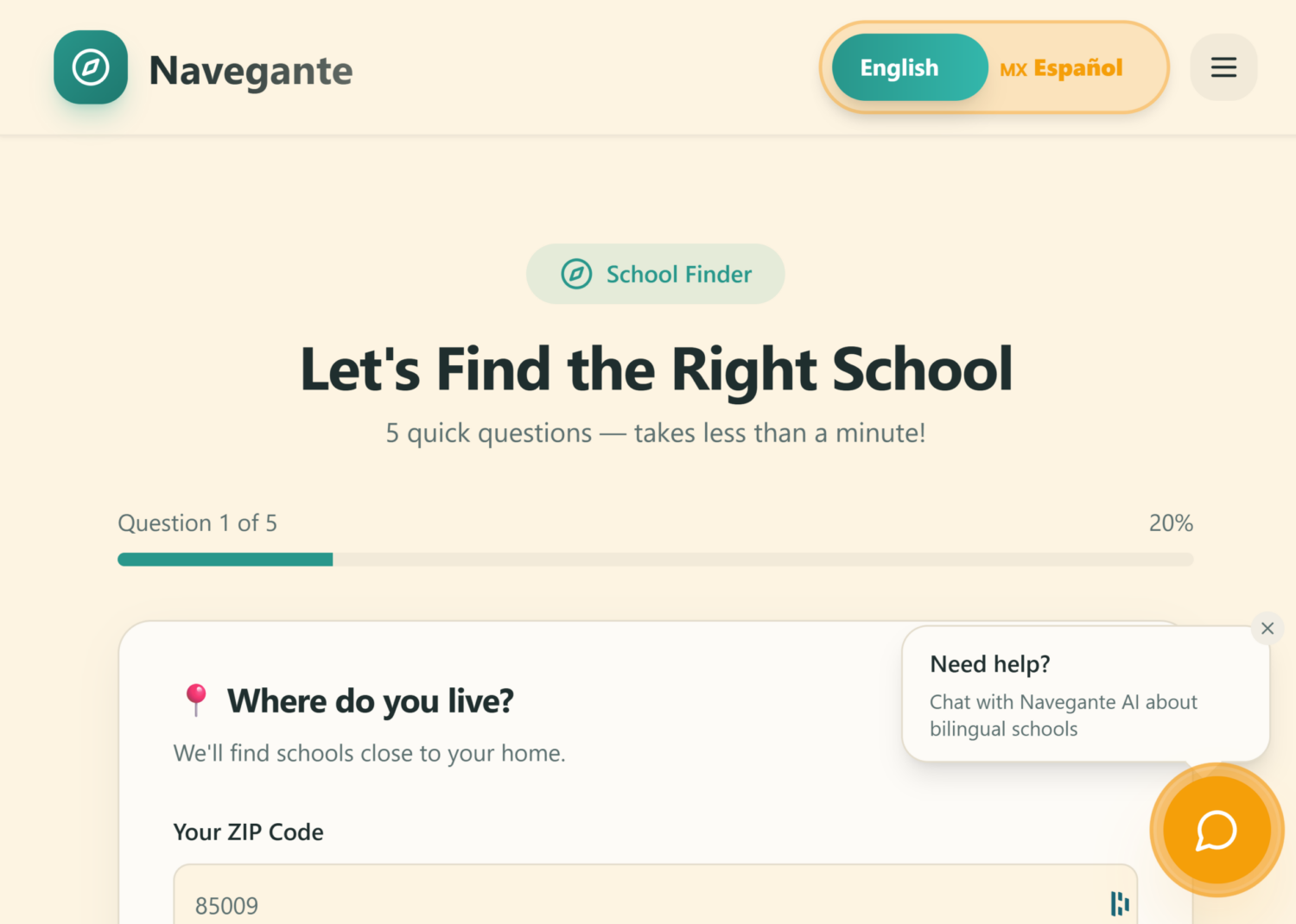
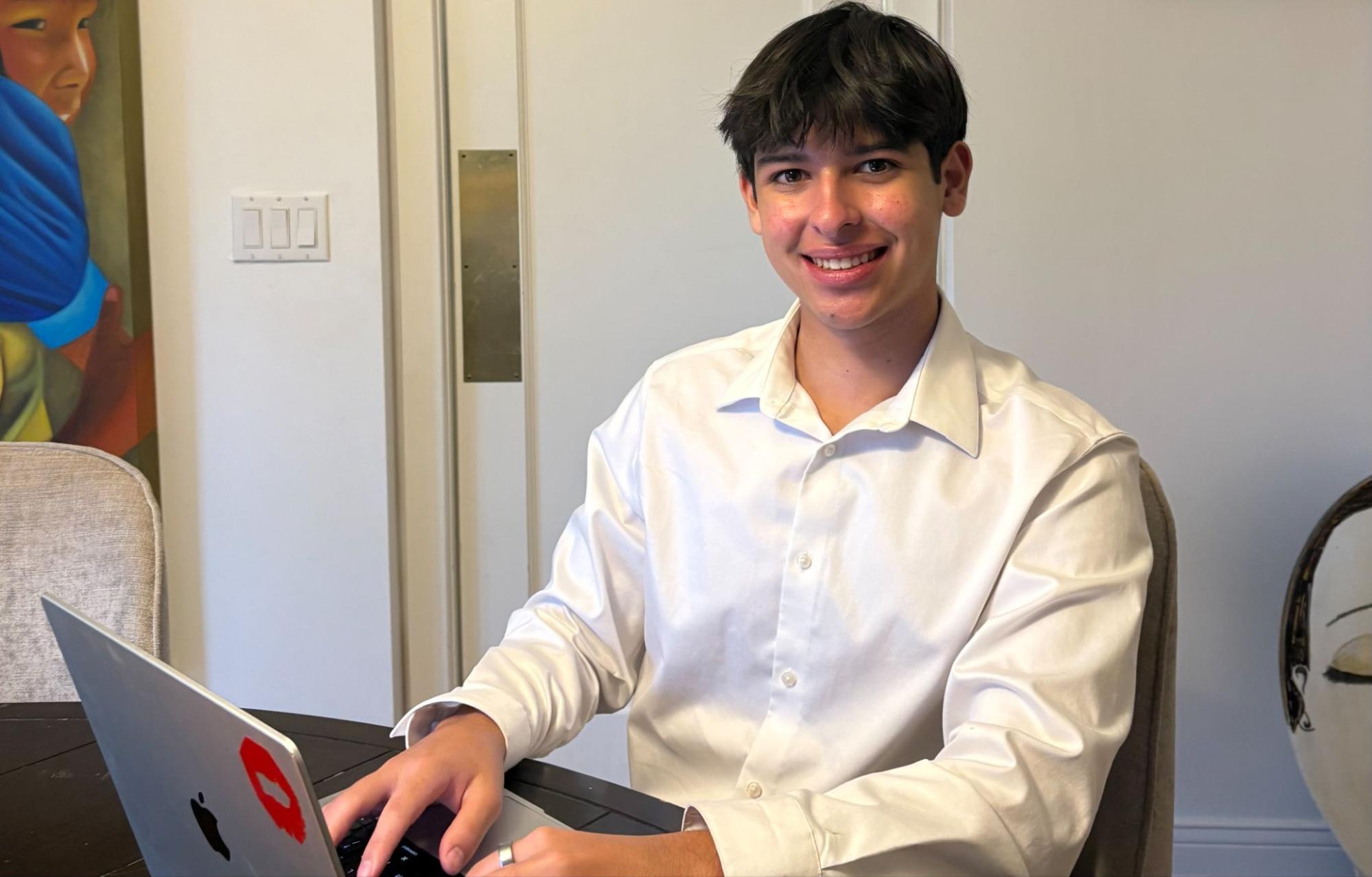
Emilio Saenz is a 16-year-old sophomore at Phoenix Country Day School in Phoenix, Arizona. I recently spoke with him to learn more about Navegante, a website Emilio developed using free AI tools to help families find schools with bilingual support in Arizona. Our conversation has been edited for clarity.
Tell me a bit about yourself, your background, and other than being a high school student, what is your role in education?
My name is Emilio Saenz. I’m a 16 year old sophomore at Phoenix Country Day School in Phoenix, Arizona. I’m the middle child in a family of six kids. Both of my parents immigrated from Mexico, so I grew up with Spanish as my first language.
My role in education policy is somewhat twofold. First, I was lucky enough to be selected to be the vice chair of the student advisory panel for the State Board of Education. The panel provides a youth perspective to the board. Next Monday for example we’re presenting on civic and financial literacy and I’m actually presenting Navegante, my website, as well. The second part is, I’m the founder of Navegante, which is a platform meant to connect families and parents to bilingual programs and English learner support in schools across the state.
What was the impetus for creating Navegante?
A few months ago I didn’t even know bilingual education existed, especially in Arizona. But I have a friend who moved from Mexico last year who only spoke Spanish at the time, and because of this she was stuck in an English-only program all day. After hearing of her struggles, about falling behind in classes because of the language barrier, I thought about how many other kids like her are struggling and are not going to have as much opportunity just because English isn’t their first language. I started doing some research and set up a meeting with somebody who works for the Board of Education. We sat down for 30 minutes and talked about the English learner landscape and that’s when I really learned about 50/50 [dual language] programs and I saw that there was this better alternative.
In trying to see where these programs were located, I made a public records request to the Arizona Department of Education, but it was denied. And that’s when I realized this data is not easy to find. This is especially true because before the Board approved the model in 2020, bilingual programs were literally being hidden from the Department of Education because of Superintendent Tom Horne’s strong opposition to bilingual education.
Now that these programs are allowed, the information landscape for them is so fragmented and it’s really hard to find. So if you’re just the average parent, you might not even know they exist, and you will have to do some real digging to be able to find one near you. So I thought I should centralize it and that’s how the idea of the website came to be.
You’ve shared that you didn’t know anything about bilingual programs before starting this project. What was your educational experience like as somebody who spoke Spanish at home?
I was born here. I’ve been speaking English at school since age three, which helped me learn the language pretty quickly. In my elementary school, I was lucky enough to have one teacher who spoke English and another that spoke Spanish. So, even if it wasn’t a true bilingual program, if I didn’t understand a certain thing, the teacher that spoke Spanish was always there to help. That bilingual support was very nice to have at an early age, but I’ve never had any experience with dual language programs. But my parents actually only speak to us in Spanish in hopes that we keep the language.
Can you walk me through how you decided what content to include in the tool?
The current version is multiple iterations after a very basic MVP, minimum viable product. After I created the MVP I met with at least six organizations that work with the Latino community in Phoenix, because that’s who I wanted to help. And I picked up feedback from each of them. For example, including the public transportation options and the school’s letter grade were recommendations given to me by Jason Catanese, owner of Camp Catanese, a college preparation foundation for low income students in Arizona.
As far as which schools to include, the data is hard to find, so I had to patchwork it together. The majority of the schools came through an AI web scraping model that went through school districts’ meeting minutes. Basically, any mention of the dual language immersion model would be flagged, and I’d add it to the directory. A lot of districts also make the information publicly available on their website. And sometimes I even had to manually confirm by calling some districts before adding them to the directory.
I started in mid-December during winter break and it has been about three months of concentrated building and seeking feedback and proof of concept, and one month or less of having launched and starting to open it up to real users. At this point, it’s about getting [the tool] into more people’s hands and getting more feedback. The goal over time is that the website will keep improving and growing. And the website also has a personal feedback form where people can give their thoughts on the website, like the user experience. We’re always trying to improve [the website] to make it as easy as possible to navigate.
Do you have a sense of how real families and students are responding to and interacting with the tool?
It’s hard to track who is visiting, but to date, we’ve had over 250 different people on the website. And we’ve had a few support requests come out of that. For example, I received a request about programs in a rural area—which was a challenge— but there were some options nearby.
Can you share some of what you’ve learned throughout this process about how school systems support multilingual students?
What I’ve learned is it really is dependent on if the school is willing to dedicate the resources and serve this population. I wish more districts would make the jump and make that investment into dual language, [including] more high schools. There are actually very few high schools in Arizona that do dual language. If you’re somebody like my friend who came over her freshman year, you’re kind of out of luck. You have to just struggle through high school with no English background and no dual language options.
If people take one thing away from your website, what would you like that to be? And what kind of change do you hope comes out of this?
I would like it to be that if you’re feeling stuck in an English-only program and like you don’t have a fair shot at success, know that there are alternatives out there. And that’s really what the goal of my website was, that nobody should have to feel stuck learning in a language they don’t understand.
And in terms of change, there is a statistic that motivated me to build this website: only 55 percent of English learners in Arizona will graduate from high school. This is a shocking and alarming statistic, because it shows how ineffective the English learner landscape has been for so many years. This limits their opportunities for the future and so if going to these bilingual programs is going to raise that statistic at least a little bit, I’ll be happy.
Senior Policy Analyst, Education Policy