Vanessa Rangel
Operations Manager, New America Chicago



This past summer, New America Chicago’s CivicSpace initiative and the Future of Land and Housing program at New America conducted research with residents from communities impacted by gentrification in and around the Pilsen neighborhood, to help inform The Chicago Community Trust’s Stay in Place strategy.
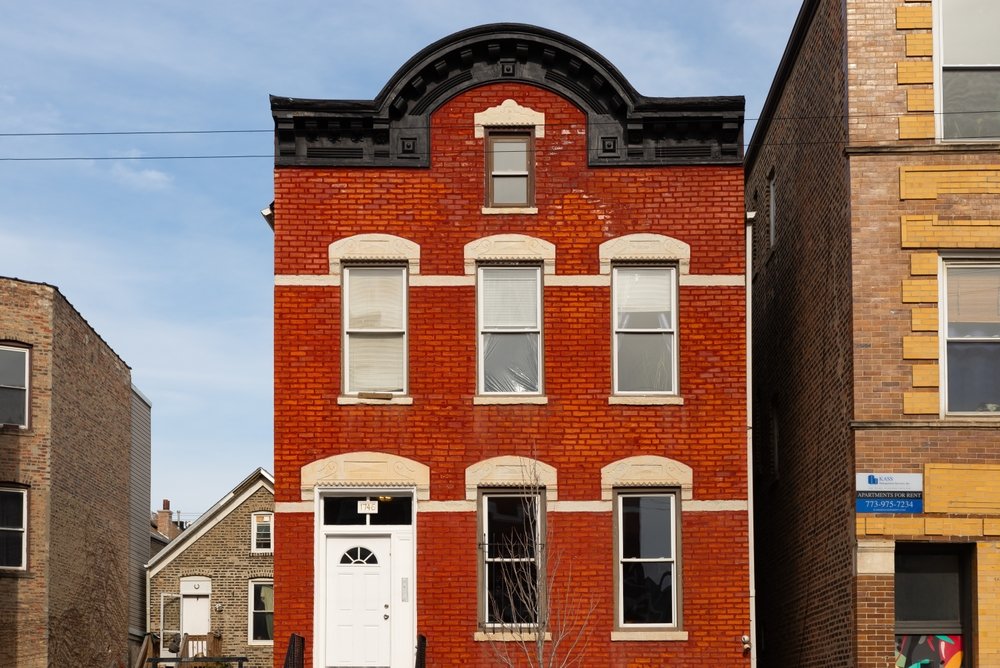
With rising property taxes, deferred home maintenance, and the risk of displacement from the rising tide of institutional investors, many homeowners—particularly in communities of color—are struggling to stay in their homes. This challenge is especially acute for owners who live in their two- to four-unit buildings, which represent one of Chicago’s best sources of Naturally Occurring Affordable Housing (NOAH). If Chicago hopes to close the racial and ethnic homeownership gap and achieve meaningful progress to build intergenerational wealth for low-income communities, it must focus on preserving ownership and strengthening the value of homes owned by families of color.
Pilsen has a rich cultural history in Chicago as home to different waves of immigrant communities throughout the years. Irish, German, Czech, Polish, and Italian immigrants have all called Pilsen home, with Mexican immigrants becoming the majority in the second half of the twentieth century. Today, Pilsen, part of the “Lower West Side,” has a population of over 33,000 residents according to Chicago Metropolitan Agency for Planning (CMAP) data. Of these, the majority (roughly 68 percent) identify as Latino/a/e, followed by 22 percent identifying as white residents. A third of the population is foreign-born, and 60 percent of households are Spanish-speaking.
Directly related to the Stay in Place session, just over one-third of occupied housing units are owner-occupied, with nearly 55 percent of housing being two- to four-unit buildings. Housing stock in Pilsen is relatively old compared to other Chicago neighborhoods. The median year built for housing is 1933, and nearly 60 percent of homes were built before 1940. In the last decade, Pilsen has seen the largest increase in median household income of any other neighborhood in the city, with more white residents moving in and Latine residents moving out. It is a neighborhood central to the discussion of gentrification, where those working in the housing space are exploring how to help long-time renters and homeowners stay in place.
Note: Throughout this brief, quotes from Stay in Place session participants are included to highlight residents’ lived experiences and perspectives in their own words.
A companion brief on Chicago’s Englewood neighborhood and the unique challenges aging homeowners of color face to “stay in place” is available here.
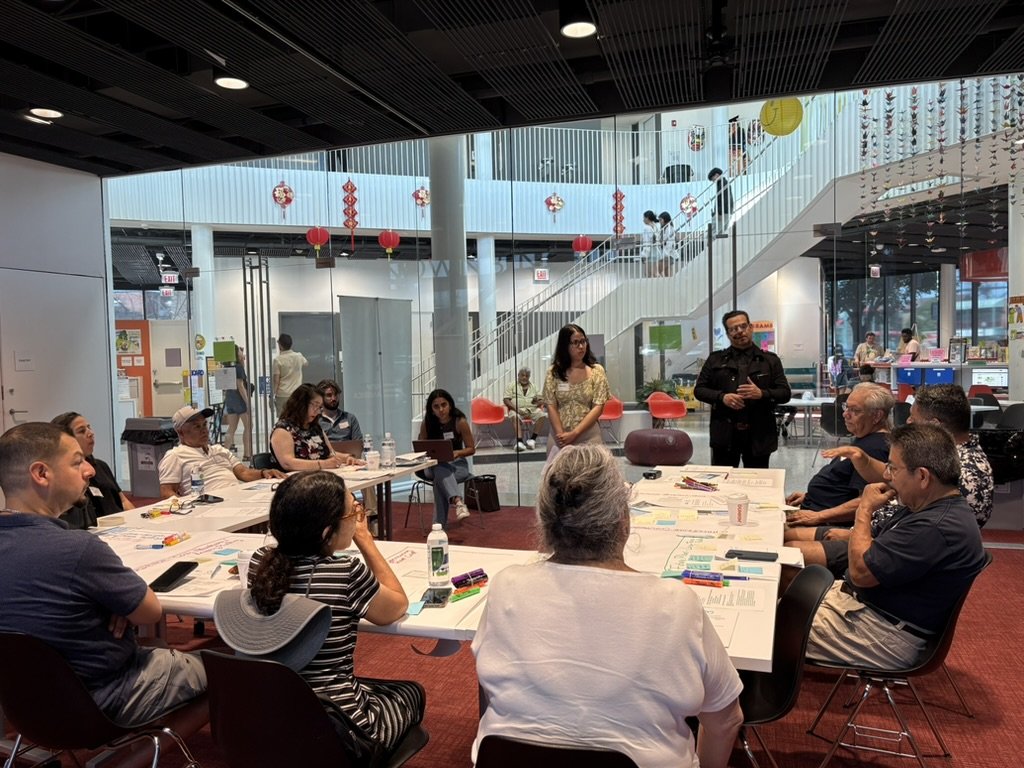
The Pilsen Stay in Place session consisted of Latino/a two- to four-unit building owners, with the goal being to better understand their challenges and the kind of assistance needed to keep and maintain their buildings.
The session explored the following research questions:
Below is a summary of key insights.
All participants expressed a strong desire to hold onto their buildings for the foreseeable future and either pass them down to family, or, if forced to sell, to sell to long-term, reliable tenants or other families within the Pilsen neighborhood. As one owner shared, “A building is like a part of the family.” Another said, “I’m a long-term owner. I plan to eventually pay off the properties and have my sons inherit them and continue to live in Pilsen.”
Despite this deep attachment and long-term vision for community investment, participants shared several external pressures that could force them to unwillingly sell. These include:
While most participants have kept rent well below the market rate in Chicago (with 60 percent of two bedrooms under $1,300), most participants have had to consider raising rent in the last few years due to rising costs. Participants mentioned a number of shared factors in how they calculate rent for their tenants; however, nearly all (10 in 12) had given people breaks on rent in the past when they needed help. This section contains the participants’ considerations for raising rent or keeping it the same.
There was unanimous agreement that all buildings were in need of repairs. The reasons for repair ranged from long-term plans for major renovations, urgent repairs due to the age of the buildings, and updates as a result of changing codes, such as costly electrical upgrades. When asked to label their maintenance needs as “must do” versus “wish list,” these patterns emerged from the group activity:
As one building owner told us, “We’re competing with developers, with all the new condos…and new apartments going up in Pilsen. They have the state-of-the-art, the nicest finishes, everything. In order for us to compete with that, we have to try to keep up with them.”
Participants pointed out that there was both a lack of affordable loans and assistance programs, as well as confusion over which programs were available to participants and what the eligibility requirements included. Despite what people may assume about their financial situation due to owning a building, many felt like they were struggling to get by and needed additional support. Below are both situational and emotional barriers that arose from the discussion:
The session included a loan design activity designed to gather insights about participants’ loan preferences, and specifically the trade-offs they would be willing to accept for differing loan amounts and repayment terms.
Participants were enthusiastic about the prospect of forgivable loans, especially given the lack of affordable lending options. One participant shared, “No interest? Sign me up.” Most, if not all, of the participants were willing to make certain concessions in keeping rent low or not selling to developers for a period of time, depending on the size of the loan.
There was broad agreement that the loan terms should be flexible and clear, as some were wary of unknown future constraints and wanted to know what “affordable rent” meant concretely. Some of the takeaways from the activity and conversation include:
With the community members’ lived experience in mind, we compiled several policy and program recommendations for nonprofit partners in the housing space, funders, and other stakeholders to pursue in their work to keep multi-unit buildings affordable for both renters and owners over time.
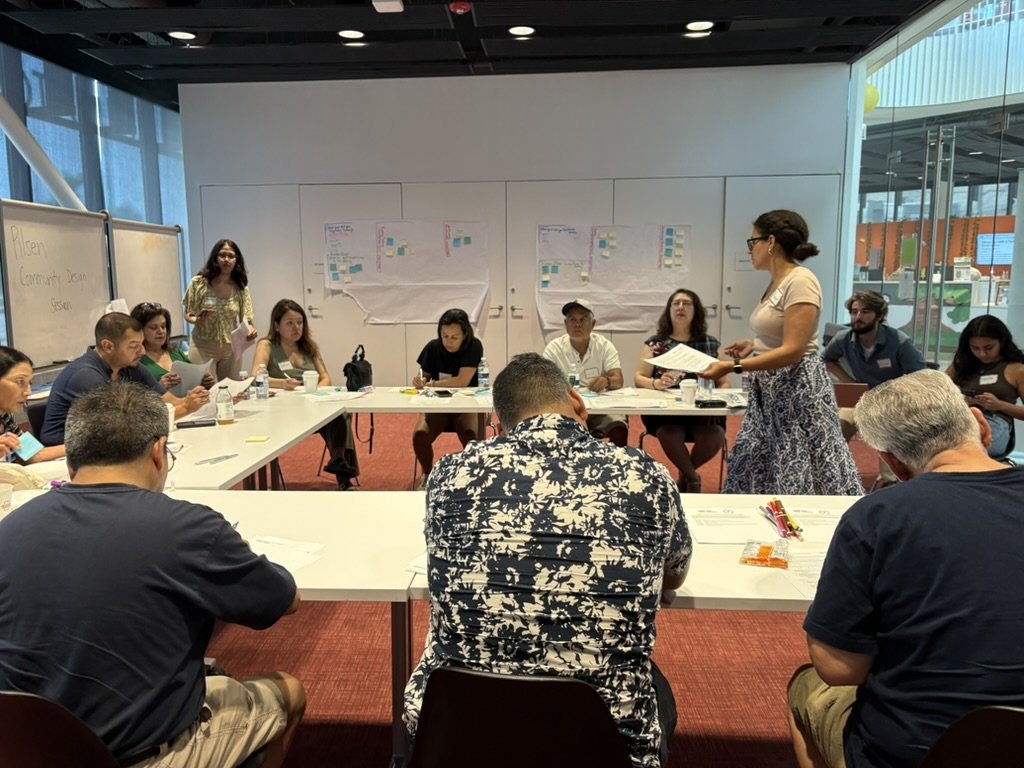
To reach a variety of community members we embraced different methods of outreach. With Pilsen, we utilized advertising with CCT nonprofit partners, like The Resurrection Project; online forums for landlords; local newspapers; Craigslist, social media, and the NextDoor app; and local churches and the library system. There were difficulties trying to reach two- to four-unit building owners, so the criteria were expanded to include another community dealing with gentrification, Logan Square. However, flyering in the Pilsen neighborhood proved to be the most successful method for reaching participants, so we were able to fill the group with mostly all Pilsen residents except for one person from Logan Square.
For both Stay in Place sessions, we had potential participants fill out an intake form answering demographic questions as well as questions about their current living situation and future plans. From there, we followed up with those who seemed to qualify over the phone to build rapport and get to know them better to make sure the session was a good fit for their time. All of those who participated were gifted a prepaid Visa card for their expertise and valuable contribution to the project.
Each session was facilitated by a New America staff member. A lead facilitator introduced the team and the purpose of the session, shared how the findings would be used, and offered an opportunity for participants to ask any questions. Each participant was also asked for their consent to record the interview and was provided assurances that everything shared would remain confidential and nothing would be attributed to them by name or any other identifying information. The activities that followed provided multiple ways for residents to participate in a way they could feel comfortable, both verbally in the group and in writing. Sessions were recorded, notes were transcribed, and each session transcript was cleaned for accuracy.
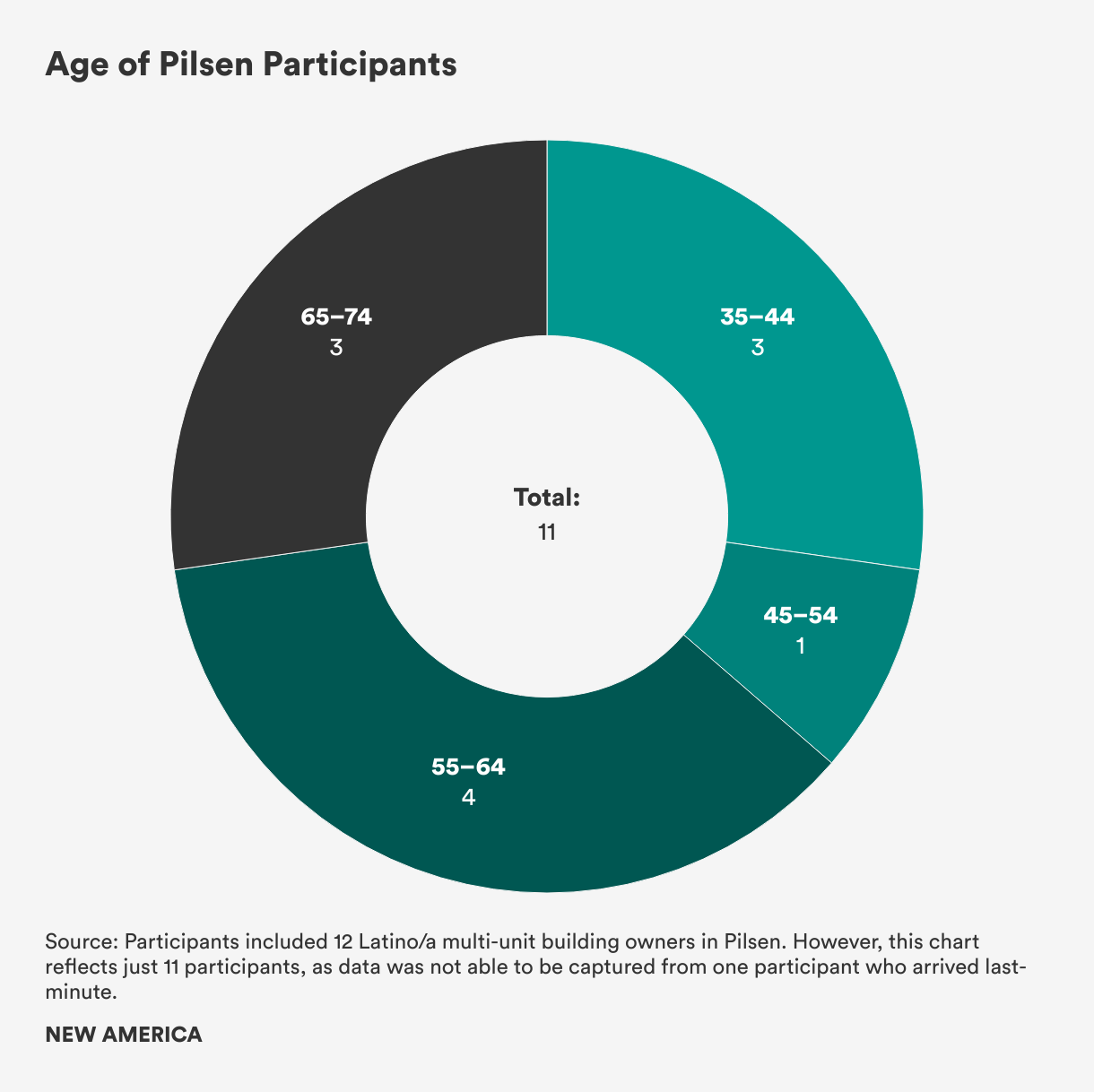
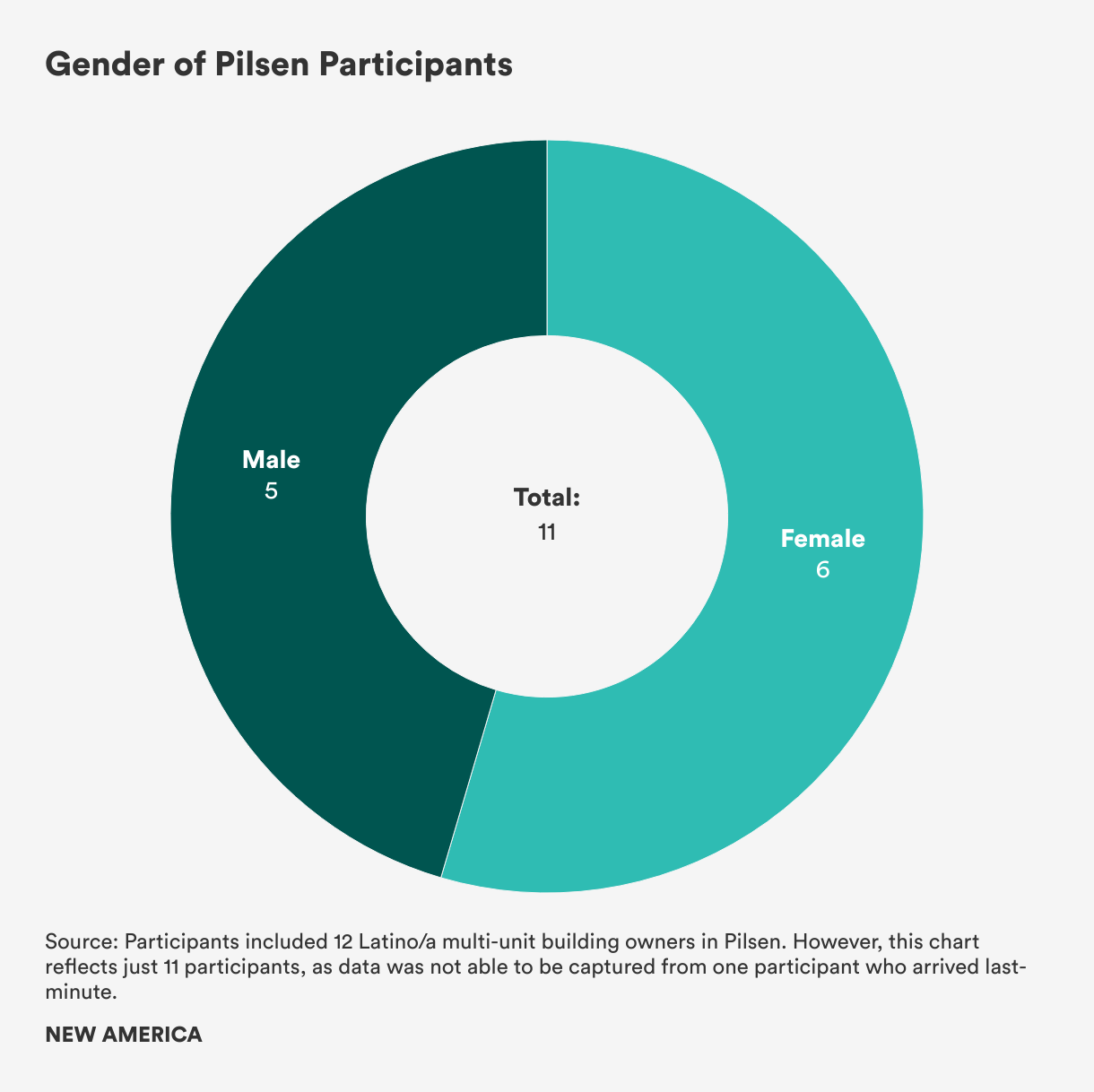
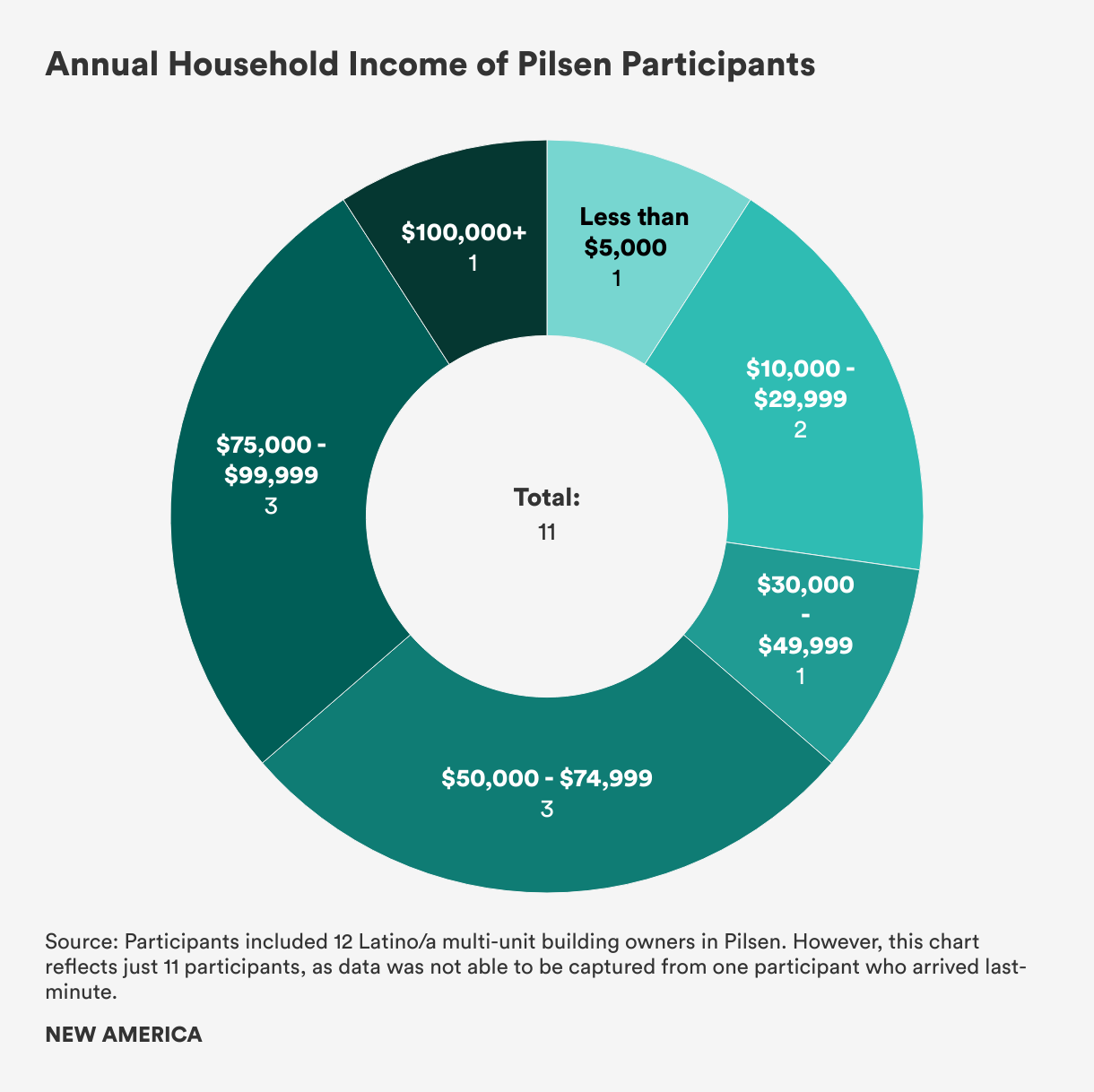
The Pilsen session had 12 attendees altogether—all Latino/a multi-unit building owners from areas impacted by gentrification in zip codes 60608, 60609, and 60647. The totals for the Pilsen group do not reflect all 12 participants because one person showed up last-minute as a referral from The Resurrection Project.
Operations Manager, New America Chicago
Deputy Director, Future of Land and Housing Program
Researcher
Director, New America Chicago
Senior Fellow and Director, Future of Land and Housing