A Chapter of: Extracting Success in Pre-K Teaching: Approaches to Effective Professional Learning Across Five States
Explicitly Teaching Social and Emotional Skills in San Jose, California

Early Learning Social Emotional Engagement in the Franklin-McKinley School District serves public pre-K and kindergarten teachers. Some pre-K teachers are required by the state to have a bachelor’s degree and teacher certification. Teachers in the California State Preschool Program are required to have some early childhood education or child development coursework. Paraprofessionals, who usually have minimal or no formal higher education, also participate in the program. The Franklin-McKinley School District sits in the heart of Silicon Valley and serves recent immigrants from Mexico, Central America, and Asia. Eighty percent of students in the Franklin-McKinley School District qualify for free and reduced-price lunch.63 In the district, 98 percent of children in kindergarten through third grade are non-white.64
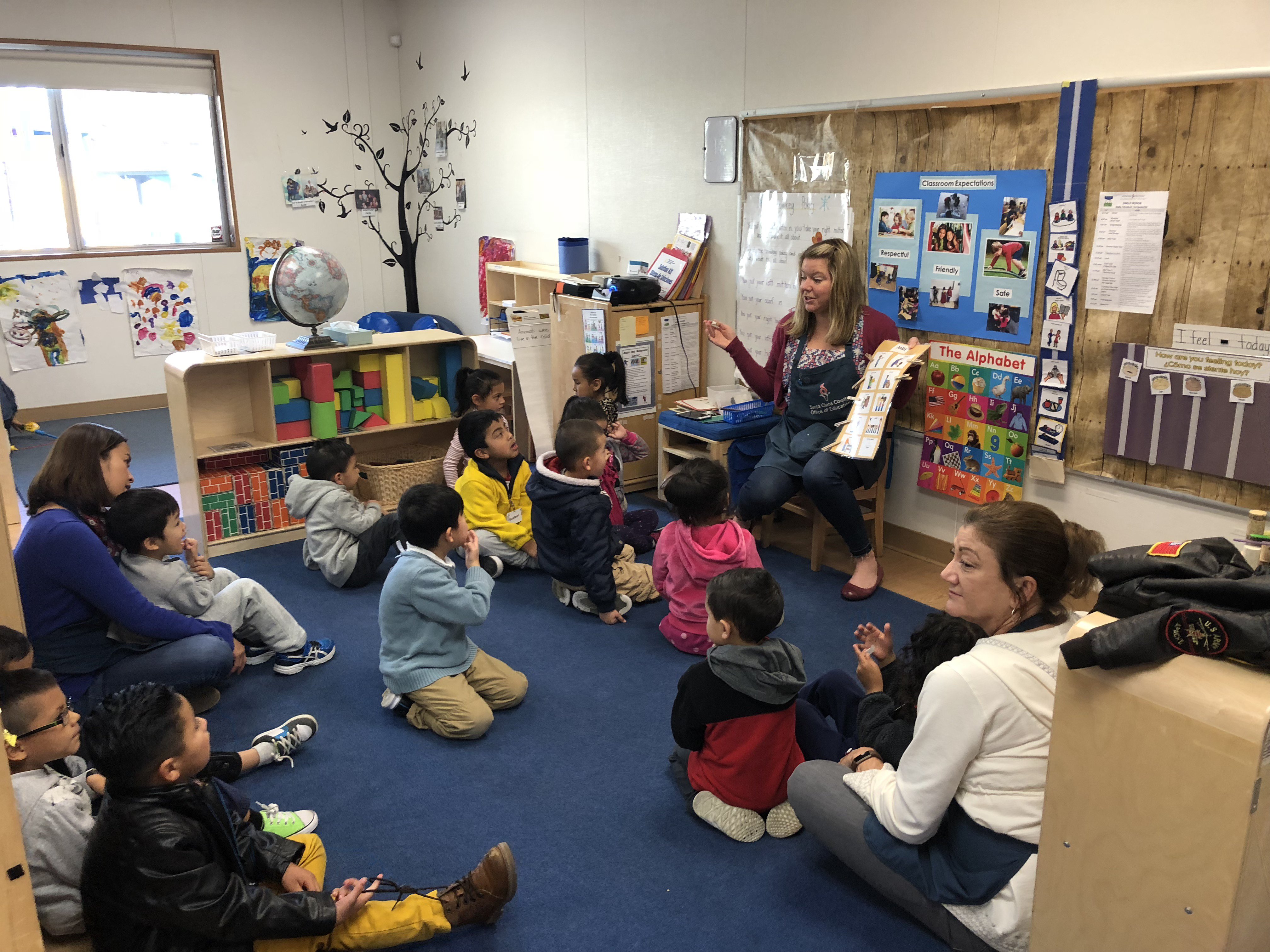
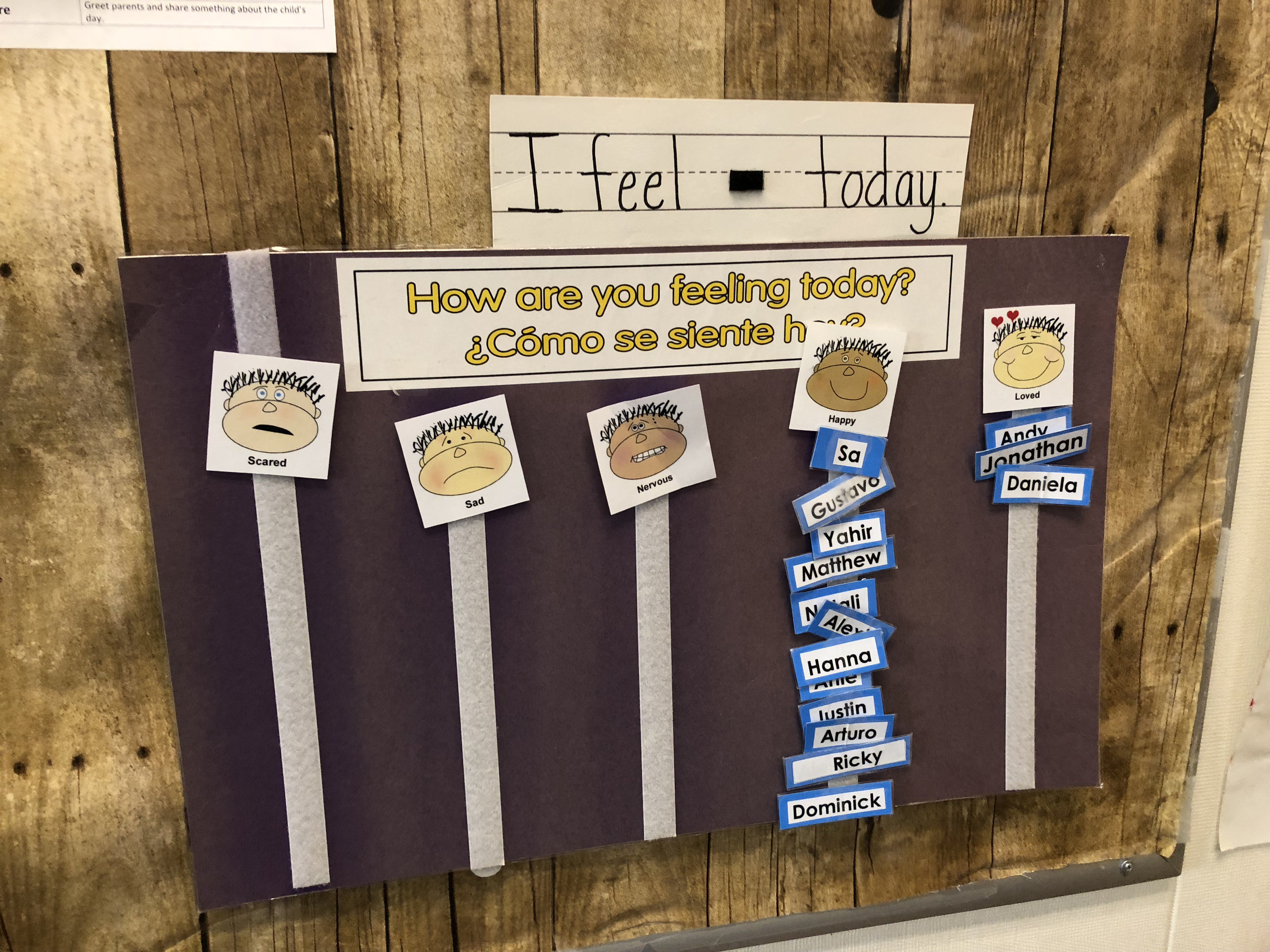
Maureen Casey is leading circle time at nine o’clock in the morning with a group of pre-kindergarteners in East San Jose, CA. After songs, she assigns students classroom jobs. Natalie will be the teacher’s assistant today. Next, Casey asks her students who they think should get today’s Super Friend Award. “Gustavo? Is Gustavo being a super friend today?” she asks. In Casey’s classroom children are acknowledged for friendship skills like using kind words, taking turns, and being safe and gentle with their peers. Casey has not always focused on explicitly teaching social-emotional skills, but through ongoing professional development and coaching, she has been able to incorporate these important skills in her classroom.
Sarah Jackson
Casey is a special education pre-K teacher in the Franklin-McKinley School District and also works as an inclusion specialist to support special education students in mainstream classrooms in the county’s Head Start program. Her classroom interactions to develop the children’s social-emotional skills are part of a district-wide effort to improve teaching practices in early childhood. Those efforts include professional development for teachers and principals, support in engaging families, the establishment of professional learning communities, coaching in early literacy and social-emotional learning strategies, and teacher leader programs.
The professional development model, called Early Learning Social Emotional Engagement, is part of the district’s larger efforts to invest in early learning programs both in the school district and throughout Santa Clara County. The model trains pre-K teachers, Transitional Kindergarten teachers, some kindergarten teachers, and paraprofessionals from the school district alongside Head Start teachers. The district recently adopted a strategic plan that recognizes that learning begins at birth and calls for additional investments in early education. This work is partially supported by the David and Lucile Packard Foundation, which is investing in three communities in California (Fresno, Oakland, and San Jose) over 10 years to help build kindergarten readiness.
Sarah Jackson
Voice and Choice
A key feature of the professional development is what the district calls “voice and choice.” Training must have buy-in from the teachers, and it must be embedded in their jobs or the efforts will not be successful.
In Franklin-McKinley’s professional development program, teachers can choose whether they want to participate in follow-up coaching, for example, and they can choose what they want to focus on in their PLCs. Casey, for example, is in a PLC that focuses on teaching mathematics and how to pair social-emotional learning strategies with math. Other teachers are focused on literacy or family engagement. The district also changed schedules to better align release time across its system to create more opportunities for teachers to connect on a regular basis and to open up aligned time during the workday for professional development.
Casey is also part of the district’s Teacher Leader program. The program enables teachers who have become proficient in new models of teaching to attend national conferences on early learning and to help train and assess other teachers in the district, building the capacity of the district’s expert teaching force over time.
“This program has been probably the best one I’ve done in my educational career,” Casey said, “just because of the follow through. I feel like I’m really becoming proficient. In the past, I’ve had these sessions, and no one follows up. With this, you are cycling back all the time, and the coaches remind you of what you are doing, and help you make change.”
The district is using the Teaching Pyramid model65 from the Center on the Social and Emotional Foundations for Early Learning, which the district adapted to fit its needs with the help of its designers. The PLC, the training, and the coaching are all integrated. The district has maintained a focus on social-emotional learning over multiple years but changes the program design with each new cycle based on evaluation data and teacher feedback.
The school district partnered with California’s Early Learning Lab66 who worked with teachers and administrators in the district to co-design this model, and also with Tweety Yates, an expert facilitator and a research assistant professor in the Department of Special Education at the University of Illinois at Urbana-Champaign who was brought in to facilitate professional development sessions.
Teaching Social-Emotional Learning
The district is focusing on social-emotional learning because it knows these skills are fundamental to children’s school success. But district leaders were also responding to teachers’ requests for tools and extra support to help them cope with challenging behaviors in the classroom. As the Transforming the Workforce report lays out, social-emotional competence enables children to engage in academic tasks by increasing their ability to interact constructively with teachers, work with and learn from peers, and dedicate sustained attention to learning.67
The adapted Pyramid Model gives teachers strategies for responding to children’s social and emotional needs in the classroom and tools to create classrooms with strong and supportive relationships. Thuy Kropp, a teacher for four-year-olds, almost always has students in her classroom who have never been in school before. Kropp tells the story of one child who was bright and creative, but who was disrupting the classroom by hitting and throwing things. Her first stabs at helping him had been unsuccessful. But while participating in the training program, Kropp created a chart and story from the book Tucker Turtle Takes Time to Tuck and Think, one of the social stories used in the Pyramid curriculum to help children understand social interaction and expectations. She also provided a copy of the book to the boy’s family with suggestions for home use.
The book and chart helped the child understand the expectations for him in the classroom, which Kropp says made a big difference. “He started to say things like: ‘Ms. Kropp, today I did not hit anyone. Today I did not throw anything around.’ He actually internalized these concepts and the incidents were reduced,” she said.
This work is not without significant challenges, and leaders in Franklin-McKinley say that foremost among them is that change in teaching practice can take a long time. “It’s like designing the iPhone and waiting five years until the launch party,” said Melinda Waller, the district’s director of early learning, noting that children are so different from the beginning of the year to the end that it makes it hard for teachers to recognize change even when it is right in front of them. “They can often forget what it takes to get kids to that end-of-year place,” Waller said, “and that each year you are starting fresh.”
Leaders emphasize that even with expert professional development teachers are not easily able to move from knowledge to applied skills. Working to apply the strategies they have learned to every child in their classroom over time takes sustained effort, and for that teachers need support. That is one reason why ongoing coaching and aligned, evidence-based content is so important.
“Only You Know What is Happening in Your Classroom:” Empowering Teachers to Use Data
The district has also made a point of being intentional about the ways it is using data both to collect baseline information and document changes in teacher practice in the short- and long-term. In addition to the Desired Results Developmental Profile, a child progress tracking tool required by the state of California, the school district is using the Teaching Pyramid Observation Tool to measure how well teachers are implementing Pyramid Model practices.
What has made the work successful, district leaders say, is ongoing efforts to ensure teachers understand the goals of data collection. Although some teachers still feel that collecting this information is a waste of time, there is a growing recognition from teachers that it is important to collect and that they are partners in the process. Facilitators present the ongoing results to the group regularly and discuss what is going well and collective areas for improvement. For example, Chris Sciarrino, the director of early childhood practice and innovation at the Early Learning Lab, gave a presentation on helping students build curiosity and take initiative in their learning, an area of needed growth that a recent evaluation had uncovered.
“Principals and directors really talked with us about why we are doing this,” Casey said of the data collection. “They presented it not as an evaluation tool at all, but a tool to help us create classrooms that are enriching for kids. It took off some of the pressure.”
Teachers, with support from the Early Learning Lab, have also created a “data quick check,” a 10-minute online survey that teachers can fill out on their smartphones each day to help them keep track of the impact of their work. The survey helps them reflect on how they are integrating practices and tracking positive and challenging behaviors in the classroom. Teacher leaders worked with directors to develop the questions, so that “it meets their needs, but it also meets our needs,” Casey said. When teachers review their data, they can see that even though it may feel like there is no progress, things are actually improving in their classrooms, slowly but surely.
The facilitators also say that they try to integrate discussions of overall systems change into every session, so teachers understand what it is they are a part of and why they are taking part in this learning. They also try to build on and emphasize teachers’ existing expertise and ability to validate or dispute data about their own classroom. Sciarrino tells the group: “only you know the answer to what’s been happening in your classroom.”

Extracting Success in Pre-K Teaching: Approaches to Effective Professional Learning Across Five States
- Introduction
- Pre-K Teachers and In-Service Professional Learning
- Our Approach
- Strengthening STEM Instruction in Passaic, New Jersey
- Building a Cohort of Early Childhood Technology Leaders in Chicago, Illinois
- Partnering to Connect Research to Practice in Nashville, Tennessee
- Explicitly Teaching Social and Emotional Skills in San Jose, California
- Improving Language and Literacy Across Texas
- Five Lessons for Growing Strong Pre-K Teachers
Citations
- Sarah Jackson, California Communities Aiming for Quality in Early Learning: Focus: San Jose (Washington, DC: New America, 2016), 3, https://static.newamerica.org/attachments/12790-stronger-teaching-and-caregiving-for-californias-youngest/San%20Jose%203.14.4fb7ee0949294619a9e9eb6aab28c0b2.pdf.
- Sarah Jackson, California Communities Aiming for Quality in Early Learning: Focus: San Jose (Washington, DC: New America, March 2016), 3, https://static.newamerica.org/attachments/12790-stronger-teaching-and-caregiving-for-californias-youngest/San%20Jose%203.14.4fb7ee0949294619a9e9eb6aab28c0b2.pdf.
- Center on the Social and Emotional Foundations for Early Learning (website), Vanderbilt University, http://csefel.vanderbilt.edu/index.html.
- The Early Learning Lab, https://earlylearninglab.org/
- LaRue Allen and Bridget B. Kelly, eds., Transforming the Workforce for Children Birth Through Age 8: A Unifying Foundation (Washington, DC: National Academies Press, 2015), 139, http://www.nap.edu/catalog/19401/transforming-theworkforce-for-children-birth-throughage-8-a.