Teacher Practice
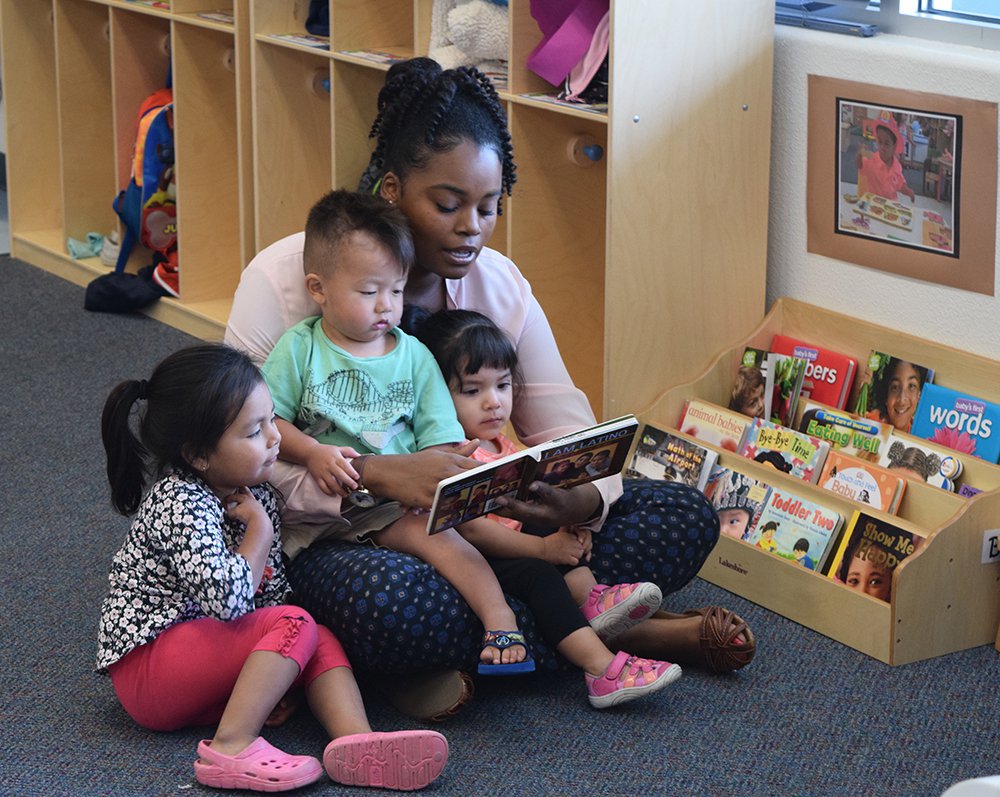
Problem: Teachers do not always have the knowledge and skills they need to do their jobs well.
Evidence shows that to effectively work with young children, educators need a strong understanding of child development and early learning; this helps them build the relationships needed to engage children in rich interactions and to provide appropriate learning activities.17 When providers and teachers are trained in the science of child development and the specialized knowledge and competencies needed to teach young children, they help ensure that children reach their full potential.
But research from the Center for the Study of Child Care Employment shows teachers do not always get these skills in their preparation programs, and the qualification levels of early childhood teachers in California vary greatly depending on the setting.18 Research also shows that there is wide variability in the quantity, quality, and type of professional learning opportunities for those working with children from birth through age eight.19
Teachers need in-service professional learning opportunities to develop their practice. This is especially true in California, where, according to Children Now, nearly half of all children are growing up poor or low-income, and 21 percent of students are dual language learners, with 83 percent of them native Spanish speakers.20 Teachers of young children in California need training in how to support students living in poverty and dual language learners.
Evidence shows that to effectively work with young children, educators need a strong understanding of child development and early learning.
Solution: Some school districts in the state are working to provide high-quality, ongoing, targeted professional development, often paired with coaching.
The seminal National Academies Press report of 2015, Transforming the Workforce for Children from Birth Through Age 8: A Unifying Foundation, found that effective professional learning often includes collaboration through professional learning communities (PLCs), one-on-one coaching, and a “continuous improvement mindset.”21 In a recent policy paper on professional development in pre-K, New America found that programs like these can improve the quality of adult-child interactions in all settings where young children are spending time and set children up for success in school.22
In the Fresno Unified School District, Head Start, Early Head Start, the Fresno County Superintendent of Schools, and the Central Valley Children’s Services Network have come together in the Fresno Language Project to improve instruction for young dual language learners. Teachers, home care providers, and administrators from the project meet in a series of collaborative professional development sessions on Saturday mornings. The sessions focus on language instruction, based partly on work by Linda Espinosa, author of Getting It RIGHT for Young Children from Diverse Backgrounds, who advocates strategies to promote oral language development in the classroom and through connection with families. Her approach includes a focus on the value of and support for the home language, getting to know the child and family, and strategies teachers can use to support linguistic growth, such as selecting picture books, rhymes, and chants to foster vocabulary and concept development.
This issue is relevant not only in Fresno, where children speak upwards of 50 different languages and 34 percent of kindergarteners are dual language learners, but increasingly in all of the school districts in California.23 As the former superintendent of Fresno Unified, Michael Hanson, told us: “Fresno is the microcosm for what the rest of California is going to look like 10 or 20 years down the line.” Recent data from the Migration Policy Institute show 60 percent of California’s children from birth to age eight are dual language learners.24
Over time the Fresno Language Project has grown. The school district now employs a full-time coach who works exclusively with project participants. She focuses on building trusting relationships with providers and helping them strengthen teacher-child interactions and classroom practice. This school year, 51 teachers and teaching assistants participated in the program, along with a group of leaders, which include early learning site supervisors, directors, coaches, and department heads.
The cross-sector nature of the work—training family child care providers alongside preschool teachers in the school district, for example—aims to spread these practices to all the adults in Fresno who work with children under age five.
Chris Sciarrino, who works for the Early Learning Lab and helped design and support the training in Fresno, said that too often early childhood work is done in silos—the school district working separately from Head Start, which is working separately from the resource and referral network. This particular effort worked differently, she said, since “the people behind this project have a great belief that all of the children of Fresno belong to all of us.”
This work is part of larger reform efforts in Fresno to improve early learning systems within the school district and in the community at large. When money came in from Proposition 30, a 2012 ballot measure that increased funding for public education, Fresno Unified School District started shifting resources to the younger ages. The district invested an initial $7.4 million in early learning in 2011 and has been making significant investments since that time. Today it is combining multiple public funding streams with philanthropic support to serve more children and also improve the quality of the programs offered.
In addition to supporting several birth through kindergarten coaching positions, including one for the Language Project, district funds are also used to support licensing monitors in health and safety as well as release time so teachers can attend professional development activities. Early Learning Executive Officer Deanna Mathies said that her department is working to increase its collaboration with other departments within Fresno Unified, which enables the use of new funds that have traditionally not been available to early learning. Her department is collaborating with the Department of Prevention and Intervention, Special Education, Multilingual Services, and English Learner Services, for example, to better support students, especially those who have challenging classroom behaviors, who come from environments with trauma and stressors, and who need extra help.
The leaders describe the work of the Fresno Language Project as having a “ripple effect.” Starting the reforms in a concrete way to address a common need (better support for dual language learners) has led to an increased ability to scale up effective systems reform in early childhood in this city, they say.
It is too early to understand the effects of all of this work on the children of Fresno or even how exactly this is changing teacher practice, but the district is working with an evaluation firm to track progress and to measure the impact of professional development in the classroom and, ultimately, on student development.
Starting the reforms in a concrete way to address a common need has led to an increased ability to scale up effective systems reform in early childhood in this city.
Surveys show that teachers who have participated in the Fresno Language Project feel an increased comfort level in using the strategies they have learned to support language development across all settings, from one-on-one time, to outdoor play, to math and science activities. They also say they are more comfortable supporting dual language children and encouraging parents/guardians to play music or sing songs, involve children in household chores, play games, create art, and build something to support their children’s learning, health, and development.
Additionally, participants in the project report in interviews that they have built relationships that can deepen work in other areas, like efforts to improve developmental screening, for example. All of this work has helped build community leadership for the children of Fresno, both inside and outside of the school district, by formalizing shared decision-making structures and building trust, all of which leaders say will lead to larger-scale reforms.
Franklin-McKinley School District’s professional development model, the Early Learning Social Emotional Engagement Project, includes sessions during the school day that focus on helping teachers explicitly teach social-emotional skills to their students. The sessions are followed up by ongoing professional learning communities (PLCs) and coaching. The model trains district preschool, transitional kindergarten teachers, some kindergarten teachers, and paraprofessionals alongside Head Start teachers.
As we wrote in Extracting Success, a key feature of this professional development is what the district calls “voice and choice.”25 Training must have buy-in from and be led by the teachers themselves, and it must be embedded in their jobs or the efforts will not be successful, say leaders in the district. Teachers can choose whether they want to participate in follow-up coaching, for example, and they can choose what they want to focus on in their PLCs. Some teachers may choose a PLC that focuses on how to pair social-emotional learning strategies with mathematics. Other teachers might focus on literacy or family engagement. The district also runs a teacher-leader program, which enables those who have become proficient in new models of teaching to attend national conferences on early learning and to help train and assess others in the district, building the capacity of the district’s expert teaching force over time. Early results show that after participating in the program, teachers are more likely to teach social skills, emotional competencies, and problem solving in their classrooms.26
Training must have buy-in from and be led by the teachers themselves, and it must be embedded in their jobs or the efforts will not be successful.
Costs of running this professional development work include coaching staff, a shared cost between the district and the Packard Foundation in collaboration with the New Teacher Center; organizing and training programs for informal caregivers through Catholic Charities; and money to run the professional development itself (outside facilitators, teacher release time, materials, and incentives).
Melinda Waller, the district’s director of Early Learning—a position created with support from the Packard Foundation—oversees the professional development work. Waller emphasized the need to build in costs for administrative and support staff members who play a key role in getting these initiatives off the ground and coordinating with other departments and partners.
After hearing from local teachers about the need to support young children with challenging behavior, Oakland’s Starting Smart and Strong developed a pilot project for preschool teachers to learn about trauma-informed classroom practices. The project was a partnership between Oakland Unified and the City of Oakland Head Start, the two largest early childhood providers in the city. Child poverty in the Bay Area has grown notably since the Great Recession, which means more children are experiencing stressors associated with insecure housing, hunger, and exposure to violence.27 The goal of the program is to strengthen the ability of educators to both understand the traumatic experiences of the young children in their care and better support affected children.
The group training sessions and follow-up coaching focus on trauma-informed practice, the emotional development of children experiencing trauma, trauma-informed healing environments, and support for families. The sessions also build awareness in adults about their own experiences with trauma and identify self-care strategies they can use to support themselves so as to better nurture the children in their care. Participants can also participate in follow-up professional learning communities.
The goal of the program is to strengthen the ability of educators to both understand the traumatic experiences of the young children in their care and better support affected children.
This work was part of efforts to strengthen the quality of teaching practices for those working with young children in Oakland. Oakland Unified used government dollars and support from the Packard Foundation, the Kenneth Rainin Foundation, and First 5 to build out its administrative infrastructure in early childhood and to strengthen oversight and program quality, adding a new deputy chief of Early Learning position in 2015 and more recently a director of Quality Enhancement and Professional Development. In addition to the trauma-informed training described above, the school district brings in experts to work with preschool teachers on topics such as language development and social-emotional learning. It also holds evening and weekend workshops on topics like language development for early childhood educators who need professional development hours to maintain their state certification.
All three communities have partnerships with the New Teacher Center, a national nonprofit, to support teachers and administrators in improving the quality of instruction. The organization’s work differs from community to community, but overall it provides coaching, teacher development and leadership programs, and professional development, all with the goal of strengthening teacher capacity and, in turn, local systems of early learning.
Challenges
As with the family engagement programs, structural challenges can make it difficult for teachers and caregivers to improve their practice, and for school districts to scale up these programs. For teachers, for example, high staff turnover, lack of time, and tight budgets all threaten the success of programs like these.
Early childhood programs within school districts in California have been underfunded for many years. Dollars allocated to school districts as providers in the California State Preschool Program, which serves low-income children, are not enough to run a quality program. Districts must supplement those dollars in order to expand and strengthen programs, and if they are not able to do that, early learning departments must operate on bare bones, sometimes without any money at all for professional development or basic classroom supplies. In Oakland, preschool teachers report having to fundraise for basics like glue and paint.
Districts must supplement those dollars in order to expand and strengthen programs, and if they are not able to do that, early learning departments must operate on bare bones.
Within school district bureaucracies new early learning dollars that come in from state programs or philanthropy are often vulnerable to reallocation. Program administrators in both Oakland and Franklin-McKinley describe pressure to make sure money allocated for early learning quality improvement and professional development is not used elsewhere. Oakland Unified’s Early Childhood Education department now uses a nonprofit fiscal sponsor to manage some of the dollars it does receive from the state in order to help them stretch further and to prevent the money from being swallowed up into district general funds, something that has happened in the past.
In California’s high-cost counties, early childhood teachers are sometimes working two jobs to make ends meet, which makes participating in training programs outside of usual work hours problematic, as can the lack of paid preparation time.
“What teachers need the most,” said Ana Moreno, associate program director for the New Teacher Center, “is time. Time to collaborate, time to reflect.” Moreno also said teachers need a basic level of professional support if they are to improve their practice. “We can’t quite get to instruction until they have substitute coverage and ratio coverage and adequate supplies.”
Drew Giles, Oakland’s outgoing director of quality, enhancement and professional development for early learning, said he was initially shocked to learn that his position did not come with a budget. “It’s what made my very first year so hard,” he said. “I was expected to do these magical professional development experiences and I didn’t have a budget for it.”
New dollars from the state and philanthropy enabled him to provide teachers with money for classroom supplies and eventually to begin to strengthen professional development programs. He also got creative about raising in-kind support for the work. “You become really smart. You build relationships with local people who are going to give you a deal,” he said. “You work with people who are from the community and want to see it succeed and thrive. They give you a discounted rate and free venues, so your teachers have professional places to gather. We used to have to provide extended time for teachers to go out and get their own lunch. We didn’t have a budget to pay for lunch. Now, we are able to provide them with refreshments and the materials. They feel much more valued.”
“I was expected to do these magical professional development experiences and I didn’t have a budget for it.”
Citations
- LaRue Allen and Bridget B. Kelly, eds., Transforming the Workforce for Children Birth Through Age 8: A Unifying Foundation (Washington, DC: National Academies Press, 2015), 398, http://www.nap.edu/catalog/19401/ transforming-theworkforce-for-children-birth-throughage-8-a.
- Lea J. E. Austin, Marcy Whitebook, Fran Kipnis, Laura Sakai, Ferheen Abbasi, and Felippa Amanta, Teaching the Teachers of Our Youngest Children: The State of Early Childhood Higher Education in California (Berkeley, CA: Center for the Study of Child Care Employment, October 2015), http://cscce.berkeley.edu/files/2015/California-HEI-Narrative-Report.pdf; Marcy Whitebook and Lea J. E. Austin, Early Childhood Higher Education: Taking Stock Across the States (Berkeley, CA: Center for the Study of Child Care Employment, 2015), http://cscce.berkeley.edu/files/2016/Cross-state-Brief-Final.pdf.
- LaRue Allen and Bridget B. Kelly, eds., Transforming the Workforce for Children Birth Through Age 8: A Unifying Foundation (Washington, DC: National Academies Press, 2015), 398, http://www.nap.edu/catalog/19401/ transforming-theworkforce-for-children-birth-throughage-8-a.
- 2018 California Children’s Report Card (Oakland, CA: Ch1ldren Now, 2018), https://www.childrennow.org/reports-research/2018cachildrensreportcard/; California Department of Education (website), “Facts About English Learners in California—CalEdFacts,” https://www.cde.ca.gov/ds/sd/cb/cefelfacts.asp.
- LaRue Allen and Bridget B. Kelly, eds., Transforming the Workforce for Children Birth Through Age 8: A Unifying Foundation (Washington, DC: National Academies Press, 2015), 398, http://www.nap.edu/catalog/19401/ transforming-theworkforce-for-children-birth-throughage-8-a.
- Abbie Lieberman, Shayna Cook, and Sarah Jackson, Extracting Success in Pre-K Teaching: Approaches to Effective Professional Learning Across Five States (Washington, DC: New America, April 2018), https://www.newamerica.org/education-policy/reports/extracting-success-pre-k-teaching/introduction.
- “California Communities Aiming for Quality in Early Learning. Focus: Fresno,” New America, March 2016,https://static.newamerica.org/attachments/12790-stronger-teaching-and-caregiving-for-californias-youngest/Fresno%203.14-2.c798a9d523cb4cf08cdd7e8cf996e8a1.pdf.
- Maki Park, Anna O’Toole, and Caitlin Katsiaficas, Dual Language Learners: A Demographic and Policy Profile for California (Washington, DC: Migration Policy Institute, October 2017), https://www.migrationpolicy.org/research/dual-language-learners-national-demographic-and-policy-profile.
- Abbie Lieberman, Shayna Cook, and Sarah Jackson, Extracting Success in Pre-K Teaching: Approaches to Effective Professional Learning Across Five States (Washington, DC: New America, April 2018), https://www.newamerica.org/education-policy/reports/extracting-success-pre-k-teaching/introduction.
- Analysis of the TPOT by the New Teacher Center, Early Learning Lab, and Franklin-McKinley School District.
- Public Policy Institute of California (website), “High Rates of Child Poverty Found Even in State’s Most Prosperous Regions,” February 22, 2017,http://www.ppic.org/press-release/high-rates-of-child-poverty-found-even-in-states-most-prosperous-regions/;Poverty in the San Francisco Bay Area (San Jose, CA: Silicon Valley Institute for Regional Studies, March 2015), https://jointventure.org/images/stories/pdf/poverty-brief-2015-03.pdf.