A Chapter of: Sexual Harassment: A Severe and Pervasive Problem
Introduction
Women in the U.S. workforce are more likely to be employed in less powerful positions across job sectors
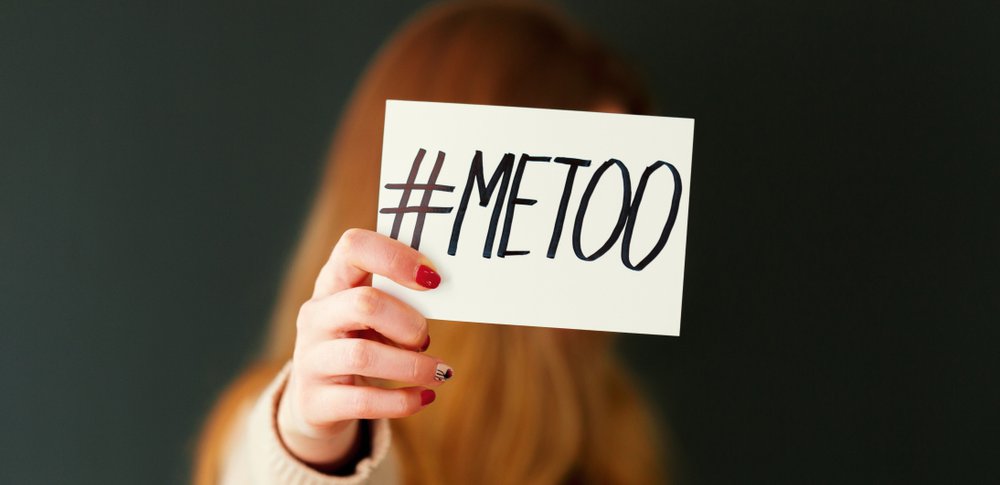
Long before the #MeToo movement exploded in 2017, before the #TimesUp Legal Defense Fund and the wave of international outrage against powerful men like Harvey Weinstein, Roger Ailes, and alleged perpetrators of their ilk, before Tarana Burke, Anita Hill, or the U.S. Navy and Marine Corp’s Tailhook scandal, there was Carmita Wood. In 1974, Wood, a mother of four, resigned from her steady job as an administrative assistant to a renowned nuclear physicist at Cornell University. His repeated unwanted sexual advances made her physically ill and her request to transfer positions was denied. Unable to find other work to support her family, Wood requested unemployment benefits, which the state Department of Labor denied, ruling—after cracking jokes about her experience—that she had resigned for “personal non-compelling reasons.” At the time, there were no words to describe what had happened to Wood. Although the Civil Rights Act of 1964 prohibited sex discrimination in the workplace, no one thought that could apply to a male boss who repeatedly groped, forcibly kissed, jiggled his crotch near, and routinely thrust his body against his unwilling female assistant, pinning her to her desk during the workday.
The following year, Wood, along with other activists at the university, created a group called Working Women United and held a Speak Out for what turned out to be a shockingly large number of women who shared similar experiences, making visible their pain, anger, shame, and unfair treatment. Together, they coined the term “sexual harassment” to describe what had happened to them—and, as a result, helped spark a movement of storytelling, social justice, and change. A decade later, the case of Mechelle Vinson, a bank teller repeatedly harassed and raped by her boss, ultimately resulted in the 1986 Supreme Court ruling that sexual harassment is a form of gender discrimination under the Civil Rights Act of 1964.
The harassment they encountered wasn’t a result of women being new to the workplace. Even in Wood’s time, women made up 39 percent of the total labor force in the United States. All these years later, even as women comprise nearly half the workforce, sexual harassment in the workplace remains a major, pervasive, and troublingly unresolved problem in virtually every sector of the economy, from male-dominated to female-dominated industries and workplaces, and from low-wage and precarious jobs to high-wage professions. The Pew Research Center, for instance, found that six in 10 women and nearly three in 10 men say they’ve experienced verbal or physical sexual harassment or unwanted sexual advances in and outside the workplace, with 69 percent of women who have experienced harassment saying at least one incident happened in their workplace.
Sexual harassment in the workplace remains a major, pervasive, and troublingly unresolved problem in virtually every sector of the economy.
The negative consequences of harassment can be long-lasting and severe. Those who experience sexual harassment in any work environment can suffer chronic health problems, post-traumatic stress, depression, substance abuse, employment difficulties, and relationship problems. And the cost to business can be high. Research has found that each incident of sexual harassment costs organizations about $22,500 a year in lost productivity, and U.S. companies have paid out more than $295 million in public penalties in recent years, which doesn’t include private settlements. In 2016 alone, U.S. companies paid $2.2 billion in insurance policies that include coverage for sexual harassment complaints.
Yet much of the sporadic attention paid to workplace sexual harassment by the media and general public over the years, and in the initial stages of the #MeToo movement, has centered on the stories of celebrities, politicians, high-profile artists and business leaders, egregious legal cases, and the media itself. Our aim with this analysis is to provide a clearer picture of the phenomenon of sexual harassment by broadly surveying the landscape of sectors in the economy and a variety of professions. We seek to better understand the roots of sexual harassment and the dynamics that drive it in various sectors, in order to design the best strategies to better prevent, respond to, and ultimately, end sexual harassment in all sectors.
Although much remains unknown about the prevalence of sexual harassment, because so few cases are actually reported or rise to the narrow legal standard to pursue a claim, the current responses clearly aren’t working. Typically, organizations handle sexual harassment by ignoring it, firing harassers, or providing sexual harassment training aimed at protecting organizations from legal liability, rather than changing cultures or eradicating sexual harassment. We reviewed the latest research and data on harassment and assault from across industries, sectors, and populations, marshalling the work of, among others, legal experts, social scientists, polling institutions, journalists, the public sector, the business community, and advocacy and research organizations. Through this expansive analysis, we lay out the key factors that drive sexual harassment in different sectors and different workplace settings, which we organized by looking at the intersection of gender ratio and wage earnings. Only with a clear understanding of how sexual harassment operates across different sectors, can we begin to identify and effectively implement the changes required in policy, practice, law, and culture to respond to, prevent and end sexual harassment.
Sexual harassment is both a legal concept and an experience, and as such, there are a number of ways to define it. Because the legal concept grew out of U.S. case law, sexual harassment, as defined by the Equal Employment Opportunity Commission (EEOC) and used to guide legal action, is described in two fairly narrow ways: Quid pro quo sexual harassment describes cases when someone with power and authority, typically a boss or supervisor, pressures a subordinate worker for sexual favors in exchange for a promotion, raise, or favorable work assignments, or to avoid being fired or demoted. The other legally recognized type of harassment is a pervasive hostile or offensive working environment, which could include everything from repeated lewd comments, to off-color or anti-women/minority group jokes and comments, to posting pornography or making unwanted sexual advances, and even to sexual assault.
The narrow legal definition, which forms the basis of most workplace sexual harassment prevention policies and training, doesn’t capture the full range of experiences of sexual harassment. Researchers often use a broader social-psychological definition for what they call sex-based harassment: “behavior that derogates, demeans, or humiliates an individual based on that individual’s sex.” The broader description defines sexual harassment as either sexual-advance harassment, which includes sexual coercion and unwanted sexual attention, or gender harassment, which may not be sexual at all, but rather encompasses verbal, physical, and symbolic behaviors intended to convey “insulting, hostile, and degrading attitudes about” one’s gender. Gender harassment may include “female or male-bashing jokes, comments that women do not belong in management or that men have no place in childcare, and crude, gender-related terms of address.” Sexual coercion parallels the legal quid pro quo definition, whereas unwanted sexual attention and gender harassment can create a hostile working environment.
The negative consequences of harassment can be long-lasting and severe.
In this report, we use the broader academic social-psychological definition of sexual harassment. We acknowledge that sexual harassment is a spectrum of discriminatory behaviors and unwanted experiences that range from lewd comments to gender harassment to unwanted sexual attention to sexual coercion to sexual assault and rape. These behaviors stem not just from sexual desire, but also from unequal power dynamics, racism, misogyny, and gendered cultural expectations. We also note how sexual harassment can take different forms and frequency based on these power dynamics for different intersecting identities—gender, race, ability, sexual orientation, or immigration status. For instance, the EEOC cites research that members of racial minority groups experience higher levels of harassment than whites, that women experience more harassment than men, and that women of color experience more harassment than white women.
Although we are concentrating on sexual harassment in the workplace, it’s important to recognize that sometimes the experience transcends work and home boundaries. As researchers Louise Fitzgerald and Lilia Cortina write:
“If a supervisor rapes a female waitress in a restaurant meat-locker during the night shift, is it sexual assault or sexual harassment? If he threatens her with a knife to force her cooperation does the incident become assault with a deadly weapon? If she happens to be his girlfriend (whom he regularly batters and stalks through the use of workplace technology,) is this harassment or intimate partner violence? The only possible answer to these questions is ‘Yes.’”
To explore the structural factors that drive sexual harassment, this analysis is broken into four chapters, each of which describe a specific employment sector—defined by the ratio of men to women and median wages earned—to map how those dynamics influence when and how sexual harassment is most likely to happen and why.
An analysis of the existing research on sexual harassment shows that power and gender are the two greatest factors in determining the frequency and type of harassment workers will experience. Because power is a difficult factor to measure, we use individual median wage as the closest available proxy for power. We then use individual median wage data to divide occupations into four groups for analysis. Below is our analysis of this data on the incidence and experiences of harassment by gender and wage, as well as additional factors, such as race and workplace structure.
The four sectors include:
- Female-dominated, low-wage work
- Male-dominated, low and middle-wage “blue collar” work
- Female-dominated, middle and higher-wage “pink collar” work
- Male-dominated, high-wage “white collar” work
Specifically, we examine how low and insecure wages, isolation, gender imbalances, cultural expectations, legal protections, and uneven power structures across sectors, in workplaces and in society, drive the occurrence and prevalence of sexual harassment.
The sectors are arranged, roughly, to correspond with what little we know about sexual harassment incidence rates. One analysis of EEOC data by the Center for American Progress found that workers in the low-wage, female-dominated sectors of food service and retail filed three times as many sexual harassment claims in the past decade. This could be due to the larger presence of women in low-wage work, where women make up nearly six in 10 low-wage workers. Still, the fact remains that these constitute the majority of industry-identified sexual harassment claims. Women who work in these settings often work for a subminimum wage and rely on tips, which requires them to “curry favor for a living,” and put up with or remain silent about any sexual harassment they may experience in order to make ends meet.
The narrow legal definition doesn’t capture the full range of experiences of sexual harassment.
Research also shows high incidence of sexual harassment in hierarchical, traditionally male-dominated fields that tend to pay coveted middle class wages—construction, manufacturing, law enforcement, and the military. In such instances, sexual harassment is often less about sexuality or the “come on,” research has found, and much more about using sex and gender as a “put down”—a way of signalling that women, LGBTQ persons, and men who don’t conform to traditional masculine stereotypes don’t belong, and to harass them out the door. In male-dominated, low-wage settings like agriculture and janitorial work, race, class, and immigration status, in addition to gender, can widen power differentials. This makes women and marginalized populations much more vulnerable, not only to sexual harassment, the data shows, but to sexual assault and violence.
Nearly 40 percent of employed women work in occupations that are majority women: education, health, nursing, care work, secretarial and administrative positions, housekeeping, customer service, and retail. Yet while “pink collar” jobs like nursing and teaching are often assumed to be oases from sexual harassment, the data shows that those in power (doctors, supervisors, principals) are often men. And harassment can also come not only from above, but from the side–from third parties such as customers, clients, vendors, and suppliers. It’s also important to point out that women can be perpetrators and men can be targets of sexual harassment. This may not be the norm but is increasingly important as women move into positions of power. It is also important that we make room for broader understandings of potential victims beyond just men and women, as traditional notions of binary genders make way for more fluid gender categories.
To delineate lower and higher-wage jobs, the analysis focuses on an industry’s or occupation’s average wages compared to the individual annual median wage for full time American workers of above or below $37,690, which is taken from the U.S. Bureau of Labor Statistics (BLS) Occupational Employment Statistics data from 2017. Note, this data excludes military, agricultural, and some care work. A sector’s description as male or female-dominated is determined by U.S. Census Bureau data on gender breakdowns by sector. We take into account the fact that the gender segregation of jobs within a sector can vary wildly, from, say, the heavily female, frontline, lower-wage bank teller jobs in the financial services sector to the heavily male, highly paid Wall Street jobs in investment banking.
Across America, men and women work in different occupations
In addition to this landscape analysis, we have produced a companion #NowWhat Sexual Harassment Solutions Toolkit. In past decades, most of the workplace response to sexual harassment has been to require prevention trainings, which have largely been aimed at reducing employer legal liability, are not well studied, and should not be seen as silver bullet. Having reviewed studies of sexual harassment trainings, the EEOC Select Task Force found that in order for this approach “to be effective in stopping harassment, such training cannot stand alone but rather must be part of a holistic effort undertaken by the employer to prevent harassment that includes the elements of leadership and accountability.” The toolkit includes not only updated guidance to make training more effective, but also highlights evidenced-based and promising real-world solutions to recommend constructive paths forward. This research report is designed to build on the powerful stories of Carmita Wood, Mechelle Vinson, and the #MeToo movement and their efforts to permanently break down the structures and move beyond the norms that have enabled harassment to persist in order to create civil and respectful work environments where all workers can thrive. We see this as a key condition in allowing all people to have agency and opportunity at work, and to live healthy, secure, and empowered lives.
The Scope of the Problem
Despite the fact that 98 percent of companies say they have sexual harassment policies and many provide sexual harassment training—largely digital and primarily to inoculate themselves from legal culpability—the problem of sexual harassment persists. A 2016 EEOC literature review found that 25 to 85 percent of women have experienced sexual harassment at work. The most recent Pew Research Center survey data reveals that women and Democrats are more likely to view this as a problem than men and Republicans. The survey also found that women working in environments dominated by men were more likely to say sexual harassment is a problem in their industry than women working in environments dominated by women—62 to 46 percent. One study found that a woman who works in a male-dominated setting is nearly two times as likely to experience gender harassment as a woman who works in a gender-balanced environment.
Yet the full extent of the problem is unclear; there is no gold standard data on the prevalence of sexual harassment. Aside from surveys, which rely on self-reporting, the best hard data we have is the number of sexual harassment complaints that are filed with the EEOC. Yet these statistics are likely the tip of the iceberg. That’s because many people who’ve been harassed remain silent and never file a complaint for a variety of reasons: fear of retaliation, minimizing or dismissing the behavior because it’s seen as common or acceptable, or wanting to forget the incident and move on. The EEOC reports that 87 to 94 percent of those who experience it don’t file a formal complaint. One 2003 study found that nearly three-fourths of those filing complaints were retaliated against. Others don’t speak out because the unwelcome behavior they’ve experienced may not technically meet the legal standard of sexual harassment, although the experience is no less corrosive. And, aside from the recent explosion of outrage and #MeToo storytelling, sexual harassment has long been dismissed in many quarters, from labor unions to the halls of political power, as a “women’s issue” of either little importance, or something that women have brought upon themselves, a view that decades of research refutes.
25 to 85 percent of women have experienced sexual harassment at work.
According to Center for American Progress researcher Jocelyn Frye’s analysis, which looked only at the kind of workplace sexual harassment that could result in litigation, nearly one-third of the more than 90,000 of all charges filed with the EEOC in fiscal year 2016 involved a claim of some form of harassment—almost half of which involved sex-based harassment. These data aren’t without their limitations: over half of EEOC claims don’t list industry, and the EEOC doesn’t track complaints by certain groups like contractors, farm workers, and domestic workers.
While working in certain industries leaves some employees more vulnerable than others, people with multiple intersecting historically marginalized identities, such as gender, race, ability, class, and sexual orientation, are further disadvantaged and often experience sexual harassment differently than white or heterosexual groups. The work of sociologist Adia Wingfield highlights how black men experience sexual harassment and racial discrimination in the medical profession, be it as doctors or nurses. Studies of military personnel have found that white women tend to experience more gender harassment, while black women face more unwanted sexual attention and coercion. A survey of LGBTQ people out of Harvard revealed over half experienced some form of gender-based discrimination, with LGBTQ people of color more than twice as likely to report discrimination while applying to jobs or interacting with police as white LGBTQ people. Low-income people lack the funding and access to resources to protect themselves before, during, and after sexual violence. Though difficult to definitively demonstrate just how these experiences differ, given the already limited amount of data on sexual harassment, it is reasonable to suspect that low-income, LGBTQ, disabled, and/or people of color’s experiences of harassment are even more difficult to navigate as they are forced to comply with multiple systems of power.
With this broader view of sexual harassment as just one problem in a larger context of inequality and violence vulnerable people face today, below we map the landscape of harassment as it occurs across very different workplaces.
Sexual Harassment: A Severe and Pervasive Problem
- Summary of Findings
- Introduction
- Making Ends Meet in the Margins: Female-Dominated, Low-Wage Sectors
- Breaking Into the Blue-Collar Boys’ Club: Male-Dominated, Low- and Middle-Wage Sectors
- Finding a Financial Foothold: “Pink Collar” Female-Dominated, Middle Wage Sectors
- Pleasing the Powerful and Prominent: Male-Dominated, High-Wage Sectors
- Conclusion