The Way Forward on Gender, Peace, and Security
In December 2017 and February 2018, participants representing several dozen U.S. government, international, and non-governmental agencies held two roundtable discussions. These conversations reviewed ten years of applying gender analysis and a women, peace, and security framework to the conflicts in Iraq and Afghanistan. The group drew dozens of lessons for policymakers seeking to build peace, counter violent extremism, and promote post-conflict reconstruction. With decades of experience in the military, humanitarian assistance, diplomacy, peace-building and advocacy fields—serving both Republican and Democratic presidents—participants offered a wide range of takeaways.
This playbook offers six immediate, practical lessons (outlined below) as the U.S. government implements new strategies for Iraq and Afghanistan and considers how best to implement the 2017 Women, Peace and Security Act. The United States Institute of Peace and New America will publish more detailed policy recommendations in the months ahead, and we also suggest further reading in the form of resources prepared by organizations and experts who participated in the conversations.
1) It’s Not Just About Numbers.
What gets measured gets done—but that doesn’t mean we can ignore what’s hard to measure, or how numbers can obscure nuance in a complex situation. There is a tendency to measure progress on gender equality and integration of women into governance by looking at representation—i.e., how many women are in parliament, in school, or in the workforce. When evaluating the progress of aid programs in particular, Congress receives information on the numbers of girls in school, and decreasing mortality rates, for instance.
While that approach has highlighted remarkable gains, it’s also simplistic. One participant told us that in Afghanistan, while it’s important to communicate these growths, “practitioners also need to identify the problems with these programs,” suggesting that there’s a more complex story behind those optimistic statistics. For instance, as more women have entered the public space in Afghanistan—whether in school, government, or the workplace—rates of violence against them also increased. This speaks to the importance of encouraging culture and behavior change—a much more challenging, but critical, mantle to take up.
Focusing only on numbers can also obscure impact. Participants noted that in Iraq, the government mandates a 25 percent quota for women, but that this doesn’t extend to their influence over policy. “Women don't have the power to change politics or shape institutions,” one participant told us. “The quota has put in 82 women but they still can’t exercise any power over the budget, for example. [It’s important to] increase their involvement, not just them being there.” Another participant added, we “can’t just encourage participation and leave it at that.”
As more women have entered the public space in Afghanistan— whether in school, government, or the workplace—rates of violence against them also increased.
2) The Role of Religion Has Been Under-Appreciated, and Future Efforts Can Do Better. Here’s How.
Across the Iraq and Afghanistan experiences, practitioners reported that Westerners often went into the field with oversimplified ideas about the role of religion. Either it wasn’t considered at all, or it was specifically assumed to be a stumbling block to women’s empowerment. Reality, however, was different. Both indigenous and outside promoters of women’s empowerment needed to be able to engage with local religious leaders, to gain their support where possible and push back on them where necessary. Animosity between religious and secular women was often a significant barrier to social solidarity and program implementation, especially in Iraq.In addition, the field of religious leadership and scholarship is often overlooked as a site of female empowerment. Participants cited both religious education for women and enabling women to empower themselves within religious communities as important elements. In Iraq, experts reported a lack of female religious leaders. In Afghanistan, few religious women scholars exist, and women expressed interest in building their numbers. Afghan women also noted that in some parts of Afghanistan, informal legal and religious networks—whose male heads may not have much actual formal religious education—hold great sway. Thus, giving women the opportunity to gain religious knowledge and formal credentials could have significant impact.
3) Don’t Silo Economic Empowerment and Peace.
No matter the audience, participants agreed that U.S. officials need to reference women and girls’ empowerment as crucial for economic growth and for security. Income streams, even small ones, for women matter for political and security empowerment, as well as health and well-being outcomes. Providing income can play a critical role in giving women a seat at the table, starting within their own family, and ultimately expanding into the community and government, as well. Economic programs had greater impact, participants recalled, when families realized that they stood to gain if women participated, and lose if they did not. This argument was particularly impactful for the older mothers- and fathers-in-law who exercised great influence in traditional families. In Iraq, advocates found economic development programming for women an effective way to bring women together across religious divides.
Participants noted that in Afghanistan, periods of significant progress also featured significant private-sector engagement. Looking at economic empowerment and security participation together helped leverage the private-sector funding—both in-country and from international corporations—that made government dollars go further, and provided more immediate payoffs.
Income streams, even small ones, for women matter for political and security empowerment, as well as health and well-being outcomes.
4) Don’t Neglect Women’s Role in Armed Struggle, and Women’s Post-Combat Roles and Needs.
Participants stressed that Iraq in particular was in danger of repeating peacebuilding errors made in Colombia, Lebanon, and West Africa by not adequately taking women into consideration. In these cases, post-conflict demobilization and re-integration programs often made little or no provision for the needs of women who had participated in armed struggle, either as combatants or providing close-in support to fighters. These programs also did not include women in post-fighting convenings and cross-community conversations.
Perhaps surprisingly, this is even true for the female Yazidi fighters who have garnered a significant amount of attention in Western media. But also in the south of Iraq, we see women who, as mothers and family members, supported mobilized forces or helped with recruiting. While researchers have documented the growing range of roles women held in the Islamic State, there appears to be little thought given to the needs of women in formerly ISIS-held areas, or those of foreign women returning to their countries.
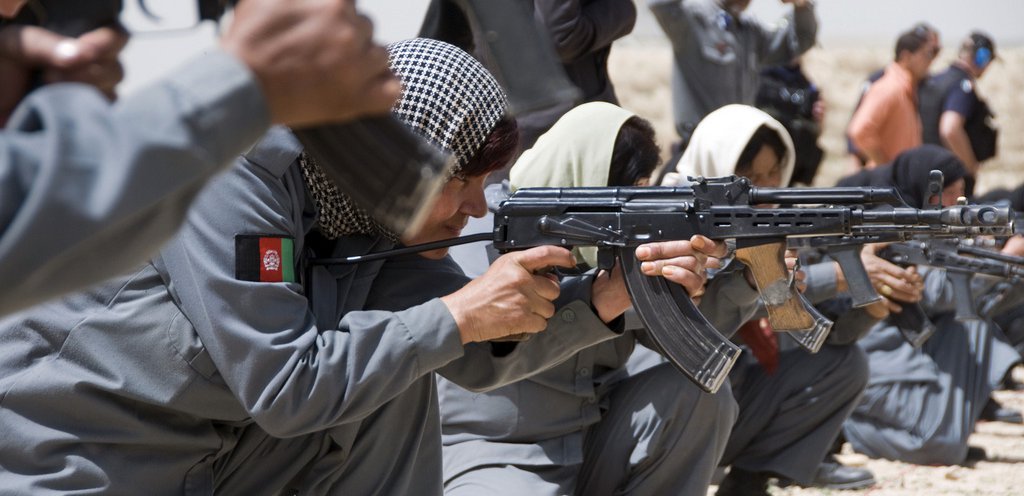
In Afghanistan, the challenges involve the dynamics of integrating women into security forces and security policymaking. Participants noted both the significant challenges on the Afghan side and Washington’s difficulties training and preparing diplomats and military personnel to support such inclusion. As U.S. representation in conflict areas becomes more military-led, participants stressed that it is vital to find ways of incorporating preparation and training regarding the practical logistics of including women in security forces.
5) “Gender” Is Much More than Women
Societies have dramatically different constructs of what gender is. This translates into different interpretations of appropriate audiences for so-called gender-based programming, meaning some groups, particularly men, are often excluded, on the assumption that gender is a “women’s issue.” What came loud and clear out of experience in Iraq and Afghanistan is that successful gender-based programming must also make space for discussions of healthy masculinity, and the inclusion of male voices. Some participants thought more programming needed to acknowledge the challenges of gender as they play out for everyone within a family unit. The experience of exposure to violence at a young age, for example, has profound impacts for both women and men, and for the peacefulness of society as a whole. But while women and girls receive little support for their post-trauma needs, boys and men (who also suffer trauma) receive even less. This problem applies to non-trauma based programming, as well. Participants noted that, when jobs and decision-making power are scarce, care needs to be taken to include men, and to create environments that are not zero-sum and preclude backlash.In Afghanistan, officials found it effective to engage men on their own roles as peacebuilders, even starting at the level of the family—what a current USIP staffer called “men, peace and security” programming.
Successful gender-based programming must also make space for discussions of healthy masculinity, and the inclusion of male voices.
6) Prioritize Scaling and Sustainability
These two challenges—how to grow small successes into bigger ones, and how to create change that continues as donor funds and participation dwindle—bedevil much work in post-conflict development and security. The overall lesson is not unique to these countries or the gender lens: Do work from longer time horizons. One NGO veteran said of his organization’s time in Afghanistan: “We haven’t been there for 16 years. We’ve been there for 16 one-year engagements.”
The experiences of a decade promoting a gender lens in peacebuilding, however, called forth some unusual or unexpected approaches to this fundamental challenge.
Local women urged that sustainability, what happens after the donors leave, be built into programming from the inception, rather than only considered as programs wind down. Participants agreed that one key way of doing that was to create a culture of knowledge-sharing within the local community. Sustainability happens when local women train each other and exchange knowledge, and when they perceive that their priorities, and not those of the donors, drive the cooperation agenda. However, achieving that kind of infrastructure takes support and planning. One participant commented that early on, planners had the idea that top-down investments in women would trickle down and create sustainability on their own—but that’s not what happened. Often, programs targeted the same groups of women repeatedly, rather than scaling out or investing in network-building.
Many programming veterans, both international experts and women from the affected countries, expressed the desire for alumni networks that could sustain the impacts of programs and build further connections even after funding has ended and foreigners have gone home.
We heard repeatedly from participants that too often, training programs for women did not morph into actual jobs or professional or political opportunities, and that developing and promoting opportunities for women to use newly acquired skills is a key part of sustainability. In Iraq, a focus on the portability of skill sets and modes of cooperation meant that, even if participants were displaced, they could continue to use what they had learned and access resources and partnership online. A program for widows who had fled ISIS put key documents in the cloud, for example, allowing the women to access them from camps hundreds of miles from where trainings had taken place. This is just one way that programs can plan for sustainability and continued instability, while making sure resources, power, and agency stay with participants for the future.
Developing and promoting opportunities for women to use newly acquired skills is a key part of sustainability.
For Deeper Learning
A number of organizations that participated in the lessons-learned roundtables have extensive programming and recommendations on the topics summarized here.
- The Council on Foreign Relations’ Women and Foreign Policy Program put forward thoughtful recommendations on how numerical targets and empowerment go together: targeting 30 percent female delegations in security and peace talks for conflict countries and the U.S. alike, routinely consulting women’s and civil society groups, and providing technical support for women’s integration into host country security institutions.
- The NGO Promundo, through its program Living Peace, supports healthy coping strategies for men post-conflict, based on research that suggests men observing or participating in violence during conflict led to them being more violent in their families. In addition, the organization organized trainings in Afghanistan through their Program H, which focuses on topics like sexual and reproductive health and rights, caregiving, fatherhood, and violence prevention. Promundo has also conducted research on masculinity in Afghanistan through its International Men and Gender Equality Survey project (IMAGES).
- The Afghanistan Research and Evaluation Unit (AREU), a top think tank in Afghanistan, published a report titled The Other Side of Gender Inequality: Men and Masculinities in Afghanistan. Their research examined qualitative and quantitative data surrounding perceptions of masculinities, equality and power dynamics, and masculinity and violence against women.
- Nonprofit Futures Without Violence published a policymaker blueprint in May 2017 on violent extremism and gender-based violence, arguing for the connection between the security of women and security of states. With pieces from researchers including Valerie Hudson, Hilary Matfess, and Audrey Alexander, the report examines a range of topics and makes key recommendations on prevention, recovery, accountability, and governmental roles.
- The United States Institute of Peace (USIP) has published several reports on these topics. From December 2012, the report Peacebuilding Efforts of Women from Afghanistan and Iraq: Lessons in Transition collected takeaways from practitioners to summarize challenges, priorities, and best practices for donors, organizers, and policymakers working with women in transitioning states. In March 2012, the report Lessons from Women’s Programs in Afghanistan and Iraq put together a similar collection of best practices focused on the state of women’s rights, how women’s empowerment can contribute to stability, and the state of funding for such programming. A November 2016 report, Afghan Women and Violent Extremism: Colluding, Perpetrating, or Preventing?, analyzes on-the-ground interviews to discuss the wide range of roles that women play—as recruiters, victims, peacebuilders, perpetrators, sympathizers, and more—within violent extremism. By outlining this variety, the report aims to inform better policy.
Acknowledgments
We’d like to thank our partners in organizing this project at the United States Institute of Peace, Kathleen Kuehnast, Ambassador (Ret.) Steve Steiner, and Danielle Robertson, and all who contributed their time and expertise at these roundtable events and to this report. This project is supported by funding from the Compton Foundation.
Downloads
More About the Authors

Heather Hurlburt
Director, New Models of Policy Change

Elena Souris

Elizabeth Weingarten
Senior Fellow, Better Life Lab