A Chapter of: The Digital Deciders
Introduction
Which futures [for the internet] seem to be more likely today? … [C]ountless experts made gloomy projections for the next five years. Cyber risks will continue to rise significantly in the near future. Technological and process innovation might help some organizations, but overall there is little on the immediate horizon that suggests that cyberattacks will become less common. With the massive profusion of recent tension between major military powers, the trend is perhaps more towards a Clockwork Orange or Leviathan Internet.1
– Jason Healey and Barry Hughes
In 2015, Jason Healey and Barry Hughes created a model to project the impact that different versions of a future internet would have, principally focused on the economy. In their paper analyzing the model, Healey and Hughes describe a number of alternate futures. Among them were the Base Case—which continued general trends of the time resulting in an internet that is mostly global and open—and the Clockwork Orange and Leviathan internets—whose main features were fragmentation and national borders.2
Today, this global and open model is under pressure, and we risk drifting towards an internet that we do not want—a Clockwork Orange or Leviathan. Amidst a massive global dialogue about cyber norms—who should not attack what and how—we are losing sight of the forest in favor of individual trees. Though important, the grand prize here is not an agreement about not attacking hospitals or financial institutions. Rather, the prize is the norm that the internet should be a place that is global and open to the free flow of content, not narrowly sovereign and closed.
The ultimate trajectory of this process will depend just as much, if not more, on domestic developments around the world as sweeping debates at international forums. Put simply, what countries do nationally will have an international impact, while we often focus on the international governance, the internet as it affects people is the internet in countries. In parallel to domestic developments, countries will continue to do what they have done for decades and seek legitimacy and cover via international agreement and norms.
The prize is the norm that the internet should be a place that is global and open to the free flow of content, not narrowly sovereign and closed.
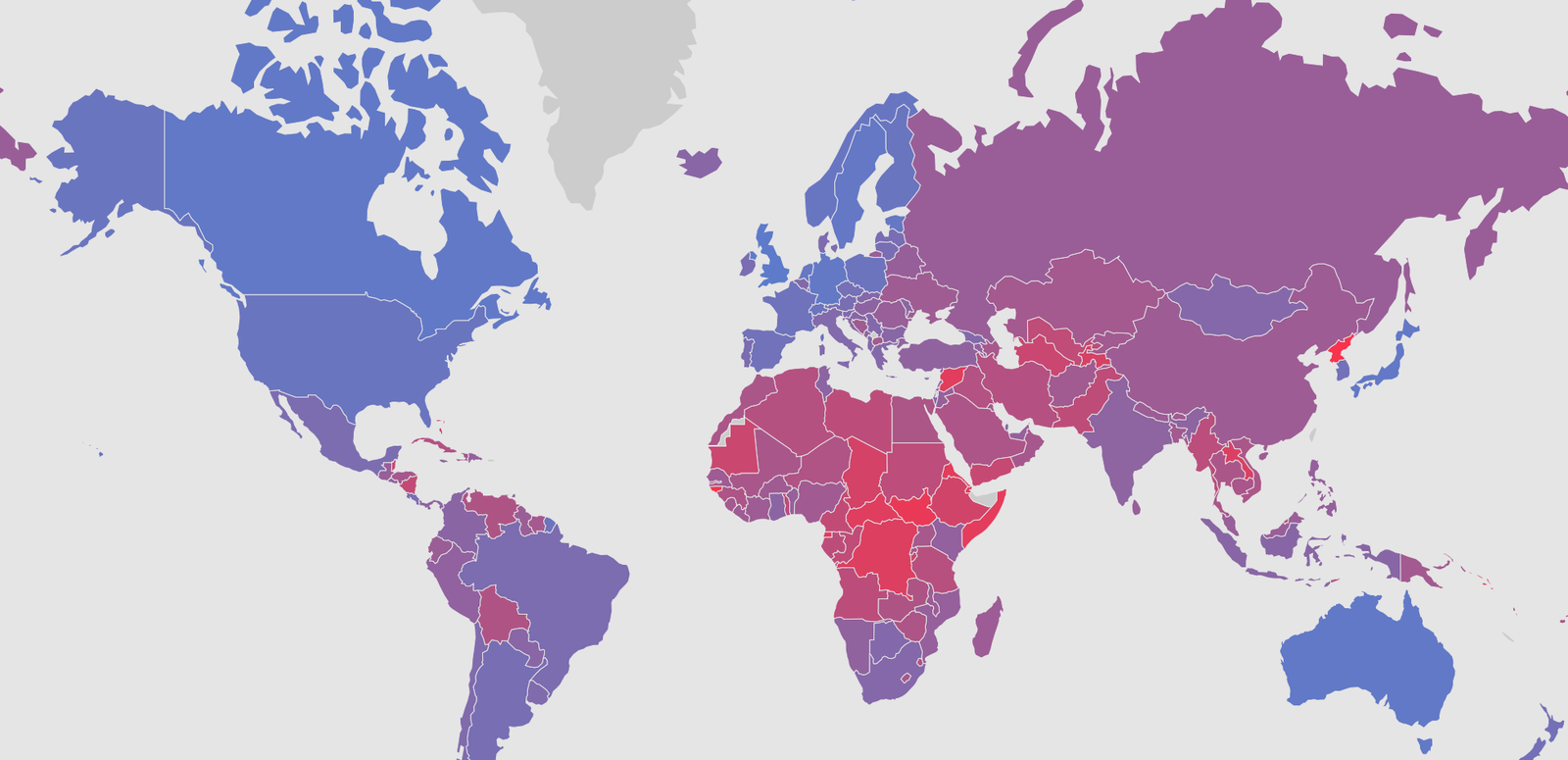
In the debate over internet governance, three clusters of states have emerged. On one end of the spectrum sit a number of countries—spearheaded by the likes of Russia and China—that advocate for greater sovereign control over as series of interconnected but nationally distinct internets. On the other end of the spectrum sits a cluster of states that advocate for an open, global internet. Traditionally, both sides have argued for a global norm that fits their own national interest and that which they view to be in the interest of the rest of the world. The third cluster of states is what we refer to as the Digital Deciders—a group of states undecided or unconcerned about the best trajectory for the internet.
If we want to build our version of the internet—one where the internet is free, open, and global and sovereign internets are an anomaly—we will need to do a better job of building our coalition more broadly. The fear that a country will not be able to manage the looming LikeWars3 is one of the factors most likely to push individual states away from an open and global internet. As we alluded to in The Idealized Internet vs. Internet Realities, one of the biggest challenges for proponents of a global and open internet will be developing a model to manage security—both likewars and cybersecurity—while maintaining openness.4
This paper and the accompanying data tools are a means for diplomats to analyze these Digital Deciders in the pursuit of a better international strategy for cyberspace. The different rankings and data sets in this paper can shed light on things like who to prioritize for engagement and how to engage different countries. At the end of the day, the purest and openest model may not be the one to offer for emulation. As Healey and Hughes note:
Deciding how to steer between alternate futures to guide policy often results in a very basic problem of political philosophy worthy of Hobbes, Locke, and Rousseau: Is it better to avoid the worst cyber futures or to aim for the best? Of course, we want the best cyberspace for ourselves and our children, but when humanity has aimed for heaven, then missed, we have often wound up in hell.5
Being able to clamp down on hate speech, for example, may be in the best interest of a country and its people. It may be necessary, even desirable, to compromise some absolute freedoms in order to maintain security.
This paper proceeds as follows. In the next section, we provide a background and context for this broad debate. In the third section, we describe the three clusters of states that have emerged. In the following section, we provide a data tool to explore those clusters and the states in them in greater detail. We finish by providing our own light analysis of the data and what it means for policymakers.
Citations
- Jason Healey and Barry Hughes, Risk Nexus: Overcome by cyber risks? Economic benefits and costs of alternate cyber futures (Washington, DC: Atlantic Council, 2015), 24, http://publications.atlanticcouncil.org/cyberrisks/risk-nexus-september-2015-overcome-by-cyber-risks.pdf.
- Jason Healey and Barry Hughes, Risk Nexus: Overcome by cyber risks? Economic benefits and costs of alternate cyber futures (Washington, DC: Atlantic Council, 2015), 12-20, http://publications.atlanticcouncil.org/cyberrisks/risk-nexus-september-2015-overcome-by-cyber-risks.pdf.
- Peter Singer and Emerson Brooking, LikeWar: The Weaponization of Social Media (Boston, MA: Houghton Mifflin Harcourt, 2018).
- Robert Morgus and Justin Sherman, “Analysis: Tensions,” The Idealized Internet vs. Internet Realities (Version 1.0) (Washington, DC: New America, 2018), https://www.newamerica.org/cybersecurity-initiative/reports/idealized-internet-vs-internet-realities/analysis-tensions/.
- Jason Healey and Barry Hughes, Risk Nexus: Overcome by cyber risks? Economic benefits and costs of alternate cyber futures (Washington, DC: Atlantic Council, 2015), 24, http://publications.atlanticcouncil.org/cyberrisks/risk-nexus-september-2015-overcome-by-cyber-risks.pdf.