A Chapter of: Lessons from the Bayou State
Reform #2: Raising Requirements for Early Childhood Educators
Starting in July 2019, all lead teachers in Louisiana early learning centers will be required to have formal education and training. LDE will require at least an Ancillary Certificate, or “enhanced CDA,” which is unique to Louisiana and must be completed through a Louisiana Board of Elementary and Secondary Education (BESE)-approved preparation program. The CDA requires 120 hours of professional education and 480 hours of field experience working with young children. And just like a CDA, the coursework covered in Ancillary Certificate programs must include things like supporting children’s social-emotional development and building relationships with families. LDE explains that the Ancillary Certificate “consists of sequential coursework that is connected to practice in an ECE classroom” and is aligned with the CLASS tool.40
The Council for Professional Recognition, which administers the CDA, has branded it the “best first step” for early childhood educators. Nine states currently require child care teachers to have a CDA, and 39 states require less than that.41
What makes the Ancillary Certificate “enhanced” is that it has a mentoring and coaching component to help cultivate changes in teacher practice. CLASS is also incorporated throughout the program’s coursework and practicum to ensure teachers are familiar with the tool. According to LDE’s website, Ancillary Certificate candidates must undergo CLASS observations by program instructors or coaches, which are used solely to inform coaching and instruction.42
Louisiana’s requirement for an Ancillary Certificate might sound minimal to the leaders in the field who are calling for all teachers to have a bachelor’s degree with specialization in ECE, as recommended by the National Academies of Science, Engineering, and Medicine. But Louisiana policymakers say they are being realistic about the starting point for their workforce, the limits of existing resources, and the fiscally conservative political climate. As Falicia Coleman said, “we have to meet individuals where they are. The reason we [Children First] have the slogan ‘We have your back’ is because sometimes these candidates cannot read well. Or read very little. We’re not going to laugh at that. We want to get them to the next level.”
State officials hope that requiring all teachers to have this knowledge foundation will improve the quality of care and education, which will set children up to be ready for kindergarten. Jenna Conway feels there is now “incredibly tight alignment between what we think is most important for kids and what we think teachers need for that.” While the Ancillary Certificate requirement goes into effect next summer, stakeholders have had five years to get on board.
Since the policy was enacted, BESE has approved 21 programs to offer the certificate. Using federal CCDBG dollars, the state created a competitive grant program called Believe and Prepare Early Childhood that gave programs start-up funding of up to $50,000.43 Just like K–12 teacher preparation programs, all Ancillary Certificate providers go to the state board for approval. The Believe and Prepare grants brought new providers to the table and also encouraged existing CDA programs across the state to meet requirements that go above and beyond their traditional programming. Believe and Prepare grants also included extensive coaching and support for programs while they were developing their new coursework. Community colleges, nonprofits, child care resource and referral agencies, and four-year institutions of higher education are now approved to prepare child care teachers. LDE is currently working with an online vendor to improve access statewide, especially for those in rural areas. Since 2014, the state has invested over $3 million in scholarships for preparation programs, Believe and Prepare start-up grants, and CDA assessment fees.
Community colleges, nonprofits, child care resource and referral agencies, and four-year institutions of higher education are now approved to prepare child care teachers.
Not only has Louisiana worked to make sure teachers have physical access to the Ancillary Certificate programs, but it has also prioritized financial accessibility, committing $5 million to scholarships so teachers can attend approved programs at no cost. When reflecting on the recent policy changes, one Lake Charles teacher who recently earned her Ancillary Certificate shared, “I thought it was good because we were able to get scholarships. Otherwise we wouldn’t have been able to go. I wouldn’t have been able to afford it.”
Overcoming Hurdles to Higher Qualifications
Even with free tuition and local or online programs, there is still the challenge of finding time for further education while working full time. A teacher who also recently completed her Ancillary Certificate said, “I didn’t think I was going be able to do it. I have so much going on with my kids. We are each trying to do school stuff. I was getting married. I had to fit all that in my schedule. Plus, I had to go back to get my high school diploma. I took some Saturdays and did it. Since I was also taking the college classes, it was a lot.”
State leaders knew that these policy changes could worsen turnover, which is at a rate of approximately 30 percent among child care centers nationally.44 While there are those who leave child care because they do not want to fulfill the higher qualification requirements, it is also a common problem in ECE for teachers to leave their current jobs once they earn more credentials that would allow them to pursue higher pay. Melanie Bronfin explained that LDE “thought CDA was the sweet spot to encourage people to have more education, but hopefully without having people leave for Head Start or the K–12 system.”
It is a common problem in ECE for teachers to leave their current jobs once they earn more credentials that would allow them to pursue higher pay.
Some teachers who have completed their Ancillary Certificate can already see how it is professionalizing the field. One teacher enrolled in Children First said she thinks the requirement “shows that we can do stuff. Some people think it’s only daycare, but we do teach. We are just like teachers. [This requirement] makes us look better.” Directors in Lake Charles had positive feedback too. One Children First director observed, “I’ve noticed changes in the directors, teachers, and kids. There is more unity among directors than ever before….I have quite a few teachers wanting to further their education….They’ll be in our office until 8:30 at night. I’m all about scripture, and it’s in unity where the blessings are. And all of this trickles down to our kids, the negative and the positive. And props to the directors too, because one of the biggest things is completion. The directors communicate with them and make sure they do their work.”
Since public pre-K teachers in Louisiana need to have a bachelor’s degree, the Ancillary Certificate programs are geared instead towards teachers in early learning centers outside of the public pre-K system. Teachers in those centers who already hold a CDA do not need to earn an Ancillary Certificate, but going forward, they will have to attend a state-approved program. Starting in 2019, teachers coming into the field will have two years from their date of hire to get an Ancillary Certificate. As of August 2018, 4,500 individuals had earned one.45
Naturally, not everyone is on board with the new reforms. One man who has owned an early learning center in Lake Charles for more than a decade said, “one thing you have to understand is that hires were usually people from the community. When you start implementing mandatory degrees, you start to alienate a lot of people. We’ve had three to four centers in the area decide that they would go completely private as a result.”
Conway explained to New America that “Louisiana is trying to transform an industry and has tried to be extremely thoughtful of the bottom line impact and how the state can support them [ECE programs] to be more effective.” When asked about pushback, she admitted that “there has been a lot of change and there are very real tensions around equity,” but said the state has “piloted all of its big moves to learn from the field and has tried to course correct when things didn't go as planned.” She said that the state is working on a system of accountability to measure the effectiveness of teacher preparation programs using a combination of data review and onsite review.
"Some people think it’s only daycare, but we do teach. We are just like teachers. [This requirement] makes us look better."
While the Ancillary Certificate is the current requirement for lead teachers, the state does not want it to be a dead end. About half of the Ancillary Certificate programs that are run by an institute of higher education or partnering with one ensure graduates leave with nine college credits. Louisiana has created a career pathway to enable Ancillary Certificate holders to pursue further education. Starting in 2015, LDE and the Board of Regents brought together a workgroup of over 50 professionals to identify “stackable courses for birth-to-kindergarten pathways that would lead to a certificate (such as a CDA), then associate degree, and then baccalaureate degree.”46 The state is still in the process of designing syllabi and developing courses for the Birth to Kindergarten field of study and will start by piloting them at selected higher education institutions.47 The next step is to ensure that this pathway is truly accessible to teachers.
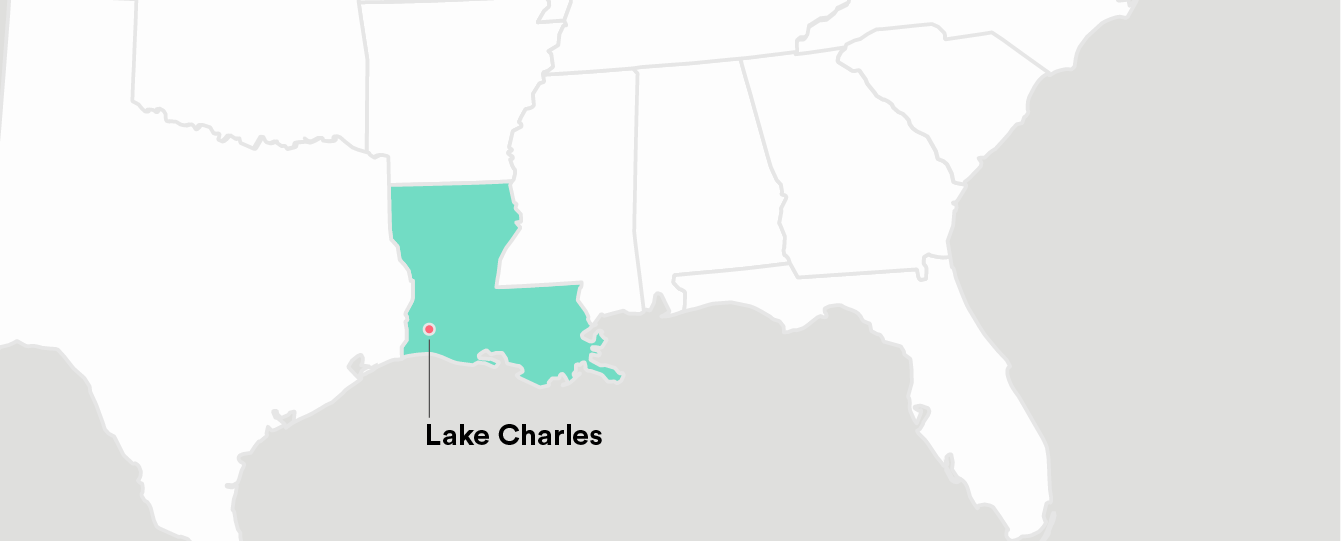
Lake Charles Case Study: A Local Take on the State's Credentialing Policy
Getting the Ancillary Certificate students to the graduation ceremony in Lake Charles took multiple years of concerted effort.
Falicia Coleman has been directing her early learning center, All About Kids Preschool, for 18 years. About five years ago she saw the need for her teachers to improve their practice and thought the Child Development Associate (CDA) credential was a good starting point. She worked with other local center directors to start the professional learning center, Children First, and offer the CDA. “Our teachers had nowhere else to get the CDA if we didn’t provide it,” she recalls. “They would have to drive over an hour to get any type of program.” She said, “I told my teachers, we’re giving up our breaks, we are gonna get this CDA….Then I called different child cares and asked if they wanted their girls [teachers] to get their CDA too. We created a network with all the directors because we really needed to get our teachers credentials.”
As LDE has worked to change the field that Coleman has long known and loved, she has largely been on board. When the state decided that all child care teachers would need the Ancillary Certificate from an approved program, Coleman knew she was at risk of having to close Children First if it did not adapt. She had to complete the rigorous application process multiple times before Children First was approved to provide the Ancillary Certificate.48 Despite the adjustment, Coleman says of the state’s move to house all early care and education under LDE: “when the school system took over child care, that helped.”
Children First is the only Ancillary Certificate program run by center directors. They have a partnership with the Lastinger Center at the University of Florida. Students take courses online and then engage with peers face-to-face each week. Unfortunately, the courses are not yet eligible for college credit. University of Florida’s Lara Glaser said, “this is a population with generally low confidence in their abilities and Coleman's team has made a huge difference in the success of this program.”
Numerous people credit Children First’s success to Coleman and her team. One Lake Charles director said, “you can tell the teachers to get their CDA and they don’t care…but they meet Falicia and the coaches and then they feel differently.” She is widely admired for being a great motivator and her dedication to this issue is clear to state officials, directors, and teachers alike. As another center director explained, “a lot of people who go to work in child care centers, their heart is there, but they don’t have the confidence to further their education…they are great nurturers but need to be great educators also.” Coleman’s enthusiasm and support helps them get there.
Coleman sends out regular emails to local and state leaders with pictures of what Children First students are accomplishing on a regular basis. She cares deeply about helping the ECE workforce in Lake Charles and has her whole family involved in the process—her husband regularly delivers home-cooked meals for the students during late night classes, and she encourages them to take leftovers home to their own families. Coleman has a master’s degree and leads her own center, but she understands some of the barriers that her students face to access higher education: “my mom never had a high school diploma. My dad didn’t either. I tell the girls, you need to help your sisters. My background is casino manager. These ladies are uneducated; they might not have cars.”
Children First found technology to be a significant hurdle for some students—whether it was slow wifi or only having phones or tablets to complete their coursework. So directors encourage their teachers to use the center computers during breaks, after hours, or even on weekends. Teachers say they feel that the center directors are invested in their success and some said that they had received texts of encouragement or reminders if they were behind in their assignments. One teacher said, “I used to look forward to Tuesdays [when we met in person], so we could get together to discuss our lesson.”
Even with this support, teachers in Lake Charles said some of their colleagues decided it was easier to just leave ECE than to go back to school since they can earn comparable wages at a job with no higher education requirements. The 2017–18 cohort of Ancillary Certificate students started the year with 55 people and graduated 34. Some teachers felt the requirement effectively encouraged those who were not passionate about working with children to leave the field.

Lessons from the Bayou State
- Introduction
- Obstacles to Developing a Strong Workforce
- Early Care and Education in the Bayou State
- Reform #1: Measuring Quality Through Teacher-Child Interactions Alone
- Reform #2: Raising Requirements for Early Childhood Educators
- Reform #3: Supplementing Wages with Tax Credits
- Connecting ECE to Kindergarten and the Early Grades
- Concluding Thoughts, Lessons, and Policy Considerations
- Appendix: Interviews Conducted
Citations
- Louisiana Department of Education in correspondence with the author, October 19, 2018.
- Early Childhood Workforce Index 2018: 4: Early Childhood Workforce Policies (Berkeley, CA: Center for the Study of Child Care Employment, 2018), http://cscce.berkeley.edu/files/2018/06/4-ECE-Policies.pdf
- Louisiana Department of Education (website), “Early Childhood Ancillary Certificate Program Applicants: Frequently Asked Questions for Applying Programs,” updated June 2018, https://www.louisianabelieves.com/docs/default-source/early-childhood/early-childhood-ancillary-certificate-program--applicant-faqs.pdf?sfvrsn=12
- Julia H. Kaufman, Jill S. Cannon, Shelly Culbertson, Margaret Hannan, Laura S. Hamilton, and Sophie Meyers, Raising the Bar: Louisiana’s Strategies for Improving Student Outcomes (Santa Monica, CA: RAND Corporation, 2018), https://www.rand.org/pubs/research_reports/RR2303.html; Louisiana Department of Education correspondence with the author, October 24, 2018.
- Marcy Whitebook and Laura Sakai, Turnover Begets Turnover: An Examination of Job and Occupational Instability Among Child Care Center Staff (Berkeley, CA: Center for Study of Child Care Employment, 2003), http://cscce.berkeley.edu/files/2003/turnoverchildcare.pdf
- Louisiana Department of Education, “The Early Childhood Care and Education Commission: Ensuring Access to Quality for Louisiana’s Youngest,” (PowerPoint presentation, August 1, 2018), https://www.louisianabelieves.com/docs/default-source/early-childhood/ecce-commission---presentation-slides---8-1-18.pdf?sfvrsn=4
- Louisiana Policy Institute for Children (website), “The New World of Early Learning in Louisiana: Career Pathways for Teachers,” http://www.policyinstitutela.org/career-pathways
- Louisiana Board of Regents (website), “Birth to Kindergarten Pathway,” https://regents.la.gov/divisions/planning-research-and-academic-affairs/academic-affairs/teacher-education-initiatives/birth-to-kindergarten-pathway/
- Louisiana Department of Education, “Updates on Early Childhood Teacher Preparation: Preparing for 2018 Program Approval Requirements” (PowerPoint presentation, Baton Rouge, LA, July 2017), https://www.louisianabelieves.com/docs/default-source/early-childhood/updates-for-cda-and-technical-diploma-programs-considering-bese-approval---july-2017.pdf?sfvrsn=4