A Chapter of: Mapping the Opioid Epidemic
Case Study: Northern Kentucky
“The greatest impact of our work comes from showing the public that the problem is in their own backyard, and how they may be indirectly impacted without even knowing it through the allocation of tax dollars to fight the opioid epidemic.”
Ned Kalapasev, GIS Administrator, Northern Kentucky Health Department
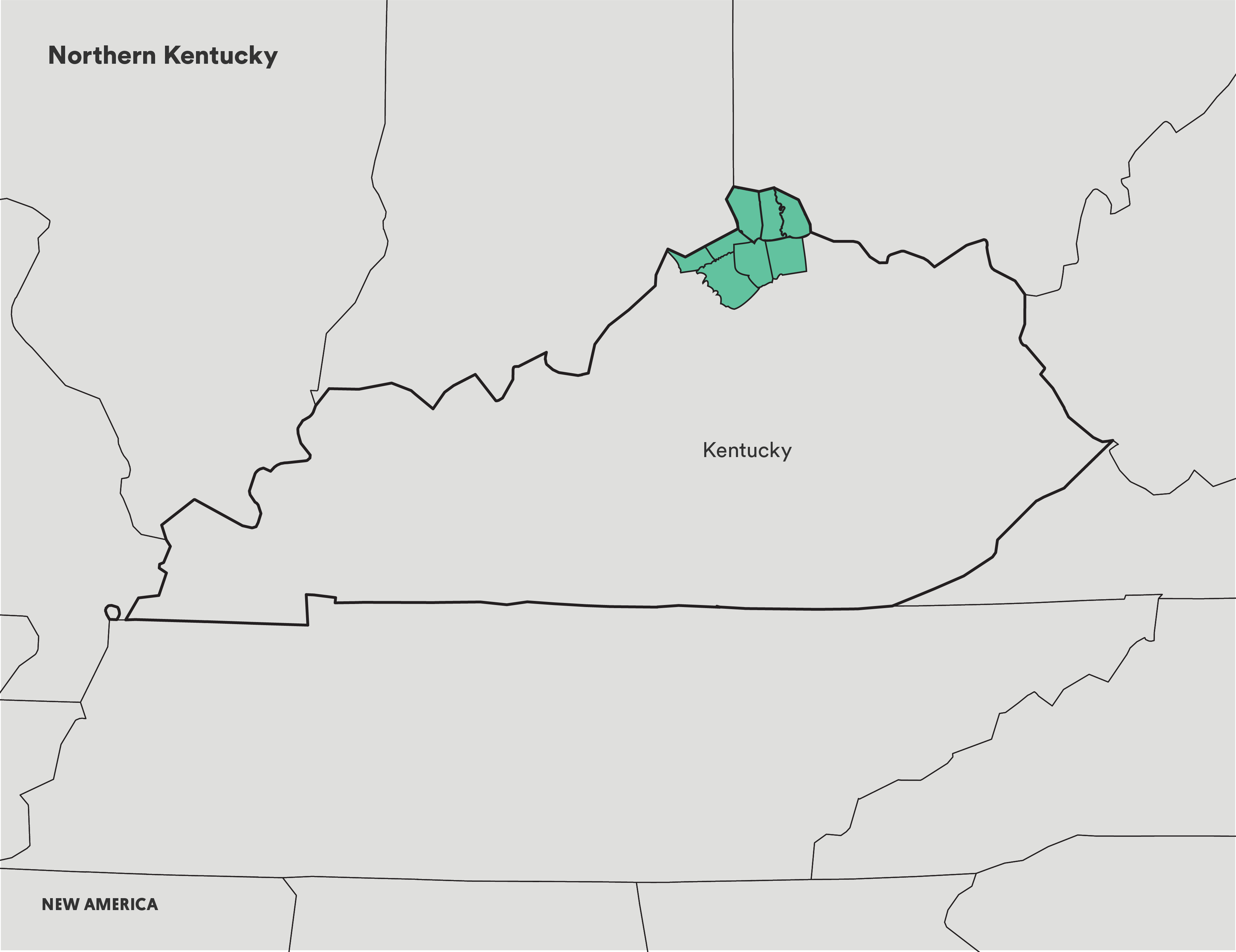
In 2016, Kentucky was in the top 10 on the list of states with the highest rates of opioid overdose deaths. The Northern Kentucky Health Department and the county’s GIS team partnered to create a database for the Heroin Impact Response Team. In doing so, they created the most comprehensive local-level compilation of opioid-related data in the country. Recorded in the database are datasets on overdose deaths, hospitalizations, heroine arrests, naloxone access locations, treatment centers, and prescription drop-off boxes.
This effort isn’t just about one county, it represents the coordinated work of eight different counties and their corresponding governments. Residents in every one of these counties have up-to-date information on the state of the opioid epidemic and the community measures being taken to combat it.
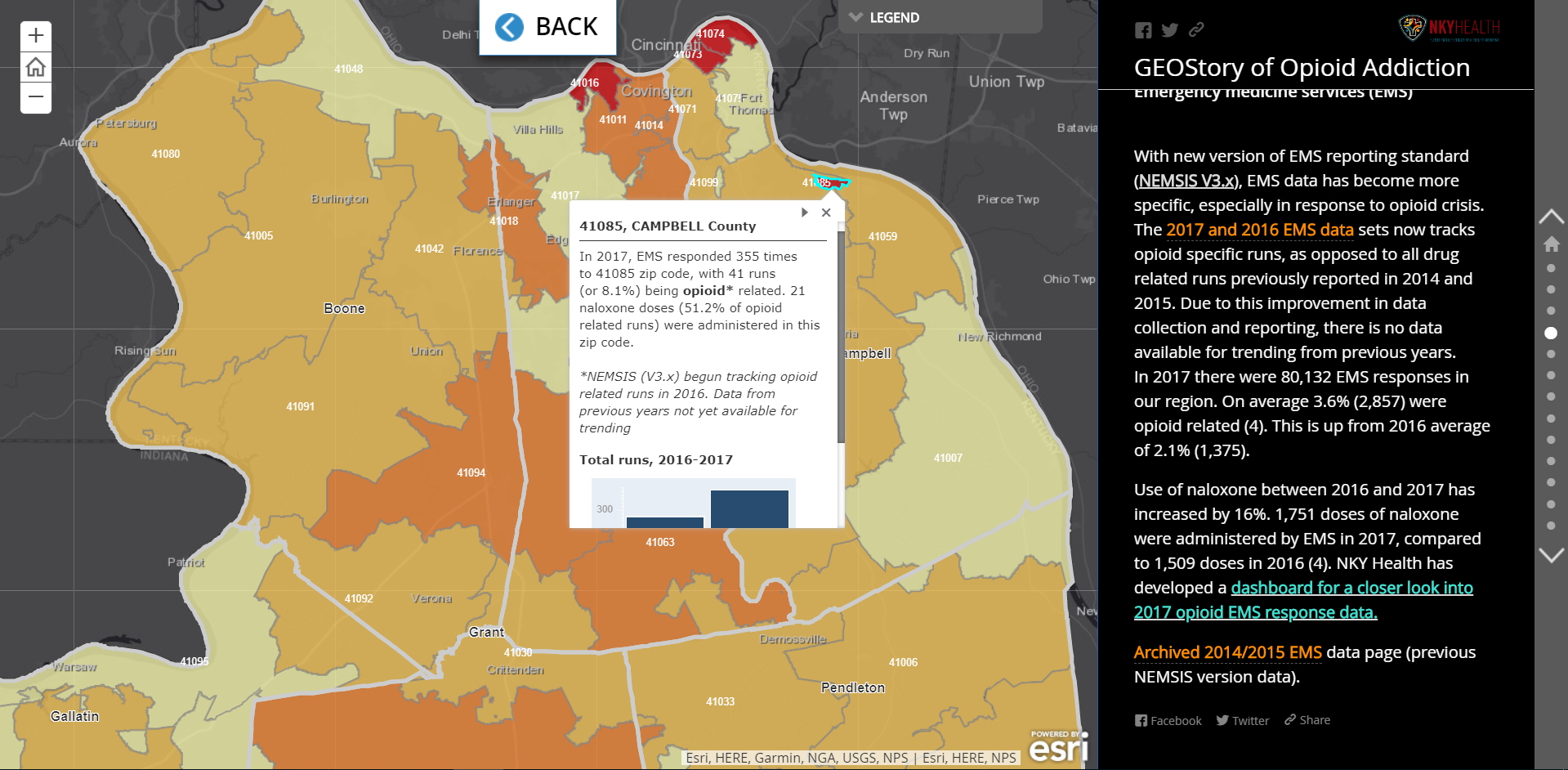
Northern Kentucky has also learned from other local governments through the Opioid Mapping Initiative. Following a presentation by Tempe, Ariz., on their work mapping EMS services, Northern Kentucky created a replica dashboard for their locality. The dashboard tracks any opioid-related emergency dispatch, notes whether naloxone was used, and shows broader trends in patient age, gender, and the day of the week emergency services were utilized.
Northern Kentucky’s opioid taskforce remains focused on public education as a critical component of their work. This story map, which they created to impress the dire state of opioid overdoses in their counties, is open to the public and is regularly updated with new data.

Mapping the Opioid Epidemic
- Introduction
- National Naloxone Access Map
- National Prescription Drop-off Map
- Celebrating Lost Loved Ones Map
- Case Study: Northern Kentucky
- Case Study: Tri-County, Colorado
- Case Study: DuPage County, Illinois
- Case Study: Cook County, Illinois
- Case Study: Alameda County, California
- Case Study: Tempe, Arizona
- Case study: Northeastern University
- Getting Started With Local Opioid Work