A Chapter of: Mapping the Opioid Epidemic
Celebrating Lost Loved Ones Map
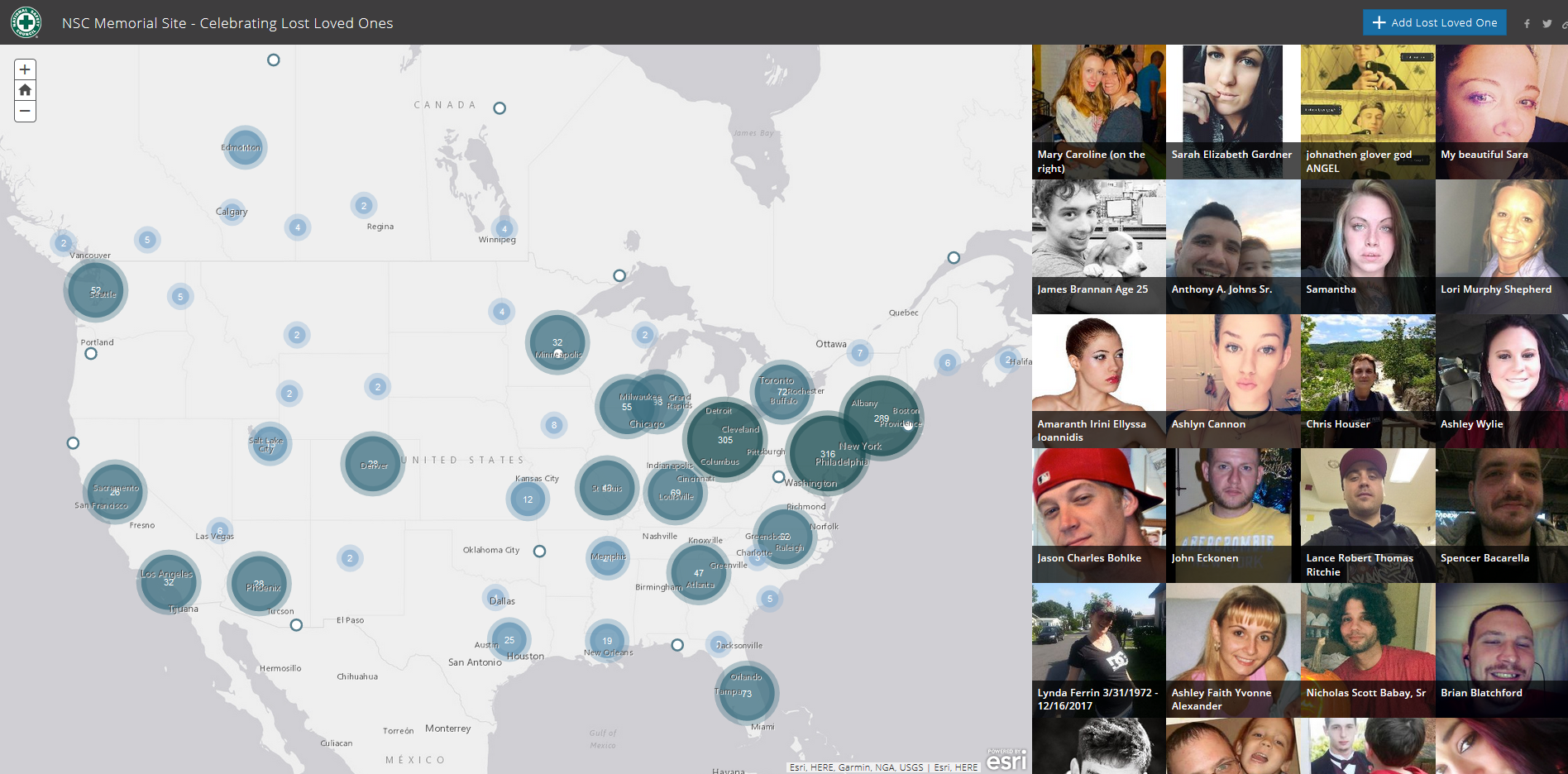
The following case studies contain a wealth of useful data about overdoses and mortality related to the opioid epidemic. This is extremely useful in driving change, but it is important to remember that behind these numbers are real people—great people with meaningful lives, lost to addiction. The Celebrating Lost Loved Ones map was one of the first national maps created to show the scope of the opioid epidemic. Appropriately, it is a crowdsourced initiative that allows family members to add a photo of their loved one to the map, along with a story about their life and their struggle with opioid addiction.
This map, unlike those that show anonymous data points, is meant to break the stigma associated with talking about drug overdoses and addiction by connecting data to human stories. When faced with the human toll of addiction, people are more inclined to pay attention and connect with these stories, especially when they appear in their own backyards. There are innumerable factors that drive people to develop addictions, and approaching each one of these reasons with compassion is key to confronting stigma.
In February 2018, the National Safety Council (NSC) officially adopted the map. NSC was already conducting work around awareness, and created the Survivor Advocates Network, which empowers surviving family members of those who have died from addiction to speak out. Since its adoption by the NSC, the map has grown to encompass more than 1,900 unique stories, and has broadened its reach through social media. The map can be a hugely beneficial educational tool for public health departments and nonprofit organizations across the country who hope to tackle misconceptions about opioids and help their communities address stigmas related to addiction.

Mapping the Opioid Epidemic
- Introduction
- National Naloxone Access Map
- National Prescription Drop-off Map
- Celebrating Lost Loved Ones Map
- Case Study: Northern Kentucky
- Case Study: Tri-County, Colorado
- Case Study: DuPage County, Illinois
- Case Study: Cook County, Illinois
- Case Study: Alameda County, California
- Case Study: Tempe, Arizona
- Case study: Northeastern University
- Getting Started With Local Opioid Work