Part 1. Women in Nuclear Security
What does it look like when women occupy leadership roles in nuclear and weapons policy, and when the process is opened to diverse perspectives? Research from business, banking, peacekeeping, and other fields says it should lead to more innovation and more durable outcomes. But the idea that gender diversity and gender analysis could have an impact on nuclear policy has been left in the academy, and the women who pioneered in the field have been largely invisible.
We interviewed 23 women who have held significant roles in setting and implementing U.S. government policy on nuclear weapons, arms control, and non-proliferation policy about their experiences in the field—how they influenced it, and how it influenced them.
The History and Structure of Nuclear Security
The nuclear policy field emerged from the clandestine world after World War II. What had begun as a small band of political theorists working alongside scientists, recruited from top universities and the RAND Corporation, broadened into positions at the Departments of Defense, Energy, and State, as well as the newly-formed National Security Council. The field’s heavy tilt toward the theoretical and military began to alter in the 1960s, however, as successive administrations committed to international processes limiting how nuclear weapons and technology could be held and used by the United States and other nations. Thus, the sub-fields of nuclear arms control and non-proliferation were born, spawning new bureaucratic entities. In later decades, those fields would grow further to encompass chemical and biological weapons of mass destruction, and a web of international treaties and arrangements aimed at controlling all of them.
As these nuclear subfields grew up, close to the core of security policy yet specialized and separate, another major dynamic was occurring: the removal of many of the formal barriers that had limited women’s participation in national security policymaking and their access to the elite channels through which policymakers entered the field. Married women were finally permitted to remain in the Foreign Service in 1972; women were admitted to the military service academies in 1976; and the Ivy League and other elite all-male colleges opened their doors to women through the 1970s and 1980s. Women’s numbers in relevant courses of study surged, providing a significant pipeline of talent just as these newer fields were staffing up.
Even so, the public image of national security professionals remains highly-masculinized to this day, with dramatic under-representation1 of female professionals, to say nothing of women’s perspectives, in media narratives and scholarly publications, at top think tanks, and in the ranks of university chairs.
The story of gender diversity in nuclear security is the story of how the field improves and innovates—or fails to do so.
While female professionals have been largely omitted from the public policymaker discourse, an alternative discourse developed that characterized opposition to nuclear weapons as feminine—and thus reinforced the idea that the policy space was exclusively masculine. Nuclear weapons and deterrence theory—and the language around them—have been the subjects of rich and extensive feminist analysis.2 Similarly, peace and disarmament studies, as well as activism, have long been not just fields where women were well-represented, but actively gendered female, often times by activists themselves as well as their opponents.
Perhaps it is this combination of belief about the masculinity of nuclear policymaking, combined with the invisibility of female policymakers, that has led many scholars to believe that women are not present in nuclear security. But they have been, from its earliest days.3 Women were more than 20 percent of the CIA’s professional staff by 1953, for example.4 In the policy field, while our earliest interviewees entered the field in the 1970s, they found women already working there in professional roles, whom they revere as pathfinders. The field has much to learn from the histories of women like Rozanne Ridgway, for example, the first woman to lead a regional bureau at the Department of State and lead negotiator at all five Reagan-Gorbachev summits.
This study aims to be a first draft of a correction, documenting the experience of nearly two dozen women with decades of experience in nuclear, arms control, and non-proliferation policy. They have much to teach us not just about the history of the field but about its future—how to keep it thriving, fill it with vital and innovative talent, and connect it with the best thinking about security, from which it has been too often cut off. In short, the story of gender diversity in nuclear security is the story of how the field improves and innovates—or fails to do so.
This study uses a very broad definition of nuclear policymaking, encompassing experience in the Defense, Energy, and State Departments, as well as the National Security Council, in both civilian and uniformed military roles. We consider positions that dealt with the posture and deployment of U.S. nuclear forces, as well as those focused on arms control negotiations concerning our own weapons systems and preventing or countering the proliferation of weapons of mass destruction elsewhere. Within this broad field, our respondents highlighted what they saw as a stark division between two communities.
The sub-field of nuclear posture and deterrence policy, and, on the military side, the people who actually handle the weapons, was described by respondents as closed-off and highly hierarchical, tending to value long experience and insider knowledge above innovation. Respondents described this field as insulated, male-dominated, and unwelcoming, with a small group of long-time insiders controlling what new ideas and individuals would be considered. Its discourse, they said, is characterized by highly abstract logic.
Several respondents contrasted it with newer security subfields where they felt innovation was more prized and new voices more welcome. Loren DeJonge Schulman, the Center for New American Security’s Deputy Director of Studies, saw relative openness in cybersecurity. The nuclear field, in comparison, “was much more, ‘You don't even get to stand up and debate your crazy policy idea. You have to have 20, 25 years of experience to even raise your hand.’”
Some respondents also perceived that their interest as individuals, if not women generally, in considering the ethical implications of decisions was unwelcome on the deterrence side. As one Pentagon professional told us, her days thinking about how to use nuclear weapons for the Nuclear Posture Review were draining, because she saw her work as the opposite: to stop nuclear weapons from being used.
The field’s jargon is infamous for being not only dense but sexualized. The feminist scholar Carol Cohn recalls thinking that the classic “missile envy” posited by feminist theorists and disarmament advocates was “uncomfortably reductionist.” One summer in the field convinced her otherwise:
Lectures were filled with discussion of vertical erector launchers, thrust-to-weight ratios, soft lay downs, deep penetration, and the comparative advantages of protracted versus spasm attacks—what one military adviser to the National Security Council has called 'releasing 70 to 80 percent of our megatonnage in one orgasmic whump.'5
The field itself also has gendered nicknames for its small elite group of nuclear experts and leaders. As one interviewee said:
Let’s talk about the gender language that drives elitism in that community. What is a nuclear expert? It is one of three things. A nuclear policy expert, they’re either a priest, from the nuclear priesthood; they are a graybeard, which is the other favorite term; and the third favorite term is silverback.
A number of interviewees described working with the priesthood as especially draining or restricting, and they changed their careers in order to move forward. At the same time, some women saw gaining expertise in this subfield, and the respect of their male colleagues, as an important challenge. As former Under Secretary of Defense for Policy Michèle Flournoy described the process, “there are some very clear rites of passage. You had to master the orthodoxy. And you had to master the technical details before you could have an opinion.” Many also showered praise on the very few women who had succeeded in this sector. As former Deputy Assistant Secretary of Defense for Nuclear and Missile Defense Policy Elaine Bunn described:
So there was the soft, fuzzy arms control side and then there was the real military side, the deployment side, and I felt like I had to prove my bonafides on the other side… [a mentor said to me] 'if you're going to stay in Defense Department, you need to do the nuclear, the targeting, the hard side of this, not just the arms control side or you're not going to be taken seriously.'
By contrast, the arms control and non-proliferation community was described as more open to new ideas and new people, as well as to women generally. Many women pointed to the threat reduction and non-proliferation fields as very open to women if not actually “women-dominated” in recent years. According to Deborah Rosenblum, whose years at the Pentagon included a stint of nuclear negotiations with North Korea, “the offices that had arms control going on, now that I think about this, were more likely the ones that the women…would gravitate to.”
“There are some very clear rites of passage. You had to master the orthodoxy. And you had to master the technical details before you could have an opinion."
Several women pointed to what they saw as the fundamentally different nature of the arms control and non-proliferation fields, involving negotiation or cooperation with other countries, and suggested that they rewarded a different set of skills around diplomacy and empathy which, perhaps, the core nuclear policy community had neglected. Janne Nolan, a veteran of the State and Defense Departments and several blue-ribbon security commissions, described a habit of “putting technical precision above understanding the severe challenges of effective diplomatic strategy. To the degree it has a gender component, I don’t know. But it’s not good training in terms of what I would prefer to see as an approach to understanding nuclear security.” This notion is supported by a growing body of research that finds that including women in peace negotiations makes the outcomes more durable and comprehensive.6 While this research has not yet explicitly addressed the role of women in international arms control and nonproliferation negotiations, it has clear applications to this area that future research could fruitfully build on.
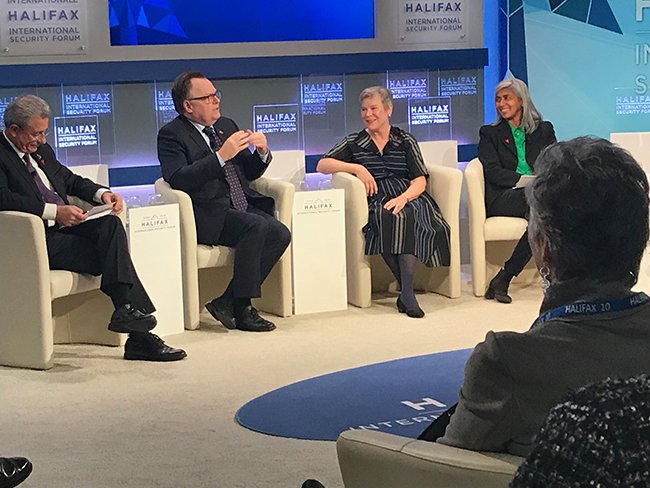
Heather Hurlburt
In addition, several women mentioned the perception, held by them or others, that women were more welcome in the non-governmental advocacy sector, and more likely to favor significant weapons cuts or disarmament. This perception was a double-edged sword; on the one hand, it demonstrated that, in the words of NATO Deputy Secretary General Rose Gottemoeller, “women aren’t afraid of nuclear weapons…as advocates for sound nuclear policy, including disarmament, they don’t shy away from working nuclear issues.” On the other hand, women reported it being used against them to undermine their seriousness inside government. (The actual views of women interviewed were complex, nuanced, and varied, underlining anecdotal findings that gender is not determinative of views on the issue.)
Women’s Career Paths
The composition of the foreign affairs and national security field as a whole has changed dramatically over the last half-century, yet it has not caught up with either women’s representation in the population or their apparent desire for such careers (as evidenced by women’s majority representation in international affairs undergraduate degree programs). Moreover, representation differs dramatically across the field and from junior to senior levels: Women are about 40 percent of all Foreign Service officers, but that number declines dramatically at the most senior levels, according to the American Foreign Service Association.7
A study of the national security workforce by the think tank Center for a New American Security (CNAS) found that “while women’s representation throughout the GS [General Schedule, i.e. career] workforce has increased, they are either leaving government service earlier than their male counterparts, or not being promoted at the same rates.”8
In the military, where all roles were opened to women only in 2014—a decision which continues to be debated—women make up 16 percent of enlisted personnel and 18 percent of the officer corps. At senior levels, women have approached 40 percent of assistant secretary and above positions at the State Department in recent years, while at the Defense Department that number hovers closer to 20 percent.9
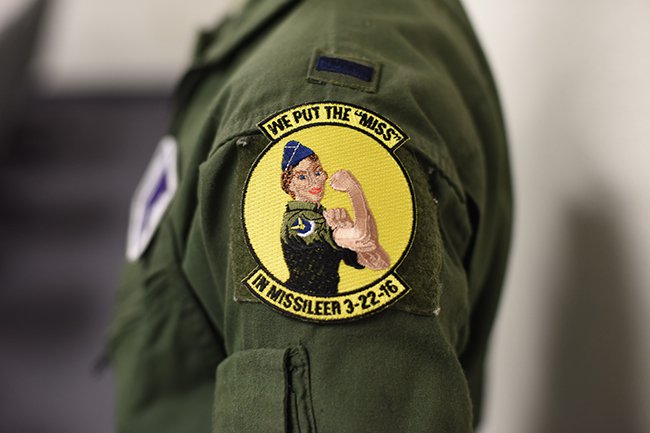
U.S. Air Force photo/Airman Collin Schmidt
As slow and incomplete as this progress has been, it should be noted that it is superior to the dismal rates of representation of non-white Americans in the policymaking process. Sexual minorities and gender non-conforming individuals—all of whom would have faced denials of security clearances and discrimination into the 2000s (and in the case of transgender servicemembers, to this day)—also remain underrepresented. We hope that our methodology and results will spur others to investigate and document the status and stories of those communities.
CNAS and others who have attempted to document firm numbers on women’s participation in national security policymaking over time have noted the difficulties in tracking National Security Council staffing as well as debates about counting military and civilian personnel and various government departments and the nuclear laboratories.
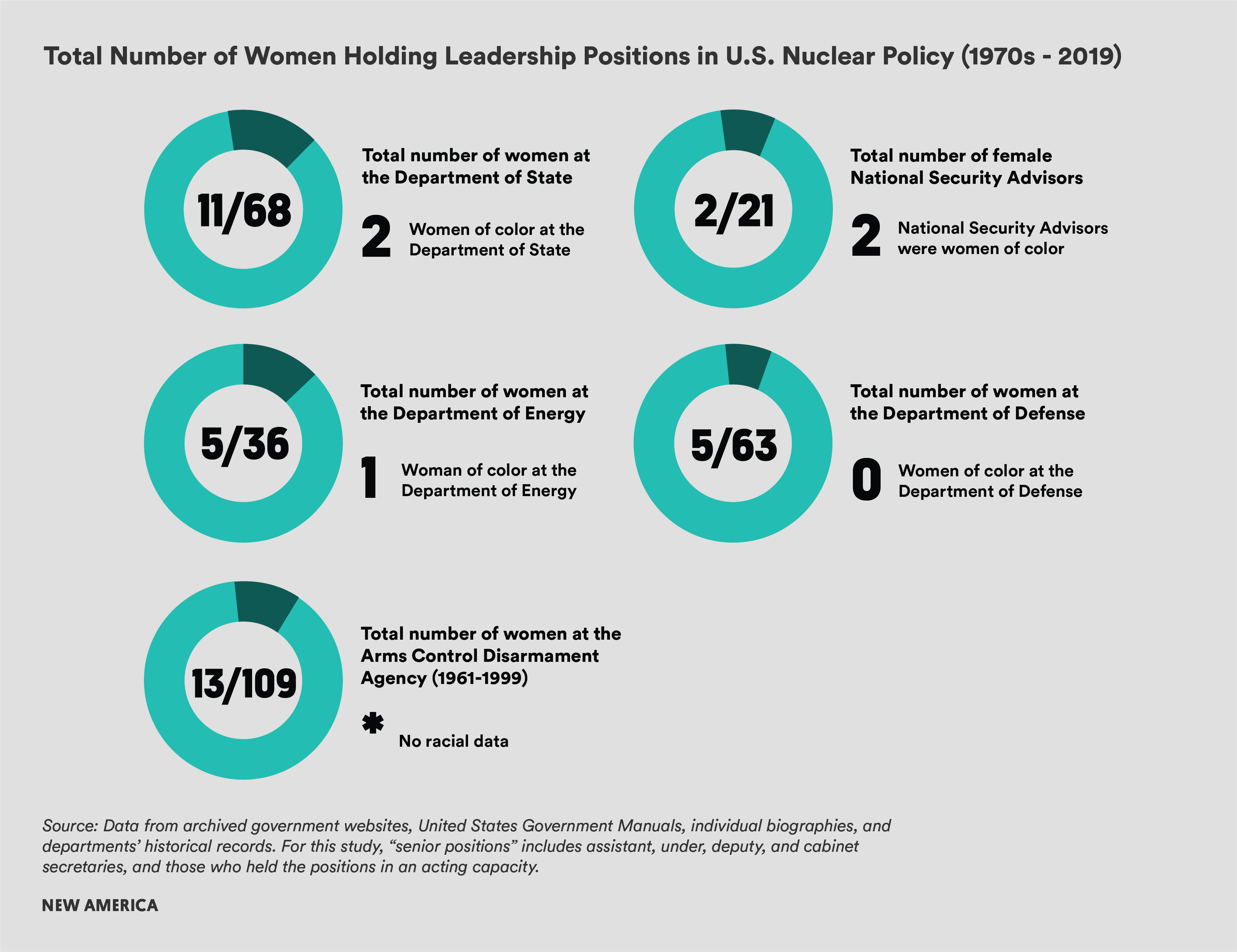
As a rough proxy for women’s participation in nuclear policymaking, we tracked the number of women in leadership roles in certain executive branch jobs starting in the 1970s, when our interviewees first entered the field, until the present day. These data include positions in the Departments of State, Defense, Energy, and within the White House. We also considered the Arms Control Disarmament Agency separately, which operated from 1961 to 1999, when it was folded into the State Department. In examining the leadership in nuclear and arms control-related positions, we tracked how many people had ever held those positions, including in an acting capacity, how many were women, and how many were women of color.
For international comparative purposes, we also considered data developed by the International Law and Policy Institute (ILPI) and the United Nations Institute for Disarmament Research (UNIDIR), reporting how many women were present at two international negotiations: the United Nations General Assembly First Committee (Disarmament and International Security) and Treaty on the Non-Proliferation of Nuclear Weapons (NPT) Review Conferences, both in five year intervals from 1980 to 2015. We have compared how many women were included in delegations from the five nuclear-weapons states, the United States, Russia, the United Kingdom, China, and France, as well as states that held nuclear weapons after the Soviet Union’s collapse—Kazakhstan, Belarus, and Ukraine—and two countries which were key to policy and negotiations over the period we consider, Iran and South Korea.10
The career paths of nuclear experts have not been studied, regardless of gender. At a time when the field is asking questions about attracting a new generation of experts, our subjects provide valuable data about the shape of careers for everyone, even as more research is needed to understand how experiences differ.
While some interviewees mentioned childhood experiences or idealism as important motivation for entering the field, others described it as more a matter of chance—taking a particular course, or having a particular job or fellowship become available. Many mentioned undergraduate or graduate coursework and the availability of fellowships to work in government, highlighting the importance of making nuclear policy study appealing to students from diverse backgrounds, and of keeping fellowships and other entry-level pipelines open and attainable.
A theme that ran across women’s experiences was the desire to make a difference, and the appeal of the nuclear and non-proliferation fields, at various times across the last four decades, as places where hard work would result in visible payoffs for U.S. and global security. Additionally, many women had combined nuclear experience with work in other security fields. They came or returned to the field for career advancement and moved elsewhere when advancement seemed blocked. These two factors suggest that the field should not depend only on attracting “lifers,” but needs to see itself as competing with other security topics for diverse talent.
As is discussed at greater length in Part 4, women who stayed in or returned to the field over decades also took on jobs of different intensity levels in order to manage the demands of family life. In order to attract and retain talent, the field needs to create jobs that allow flexibility for parenting, for example, without family responsibilities being perceived as career-ending.
While the field as a whole has done little research into how to retain its best talent, our interviewees had important insights around the factors that kept them in the field or caused them to move subfields or shift out entirely. In addition, as will be seen later, our subjects perceived that the field demanded and rewarded a specific set of attributes for all genders; thus, individuals whose strengths lay elsewhere fell by the wayside (and are thus not likely to have been included among our interviewees). Interviewees cited three main reasons why they, or women they knew, had left nuclear policymaking entirely or chose to move subfields: seeking improved leadership, shifting the balance of technical detail in their work, and escaping harassment.
Among women who stayed in the field, several mentioned love of the work and of the community as reasons to stay. Opportunities for promotion and mobility were key, as were mentoring and networking.
The Role of Mentoring and Sponsorship
Mentoring played a strong and omnipresent role in our respondents’ careers, from getting the first job in the nuclear field to choosing to stay, from building their own careers to supporting younger women and more diverse entrants. Relationships were central to finding out about jobs, being considered qualified for jobs, understanding how to succeed in particular positions and progress on to higher-ranking ones.
Additionally, the majority of women interviewed mentioned, without prompting, their desire to mentor and support younger women entering the field, with some citing existing resources for younger women, such as the Project on Nuclear Issues (PONI) or groups supporting women in the field, such as Women in International Security (WIIS) and Women of Color Advancing Peace and Security (WCAPS).
Notably, many of the women perceived themselves as part of an extended genealogy of mentors and mentees who had in turn gone on to mentor others. Flournoy, for example, was frequently cited as an inspiration based on her own career, her willingness to advise others, and her efforts to set up a woman- and family-friendly shop in the Defense Department. But Flournoy herself cited her own mentors—and like many, noted that both women and men had been key to her progress. Respondents often cited a male boss or colleague whom they perceived as committed to advancing women.
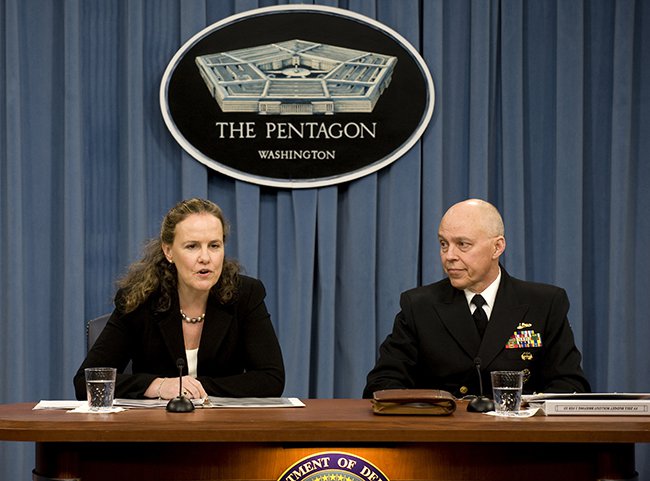
DoD / Cherie Cullen
At a time when gender and security issues have become deeply politicized, it is worth noting that women with decades of government experience reported having supportive male bosses and mentors in both Republican and Democratic administrations; some of the women whose success in the field is strongly associated with the Obama administration, for example, made key advances as career civil servants working with Republican political appointees during GOP administrations.
But Flournoy also noted a problem with relying on mentorship to come from the system as it is. She called it “the mini-me approach to mentoring, which is a senior person, say a senior man, says, ‘Ah, that young man over there. He reminds me of my younger self when I was 25, he's just like me. So, I'm going to take an interest him and promote him and put him forward,’ and so forth….That's going to be a self-perpetuating system.”
Our interviewees, especially those who had enjoyed multi-decade careers in the field and risen to senior positions, described mentor relationships that endured over time. Mentors gave advice, warded off sexual harassment, took junior colleagues along to new jobs and might even call years later to propose a new job for a mentee. Expectations might be heavy in return, from the boss who expected all-night work to the ones who had to be explained and managed by their subordinates.
Mentorship thus provided women a key avenue to succeed in the field—and to help other women follow them, which many enthusiastically described doing.
However, in some instances, mentorships replicate many of the field’s more problematic dynamics for women and men, which we take up in the next section.
Citations
- For data on gender imbalance in op-eds and mainstream media coverage, see New America Foundation Weekly Wonk, “The Underrepresentation of Women in Foreign Policy is a Huge Problem,” Vox, February 16, 2015, https://www.vox.com/2015/2/16/8039675/foreign-policy-interrupted.
- Kyle Harvey, American Anti-Nuclear Activism, 1975–1990: The Challenge of Peace (New York: Palgrave MacMillan, 2014); and Benjamin Redekop, "‘Physicians to a Dying Planet’: Helen Caldicott, Randall Forsberg, and the Anti-Nuclear Weapons Movement of the Early 1980s," Leadership Quarterly 21, no. 2 (2010): 278–291.
- Karen Piper, A Girl’s Guide to Missiles: Growing Up in America’s Secret Desert (New York: Viking, 2018), https://books.google.com/books/about/A_Girl_s_Guide_to_Missiles.html?id=VV4_DwAAQBAJ. Liza Munday, Code Girls: The Untold Story of the American Women Code Breakers of World War II (Hachette Books, 2017), https://books.google.com/books/about/Code_Girls.html?id=LaaMtAEACAAJ. Clive Thompson, Coders: The Making of a New Tribe and the Remaking of the World. (Penguin Press, 2019). https://books.google.com/books?id=mjFeDwAAQBAJ&printsec=frontcover&source=gbs_ge_summary_r&cad=0.
- Memorandum from John N. McMahon, CIA deputy director, December 19, 1983 as cited in CNAS From College to Cabinet, http://www.foia.cia.gov/sites/default/files/document_conversions/1820853/1983-12-15.pdf.
- Carol Cohn, “Sex and Death in the Rational World of Defense Intellectuals,” Signs 12, no. 4, (summer 1987): 687–718, https://people.ucsc.edu/~rlipsch/migrated/pol179/Cohn.pdf. Note that Cohn asserts that the field is “all male, except for their secretaries” in 1987, at a time when more than a quarter of our sample women were already in government, Rozanne Ridgway was leading nuclear negotiations with the Soviet Union, and another quarter were studying to enter the field. How many women were, and continue to be, deterred from entering the field by the mistaken belief that women are absent—or by their relative absence in academia?
- Patty Chang, Mayesha Alam, Roslyn Warren, Rukmani Bhatia, and Rebecca Turkington, Women Leading Peace (Washington, DC: Georgetown Institute for Women, Peace and Security, 2015), https://giwps.georgetown.edu/resource/women-leading-peace/; Thania Paffenholz, Nick Ross, Steven Dixon, Anna-Lena Schluchter, and Jacqui True, Making Women Count-Not Just Counting Women: Assessing Women’s Inclusion and Influence on Peace Negotiations (Geneva: Inclusive Peace & Transition Initiative and UN Women, 2016), https://www.inclusivepeace.org/sites/default/files/IPTI-UN-Women-Report-Making-Women-Count-60-Pages.pdf; Marie O’Reilly, Andrea Ó Súilleabháin, and Thania Paffenholz, Reimagining Peacemaking: Women’s Roles in Peace Processes (New York: International Peace Institute, June 2015), https://www.ipinst.org/wp-content/uploads/2015/06/IPI-E-pub-Reimagining-Peacemaking.pdf.
- Post-2016 statistics are difficult to come by. Up to 2016, see Andrea Strano, “Foreign Service Women Today: The Palmer Case and Beyond,” Foreign Service Journal, March 2016, http://www.afsa.org/foreign-service-women-today-palmer-case-and-beyond.
- Katherine Kidder, Amy Schafer, Philip Carter, and Andrew Swick, From College to Cabinet: Women in National Security (Washington, DC: Center for a New American Security, 2017), 8, https://s3.amazonaws.com/files.cnas.org/documents/CNASReport-WomeninNatSec-Final.pdf?mtime=20170403112013.
- Heather Hurlburt, Elizabeth Weingarten, and Elena Souris, National Security: What We Talk About When We Talk About Gender (Washington, DC: New America, 2018), https://www.newamerica.org/political-reform/reports/national-security-what-we-talk-about-when-we-talk-about-gender/.
- John Borrie, Anne Guro Dimmen, Torbjørn Graff Hugo, Camilla Waszink, and Kjølv Egeland, Gender, Development and Nuclear Weapons: Shared Goals, Shared Concerns (Geneva, Switzerland: United Nations Institute for Disarmament Research (UNIDIR) and International Law and Policy Institute (ILPI), October 2016), http://www.unidir.org/files/publications/pdfs/gender-development-and-nuclear-weapons-en-659.pdf.