Building Early Education Leaders
Abstract
Elementary school principals play a vital role in determining the quality of care and education that young children receive. In fact, research shows that, after teachers, principals are the most important in-school factor impacting student achievement. Principals often function as both administrative and instructional leaders, and can be responsible for everything from managing finances to hiring staff, choosing a curriculum, and evaluating teachers. And yet, many elementary school principals enter their roles without the knowledge and skills they need to best serve young students. A small but growing number of states and districts are investing in professional learning for principals to equip them to strengthen pre-K and the early grades. In this brief, New America details visits to three such programs around the country in San Antonio, TX; Fergus Falls, MN; and Montgomery, AL.
Acknowledgments
This work would not be possible without generous support from the Heising-Simons Foundation. We thank New America colleagues Aaron Loewenberg and Cara Sklar for their insights on this project; and Riker Pasterkiewicz and Maria Elkin who directed publication. Thanks also to Betsy Fox, Michael Brown, Nancy Jost, Kristie Kauerz, and Gail Morgan for sharing their expertise.
Downloads
Introduction
It’s hard to deny the power of a good leader. Across fields, leaders establish conditions for success. Among other things, leaders are usually responsible for determining an organization’s priorities, helping employees meet established goals, setting the culture, and empowering staff. Early childhood education is no different.
Principals leading elementary schools play a vital role in determining the quality of care and education that young children receive. In fact, research shows that, after teachers, principals are the most important in-school factor impacting student achievement.1 Principals often function as both administrative and instructional leaders, and can be responsible for everything from managing finances to hiring staff, choosing a curriculum, and evaluating teachers.
Thus, it is crucial that these leaders understand how young children learn best. They must be able to identify appropriate instruction across ages and grade levels. For instance, when entering a kindergarten classroom, principals should know that children sitting quietly at desks completing worksheets is not a good sign. Alternatively, when children are playing, leaders should be able to make the distinction between a classroom where learning is taking place versus one in chaos. In a 2017 50-state scan on policies for early education leaders, New America found that, in most states, it is possible for principals to enter their roles without the knowledge and skills they need to best serve young students.2
What’s missing in leader preparation?
Early childhood education is not typically covered in principal preparation programs. And research shows that elementary school principals often don’t understand what early learning should look like based on the science of child development.3 With public pre-K expansion, principals are increasingly overseeing younger students, but a 2015 survey found that only about 20 percent of early-career principals overseeing pre-K classrooms felt well-versed in early childhood education.4 And this doesn’t just apply to pre-K: instruction in kindergarten and the early grades often doesn’t align with what is best for young children.5
With the right skill set and support, principals can be true drivers of change for teachers and the children they work with. Research has found that leadership is key in efforts to strengthen and align the pre-K through third grade continuum—a primary strategy for ensuring children build on their learning from one year to the next.6
Leaders who feel better equipped to do their jobs are also more likely to stay in their roles. Turnover is disruptive to both staff and students, and makes it difficult to achieve longer-term reform efforts. A recent report by the Learning Policy Institute finds that inadequate preparation and professional learning are among the top reasons that principals leave their jobs.7
Strong preparation for elementary school principals is sorely needed. And for those already on the job, professional learning focused on early education can be a key (and sometimes overlooked) lever to improving program quality, if it is done well.
Some states and districts recognize this need to enhance leaders’ understanding of how to support teachers, children, and families from pre-K through third grade and have put professional learning opportunities in place. These opportunities sometimes include child care center directors and district and community leaders in order to broaden the network of people with a deeper understanding of the science of child development and how it plays out in pre-K through third grade classrooms.
What does it take for professional learning to be effective?
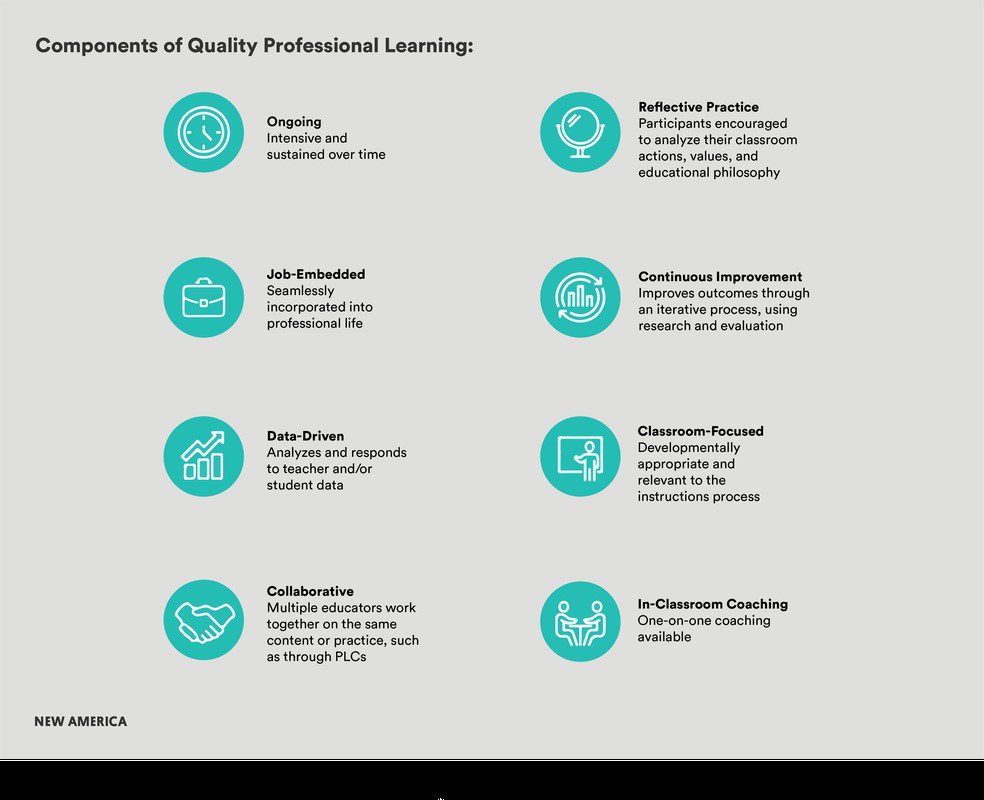
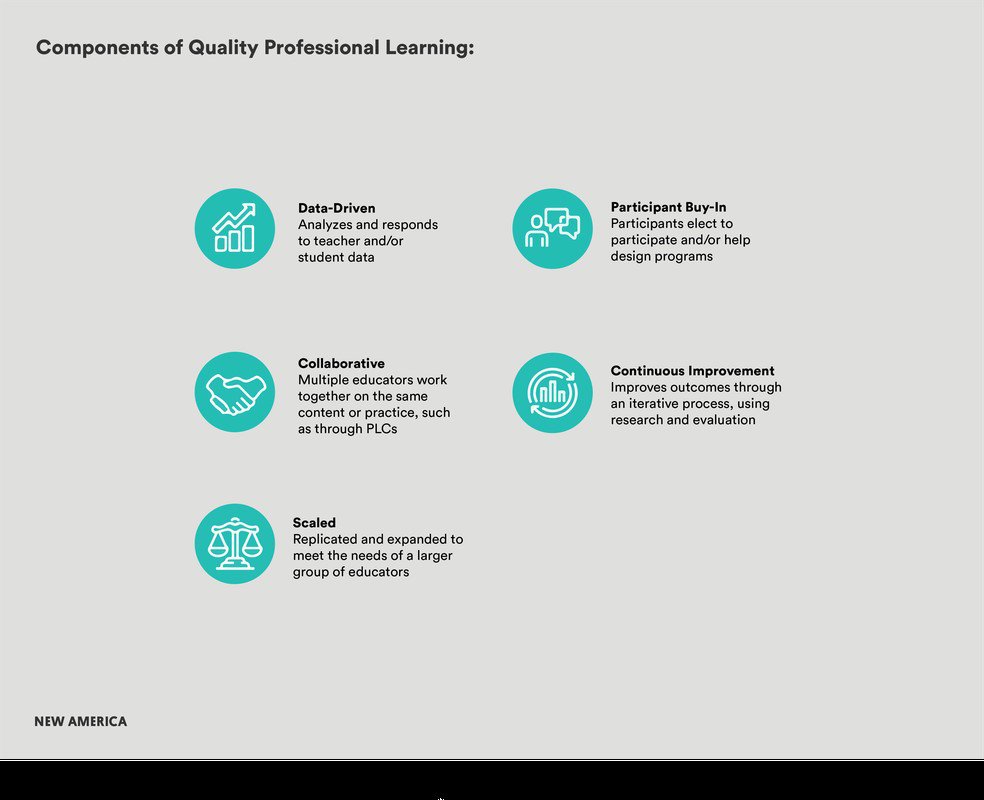
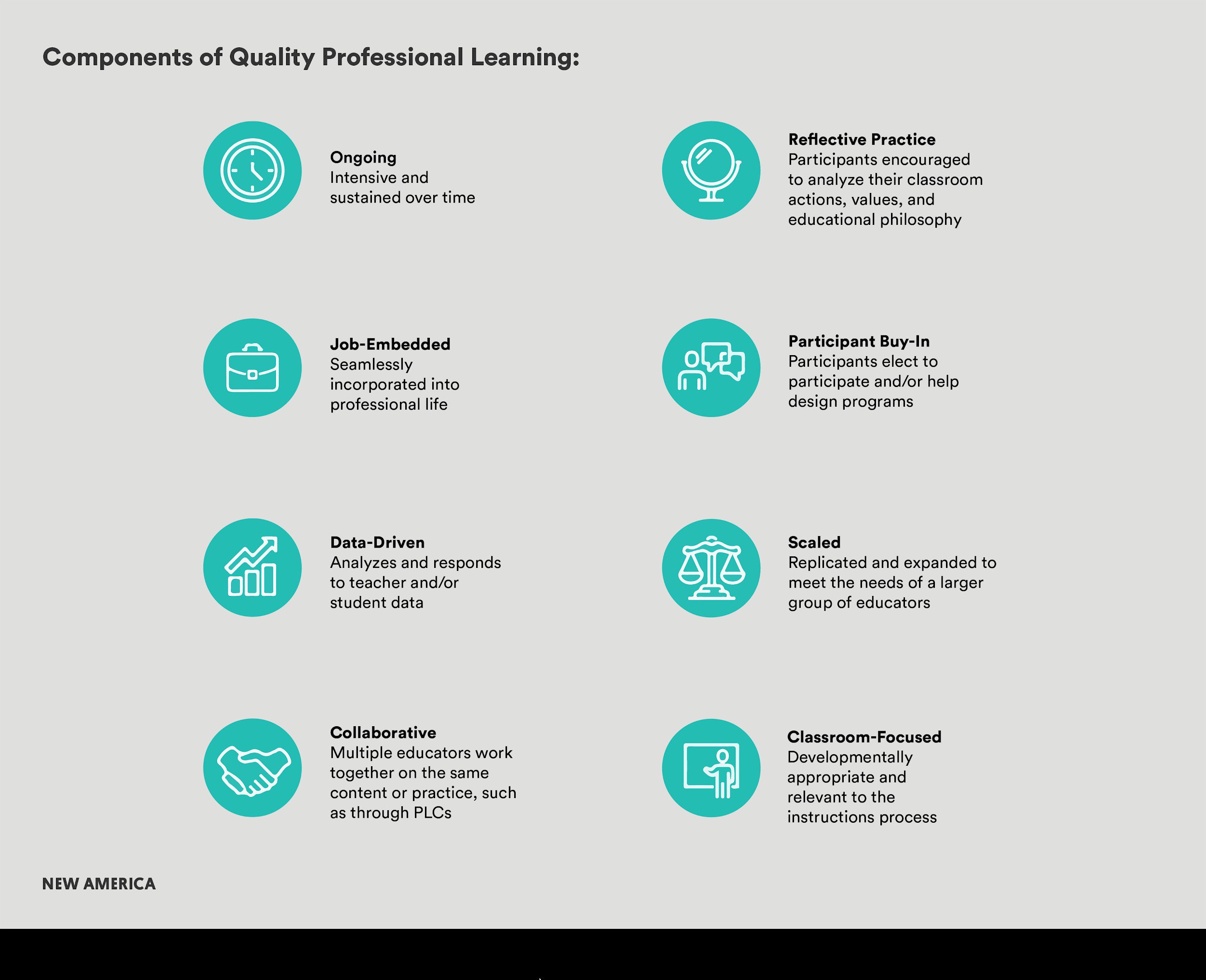
In a paper released in May 2017, New America explored the components of high-quality professional learning for pre-K teachers, which can also be applied to professional learning for principals.8 These are the components we identified:
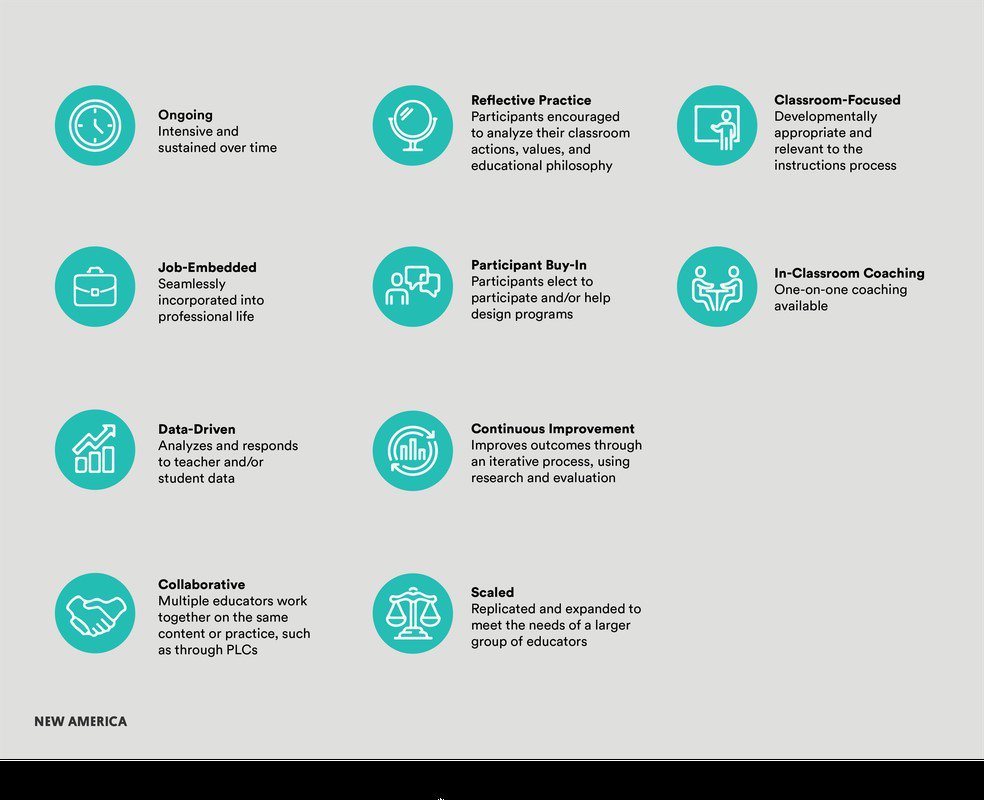
Leaders also need to know how adults learn so that they can help teachers reach their full potential.
Professional learning that incorporates all of these factors is rare because it is resource-intensive. While researchers tend to agree on the general components of high-quality professional learning, there is no agreed upon “right way” to equip leaders to support young learners and drive pre-K through third grade work.
Who is offering leader professional learning on early education and pre-K through third grade alignment?
From January to April of 2019, New America visited three programs in different parts of the country to see what this type of professional learning looks like in practice. In May 2018, we joined Kristie Kauerz and the National P–3 Center in Seattle for a peer-to-peer conversation bringing together designers and managers from 11 programs around the country aimed at strengthening early education leaders to share perspectives, strategies, and challenges.9 (A brief exploring takeaways from the brain trust will be released this summer.) While we identified a few other programs doing this work, it is clear that these types of professional learning opportunities are few and far between.
This blog series offers a closer look into three professional learning programs to expand and deepen leader knowledge of child development and early learning, two of which participated in the peer-to-peer conversation last May. First, we head to San Antonio, Texas, where two school districts brought in the New Teacher Center to equip principals to improve instruction in pre-K and kindergarten. Second, we brave the elements in Fergus Falls, Minnesota, to sit in on a state-led pre-K through third grade workshop with cross-sector leaders from rural districts. Finally, we venture to Montgomery, Alabama, where principals from across the state present their capstone projects as the culmination of a year-long program digging into the National Association of Elementary School Principal’s core competencies.10
We profile the structures and strategies of these three programs, elevating what professional development operators are learning. We hope that states and local districts will use these profiles as a starting point for the development of their own programs, because there will always be a need for well-versed leaders in early and elementary education.
Citations
- Robert J. Marzano, Timothy Waters, and Brian A. McNulty, School Leadership That Works: From Research to Results (ASCD, 2005), https://shop.ascd.org/Default.aspx?TabID=55&ProductId=668&School-Leadership-That-Works:-From-Research-to-Results.
- Abbie Lieberman, A Tale of Two Pre-K Leaders: How State Policies for Center Directors and Principals Leading Pre-K Programs Differ, and Why They Shouldn’t (Washington, DC: New America, 2017), file:///Users/liebermana/Downloads/Tale-Two-PreK-Leaders%20(1).pdf.
- LaRue Allen and Bridget B. Kelly, eds., Transforming the Workforce for Children Birth Through Age 8: A Unifying Foundation (Washington, DC: National Academies Press, 2015), https://www.nap.edu/%20catalog/19401/transforming-theworkforce-forchildren-birth-throughage-8-a.
- Aaron Loewenberg, “Many New Principals Lack Early Ed Knowledge” EdCentral (blog) New America, August 31, 2015, https://www.newamerica.org/education-policy/edcentral/elem-principals-prek/; Laura Baker, “New Principals: A Data Snapshot,” Education Week, August 18, 2015, https://www.edweek.org/ew/section/multimedia/new-principals-a-data-snapshot.html.
- Bruce Atchison, Louisa Diffy and Emily Workman, K-3 Policymakers' Guide to Action: Making the early years count (Denver, CO: Education Commission of the States, 2016), http://www.ecs.org/wp-content/uploads/K-3_Policymakers_Guide_to_Action.pdf
- Karen Manship, Jonathan Farber, Claire Smith and Katie Drummond, Case Studies of Schools Implementing Early Elementary Strategies: Preschool Through Third Grade Alignment and Differentiated Instruction (Washington, DC: U.S. Department of Education, 2016), https://www2.ed.gov/rschstat/eval/implementing-early-strategies/report.pdf.
- Stephanie Levin and Kathryn Bradley, Understanding and Addressing Principal Turnover: A Review of the Research (Reston, VA: National Association of Secondary School Principals, 2019), https://learningpolicyinstitute.org/product/nassp-understanding-addressing-principal-turnover-review-research-report?utm_source=LPI+Master+List&utm_campaign=3bc64507cb-LPIMC_NASSP_PrincipalTurnover_20190319&utm_medium=email&utm_term=0_7e60dfa1d8-3bc64507cb-42296491.
- Abbie Lieberman, Shayna Cook, and Sarah Jackson, Extracting Success in Pre-K Teaching: Approaches to Effective Professional Learning Across Five States (Washington, DC: New America, 2018), https://www.newamerica.org/education-policy/reports/extracting-success-pre-k-teaching/.
- Learn more about the National P-3 Center at https://sehd.ucdenver.edu/pthru3/content/welcome.
- Leading Pre-K–3 Learning Communities Competencies for Effective Principal Practice: Executive Summary (Alexandria, VA: National Association of Elementary School Principals, 2014), https://www.naesp.org/sites/%20default/files/leading-pre-k-3-learning-communitiesexecutive-summary.pdf.
Coaching Elementary School Principals on Instruction in San Antonio, Texas
On a Wednesday morning in January at a pre-K through fifth grade school in southwest San Antonio, Betsy Fox, director of Early Learning Partnerships at the New Teacher Center (NTC), arrived to lead the school principal through what the NTC calls an “in-field support visit,” or a “walk and talk.” Fox would spend the next two hours with the principal observing pre-K and early grade classrooms to help her analyze whether the instruction and learning in her school mirrors what is developmentally appropriate for young children.
While only the principal was required to join this morning, the assistant principal, math coach, and literacy coach also rearranged their schedules to tag along. First, everyone convened briefly in the principal’s office to discuss the agenda. Fox started with an ice-breaker, asking the group to share what they were doing in the year 2000. Connecting with the administrators on a personal level is key to her work, as it helps put them at ease so that they feel comfortable being open during her visit.
These visits are an opportunity for school leaders to receive one-on-one, specialized, and professional learning. Before entering the classrooms, Fox let the group choose what they wanted to look for. They opted for “student talk,” a school-wide initiative already in place. They hoped not to see quiet classrooms with teachers doing all the talking, but instead classrooms where children have opportunities to discuss and teach each other. Child development research shows that talk among students fosters socialization, deepens comprehension,11 and is part of a strong oral language environment that promotes children’s literacy.12
Unfortunately, on this day, student talk and strong teacher-child interactions were missing in most of the classrooms the group observed. Both the pre-K and kindergarten teachers were using direct instruction and asking students few, if any, open-ended questions. Teachers emphasized following directions and precise responses over inquiry and back-and-forth conversation.
As we moved from classroom to classroom, there were other signs that instruction was not aligned with what research says is best for young children. We saw almost no dramatic play areas in the pre-K or kindergarten classrooms. Instead, children were filling in worksheets and kindergarteners were working on crafts where the stated goal was to make sure the project turned out just like the teacher’s model. A poster on the wall in one classroom described “good coloring” as “coloring with the real color.” Opportunities for creativity, exploration, and student talk seemed limited.
During the “walk and talk,” Fox’s role was to develop the administrative team as instructional leaders, helping them to identify both effective teaching moments and areas for improvement. She debriefed quickly with them after each classroom and then more deeply at the end of the two hours. Fox let the administrators take the lead in the debrief, asking what they saw. When their observations did not align with developmentally appropriate practice, she nudged them on their thinking.
The team noted the opportunities for student talk they did see and discussed how to encourage teachers to incorporate more inquiry questions in their lessons. They decided to prioritize this during grade-level meetings. Fox encouraged administrators to be up-front and open about what they knew and didn’t know. She also reassured the group by saying, “you are not alone in struggling with these issues.” The administrators also requested feedback on how to talk to their teachers. With Fox’s advice, they agreed to start by simply moving away from the term “monitoring” and toward the term “supporting” with teachers to change the way they view feedback. She offered to send them a series of resources following the meeting to help them implement the changes they discussed.
This was Fox’s second time at this elementary school for a “walk and talk” with this principal, and she had also interacted with her during two other days the same week. That Monday, the principal joined a dozen others from her district at a neighboring district for a “learning walk,” where they observed classrooms as a group at another elementary school. That Tuesday, all elementary school principals or assistant principals from both districts participated in a half-day seminar on early math instruction and coaching practices.
These are all components of NTC’s Early Learning Leadership Program (ELLP), a year-long opportunity to help principals “see differently” in pre-K and the early grades. Principals learn early learning pedagogy and how to support teacher improvement. The curriculum is based on the National Association for Elementary School Principals’ core competencies.13 The NTC model typically requires all principals in a district to participate and strongly encourages other district leaders to attend the seminars. In this case, there are 27 elementary school principals between the two districts. Fox says that “this is really key to get people in the room who normally do not think about early childhood education. But it can also make for some challenging participants who don't actively support early learning at their schools.”
This professional learning opportunity is funded through a local grant from Pre-K 4 San Antonio, a citywide pre-K program.14 In 2012, San Antonio voters approved an eighth of a cent increase in the city’s sales tax to fund the program. Grants to San Antonio districts for professional learning are just one aspect of the Pre-K 4 San Antonio program.
These San Antonio districts are two of eight districts throughout the country in which NTC has offered ELLP. NTC contextualizes the program to each district. For example, the Long Beach Unified School District asked for more content on social-emotional learning and executive function, so NTC made that a priority. Four new districts have shown interest in participating next year.
NTC’s program is more time- and resource-intensive than many others around the country, largely because of the individual school visits. But following Fox over the course of three days, it is easy to see how valuable these are to altering teacher practice, which is the ultimate goal. It’s one thing for principals to hear in a seminar what early learning should look like; it’s different to be able to critique teaching and learning in their own schools. NTC’s program prioritizes depth over breadth: it is focused on elementary schools (but may include a district’s early learning leaders), and has an emphasis on pre-K and kindergarten, though the lessons can apply to first through third grade.
Evaluations of NTC’s work show that its approach is effective. While it doesn’t have an evaluation of this project, data from its i3 Scale-Up Grant from the U.S. Department of Education, which focused on mentoring and induction for beginning teachers, found that “regardless of district context, when teacher mentors receive NTC’s high-quality, consistent professional learning, the teachers they mentor are more effective and their students learn more.”15 This project employed professional learning methods similar to those Fox uses with elementary school principals in ELLP. NTC also collects data on participants’ growth throughout their programs. Participants complete extensive evaluations about their experience at the end of each seminar. They also rate their own proficiency on the various content areas covered during the series at the beginning and end of the program.
Fox believes that to improve practice you need three things: “effective early childhood education coaches, then principal and district leadership, and then teacher training.” Her goal is to be a thought partner with principals and district leaders. One benefit of coming from outside of the state or district is that she isn’t their boss; she cannot be punitive, but simply help principals improve. Fox says it’s important to her that during visits they are “laughing, sharing stories, and creating trust and rapport.”
At the end of Fox’s visit with the leaders of this San Antonio elementary school, she asked them for feedback on the morning and how the experience changed their thinking. The principal said wholeheartedly, “I feel your support.” Fox returned to San Antonio and followed up with this principal in person one additional time this year, and the district recently has asked her to return next year to facilitate additional forums and visit each school.
Citations
- Laura Beth Kelly, Meridith K. Ogden and Lindsey Moses, “Collaborative Conversations: Speaking and Listening in the Primary Grades” Young Children Vol. 74, No. 1 (March 2019), https://www.naeyc.org/resources/pubs/yc/mar2019/speaking-listening-primary-grades.
- U.S. Department of Health and Human Services, “The Big 5 The Big Picture Oral Language and Vocabulary” https://eclkc.ohs.acf.hhs.gov/sites/default/files/pdf/big5-big-picture-oral-language-vocabulary-eng.pdf.
- Leading Pre-K–3 Learning Communities Competencies for Effective Principal Practice: Executive Summary (Alexandria, VA: National Association of Elementary School Principals, 2014), https://www.naesp.org/sites/ default/files/leading-pre-k-3-learning-communitiesexecutive-summary.pdf.
- Abbie Lieberman, “What if All Children Had Access to Pre-K 4 SA?” EdCentral (blog) New America, February 1, 2019, https://www.newamerica.org/education-policy/edcentral/pre-k-4-sa/.
- SRI Education, Evaluation of the New Teacher Center (NTC) i3 Scale-up Grant: Cohort 1 Preliminary Teacher and Student Impact (January 2019), https://info.newteachercenter.org/i3Brief2018.
Cultivating Pre-K Through Third Grade Leaders Across Systems in Minnesota
The wind chill the February morning of the first Regional PreK-3 Leadership Workshop was below zero,16 with a few feet of snow on the ground, yet many district and school leaders drove more than an hour to get to Fergus Falls, Minnesota, located in the northwest corner of the state.
The group gathered for the first of three workshops in the series. During the 2018–19 school year, state officials embarked on a roadshow engaging leaders in discussions on children’s first eight years of life and what schools, districts, and communities need to do differently. In that vein, a key topic of the first workshop was shifting mindsets. “Pre-K through third grade is a new game—not another strategy or initiative—that requires a new way of working,” said Mike Brown, Education Specialist at the Minnesota Department of Education (MDE).
This pre-K through third grade focus is meant to align with and strengthen other statewide initiatives, namely Minnesota’s World’s Best Workforce statute,17 which includes school readiness and third grade reading goals. As part of this initiative, school boards are expected to implement a “long-term, comprehensive strategic plan to support and improve teaching and learning.”
The February workshop in Fergus Falls was just one of seven three-day series taking place across the state this winter and spring. The workshops are held in partnership with the six Minnesota Initiative Foundations,18 referred to as MIFs. (The Twin Cities metro area does not have a MIF, so MDE partnered with the Minnesota Elementary School Principal Association (MESPA) to provide the workshops in that metro area.) The MIFs help secure a location, pay for food, and recruit local participants. The MIFs were established by the Minnesota-based McKnight Foundation in the 1980s as a way to respond to regional contexts and support needs and opportunities in different parts of the state. Minnesota is largely rural, but the Twin Cities get most of the attention and resources in policy decisions. The MIFs aim to rectify this.
The workshop series, designed and delivered by MDE staff, is broken into three full-day sessions where district teams come together to deepen their learning and develop pre-K through third grade alignment plans for their schools, districts, and communities.
Minnesota’s focus on leadership is part of a larger vision around pre-K through third grade implementation. In 2015, with the Minnesota Elementary School Principals Association (MESPA) and with funds from Race to the Top–Early Learning Challenge and a grant from the McKnight Foundation, MDE launched a PreK–3 Principal Leadership Series. Principal-led teams of school leaders from around the state were invited to participate in the series, which was based on the National Association of Elementary School Principal’s Guide for Leading Pre-K–3 Learning Communities.19 The state ran four cohorts of the series in the Twin Cities, ending during the 2017–18 school year.
While running the PreK-3 Principal Leadership Series, MDE with MESPA and the Minnesota Association of School Administrators offered additional professional learning opportunities for school and district leaders as well as teachers to bolster pre-K through third grade work. One opportunity was a free online course focused on building rigorous and robust learning environments developed by FirstSchool at the University of North Carolina–Chapel Hill.20 The second opportunity was a four-day series to help leaders build coherence across the learning continuum, which was based on the work of Michael Fullan and Joanne Quinn and led by Quinn.21
Knowing there was more work to do, principals and other leaders who learned about the promise of a pre-K through third grade approach kept asking, “what does it look like in practice?” MDE developed a new series focused on action. This time, the agency took the message on the road, traveling out to communities. The state’s regional summits, in partnership with the MIFs, are funded in part with dollars from Title II of the federal education law,22 the Every Student Succeeds Act (ESSA).23 The law expands the focus on the role of principals and other school leaders as well as on early education. When the state’s Race to the Top–Early Learning Challenge grant expired, it was able to sustain the program through ESSA instead.
The districts represented in the Fergus Falls training were rural, with some having just a single school with one principal overseeing pre-K through 12th grade—sometimes located in the same building as the district office. Rural districts often face different challenges than urban and suburban districts,24 so tailoring the professional learning to meet their needs is important.
Some may think it is easier to create a strong pre-K through third grade continuum in a small community where it is not difficult to get district staff, principals, and teachers in the same room, but challenges still exist. One participant, the only one from her district to attend the training, lamented that it is “difficult to create teams because one person is wearing so many hats.”
MDE requests that leaders participate as a team, but does not require specific roles to be included. More than one participant, though, attended alone. The agency makes recommendations for teams, suggesting that those who contribute to the “design, implementation, and evaluation of your PreK–3rd system” should come to the sessions. This includes at least an early childhood administrator, early childhood special education administrator, elementary school principal, Head Start director, and community early childhood program leader. For the second workshop day, MDE recommends other school and district administrators, who oversee curriculum, instruction, and assessment, also attend. While flexibility is beneficial for districts and schools in the short term, consistency is essential in the long term. This means having the right team members matters, and so does ensuring that each actor involved in implementation has a solid understanding of what needs to be done and why.
Few attending the February workshop had taken part in MDE’s previous professional learning opportunities. So, for many, this content was relatively new, although recognizing the importance of children’s early years was not. Depending on what part of the state MDE is visiting, people in the room could range from those who attended the original Principal Leadership Series to those who are just beginning to understand the shifts in mindset required. In a follow-up interview, Brown noted the varying levels of knowledge about pre-K through third grade strategies added to the challenge of creating a just-right workshop. MDE debated offering these workshops only to those who participated in the previous series, but because staff wanted to increase reach and depth across the state, they opened them to anyone.
Participants at the Fergus Falls workshop began the day by listening to a presentation on child development and third grade reading and then creating posters in teams about what impacts third grade reading. Someone in the room noted a lack of shared understanding of readiness across entities and said this has limited the community from doing pre-K through third grade alignment well. Others commented on the importance of getting transitions right for children and families. Part of this, one participant said, is encouraging kindergarten teachers to use early childhood language to ensure the two years don’t feel so far apart. Other participants discussed challenges in collaborating with kindergarten teachers: “Kindergarten feels so out of reach.”
The rest of the day focused on developing a shared understanding of pre-K through third grade work, mapping current efforts across the early learning continuum, and thinking about the role of data in this work. Because of the rich conversation and engagement—and a packed agenda—MDE didn’t get through all of the topics it had planned and encouraged attendees to dig into those other topics before the second workshop in about six.
The goal was that, by the end of the three workshops, the teams would have a plan that was ready to implement that included a current district goal, a new district, school, or program goal, and a community goal; and districts would be prepared to incorporate pre-K through third grades into their 2019-20 World’s Best Workforce plans. Recognizing that additional professional learning opportunities will be needed, depending on where communities started and how far along they get, MDE officials are planning a second phase of this work. Among the challenges on the team’s radar are encouraging principals to consider how they can support children’s learning before they enter elementary school, expanding pre-K access, and improving educators’ data literacy.
What the next phase looks like will also depend on feedback from the current workshop series. The roadshow concept has been well-received and enables MDE to directly engage with school, district, and community leaders on pre-K through third grade strategies; however, coordinating schedules, finding space, and operating with tight timelines for the workshop series posed challenges. The MDE team has received positive feedback verbally and from the session surveys, but it wants to do a deeper evaluation of its pre-K through third grade leadership work. “It is a top priority,” said Bobbie Burnham, director of MDE’s Early Learning Services, noting that the agency is currently working with experts to help determine how best to do it.
Citations
- Learn more about Minnesota Department of Education’s Regional PreK-3 Leadership Workshops at http://mnprek-3.wikidot.com/2018-19-regional-workshops.
- Learn more about Minnesota’s World’s Best Workforce statute at https://education.mn.gov/MDE/dse/wbwf/.
- Learn more about the Minnesota Initiative Foundations at https://www.greaterminnesota.net/.
- Leading Pre-K–3 Learning Communities Competencies for Effective Principal Practice (Alexandria, VA: National Association of Elementary School Principals, 2014), https://www.naesp.org/sites/default/files/docs/leading-pre-k3-learning-communities.pdf.
- Learn more about First School at https://firstschool.fpg.unc.edu/.
- Michael Fullan and Joanne Quinn, Coherence: The Right Drivers in Action for Schools, Districts, and Systems. 1st Edition. Thousand Oaks, CA: Corwin, A Sage Company, 2016.
- Laura Bornfreund, Harriet Dichter, Miriam Calderon, and Amaya Garcia, Unlocking ESSA’s Potential to Support Early Learning, (Washington, DC: New America, 2017), https://www.newamerica.org/education-policy/policy-papers/unlocking-essas-potential-support-early-learning/.
- Learn more about the Every Student Succeeds Act at https://legcounsel.house.gov/Comps/Elementary%20And%20Secondary%20Education%20Act%20Of%201965.pdf.
- Caroline Preston, “The Big Jobs of Small-town Principals,” Hechinger Report, December 6, 2018, https://hechingerreport.org/the-big-jobs-of-small-town-principals/.
Building on Pre-K Success with Alabama Principals
One unseasonably warm April morning, about two dozen principals from around Alabama gathered at the Council for Leaders in Alabama Schools (CLAS) office in Montgomery just one block from the Alabama State House. CLAS is an association that provides professional learning for school and district leaders throughout the state. Principals were attending their third and final full-day, in-person meeting of the year for the National Association for Elementary School Principals (NAESP) Pre-K–3 Leadership Academy, and they were eager to present their capstone projects. In back-to-back presentations from 9:15 a.m. to 3:00 p.m., the school leaders explained how they’ve taken the material they’ve learned throughout the year and applied it to their schools. Each capstone project focused on one of NAESP’s core competencies.25
One principal from a small town about two hours west of Montgomery chose to focus on Competency 2: “Ensure Developmentally Appropriate Teaching.” In her presentation, she explained that getting kindergarten and the early grades to mirror the good work happening in pre-K required a mindset shift for her teachers. Detailing pushback she received from one particular kindergarten teacher, “a very seasoned educator,” the principal said, “she would say, ‘the children can play at home; we don’t have time to play in kindergarten.’” But once a few teachers bought into the changes and were successful, reluctant teachers started to shift their mindsets too. One teacher told the principal that she now goes home at the end of the day feeling refreshed instead of exhausted.
This principal said, “going through this process for me has been transformative. There is a whole shift in the way kindergarten is being taught. It’s particularly benefited two students who I know are going through a lot at home. We’ve taught teachers how to look at the whole child.” She plans to continue this work next year with ongoing professional learning communities (PLCs), summer professional learning on early grade assessments, and a visit to a model pre-K through third grade school.
In 2000, Alabama piloted a state-funded pre-K program that has been linked to higher reading and math proficiency on the state’s assessment through middle school.26 First Class Pre-K, administered by the Alabama Department of Early Childhood Education, currently serves 28 percent of the state’s four-year-old population. It’s one of only three state pre-K programs that meet all 10 of the National Institute for Early Education Research’s quality standards benchmarks.27
While pre-K has been a bright spot for Alabama, when looking at the larger picture for children and their families, many are underserved. According to the National Center for Child Poverty, in 2016, 30 percent of young children in Alabama lived in poverty compared to 21 percent nationally.28 Close to three-quarters of those children lived with a single parent. In Alabama, there is a long waitlist for child care subsidies for families in need, and reimbursement rates for providers are very low, meaning safe, high-quality care can be difficult to provide.29 Among school-aged children in 2017, only 31 percent of Alabama fourth graders were proficient in reading and math, according to the National Assessment of Educational Progress. Alabama has a great deal of work to do to better meet the needs of young learners.30
State policymakers view building on the success of First Class Pre-K by continuing its best practices into kindergarten and the early grades, which are overseen by the Alabama State Department of Education, as a potential lever for improving student outcomes writ large.
In 2017, Alabama started a grant program called the “PreK–3rd Grade Integrated Approach to Early Learning” to make this a reality.31 This work involves a three-pronged focus on leadership, instruction, and assessment. Local education agencies apply for year-long grants that provide financial resources for classroom improvements and job-embedded professional learning for teachers and leaders. Every principal who receives a grant is required to apply to participate in the NAESP Pre-K–3 Leadership Academy.
The leadership academy is a partnership between NAESP, CLAS, and the Alabama Department of Early Childhood Education. According to Jeannie Allen at the Department of Early Childhood Education, the academy is offered statewide, so principals who are not participating in the state’s broader pre-K through third grade alignment efforts can also opt in. While NAESP designs the curriculum and the application for participants, CLAS and the Department of Early Childhood Education are responsible for reviewing applications, selecting participants, pairing them with advisors, and creating cohorts.
The leadership academy uses a blended model. In addition to three in-person meetings throughout the year, there is online coursework, online discussion, and check-in phone calls. Participating can be a significant ask for principals who already have a lot on their plates. On this particular morning, the senior cohort advisor, Deborah Baker, started by calling attention to the commitment required, congratulating everyone on their dedication to the program: “You’ve read over 500 pages of literature, watched over two hours of video clips….” The program administrators were proud that almost all of the 30 school leaders who started in this cohort stayed throughout the year despite the time commitment.
During their presentations, each of the principals shared ways they benefited from this program’s content and capstone experience. However, those elementary school principals coming from a secondary background had perhaps the most to gain. One principal said, “when I came into this role four years ago, it was my first time interacting with pre-K students.” Another principal, formerly a high school football and basketball coach, said, “I don’t have the depth and breadth and knowledge that most of you have, but I’m trying to learn. This is a great opportunity for those of us who don’t have an elementary background.”
While each capstone project was unique, there were a few common themes, particularly around lessons learned. One principal told the group, “discipline has seriously decreased in kindergarten and first grade now that instruction is more appropriate. There were more ‘discipline’ problems when kids are told to sit in desks all day before they are ready.” Multiple principals had similar experiences and reported fewer office referrals for behavior.
Throughout the day, the principals requested resources from each other based on their peers’ presentations. Baker kept a list of requested materials to share out with the group after. There appeared to be rapport between the school leaders and an eagerness to help each other tackle similar challenges.
This final day also functioned as participants’ graduation from the program. Upon completion, graduates earn an NAESP Leadership Certificate and Professional Learning Units (needed for certificate renewal in Alabama).32 Gail Morgan, Associate Executive Director of Professional Learning at NAESP, who led the graduation ceremony, said that NAESP works closely with state agencies to provide credit aligned with state leadership certification. Separate from the Academy, Morgan also announced that NAESP will soon be offering micro-credentials, which will enable leaders to learn about each of the six competencies individually.33 As of May 2019, three Leadership Academy cohorts have been completed in two states, one is currently in progress, and a new one is scheduled to launch in an additional state in June.
This was Alabama’s second cohort of the PreK–3rd Grade Leadership Academy. Baker, who was involved during its inaugural year, said things have gone more smoothly this year now that the program administrators have learned what types of supports participants need. She was enthusiastic about the third cohort, which started in early May 2019. There was enough interest in the third cohort that not all applicants could be admitted.
Citations
- Leading Pre-K–3 Learning Communities Competencies for Effective Principal Practice: Executive Summary (Alexandria, VA: National Association of Elementary School Principals, 2014), https://www.naesp.org/sites/ default/files/leading-pre-k-3-learning-communitiesexecutive-summary.pdf.
- J. Preskitt, H. Johnson, D. Becker, J. Ernest, M. Fifolt, J. Adams, T. Strichik, J. Ross, and B. Sen, Proficiency in Reading and Math: First Class Pre-K Benefits Persist in Elementary and Middle School, (Alabama Department of Early Childhood Education, 2018), http://children.alabama.gov/wp-content/uploads/sites/4/2018/12/6_Persistence-of-Proficiency-Differences.pdf.
- Allison H. Friedman-Krauss, W. Steven Barnett,Karin A. Garver, Katherine S. Hodges, G. G. Weisenfeld,Nicole DiCrecchio, The State of Preschool 2018: State Preschool Yearbook (New Brunswick, NJ: National Institute for Early Education Research, 2019), http://nieer.org/wp-content/uploads/2019/04/Alabama_YB2018.pdf
- National Center for Children in Poverty, “Alabama Demographics of Young, Poor Children,” http://www.nccp.org/profiles/state_profile.php?state=AL&id=9.
- Christine Johnson-Staub and Shiva Sethi, CCDBG Implementation: Alabama, (Washington, DC: CLASP, 2019), https://www.clasp.org/sites/default/files/publications/2019/01/Opportunity%20to%20Change%20Alabama%20Profile.pdf.
- The Nation’s Report Card, “State Profiles” https://www.nationsreportcard.gov/profiles/stateprofile?chort=1&sub=RED&sj=&sfj=NP&st=MN&year=2017R3.
- Learn more about Alabama’s PreK–3rd Grade Integrated Approach to Early Learning here: https://children.alabama.gov/pre-k-3rd-grade-early-learning-continuum/
- Rule of the Alabama State Board of Education, Chapter 290-3-2, https://www.alsde.edu/ofc/otl/Admin%20Code/290-3-2%20Educator%20Certification%20Chapter%20Effective%204-24-16.pdf.
- Lindsey Tepe, “Micro-credentials Should be the Next Experiment in Education,” The New America Weekly, April 9, 2015, https://www.newamerica.org/weekly/edition-76/micro-credentials-should-be-next-experiment-education/.
Building Early Education Leaders: Conclusion and Takeaways
Principals who understand how young children learn best can take meaningful steps to support appropriate instruction in their schools and strengthen alignment in pre-K and the early grades. The growing number of states and districts choosing to focus on developing principals as early education leaders is a promising trend.
Ongoing, job-embedded professional learning can be expensive, but starting children off on the right foot with access to high-quality early learning can mean fewer costly interventions down the road. School leaders who understand how young children learn can more effectively empower their best teachers and also support their teachers who are still learning about early education. States and districts can be pulled in many directions when it comes to allocating their limited resources. In the National P–3 Center’s Peer-to-Peer Conversation last summer, operators of professional learning programs for leaders raised time and funding constraints as primary challenges to this work. Funding for the three programs we visited came from various sources, including federal grant dollars, state budgets, a local sales tax, and private foundations.
There is not necessarily one right way to equip principals with the knowledge and skills they need to better meet the needs of young learners. While the design of each of the programs we visited was unique, the National Association of Elementary School Principals’ core competencies guided all of them.34 Each program displayed aspects of high-quality professional learning, and there were components of each one that stood out:
- In San Antonio, we were impressed with the New Teacher Center’s one-on-one in-school coaching, and we noted how valuable it was for principals to see the content they were learning in the seminars applied in their own schools.
- In Fergus Falls, we saw value in the state’s ability to extend the reach of the work beyond principals to include other early childhood community and district leaders.
- In Montgomery, it was remarkable that, after just one year, many principals were able to point to tangible reforms they had made in their schools as a result of what they learned in the leadership academy.
Determining how to evaluate program impact or success is another challenge for states and districts. The three programs we visited had participants fill out surveys on their experiences throughout the year, but self-reported opinion data has limitations. The ultimate goal of these efforts is to improve instruction and child outcomes, but it is difficult to measure the impact of principal professional development on these indicators.
Each of the examples we highlighted is structured and delivered differently. While there is no one right model, it’s important that program designers consider the potential trade-offs when making decisions about the depth of content to include, format of sessions, required and recommended participants, and other components. This is something we’ll examine more deeply in a brief we’re partnering with Kristie Kauerz, director of the National P-3 Center, to be released later this summer. In the brief, we will discuss takeaways from last year’s peer-to-peer conversation with 11 programs.
New America will also be examining another way for ensuring that principals are equipped to lead classrooms where young children learn: preparation and licensure. Illinois is the only state to date that has reformed its principal licensure laws to ensure that pre-K is incorporated throughout coursework and field placements. Check back in the fall for more on Illinois’ approach to ensuring that all principals enter their roles with an understanding of what early learning should look like.
Citations
- Leading Pre-K–3 Learning Communities Competencies for Effective Principal Practice: Executive Summary (Alexandria, VA: National Association of Elementary School Principals, 2014), https://www.naesp.org/sites/ default/files/leading-pre-k-3-learning-communitiesexecutive-summary.pdf.
More About the Authors

Abbie Lieberman
Senior Policy Analyst, Early & Elementary Education

Laura Bornfreund
Senior Fellow, Early & Elementary Education