A New Politics Beyond 2020
Abstract
This series of articles highlight the thinking of the Political Reform program in 2019 and going forward. We see the current political moment as an inflection point, one that allows us to think about what American democracy could be in the future rather than the morass of the present. Beyond the systemic mistrust, cynicism, and dysfunction, we look to a future of a more equal, representative, and healthy democracy, one in which all citizens count, and one in which government can function effectively to address people’s needs.
This series of articles was originally published in the New America Weekly on June 27, 2019.
Acknowledgments
We are thankful for the support from the William and Flora Hewlett Foundation, the Ford Foundation, Open Society Foundations, the Democracy Fund, the Compton Foundation, Ploughshares Fund, the Mertz Gilmore Foundation, and the Bill & Melinda Gates Foundation.
Downloads
Expanding the Scope of Democratic Reform
Democracy advocates should no longer limit their ambitions to elections and voting, but should be unafraid of a deeper economic agenda.
Mark Schmitt
From high school at the tail end of the 1970s, I vividly remember a textbook with a specific story about then-recent history: In 1960, while campaigning for the presidency, John F. Kennedy went to West Virginia, and there the privileged Bostonian discovered families living in dire poverty. Previously, in this story, Americans hadn’t really known that deep poverty existed. “The paradox of poverty in the midst of plenty,” his successor, Lyndon B. Johnson, called it, in launching the War on Poverty, which our textbook affirmed was making modest progress in eliminating this well-defined problem.
This was a happy story but dubious history. For one thing, poverty could no more be “discovered” than North America in 1492, since the people living in it, at least, knew about it, and there was plenty of it in Boston, too, among both black and white communities. And this high school was in the already post-industrial small city of New Haven, CT, an ongoing laboratory for faddish social policy. We could see for ourselves the backlash against the War on Poverty and the meltdown of the larger economy. But the way the story was told—and there are more nuanced versions of the same happy folktale—was itself revealing of the limits of the postwar “liberal consensus” that would soon come to a crashing end: “Poverty” is a fixable exception in an otherwise well-functioning system. The basic engine of capitalism, in this story, is generating growth and equitably shared prosperity, except for this one little problem, which can be defined statistically and solved.
I go back to this story because I’ve come to think that the way we talk about democracy and political reform today often has a lot in common with the way poverty was for decades identified as an exception in an otherwise healthy system. We talk about “corruption,” which is obviously a very real phenomenon, especially in an era where the president of the United States seems to direct funding from our own and foreign governments into the accounts of private properties that he owns. Of course this is corruption on an epic scale.
But even at this scale, corruption is still a well-defined problem, albeit one that spans the compass from Trumpian emoluments and tacit bribes, to ordinary campaign contributions that make elected officials dependent on donors and pull them away from a loyalty to the interest of the public as a whole. “Corruption,” as an exception, assumes that there’s a functioning system that can find that public interest, and that corruption can be seen in deviations from that interest. But how often can we be sure what the more accurate measure of the public interest is? Is it the opinion of the median voter? An objectively ideal policy outcome? An outcome deemed fair by John Rawls’s principle that the greatest benefit should go to the least well off? This is itself a politically contested question, even if rarely discussed so explicitly.
In regulating money in politics, the traditional focus is entirely on corruption, in part because the Supreme Court in 1976 declared it the only acceptable justification for regulating money raised or spent on elections. But even the most expansive definition of corruption (such as those advocated in Zephyr Teachout’s Corruption in America or Lawrence Lessig’s Republic, Lost) or the legal regimen in an alternate universe where the Court reversed Citizens United along with the underlying Buckley v. Valeo precedent, would apply only to elections, and spending intended to influence elections. Indeed, most of the recent Court decisions, from McConnell v. FEC mostly upholding the 2002 Bipartisan Campaign Reform Act, through Citizens United that took the other tack, have hinged not on the definition of protected speech, but on how to define the boundaries of elections, and whether certain kinds of spending should be treated and regulated like election spending.
Even if the legally defined zones of elections and congressional deliberation could be shielded from the influence of economic inequality, elections and official lobbying are far from the only way that the very wealthy drive the policy process, and perhaps not even the most important. There are, for example, lavishly funded campaigns around issues and nominations, such as the Federalist Society’s $250 million effort to remake the federal courts, detailed recently by the Washington Post, none of which would fall under the jurisdiction of the Federal Election Commission even in an earlier era. Or the influence of philanthropy, which has put policy ideas such as charter schools and criminal justice reform onto the agenda, and where spending is rewarded by an exceptionally generous tax deduction. Consider, too, the deference we seem to give to the wisdom of the very wealthy, such as by taking Howard Schultz’s presidential aspirations and ill-formed political ideas far more seriously than we’d take a person of average wealth. And there are the quasi-governmental domains formed by tech giants, where a single individual makes sweeping decisions that affect the scope of our speech or privacy.
It’s tempting to imagine that the house of democracy can be guarded from the distortion of money by a white picket fence and a “keep out” sign. But at current levels of economic inequality, where 10 people control more than $50 billion each, the dream of quarantining the democratic process from the influence of that inequality is likely to fail, as long as we have any kind of First Amendment. Fixing American democracy, then, can’t be separated from the work of fixing our fundamental economic structures, not only reducing the advantages of those at the top, but also boosting the economic and personal autonomy of those at or below the average income, along with their capacity to organize and participate fully. Democracy advocates should no longer limit their scope to the processes and procedures of elections and voting, but should be unafraid of a deeper economic agenda.
***
There’s another reason I began with poverty and the 1960 election. It’s a story, however caricatured, about changing the agenda of politics. For whatever combination of reasons, “poverty” wasn’t on the agenda in the 1950s, but after 1960, it was. Individual leaders, events (beginning with the Watts Riots in 1965), books, an emerging consensus in academia, and new tools to measure economic deprivation all helped put it there. Later, though, conservatives redefined the agenda away from poverty toward “personal responsibility,” or “controlling entitlement spending.”
The core power in a democracy, even more than the power to draw congressional district lines or rules about voting procedures, is the power to define what politics is about, or what we argue about. John Maynard Keynes, in The End of Laissez Faire, drew the central distinction between “agenda”—areas where government had a role—and “non-agenda”—where it didn’t. “The chief task of economists at this hour is to distinguish afresh the Agenda of government from the Non-Agenda; and the companion task of politics is to devise forms of government within a democracy which shall be capable of accomplishing the Agenda.”
The core power in a democracy, even more than the power to draw congressional district lines or rules about voting procedures, is the power to define what politics is about, or what we argue about.
In recent decades, much has been off the agenda of U.S. democracy, governed by artificial limits on the scope of debate. Think, for example, of the priority given to the federal budget deficit, which meant that the economic stimulus to end the 2008-2009 recession was deeply inadequate, and the Affordable Care Act had to be twisted in complex knots to avoid adding a dollar to the deficit. The ’80s doctrine of shareholder value—that a corporation has no obligation higher than to deliver short-term gains for its owners—led to decades of leveraged buyouts, consolidation, pressure to reduce costs, and a deep divide between workers and owners of capital. The “Washington Consensus” on trade and financial deregulation similarly took a range of policy options off the table. Antitrust enforcement was virtually nonexistent, held back by a doctrine that set narrow limits on its application. None of this was accidental; most of it reflects an idea, common to neoliberal economic thinking, that certain aspects of the economy should be off limits to democratic decision-making. (It’s sort of the inverse of the vision that democratic reform can be isolated from economics.)
These limitations have had their own political consequences: Government was unable to fully respond to the devastation of families in the financial crisis, the hollowing out of the American economy as globalization took its toll, the flattening of wage growth for average workers, or the opioid crisis. And voters in turn lost confidence in the ability of government to respond to the challenges in their lives, turning instead to a racist demagogue with a vague promise to do better than the “very stupid people” who made policy before him.
So a second aspect of broadening the scope of political reform is to expand not just who gets to participate, but the scope of what we can argue about, and what we can make collective decisions about. Fortunately, this is beginning to happen. Presidential candidates for 2020, perhaps trying to keep up with Senator Elizabeth Warren in generating policies and plans, have not only put more detail into their ideas, but have challenged some of the limitations that bound the Obama administration and others before it. They will be less constrained by the deficit, more open to raising taxes on the wealthiest and broadening regulation to protect consumers and workers. They’ll also be open to a broader agenda on political reform itself, embracing ideas such as the small-donor matching system in H.R. 1, which enhances the voice of the less well-off rather than trying to limit the influence of others. They should also be willing to change the rules of the Senate, which was once an open forum for policy entrepreneurs to put new ideas on the agenda, but is now so tightly controlled by the Majority Leader that senators have to beg him to allow votes even on ideas with broad support.
This broader agenda will be as much a measure of a healthy democracy as reforms to voting rights, congressional districting or campaign finance, needed as those are. A true democracy is not only one in which everyone can participate, but in which the fullest range of public rules that affect our lives (aside from constitutionally protected rights) is up for debate.
We’re on the Brink of a New Era of Political Reform
Dissatisfaction with the status quo reveals that this is the time when political possibilities expand—but also when we should be careful.
Lee Drutman
“Bold, ambitious ideas need a hearing right now.”
That was Pete , the wunderkind mayor-turned-presidential candidate who has made a strong case that structural democracy reform issues need to come first. There are many ways to interpret Mayor Pete’s unlikely rise in the crowded Democratic primary field. But one way is to see him as connecting to a diffuse but growing sense that the rules of our democracy are broken, as well as a hunger for some new ones.
In other words, we’re likely on the verge of a new era of political reform, one in which possibilities expand and big changes become more likely. This is the time when imagination grows—but also when we have to be careful, lest we get too carried away.
The clearest sign we’re approaching a new era is the widespread dissatisfaction with the status quo. You don’t need to be a pollster to see which way the wind is blowing. Americans are deeply frustrated with how democracy is working in the United States.
A few recent polling nuggets will suffice to tell you what you may already know.
- Just 38 percent of Americans say that they’re satisfied with the U.S. system of government and how well it works. Since 2012, the percentage has fluctuated between 35 and 40 percent, but is down considerably from a recent high of 76 percent in 2002.
- Just 28 percent of Americans say that they’re satisfied with the “way the nation is being governed,” which is also near a record low. That share was 37 percent in 1971 and 55 percent in 1984. It has hovered between 26 and 33 percent since 2008.
- More than two in three (71 percent) Americans believe that politics has reached a dangerous new low point, and 39 percent of Americans believe that this dangerous new low point is the new normal.
But this dissatisfaction goes deeper still. Americans are also unhappy with their political parties. “Independent” has been the most popular political identification in the United States for almost all of the last three decades, but since 2010, it has pulled away further from both of the two major parties. Even if independents vote like partisans, they are expressing frustration and disengagement with their choice to stand apart from partisan politics.
Given the levels of dissatisfaction with the two parties, it’s not surprising that Americans want more parties. The share of Americans saying “A third party is needed” hit an all-time high in 2018: 68 percent. Solid majorities of both Democrats and Republicans agree.
As with the desire for more parties, more Americans are open to structural changes now than have been in a long time—probably in at least 100 years, since the Progressive Era. In a 2018 Pew Research Center poll, only 15 percent of Americans said that the U.S. political system is the “best in the world” (way down from earlier polling), while another 26 percent said that it was above average, 28 percent said that it was merely average, and 29 percent (almost three in ten) said that it was below average. In the same poll, 61 percent of Americans agreed that “significant changes” are needed in the fundamental “design and structure” of American government—a high openness to change.
As with the desire for more parties, more Americans are open to structural changes now than have been in a long time—probably in at least 100 years, since the Progressive Era.
We’re not only seeing this craving for change in polls. We’re also seeing it on the ballots. In 2018, Maine became the first state in the United States to use ranked-choice voting in state-wide elections, re-affirming a 2016 statewide referendum supporting the innovative new voting method, which guarantees majority support for winning candidates, avoids spoiler effects, and can help incentivize compromise and civility in our divisive politics. Now, ranked-choice voting is spreading, with campaigns building in states and cities across the country.
Indeed, wherever political reform was on the ballot in 2018, it was wildly popular. Four states passed independent redistricting commissions, and three passed voter enfranchisement reforms.
Momentum is only growing, and part of it is generational. The new younger political leaders, like Buttigieg, have no nostalgia for an old system that may have once worked, but no longer does. They understand that, despite whatever once existed, there’s no going back. Only forward.
History suggests that we’re at an inflection point on the cusp of a new era of reform. In one sense, it’s right on schedule. As Samuel Huntington notes in his 1981 classic, American Politics: The Promise of Disharmony, the United States goes through periods of reform politics about every 60 years or so: the 1960s, the Progressive Era, Jacksonian Democracy, and the Revolutionary War. In these years, Americans grew disillusioned and discontented with the corrupt status quo, and reform movements spread. New media and expanding participation upended traditional power politics. The parallels of today with earlier eras are striking.
An era of reform creates opportunities. But, of course, it also creates challenges. The history of political reform is littered with utopianism and unintended consequences. Too often, American reformers have crashed on the shoals of unrealistic expectations, working against, rather than with, the grain of the United States’ political institutions, denying the realities of both politics and human psychology, and being unwilling to learn from experience and experiment. And reform skeptics, for their part, have frequently defended the status quo reflexively and unthinkingly, arguing tradition for tradition’s sake without engaging with reforms or acknowledging the flaws of the existing system.
This, then, is the charge of the years ahead. Now is indeed the time to be bold and ambitious; new ideas indeed demand a hearing. But we must also be realistic and stay connected to deeper traditions that have worked well, but can use some updating. We can’t ignore history and its lessons, and we must innovate within the confines of familiar truths, including those about human nature itself.
This is no easy balancing act. And as with each era of reform, we’ll get some things right and some things wrong. We’ll over-correct for some past mistakes, and make some new ones in the process. But democracy isn’t something to perfect or solve. It’s an ongoing struggle in the still-improbable task of self-governance at a scale and complexity never before known.
Communitarianism 2.0
What might a new social contract for the United States look like?
Chayenne Polimedio

Healthcare for all. Free college. Taxing the ultra-millionaires. The 2020 campaign cycle has already witnessed an important paradigm shift in U.S. politics and policy design. So many of the ideas that candidates like Bernie Sanders, Elizabeth Warren, Cory Booker, and others are espousing on the campaign trail today—ideas that are almost “no-brainers”—were, not too long ago, perceived as impossible. More than that, they were seen as an affront to what many believed to be one of the United States’ most fundamental values: individual liberty.
These days, however, the disavowal of the notion that an individual’s grit, determination, and perseverance are the sole determinants of success is now central to much of the political sparring ahead of the 2020 presidential election. In particular, this challenge to the centrality of personal responsibility has underscored a broader diagnosis: that a system that should distribute power equitably—that is, U.S. democracy—is broken. The bootstrap myth, in other words, leaves out the reality that deep-seated political and economic inequalities create a lopsided playing field.
“Radical” policy proposals such as the ones above are, at their core, about a politics that’s more compassionate. In this light, we’re in a moment that has the potential to upend principles that have driven much of the so-called neoliberal policymaking—and bring about a “mutual-responsibility” framework that addresses some of the country’s most pressing challenges.
A new politics, one that stretches beyond 2020, will ask: What do we owe each other?
We Were Never Supposed to Bowl Alone
U.S. democracy is unique in the way that it was designed to be the product of the tension between Lockean liberalism—focused on individual liberties—and ancient Greek democracy—based on the concept of a citizenry that has a share in both ruling and being ruled. Under this model, the Constitution strove to “secure the common good of the society, the happiness of the people, and a complex public good that incorporates such elements as a due sense of national character, the cultivation of the deliberate sense of the community, and even extensive and arduous enterprises for the public benefit.”
What came to be known as the Founders’ establishment of civic republicanism, the combination of individual freedom and civic participation centered on the common good, is precisely what made the experiment in the United States special and promising.
But over time, these ideals weakened or were lost altogether. With the Gilded Age of the late-19th century, the idea of the common good gave way to the primacy of “self-made” economic success. As sociologists Robert N. Bellah et al write, it was also during this time that “some of the worst fears of earlier republican moralists seemed confirmed: that by releasing the untrammeled pursuit of wealth without regard to the demands of social justice, industrial capitalism was destroying the fabric of a democratic society, threatening social chaos by pitting class against class.” The emergence of the progressive movement the 1890s—marked by a series of government reforms aimed at addressing the problems caused by industrialization, urbanization, immigration, and political corruption—was a direct response to this.
But a technocratic, managerial state, while allowing for greater public participation, also wasn’t the answer to the ills afflicting U.S. democracy. It was still fairly exclusionary, and it marginalized certain groups of people in the process. In the years that followed, administrations came and went, and what ensued were debates between whether the language of U.S. democracy was a language of duties or a language of rights. Subsequent attempts to curtail the negative externalities of liberalism’s emphasis on the individual, like Franklin D. Roosevelt’s New Deal and Lyndon B. Johnson’s Great Society, in their own way, failed to get at the root cause of the problem: the primacy of the unchecked, unencumbered self.
By the 1990s, a movement backed up by scholars including Amitai Etzioni, William Galston, Robert Putnam, and Michael Sandel proposed a new language: one that acknowledged that duties and rights could co-exist. This concept of communitarianism—that is, “a social philosophy that, in contrast to theories that emphasize the centrality of the individual, emphasizes the importance of society in articulating the good”—became the alternative lens through which to see the Founders’ vision for the United States.
Communitarianism combines “progressive thinking with traditional values of community commitment,” and in doing so, it has the potential to “catalyze the conversations necessary for achieving constructive change,” Galston wrote. Outside of academia, figures like New Jersey Senator Bill Bradley and President George W. Bush advocated for a governance framework that restored the language of community, citizenship, and mutual obligation. Unfortunately, more immediate concerns, such as the War on Terror and the Great Recession, eclipsed the promise of communitarianism. And more recently, seemingly insurmountable political divisions have made the idea of the common good even more elusive.
Nonetheless, the crux of U.S. democracy has remained the same: how to realize the idea of the common good in a highly individualistic society.
The Case for Moral Governance
Today’s record-high levels of social isolation and depression, as well as the increase in negative partisanship, are symptoms of a politics that’s still based on a rights-vs.-duties dichotomy. Traditionally, the challenge of figuring out how to handle this friction has been relegated to intermediary institutions such as churches, unions, and other voluntary organizations. These bodies, thanks to their ability to foster norms of trust and mutual obligation, are perceived as the closest thing to the Founders’ original concept of civic republicanism.
Yet civic institutions are limited in what they can do. Often, they play a remedying role, making the consequences of unencumbered individualism less acute or perhaps more tolerable.
But there’s more that can be done.
Government, too, can be a champion of community and mutual responsibility. The social bonds developed in religious communities, the collective wins engendered by workplace unions, and the spirit of civic duty that permeates voluntarism shouldn’t have to be constrained to the “civic realm.” Policy design that successfully merges the public and private realms of life, and an approach to governance that has a clear moral basis, has the power to create a new social contract for Americans. That, in turn, could transform the way we think about the common good in a highly individualistic society.
Policy design that successfully merges the public and private realms of life, and an approach to governance that has a clear moral basis, has the power to create a new social contract for Americans.
A new politics beyond 2020—one that asks what we owe each other—has the power to prod us to rethink economic, social, and family policy. It can lead to practices in policy design that reflect the upcoming demographic, cultural, and political shifts that the current “individual first” model isn’t equipped to address.
In fact, some communitarian policies are already in effect in the United States. Funding for research, taxing for national security, and regulating environmental preservation are, in essence, government-enacted policies aimed at the common good. Not only do they underscore broader interests, but they also validate the fact that it doesn’t make sense to leave to individuals the work of, say, developing a new vaccine, protecting borders, or establishing environmentally sustainable forms of energy.
Beyond these examples, a new, compassionate politics will, as sociologist Amitai Etzioni told me, look at how more universal programs foster a “shared understanding of values and morals.” Because universal programs aren’t “openly distributive, but instead benefit all,” conservatives and progressives alike tend to support them, Etzioni said. Think of social security and medicare, and how the majority of voters are not only in favor of these programs, but also would support their expansion. In a similar vein, a communitarian approach to policy design would recognize the economic, emotional, and social burdens of caregiving and seek to make care cheaper, more accessible, remunerated, and even universal. And for Etzioni, a moral argument for trade policy would seek to “manage trade agreements so that protections for workers aren’t seen as a great betrayal of economic principles.” Even something like the school lunch program could be reimagined into a universal program that would help to erase the socioeconomic lines that are too often drawn between kids who have no control over their financial circumstances.
Put another way, these are policies that aim to nurture the common good by advancing a vision of democracy rooted in mutual responsibility for one another.
The pay-off of a bold approach to how we design policy is a politics that can combat isolation and polarization, and equalize power. It’s also a politics that can help individuals—religious and secular—find a higher purpose. There’s nothing un-American or undemocratic about that.
Powering Down
The next decade may see a reversal of the traditional political career pathway, as politicians look to the state level to meet their political ambitions.
Maresa Strano
When Donald Trump was elected president of the United States in 2016, it seemed as if the world had been turned upside down. The man, for one thing, lacked experience. Worse still, he appeared to have no interest whatsoever in public service. But while his victory came as a shock, his decision to seek the highest office in the land without first paying his dues at the local or state levels was less surprising—it was even banal. Why? Because Trump, in his own way, is the embodiment of pure political ambition: power without service. And could there have been a better time to run than when Congress had ceded its power to the presidency and its actual governing responsibilities to the states?
But what Trump, and indeed much of the country, is missing is that with great governing responsibility comes great power.
For nearly a century, the assumption of a direct relationship between “higher office” and “more power” has led many politicians to chart the same basic, vertical career path from local to state to national office. But that assumption hasn’t always held, and, in light of not only Trump but also recent shifts towards state-level power, party realignments, and electoral upheavals, that assumption is overdue for a reckoning.
The next decade may witness a fundamental change in the way Americans view the federal hierarchy, as national politicians, experts, and rising-star candidates rediscover their forebears' view of state government as the place where both private ambition and public service can be fulfilled.
With this prospect in mind, below are a few ways to think about the changing political landscape, both now and in the future.
If Power Has Moved to the State Level, Why Isn’t It Better Known?
As the 2020 election cycle draws closer, we can still expect the usual torrent of speculation about the presidential contest and select battleground congressional races. We can also expect, depending on the affiliation of the prognosticator, debate about how each combination of outcomes could be the U.S. political system’s salvation or deal it a fatal blow.
Contrarily, coverage of state legislative battles will struggle to compete with higher-stakes national election narratives. This will likely occur despite the fact that a decade of congressional paralysis has resulted in a significant devolution of power and lobbying from Washington to the state level, where policymaking is still possible and arguably much easier. Too easy, perhaps.
General public awareness of state power is low primarily because voters are oblivious about state and local politics. This suits moneyed interests just fine. The 2010 Republican takeover of state governments created an opportunity for widespread conservative investment in state policymaking. Networks like the American Legislative Exchange Council (ALEC), State Policy Network, and Americans for Prosperity—what State Capture author Alex Hertel-Fernandez calls the “right-wing troika”—recognized decades ago that state power held the keys to creating the United States as they envision it: one built on the values of economic libertarianism and social conservatism. Through a strategy of stealth and policy feedbacks designed specifically to incapacitate the opposition, such as political gerrymandering, this right-wing troika and its corporate allies have tightened their grip on state legislatures.
Moneyed interests shape public policy at the state level with minimal public opposition because voters are too preoccupied with national politics to notice what’s happening in their own backyard. Less than one-quarter of Americans can name their state representative, even though—or perhaps because—state legislator incumbency rates have held steady at about 92 percent for the past 15 years. Both numbers would improve with an increase in talented candidates vying for competitive state legislative seats—who are doing so for reasons besides wanting to leverage the experience to run for “higher” office. And let’s hope that this happens, because, as one New York Times contributor warned, "If Americans don’t start paying closer attention to what’s happening in statehouses across the country, the republic may never recover.”
If States Are So Polarized, Why Are They More Productive?
Though most state legislatures are more polarized than Congress, they’re significantly less gridlocked. In fact, state legislative activity has increased dramatically over the last decade thanks in large part to the Republican-led, cross-state, and gerrymandering-focused campaign to optimize their vote at both the national and state level. Gerrymandering and, to a lesser degree, regional self-sorting have contributed to record-high proportions of single-party-controlled state governments, otherwise known as “trifectas.”
Compared to divided governments, trifectas can pass legislation with relative ease. For instance, the notoriously unproductive federal government, which by January 2021 will have been divided for eight of the last 10 years, has become a legislative graveyard, and Congress, accordingly, has been consigned to “failed institution” status. Public opinion backs this up: A 2018 survey from researchers at Georgetown University and NYU asked Americans to rate their confidence in 20 U.S. institutions. They found that both Democrats and Republicans rated Congress the lowest.
If Congress Has Failed, Why Are Leaders Not Drawn to State Legislative Office?
Based on the above, it might be tempting to say that legislative productivity is a sign of a healthy and functioning democracy. But in the case of state legislatures, high-volume output can also be a symptom of “state capture.” Put another way, far from epitomizing robust, deliberative, two-party representative democracy, legislatures in trifecta states are proving to be highly susceptible to outside influences intent on subverting democratic processes.
This is because state legislators’ low pay and lack of policy expertise makes them easy prey. According to the National Conference of State , legislators in 30 states earn salaries of $30,000 or less. At the low end, Texas pays $7,200 per year, New Hampshire pays $200 per two-year term (same as they were paid in 1889), and New Mexico doesn’t pay its legislators at all. Many legislative jobs are only part time—which makes sense given the low salary—but this means that the serious work of lawmaking often gets short shrift in favor of the legislators’ other, frequently better-paying gigs.
Meanwhile, rank-and-file members of Congress earn an average of $174,000 a year. Legislating is technically their full time job, but in an era of partisan conflict and quagmire, most of their time is actually spent fundraising and grandstanding. For members of Congress whose political ambitions may have initially stemmed from a genuine desire to serve the public, this can’t possibly be satisfying work. Still, salary is a major incentive for office-holders and -seekers. Salary is another proxy for power and prestige; as long as the federal-state lawmaking pay gap remains this wide, perceptions of the associated power gap will endure. Plus, not every emerging or even experienced leader is independently wealthy. Some politicians might prefer to serve closer to home but either cannot afford it or cannot abide the lifestyle downgrade.
If voters want their representatives to prioritize their needs over those of their benefactors and to attract more talented leaders, they’ll have little choice but to allow their legislators to raise their salaries (as they’re legally permitted to do in most legislatures) without fear of being ousted in retaliation.
What Are the Signs That Ambition Will Follow Power to State Office?
Politicians are creatures of ambition, but they’re not lemmings. While political ambition is considered to be static, career trajectories can and do shift due to partisan realignments or electoral upheavals.
Periods of party realignments come with an influx of ideologically purist, activist-minded amateurs to elected office. We witnessed this in 2010 with the Tea Party insurgency, in 2016 with the election of Trump, and then again during the 2018 midterms that swept Bernie Sanders-inspired progressives like Alexandria Ocasio-Cortez into Congress.
Such inexperienced newcomers, being more action oriented and less risk averse than their more established colleagues, are more disposed to rejecting the traditional vertical pathway to power. They might trade a seat in Congress for a seat in their state legislature. They might even embrace the associated pay cut rather than recoil from it as a way to demonstrate their commitment to either fiscal austerity or populism. Once they are in, they will be better positioned to awaken their constituencies to the outsized effect corporate money has had on state legislatures, and thus will pave the way to salary hikes.
As for electoral upheavals, in addition to 2010, 2016, and 2018, the 2020 Democratic presidential primary candidates are challenging a host of electoral norms in their campaign platforms that most take for granted.
There’s also a historical basis for asserting that political ambition could be reoriented around states. After all, bias toward national office is a relatively modern development. In the 19th century, it was not at all unusual for members of Congress to return home after one or two terms and resume public service at the state or local level. Some 20th-century politicians continued to regard local and state level service as higher political callings than service in Washington. For instance, Chicago-bred Dan Rostenkowski, former chairman of the Ways and Means Committee, considered his tenure in national and even state offices as “stepping stones leading back to Chicago.”
Generally speaking, that home-turf attitude fizzled after the turn of the 20th century—at the end of the Progressive Era—after the power to elect U.S. senators was transferred from state legislatures to the people and the principle of “Home Rule” emerged to give municipalities authority to self-govern on matters of local concern. State legislatures came out of this period more accountable but less powerful than before, and concentration of power at the federal level accelerated from there—from the New Deal to the civil rights movement. But conditions have changed. Today, though the American economy is strong, its democracy is weak, and the time is ripe to renovate that old, more decentralized model of political ambition.
States will once again be vibrant laboratories of democracy, rather than wholly owned subsidiaries of corporate lobbyists and the right-wing troika.
One study on electoral trajectories observed that political office-seeking decisions are subject to two main considerations: which office is “better” under the relevant circumstances, and how much financial or party support is attached to a given bid. In a near future where experienced or aspiring politicians see private ambition and public service as mutually assured, those criteria will point to state legislatures. States will once again be vibrant laboratories of democracy, rather than wholly owned subsidiaries of corporate lobbyists and the right-wing troika. When that time comes, U.S. democracy will still be imperfect—but at least it’ll be better balanced.
New Technology Reveals the Persistent Flaws in U.S. Democracy
How Can We Empower Citizens To Meet Those Challenges?
Hollie Russon Gilman & Elena Souris
You’ve probably already heard: Technology is, in some ways, making democracy worse. That headline barely seems newsworthy. But, does it have to be bad? No.
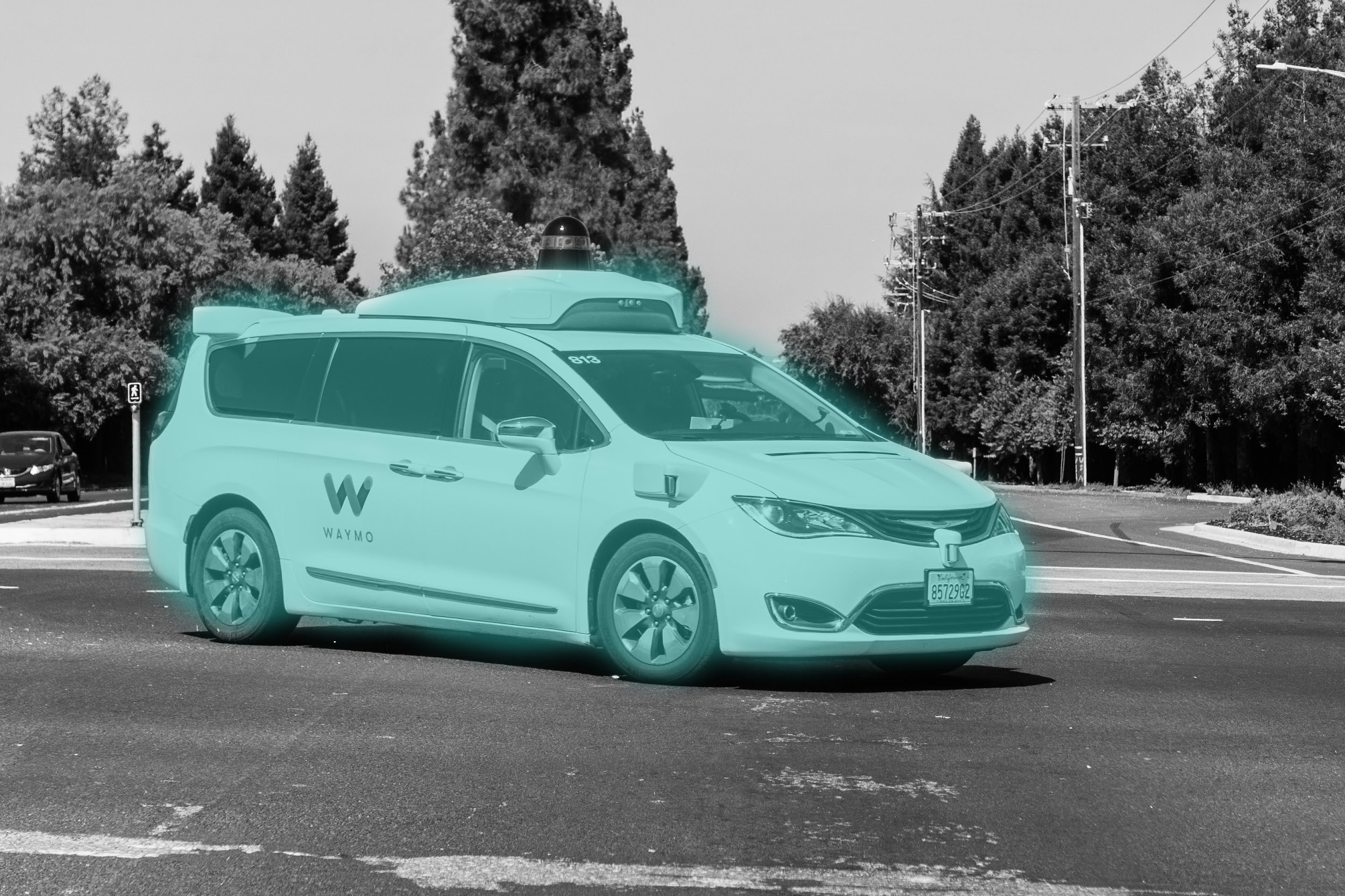
New technology is already changing the way people live, play, work, and otherwise engage within their neighborhoods. Things like ride-share services, self-driving cars, delivery robots, and neighborhood crime alert apps were unimaginable 20 years ago. Today, though, they’re all around us or are just around the corner. But beyond these sorts of amenities are technologies like genetic forensics, artificial intelligence, and facial-recognition software that may dramatically shape our reality in ways that are much less visible—and perhaps not always positive.
Indeed, with these tech innovations will come important questions not only about how we live in cities, but also, more fundamentally, about who has the power to shape decision-making within these communities. In other words, as technology keeps evolving, so, too, should the way we approach democracy. To ensure that it’s not just politicians, lobbyists, and special-interest groups that have a say in answering big tech-policy questions, everyday people should also be empowered to participate in various governance processes.
As technology keeps evolving, so, too, should the way we approach democracy.
For most of U.S. history, political influence over policy-making has stayed with the few and the powerful. Often, it’s been easier for corporate lobbying to affect political wrangling than it’s been for community members. In this light, new technologies are, to an extent, poised not to change this reality—but rather to entrench it. Simply put, our democracy and public policymaking processes aren’t yet ready to meet this challenge in a meaningfully equitable and inclusive way.
It doesn’t have to be like this, though. The ongoing debates around the country on technology’s possible impact on citizens offer a range of case studies that not only illuminate the challenges of these coming shifts—they also point to potential solutions.
Take, for instance, how a month ago the San Francisco Board of Supervisors passed a ban prohibiting city agencies from using facial-recognition software or information from external systems reliant on this technology (with some exemptions for prosecutors in ongoing investigations). Supporters of the technology say that it’s crucial for security and policing. Critics, on the other hand, argue to the contrary: that the software is often inaccurate, especially for women, transgender people, and people of color—which could open up another chapter of the United States’ long history of unjust policing and surveillance.
New technology, then, ought to prod us to revisit some foundational questions of governance: What kind of democracy do we want? And what will be the consequences on a variety of levels—individual, state, national, corporate—of realizing this democracy? This concern is because the United States doesn’t have a stellar track record of empowering communities in decision-making processes. And when policy-making does include (limited) community input, it’s typically confined to tangible issues, like public housing or community development. Even inherently grassroots innovations like participatory budgeting have been confined to capital funds—the type of brick-and-mortar funding and outcomes that people can eventually see.
Yet San Francisco may show us a way forward. There, the potentially harmful effects of facial-recognition software on immigrants, black Americans, and low-income neighborhoods succeeded in mobilizing diverse segments of civil society, including groups focusing on racial justice, LGBTQ rights, and the rights of immigrants and unhoused persons. The aforementioned law mostly banning facial-recognition software is evidence of their success.
San Francisco’s experience underscores the impact that civic engagement can have on democracy—if done right. Grassroots groups organized around a unifying issue and saw political change happen as a result. In that, they also pulled into focus the limits of our federal political system to address large-scale, national issues in a responsive way.
Of course, San Francisco isn’t perfect, and localities themselves may at times be ill-suited for effectively governing technologies that span borders and states. But they can act as vital starting points for fueling national momentum. At a minimum, this sort of local work makes clear the public’s desire to have a seat at the table when discussing complex issues. (Just recall that recent polling shows that residents of California support laws that require public discourse and votes by lawmakers before the government attempts to use surveillance technology.)
And it’s not just San Francisco. We’re seeing instances of more participatory processes inside city halls all across the country.
Consider the Office of Community Wealth Building (OCWB) in Richmond, Va., which provides opportunities for community members living in poverty to participate in Richmond’s city government. The OCWB has also convened four focus groups with community-based organizations and has extended an open invitation for community members to participate in listening sessions every Friday afternoon. Citizen input, then, is woven throughout the process. Other local governments could pursue a similar strategy—one that informs the public on tech-policy issues, engages in broader dialogue, and applies citizens’ feedback.
Another model of local process innovation is the Philadelphia Participatory Design Lab, a Knight Foundation Cities Challenge Winner. As part of the Philadelphia Mayor’s Office, the lab partners with key government agencies to engage residents through design-thinking—a method largely developed by the technology community that aims to keep “users” in mind. While working with Philadelphia’s Office of Homeless Service (OHS), the lab’s goal has been to “employ service design methods to improve the experiences of the public when interacting with the OHS centralized intake system.”
As one example, the office decided to change a policy requiring people to give up their food during the intake process because residents found it demoralizing. When applied to the challenges around new technology, this kind of design-thinking could be used to more concretely engage communities and plan around obstacles before they happen.
Change is afoot beyond city halls, too. There are cutting-edge civic tech organizations thinking about how to stitch user feedback directly into using technology as a means for empowering people. For instance, the Center for Technology and Civic Life provides an easily accessible toolkit, designed in consultation with local county offices around the country, for election administrators on the ground to leverage technology to facilitate voting.
How to make government more responsive to the people it serves is a question that policymakers have long been grappling with; new technology offers us yet another opportunity to experiment with how best to answer that question. There’s no doubt that this work will be difficult—the very “invisible” nature of, say, biased algorithmic decision-making makes the policy implications seem, at times, overwhelming.
And yet, at this political moment of mistrust and misinformation, our response shouldn’t be to shut out democratic forms of engagement. Rather, it’s incumbent that we be creative and re-imagine how to bring people into this work. It may take trial and error to figure out how to do this effectively, but the costs of not doing so are too great to risk.
Should We Take the ‘Foreign’ Out of Foreign Policy?
The divide between domestic and foreign policy that we were all trained in is an artifact of the 1980s and ’90s.
Heather Hurlburt
In 2018, I had the honor of being asked to do one-on-one debate prep with a Senator seeking re-election. “It’s good to see you again,” they said when I arrived. “But there’s not really much on foreign policy this year.”
“Great, let’s just walk through some issues,” I said. And for half an hour I tested and prodded: on immigration, refugees and security; trade and China; defense spending and jobs; anti-Semitism and the Israeli-Palestinian conflict. Eventually, we turned to the more traditional items: Iran, North Korea, Russia. But I couldn’t resist: “Senator, I hope you agree that all these topics are foreign policy, too. They’re what foreign policy is now.”
The divide between domestic and foreign policy that we were all trained in—that structures academic institutions and think tanks like New America, Congressional and White House staff, and media beats—is an artifact of the 1980s and ’90s. Academics have different ideas about why, since throughout history societies and rulers saw the security of incomes and livelihoods as inseparable from the security of countries and thrones.
A few things we do know: In the post-World War II era, the United States was so wealthy that it could afford to conduct international affairs without much reference to its domestic life, and so much wealthier than others that we could be the market and currency of last resort for the entire world. Our oceans and our continental dominance so shielded us from global threats that foreign policy wasn’t the daily necessity that it is for Belgium, Hong Kong, or Uruguay. Though internationalists had believed for decades that trade conflict sparked real wars, those disputes seemed to pale against the threat of nuclear exchanges that could wipe entire trading systems out of existence. Thus, if the job of foreign policy came to be defined as keeping us out of nuclear war, its purpose was no longer clear once the Cold War ended. It became, as former Obama Administration official Jeremy Shapiro has written, perhaps with some hyperbole, a luxury.
In 2016, Donald Trump collapsed the distinction. This hasn’t been obvious to many of his critics, who see his avid use of “national security exceptions” in economic policies and his reframing of immigration in racialized security terms as personal quirks. But his approach is grounded in a larger and more consistent worldview, which, if we’re intellectually honest, has been a feature of American political life since our early days. Its core anxiety about outsiders echoes back to our earliest days—trade is a regrettable necessity, people who want to migrate here are of dubious quality, and international intercourse, whether political or economic, pollutes and dilutes the purity of the American character.
***
That idea that the security of an American identity is rooted in holding the foreign at bay comes through in Thomas Jefferson’s anxiety about the seductions of trade with the British after the Revolutionary War. It’s visible, too, in the Senate’s rejection of Woodrow Wilson’s League of Nations after World War I, and of Harry Truman’s International Trade Organization after World War II. (Bet you didn’t know that Truman signed the Havana Charter, an agreement that established international labor rights and antitrust rules, but couldn’t get it ratified.)
When faced with the threat of every challenge being lumped into this kind of us-versus-them frame, it’s completely understandable that the reaction of many professionals on the left and right has been to insist that foreign policy stands apart. And it’s also true that recent efforts to go the other way, putting domestic concerns into a national security frame, have produced painful and problematic results—before Trump was calling trade and immigration national security issues, there were prestigious task forces suggesting that everything from foreign aid to education to obesity be framed as a national security issue.
So the downsides of re-thinking what national security is are clear. But there are also upsides, and they’re very large ones. In fact, re-integrating foreign and domestic foreign policy thinking could produce more coherent approaches to, and eventually pay major dividends on, a host of major issues, not just Trump’s signature ones.
In fact, re-integrating foreign and domestic foreign policy thinking could produce more coherent approaches to, and eventually pay major dividends on, a host of major issues, not just Trump’s signature ones.
Start with climate change, which ought to be obvious; the United States produces less than 15 percent of global greenhouse gas emissions annually. A serious response plan, whether it’s a progressive Green New Deal or a centrist market- and innovation-based approach, needs to spur reductions in other countries, position U.S. industry to take advantage of technology and consumption shifts, and manage instability that results from changes in both the natural and political worlds. Yet centrist climate thinkers shy away from mentioning the international dimension other than new markets opening for U.S. technology; and the Green New Deal refers to the need for international solidarity but offers very few ideas on how to achieve it. Nor are national security thinkers (with a few exceptions like New America’s own Sharon Burke) engaging with climate change as a core driver of policy. When the Center for a New American Security’s Loren DeJonge Schulman recently sought to commission an essay on what U.S. security strategy would look like with climate at its heart, she couldn’t find an author: “My national security peers generally feel we lack the vocabulary and framework to address such a huge challenge.”
Trade and international economic policy are another area in which the global and local interlock—sometimes in the zero-sum way Trump evokes, but also in ways that both build a web of international connections and grow jobs and livelihoods out of them. Volvo-owned Mack Trucks and Daimler-owned Freightliner build heavy trucks in the United States with union labor. International tourism sustains entire communities. Trade has become a third rail in U.S. politics. But any conversation among policy wonks moves quickly to questions of taxation, labor law, antitrust, and transition support for communities—and then onto automation and the future of work.
Most fundamentally, the wall between foreign and domestic needs to crumble in how we think about challenges to our democratic institutions. The obvious response there might seem to be that the challenge of foreign interference is obviously foreign, while other problems such as extreme polarization, the rise of hate speech, the decline of trust in institutions, and the dwindling of democratic norms are purely domestic.
But reality is more complex. Declining trust in democracy, polarization, and the rise of hate groups are all played on by Russia and other actors, using disinformation spread through social media. Political violence of various ideologies spreads and is nurtured through international networks—we’re used to thinking of ISIS and Al Qaeda this way, but the social media trails left by far-right killers from New Zealand to Pittsburgh show convincingly the lethality of white supremacists across borders. Studies suggest that rising economic inequality contributes to the loss of faith in democracy—and that the choices we make in international economic policy are a significant contributor to inequality.
Is this too much, causing the public and even policymakers to throw up their hands and turn back to oversimplified solutions? A variety of actors across partisan lines are betting not, that we can learn different methods of problem-solving. Instead of putting an issue in a bucket—“domestic” or “foreign”—they say, we can cast nets around the set of factors that contribute and then work them together. The old foreign and domestic policy sets, instead of having a hard line between them, become two boxes of tools that we pull from for different jobs.
Take two examples of how that might work. One is election security. The Alliance for Securing Democracy is a bipartisan group led by foreign policy wonks with extensive experience in the campaign trenches. Their comprehensive policy agenda includes cyber defense and foreign alliances, but also tech transparency, reforming the machinery of elections at the state and local level, and increasing support for local and independent media. Longtime Russia expert Andrew Weiss recently tweeted that reforming laws that make it easy to secretly buy and control U.S. businesses might be a more important step against interference in our democracy than threats or sexy cyber-defenses.
Another approach suggests that foreign policy starts from taking a new look at fundamental U.S. challenges in a global light. Former Georgia gubernatorial candidate Stacey Abrams caused a small stir in foreign policy circles when she added gun violence and voter suppression to migration and trade as “security issues.”
Our values espoused abroad must be reflected by the values experienced at home … One of the challenges … endemic to gun violence is that we cannot challenge and chastise other nations for the security of their people, when we allow our people to be randomly murdered for the lack of spine to call out the problem.
That approach will make everyone uncomfortable, but with U.S. guns fueling violence in Central America that in turn drives migration that’s used to drive divisive politics here—and foster anxieties that feed on economic dislocation that can be both helped and hindered by international economic policy—it seems likely that it’s the right one. Certainly it turned out that way for the Senator I briefed, who won re-election easily.
Twenty years ago, Madeleine Albright toured the United States proclaiming that foreign policy should be “less foreign to the American people.” It turns out that a necessary first step is ensuring that the practitioners of foreign and domestic policy are not foreign … to each other.
More About the Authors

Maresa Strano
Deputy Director, Political Reform Program

Elena Souris

Mark Schmitt
Senior Director, Political Reform Program

Chayenne Polimédio
Fellow, Political Reform Program

Heather Hurlburt
Director, New Models of Policy Change

Hollie Russon Gilman
Senior Fellow, Political Reform Program

Lee Drutman
Senior Fellow, Political Reform Program