A Chapter of: Global Answers for Local Problems
About this Study
Our Sample
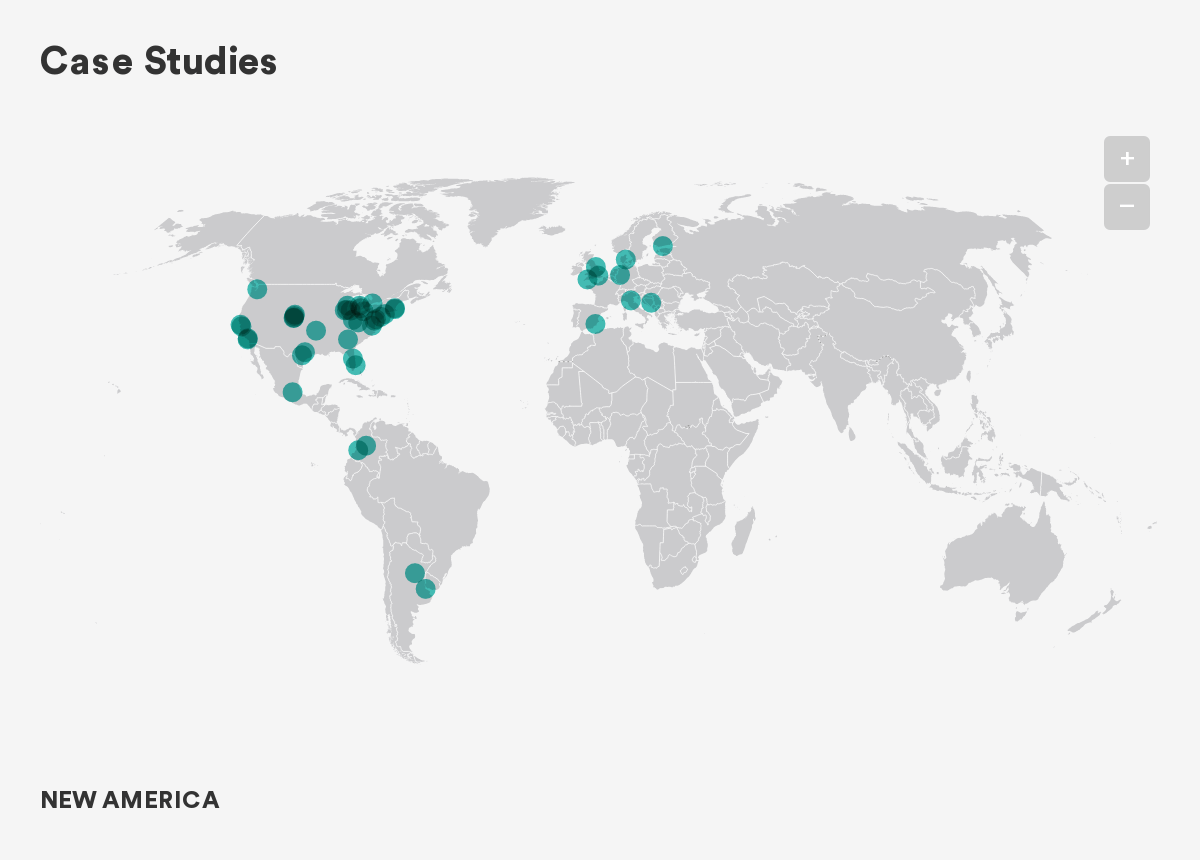
Applying collaborative governance and building genuine civic engagement in forms tailored to unique locations’ histories, budgets, and challenges is difficult for all cities. To understand how some cities are meeting this challenge, we examined 46 cities in the United States, Europe, and Central and South America that implemented 50 different local collaborative governance and civic engagement programs. Data for this sample came from the finalists and semi-finalist application materials for the Cities of Service Engaged Cities Award, a program that provides an international lens on collaborative governance trends and models. Our aim with the sample is to include a wide range of geographic and issue-areas, which we’ve represented below through data visualization.
Cities of Service (CoS) is a nonprofit and nonpartisan organization that aims to help city leadership work alongside residents. Founded in 2009 by Michael Bloomberg, originally within the City of New York, CoS is now an independent organization of more than 280 coalition cities that represents over 84 million people across the Americas and Europe.32 Their mission is to “help coalition cities tap into the knowledge, creativity, and service of their citizens to help identify and solve critical public problems.” 33 Their founding partner was Bloomberg Philanthropies and their current program partners include the Rockefeller Foundation, AARP, the Prudential Foundation, and the Corporation for National Service/Americorps VISTA. Throughout their history, support for CoS has also come from American Express, Comcast NBCUniversal, ConAgra Foods Foundation, ICAP North America, JPMorgan Chase & Co., Sodexo, Urban Land Institute, Walmart Foundation, and WeWork.34 To support municipal civic engagement experimentation, CoS provides cities with resources like human capital, expert technical assistance, and funding opportunities, and helps connect city leadership with a range of partners, including corporate partners, national nonprofits, constituents, and a peer network of other cities.
The aim of the Engaged Cities Award is to “elevate city-led strategies that most successfully engage citizens to help create and implement solutions to pressing local problems,” including tactics like civic tech, data analytics, participatory design, and impact volunteering. The three winning cities each year receive a minimum of $50,000, media coverage through CoS, and resources, including videos and blueprints to promote their work and help other cities implement similar programs. Winners are also invited to participate in annual convenings with others from the Cities of Service Network, where they can learn and share best practices.35
CoS funded this report and provided important fact checking and background information on the cities discussed here based on their research and site visits. All information included in this report was done so at our discretion and all views are our own, not those of the CoS staff. For more information on New America’s funding practices, please refer to our gift guidelines.36
Our research pulls data from the first two years of the award, analyzing the quality of the engagement; the internal bureaucratic structure of municipal offices; and the ability to ensure innovation, diversity, and inclusive engagement based on documentation and data they provided through the Cities of Service application process. To analyze the programs’ individual structures, we adapted the typology that Cities of Service used to evaluate and compare finalists, considering the cities’ problems, solutions, stakeholders, and approaches to diversity.
First, we considered the problems that each city was experiencing and identified 1) the types of problem and 2) the problems’ impacts. The problems could be generally grouped into six categories: health and safety, neighborhood revitalization, environment and sustainability, education and youth, and economic security issues, as well as process improvement for service delivery. Within these types of problems, we considered their impact: whether they limited or challenged the effectiveness of cities’ public service delivery, whether they directly affect the daily lives of citizens, or both.
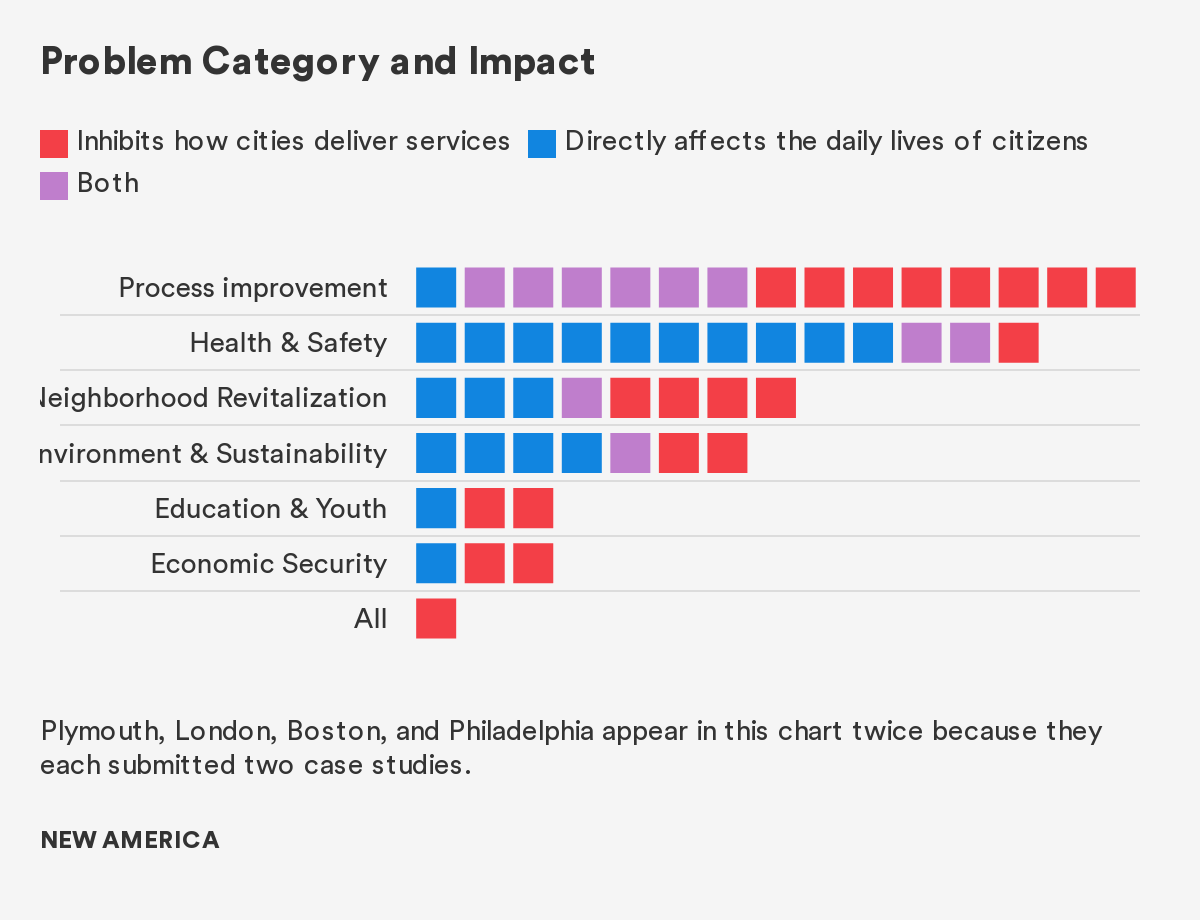
As this chart demonstrates, the cities in our sample work to address a wide variety of concerns that impact both service delivery and citizens’ daily lives. The sample is too small to suggest that collaborative governance models are best suited to some issues over others, but does show the range of problems that cities can collaborate with residents to address.
From here, we also tracked the types of solutions and tools that cities were using to solve these problems. Most resulting collaborative governance programs could fit into five categories: Participatory design, crowd-sourcing, impact volunteering, citizen-sourced data, or capacity building. Many cities used a combination of these tools in one program.
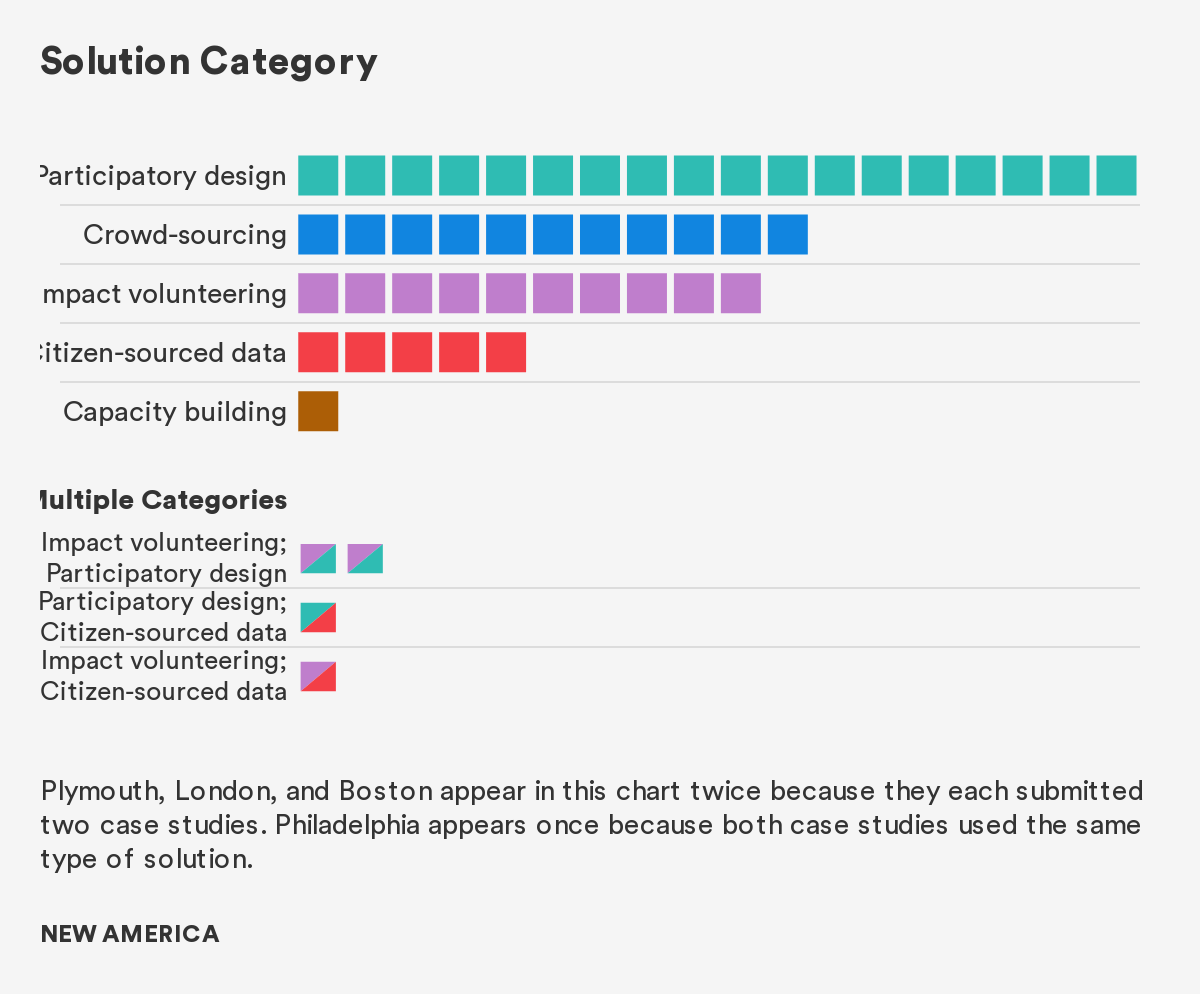
While these case studies suggest that participatory design was the most popular tool—compared to capacity building or citizen-sourced data, for example—this sample does not suggest that any of these solutions are more effective than others.
Our Methodology
To analyze this data, we broke examples down into the categories above to understand how cities were approaching these local problems, and spoke with CoS staff about their observations during site visits. Finally, we co-hosted a workshop with CoS alongside the 2019 CityLab conference in Washington D.C., bringing together municipal leaders from almost 20 cities, including some represented in our sample from the Engaged Cities award. These public servants held a range of offices, some within the mayor’s office and others in various city departments. Their roles included the chief of performance strategy and innovation, sustainability manager, leader of community initiatives in the Office of Peace and Civic Culture, the director of planning and development, director of the Department of Neighborhoods, chief service officer, chief innovation officer, and coordinator of the Civic Imagination Office. The workshop focused on building relationships between these local innovators, drawing lessons learned from their experiences, and identifying their individual needs and priorities in doing that work.

Global Answers for Local Problems
- Executive Summary
- The Promise of Participatory Democracy
- Cities as Centers of Challenge and Opportunity
- Building Collaborative Government and Institutionalizing Civic Engagement
- Identifying Levers of Power in Municipal Government
- Sharing Levers of Power in Municipal Government
- About this Study
- On the Ground Lessons from Engaged Cities
- Recommendations: Next Steps for Practitioners and Research
- Conclusion
Citations
- “About,” Cities of Service online.
- “About,” Cities of Service online.
- “Supporters,” Cities of Service online.
- “Cities of Service Engaged Cities Award,” Engaged Cities Award online.
- “Gift Guidelines,” New America online.