Peter Bergen
Vice President, Global Studies & Fellows, New America; Professor of Practice, Arizona State University; Author, All the Presidents’ Wars
Editor’s note: This report was originally published on June 17, 2021, building on prior presentations of this data. The data and figures within are updated on an ongoing basis. The surrounding analysis and text have not been updated since the original publication. Readers should refer to the figures for the most current information.
This project tracks America’s counterterrorism wars, including the drone war in Pakistan, air and ground operations in Yemen and Somalia, as well as the internationalized air war in Libya. It draws on news reports, official government statements, and available reporting from NGOs and other organizations. See the full methodology and also find detailed source information within each figure.
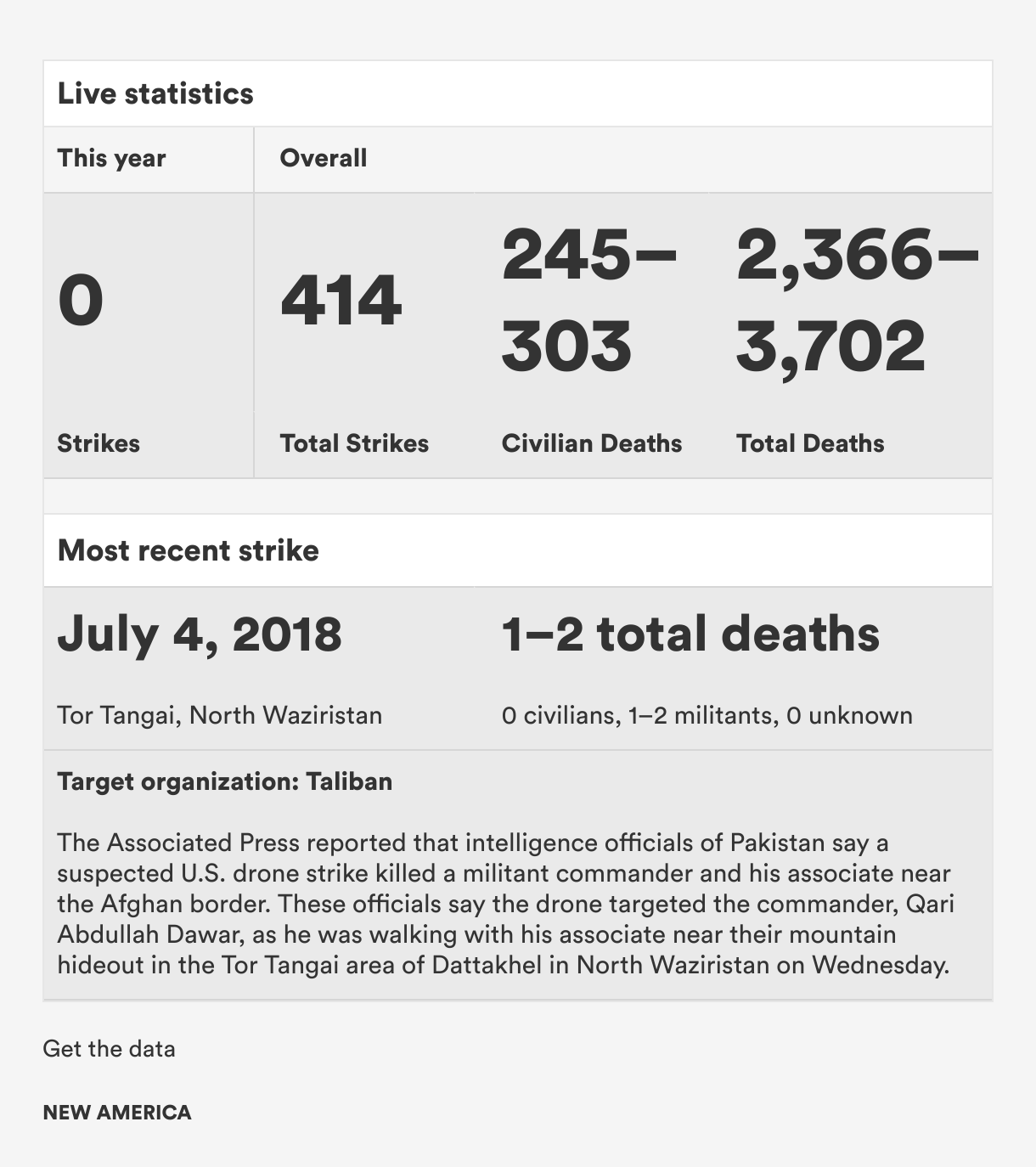
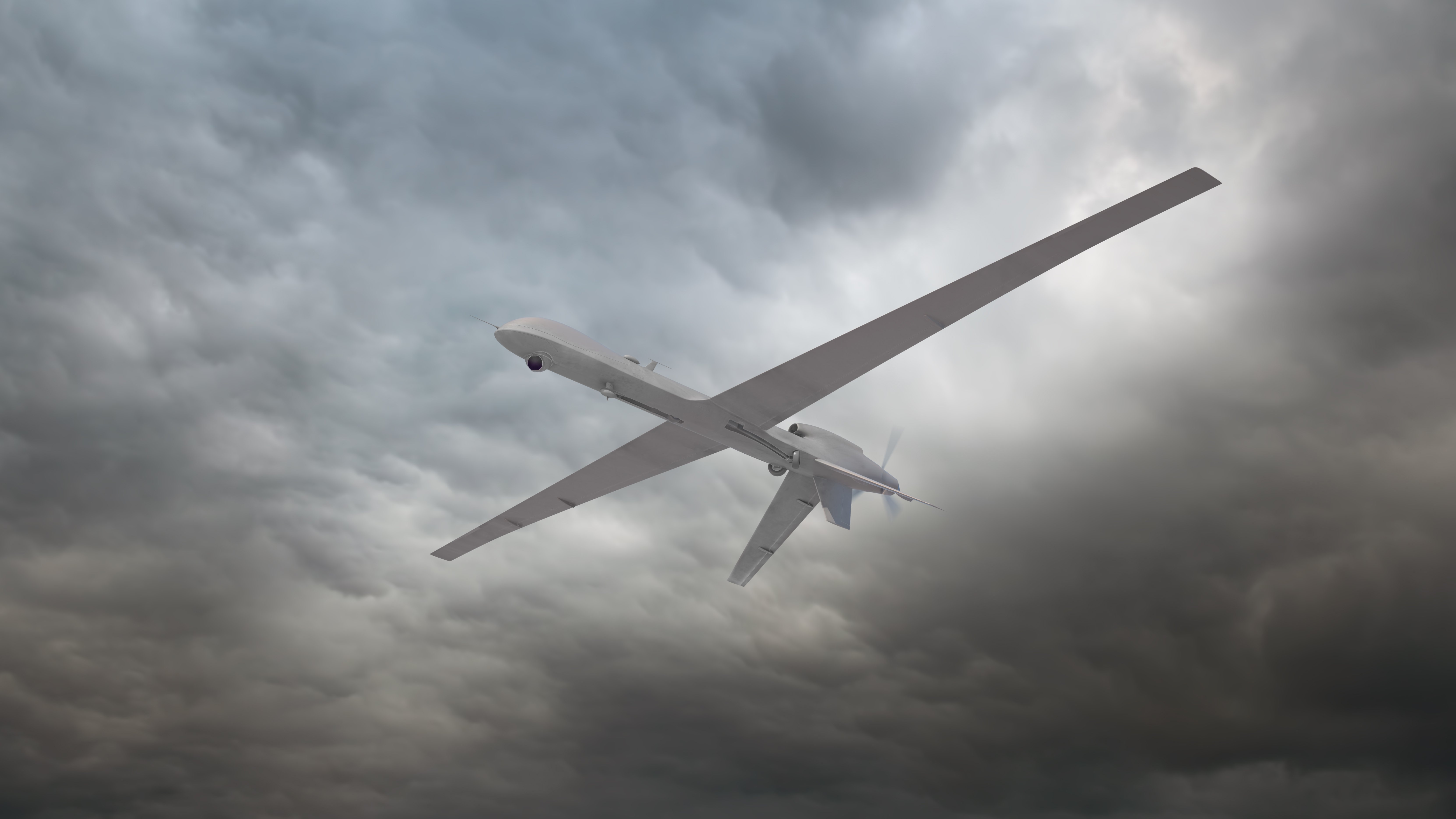
On June 19, 2004, the United States undertook its first known drone strike in Pakistan, beginning a covert war that would kill thousands of people. Since that first strike, which killed prominent Taliban leader Nek Muhammad in South Waziristan, the use of drones in Pakistan has remained shrouded in mystery with the government often denying that strikes took place or that civilians were killed. In the last year of his administration, President Obama began to release information on strikes outside of traditional war zones. This site provides a detailed and public look at the drone war in Pakistan by drawing upon credible reporting and government statements to track the drone war.
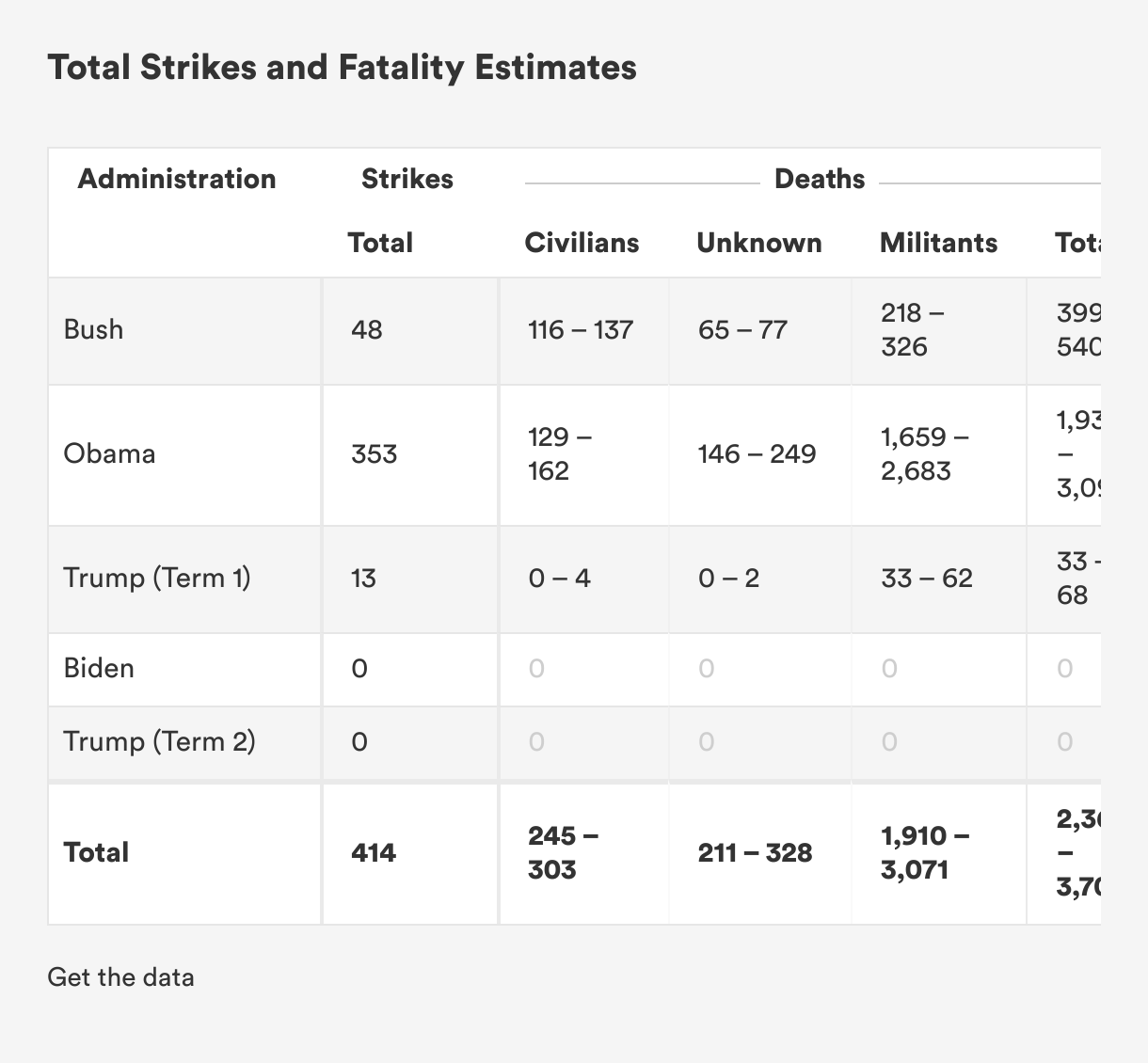
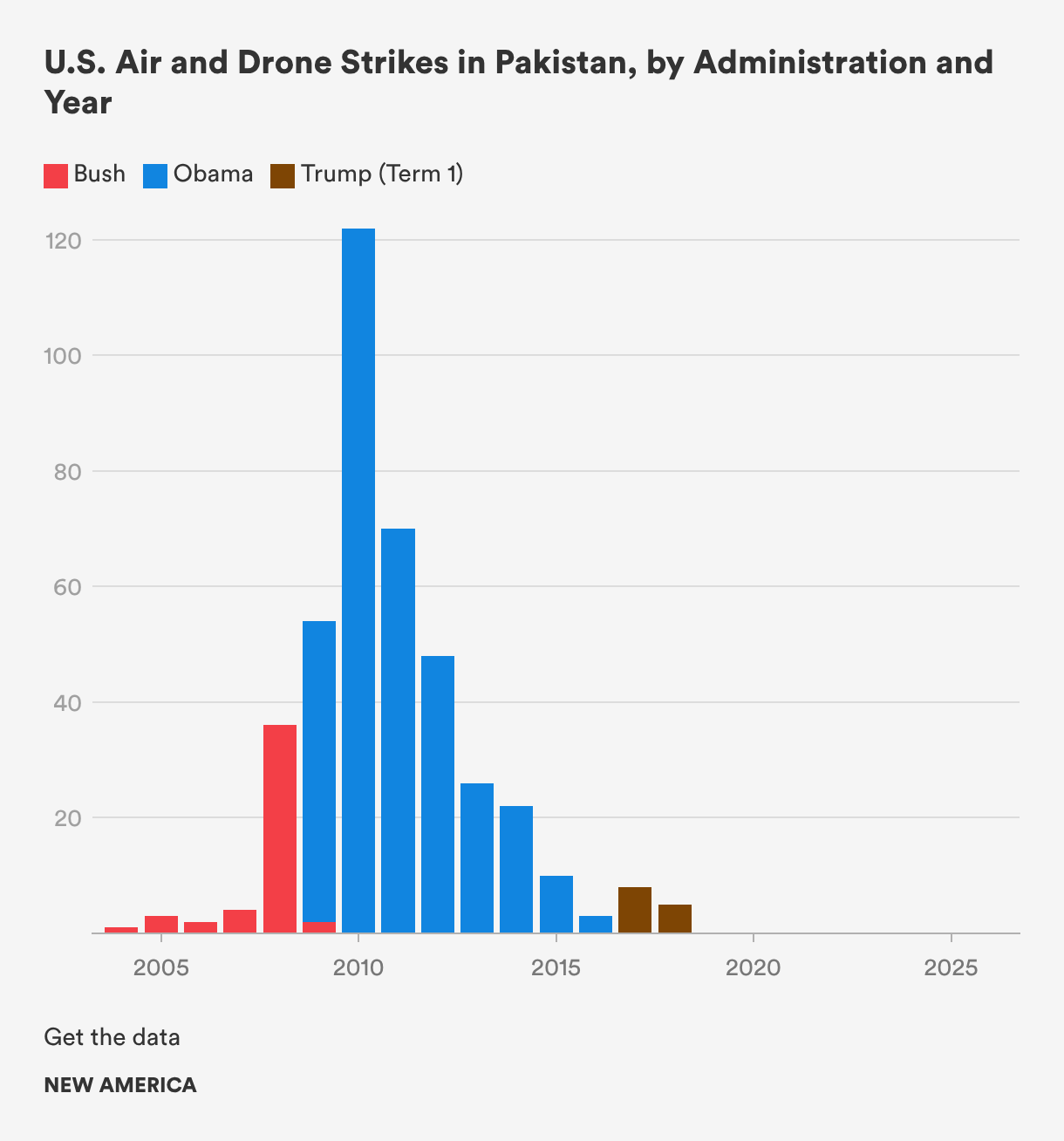
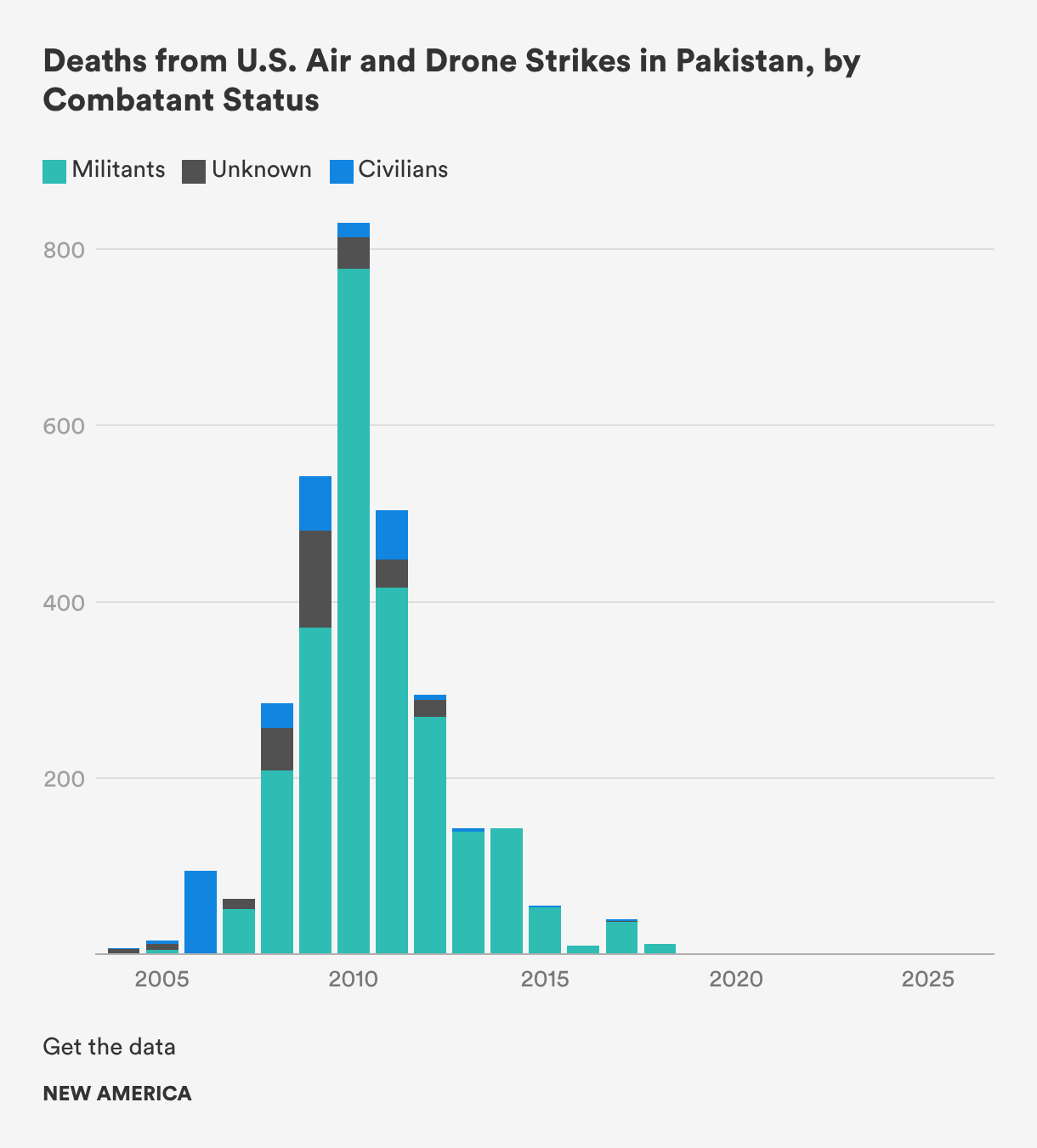
Under the Bush administration, the drone war remained relatively limited in Pakistan until 2008, when the administration began to escalate the number of strikes. The Obama administration continued to escalate strikes, peaking in 2010 and then beginning a slow decline until 2016 when the Obama administration conducted only three known strikes in Pakistan. On May 21, 2016, the United States conducted its last drone strike in Pakistan under Obama, killing then-Taliban leader Mullah Akhtar Mansour in Balochistan. No strikes were conducted in the last eight months of the administration.
On January 20, 2017, Donald Trump became president and inherited a drone war in Pakistan that had halted. On March 2, the Trump administration conducted its first strike in Pakistan ending a more than nine month pause in strikes. However, the Trump administration has not conducted a strike in more than a year and a half.
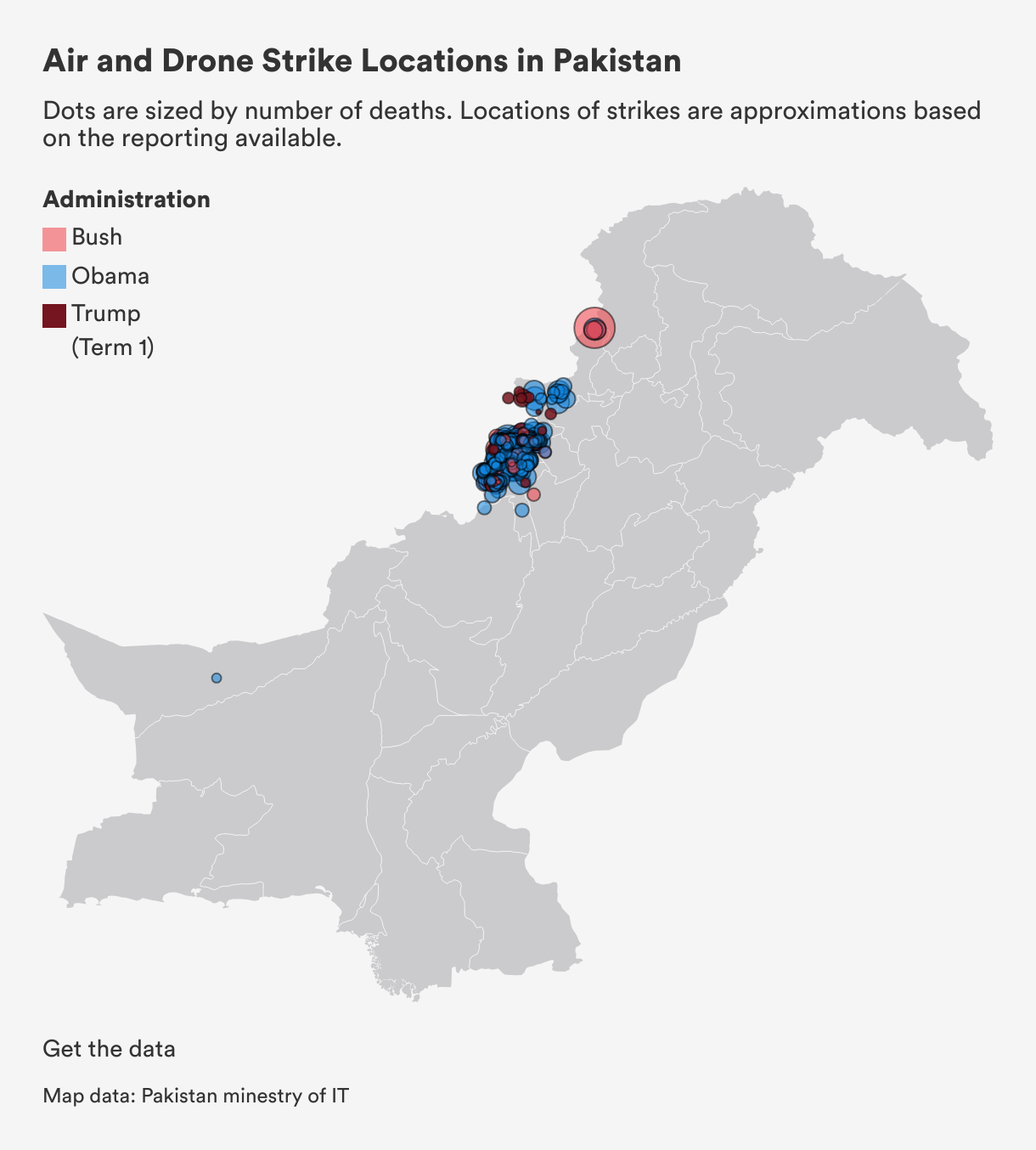
With the exception of the final strike of the Obama administration, the American drone war in Pakistan has been located in the Federally Administered Tribal Areas (FATA) along Pakistan’s northern border with Afghanistan. The map below shows the location of strikes mapped to the best of our ability. It can be toggled to view the data as a list.
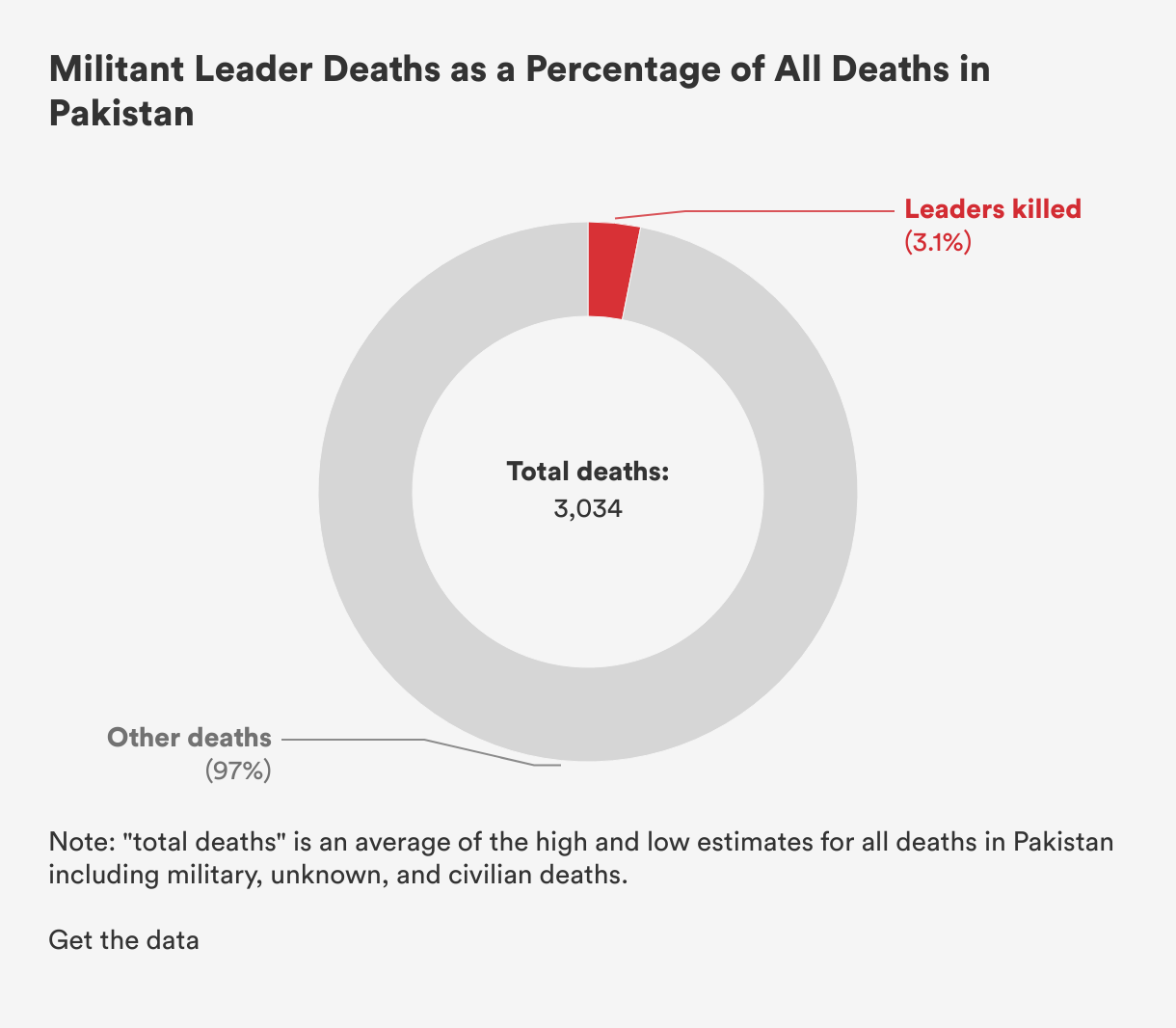
Many key al-Qaeda and Taliban leaders have been killed in strikes since the beginning of the campaign.
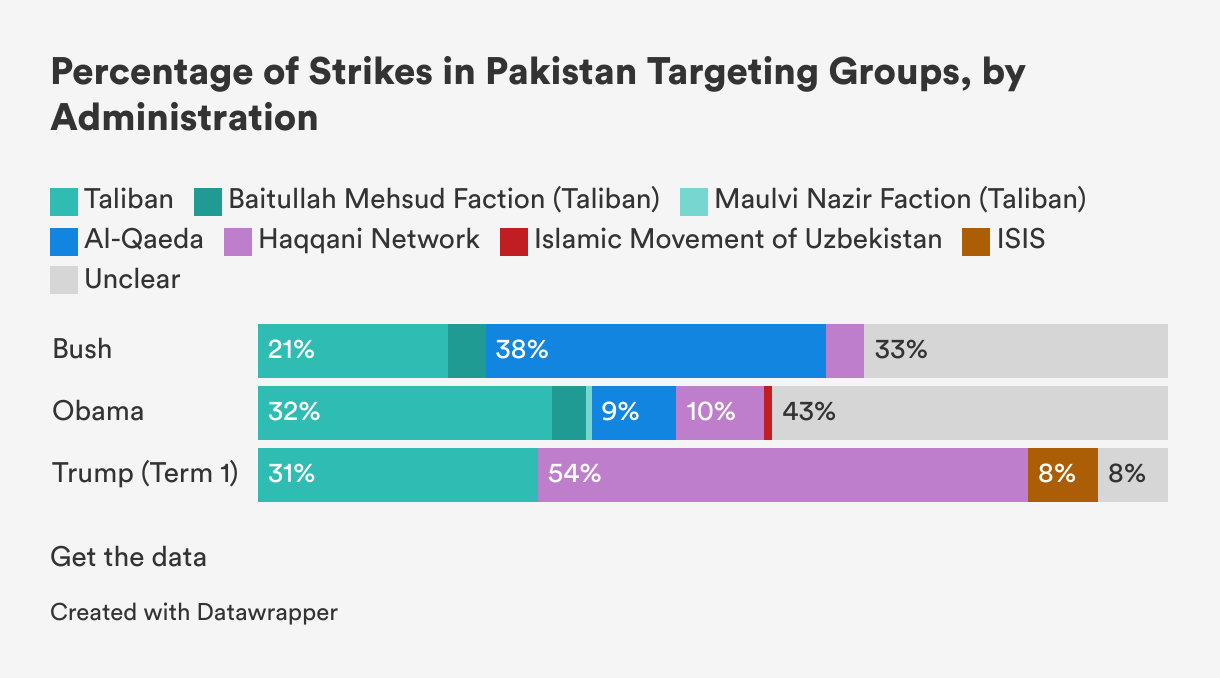
Over the course of the drone war in Pakistan, the targets of strikes began to change. Whereas more than a third of the Bush administration’s strikes targeted al-Qaeda, that percentage had dropped substantially by the Obama administration and was replaced by a greater proportion of strikes targeting the Taliban and Haqqani Network.
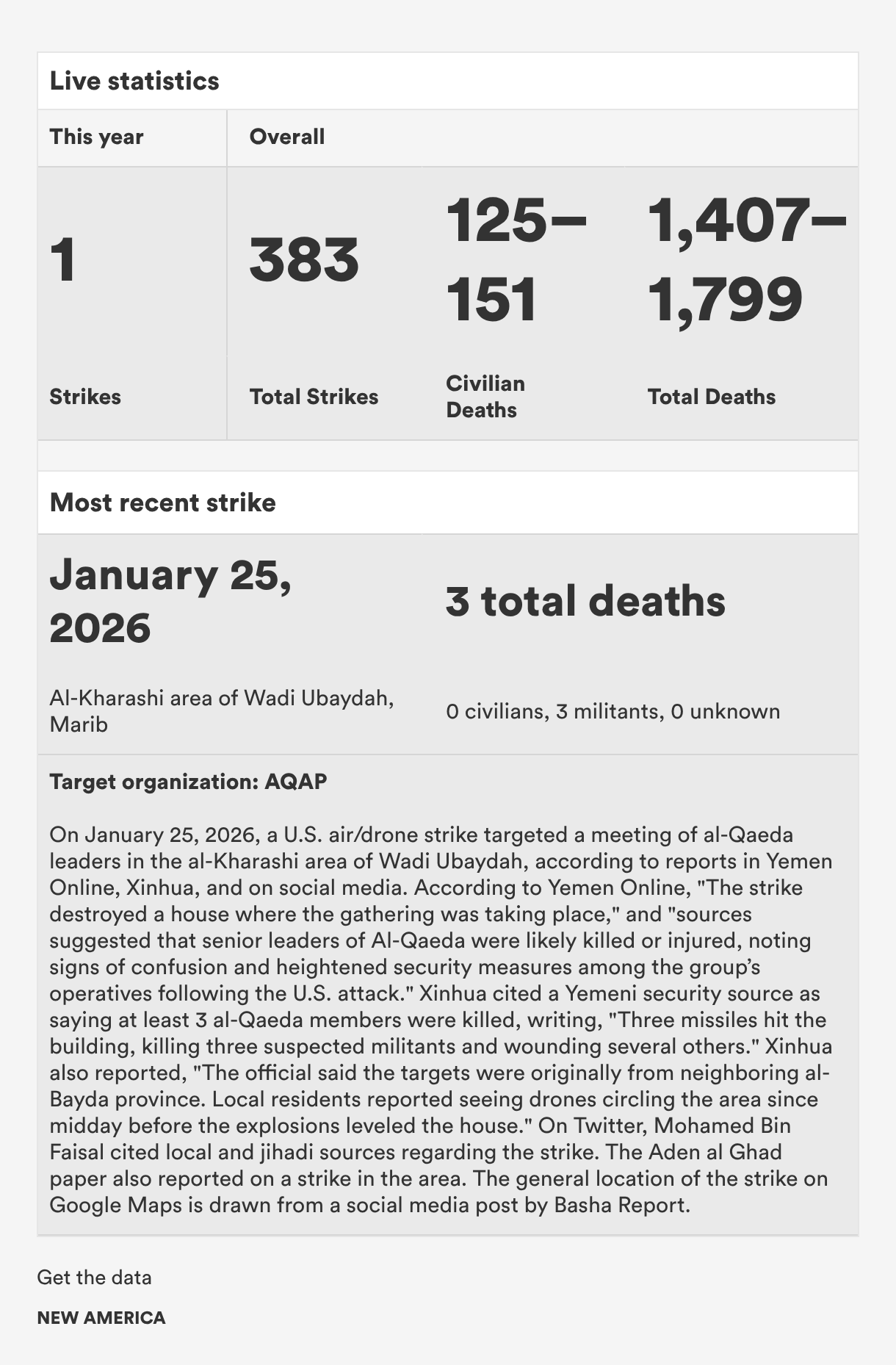
On Sunday, November 3, 2002, six men, packed into a sedan, rolled east of Yemen’s capital through the sparse desert of Marib province, where they were struck and killed by a hellfire missile sent to meet them from a U.S. Predator drone. The U.S. targeted killing program was in its infancy—only one other strike had reportedly ever been conducted—and this was a precedent-setting success.
The strike targeted and killed Qaed Salim Sinan Al-Harithi, who was believed to have devised the 2000 terrorist attack on the USS Cole that killed 17 American sailors and wounded 39. The five other passengers, though not the original target, also perished—one of which was an American citizen.
Since that strike, the United States has killed more than 1,000 people in counterterrorism operations in Yemen.
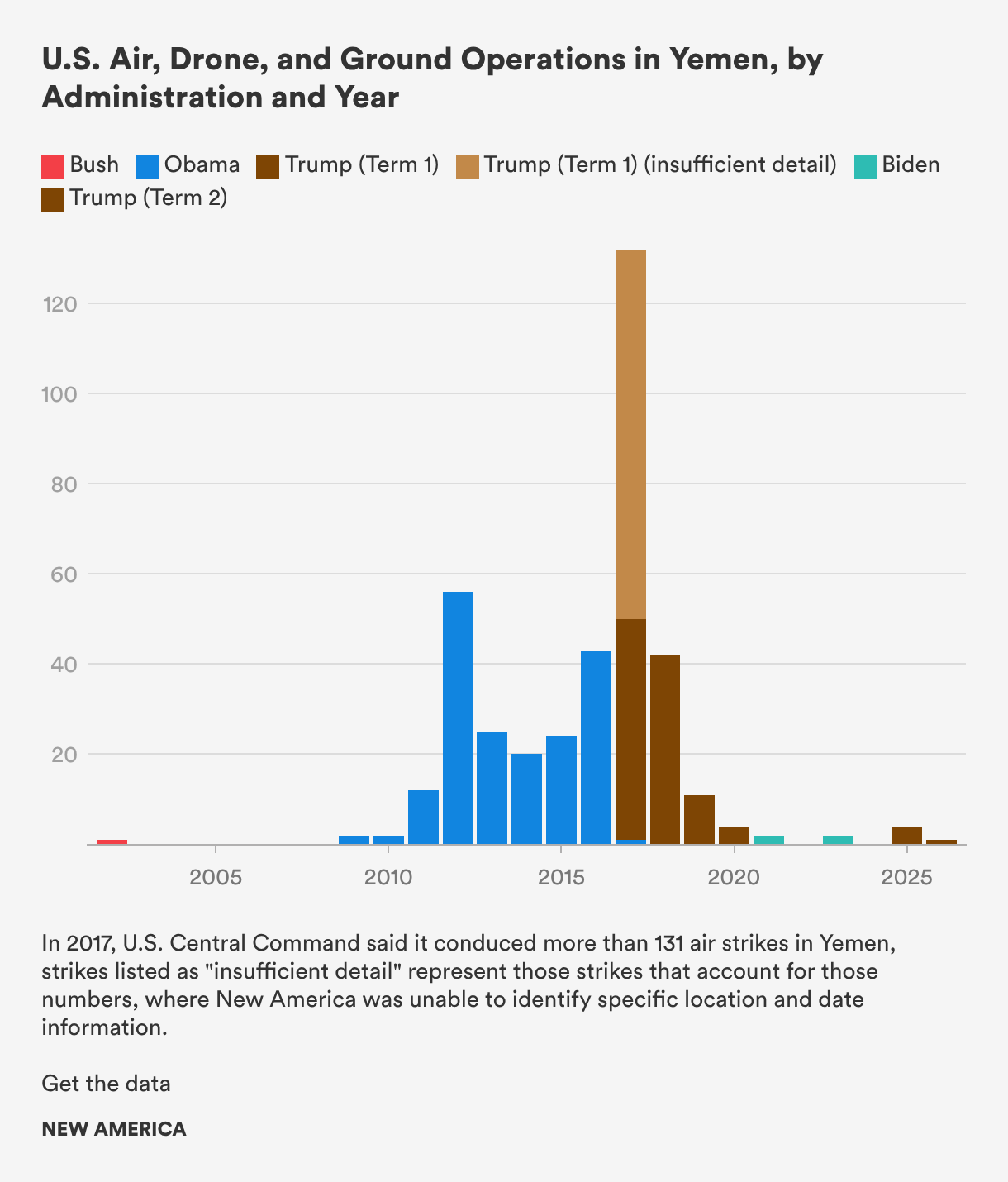
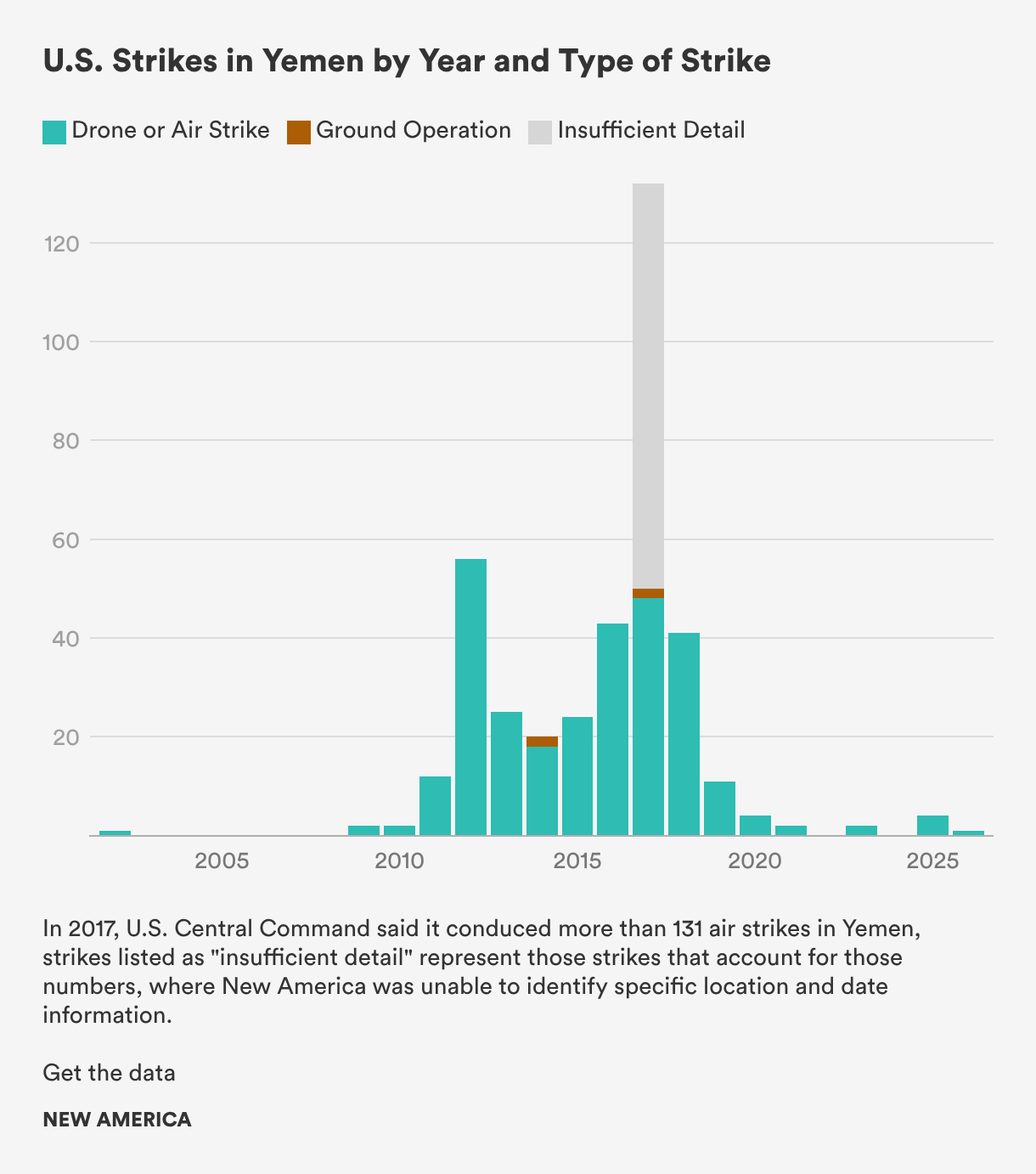
The conduct of American counterterrorism operations in Yemen has varied over time. For seven years after the United States’ first strike, which was carried out under the Bush administration, the United States refrained from conducting further strikes in Yemen. The U.S. drone program would not commence in Yemen in earnest until 2009, when Barack Obama took office.
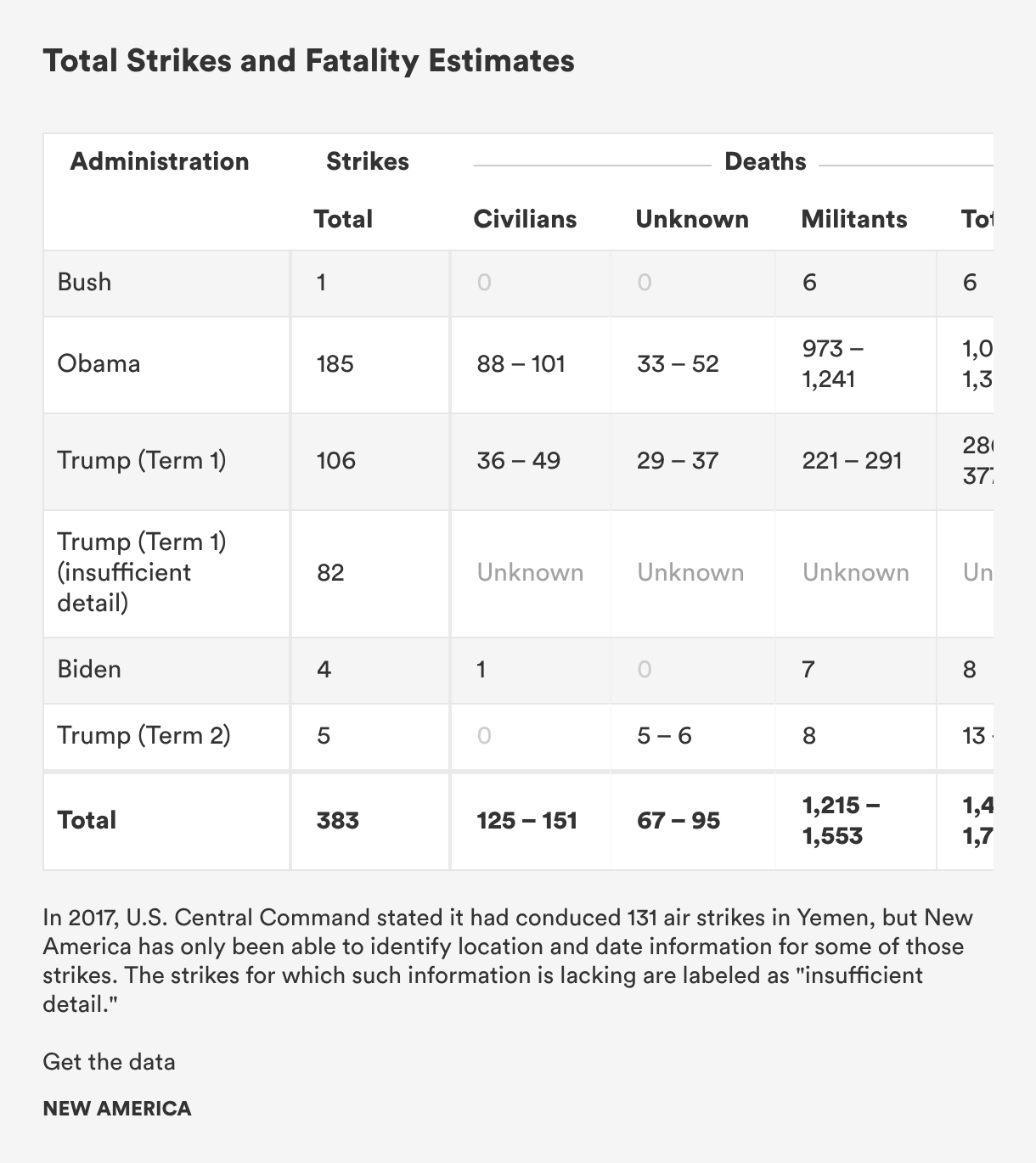
On January 20th, 2017 Donald Trump was inaugurated as president, inheriting an already escalating counterterrorism war in Yemen. As president, he proceeded to further loosen the restraints on conducting airstrikes, drone strikes, and ground raids in the country.
In 2017, the United States conducted more individually identifiable strikes than in any other year except 2012. In February 2018, the military said it conducted 131 strikes in 2017.
In March 2017, President Trump designated three provinces in Yemen as “areas of active hostilities,” as part of the administration’s efforts to loosen the battlefield restrictions of the Obama-era drone wars, raising the risk of civilian casualties, such as the reported dozens incurred in the first ground raid Trump authorized as president.
Trump authorized a military operation on January 29, 2017, conducted in the Yakla district of Yemen’s al-Bayda province, targeted several AQAP members, and reportedly killed between 13-14 militants. Three AQAP leaders were killed in the operation: senior leader Abdul Raouf al-Dhahab and his brother Sultan al-Dhahab, both of the infamous Dhahab clan which established influence in Bayda through its relationship to al-Qaeda, and Seif al-Nims (also referred to in reports as Saif Alawai al-Jawfi).
The raid was in the planning stages for months under President Obama, but was not executed. Trump's authorization of the raid was costly, resulting in the death of several Yemeni and Saudi civilians, the death of Chief Petty Officer William Owens, and injuries to an additional three special operations officers. The devastation of civilian deaths, which included women and children, among them the eight-year-old daughter of the late Anwar al-Awlaki, resulted in the suspension of U.S. commando activities by Yemeni officials, though officials backtracked in days following.
On March 2-6, 2017, the U.S. military conducted a combination of drone and airstrikes, with reported numbers ranging from 25 strikes by Pentagon estimates to as many as 40, according to reports. Pentagon spokesman Navy Capt. Jeff Davis denied local reports that troops were involved in the multi-pronged attack, but acknowledged U.S. forces were deployed to that location during that period.
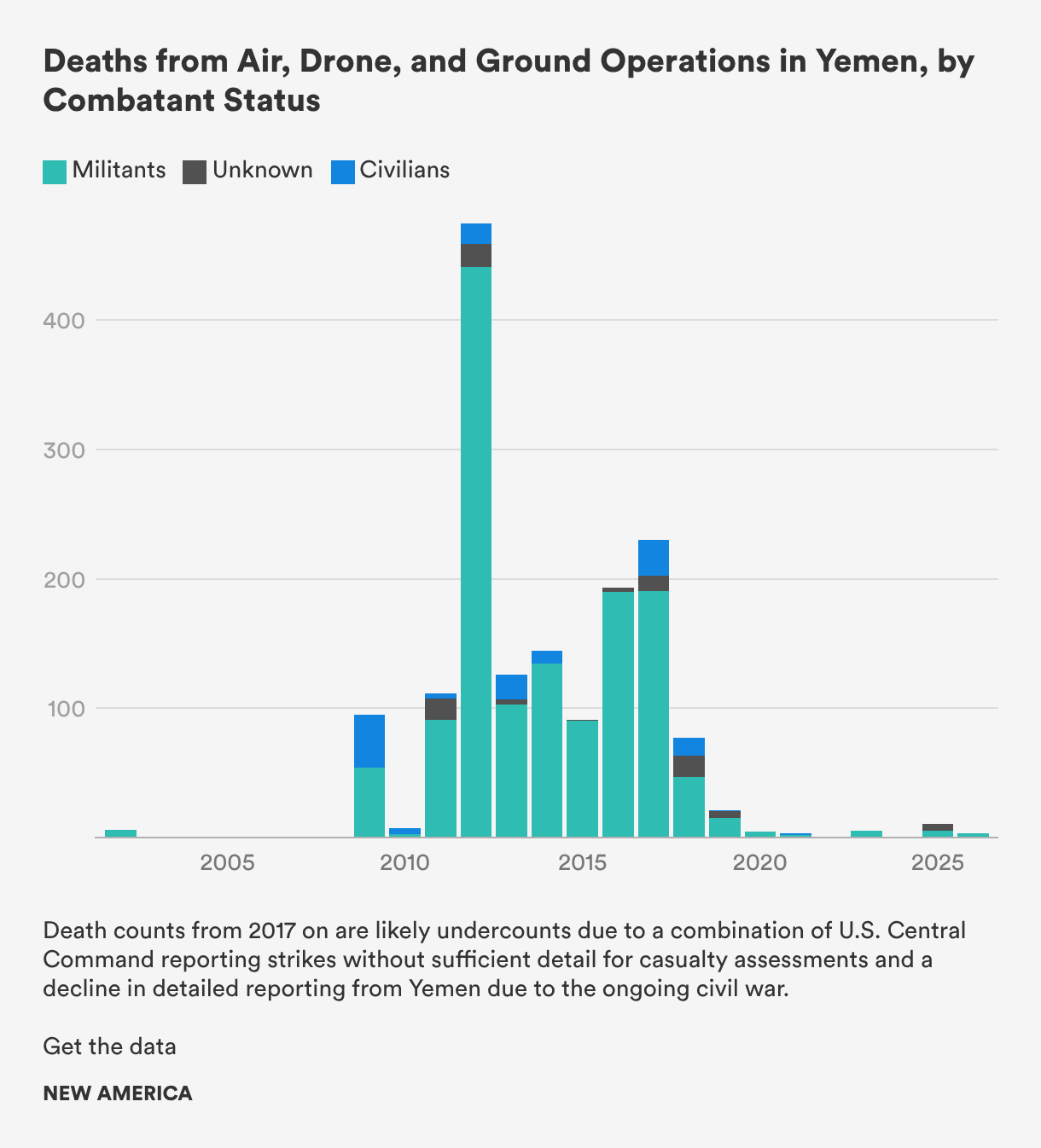
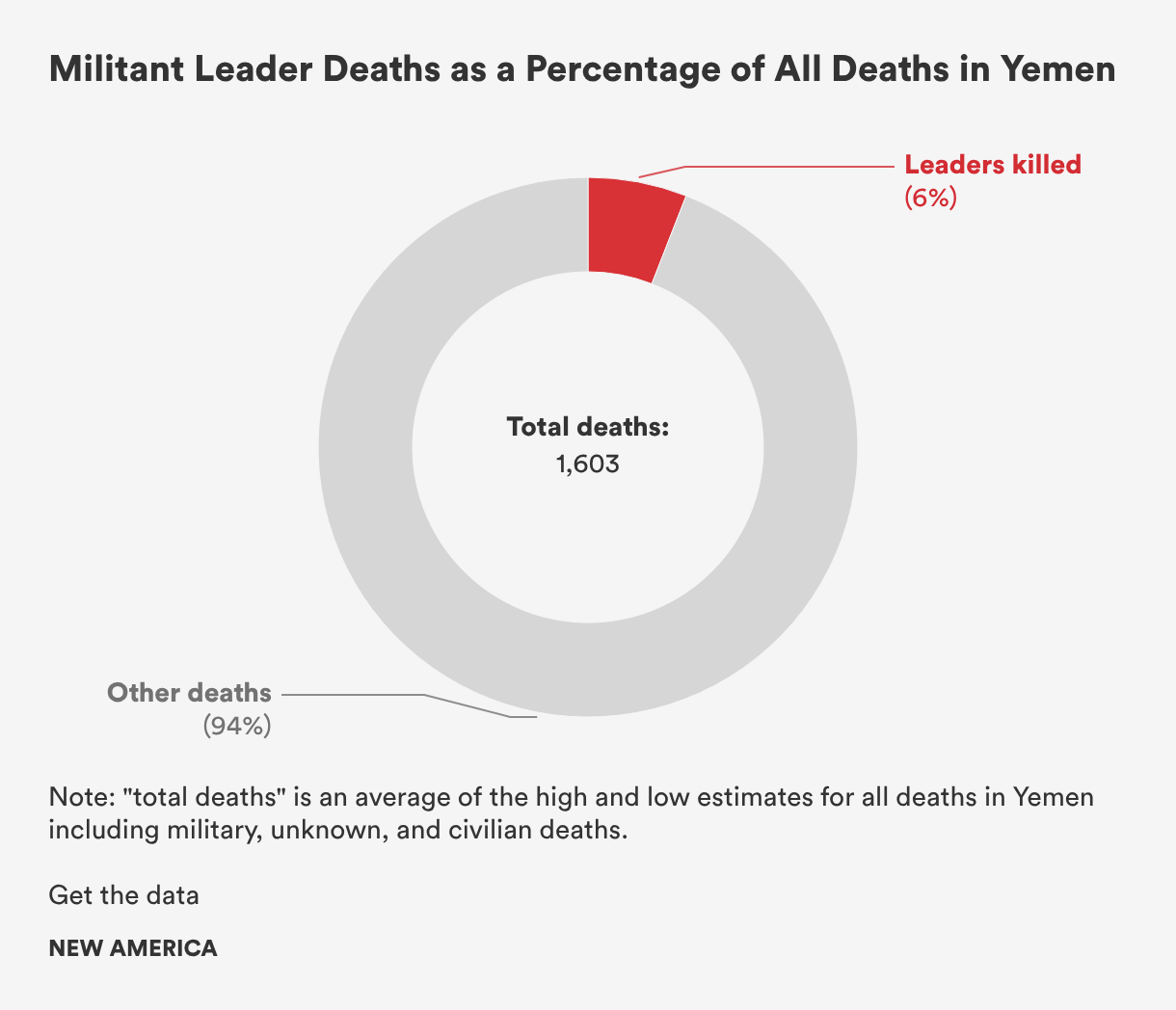
Although the Trump administration vastly escalated the counterterrorism war in Yemen, the war began under President Obama. Over his entire presidency, President Bush had conducted only a single strike in Yemen in 2002.
In January 2009, as Obama took office , dispersed Qaeda militants—pushed out of Saudi Arabia by its relatively successful counterterrorism campaign—and Yemeni militants merged and announced the formation of Al-Qaeda in the Arabian Peninsula (AQAP). AQAP conducted aggressive operations against local security forces between 2009 and 2010. But at the same time, the group still held ambitions of a global jihad.
In the early afternoon of November 5, 2009, Nidal Hasan, a military psychiatrist preparing to deploy with his unit, abruptly opened fire on other servicemen at Fort Hood Army Base, killing 13 people and wounding 30 others. “Nidal Hassan [sic] is a hero,” wrote his guide, Anwar al-Awlaki, a popular American terror propagandist who had fled the U.S. in 2002 under suspicion of terror activity.
Awlaki, born and raised in the fertile valley of Las Cruces, New Mexico—where his father was studying agriculture on a Fulbright award— had been on the FBI’s radar for a decade by the time he published his blog post on the Fort Hood shooting. However, his enigmatic connections to three 9/11 hijackers would set the U.S. government on his trail for years to come, apparently fueling his radicalization and prompting him to leave the U.S. for London, and eventually Yemen.
On Christmas day in 2009, AQAP mounted an attack on a United States airliner. Umar Farouk Abdulmutallab, a Nigerian-born graduate student attending school in Europe, had sought out Awlaki and received from him a martyrdom mission: take down a passenger plane over U.S. soil. If not for a defect in the bomb, which was tucked into Abdulmutallab’s undergarments, he would have succeeded.
This near miss precipitated an escalation in Obama’s counterterrorism campaign in Yemen.
In January 2011, demonstrations broke out in the country, as was occurring at the time in other nations across North Africa and the Arabian peninsula. As the fledgling, but capable, AQAP made territorial gains amidst the chaos, the United States responded by substantially escalating air and drone strikes.
While the tectonic plates of poor governance, tribal cleavages, and Islamic extremism ground together beneath Yemen’s rumbling uprising, AQAP and the Obama administration were entrenched in separate efforts to gain momentum. Osama bin Laden, monitoring the group’s rise in Yemen—the country he deemed “most suitable for jihad”—from his Pakistan hideout, urged the Qaeda-offshoot to focus on filling the gap in governance and winning over the civilian population.
Heeding this admonition, AQAP continued to accumulate territory, administering Sharia law where it raised its flags and providing much-needed services and order to the suffering populations. Digging in their heels, they ensured their longevity and prominence by allying with the tribes, even marrying into them.
But that would be the last bit of advice to AQAP from the central al-Qaeda leader. Finding momentum in his own campaign, Obama approved the Navy SEAL operation to kill Bin Laden, giving him room to turn his attention to a rising threat in Yemen.
Anwar al-Awlaki was killed in a drone strike by the U.S. government on September 30, 2011. This is the first known case of the American government targeting and killing a citizen since the Civil War. Another American jihadist, Samir Khan, was killed alongside Awlaki, but was not the target of the strike, though he’d risen to prominence in the terror network as the editor and publisher of Al-Qaeda’s Inspire magazine. Two weeks later, Awlaki’s son, 16-year-old Abdulrahman al-Awlaki, was killed in collateral damage from a strike reportedly targeting Egyptian Al-Qaeda leader Ibrahim al-Banna.
Awlaki would be one of many militant leaders killed over the course of the war in Yemen.
Strikes would continue to rise and peak in 2012, but slowly began to de-escalate through 2014.
However, the fall in strikes would not last. In September 2014, Yemen’s Houthi rebels made a strong advance into the country taking the capital of Sana’a. In January 2015, the Houthi rebels sparked a renewed conflict. While many assumed the instability would pose challenges for American counterterrorism operations, the United States began to re-escalate its war in 2015 in part due to renewed AQAP advances, including its seizure of the port city of al Mukalla in April 2015.
When the Obama administration would hand over the ‘drone playbook’ to the incoming administration, counterterrorism activities were already on a precipitous rise in Yemen.
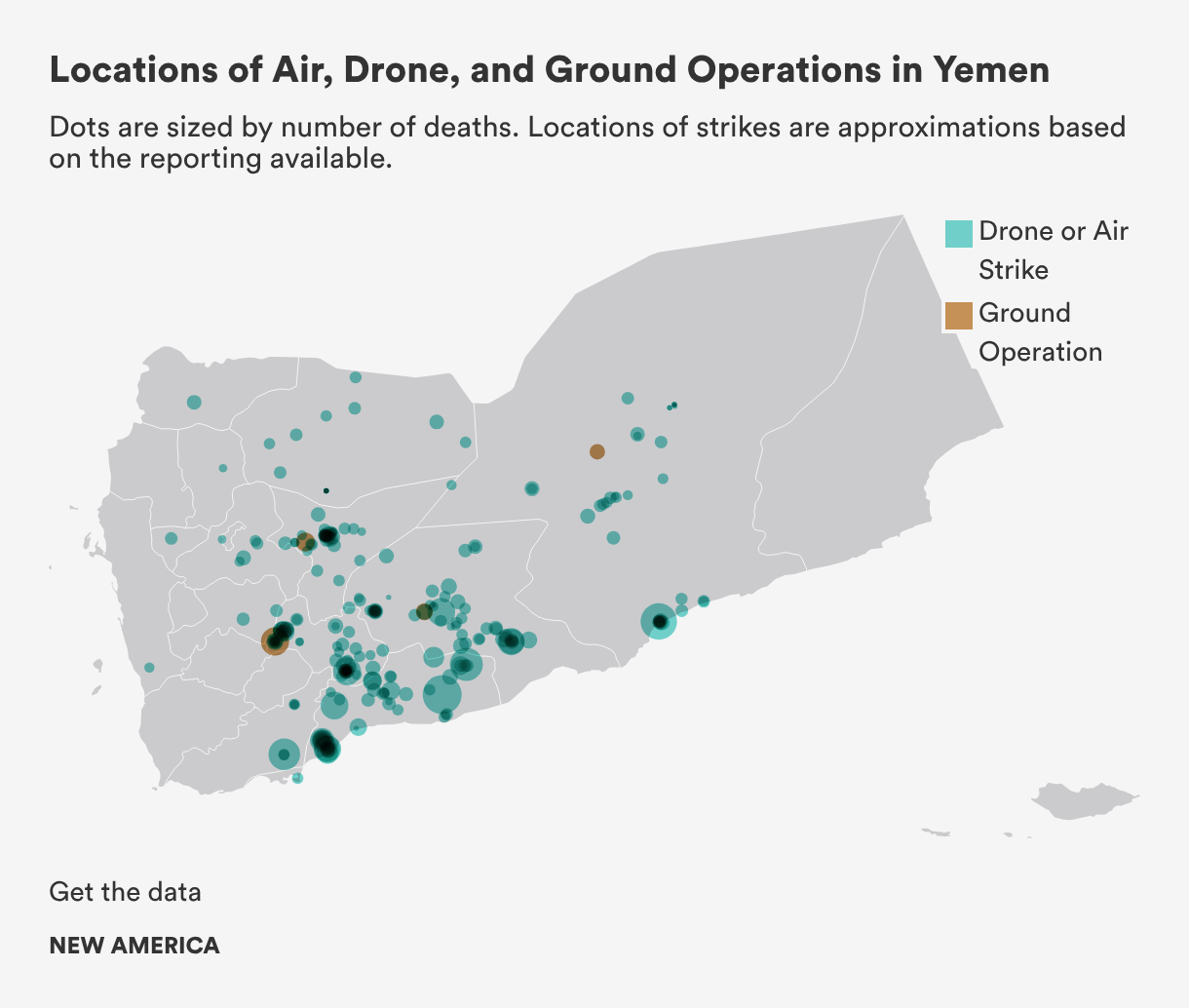
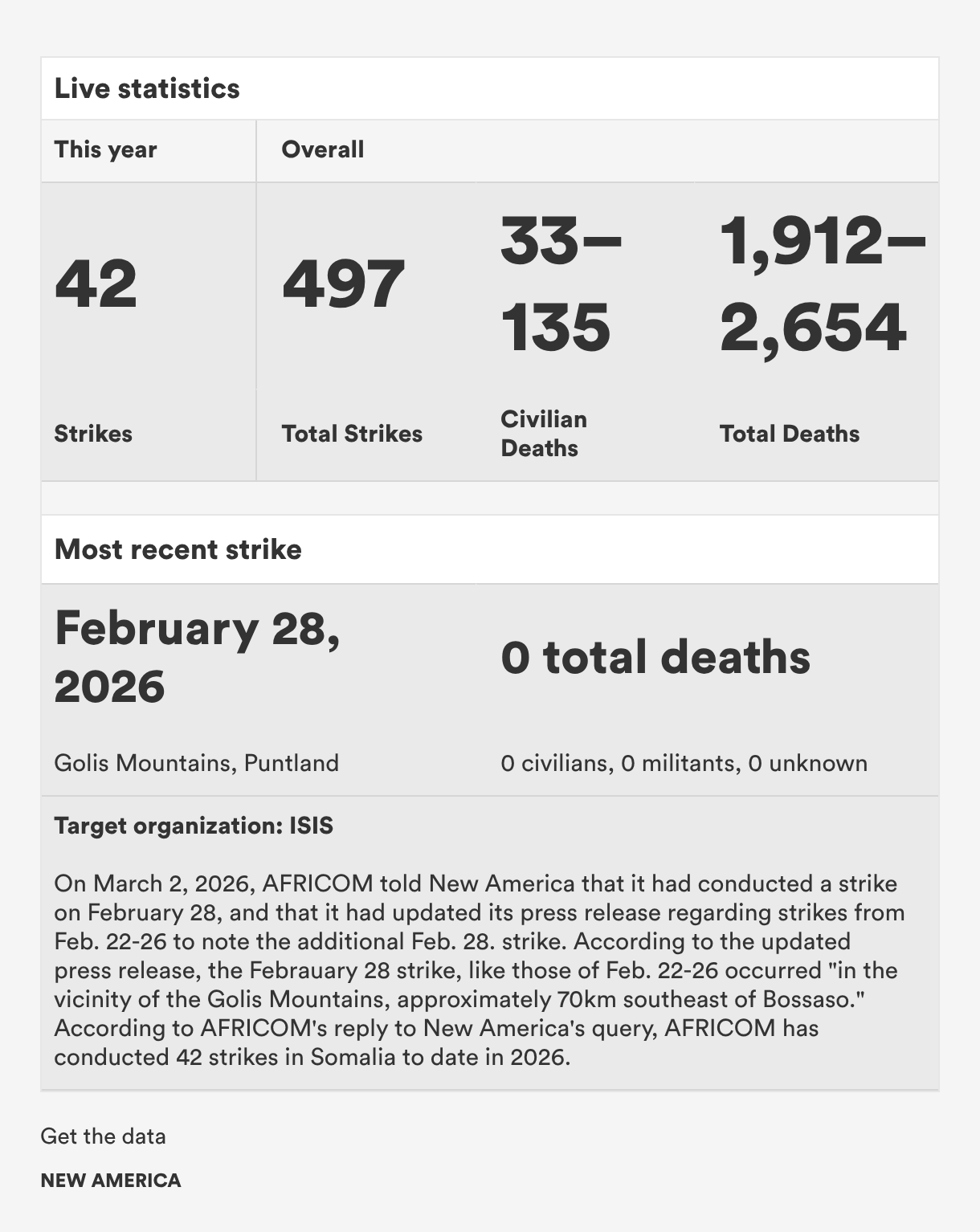
Since his inauguration, President Donald J. Trump has presided over an unprecedented escalation of the U.S. counterterrorism war in Somalia. By mid-2019, the United States surpassed the number of strikes by drones and Special Operations raids of any previous year, and had also conducted double the number of strikes that it had through August 2018. With this escalation, Trump intensified a covert American war that had persisted since 2003, and which had killed more than 350 people before Trump took office. In 2017, the Trump administration more than doubled the number of strikes than that of any year that Obama was in office.
The first recorded post-9/11 operation in Somalia occurred on March 19, 2003, under the Bush administration. It involved the capture and interrogation of Suleiman Abdallah and reflected the U.S. preference to detain, interrogate, and prosecute terrorists. American counterterrorism operations in Somalia have since expanded to include airstrikes, drone strikes, and ground raids to kill suspected terrorists.
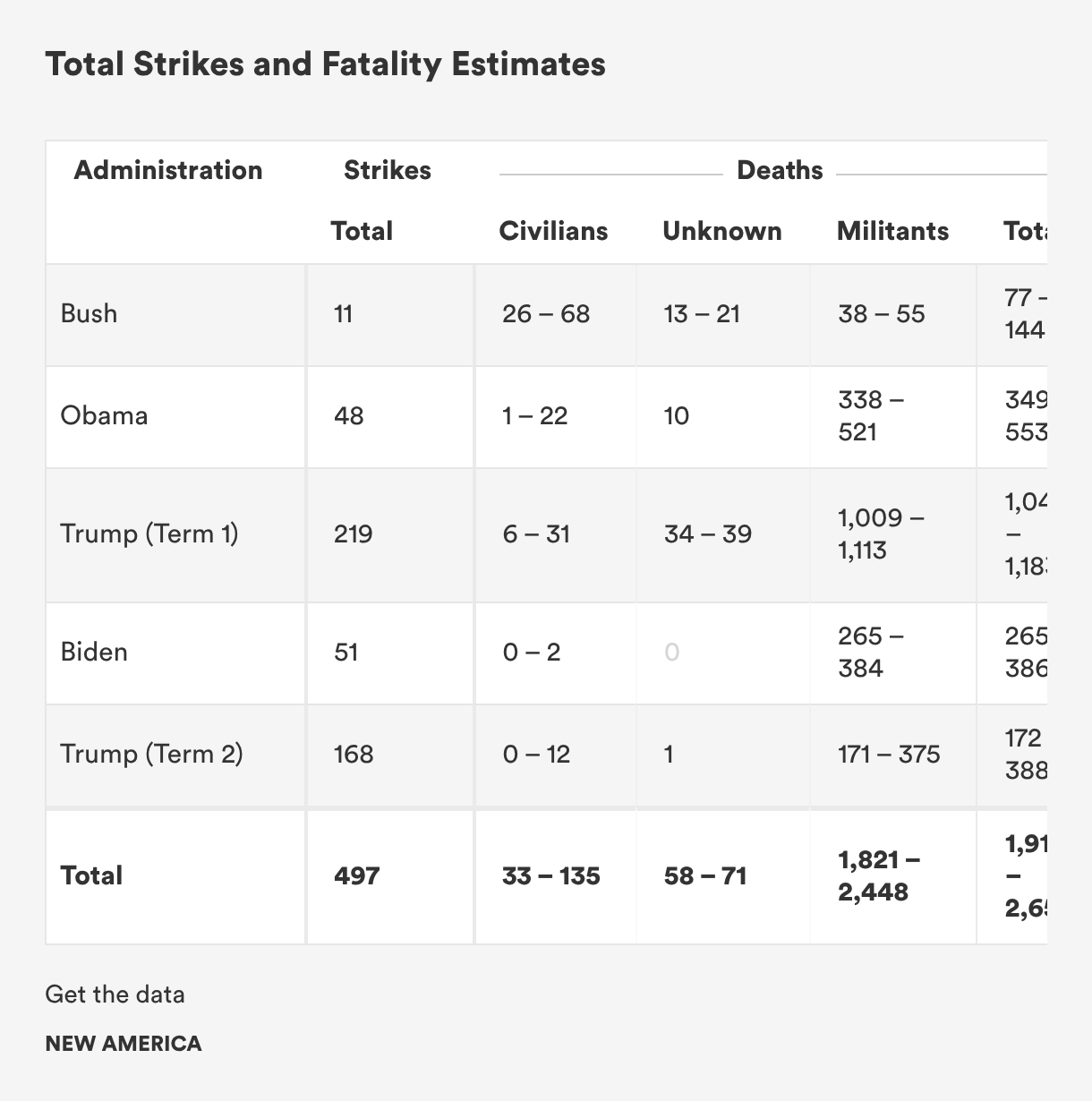
The U.S. has a long history of military engagement in Somalia, extending back to the bloody 1993 Battle of Mogadishu. The failed operation, known as “Black Hawk Down,” resulted in the withdrawal of U.S. forces, which further destabilized Somalia, leaving an opening for the rise of local extremist groups.
In the absence of a central government, an Islamist militia called the Islamic Courts Union (ICU) emerged to institute order. Opposing this militia was the Transitional Federal Government and various tribes and individuals unwilling to cede power to the ICU.
Ethiopia, with American support, moved across the border into Somalia in 2006 to support the transitional government. The ICU splintered, leading to the emergence al-Shabaab, a jihadist group which would eventually publicly align with al-Qaeda. The U.S. Department of State designated al-Shabaab a Foreign Terrorist Organization in 2008. With the rise of al-Shabaab, what had been low-level targeting of high-level militant leaders by the United States escalated into a broader targeting of the new jihadist group. This escalation was aided by a shift from ground operations—often aimed at capturing militants—to drone strikes, which began in 2011.
In March 2017, President Trump approved a Department of Defense proposal to give the military even more latitude to conduct lethal operations in Somalia, designating parts of the country as “areas of active hostilities,” which, effectively instituted “war-zone targeting rules,” despite the absence of a formal war declaration in Somalia. And in November 2017, the Trump administration authorized a strike on ISIS fighters in Somalia for the first time, expanding the targeted groups in the open-ended counterterrorism campaign.
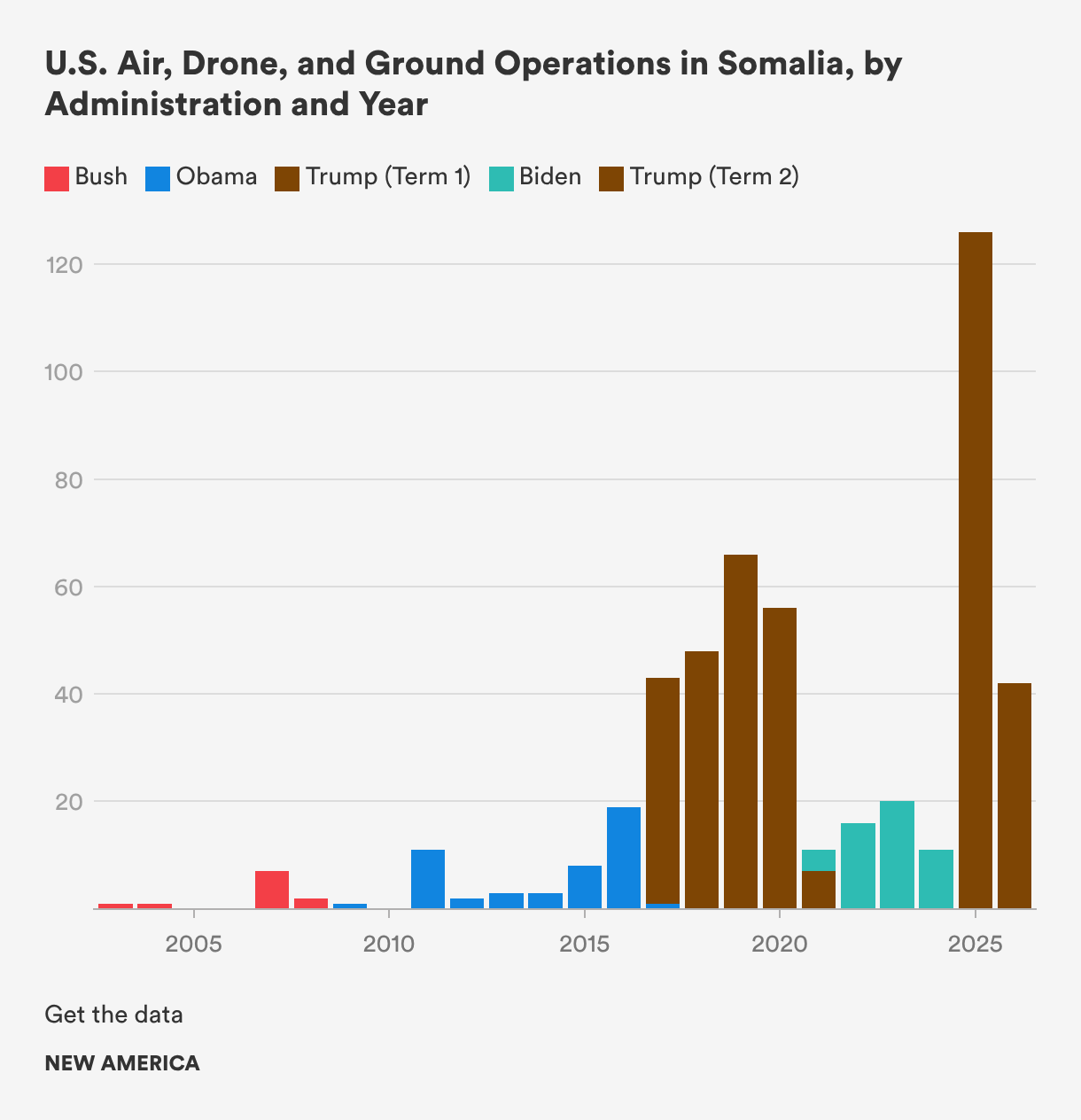
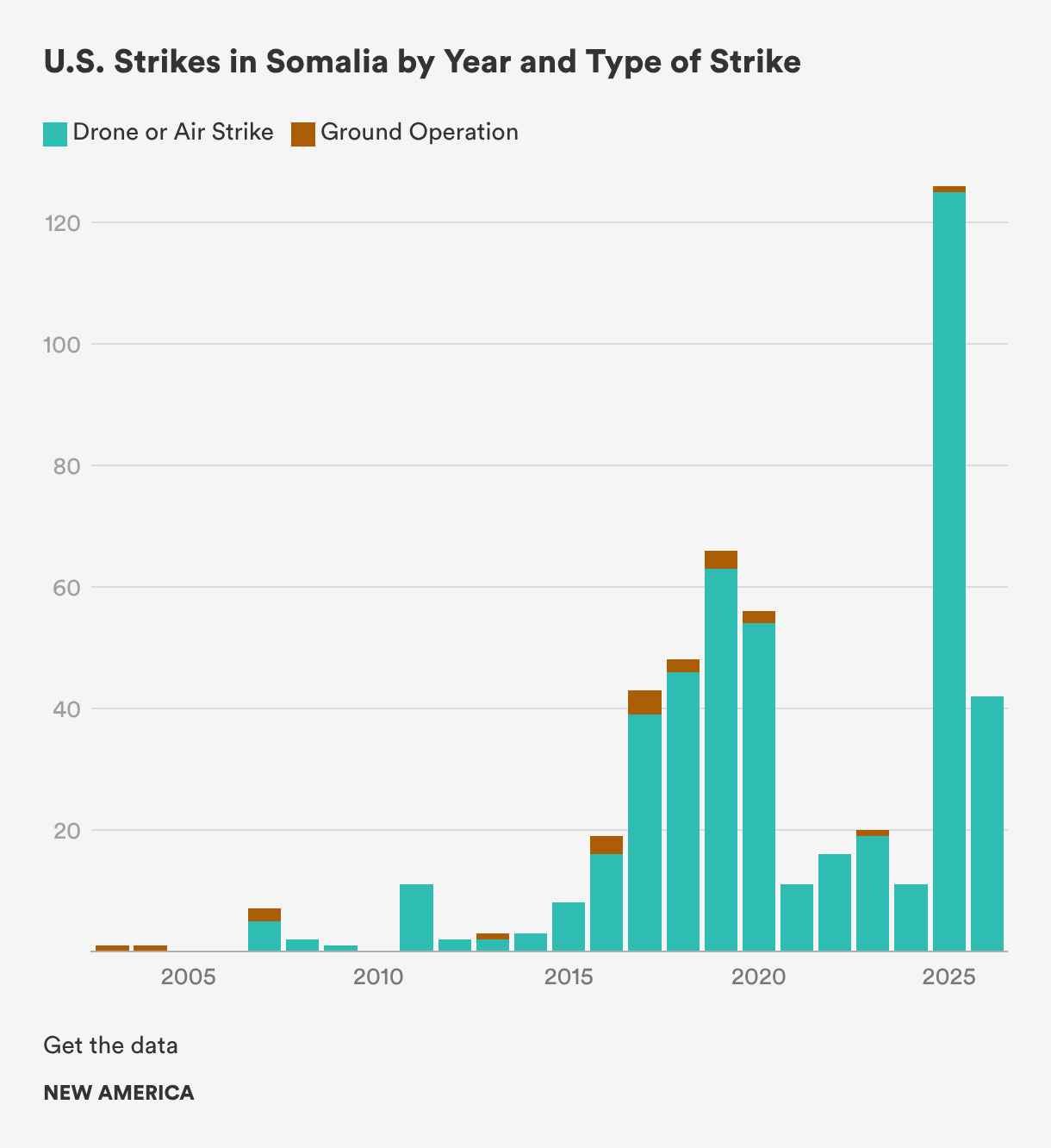
Counterterrorism operations in Somalia have included a number of ground raids, setting Somalia apart from Yemen and Pakistan, where U.S. counterterrorism operations have mostly been limited to drone strikes. The U.S. conducted 12 counterterrorism operations in Somalia between 9/11 and the expansion of the U.S. drone program to the country in 2011.
These operations were limited to ground raids—three in 2003 and 2004—until the United States began conducting airstrikes in 2007, which coincided with Ethiopia’s invasion of Somalia. On January 7, 2007, an AC-130 warplane guided by surveillance from a Predator drone fired on al-Qaeda operatives involved in the 1998 U.S. Embassy bombings in Tanzania and Kenya. At least eight militants were reportedly killed in the operation, the first casualties of the U.S. counterterrorism campaign in Somalia.
On June 23, 2011, the Obama administration approved the first military drone strike on two al-Qaeda-linked operatives in Somalia. U.S. military officials had intelligence that Somali militants were communicating frequently with militants in Yemen — where the drone program had already commenced in earnest.
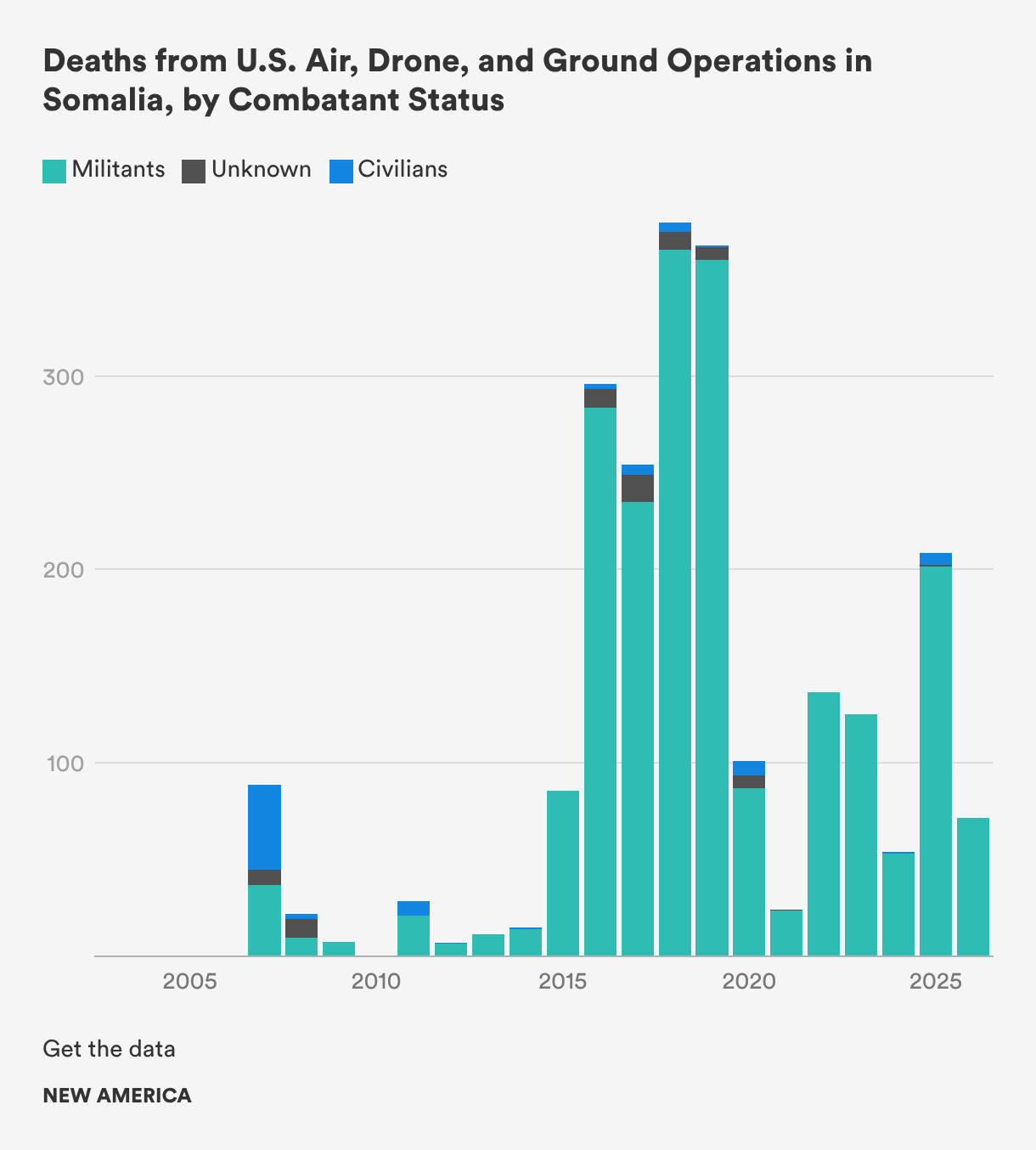
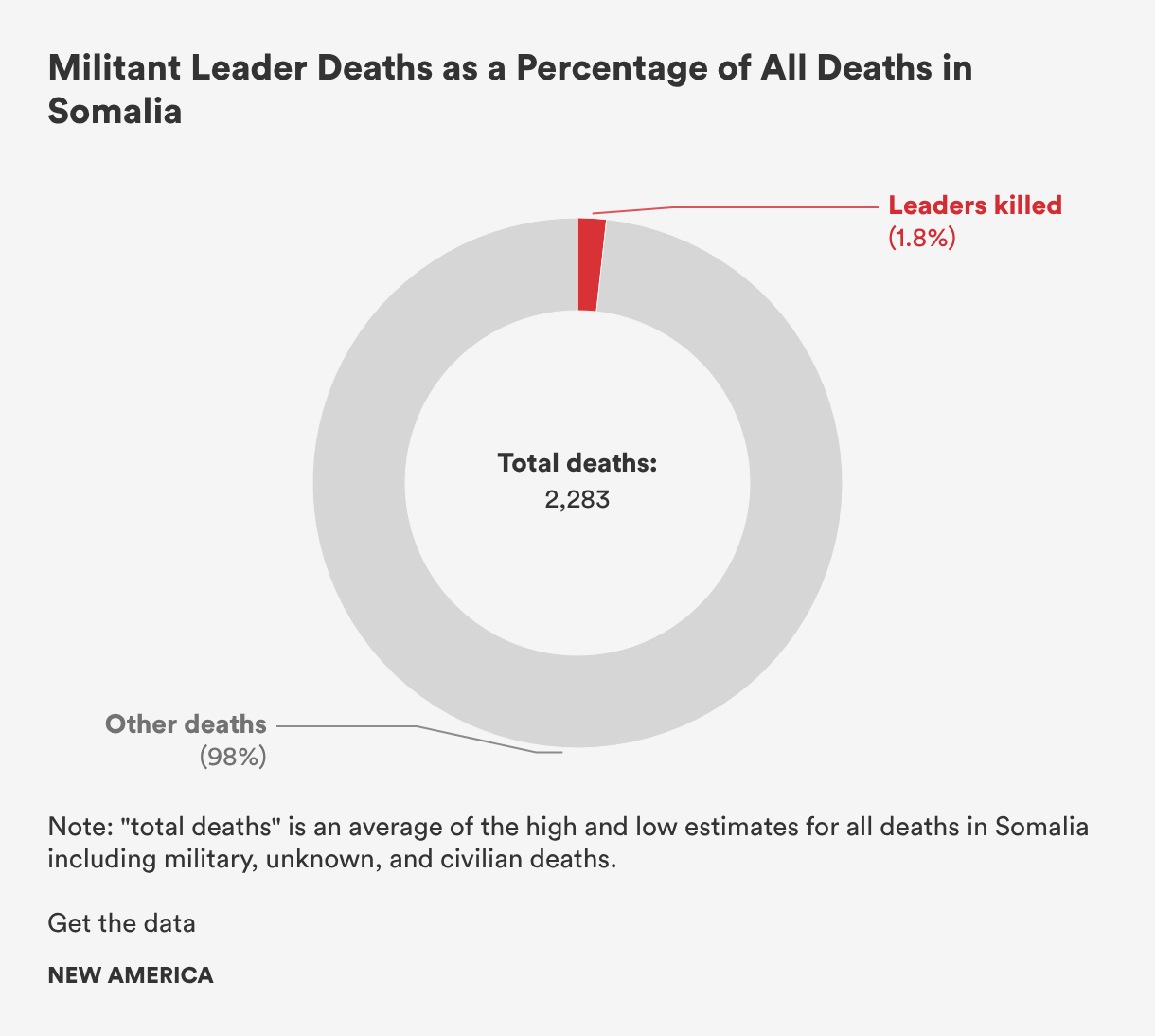
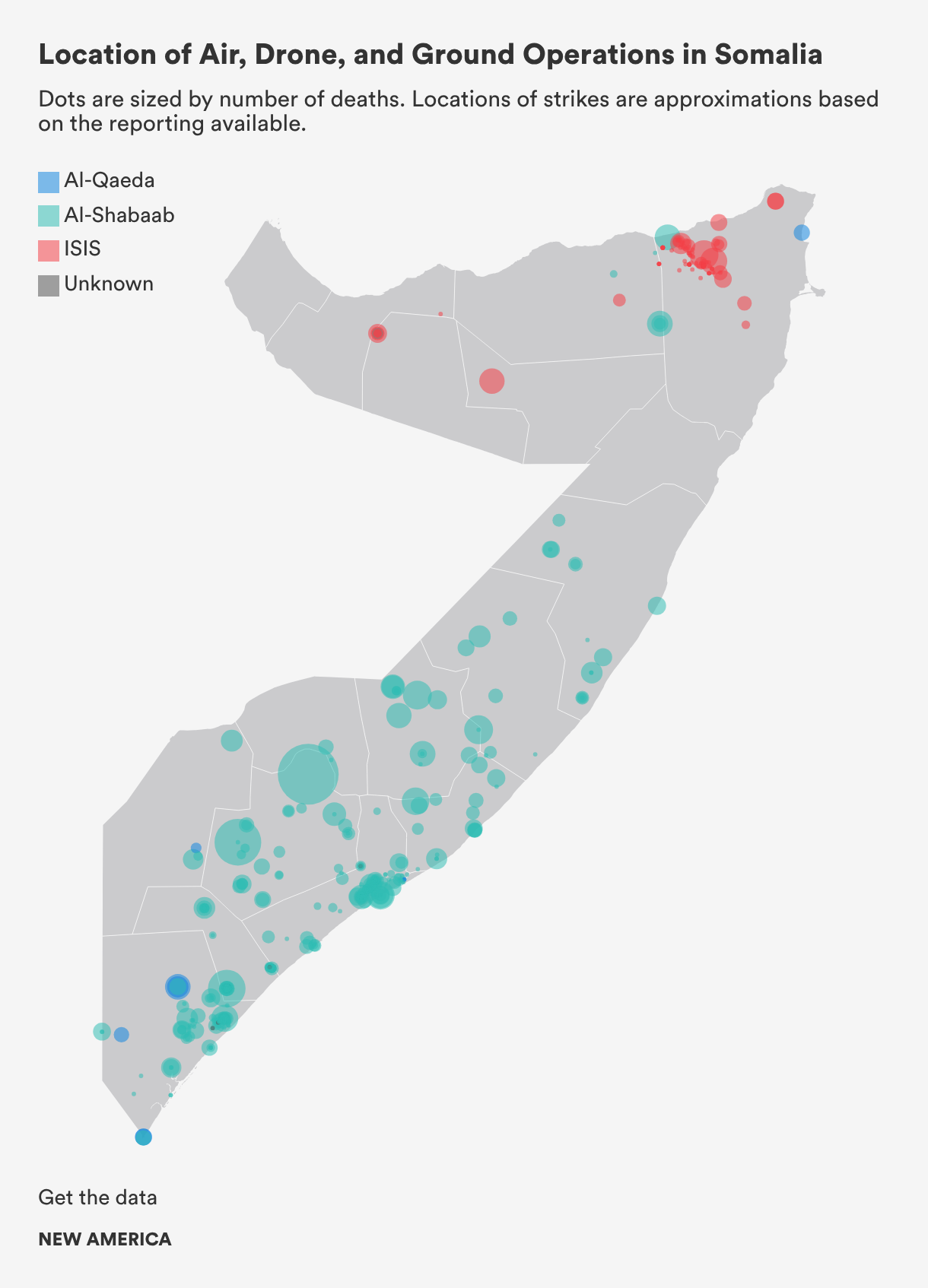
As of late 2017, al-Shabaab has lost control of most cities, mostly due to an African Union offensive that pushed the group out of Mogadishu in 2011 and waves of U.S. strikes that decimated Shabaab leadership in 2008. However, it still operates training camps in many rural areas in the southern half of the country. The U.S. has twice killed large numbers of Shabaab foot-soldiers at these camps. In March 2016, the U.S. conducted an operation several miles northwest of Mogadishu including air and drone strikes, killing approximately 150 fighters, according to officials. In November 2017, under the Trump administration, the Pentagon again conducted a large operation near the same location which killed more than 100 suspected Shabaab militants. In October 2018, AFRICOM conducted a strike in Haradere, killing between 60-117 militants. In January 2019, the year started off with a strike in Jilib, killing between 52-73 militants.
ISIS-Somalia, a local ISIS affiliate, is a relatively small group operating in the country. They currently are at odds with Shabaab, battling for territory in the Golis Mountains. AFRICOM actively pursues ISIS and Shabaab across the Golis Mountains region, striking eight times in 2019.
New America and Airwars track air, drone, and artillery strikes, and their resultant civilian and combatant fatalities in the ongoing civil war turned international proxy conflict in Libya. This project concluded on March 31, 2020.
In 2011, during a national uprising in Libya, NATO intervened to protect civilians from the forces of Libyan leader Muammar al-Gaddafi, a military action that significantly contributed to the regime’s defeat. Though the United Nations-sanctioned campaign ended on October 31, 2011, several countries and local militias have continued to conduct airstrikes and drone strikes intermittently with scant accountability. With the aid of a team of Libyan researchers, New America and Airwars have documented these airstrikes and the resulting civilian deaths.
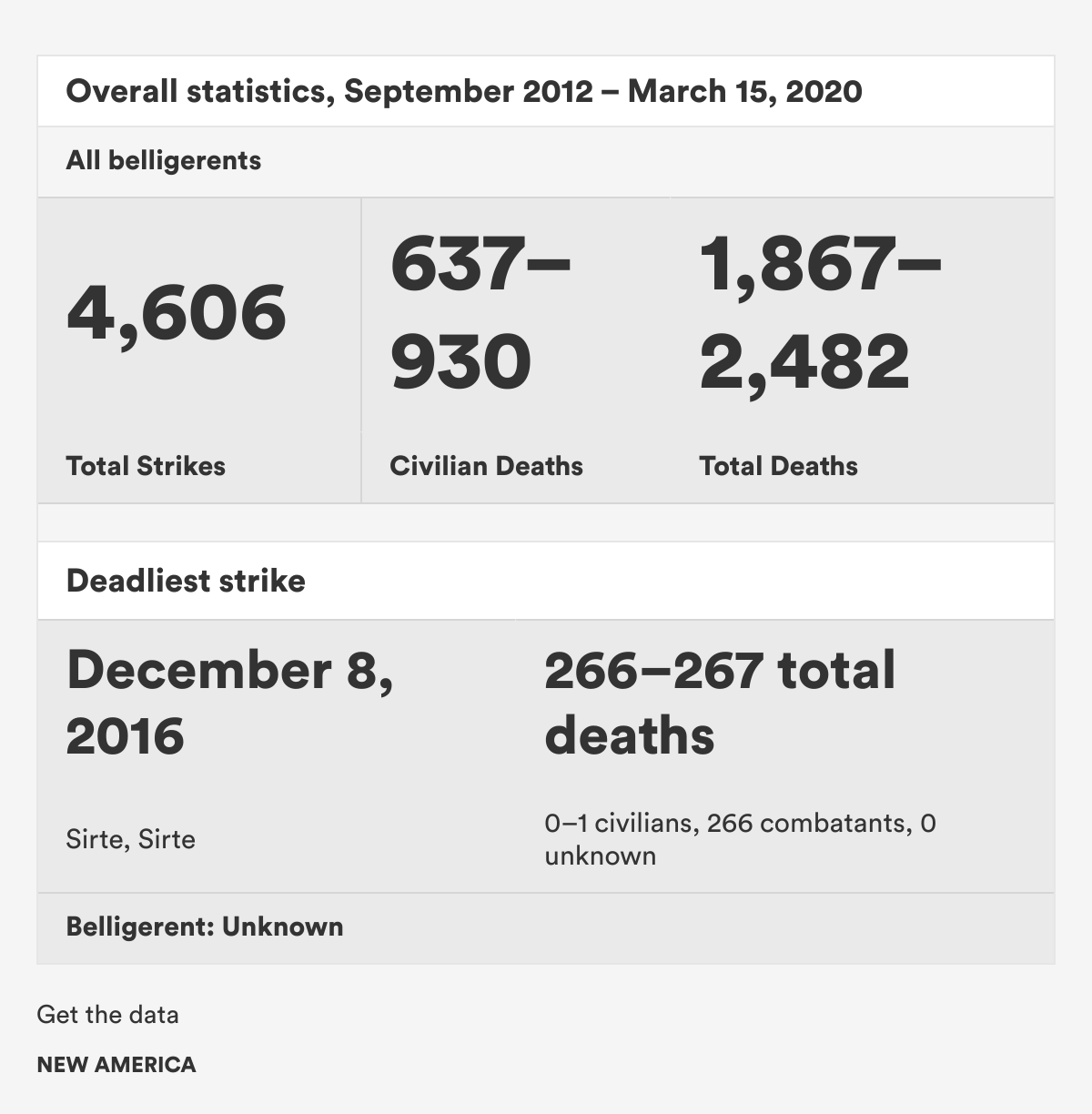
According to reports by some of the belligerents as well as news reporting and accounts in social media, the nations and local groups operating in Libya have conducted more than 4,500 air, drone, and artillery strikes in Libya since the end of the UN-sanctioned intervention. Hundreds of civilians are reportedly killed in these strikes.
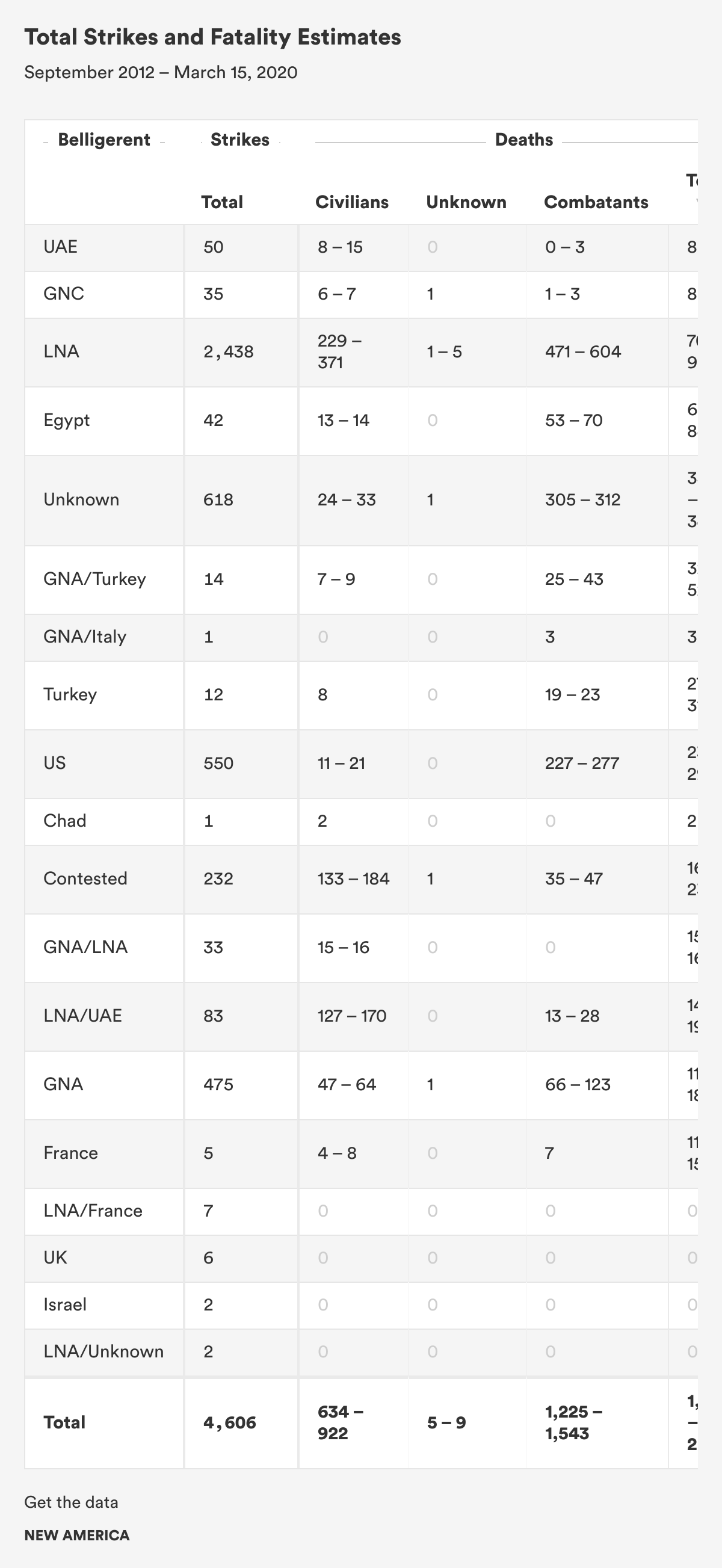
Several leaders among the various rebel factions had begun to jockey for control over the direction of the revolution before Gaddafi’s death, so when the regime finally collapsed, the stage was set for bitter disagreements between rebel camps. Fighting between the two main factions, the elected congressional body and a rival group led by General Khalifa Haftar called the Libyan National Army (LNA), spread to southern Libya and, in late 2014 and early 2015, to the oil crescent, where both sides conducted airstrikes. The LNA is responsible for the most civilian deaths in the aerial conflict in Libya.
In December 2015, after a lengthy U.N.-led mediation process, representatives from the GNC and the LNA signed a deal in Skhirat, Morocco, to end their conflict. In April 2016, the unity government called the Government of National Accord (GNA) took over in Tripoli. However, the GNA remained contested by Haftar and his forces.
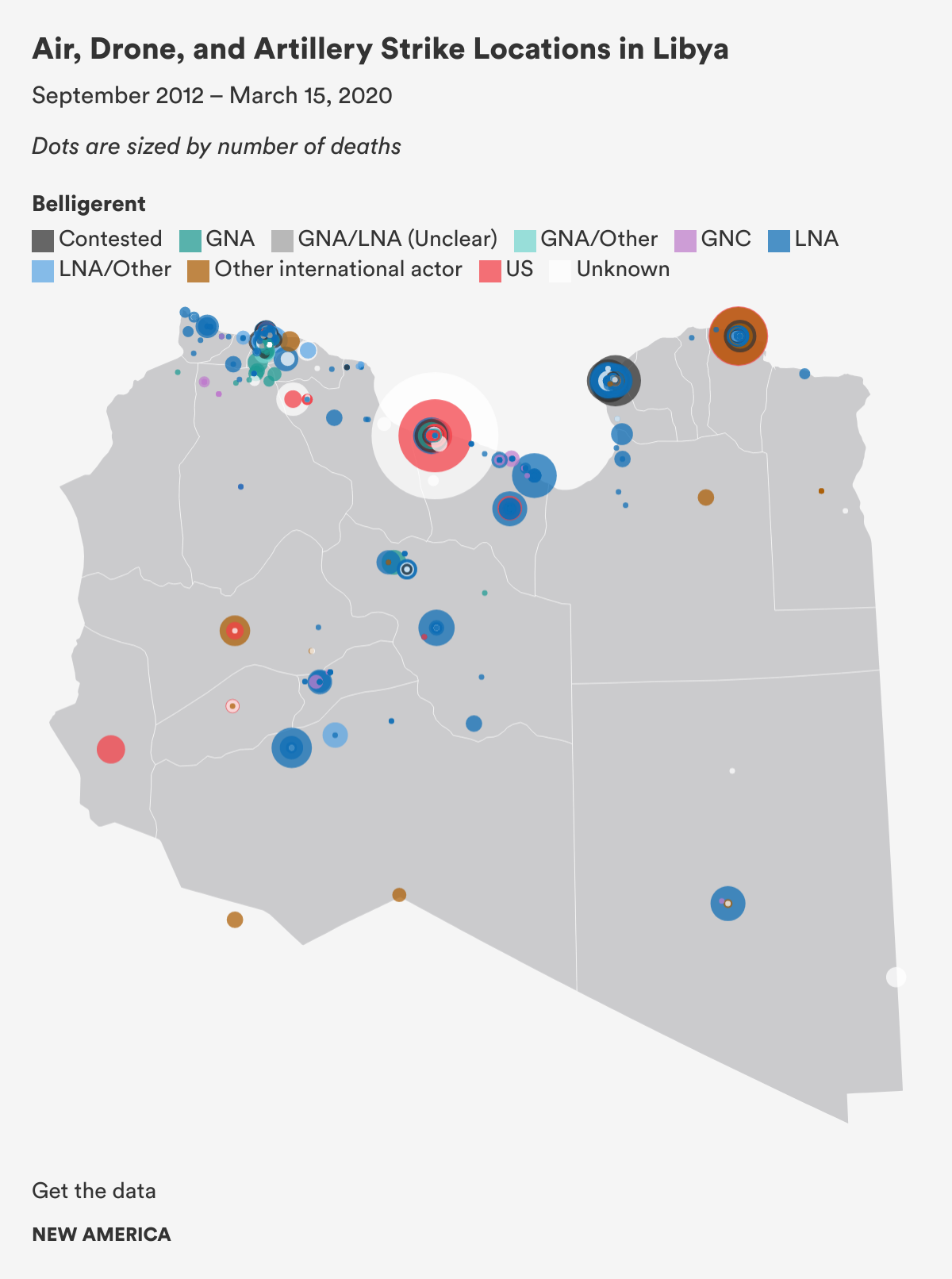
This political contest, in conjunction with the expansion of militant-held territory in the country, sparked action from foreign states, which have conducted airstrikes in support of either the LNA or the GNA, and/or have targeted Islamist militants (in many cases, those objectives overlap). Western nations such as the United Kingdom, France and the United States were active in the mediation process that led to the GNA’s formation, and the United States has conducted hundreds of strikes in Libya with the consent of the GNA. Turkey is the most recent country to join the conflict, and coordinates and conducts strikes with the GNA.
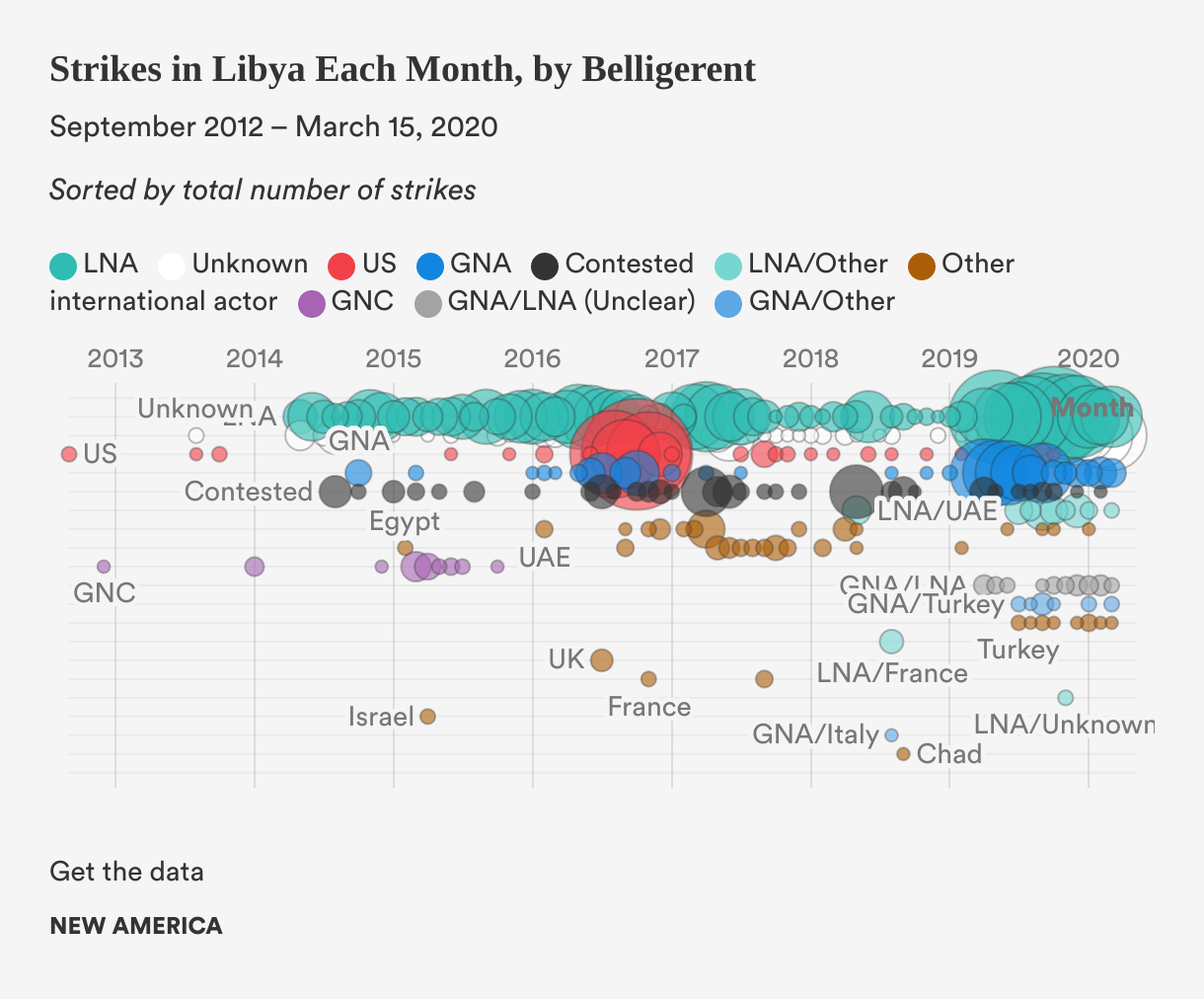
For its part, the LNA has enlisted the help of Egypt and the United Arab Emirates in its aerial campaign. Egypt’s strikes in Libya aren’t always in the service of the LNA. Some are conducted unilaterally, ostensibly to defend the border between the two countries. However, civilians have been victims on occasion, according to reports, though Egypt hasn’t claimed any unintended casualties.
Emirati airstrikes in Libya began from an Egyptian air base in August 2014. By this point, the UAE, joined by Egypt and Saudi Arabia in particular, and Qatar, allied with Turkey and Sudan, had put their support behind different Libyan groups. The strikes conducted by the UAE in August 2014 were primarily to undermine Misratan and Libya Dawn militias in Tripoli, which were supported by Qatar. Though Egypt denied being actively involved in these strikes and the UAE did not comment on them, four American officials confirmed both countries’ involvement.
As recently as December 2017, the UAE was expanding its footprint at Al Khadim air base—roughly 65 miles east of Benghazi—in an effort to combat ISIS and other non-ISIS Islamist groups in Libya, but the primary focus of the UAE’s air campaign in Libya continues to be its opposition to Qatari-backed Islamist groups. In the spring of 2019, Haftar began a military offensive to capture Tripoli, which intensified fighting between the LNA and GNA. According to media reports, since the offensive began, nearly 400 people have died, almost 2,000 have been injured, and tens of thousands have migrated from greater Tripoli.
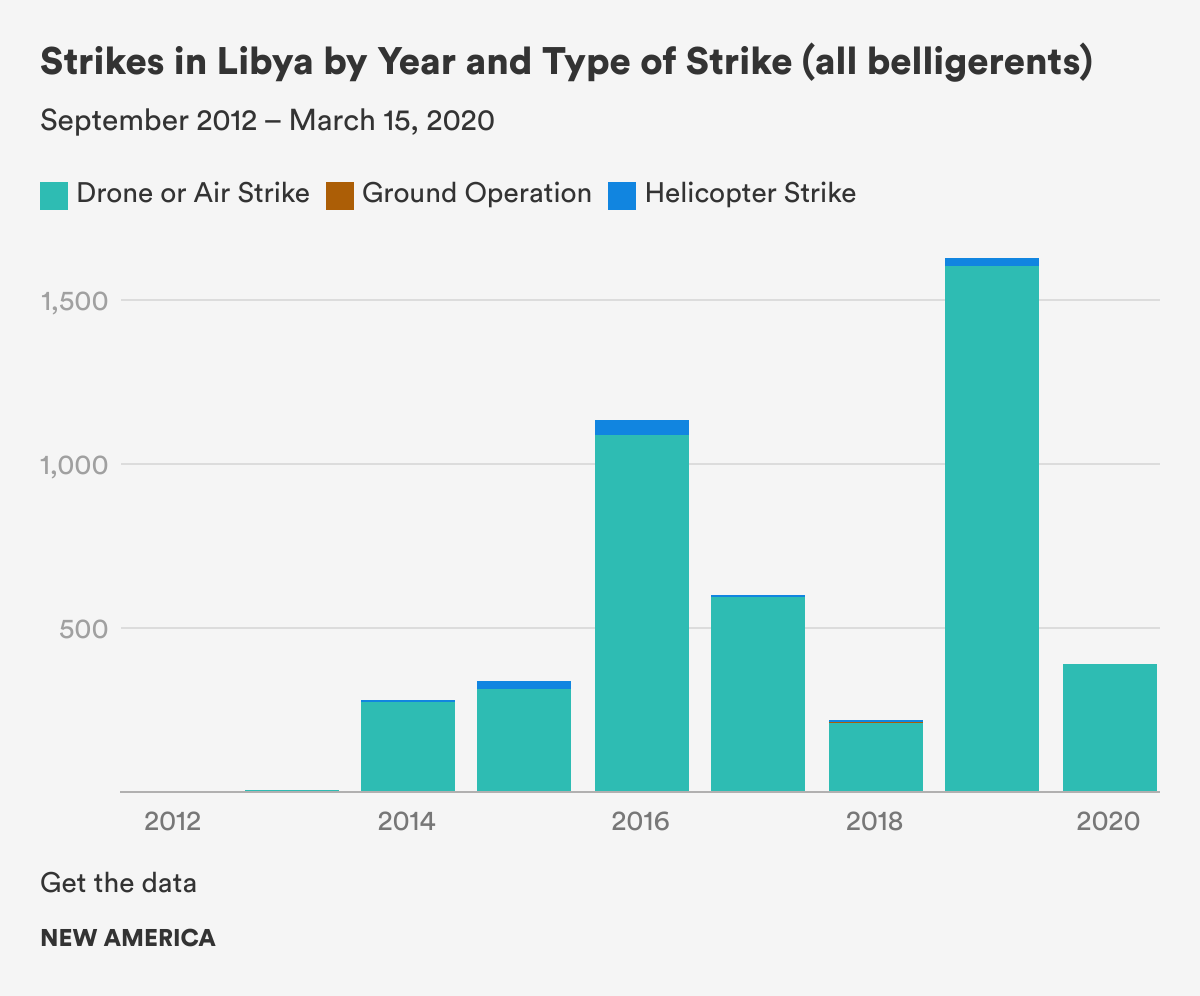
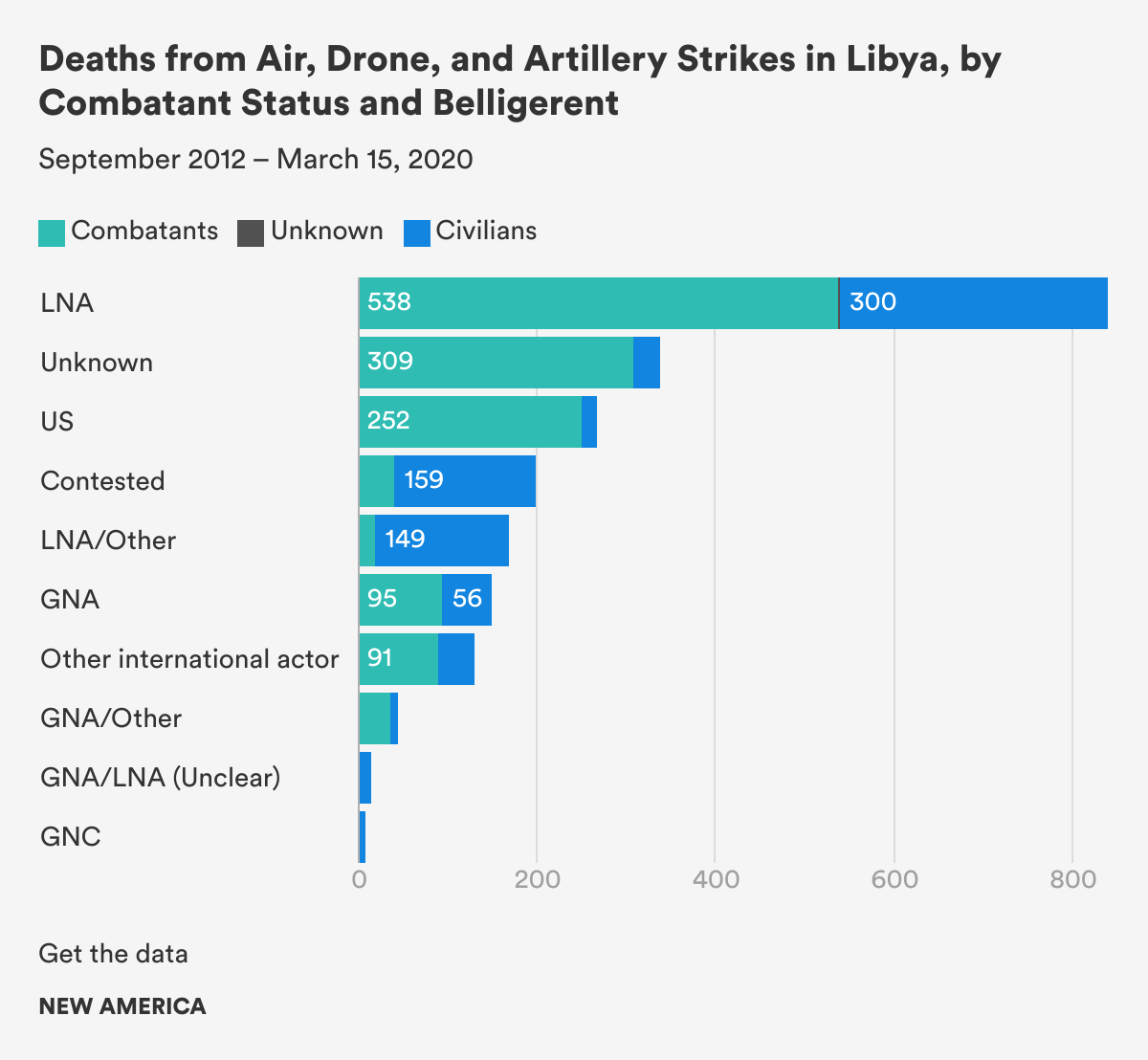
Reported civilian deaths as a result of the air wars in Libya from September 2012 to March 15, 2020, at least 624 and potentially as many as 915, based on the minimum and maximum estimates of civilian casualties in our database. These are low estimates compared to Iraq and Syria, similar conflicts in that multiple belligerents are conducting strikes. A total of 4,517 strikes are logged in our database over this period. Across this period of analysis, the majority of allegations of civilian deaths are attributed to the LNA and the UAE.
Libya is one of the many countries the United States has extended its controversial armed drone program—part of its robust counterterrorism campaign in countries outside of conventional war zones such as Afghanistan and Iraq. Other countries include Pakistan, Somalia, and Yemen.
Strikes in Libya were authorized under President Obama’s PPG in the second half of 2016, in an effort to destroy ISIS’s stronghold in the coastal city of Sirte. At the request of the internationally recognized Government of National Accord, the United States launched Operation Odyssey Lightning, a combination of drone attacks and airstrikes that started in Aug. 2016 and ended in Dec. 2016.
President Trump replaced the Obama administration’s 2013 Presidential Policy Guidance (PPG) with the PSP or Principles, Standards and Procedures in 2017.
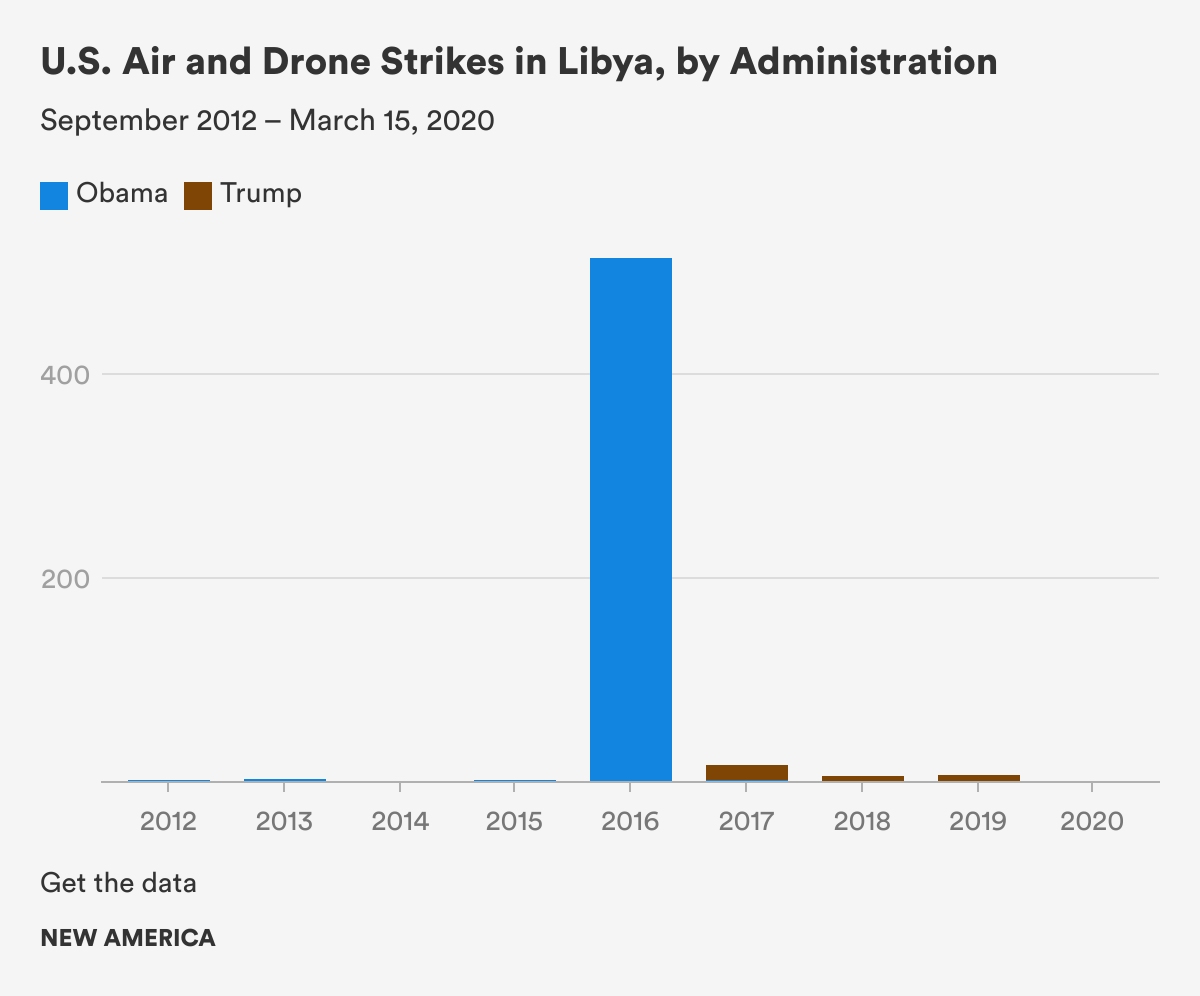
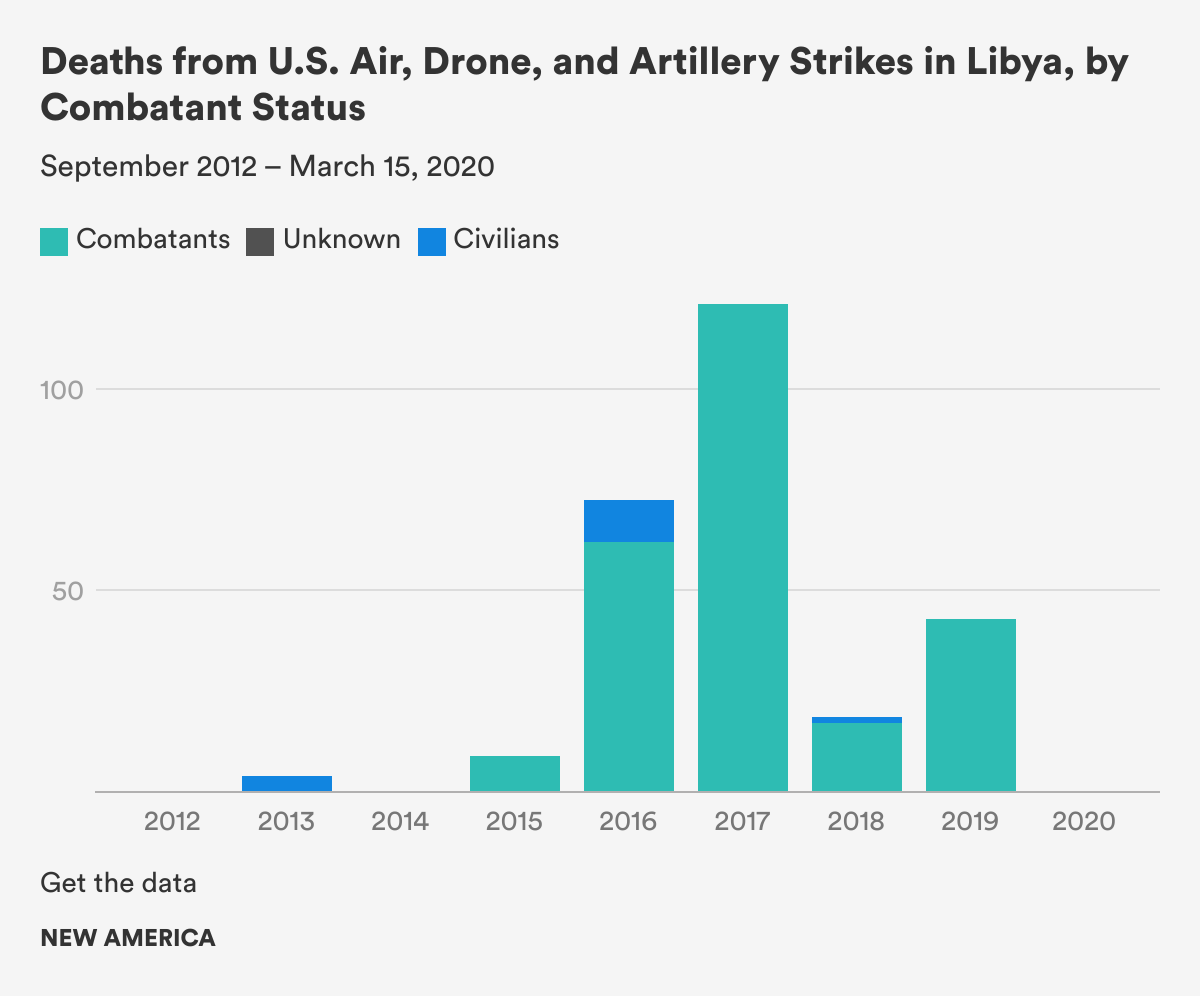
The United States has the highest standard of reporting strikes among international parties to the aerial conflict in Libya, and has the lowest number of strikes that have been reported to result in civilian fatalities, according to New America and Airwars data. However, under the Trump administration, the Pentagon has seemingly taken steps to conceal the extent of its operations in Libya and elsewhere by delaying the submission of a report to Congress and sometimes withholding information about certain strikes.
AFRICOM has not reported any civilian deaths in its operations in Libya.

These databases reflect the aggregation of credible news reports about U.S. counterterrorism strikes in Pakistan, Yemen, Somalia, and Libya. The media outlets that New America relies upon are the three major international wire services (Agence France Presse, Associated Press, Reuters), the leading regional newspapers (Dawn, Express Times, The News, Yemen Observer, Yemen Post), leading South Asian and Middle Eastern TV networks (Geo TV and Al Jazeera), and Western media outlets with extensive in-country reporting capabilities (BBC, CNN, the Guardian, Los Angeles Times, New York Times, Telegraph, Washington Post).
Other sources, including U.S. military press releases and non-governmental organization reports may be included where they shed light on the data. In the case of Libya, New America and its project partner Airwars include reporting from international and local news agencies; non-governmental organizations; and social media sites that corroborate evidence, such as local residents’ groups, Facebook pages, YouTube footage of incidents, and tweets relating to specific events. New America makes no independent claims about the veracity of casualty reports provided by these organizations.
New America would like to thank the Bureau of Investigative Journalism, the Stanford International Human Rights and Conflict Resolution Clinic, the Global Justice Clinic at NYU School of Law, and the Columbia University Law School for their valuable work on this subject, from which we have benefited and improved our own research.
Vice President, Global Studies & Fellows, New America; Professor of Practice, Arizona State University; Author, All the Presidents’ Wars

Deputy Director, Future Security, New America; Term Member, Council on Foreign Relations

Fellow, Future Security