A Chapter of: Virtual Currency Donations
Appendix 10: Switzerland
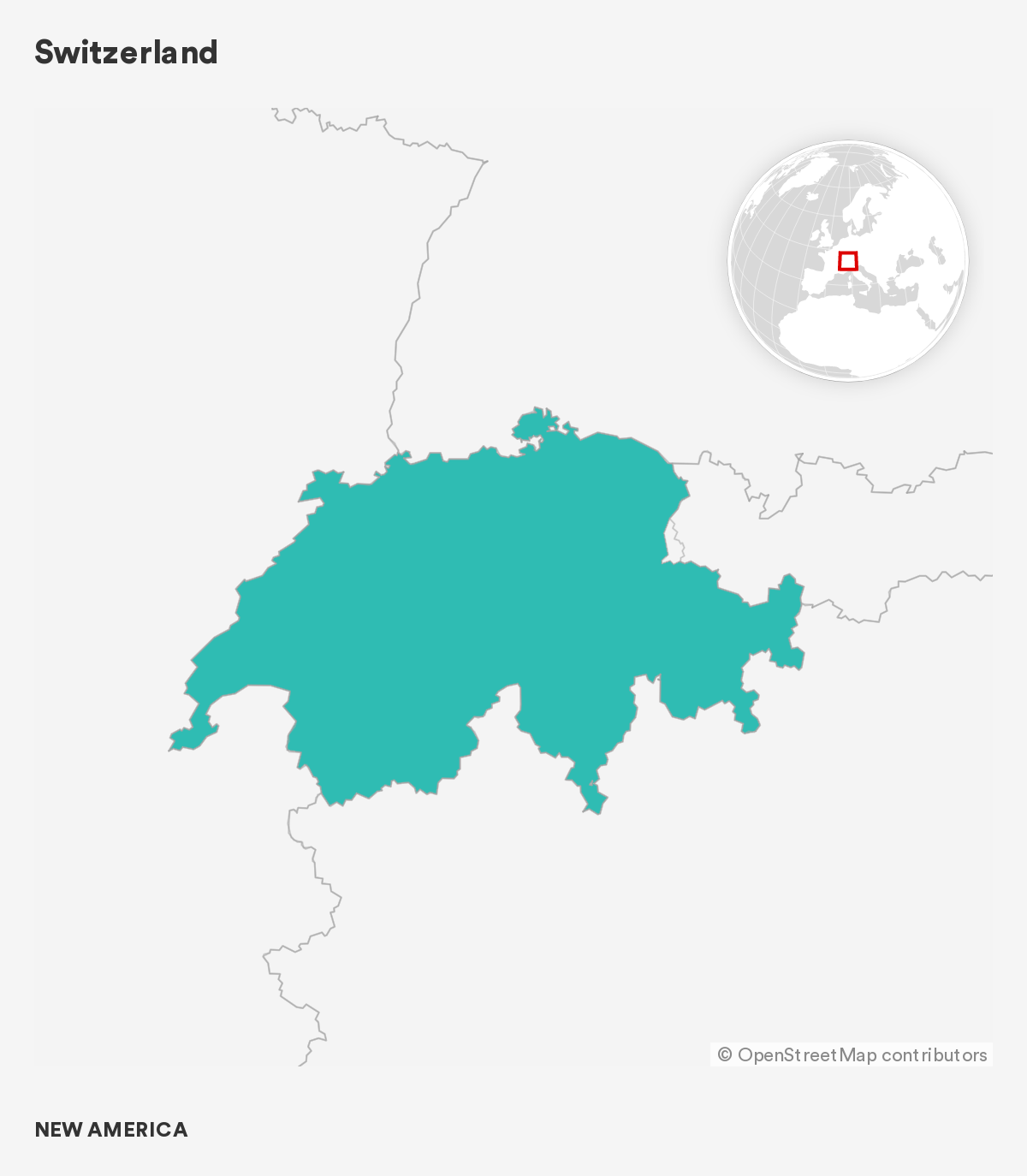
Highlights
- Switzerland’s Zug canton has been called “Crypto Valley” for attracting a number of different virtual currency “Foundations” headquarters, who launched their Initial Coin Offerings (ICOs) from the region. Zug-based ICOs include Ethereum (raising $18 million) and Tezos (raising $232 million).
- For decades, Switzerland has occupied a unique position in the global banking system, in light of its strong bank secrecy regime and reputation as a tax haven and, in some cases, a source of tax evasion for foreign account holders.
- The Swiss Financial Market Supervisory Authority (FINMA) differentiates between payment tokens (cryptocurrencies), utility tokens, and asset tokens, while noting that these classifications are not mutually exclusive, and tokens with multiple characteristics can be deemed to be both securities and means of payment.
- For tax purposes, virtual currencies in Switzerland are generally treated like foreign currencies; virtual currency capital gains or losses are not subject to taxation, and are therefore not tax deductible.
Virtual Currency-Specific Regulations
- Swiss Financial Market Supervisory Authority (FINMA), Guidelines for Enquiries Regarding the Regulatory Framework for Initial Coin Offerings (ICOs) (Feb. 16, 2018)
- Confédération suisse, Federal Council report on virtual currencies in response to the Schwaab (13.3687) and Weibel (13.4070) postulates (June 25, 2014), archived at
- Swiss Financial Market Supervisory Authority (FINMA), FINMA Guidance 04/2017 Regulatory Treatment of Initial Coin Offerings (Sept. 29, 2017)
- Swiss Financial Market Supervisory Authority (FINMA), FINMA Guidance 02/2019 Payments on the Blockchain (Aug. 26, 2019),
- Swiss Federal Council, Legal framework for distributed ledger technology and blockchain in Switzerland, Federal Council Report (Dec. 14, 2018)
- Swiss Financial Market Supervisory Authority (FINMA), Fact Sheet: Virtual Currencies 2 (Jan. 1, 2019)
- Swiss Legal Tech Association (SLTA), Regulatory Task Force Report: Data, Blockchain, and Smart Contracts (Apr. 27, 2018)
Nonprofit Regulations
- SwissFoundations, Swiss Foundation Code: Principles and Recommendations for the Establishment and Management of Grant-making Foundations (2015)
- Giedre Lideikyte Huber (Lawyer at Cantonal Tax Administration, Geneva), Philanthropy and taxation: Swiss legal framework and reform perspectives, Université de Geneva Fiscalité (Mar. 2018)
- International Journal of Not-for-Profit Law, The Swiss Legal Framework on Foundations and Its Principles About Transparency, (Sept. 2014)
- Dominique Jakob and Peter Picht, Responsible Investments by Foundations from a Legal Perspective, The International Journal of Not-for-Profit Law (March 2013)
Tax Regulations
- Swiss Confederation Federal Tax Administration (FTA), The Swiss Tax System, Swiss Tax Conference (2019), https://www.eda.admin.ch/dam/countries/countries-content/united-kingdom/en/FTA-swiss-tax-system-2019_EN.pdf
- Swiss Federal Department of Finance, The Swiss Tax System (Jan. 2020), https://www.efd.admin.ch/efd/en/home/themen/steuern/steuern-national/the-swiss-tax-system/fb-schweizer-steuersystem.html
- Swiss Federal Tax Administration (FTA), https://www.estv.admin.ch/estv/en/home.html
- European Fundraising Association, Tax Incentives for Charitable Giving in Europe (Dec. 2018), https://efa-net.eu/wp-content/uploads/2018/12/EFA-Tax-Survey-Report-Dec-2018.pdf
- Deloitte, International Tax: Switzerland Highlights 2019 (Jan. 2019), https://www2.deloitte.com/content/dam/Deloitte/global/Documents/Tax/dttl-tax-switzerlandhighlights-2019.pdf
Anti-Money Laundering Regulations
- Swiss Interdepartmental Coordinating Group on Combating Money Laundering and the Financing of Terrorism (CGMF), National Risk Assessment (NRA): Risk of money laundering and terrorist financing posed by crypto assets and crowdfunding (Oct. 2018),
- Swiss Financial Market Supervisory Authority (FINMA), Legal basis for conducting money laundering (accessed Jan. 23, 2020)
- The Federal Assembly of the Swiss Federation, Federal Act on Combating Money Laundering and Terrorist Financing (Anti-Money Laundering Act, AMLA) (Oct. 10, 1997) (status as of Jan. 1, 2019), CC 955.0
- Swiss Federal Council, Verordnung über die Bekämpfung der Geldwäscherei und der Terrorismusfinanzierung [Anti-Money Laundering Ordinance], CC 955.01 (Nov. 2015) (Status as of Jan. 1, 2020)
- Swiss Financial Market Supervisory Authority (FINMA), FINMA Anti-Money Laundering Ordinance, CC 955.033.0 (Jun. 2015) (status as of Jan. 1, 2020)
Other Relevant Regulations, Sources, Notes
- Global Legal Insights, Blockchain & Cryptocurrency Regulation (2019), “Switzerland”
- Law Library of Congress, Regulatory Approaches to Cryptoassets in Selected Jurisdictions: Switzerland (April 2019)
- Law Library of Congress, Regulation of Cryptocurrency in Selected Jurisdictions: Switzerland 70 (June 2018),
- Practical Law, Charitable Organisations in Switzerland: Overview (2018)
- Jeffrey H. Matsuura, Digital Currency: An International Legal and Regulatory Compliance Guide (2016)

Virtual Currency Donations
- Executive Summary
- Introduction
- About Our Organizations
- Methodology and Terminology
- First Principles of Civil Society
- Blockchain and Digital Currency
- Use Cases
- Key Findings
- Other Findings
- Conclusion
- Appendix 1: Virtual Currency Terminology
- Appendix 2: International Highlights
- Appendix 3: Australia
- Appendix 4: Bermuda
- Appendix 5: Canada
- Appendix 6: Denmark
- Appendix 7: Malta
- Appendix 8: Singapore
- Appendix 9: South Africa
- Appendix 10: Switzerland
- Appendix 11: United Kingdom
- Appendix 12: United States