A Chapter of: Virtual Currency Donations
Appendix 7: Malta
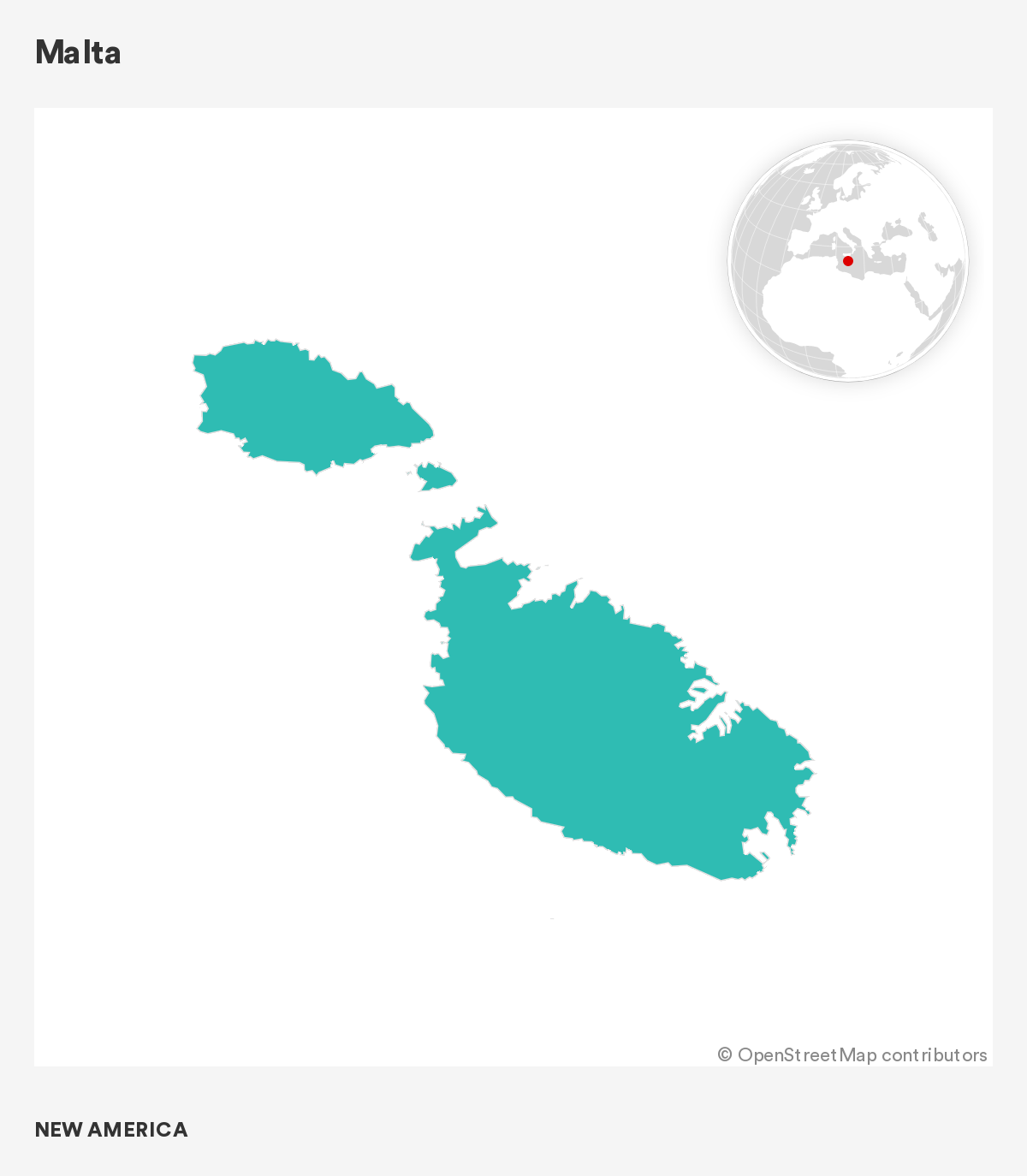
Highlights
- Malta generally styles itself a virtual-currency-friendly jurisdiction. At present, there are no rules or guidance in place that specifically treat the taxation of virtual currency in Malta, whether from an income tax, duty, or VAT perspective.
- Malta’s government has been committed to attracting blockchain-related businesses and entrepreneurship, and in 2018 the Government of Malta passed three complementary legislative acts (the Malta Digital Innovation Authority Act, the Innovative Technology Arrangements and Services Act, and the Virtual Financial Assets Act) in order to provide businesses with clear virtual currency-specific legal rules.
- Malta’s Digital Innovation Framework sets out four possible categories of Distributed Ledger Technology Assets (“DLT Assets”), which may include virtual currencies. These are: (i) Electronic Money; (ii) Financial Instruments (albeit that are intrinsically dependent on, or utilise, Distributed Ledger Technology); (iii) Virtual Tokens (more commonly referred to as Utility Tokens); or (iv) Virtual Financial Assets (“VFAs”). The classification of any given virtual currency into one of the four categories is mutually exclusive.
Virtual Currency-Specific Regulations
- Laws of Malta, Virtual Financial Assets Act (VFA Act), Cap.590 (Nov. 2018)
- Laws of Malta, Innovative Technology Arrangement and Services Act (ITAS Act), Cap.592 (Nov. 2018)
- Laws of Malta, Malta Digital Innovation Authority Act (MDIA Act), Cap.591 (Nov. 2018)
- Malta Financial Services Authority (MFSA), Virtual Financial Assets Framework Frequently Asked Questions (Jan. 2019)
- Malta Financial Services Authority, Financial Instrument Test Guidelines (April 2019)
- Malta Financial Services Authority, Financial Instrument Test
- Malta Financial Services Authority, Virtual Financial Assets Rulebook Chapter 2: Virtual Financial Assets Rules for Issuers of VFAs (Feb. 2019)
- Malta Financial Services Authority, Virtual Financial Assets Rulebook Chapter 3: Virtual Financial Assets Rules for VFA Service Providers (March 2019)
Nonprofit Regulations
- Laws of Malta, Voluntary Organisations Act (Dec. 2007) Cap.492 and Civil Code (Amendment) Act (2007)
- Laws of Malta, Trusts and Trustees Act (June 1989) Cap.331
- Laws of Malta, Civil Code Chapter 16 (Foundations) p.547 (Jan. 1874)
- Laws of Malta, Investment Services Act (July 1995)
Tax Regulations
- Laws of Malta, Foundations (Income Tax) Regulations (May 2010)
- Internal Revenue Services, Malta Income Tax Treaty and Technical Explanation (2008)
- Laws of Malta, Income Tax Act (Jan. 1949) Cap.123
- Laws of Malta, Income Tax Management Act (Sept. 1994) Cap.372
Anti-Money Laundering Regulations
- Laws of Malta, Prevention of Money Laundering Act, Cap.373 (Sept. 1994)
- Laws of Malta, Prevention of Money Laundering and Funding of Terrorism Regulations (Subsidiary Legislation 373.01) (Jan. 2018) [Transposing Requirements of EU Fourth Anti-Money Laundering Directive]
- Malta Financial Services Authority, Virtual Financial Assets Rulebook Chapter 1: Virtual Financial Assets Rules for VFA Agents, R1-1.2.2
Other Relevant Regulations, Sources, Notes
- Ganado Advocates, An Overview of the Malta Digital Innovation Authority Bill (2018)
- DM Europe, Malta Purpose Foundation (Aug. 2010)
- Corrieri Cilia Legal, Private trusts, foundations and charities in Malta (Nov. 2018)
- Global Legal Insights, Blockchain & Cryptocurrency Regulation (2019), “Malta”
- Library of Congress, Regulation of Cryptocurrency: Malta (accessed Oct. 2019) [note: outdated/written before final enactment of digital asset legislation]
- Malta Council for the Voluntary Sector, Financial Support and Tax Exemptions Proposal for Voluntary Organisations (Sept. 2011)
- European Center for Not-for-Profit Law, Study on Recent Public and Self-Regulatory Initiatives Improving Transparency and Accountability of Non-Profit Organisations in the European Union (Apr. 2009)

Virtual Currency Donations
- Executive Summary
- Introduction
- About Our Organizations
- Methodology and Terminology
- First Principles of Civil Society
- Blockchain and Digital Currency
- Use Cases
- Key Findings
- Other Findings
- Conclusion
- Appendix 1: Virtual Currency Terminology
- Appendix 2: International Highlights
- Appendix 3: Australia
- Appendix 4: Bermuda
- Appendix 5: Canada
- Appendix 6: Denmark
- Appendix 7: Malta
- Appendix 8: Singapore
- Appendix 9: South Africa
- Appendix 10: Switzerland
- Appendix 11: United Kingdom
- Appendix 12: United States