Community Broadband
Abstract
With around 18 million people across the United States lacking broadband service, community and tribal broadband networks offer a much-needed opportunity to expand and improve internet access across the country. These networks, which include municipal or public option networks, today serve more than 900 communities nationwide. This report details how these networks have succeeded in connecting unserved communities, challenged incumbent private-sector providers to deliver higher-quality and more affordable internet, and expanded opportunities for education, job creation, and economic growth. Unfortunately, as many as 20 states prevent localities from forming their own networks. These restrictive state laws should be repealed so that local governments can decide for themselves whether these networks are best for their communities.
*Corrected 10:00am on July 22, 2020: A previous version of this abstract erroneously said "With at least 20 million people across the United States lacking broadband service, community and tribal broadband networks offer a much-needed opportunity to expand and improve internet access across the country." This sentence has been corrected to read "With around 18 million…" We regret this error.
Downloads
Introduction
Today, people need internet access to engage in almost every facet of their lives, including employment, housing, health, and government services. Unfortunately, issues with broadband access, adoption, and affordability persist in the United States, creating a digital divide between those who have high-quality service and those who do not. The Federal Communications Commission’s (FCC) 2020 Broadband Deployment Report stated that around 18 million people across the United States lacked an internet connection meeting the FCC’s definition of high-speed broadband service.1 The reality is likely far worse, as the FCC’s broadband-availability data collection methods have been found to overstate deployment figures.2
As communities work to bridge the digital divide, some have turned to building their own networks rather than waiting on private, incumbent internet service providers (ISPs) to expand or improve the services they offer. These community broadband networks, which include municipal or public option networks, serve more than 900 communities across the country today.3 These networks can challenge incumbent private providers in the area to deliver higher-quality and more affordable internet, reaching more underserved communities than private providers would. Numerous municipal networks have expanded economic opportunities by connecting people to online educational and employment opportunities.
Community broadband networks can also stimulate competition among ISPs, subsequently pushing down costs for consumers while increasing connection speeds. They can also attract new businesses to an area and improve the ability of existing firms to create more jobs and better products.
Ultimately, communities and local governments should be able to decide for themselves whether operating their own broadband network would be the best way to address a lack of broadband availability and to subsequently catalyze local economic development. Despite lobbying from incumbent ISPs against such efforts, as well as state legislation inhibiting the development of these infrastructure projects, communities should feel empowered to invest in their digital futures by investing in their own broadband networks.4
Citations
- 2020 Broadband Deployment Report, Federal Communications Commission, adopted April 20, 2020, released April 24, 2020, https://docs.fcc.gov/public/attachments/FCC-20-50A1.pdf
- Broadband Internet: FCC’s Data Overstate Access on Tribal Lands (Washington, D.C.: United States Government Accountability Office, September 2018), https://www.gao.gov/assets/700/694386.pdf ; An Update on Connecting Rural America (Microsoft, 2018), https://news.microsoft.com/rural-broadband/#broadband-availability ; Steve Lohr, “Digital Divide Is Wider Than We Think, Study Says,” New York Times, December 4, 2018, https://www.nytimes.com/2018/12/04/technology/digital-divide-us-fcc-microsoft.html ; Steve Sampsell, “Broadband researcher believes lack of access offers opportunity,” Pennsylvania State University, November 20, 2018, https://news.psu.edu/story/548600/2018/11/20/research/broadband-researcher-believes-lack-access-offers-opportunity
- “Community Network Map,” Institute for Self-Reliance, January 2020, https://muninetworks.org/communitymap
- Kayleigh Rogers, “Big Telecom Spent $200,000 to Try to Prevent a Colorado Town From Even Talking About a City-Run Internet,” Vice, October 25, 2017, https://www.vice.com/en_us/article/a37v4z/big-telecom-spent-dollar200000-to-try-to-prevent-a-colorado-town-from-even-talking-about-a-city-run-internet ; “Community Network Map,” Institute for Self-Reliance, January 2020, https://muninetworks.org/communitymap
The Current State of Broadband: Intertwined Failures of Access, Adoption, and Quality

Broadband adoption in the United States is floundering compared to the rest of the world. In 2017, the percentage of households in the United States who reported that they had access to the internet using dial-up, ADSL (asymmetric digital subscriber line), or cable broadband was only 78 percent. This placed the United States at 27th out of 36 countries in the Organization for Economic Co-operation and Development (OECD), well behind most other advanced economies.5
The current state of broadband in the United States is best understood through the lens of three intertwining factors: access, adoption, and quality. The FCC, the agency responsible for regulating telecommunications services, has long considered the concept of access primarily in terms of deployment. That is, they have only considered the scope of an area where a company claims it could provide service, without assessing where companies actually do provide service. Similarly, the FCC has only considered the speeds that companies advertise, rather than the speeds they actually deliver.6
Unfortunately, the FCC’s data on deployment is severely flawed and overstates access. The FCC’s 2020 Broadband Deployment Report stated that around 18 million, or 5.6 percent of the population, lack an internet connection that meets the FCC’s current definition of high-speed broadband, which is any service that meets at least 25 megabits per second (Mbps) in download speed and 3 Mbps in upload speed. Although many parts of the country are served by several competing ISPs, many areas lack quality coverage from any providers. In fact, many independent studies show that the reality of access is far worse than FCC figures indicate because the FCC’s method of collecting data on broadband can lead to overstated deployment figures.7 FCC Commissioners Jessica Rosenworcel and Geoffrey Starks have spoken out about the “massive, erroneous overstatements of high-speed internet deployment” in FCC data, and the issue has received bipartisan criticism and scrutiny.8 A survey conducted in 2018 by the Pew Research Center found 24 percent of rural adults identified access to high-speed internet as a major problem in their local community, with an additional 34 percent of rural residents seeing this as at least a minor problem, meaning that roughly six in ten people in rural areas (58 percent) believe access to high-speed internet in their area is a problem.9
Adoption is the second key element to evaluate. Traditionally, broadband adoption has been defined as the percentage of the population that subscribes to broadband service.10 Advocates have pointed out, however, that meaningful broadband adoption depends on more than the subscription rate. Instead, it depends on whether people have service meeting the speed, quality, and capacity necessary to accomplish common tasks, whether they have the digital skills necessary to participate online, and whether they are on a personal device on a secure and convenient network.11
Cost can be a decisive factor—high prices discourage adoption. A survey published by the Pew Research Center in 2019 revealed that whereas 81 percent of households with incomes between $30,000 and $99,000 have home high-speed broadband service, 44 percent of adults with household incomes below $30,000 a year do not.12 The Office of Policy Development and Research at the U.S. Department of Housing and Urban Development (HUD) found that connectivity rates for home broadband are particularly low among HUD-assisted renter households, who are also more likely to depend exclusively on smartphones and other handheld and mobile devices to access the internet in the home.13 A survey from the Pew Research Center in 2019 found that half of non-broadband users surveyed say they do not subscribe to broadband because the cost of a monthly subscription is too expensive.14
The third key factor to evaluate is the quality of broadband service. Unfortunately, the poor quality of available services compounds the challenges faced by communities with scattered deployment, low-income neighborhoods, communities of color, and other historically marginalized areas.15 In 2017, the National Digital Inclusion Alliance found that AT&T was engaged in digital redlining, the practice of denying wealth-building opportunities and services based on community demographics, including income and ethnicity.16 The company had discriminated against lower-income neighborhoods by restricting deployment of faster broadband technology to middle- and upper-income neighborhoods, while keeping communities with higher poverty rates on lower-quality, slower broadband technology.
Similarly, many communities across the United States report that their connections are slower than advertised speeds. In 2019, OTI created the United States of Broadband Map to visualize broadband speeds as reported by Measurement Lab, the largest, publicly available, open-source internet measurement effort in the world.17 The map shows differences between ISP-reported speeds and the speeds people actually experience. Quality matters, because slow internet is not just frustrating—it can be dangerous when people are relying on internet access for telehealth and other vital services.
*Corrected 2:15pm on July 14, 2020: A previous version of this report erroneously stated that "80 percent of respondents to the Pew survey on high-speed internet access citing cost as one reason they lacked in-home internet access." This has been changed to "A survey from the Pew Research Center in 2019 found that half of non-broadband users surveyed say they do not subscribe to broadband because the cost of a monthly subscription is too expensive." We regret this error.
Citations
- “Households with broadband access,” Organization for EconomicCo-operation and Development, 2020, https://data.oecd.org/broadband/households-with-broadband-access.htm
- Statement of Commissioner Geoffrey Starks, Dissenting, “2019 Broadband Deployment Report,” Starks Dissenting Statement, p. 3; FCC, “FCC Form 477 Local Telephone Competition and Broadband Reporting,” 17.
- Broadband Internet: FCC’s Data Overstate Access on Tribal Lands (Washington, D.C.: United States Government Accountability Office, September 2018), https://www.gao.gov/assets/700/694386.pdf ; An Update on Connecting Rural America (Microsoft, 2018), https://news.microsoft.com/rural-broadband/#broadband-availability ; Steve Lohr, “Digital Divide Is Wider Than We Think, Study Says,” New York Times, December 4, 2018, https://www.nytimes.com/2018/12/04/technology/digital-divide-us-fcc-microsoft.html ; Steve Sampsell, “Broadband researcher believes lack of access offers opportunity,” Pennsylvania State University, November 20, 2018, https://news.psu.edu/story/548600/2018/11/20/research/broadband-researcher-believes-lack-access-offers-opportunity ; Ross Schulman, Georgia Bullen, and Nick Thieme, The United States of Broadband, (Washington, D.C.: New America, July 17, 2019) https://www.newamerica.org/oti/reports/united-states-broadband-map/
- Statement of Commissioner Geoffrey Starks, Inquiry Concerning Deployment of Advanced Telecommunications Capability to All Americans in a Reasonable and Timely Fashion, GN Docket No. 18-238, 2019 Broadband Deployment Report, https://docs.fcc.gov/public/attachments/FCC-19-44A5.pdf ; Statement of Commissioner Jessica Rosenworcel, Establishing the Digital Opportunity Data Collection, WC Docket No. 19-195; Modernizing the FCC Form 477 Data Program, WC Docket No. 11-10, https://docs.fcc.gov/public/attachments/DOC-358832A5.pdf ; “Broadband Coverage Maps Must Be More Accurate, Tester & Bipartisan Group of Senators Tell Federal Communications Commission,” U.S. Senator for Montana Jon Tester, July 15, 2019, https://www.tester.senate.gov/?p=press_release&id=6878
- Monica Anderson, “About a quarter of rural Americans say access to high-speed internet is a major problem,” Pew research Center, September 10, 2018, https://www.pewresearch.org/fact-tank/2018/09/10/about-a-quarter-of-rural-americans-say-access-to-high-speed-internet-is-a-major-problem/
- “Broadband Adoption Recommendations: Connecting North Carolina: State Broadband Plan,” Broadband Infrastructure Office - North Carolina Department of Information Technology, 2017, https://www.ncbroadband.gov/connectingnc/broadband-adoption/
- Colin Rhinesmith, Digital Inclusion and Meaningful Broadband Adoption Initiatives, (Evanston, Ill.: Benton Foundation, January 2016), https://www.benton.org/sites/default/files/broadbandinclusion.pdf ; Angela Siefer, “Practical Definition of Broadband Adoption,” National Digital Inclusion Alliance, November 9, 2015, https://www.digitalinclusion.org/blog/2015/11/09/practical-definition-of-broadband-adoption/
- Monica Anderson and Madhumitha Kumar, “Digital divide persists even as lower-income Americans make gains in tech adoption,” Pew Research Center, May 7, 2019, https://www.pewresearch.org/fact-tank/2019/05/07/digital-divide-persists-even-as-lower-income-americans-make-gains-in-tech-adoption/
- “Digital Inequality and Low-Income Households,” U.S. Department of Housing and Urban Development Office of Policy Development and Research, Fall 2016, https://www.huduser.gov/portal/periodicals/em/fall16/highlight2.html
- Monica Anderson, "Mobile Technology and Home Broadband 2019," Pew Research Center, June 13, 2019, https://www.pewresearch.org/internet/2019/06/13/mobile-technology-and-home-broadband-2019/
- Ross Schulman, Georgia Bullen, and Nick Thieme, “Related Principles,” The United States of Broadband, (Washington, D.C.: New America, July 17, 2019), https://www.newamerica.org/oti/reports/united-states-broadband-map/related-principles/
- Afi Scruggs, “On the wrong side of the digital divide in Cleveland, OH,” Belt Magazine,May 29, 2018, https://beltmag.com/wrong-side-digital-divide/ ; “Who Gets Access to Fast Broadband? Evidence from Los Angeles County 2014-17,” USC Annenberg Research Network on International Communication,September 2019, https://arnicusc.org/wp-content/uploads/2019/10/Policy-Brief-4-final.pdf
- Ross Schulman, Georgia Bullen, and Nick Thieme, The United States of Broadband, (Washington, D.C.: New America, July 17, 2019), https://www.newamerica.org/oti/reports/united-states-broadband-map/the-united-states-of-broadband-map/
The Success of Community and Tribal Networks: Case Studies of FairlawnGig, NextLight, and YurokConnect
Community and tribal broadband networks can provide residents and tribal members with the ability to resolve the challenges posed by the high cost, limited coverage, and low quality of broadband service offered by incumbent, corporate ISPs. Private providers that already service an area may choose not to improve their infrastructure for a variety of reasons, including a lack of financial incentive, a perceived lack of customers, or a lack of competition from other providers in the area who might challenge the incumbent. A 2017 report on community-owned fiber networks showed that community broadband networks charge less for broadband service than do private competitors serving the same communities. It found that residents of 24 areas across the United States where municipal internet service providers were available could save anywhere between $20 to $600 annually by subscribing to the municipal option, rather than to other private competitors in the area.18
Community networks can therefore deliver higher-speed, more affordable internet service where an incumbent provider does not. They come in a variety of forms. Local governments or public utilities may construct and manage broadband networks on their own, or partner with private companies. Communities may also form their own cooperative to provide broadband service as a utility, similar to electric or telephone utilities.19 The Institute for Local Self-Reliance’s map of community networks shows that 109 communities across the United States have internet service available through a publicly owned, fiber-to-the-home city network. The map also shows that 73 communities are served by publicly-owned cable networks, and another 196 communities by some form of publicly-owned fiber service.20
The Electric Power Board in Chattanooga, Tenn.; the city of Ammon, Idaho’s fiber optic network; and LUS Fiber in Lafayette, La. are examples of successful municipal networks offering fast broadband service at affordable rates.21 By prioritizing the needs of the community and end users, rather than return on investment, these networks keep internet access affordable and high-quality. Such networks, by introducing competition in an area, can also increase pressure on incumbent providers to provide better services. Many other communities across the country have recognized the economic importance of affordable, high-speed internet access and invested in their own successful broadband networks. These include Fairlawn, Ohio; Longmont, Colo.; and the Yurok Tribe in northern California.
FairlawnGig (Fairlawn, Ohio)

Since 2017, the city of Fairlawn, Ohio has offered 1 gigabit (1000 Mbps) residential broadband service through its FairlawnGig network advertised for $75 per month. This “1 Gig” internet, as plans advertised to reach download speeds of 1000 Mbps are often called, is more than ten times as fast as the median download speed advertised in the United States.22 Fairlawn’s municipal network is one of the fastest ISPs in the north-central region of the United States, ranking higher in 2019 than national providers like RCN and Comcast Xfinity.23 FairlawnGig also offers a service with 300 Mbps symmetric download and upload speeds to residents for $55, more than three times faster than the median download speed for plans advertised in the United States. The network also serves larger organizations and businesses service reaching speeds of up to 100 gigabits.24
Fairlawn is a small city in northern Ohio with a population of 7,534.25 In 2015, the mayor of Fairlawn proposed a municipal fiber optic and Wi-Fi project called FairlawnGig that would serve people within a “joint economic development district” in eastern Ohio that included the cities of Fairlawn, and parts of Akron and Bath. The mayor believed faster broadband would improve public safety and attract new businesses and young professionals to the area.26 Residents were overwhelmingly in favor of the network.27
As the city does not have a municipal utility, Fairlawn put out a request for proposals and selected Fujitsu to build out the network. Fujitsu would build out the infrastructure, and the city would manage the retail part of the service itself, with 55 percent of the revenue going to the city, and the remainder to Fujitsu.28
The city financed the network with a 30-year industrial development revenue bond and a guarantee of one year’s worth of debt service from an agreement with the Development Finance Authority of Summit County.29 The deputy director of public service in Fairlawn, Ernie Staten, understood broadband access as essential infrastructure, stating that the network need not break even to be a success.30
FairlawnGig was a success right out of the gate. Only a year after its launch, the city reported that the network was serving 1,800 customers, 250 of which were commercial. This represented about 45 percent of the combined personal and commercial market share, far exceeding the network’s initial goal of 35 percent usage.31 In 2019, journalists found that the network serviced over 50 percent of Fairlawn residents.32 A variety of private and public organizations are planning on moving or creating commercial spaces in Fairlawn knowing that its fiber broadband service can support their business functions. According to the network’s deputy service director, Crystal Clinic Orthopaedic Center, a practice with about a dozen facilities in the region, built its flagship orthopedic hospital in Fairlawn based on access to FairlawnGig, despite an offer for free land in nearby Akron.33 Fairlawn is also finalizing an agreement to handle computer-aided emergency dispatch throughout the county.34
Fairlawn’s investment in broadband infrastructure is paying off. Beginning as a municipal network, it has grown exponentially into a financially solvent regional provider.35 FairlawnGig has enjoyed such success that it is expanding into neighboring areas in Medina County, including Parma and more of Akron, Ohio.36 Though Fairlawn is approximately 20 times smaller than the neighboring city of Akron, Akron granted Fairlawn the right to use two fiber strands owned by Akron to provide service to Bounce, the city’s entrepreneurship and innovation hub.37
NextLight (Longmont, Colo.)
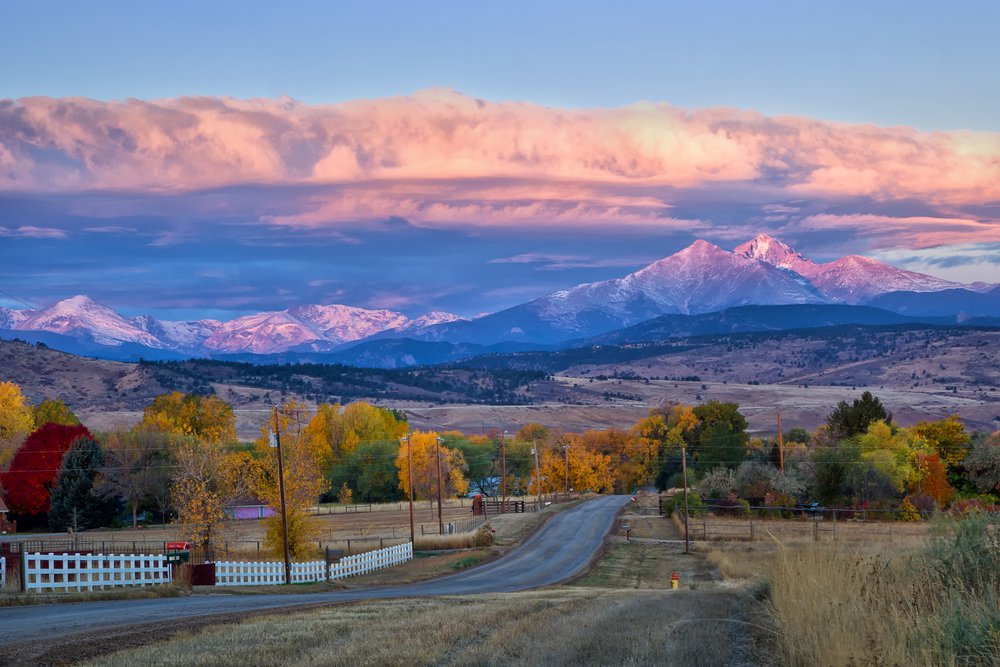
Whereas FairlawnGig’s establishment was straightforward, NextLight, the gigabit-speed municipal broadband network offered by the city of Longmont, Colo., overcame many legal and commercial obstacles to arrive at its present success. The network currently offers 25 Mbps broadband service advertised for $39.95 per month, and 1 Gbps service advertised for $69.95 per month, which is discounted to $59.95 for those who have been subscribed for more than 12 consecutive months.38 NextLight’s director estimates that close to 90 percent of subscribers are “charter” members, or subscribers to the gigabit-speed service.39 Both advertised service options are priced below $79, the average national price of service per month found by BroadbandNow, and while the 25 Mbps service meets the FCC’s definition of high-speed broadband service, the 1 Gbps service is more than ten times as fast as the median download speed advertised in the United States.40 Nextlight’s conditions of service are also notably fair. All connections from NextLight are symmetrical, meaning they advertise identical download and upload speeds, rather than faster download speeds with lagging upload speeds, as commonly seen in plans offered by major ISPs. Nextlight’s plans are also offered without contracts or data caps, which removes the data cap overage penalties and contract termination fees that often hike up the prices and fees of other ISPs’ plans.41
Longmont is a city of 96,577 people in the northern stretches of the Denver metropolitan area.42 The city traces the development of its municipal network to 2012, but its movement toward a 100 percent community-owned broadband service began much earlier.43 In 1999, the local Platte River Power Authority funded the building of a fiber optic network to support its substations in Longmont. The network had extra capacity so that it could potentially be used to bring connectivity solutions to the community some time in the future. Despite this capacity to build a community network on the existing fiber infrastructure, in 2005, incumbent ISPs—namely what is now CenturyLink (formerly Qwest) and Comcast—lobbied the state legislature to enact a protectionist law that effectively barred municipal networks.44 In 2011, Longmont residents waged a hard-fought campaign to hold a ballot referendum to exempt the city from the onerous state law. Despite aggressive efforts by Comcast, CenturyLink, and other major telecom companies to defeat the ballot measure—including an outpouring of cash towards TV and radio ads, Google search ads, and flyers—Longmont voters approved the referendum and freed the city to provide internet service.45
By 2018, NextLight was one of the fastest ISPs in the country. PCMag ranked it as the fastest network in the country, besting privately-owned networks like Google Fiber, Verizon Fios, and RCN.46 In 2018, an estimated 53 percent of Longmont residents were NextLight subscribers.47 The network is financially sustainable and expected to pay off its bonds four years ahead of schedule, with no tax dollars used toward building the network.48 The network has brought significant benefits to the area. With one of the most affordable gigabit-speed internet plans in the country, it has saved its residents and businesses money and time.49 It has spurred economic development and supported events by Longmont’s entrepreneurial community.50 The network has also shown a commitment to helping bridge the digital divide by offering free, residential broadband service reaching 25 Mbps in download and upload speed, along with a modem or wireless router, to qualifying low-income families.51 Eligible families must live in Longmont in a NextLight-serviceable area, and have children in St. Vrain Valley School District who receive free or reduced lunch assistance.52
NextLight’s rate for gigabit service in Longmont is also much lower than that offered by Comcast in the neighboring town of Boulder.53 The network’s success has also encouraged other Colorado communities, like Aurora, Loveland, and Fort Collins, to successfully fight for their own municipal broadband networks.54
YurokConnect (Yurok Reservation, Calif.)

Municipalities are not the only entities that can respond to their residents’ needs and create their own broadband networks; many tribal nations are also building their own networks to close the digital divide in tribal areas. Tribal nations are among the least connected communities in the country. The FCC has long recognized the profound lack of connectivity on reservations and conducted field hearings to explore the problem two decades ago.55 In 2020, problems persist, as recent federal estimates put more than 27.7 percent of people living on tribal lands without broadband access, compared to 22.3 percent of those living in rural, non-tribal areas without broadband access.56 A report released in 2018 by the Government Accountability Office reveals, however, that the FCC overstates broadband access in tribal lands by collecting broadband availability data rather than actual access to service data.57 Additionally, the report reveals that tribes suffer disproportionately from lack of broadband infrastructure, as well as slower and more expensive service where there are options.58 Broadband deployment costs more on unserved tribal lands that are generally rural and may have rugged terrain, and such costs can thereby discourage private providers from deploying in such areas. With few private options, there’s a particularly strong incentive for tribal nations to develop their own networks.
For example, the Yurok Tribe built its own wireless network to serve a tribal community in a rugged stretch of the northern California coastline. YurokConnect is a wireless broadband network that covers the entirety of the Yurok Tribe Reservation, comprising a one-mile wide tract running along both sides of the Klamath River and extending for 45 miles to the Pacific Ocean. Bandwidth is distributed via wireless point-to-point, originating from a mountain top that was originally owned by the Air Force but decommissioned and acquired by the Yurok Tribe, on unlicensed “TV white space” spectrum.59 YurokConnect offers single-family residences service up to 800 Kbps for $40 per month, and up to 2 Mbps for $80 per month. Upload speeds reach 285 Kbps for residential accounts, and there is a $4 monthly rental fee for radio units.60 Standard service connection charges are determined by network staff, but include account set up, pick up of standard home units, and remote verification of service.
Though speeds offered by YurokConnect fall well below the 25/3 Mbps in download and upload speed that the FCC defines as high-speed broadband service, the service addresses a need that has long been overlooked by commercial ISPs. The Yurok Tribe Reservation is remote and sparsely populated, as well as characterized by low median household income and limited economic opportunities.61 The reservation’s terrain is rough, mountainous, and heavily forested, making it exceptionally difficult to build out communications infrastructure. The tribe reports that 90 percent of the reservation actually has no infrastructure, and lacks power and water in addition to telecommunications. Previously, the existing telephone and T1 services (dedicated transmission fiber optic telephone lines that carry more data than traditional telephone lines) available to the Yurok Tribe were offered by conventional wireline phone companies for approximately $650 per month to more than $1200 per month.62 This was not only cost-prohibitive for the community, but led to roadblocks in communications for Yurok’s public safety agency, which had to share the single T1 line available.
By creating their own network, the Yurok Tribe has helped close the digital divide for its members. For the Tribe to build its own network, the federal government required it to conduct mandatory environmental surveys for building network infrastructure, as well as acquire the necessary permits from both state and federal agencies. Particularly essential was a license to run the network on white space spectrum, which the Tribe acquired with the help of the FCC’s Office of Native Affairs.63 Using the TV white space spectrum made it possible for the tribe to install fewer towers and also reduced the amount of hardware required on the user end to connect to the network.64 Given the reservation’s rugged terrain and scattered population, the white space spectrum license was particularly advantageous for building an efficient and cost-effective network.
YurokConnect has brought a multitude of benefits for the nearly 5,000 Tribe members who previously lacked internet access on their land.65 The network has created better opportunities for telemedicine, distance learning, public safety, and communications infrastructure for Yurok’s fishery management and tribal government operations.66 YurokConnect subscribers have access to material from universities in the area, including the College of the Redwoods and Humboldt State University. Internet access brings opportunities for tribal members to shop at lower prices online, or sell goods to a wider market.67 The Yurok Tribe is now also connected with the nearby Klamath Fire Station. The reliable internet connection via the network facilitates virtual training for volunteer Yurok firefighters.68
The Yurok Tribe’s broadband service and technology is also set to improve. In 2013, the California Public Utilities Commission approved a $6.5 million grant for the Yurok and neighboring Karuk tribes to build an 82-mile fiber backbone to an existing internet hub, and then build out last-mile wireless connections to around 814 homes and businesses throughout the land.69 In 2018, the California state government deemed the environmental assessment complete, and the joint Klamath River Rural Broadband Initiative is awaiting approval from the California Advanced Services Fund on the initiative’s additional requests for funding to expand the project.70 With increased funding, the two tribes can achieve economies of scale to serve both tribes and their surrounding neighbors.71 The proposed project would open up broadband service for health clinics, tribal offices, and businesses. It would also provide broadband access to the two schools on the reservation that is comparable to service found in urban areas in other parts of the country.72
Community broadband networks have much potential to bring high-speed internet and greater prosperity to unserved and underserved communities. Given the successes seen in the towns of Fairlawn and Longmont, as well as in the Yurok Tribe, local communities should feel empowered to invest in their own social and economic success through the establishment of a community-owned network.
*Corrected 2:15pm on July 14, 2020: A previous version of this report erroneously stated that "In 2020, problems persist, as recent federal estimates put more than 90 million people on tribal lands without internet, compared to 11 million residents in rural, non-tribal areas." This has been changed to "In 2020, problems persist, as recent federal estimates put more than 27.7 percent of people living on tribal lands without broadband access, compared to 22.3 percent of those living in rural, non-tribal areas without broadband access." We regret this error.
Citations
- David Talbor, Kira Hessekiel, and Danielle Kehl, Community Based Fiber Networks: Value Leaders in America, (Cambridge, MA.: Berkman Klein Center for Internet & Society, January 2018), https://dash.harvard.edu/bitstream/handle/1/34623859/2018-01-16-Pricing.final.pdf?sequence=5&isAllowed=y
- Lennard G. Kruger and Angele A. Gilroy, Municipal Broadband: Background and Policy Debate, (Congressional Research Service, April 6, 2016),https://fas.org/sgp/crs/misc/R44080.pdf
- “Community Network Map,” Institute for Self-Reliance, January 2020, https://muninetworks.org/communitymap
- “The Opportunity of Municipal Broadband,” Next Century Cities, https://nextcenturycities.org/wp-content/uploads/NCC_OMB.pdf
- Eighth Measuring Broadband America Fixed Broadband Report: A Report on Consumer Fixed Broadband Performance in the United States, (Federal Communications Commission, 2018), https://data.fcc.gov/download/measuring-broadband-america/2018/2018-Fixed-Measuring-Broadband-America-Report.pdf , 13.
- “Residential Broadband Services,” FairlawnGig, https://www.fairlawngig.net/residential/ ; Eric Griffith, “The Fastest ISPs of 2019,” PCMag, June 26, 2019, https://www.pcmag.com/article/369142/the-fastest-isps-of-2019
- “Business Broadband Services,” FairlawnGig, https://fairlawngig.net/business/
- “QuickFacts: Fairlawn city, Ohio; Forestville CDP, Ohio; Pepper Pike city, Ohio,” United States Census Bureau, July 1, 2019, https://www.census.gov/quickfacts/fact/table/fairlawncityohio,forestvillecdpohio,pepperpikecityohio/PST045219
- “Mayor Roth Announces FairlawnGig,” Business Wire, January 12, 2015, https://www.businesswire.com/news/home/20150112006234/en/Mayor-Roth-Announces-FairlawnGig
- A community survey of four hundred residents elicited a 97 percent positive support for better connectivity through a municipal network. “Transcript: Community Broadband Bits Episode 201,” Institute for Local Self-Reliance, May 16, 2016, https://muninetworks.org/content/transcript-community-broadband-bits-episode-201
- “Transcript: Community Broadband Bits Episode 201,” Institute for Local Self-Reliance, May 16, 2016, https://muninetworks.org/content/transcript-community-broadband-bits-episode-201
- “City of Hudson, Ohio Meeting Minutes: Fiber to the Community Ad-Hoc Committee,” City of Hudson, July 26, 2018, https://www.hudson.oh.us/Archive/ViewFile/Item/1939 ; “Municipal FTTH Networks,” Institute for Local Self-Reliance, last updated March 19, 2019, https://muninetworks.org/content/municipal-ftth-networks#OH
- “Transcript: Community Broadband Bits Episode 201,” Institute for Local Self-Reliance, May 16, 2016, https://muninetworks.org/content/transcript-community-broadband-bits-episode-201
- Beth Thomas Hertz, “Networks lure business to come, grow, stay,” Crain Communications, October 7, 2018, https://www.crainscleveland.com/technology/networks-lure-business-come-grow-stay
- Masha Zager, “FairlawnGig Fiber Boosts Regional Economy,” Broadband Communities, August/September 2019, https://www.bbcmag.com/community-broadband/fairlawngig-fiber-boosts-regional-economy
- Zager.
- Zager.
- “Case Study: City of Fairlawn, Ohio,” Fujitsu, 2018, https://www.fujitsu.com/us/Images/City-of-Fairlawn-Ohio-Case-Study.pdf
- Rick Armon, “Municipal Broadband Service Goes Regional in Fairlawn, Ohio,” Government Technology, June 22, 2018, https://www.govtech.com/network/Municipal-Broadband-Service-Goes-Regional-in-Fairlawn-Ohio.html
- “Bounce Innovation Hub and FairlawnGig partner to bring high-speed internet service to Bounce,” FairlawnGig, December 5, 2018, https://www.fairlawngig.net/5051-2/
- “Residential Rates and Services,” City of Longmont, Colorado, https://www.longmontcolorado.gov/departments/departments-e-m/longmont-power-communications/nextlight-broadband/rates-and-services-gig-promo
- “Transcript: Community Broadband Bits Episode 392,” Institute for Local Self-Reliance, January 29, 2020, https://muninetworks.org/content/transcript-community-broadband-bits-episode-392
- Julia Tanberk and Tyler Cooper, “2020 U.S. Internet, TV, & Phone Shopping Study,” BroadbandNow, March 16, 2020, https://broadbandnow.com/research/internet-tv-phone-shopping-study-2020 ; Eighth Measuring Broadband America Fixed Broadband Report: A Report on Consumer Fixed Broadband Performance in the United States, (Federal Communications Commission, 2018), https://data.fcc.gov/download/measuring-broadband-america/2018/2018-Fixed-Measuring-Broadband-America-Report.pdf , 13.
- Jonathan Schwantes, How Cable Companies Use Hidden Fees to Raise Prices and Disguise the True Cost of Service, (Consumer Reports: October 2019), https://advocacy.consumerreports.org/wp-content/uploads/2019/10/CR-Cable-Bill-Report-2019.pdf
- “QuickFacts: Longmont city, Colorado,” United States Census Bureau, July 1, 2019, https://factfinder.census.gov/faces/nav/jsf/pages/community_facts.xhtml?src=bkmk
- “In the Media,” City of Longmont, Colorado, https://www.longmontcolorado.gov/departments/departments-e-m/longmont-power-communications/broadband-service/in-the-news
- “Transcript: Community Broadband Bits Episode 10,” Institute for Local Self-Reliance, June 26, 2015, https://muninetworks.org/content/transcript-community-broadband-bits-episode-10
- “Colorado City Takes The Internet Into Their Own Hands,” WebProNews, July 19, 2012, https://www.webpronews.com/colorado-city-takes-the-internet-into-their-own-hands ; Karl Bode, “Colorado Cities Keep Voting To Build Their Own Broadband Networks,” Techdirt, January 12, 2018, https://www.techdirt.com/articles/20180104/09234138930/colorado-cities-keep-voting-to-build-their-own-broadband-networks.shtml ; Kayleigh Rogers, “Big Telecom Spent $200,000 to Try to Prevent a Colorado Town From Even Talking About a City-Run Internet,” Vice, October 25, 2017, https://www.vice.com/en_us/article/a37v4z/big-telecom-spent-dollar200000-to-try-to-prevent-a-colorado-town-from-even-talking-about-a-city-run-internet ; Emily Badger, “How the Telecom Lobby is Killing Municipal Broadband,” CityLab, November 4, 2011, https://www.citylab.com/life/2011/11/telecom-lobby-killing-municipal-broadband/420/
- Eric Griffith, “The Fastest ISPs of 2018,” PC Mag, June 18, 2018, https://www.pcmag.com/article/361765/the-fastest-isps-of-2018
- Macie May, “Longmont’s NextLight Receives “Top Spot” Ranking by PC Magazine,” Longmont Observer, June 23, 2018, https://longmontobserver.org/city/longmonts-nextlight-receives-top-spot-ranking-by-pc-magazine/
- Scott Converse, “Longmont’s Nextlight take rate is at 51%,” Longmont Observer, May 9, 2017, https://longmontobserver.org/business/longmonts-nextlight-take-rate-is-at-51/
- “NextLight wins affordability awards from BroadbandNow,” City of Longmont, Colorado, April 16, 2019, https://www.longmontcolorado.gov/home/showdocument?id=28226
- “Longmont Startup Week 2018,” Longmont Observer, July 5, 2018, https://longmontobserver.org/business/startup/longmont-startup-week-2018/ ; “St. Vrain schools connect to NextLight … again,” City of Longmont, Colorado, June 30, 2017, https://www.longmontcolorado.gov/home/showdocument?id=21369
- Macie May, “‘Sharing the NextLight’ Bridging the Digital Divide in Longmont,” Longmont Observer, January 18, 2019, https://longmontobserver.org/featured/sharing-the-nextlight-bridging-the-digital-divide-in-longmont/
- “Sharing the NextLight,” City of Longmont, Colorado, https://www.longmontcolorado.gov/departments/departments-a-d/children-youth-and-families/family-success/digital-divide-program
- “More Than Half of Longmonters Choose NextLight Fiber. Because NextLight Fiber.” Institute for Local Self-Reliance, November 5, 2018, https://muninetworks.org/content/more-half-longmonters-choose-nextlight-fiber-because-nextlight-fiber?mc_cid=01f7f8af4e&mc_eid=d79908fd76
- Nicole Brady, “Aurora voters pave way for municipal broadband service,” The Denver Channel, November 8, 2018, https://www.thedenverchannel.com/news/local-news/aurora-voters-pave-way-for-municipal-broadband-service ; Jon Brodkin, “Comcast, beware: New city-run broadband offers 1Gbps for $60 a month,” Ars Technica, August 20, 2019, https://arstechnica.com/tech-policy/2019/08/comcast-beware-new-city-run-broadband-offers-1gbps-for-60-a-month/ ; “Loveland City Council Approves Broadband Utility,” City of Loveland, November 6, 2018, https://www.letstalkloveland.org/lets-talk-broadband#loveland-city-council-approves-broadband-utility-1
- Statement of Policy on Establishing a Government-to-Government Relationship with Indian Tribes, Federal Communications Commission, Adopted: June 8, 2000, Released: June 23, 2000.https://www.tribalconsultation.arizona.edu/docs/FCC/fcc00207.pdf
- 2019 Broadband Deployment Report. FCC. Adopted: May 8, 2019 Released: May 29, 2019, 16, https://docs.fcc.gov/public/attachments/FCC-19-44A1.pdf
- Broadband Internet: FCC’s Data Overstate Access on Tribal Lands (Washington, D.C.: United States Government Accountability Office, September 2018), 14, https://www.gao.gov/assets/700/694386.pdf
- Margaret Harding McGill, “The least connected people in America,” Politico, February 7, 2018, https://www.politico.com/agenda/story/2018/02/07/rural-indian-reservations-broadband-access-000628
- There are areas of the country where not all television channels are utilized. Unused spectrum between TV stations, called white spaces,can be used for high-capacity Wi-Fi and fixed wireless home broadband connections. A Rural Broadband Model, Yurok Tribe Information Services Department, 2011, 12-13 http://www.yuroktribe.org/departments/infoservices/documents/A_Rural_Broadband_Model.pdf ; “White Space,” Federal Communications Commission, https://www.fcc.gov/general/white-space ; Paula BoydMichael Calabrese, Edgar Figueroa, Kalpak Gude, Alan Norman, Mark Radabaugh, “Expanding The Unlicensed Economy: Why More Unlicensed Spectrum Access Is Key to Affordable Wireless Connectivity,” (panel discussion, Washington, D.C., May. 24, 2017), https://www.newamerica.org/oti/events/expanding-unlicensed-economy-why-more-unlicensed-spectrum-access-key-affordable-wireless-connectivity/ ; Michael Calabrese, “Examples of Consumer Benefits from TV 'White Spaces' Legislation,” New America, July 10, 2006, https://www.newamerica.org/oti/policy-papers/examples-of-consumer-benefits-from-tv-white-spaces-legislation/
- “YurokConnect Basic Rate Schedule,” YurokConnect Wireless Service, April 2012, http://www.yuroktribe.org/departments/infoservices/yurokconnect/docs/YurokConnect%20Basic%20Rate%20ScheduleRevised.pdf
- Proponent’s Environmental Assessment Klamath River Rural Broadband Initiative, Karuk Tribe, December 2017, 2, https://www.cpuc.ca.gov/environment/info/esa/klamath/pdfs/KRRBI_PEA_18DEC2017.pdf
- “What a T1 Internet Line Can—and Can’t—Do for Your Small Business,” Frontier, https://business.frontier.com/guides/t1-internet-line/ ; A Rural Broadband Model, Yurok Tribe Information Services Department, 2011, http://www.yuroktribe.org/departments/infoservices/documents/A_Rural_Broadband_Model.pdf
- James Carlson, “A technological profile: Broadband over analog technology,” July 11, 2011, https://www.officer.com/command-hq/technology/communications/article/10278686/a-technological-profile-broadband-over-analog-technology
- “Tribe testing out new Wi-Fi technology ,” Yurok Today, February 2011, https://www.yuroktribe.org/documents/newsletter_february.pdf
- Tribal Broadband: Funding Access & Adoption, Corporation for Education Network Initiatives in California, https://cenic.org/files/publications/TribalBroadbandFunding_final.pdf
- “Yurok Tribe to be First to Benefit from New Device Offered by Carlson Wireless,” Carlson Wireless, January 26, 2011, https://www.carlsonwireless.com/press-releases/yurok-tribe-first-benefit-new-remote-broadband-technology-offered-carlson-wireless/
- “About Us,” Yurok Tribe, http://www.yuroktribe.org/departments/infoservices/yurokconnect/docs/About_Us.pdf
- “New Technology Revolutionizes Yurok Tribal Communications,” PoliceOne, July 26, 2011, https://www.policeone.com/police-products/communications/press-releases/new-technology-revolutionizes-yurok-tribal-communications-jH9gyNnK2cf3N3lb/
- Resolution T-17418 Approval of Funding for the Grant Application of the Karuk Tribe (U-7235-C), Public Utilities Commission of the State of California, October 17, 2013, https://tellusventure.com/downloads/casf/feb_2013_round/cpuc_final_resolution_casf_grant_krrbi_17oct2013.pdf
- “Klamath River Rural Broadband Initiative Project Update,” Yurok Tribe, May 2019, https://tellusventure.com/downloads/casf/2019/karuk_casf_app_krrbi_3may2019.pdf
- Resolution T-17418 Approval of Funding for the Grant Application of the Karuk Tribe (U-7235-C), Public Utilities Commission of the State of California, October 17, 2013, 3, https://tellusventure.com/downloads/casf/feb_2013_round/cpuc_final_resolution_casf_grant_krrbi_17oct2013.pdf
- “Klamath River Rural Broadband to build 82 miles of fiber-optic line,” Yurok Tribe, https://yuroktribe.org/documents/press_release_rural_broadband1_WEB.pdf
Overcoming State Laws for Municipal Broadband Networks

As the Longmont case study demonstrated, state government can get in the way of communities that want to establish their own networks. According to consumer-focused group BroadbandNow, 25 states have enacted laws that burden municipalities trying to solve broadband access problems by creating their own networks.73 The Institute for Local Self-Reliance and communications law firm Baller Stokes & Lide have identified 19 states with substantial barriers to public communications initiatives and public-private broadband partnerships, including explicit prohibitions on public broadband services.74
The difference in the total number of states with laws against municipal broadband networks demonstrates that the types of laws and legal restrictions that target community broadband vary widely from state to state. Some states, like Missouri, Pennsylvania, and Texas, explicitly prohibit municipalities and municipal electric utilities from directly or indirectly selling specified telecommunications services to the public, or selling or leasing telecommunications services to the public or other private communications providers.75 Other jurisdictions impose obstacles rather than bans. For example, Louisiana and Virginia require communities to hold a referendum before providing any services, which can be time-consuming and costly, and which allow incumbent ISPs to outspend proponents of community networks. Additionally, communities in Utah and North and South Carolina face significant bureaucratic barriers in the form of procedural requirements that would be difficult for any ISP, public or private, to meet.76
Many communities also face restrictions that may superficially appear to be benign—and were promoted by incumbent carriers as necessary to achieve “fair competition” and “a level playing field”—but are in practice highly discriminatory and prohibitory. For example, in Florida, municipal telecommunications services are taxed even though there are no comparable taxes for other municipal services sold to the public. In addition, some states have enacted laws of general applicability that cover all local government activities in the state, not just communications matters, and impose challenging requirements such as finding alternative sources of funding beyond tax revenues. Further, some state laws allow community broadband initiatives and public-private partnerships but bar or restrict their access to state broadband subsidies. Other approaches that impose obstacles include those in Nevada, which sets caps on the population size of a service area.
These state laws impose serious disadvantages to local economies and communities across the nation, and can stifle the ability of localities to serve their constituents’ telecommunications needs. For instance, by limiting communities' abilities to create their own broadband networks, when incumbent ISPs face troubles with connectivity, there are fewer connectivity solutions available to residents. This is particularly important in times of crisis. The COVID-19 pandemic has demonstrated just how important it is for people to be connected as they stay at home for public health reasons. More than ever, people need internet access to work, receive government services, and continue their education online.77
The divergent paths of three municipal broadband networks in Utah, namely UTOPIA, iProvo, and the Spanish Fork Community Network (SFCN), exemplify the harmful effects of such restrictions on municipal broadband and communities’ access to affordable and high-speed internet. Based on its exemptions from restrictive state laws, SFCN, the oldest of the three networks, was able to flourish whereas UTOPIA and iProvo have struggled.
Construction on the SFCN began in 2001 with a $7.5 million revenue bond, which the city paid off in 2015 as planned. This was also the year the municipal network began upgrades to provide 1 gigabit service to residents for $75 per month, including free installation, no contracts, and a free first month.78 As of 2012, 80 percent of Spanish Fork residents were customers of SFCN, and the city made a net income of about $1 million per year. The network has its own TV channel and production studios, and a biweekly city news show. It services all municipal buildings and facilities, and was credited with ensuring that updates from the government on road blockages and clean-up efforts were broadcast.79
SFCN has succeeded in contrast to its Utah counterparts due to its exemption from the Municipal Cable TV and Public Telecommunications Services Act, which passed the Utah state legislature in 2001. Incumbent ISPs were largely behind drafting the law, which limited future municipal networks in Utah (including UTOPIA and iProvo) to operating as wholesalers only. As a legacy operator, SFCN was allowed to continue using the direct retail model.80 A wholesale model is much more challenging to maintain than a direct retail model, as it entails less control of service quality and requires splitting revenues with third parties.81 The act, therefore, made it much more difficult for a municipal broadband network to be financially solvent. The director of information systems for Spanish Fork, John Bowcut, noted, “The wholesale model has not proven successful,” and that he does not “envy the position of being millions of dollars in debt and having someone else do your customer service,” referring to the difficulties faced by the two other Utah municipal networks.82
SFCN services local businesses and residents directly, whereas iProvo and UTOPIA, limited by the law to a wholesale model, can only sell their capacity to other service providers. The legislation also creates restrictions on how to structure debt, in addition to standard requirements of holding a preliminary public hearing about a potential network, hiring a feasibility consultant to conduct a feasibility study, ensuring that average annual revenue would exceed average annual costs by the amount necessary to meet bond obligations based on results from the first year of a feasibility study, as well as a five-year projection of all costs involved in purchasing, leasing, constructing, maintain, or operating the network, as well as revenues.83
In addition to this preliminary work, the law requires that a referendum be held on whether the municipality shall provide telecommunications services. If a municipal broadband network is successful, it is also restricted to offering its services, “within the geographic boundaries of the municipality,” which prevents it from expanding across town lines.84
Despite the legislative hurdles, however, UTOPIA and iProvo have continued serving their communities. In recent years, UTOPIA has shown positive improvements. The network has covered its bond payments with revenue since 2018, and the Utah Infrastructure Authority can now issue bonds itself, no longer requiring cities in the network to use their bonding capacity to back costs. Customers also have access to 10 Gbps broadband service with UTOPIA, the first service of that speed in the state.85
Beyond Utah, other states like Nebraska have enacted laws that explicitly prohibit municipalities from directly providing telecommunications services or partnering with a private company to offer service.86 Public utilities in Nebraska are prohibited from offering retail broadband services, and though they may own, sell, or lease dark fiber (optical fiber already laid into the ground, but not used) to a private ISP, they cannot sell or lease dark fiber and broadband infrastructure at rates lower than what incumbents charge.87
Despite these stringent state-level legal restrictions, Lincoln, Neb. has been building city-owned and operated fiber infrastructure with the help of local communications company ALLO. Private ISPs can pay the city to use the fiber to offer broadband service to customers over the network. The city is also requiring ISPs to make any additional conduit they add to the existing network available to all other ISPs within the system.88 ALLO itself offers 1 Gbps service at $99 per month, followed by $70 per month for service advertised to reach 300 Mbps and $45 per month for service advertised to reach 20 Mbps. This well exceeds the average speed of broadband service in Lincoln, which the city reported was anywhere between 4 and 12 Mbps.89
Similarly, in Arkansas, one of the least connected states in the United States with an average broadband speed of only 29.1 Mbps, municipalities are making some progress in overcoming the obstacles imposed by state law. Arkansas’s eight-year-old law blocking municipal broadband was partially overturned in March 2019.90 Since 2011, the state had explicitly banned municipalities from building their own networks. The 2019 law still requires that any Arkansas municipality must acquire a grant or loan from a second party in order to build a network, and allows for deployment only in unserved areas. However, its passage demonstrates that communities are moving toward creating their own networks that can improve the quality of their internet service and connection.91
Communities in North Carolina are facing similar challenges from state legislation, and still have much to overcome. North Carolina’s law places serious restrictions on the ability of local governments to create municipal broadband networks. Interested governments must price their services comparably to private providers, and they must also make payments in lieu of taxes that equal the taxes and fees a private ISP has to pay. There are also additional bureaucratic hurdles. Current state legislation requires cities to hold a public hearing process before setting up their network. This process must include a period for private providers to comment on the entry of a municipal competitor, and allow for the solicitation of public-private partnership proposals before a municipality considers building its own network.92
Municipalities in North Carolina may also only offer broadband services to those within municipal boundaries. This requirement alone has frustrated residents in towns and cities near Wilson, N.C., which has provided affordable, high-speed broadband service to its residents through its municipal broadband network, Greenlight, for over a decade. The Greenlight network even offers 1 Gbps internet, but due to state legislation, cannot service residents of surrounding areas who are calling to be served.93 Therefore, the North Carolina League of Municipalities is pushing state lawmakers to pass legislation that would authorize local governments to raise money for broadband infrastructure from taxes and borrowed funds, spend money on broadband infrastructure, and lease such infrastructure to private and non-private entities.94
Citations
- Kendra Chamberlain, “Defining Municipal Broadband Roadblocks,” Broadband Now, September 6, 2019, https://broadbandnow.com/report/defining-municipal-broadband-roadblocks/
- “State Restrictions on Community Broadband Services or Other Public Communications Initiatives,” Baller, Stokes, and Lide, July 1, 2019, http://www.baller.com/wp-content/uploads/BallerStokesLideStateBarriers.pdf
- “State Restrictions on Community Broadband Services or Other Public Communications Initiatives,” Baller, Stokes, and Lide.
- “State Restrictions on Community Broadband Services or Other Public Communications Initiatives,” Baller, Stokes, and Lide.
- “#Right2Connect,” Access Now, https://act.accessnow.org/page/59048/action/1 ; Amir Nasr, “The Homework Chasm,” Slate, March 30, 2020, https://slate.com/technology/2020/03/coronavirus-school-broadband-homework-gap.html
- “Residential Internet Tiers,” Spanish Fork Community Network, http://www.sfcn.org/sfcn/internet/
- Cimaron Neugebauer, “Spanish Fork steers clear of UTOPIA, builds own network,” The Salt Lake Tribune, December 2, 2012, https://archive.sltrib.com/article.php?id=55045925&itype=CMSID
- Cimaron Neugebauer; Brendan Fischer, “Community-Owned Internet, Long Targeted by ALEC and Big Telecom, Under Fire in Georgia,” Center for Media and Democracy, March 7, 2013, https://www.prwatch.org/news/2013/03/12010/community-owned-internet-long-targeted-alec-and-big-telecom-under-fire-georgia
- Christopher Mitchell, “How Lobbyists in Utah Put Taxpayer Dollars at Risk to Protect Cable Monopolies,” Institute for Local Self-Reliance, November 11, 2015, https://muninetworks.org/content/how-lobbyists-utah-put-taxpayer-dollars-risk-protect-cable-monopolies
- Cimaron Neugebauer, “Spanish Fork steers clear of UTOPIA, builds own network,” The Salt Lake Tribune, December 2, 2012, https://archive.sltrib.com/article.php?id=55045925&itype=CMSID
- “Chapter 18: Municipal Cable Television and Public Telecommunications Services Act,” State of Utah, https://le.utah.gov/xcode/Title10/Chapter18/C10-18_1800010118000101.pdf
- Utah Code 10-18-303, Municipal Cable Television and Public Telecommunications Services Act, Operational Requirements and Limitations, General operating limitations, State of Utah, amended in 2009, https://le.utah.gov/xcode/Title10/Chapter18/10-18-S303.html
- Lisa Gonzalez, “UTOPIA Continues the Positive Trajectory,” Institute for Local Self-Reliance, October 1, 2018, https://muninetworks.org/content/utopia-continues-positive-trajectory
- Nebraska Revised Statute 86-594, State of Nebraska, https://nebraskalegislature.gov/laws/statutes.php?statute=86-594
- Nebraska Revised Statute 86-594, State of Nebraska, https://nebraskalegislature.gov/laws/statutes.php?statute=86-594
- “Lincoln Fiber to Home Project Overview,” City of Lincoln, Nebraska, https://lincoln.ne.gov/city/mayor/communications/telecommunications/pdf/project-overview.pdf
- “ALLO Fiber Internet, TV, & Phone: Lincoln, NE,” Allo Communications, https://www.allocommunications.com/locations/lincoln/?utm_source=OT&utm_medium=DM&utm_campaign=getfiberlincoln ; “Lincoln Fiber to Home Project Overview,” City of Lincoln, Nebraska, https://lincoln.ne.gov/city/mayor/communications/telecommunications/pdf/project-overview.pdf
- House Bill 2033, as engrossed: H3/17/11 H3/24/11 S3/28/11, An Act to Amend the Telecommunications Regulatory Reform Act of 1997, and for Other Purposes, State of Arkansas, https://www.arkleg.state.ar.us/Acts/Document?type=pdf&act=1050&ddBienniumSession=2011%2F2011R ; Nick Keppler, “Why Did Arkansas Change Its Mind on Municipal Broadband?” City Lab, April 17, 2019, https://www.citylab.com/life/2019/04/arkansas-internet-municipal-broadband-preemption-laws/587263/
- Nick Keppler, “Why Did Arkansas Change Its Mind on Municipal Broadband?” City Lab, April 17, 2019, https://www.citylab.com/life/2019/04/arkansas-internet-municipal-broadband-preemption-laws/587263/
- State of Tenn., et al. v. FCC, et al., United States Court of Appeals for the Sixth Circuit, argued: March 17, 2016, decided and filed: August 10, 2016, https://transition.fcc.gov/Daily_Releases/Daily_Business/2016/db0810/DOC-340741A1.pdf
- State of Tenn., et al. v. FCC, et al., United States Court of Appeals for the Sixth Circuit, argued: March 17, 2016, decided and filed: August 10, 2016, https://transition.fcc.gov/Daily_Releases/Daily_Business/2016/db0810/DOC-340741A1.pdf
- Erin Wynia and Joanne Hovis, Leaping the Digital Divide: Encouraging Policies and Partnerships to Improve Broadband Access Across North Carolina, (Raleigh, NC: North Carolina League of Municipalities, March 21, 2018), https://www.nclm.org/resourcelibrary/Shared%20Documents/PGA%20Reports%20%26%20Files/Broadband%20Whitepaper%20-%20FINAL%20Email%20Friendly.pdf
Conclusion
More than 900 communities across the country today are served by community and tribal broadband networks, which are essential to expanding access to the internet, increasing adoption, and improving quality of service.95 These networks—maintained by city governments, tribal nations, rural utility cooperatives, and other local institutions—create public options for broadband that can challenge incumbent private providers by delivering higher-quality and more affordable internet, and reaching more underserved communities than private providers would.
In light of these benefits, it’s time to allow communities to invest in their own social and economic success and remove legal barriers to community networks. The case studies of FairlawnGig, NextLight, and YurokConnect demonstrate how these networks can expand economic opportunities by connecting people to online services, telehealth opportunities, e-learning, and jobs, and attracting new businesses to the area. Policymakers should acknowledge the value of community broadband networks and support, rather than undermine, efforts to build them. The Community Broadband Act, for example, would prevent states from creating laws that prevent cities and localities from creating their own broadband internet networks. Doing so will improve internet access and affordability, better connect people to new opportunities, strengthen local economies, and help close the digital divide.
Citations
- “Community Network Map,” Institute for Local Self-Reliance, January 2020, https://muninetworks.org/communitymap
More About the Author

Claire Park
Issues
Programs/Projects/Initiatives
Topics
Related