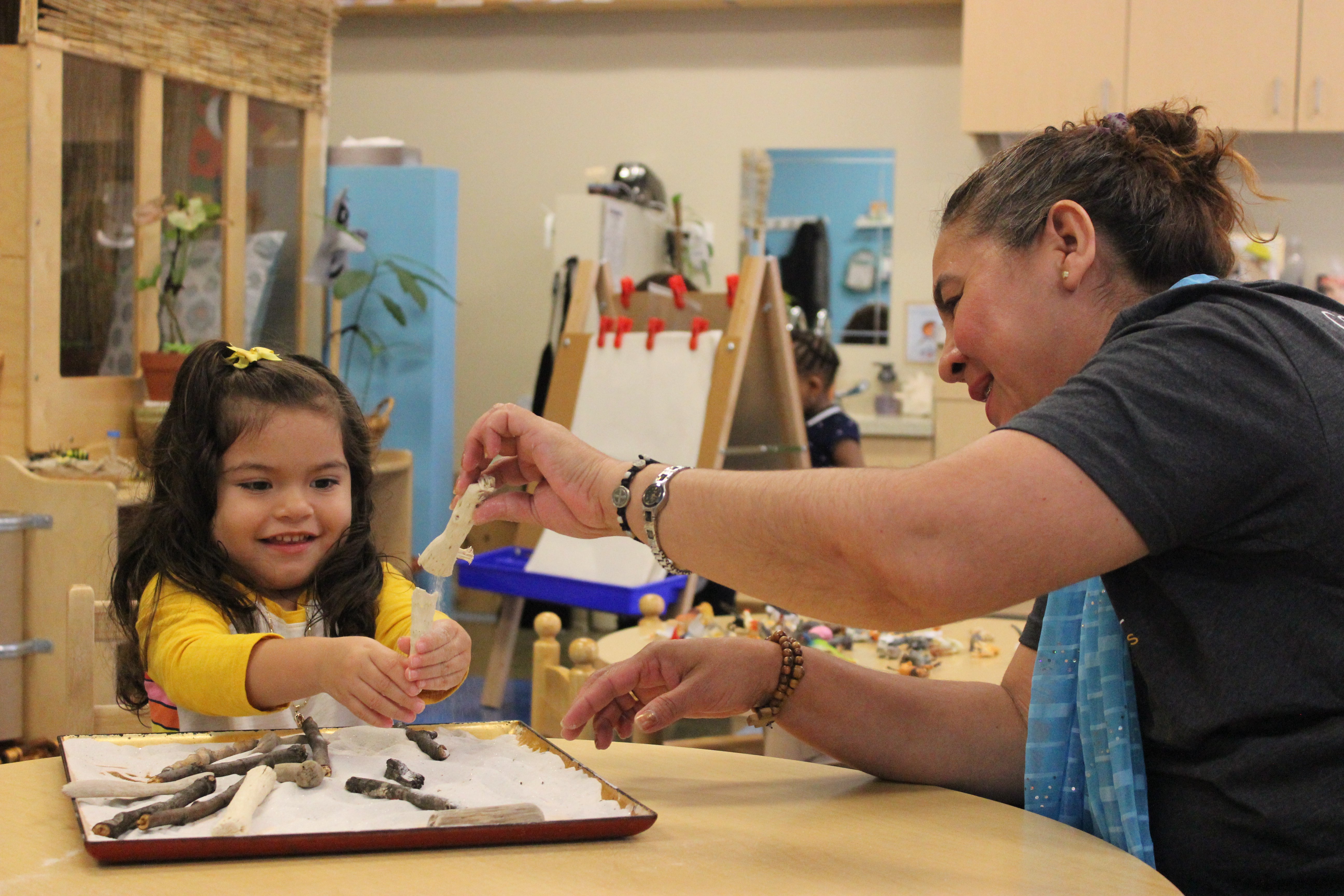
Developing a Bilingual Associate Degree Program for Spanish-Speaking Early Childhood Educators
Abstract
In 2016, Washington, D.C. passed regulations that sought to increase the education and credentials of the early educator workforce. To meet the needs of Spanish-speaking educators, leaders at the University of the District of Columbia Community College (UDC-CC) collaborated with community stakeholders and organizations, to design and implement a Spanish-English bilingual associate degree program. The program was designed to address academic, bureaucratic, linguistic, and other barriers to obtaining degrees by providing early childhood educators with the opportunity to take courses in Spanish at close to no cost, receive support with the enrollment process, be part of a cohort structure, and continue to work while earning their degrees. This brief will explore the design process, key features, and supports offered to students in the program, with a look at how one local employer worked to help increase access to the program.
Acknowledgments
We are grateful to Cecelia Alvarado, Maria Teresa Aspinwall and Marilyn Hamilton at the University of the District of Columbia Community College for sharing the story of the program’s development and reviewing earlier drafts of the paper. A special thank you to Silvia Arias, Elizabeth Bowman, Lorena Gomez, Beth Kushner, Lisa Luceno, and Christie McKay of Briya Public Charter School for their participation and collaboration. We appreciate Jill McFarren Aviles and students in the bilingual associate degree program for welcoming us into their class and sharing their perspectives. Thank you to DC State Superintendent of Education Hanseul Kang for participating in an interview. This report benefitted from the expertise and feedback of Laura Bornfreund, Sabrina Detlef, Marica Cox Mitchell and Elena Silva. Julie Brosnan, Riker Pasterkiewicz and Joe Wilkes provided layout and communication support. New America’s Early & Elementary Education and PreK–12 teams are generously supported by the Alliance for Early Success, the Bill & Melinda Gates Foundation, the Heising-Simons Foundation, the Hewlett Foundation, the Richard E. and Nancy P. Marriott Foundation, the McKnight Foundation, the David and Lucile Packard Foundation, the W. Clement & Jessie V. Stone Foundation, and the W. K. Kellogg Foundation. The views expressed in this report are those of the authors and do not necessarily reflect the views of these foundations.
Disclaimer: Cara Sklar is a former employee and current member of the Board of Trustees of Briya Public Charter School.
Downloads
Introduction
On a brisk Saturday morning, a group of infant and toddler teachers is engaged in a discussion about what it means to be a leader. These educators are enrolled in the first cohort of an innovative associate degree program that is offering them coursework in their native language of Spanish. Their course instructor, Jill McFarren Aviles, asks them, “Cómo se relaciona el liderazgo con su trabajo sobre desarrollo infantil?” [How does leadership relate to your work in infant development?] One student explains, “Necesitamos estar abiertos a las ideas e intereses de los niños. No podemos decirles lo que tienen que hacer todo el tiempo. Debemos dejarlos explorar por sí solos.” [We need to be open to the ideas and interests of the children. We can’t just tell them what to do all of the time. We need to let the kids explore for themselves.]1 They continue the conversation and settle on one key ingredient to leadership: listening.
Indeed, the District of Columbia’s first Spanish-English associate degree program in infant and toddler education was the result of leaders listening to the needs of the field. Developed by leaders at the University of the District of Columbia Community College (UDC-CC) with input from community stakeholders and organizations, the program was a response to regulatory changes passed by the city in 2016 that sought to increase the education and credentials of the early educator workforce. These regulations mandate that by December 2022 all child care center directors must have a bachelor’s degree and that by December 2023 center-based teachers and expanded home providers2 must have an associate degree in early childhood education.3 As of February 2018, a total of 1,037 teachers across center and home-based settings needed an associate degree.4
According to Hanseul Kang, D.C. state superintendent of education, the rationale behind the new requirements was, first, research demonstrating that the first three years of life are a crucial period for brain development, and second, the desire to better align birth-to-three education with pre-K education. “The increase in the minimum education requirements is meant to provide the early childhood workforce with the skills and the knowledge they need to maximize this incredibly important time and ensure our children are given a solid foundation,” Kang explained. “We hear from so many of our schools that our pre-K students are already walking in the door with significant gaps,” she said, which “really pushed us to think about…how can we improve the quality of the care they're receiving…in the infant and toddler years?”5
Many leaders in the early childhood education field nationwide are focused on raising credential requirements to help strengthen the skills and competencies of the workforce. This work has been motivated by the seminal Transforming the Workforce report, which recommends that lead early childhood educators at minimum hold a bachelor’s degree with specialized knowledge and competencies.6 But despite being embraced by some, these ideas have faced pushback, with some arguing that increased degree requirements threaten to push some educators out of the profession due to a lack of support structures to help them access and persist in degree programs.7
When the regulations were passed, the city’s Multicultural Spanish Speaking Providers Association sent a petition with over 200 signatures to the D.C. Office of the State Superintendent of Education (OSSE) asking for a degree program in Spanish.8 A smaller number met with Elizabeth Groginsky, former assistant superintendent for early learning at OSSE, to express concern that they would need to spend extra time in school learning English before they could pursue a degree.9 “When the regulations came out we, like everybody, were saying, ‘How’s this going to work?’ The [language] piece has been a big concern to early childhood practitioners in the field for a long time,” said Elizabeth Bowman, adult education director at Briya Public Charter School.10
While the city does not track the percentage of early educators who speak a language other than English, the National Institute of Early Education Research (NIEER) reports that 41 percent of Early Head Start teachers in D.C. speak a language other than English.11 In addition, at least 56 child care centers in the District offer some form of instruction in other languages and 26 support Spanish, in particular.12 Nationally, research paints a clear picture of linguistic stratification within the workforce, with immigrant and linguistically diverse providers taking on lower-paid and lower-skilled (e.g., teacher assistant) roles.13 Unless more educational options are offered, the push for increased credentials threatens to force some multilingual providers out of the profession entirely—a potentially large problem given the current shortage of high-quality child care in the city14 and the growing population of dual language learners (DLLs).15
These linguistically diverse educators are essential for meeting the needs of the city’s dual language learners, who represent over 20 percent of young children in Washington, D.C.16 These children are in the process of developing English proficiency while mastering their home language. Research suggests that DLLs’ linguistic, academic, and social development are best nurtured in environments that support home languages. Early learning programs have an advantage over the K–12 education system in that they employ staff who are more racially and linguistically diverse, thus offering greater capacity to support home languages. But these caregivers and teachers face academic, bureaucratic, linguistic, and other barriers to obtaining degrees.17
The bilingual associate degree program at UDC-CC was designed to address these barriers by providing early childhood educators with the opportunity to take courses in Spanish at close to no cost, receive support with the enrollment process, be part of a cohort structure, and continue to work while earning their degrees. This brief will explore the design process, key features, and supports offered to students in the program, with a look at how one local employer worked to help increase access to the program.
Washington D.C.’s Early Childhood Landscape
Washington, D.C. leads the nation in both the percentage of the three- and four-year-old population enrolled in pre-K and in per-pupil spending.18 The Pre-K Enhancement and Expansion Amendment Act of 2008 codified D.C.’s commitment to universal pre-K with an unprecedented investment of local dollars to create capacity, provide scholarships to educators, and raise quality. However, the policy had the unintended effect of drawing three- and four-year-old children out of community-based settings and into the public schools. This left child care centers and family child care providers19 in the financially precarious position of decreased enrollment of three- and four-year-old children, increased cost of predominantly caring for infants and toddlers, and little to no revenue to support additional education for their staff.20
Child care licensing regulations in D.C. stand out as among the most aggressive in the country. Besides D.C., only one state requires center directors to obtain a bachelor’s degree21 or teachers in community-based settings to obtain an associate degree.22 D.C.’s decision to put the requirement in regulation means that all legally operating child care providers in the city are mandated to comply. Most states take a softer tactic, opting to incent degree attainment only when public funding for increased compensation and requisite supports are available.23
In addition, the District of Columbia faces a child care capacity shortage and the regulatory changes further exacerbate the issue, putting the current pool of providers at risk of being shut down if they are unable to retain or attract faculty who meet the educational requirements for licensure. D.C. is home to 27,157 children three and younger, but only has the capacity to serve 8,214.24 The limited care that exists is often too expensive for families to afford, with 32 percent of children three and younger living in neighborhoods where the cost of center-based care exceeds 50 percent of median household income.25
Recognizing these challenges, D.C.’s early childhood advocacy community built on the success of the universal pre-K movement to advocate for the Birth-to-Three for All DC Amendment Act of 2018 to create high-quality and comprehensive systems of care for infants and toddlers. While it has not yet been fully funded, the Birth-to-Three Act provides higher payment rates for child care providers, increases educator salaries, and creates higher education pathways for the infant and toddler workforce. The Birth-to-Three Act requires the University of the District of Columbia to partner with three community-based organizations to provide an infant and toddler associate degree program in community-based settings and requires one of the sites to provide coursework in a language other than English.26
Citations
- The authors observed this during the class discussion of UDC-CC class “Orientation to Infant/Toddler Professional Practice” on March 2, 2019 in Washington, DC at Briya.
- The District of Columbia has three kinds of child care programs: child care centers, home providers (also called family child care providers) that care for up to 6 children, and expanded home providers that care for 6 to 12 children.
- In 2017, OSSE passed revised regulations extending the deadline to December 2023 for center-based teachers from the original date of December 2020 and for expanded home providers from the original date of December 2019.
- Early Childhood Education (ECE) Workforce, Increased Minimum Education Requirements: One Year Later, (Washington, DC: Office of the State Superintendent of Education, 2018).
- Interview in Washington, DC, June 6, 2019.
- LaRue Allen and Bridget B. Kelly, eds., Transforming the Workforce for Children Birth through Age 8: A Unifying Foundation (Washington, DC: The National Academies Press, 2015), https://www.nap.edu/read/19401/chapter/2#6
- Increasing Qualifications, Centering Equity: Experiences and Advice from Early Childhood Educators of Color (Washington, DC: National Association for Young Children and the Education Trust, 2019), https://www.naeyc.org/sites/default/files/globally-shared/downloads/PDFs/our-work/public-policy-advocacy/increasing_qualifications_centering_equity.pdf
- Interview with Cecelia Alvarado, Washington, DC, November 29, 2018.
- Michael Allison Chandler, “D.C. Childcare Workers Push Back Against New College Degree Requirements,” Washington Post, June 6, 2017, https://www.washingtonpost.com/local/social-issues/dc-child-care-workers-push-back-against-new-college-degree-requirements/2017/06/06/86ff73fe-4a1f-11e7-a186-60c031eab644_story.html
- Interview in Washington, DC, February 8, 2019.
- W. Steven Barnett and Allison H. Friedman-Krauss, State(s) of Head Start (New Brunswick, NJ: National Center for Early Education Research, 2016), page 121, http://nieer.org/wp-content/uploads/2016/12/HS_Full_Reduced.pdf#page=121
- Email from OSSE, June 20, 2019.
- Maki Park, Margie McHugh, Jie Zong, and Maria Batalova, Immigrant and Refugee Workers in the Early Childhood Field: Taking a Closer Look (Washington, DC: Migration Policy Institute, 2015), https://www.migrationpolicy.org/sites/default/files/publications/ECEC-Workforce-Report.pdf; and Marcy Whitebook, Fran Kipnis, and Dan Bellm, Diversity and Stratification in California’s Early Care and Education Workforce (Berkeley, CA: Center for the Study of Childcare Employment), https://cscce.berkeley.edu/files/2008/diversity_stratification08.pdf
- Based on the authors’ analysis of available data, only 29 of the 268 licensed child care providers receiving child care subsidies in DC received the highest designation of “high-quality” on the quality rating and improvement system. The analysis was conducted using information found at the OSSE website My Child Care DC, https://childcareconnections.osse.dc.gov/MyChildCare/home
- Maki Park, Anna O’Toole, and Caitlin Katsiaficas, Dual Language Learners: A National Demographic and Policy Profile (Washington, DC: Migration Policy Institute, 2017), https://www.migrationpolicy.org/research/dual-language-learners-national-demographic-and-policy-profile
- Maki Park, Anna O’Toole, and Caitlin Katsiaficas, Dual Language Learners: A National Demographic and Policy Profile.
- Kaylan Connally, Amaya Garcia, Shayna Cook, and Conor P. Williams, Teacher Talent Untapped: Multilingual Paraprofessionals Speak About the Barriers to Entering the Profession (Washington, DC: New America, 2017), https://na-production.s3.amazonaws.com/documents/Teacher-Talent-Untapped.pdf; and Robert Stechuk, Leanne Ryder, and Hiram Cortez, Latina Teachers and the “BA Challenge”: Impacts and Conditions of Increasing Degree Requirements in Early Childhood Education (Washington, DC: UnidosUS, 2020), http://publications.unidosus.org/bitstream/handle/123456789/1986/unidosus_thebachallenge_lr.pdf
- Allison H. Friedman-Krauss, W. Steven Barnett, Karin A. Garver, Katherine S. Hodges, G. G. Weisenfeld, and Beth Ann Gardiner, The State of Preschool 2019: State Preschool Yearbook (New Brunswick, NJ: National Institute for Early Education Research, 2020), 71–72, http://nieer.org/wp-content/uploads/2020/04/District_of_Columbia_YB2019.pdf
- The term family child care provider is used to describe licensed small businesses where a child care provider cares for non-relative children in his or her home. There are several names for these providers, including child development homes, home-based providers, or child care homes.
- DC.gov (website), Office of the State Superintendent of Education, “Modeling the Cost of Child Care in the District of Columbia—2016,” https://osse.dc.gov/publication/modeling-cost-child-care-district-columbia-2016
- Cara Sklar, “Center Director Preparation: How Do We Prepare a Renaissance Woman?” EdCentral (blog), New America, October 28, 2019, https://www.newamerica.org/education-policy/edcentral/center-director-preparation-how-do-we-prepare-renaissance-woman/
- We Can Do Better: Child Care Aware of America’s Ranking of State Child Care Center Regulations and Oversight (Arlington, VA: Child Care Aware of America, 2013), 29, https://www.childcareaware.org/wp-content/uploads/2015/10/wecandobetter_2013_final_april_11_0.pdf
- Stacie G. Goffin and Laura Bornfreund, eds., Moving Beyond False Choices for Early Childhood Educators: A Compendium (Washington, DC: New America, 2020), https://www.newamerica.org/education-policy/reports/moving-beyond-false-choices-for-early-childhood-educatorsa-compendium/; Some states are incenting degree attainment via Quality Rating and Improvement Systems, for more see: National Center on Early Childhood Quality Assurance, QRIS Resource Guide, (Fairfax, VA: U.S. Department of Health and Human Services, Administration for Children and Families), 10, https://qrisguide.acf.hhs.gov/sites/default/files/1812_Section_4_Standards_FINAL.pdf
- Emily Dowdall, Ira Goldstein, and Jacob Rosch, Early Learning Supply & Demand in the District of Columbia: Using Data to Identify Critical Gaps (Washington, DC: Bainum Family Foundation), 14–17, https://bainumfdn.org/wp-content/uploads/2018/10/Bainum_EL-Supply-Demand-Report_FNL_Nov-2018.pdf
- Dowdall, Goldstein, and Rosh, Supply & Demand, 10.
- Birth-to-Three for All DC Amendment Act of 2018, D.C. Law 22-179, https://code.dccouncil.us/dc/council/laws/22-179.html
Designing a Bilingual Degree Program
The University of the District of Columbia is the city’s only public institution of higher education. In 2009, the university was split into a four-year institution and a community college. According to a 2009 report by JBL Associates, the rationale for this change was to strengthen and improve the university. The report said, “UDC has struggled since it was founded to provide associate degrees, certificates, and workforce preparation programs alongside its four-year and graduate programs. Combining the two missions proved unmanageable because the educational missions of community colleges and universities require different resources and staff expertise.”27 UDC-CC has an open admissions process and low tuition to promote greater access to its career and technical training certification and associate degree programs—making it a strong fit for meeting the educational needs of the city’s early childhood workforce.
Leveraging Existing Structures
Cecelia Alvarado, former education program coordinator at UDC-CC, was determined to design a program that would meet the needs of the Spanish-speaking providers in the city. Even before the regulations were passed, early childhood teachers in the community were asking for classes in Spanish. “I already had the idea of offering the whole degree in Spanish and sent notices to eight to nine programs to get their input on what it might look like,” she told us.28
An advisory group was convened to help think through a vision for the program, the resources that could be brought to bear, and the needs of providers. At one of the first advisory meetings in July 2017, Spanish-speaking providers and representatives from Spanish early childhood programs shared their wishes for the program. All agreed that a degree program in infant and toddler education was most needed, given growing demand for infant and toddler care. The group also devised a list of program “must-haves” including community locations for classes, a cohort structure, scholarships, and strong collaboration and communication with the admissions and financial aid offices.29 The input of the early childhood educator community was essential, given that the program would serve educators who work in center-based care and those who work in and lead family child care (see Special Considerations for Helping FCC Providers Attain Degrees).
Special Considerations for Helping FCC Providers Attain Degrees
Family child care (FCC) providers are an important part of the early childhood ecosystem—their homes are where a disproportionate number of children from families with low incomes are cared for. These small businesses are often run by community members whose linguistic capacity and cultural knowledge reflect the families they serve. But FCC providers face unique challenges operating within a system built largely around center-based child care. FCC providers often have less access to professional development and face challenges increasing their academic credentials.30 To best support FCC providers, degree programs should include the following:
- Cohort Model: FCC providers often work in isolation, without an instructional coach or peer support. Utilizing a cohort model enables providers to build networks of support, share resources, and learn from each other.31 The relationships they build will enhance their experience in the program32 and persist after graduation.
- Business Training: Not only are FCC providers teachers, they are also small business owners. It is important for coursework to build their knowledge of early childhood development as well as small business ownership.33 FCC providers would benefit from courses that will strengthen their knowledge of business administration, finance, accounting, and regulatory compliance.
- Awareness of Mixed-Age Settings: FCC providers teach in mixed-age settings where infants and toddlers learn alongside older children. Degree programs should acknowledge this aspect of FCC settings and include differentiated coursework and instruction on child development and learning across the age continuum as well as how to support peer-to-peer interaction between younger and older children.34
- Specialized Supports: Teachers from a center-based setting may receive employer supports including stipends to help with the costs of education, release time to attend classes, or help navigating the higher education system. Because FCC providers are self-employed, they must rely on external entities to provide these supports. Institutions of higher education, state entities administering early childhood scholarships, provider associations, staffed family child care networks,35 and child care provider unions could work together to offer this network of supports and create a pool of qualified substitutes so FCC providers do not have to close their businesses to attend class.
Members of the advisory group also volunteered to help people through the enrollment process. Lisa Luceno, who was a member of the advisory group and is senior director of early childhood at Briya Public Charter School, described a sense of partnership in planning the program, saying, “we were involved with [thinking through] what Briya could provide. Many people had tried to get in [to UDC] and were just met with obstacles at the university level. So we had conversations about how Briya could fill this critical role, being an educational institution in the community that is more accessible.”36
Briya was a natural partner because, since 1989, it has served the immigrant community in D.C., beginning as an Even Start Multicultural Family Literacy Program that served Central American and Vietnamese refugee families who were immigrating in large numbers to the city.37 The school network has four campuses across D.C., the majority of which are co-located with Mary’s Center, a community hub that offers health and social services. Together, Mary’s Center and Briya have earned a reputation throughout the region as leaders in the early learning community. For decades, Mary’s Center provided technical assistance and business coaching to hundreds of center-based and FCC providers each year.
Briya uses a two-generation model that provides adult education and early childhood education to the immigrant community. Briya’s adult education programs are designed to meet the needs of immigrant families; they offer English for Speakers of Other Languages (ESOL) courses and workforce development programs to help students earn a high school diploma or obtain a child development associate credential (CDA) or registered medical assistant credential (RMA). Since 2002, Briya has offered a CDA program in Spanish. Given its wide reach, Briya offered to hold classes at one of its campuses to increase accessibility for its own teachers and others in the community.
With the support of key community stakeholders in place, Alvarado turned to Marilyn Hamilton, dean of academic affairs at UDC-CC, to help make the program a reality. They started by finding ways to push obstacles out of students’ way. “We want to do things that will help them succeed and not provide any barriers that will [make them] fail,” said Hamilton.38 They worked together to identify how the program could be adopted into the current structure of the university, address challenges that arose, and establish the systems of support needed to help candidates enroll and persist in the program.
The program was built on the existing infant and toddler degree program, which meant that it did not need to go through a formal approval process. “Seriously, sometimes you just have to do it! Once the university understood why this was needed and what was needed, they understood the need to support [the program],” said Hamilton.39
The part-time bilingual degree program covers the same content and curriculum as the program offered in English. The only differences between the two programs are the language used for instruction, the course sequence, and amount of time to earn the degree.40 “We flipped how people take the classes, so we have them take the [infant and toddler] courses first and the general education courses last,” said Alvarado.41 That means the first nine courses in the degree program are offered in Spanish, the next four are offered bilingually, and the remaining eight general education courses are in English. By front-loading the content courses, the program offers participants the chance to start off in an area of strength and build off their existing knowledge gained through years of working with young children. In addition, Hamilton says that she believes “that if someone writes and speaks the content in their own language, they understand and embrace it better.”42 Indeed, research on adult English as a Second Language (ESL) students affirms that use of a native language supports the acquisition of content, and ultimately supports language learning.43
Addressing Challenges
The bilingual design of the degree program is not without its challenges, as program participants still need to have strong enough English language skills to be successful in their general education coursework. UDC-CC requires applicants to take the Accuplacer test, which is used to determine course placements and the need for remediation. In addition, students in the bilingual associate degree program must take the ESL Accuplacer test to measure their English language skills. It may be that the program will need to integrate some English language development within the current courses. “When we get to that point, we’re going to be teaching those courses in English, but they’ll have someone who speaks their language as a supplemental instructor” who can help explain the content more meaningfully, noted Hamilton.44
To be sure, offering a bilingual degree program comes with challenges beyond navigating program design and university bureaucracy: Spanish-speaking faculty with expertise teaching infants and toddlers and Spanish textbooks and materials are also essential.
Both Alvarado and Hamilton described the challenge of finding course instructors. “The job announcement called for Spanish-speaking instructors with an infant and toddler background. We received 13–14 applications. Nine did not have Spanish and the others did not have infant-toddler experience,” said Alvarado.45 The need for some background in infant-toddler was a priority as they wanted to ensure an understanding of this developmental period, of family engagement, and of how to incorporate best practices into infant and toddler settings. Ultimately, the instructors who were hired did have some expertise but were offered additional training in the Program for Infant Toddler Care (PITC) to ensure their understanding of the specific materials and philosophy undergirding UDC-CC’s program. The majority of courses in the degree program use PITC training manuals, available in Spanish, as the textbook.
The majority of university systems have processes in place that are “entrenched in English” noted Alvarado, which meant that resources had to be placed towards translating materials into Spanish. These materials include information sheets and guides on the financial aid process, about the program and required courses, about the application process, and more. In addition, finding supplemental textbooks in Spanish also proved difficult—some textbooks have Spanish editions, but the majority of texts that were found were published in different countries. Course instructors had to go beyond traditional resources and pull together a variety of materials to support student learning. In the class we observed, the instructor used a combination of written materials and videos from YouTube.
Key Takeaways
Program Design
- Reduce bureaucratic barriers by using existing program structures to build out degree programs in other languages
- Consider the unique needs of family child care providers in supports offered and course content/curriculum
- Engage the early education community in program planning through advisory boards, community meetings, and other strategies
- Designate resources and time to translating and finding program materials
- Provide faculty with professional learning to grow their skills and knowledge
- Identify strategies and best practices for integrating English language development into college coursework
Citations
- The authors observed this during the class discussion of UDC-CC class “Orientation to Infant/Toddler Professional Practice” on March 2, 2019 in Washington, DC at Briya.
- The District of Columbia has three kinds of child care programs: child care centers, home providers (also called family child care providers) that care for up to 6 children, and expanded home providers that care for 6 to 12 children.
- In 2017, OSSE passed revised regulations extending the deadline to December 2023 for center-based teachers from the original date of December 2020 and for expanded home providers from the original date of December 2019.
- Early Childhood Education (ECE) Workforce, Increased Minimum Education Requirements: One Year Later, (Washington, DC: Office of the State Superintendent of Education, 2018).
- Interview in Washington, DC, June 6, 2019.
- LaRue Allen and Bridget B. Kelly, eds., Transforming the Workforce for Children Birth through Age 8: A Unifying Foundation (Washington, DC: The National Academies Press, 2015), https://www.nap.edu/read/19401/chapter/2#6
- Increasing Qualifications, Centering Equity: Experiences and Advice from Early Childhood Educators of Color (Washington, DC: National Association for Young Children and the Education Trust, 2019), https://www.naeyc.org/sites/default/files/globally-shared/downloads/PDFs/our-work/public-policy-advocacy/increasing_qualifications_centering_equity.pdf
- Interview with Cecelia Alvarado, Washington, DC, November 29, 2018.
- Michael Allison Chandler, “D.C. Childcare Workers Push Back Against New College Degree Requirements,” Washington Post, June 6, 2017, https://www.washingtonpost.com/local/social-issues/dc-child-care-workers-push-back-against-new-college-degree-requirements/2017/06/06/86ff73fe-4a1f-11e7-a186-60c031eab644_story.html
- Interview in Washington, DC, February 8, 2019.
- W. Steven Barnett and Allison H. Friedman-Krauss, State(s) of Head Start (New Brunswick, NJ: National Center for Early Education Research, 2016), page 121, http://nieer.org/wp-content/uploads/2016/12/HS_Full_Reduced.pdf#page=121
- Email from OSSE, June 20, 2019.
- Maki Park, Margie McHugh, Jie Zong, and Maria Batalova, Immigrant and Refugee Workers in the Early Childhood Field: Taking a Closer Look (Washington, DC: Migration Policy Institute, 2015), https://www.migrationpolicy.org/sites/default/files/publications/ECEC-Workforce-Report.pdf; and Marcy Whitebook, Fran Kipnis, and Dan Bellm, Diversity and Stratification in California’s Early Care and Education Workforce (Berkeley, CA: Center for the Study of Childcare Employment), https://cscce.berkeley.edu/files/2008/diversity_stratification08.pdf
- Based on the authors’ analysis of available data, only 29 of the 268 licensed child care providers receiving child care subsidies in DC received the highest designation of “high-quality” on the quality rating and improvement system. The analysis was conducted using information found at the OSSE website My Child Care DC, https://childcareconnections.osse.dc.gov/MyChildCare/home
- Maki Park, Anna O’Toole, and Caitlin Katsiaficas, Dual Language Learners: A National Demographic and Policy Profile (Washington, DC: Migration Policy Institute, 2017), https://www.migrationpolicy.org/research/dual-language-learners-national-demographic-and-policy-profile
- Maki Park, Anna O’Toole, and Caitlin Katsiaficas, Dual Language Learners: A National Demographic and Policy Profile.
- Kaylan Connally, Amaya Garcia, Shayna Cook, and Conor P. Williams, Teacher Talent Untapped: Multilingual Paraprofessionals Speak About the Barriers to Entering the Profession (Washington, DC: New America, 2017), https://na-production.s3.amazonaws.com/documents/Teacher-Talent-Untapped.pdf; and Robert Stechuk, Leanne Ryder, and Hiram Cortez, Latina Teachers and the “BA Challenge”: Impacts and Conditions of Increasing Degree Requirements in Early Childhood Education (Washington, DC: UnidosUS, 2020), http://publications.unidosus.org/bitstream/handle/123456789/1986/unidosus_thebachallenge_lr.pdf
- Allison H. Friedman-Krauss, W. Steven Barnett, Karin A. Garver, Katherine S. Hodges, G. G. Weisenfeld, and Beth Ann Gardiner, The State of Preschool 2019: State Preschool Yearbook (New Brunswick, NJ: National Institute for Early Education Research, 2020), 71–72, http://nieer.org/wp-content/uploads/2020/04/District_of_Columbia_YB2019.pdf
- The term family child care provider is used to describe licensed small businesses where a child care provider cares for non-relative children in his or her home. There are several names for these providers, including child development homes, home-based providers, or child care homes.
- DC.gov (website), Office of the State Superintendent of Education, “Modeling the Cost of Child Care in the District of Columbia—2016,” https://osse.dc.gov/publication/modeling-cost-child-care-district-columbia-2016
- Cara Sklar, “Center Director Preparation: How Do We Prepare a Renaissance Woman?” EdCentral (blog), New America, October 28, 2019, https://www.newamerica.org/education-policy/edcentral/center-director-preparation-how-do-we-prepare-renaissance-woman/
- We Can Do Better: Child Care Aware of America’s Ranking of State Child Care Center Regulations and Oversight (Arlington, VA: Child Care Aware of America, 2013), 29, https://www.childcareaware.org/wp-content/uploads/2015/10/wecandobetter_2013_final_april_11_0.pdf
- Stacie G. Goffin and Laura Bornfreund, eds., Moving Beyond False Choices for Early Childhood Educators: A Compendium (Washington, DC: New America, 2020), https://www.newamerica.org/education-policy/reports/moving-beyond-false-choices-for-early-childhood-educatorsa-compendium/; Some states are incenting degree attainment via Quality Rating and Improvement Systems, for more see: National Center on Early Childhood Quality Assurance, QRIS Resource Guide, (Fairfax, VA: U.S. Department of Health and Human Services, Administration for Children and Families), 10, https://qrisguide.acf.hhs.gov/sites/default/files/1812_Section_4_Standards_FINAL.pdf
- Emily Dowdall, Ira Goldstein, and Jacob Rosch, Early Learning Supply & Demand in the District of Columbia: Using Data to Identify Critical Gaps (Washington, DC: Bainum Family Foundation), 14–17, https://bainumfdn.org/wp-content/uploads/2018/10/Bainum_EL-Supply-Demand-Report_FNL_Nov-2018.pdf
- Dowdall, Goldstein, and Rosh, Supply & Demand, 10.
- Birth-to-Three for All DC Amendment Act of 2018, D.C. Law 22-179, https://code.dccouncil.us/dc/council/laws/22-179.html
- Building a Strong, Independent DC Community College (Washington, DC: JBL Associates, 2009), http://www.workingpoorfamilies.org/pdfs/DC_Comm_College.pdf
- Interview, November 29, 2018.
- Program need rationale statement, shared by Cecelia Alvarado.
- National Center on Early Childhood Quality Assurance, Addressing the Decreasing Number of Family Child Care Providers in the United States (Fairfax, VA: U.S. Department of Health and Human Services, Administration for Children and Families), https://childcareta.acf.hhs.gov/sites/default/files/public/1909_addressing_decreasing_fcc_providers_final.pdf
- Juliet Bromer and Toni Porter, Staffed Family Child Care Networks: A Research-Informed Strategy for Supporting High-Quality Family Child Care (Washington, DC: National Center on Early Childhood Quality Assurance, Office of Child Care, Administration for Children and Families, U.S Department of Health and Human Services, 2017), https://childcareta.acf.hhs.gov/sites/default/files/public/fcc_networks_brief_0.pdf
- The authors observed this during the class discussion of UDC-CC class “Orientation to Infant/Toddler Professional Practice” on March 2, 2019 in Washington, DC at Briya.
- Michael B. Abel, Teri N. Talan, and Marina Magid, Closing the Leadership Gap: 2018 Status Report on Early Childhood Program Leadership in the United States (Wheeling, IL: McCormick Center for Early Childhood Leadership at National Louis University, 2018).
- Phone interview with Jill McFarren Aviles (UDC-CC adjunct professor), April 28, 2020.
- Natalie Vieira and Shannon Hill, Creating the Conditions for Family Child Care to Thrive (New Haven, CT: All Our Kin, 2019), http://allourkin.org/policy
- Phone interview, March 29, 2019.
- Briya Public Charter School (website), “History,” http://briya.org/about-us/history/
- Phone interview, February 13, 2020.
- Phone interview, Feb. 13, 2020.
- The traditional AA degree program is designed to be completed in two years. The bilingual degree program is designed to be completed in three years to allow students to continue working full time and take a lower course load per semester.
- Interview, November 29, 2018.
- Phone interview, February 13, 2020.
- Ana Huerta-Macias and Kerrie Kephart, “Reflections on Native Language Use in Adult ESL Classrooms,” Adult Basic Education and Literacy Journal 3, no. 2 (2009): 87–96.
- Phone interview, February 13, 2020.
- Interview, November 29, 2018.
Supports for Students: A Collaborative Approach
UDC-CC Offers Individualized Support
Bilingual early educators face linguistic, academic, and bureaucratic barriers to enrolling in and persisting in a degree program.46 Any program designed to meet the needs of this population must include a variety of wraparound supports to minimize these obstacles.
At UDC-CC, Alvarado and Hamilton worked on addressing the barriers to enrolling in and accessing the program that existed at the university. Hamilton noted that she has been pushing the university to pay more attention to the needs of students who were educated in other countries or those who speak English as a second language. “What are some of the documentation we need to prove that they have graduated from high school, graduated from college?” she said.47 On top of that issue was the fact that no one in the admissions or financial aid office at UDC-CC spoke Spanish.
In collaboration with the Multicultural Spanish Speaking Providers Association, program leaders held multiple information sessions to share application and admission requirements, and workshops on applying for financial aid. Each applicant was also provided with one-on-one support to ensure that the application and supporting documents48 were in order. Alvarado said that she pre-submitted all 80 applications and met with the admissions staff to determine as early as possible which applicants were likely to be accepted. “We needed to know that before students paid the $35 application fee,” she said.49 This process resulted in a cohort of 30 students, a mix of center-based infant and toddler teachers and family child care providers.
Much of that early work relied on volunteers, and so to better support future students, the program hired a Spanish cohort liaison to serve as the point person for prospective candidates and students in the bilingual associate degree program. Maria Teresa Aspinwall, who speaks Spanish and has served as the bilingual cohort liaison since early 2019, described her role as multifaceted. She is the first point of contact for the program and offers individual guidance to each applicant on admission, financial aid, program expectations, and transition into the program. In addition, she teaches the first year seminar course and provides translation help — a critical need given that applications for the city’s scholarship programs are in English.
Another big part of her role is being highly accessible to students, all of whom work full-time and are often unable to make appointments during typical business operating hours. “It’s such a non-traditional role, I don’t have an office, I am on the road. I go to Briya or I go to Backus and have office hours,” said Aspinwall, “I am always accessible and that seems to have worked well with this population.”50
Briya Helps its Staff Access the Program
At Briya, many staff members had gone through the degree program at UDC prior to the establishment of the bilingual program and described the challenges they faced navigating the enrollment process and taking coursework in English. Lorena Gomez, now the early childhood coordinator at Briya, said, “when we went to UDC, we did it on our own. The support at UDC was very limited, because they didn't really understand that we were foreign students…and we needed help. It took me six months to complete all of the paperwork.”51 This level of difficulty was common among staff members who went through the program—many waited six months to a year for admission to be granted due to the challenges of getting their previous education validated and translated. Similarly, Silvia Arias, early childhood manager at Briya, described the challenges of getting admitted to UDC and having to translate her English textbook into Spanish in order to be able to access the content.
Given their experiences, Gomez and Arias were more than willing to offer their knowledge and guidance to their colleagues who were trying to enroll in the new bilingual associate degree program. Part of this work involved encouraging students to apply and strategizing about how to make the program work for them. Most of the individuals we interviewed emphasized that the program was a once in a lifetime opportunity. Gomez said, “some of them were not that comfortable,” saying things like, “I don’t know about my schedule, my family, my children.” She said, “I told them you need to talk to your family,” since “this is a big opportunity…and we will help you through and support you.”52
To help streamline the enrollment process for the new cohort of teachers, Christie McKay, executive director of Briya, enlisted Elizabeth Bowman and Beth Kushner, both of whom support Briya’s adult education program, along with the early childhood coordinators at each campus. An initial 26 staff members expressed interest in the program and 10 were able to matriculate into the first cohort that started in January 2019. Kushner, adult career transitions coordinator at Briya, led the charge, informing staff what information was needed from them and coordinating with early childhood coordinators at each site. The coordinators are in charge of supervising teachers, talking through staff member goals, and identifying challenges to enrollment.
The team at Briya worked with individual staff members to fill out their applications, scanning documents, sending transcripts for evaluation, answering emails, and helping to get their enrollment packets ready. This was high-touch and time-consuming work. Kushner described having to go to the post office to mail original diplomas to California for review and then hand delivering them to the admissions office at UDC. Briya paid for the translation of these documents, which can cost up to $300 per document. These efforts were not lost on the teachers, one of whom shared with Kushner that, without the support offered, she would not have been able to enroll in UDC.
The comprehensive nature of its educational services has allowed the school network to grow its own staff,53 as several early childhood teachers and instructional assistants came through the adult education program. Teachers compensation is also increased as they earn additional credentials. And now, Briya’s leaders are investing in helping these educators enroll and persist in the bilingual associate degree program at UDC-CC. “We have a passion for ensuring that everybody is able to continue their growth. It doesn't matter if you're a staff person or a student, everybody is on a path to growth. So it made a lot of sense to have this be part of our program, because we want to make sure that everybody has the ability to continue their education,” said McKay, executive director of Briya.54
Additional Supports to Facilitate Program Completion
Both UDC-CC and Briya quickly realized that they would need to either hire or assign full-time bilingual staff members to help each program candidate get through the admission and enrollment process. As Bowman acknowledged, the program would not have happened had it not been for joint investment in funding two full-time staff members to get it up and running. “You need the staff who will just…constantly [be] on the phone working with each individual person to figure out the system,” she said. “What do we need to navigate? How do we get through it? And then what lessons did we learn from that so that next time it’s not as individually based as the first time.”55 To be sure, not every early childhood educator has access to employers with the capacity and resources to devote to helping career advancement. University and community college systems likely have greater capacity to be flexible with hiring, seeking out bilingual staff members to help with admission, financial aid, and enrollment. “This program would not be as successful if you didn’t have someone pushing away the barriers for each student,” said Aspinwall.56
The majority of students in the program have received scholarships to cover the cost of tuition through two city scholarship initiatives for early childhood educators.57 The Higher Education Incentive Fund (HEI), with an annual appropriation of $850,000 in local funds, is offered by UDC-CC58 to help early childhood educators obtain additional learning credentials, such as an associate degree.59 And, the Birth-to-Three Act provides approximately $185,000 annually to UDC60 to help cover the costs of tuition, fees and books for early childhood educators in the infant and toddler program.61
One student’s perspective captured the sentiments of many: “Y también agradezco tanto porque también todo estos ellos nos ayudado monetariamente, por que creo que si no tuviera esa beca, yo no hacía poder hacer esto.” [I really appreciate that they are giving us financial support. If it wasn’t for the scholarship, I would not have been able to do this.]
Finally, the program uses a cohort model that allows students to matriculate together, which provides another layer of support. According to research by the Center for the Study of Child Care Employment, this type of model was integral to the degree attainment of graduates of a Los Angeles-based bachelor's degree completion program. Cohort members stayed connected after graduation, seeking out advice from one another on workplace challenges and best practices in the classroom.62 “The support of each other is huge. They work together all the time; they have similar life situations. They just get the support of each other. They have dinner together before they go over to class,” Beth Kushner, adult career transitions coordinator at Briya, told us.63
The program is aligned with research demonstrating that wraparound supports are essential for promoting student persistence and success.64 In addition to receiving a high level of support with the enrollment process, students also were able to take their courses at times and in locations that were easily accessible, cover the cost of tuition with scholarships, and learn with a cohort of peers. Those who were teachers at Briya received additional support, like seeing the costs of their transcript translation/evaluation covered and having guidance from alumnae of UDC. Looking forward, program leaders will continue providing students with tutoring and additional academic supports. They also recognize the need to provide assistance with transportation costs and child care.
These support efforts appear to be paying off, with the program seeing a high retention rate and growing enrollment. The first cohort, which began in January 2019, has a notably high retention rate of nearly 84 percent. Nationally, the average first-year retention rate of students at two-year public universities is around 49 percent.65 And as of spring 2020, 93 students are enrolled in the program across multiple cohorts. The growth in enrollment is notable given that the majority of individuals are learning about the program through word-of-mouth from current students.
As one student shared about her experience in the program, “[Los] horarios han sido muy flexibles…los maestros que tenemos son gente muy preparadas…yo personalmente estoy creciendo mucho académicamente y también desarrollando y creciendo como maestra.” [The schedule has been very flexible…the professors are well prepared…and I, personally, am growing a lot academically and also developing and growing as a teacher.]66
Key Takeaways
Student Support
- Hire bilingual support staff to help with admission and enrollment as well as individual advising and application reviews for each candidate
- Offer courses at times and in locations that are easily accessible to students
- Provide scholarships to cover the cost of tuition
- Use a cohort model to build in an additional layer of peer support and connect current students with alumni who can serve as mentors
- Hold sessions to inform prospective students of admission requirements and to provide enrollment support
- Explore funding sources to provide transportation subsidies and to assist with child care for program participants
- Cultivate support from students’ employers in the form of supervisor buy-in, encouragement to persist, and financial assistance
- Increase educator salary commensurate with increases in educational attainment level via government or employer funding
Citations
- The authors observed this during the class discussion of UDC-CC class “Orientation to Infant/Toddler Professional Practice” on March 2, 2019 in Washington, DC at Briya.
- The District of Columbia has three kinds of child care programs: child care centers, home providers (also called family child care providers) that care for up to 6 children, and expanded home providers that care for 6 to 12 children.
- In 2017, OSSE passed revised regulations extending the deadline to December 2023 for center-based teachers from the original date of December 2020 and for expanded home providers from the original date of December 2019.
- Early Childhood Education (ECE) Workforce, Increased Minimum Education Requirements: One Year Later, (Washington, DC: Office of the State Superintendent of Education, 2018).
- Interview in Washington, DC, June 6, 2019.
- LaRue Allen and Bridget B. Kelly, eds., Transforming the Workforce for Children Birth through Age 8: A Unifying Foundation (Washington, DC: The National Academies Press, 2015), https://www.nap.edu/read/19401/chapter/2#6
- Increasing Qualifications, Centering Equity: Experiences and Advice from Early Childhood Educators of Color (Washington, DC: National Association for Young Children and the Education Trust, 2019), https://www.naeyc.org/sites/default/files/globally-shared/downloads/PDFs/our-work/public-policy-advocacy/increasing_qualifications_centering_equity.pdf
- Interview with Cecelia Alvarado, Washington, DC, November 29, 2018.
- Michael Allison Chandler, “D.C. Childcare Workers Push Back Against New College Degree Requirements,” Washington Post, June 6, 2017, https://www.washingtonpost.com/local/social-issues/dc-child-care-workers-push-back-against-new-college-degree-requirements/2017/06/06/86ff73fe-4a1f-11e7-a186-60c031eab644_story.html
- Interview in Washington, DC, February 8, 2019.
- W. Steven Barnett and Allison H. Friedman-Krauss, State(s) of Head Start (New Brunswick, NJ: National Center for Early Education Research, 2016), page 121, http://nieer.org/wp-content/uploads/2016/12/HS_Full_Reduced.pdf#page=121
- Email from OSSE, June 20, 2019.
- Maki Park, Margie McHugh, Jie Zong, and Maria Batalova, Immigrant and Refugee Workers in the Early Childhood Field: Taking a Closer Look (Washington, DC: Migration Policy Institute, 2015), https://www.migrationpolicy.org/sites/default/files/publications/ECEC-Workforce-Report.pdf; and Marcy Whitebook, Fran Kipnis, and Dan Bellm, Diversity and Stratification in California’s Early Care and Education Workforce (Berkeley, CA: Center for the Study of Childcare Employment), https://cscce.berkeley.edu/files/2008/diversity_stratification08.pdf
- Based on the authors’ analysis of available data, only 29 of the 268 licensed child care providers receiving child care subsidies in DC received the highest designation of “high-quality” on the quality rating and improvement system. The analysis was conducted using information found at the OSSE website My Child Care DC, https://childcareconnections.osse.dc.gov/MyChildCare/home
- Maki Park, Anna O’Toole, and Caitlin Katsiaficas, Dual Language Learners: A National Demographic and Policy Profile (Washington, DC: Migration Policy Institute, 2017), https://www.migrationpolicy.org/research/dual-language-learners-national-demographic-and-policy-profile
- Maki Park, Anna O’Toole, and Caitlin Katsiaficas, Dual Language Learners: A National Demographic and Policy Profile.
- Kaylan Connally, Amaya Garcia, Shayna Cook, and Conor P. Williams, Teacher Talent Untapped: Multilingual Paraprofessionals Speak About the Barriers to Entering the Profession (Washington, DC: New America, 2017), https://na-production.s3.amazonaws.com/documents/Teacher-Talent-Untapped.pdf; and Robert Stechuk, Leanne Ryder, and Hiram Cortez, Latina Teachers and the “BA Challenge”: Impacts and Conditions of Increasing Degree Requirements in Early Childhood Education (Washington, DC: UnidosUS, 2020), http://publications.unidosus.org/bitstream/handle/123456789/1986/unidosus_thebachallenge_lr.pdf
- Allison H. Friedman-Krauss, W. Steven Barnett, Karin A. Garver, Katherine S. Hodges, G. G. Weisenfeld, and Beth Ann Gardiner, The State of Preschool 2019: State Preschool Yearbook (New Brunswick, NJ: National Institute for Early Education Research, 2020), 71–72, http://nieer.org/wp-content/uploads/2020/04/District_of_Columbia_YB2019.pdf
- The term family child care provider is used to describe licensed small businesses where a child care provider cares for non-relative children in his or her home. There are several names for these providers, including child development homes, home-based providers, or child care homes.
- DC.gov (website), Office of the State Superintendent of Education, “Modeling the Cost of Child Care in the District of Columbia—2016,” https://osse.dc.gov/publication/modeling-cost-child-care-district-columbia-2016
- Cara Sklar, “Center Director Preparation: How Do We Prepare a Renaissance Woman?” EdCentral (blog), New America, October 28, 2019, https://www.newamerica.org/education-policy/edcentral/center-director-preparation-how-do-we-prepare-renaissance-woman/
- We Can Do Better: Child Care Aware of America’s Ranking of State Child Care Center Regulations and Oversight (Arlington, VA: Child Care Aware of America, 2013), 29, https://www.childcareaware.org/wp-content/uploads/2015/10/wecandobetter_2013_final_april_11_0.pdf
- Stacie G. Goffin and Laura Bornfreund, eds., Moving Beyond False Choices for Early Childhood Educators: A Compendium (Washington, DC: New America, 2020), https://www.newamerica.org/education-policy/reports/moving-beyond-false-choices-for-early-childhood-educatorsa-compendium/; Some states are incenting degree attainment via Quality Rating and Improvement Systems, for more see: National Center on Early Childhood Quality Assurance, QRIS Resource Guide, (Fairfax, VA: U.S. Department of Health and Human Services, Administration for Children and Families), 10, https://qrisguide.acf.hhs.gov/sites/default/files/1812_Section_4_Standards_FINAL.pdf
- Emily Dowdall, Ira Goldstein, and Jacob Rosch, Early Learning Supply & Demand in the District of Columbia: Using Data to Identify Critical Gaps (Washington, DC: Bainum Family Foundation), 14–17, https://bainumfdn.org/wp-content/uploads/2018/10/Bainum_EL-Supply-Demand-Report_FNL_Nov-2018.pdf
- Dowdall, Goldstein, and Rosh, Supply & Demand, 10.
- Birth-to-Three for All DC Amendment Act of 2018, D.C. Law 22-179, https://code.dccouncil.us/dc/council/laws/22-179.html
- Building a Strong, Independent DC Community College (Washington, DC: JBL Associates, 2009), http://www.workingpoorfamilies.org/pdfs/DC_Comm_College.pdf
- Interview, November 29, 2018.
- Program need rationale statement, shared by Cecelia Alvarado.
- National Center on Early Childhood Quality Assurance, Addressing the Decreasing Number of Family Child Care Providers in the United States (Fairfax, VA: U.S. Department of Health and Human Services, Administration for Children and Families), https://childcareta.acf.hhs.gov/sites/default/files/public/1909_addressing_decreasing_fcc_providers_final.pdf
- Juliet Bromer and Toni Porter, Staffed Family Child Care Networks: A Research-Informed Strategy for Supporting High-Quality Family Child Care (Washington, DC: National Center on Early Childhood Quality Assurance, Office of Child Care, Administration for Children and Families, U.S Department of Health and Human Services, 2017), https://childcareta.acf.hhs.gov/sites/default/files/public/fcc_networks_brief_0.pdf
- The authors observed this during the class discussion of UDC-CC class “Orientation to Infant/Toddler Professional Practice” on March 2, 2019 in Washington, DC at Briya.
- Michael B. Abel, Teri N. Talan, and Marina Magid, Closing the Leadership Gap: 2018 Status Report on Early Childhood Program Leadership in the United States (Wheeling, IL: McCormick Center for Early Childhood Leadership at National Louis University, 2018).
- Phone interview with Jill McFarren Aviles (UDC-CC adjunct professor), April 28, 2020.
- Natalie Vieira and Shannon Hill, Creating the Conditions for Family Child Care to Thrive (New Haven, CT: All Our Kin, 2019), http://allourkin.org/policy
- Phone interview, March 29, 2019.
- Briya Public Charter School (website), “History,” http://briya.org/about-us/history/
- Phone interview, February 13, 2020.
- Phone interview, Feb. 13, 2020.
- The traditional AA degree program is designed to be completed in two years. The bilingual degree program is designed to be completed in three years to allow students to continue working full time and take a lower course load per semester.
- Interview, November 29, 2018.
- Phone interview, February 13, 2020.
- Ana Huerta-Macias and Kerrie Kephart, “Reflections on Native Language Use in Adult ESL Classrooms,” Adult Basic Education and Literacy Journal 3, no. 2 (2009): 87–96.
- Phone interview, February 13, 2020.
- Interview, November 29, 2018.
- For further reading see: Amaya Garcia, Building a Bilingual Teacher Pipeline: Bilingual Teacher Fellows at Highline Public Schools (Washington, DC: New America, 2017), https://na-production.s3.amazonaws.com/documents/FINAL_EnglishLearners_Washington.pdf; Kaylan Connally, Amaya Garcia, Shayna Cook, and Conor P. Williams, Teacher Talent Untapped: Multilingual Paraprofessionals Speak About the Barriers to Entering the Profession (Washington, DC: New America, 2017), https://na-production.s3.amazonaws.com/documents/Teacher-Talent-Untapped.pdf; and Conor P. Williams, Amaya Garcia, Kaylan Connally, Shayna Cook, and Kim Dancy, Multilingual Paraprofessionals: An Untapped Resource for Supporting American Pluralism (Washington, DC: New America, 2016), https://na-production.s3.amazonaws.com/documents/DLLWH_ParasBrief6.1.pdf
- Phone interview, February 13, 2020.
- Prospective students are required to submit documentation of DC residency, healthcare and immunization forms, and transcripts from high school and college. Those who were educated in other countries have transcripts sent from abroad and then validated and translated.
- Interview, November 29, 2018.
- Phone interview with Maria Teresa Aspinwall, May 22, 2020.
- Interview with Lorena Gomez and Silvia Arias, Washington, DC, March 25, 2019.
- Interview with Gomez and Arias.
- For more on this teacher preparation model, see our Grow Your Own Educators resource collection, https://www.newamerica.org/education-policy/collections/grow-your-own-educators/
- Interview in Washington, DC, March 25, 2019.
- Zoom interview, April 3, 2020.
- Phone interview, May 22, 2020.
- Early childhood educators working in licensed centers and family child care, Head Start, or pre-K also have access to T.E.A.C.H. scholarships to obtain an associate or bachelor’s degree, though no one in the bilingual associate degree program currently utilizes them. In FY 2019, $819,000 in local funds was allocated for T.E.A.C.H. D.C. Early Childhood Scholarship Program.
- Email from Lida Alikhani, (director of communications for the Office of the State Superintendent of Education), June 20, 2019.
- Pre-K Enhancement and Expansion Amendment Act of 2008, B17-399, http://lims.dccouncil.us/Download/18962/B17-0537-SignedAct.pdf
- Email from Cecelia Alvarado, May 15, 2020.
- Birth-to-Three for All DC Amendment Act of 2018, D.C. Law 22-179, https://code.dccouncil.us/dc/council/laws/22-179.html
- Fran Kipnis, Marcy Whitebook, Mirella Almaraz, Laura Sakai, and Lea J. E. Austin, Learning Together: A Study of Six B.A. Completion Cohort Programs in Early Care and Education. Year 4 (Berkeley, CA: Center for the Study of Child Care Employment, 2012), http://cscce.berkeley.edu/files/2012/LearningTogetherYear4Report.pdf
- Zoom interview with Elizabeth Bowman and Beth Kushner, April 3, 2020.
- Robert T. Teranishi, Carola Suárez-Orozco, and Marcelo Suárez-Orozco, “Immigrants in Community College,” The Future of Children 21, no. 1 (2011): 153-169; Jorgelina Abbate-Vaughn and Patricia C. Paugh, “The Paraprofessional-to-Teacher Pipeline: Barriers and Accomplishments,” Journal of Developmental Education 33, no. 1 (2009): 14–27; Jorge P. Osterling and Keith Buchanan, “Tapping a Valuable Source for Prospective ESOL Teachers: Northern Virginia’s Bilingual Paraeducator Career-Ladder School–University Partnership,” Bilingual Research Journal 27, no. 3 (2003): 503–521; Christine L. Smith, Focus on an Untapped Classroom Resource: Helping Paraprofessionals Become Teachers (Atlanta, GA: Southern Regional Education Board, April 2003); and Michael Genzuk and Reynaldo Baca, “The Paraeducator-to-Teacher Pipeline: A 5-Year Retrospective on an Innovative Teacher Preparation Program for Latina(os),” Education and Urban Society (November 1998): 73–88.
- Persistence & Retention – 2019, National Student Clearinghouse Research Center, https://nscresearchcenter.org/snapshotreport35-first-year-persistence-and-retention/
- Interview with students, Washington, DC, March 2, 2019.
Conclusion
Many, including those who had pushed for the program, were shocked that the bilingual associate degree program became a reality. But this outcome was no miracle; rather, it was the product of strong leadership and collaboration. The individuals who helped to shape and implement the program were driven by a shared goal to provide a pathway to higher education for those who had struggled to do it on their own or had been shut out. Along the way, they allowed for organizational learning and adjustments to help strengthen and streamline their efforts.
The bilingual associate degree proved to be a professional milestone for many of the leaders who helped make the program a reality. And it would not have been possible without the leadership and determination of Cecelia Alvarado and Marilyn Hamilton at UDC-CC. They “are just amazing women,” according to McKay. They “had a passion for making this happen and they weren't going to let anything get in the way. It was their mission. And I told them, it's probably one of the most amazing things that will happen in my career is having this [program] actually come to fruition,” she said.67
For the educators enrolled in the program, it provided a pathway to career development. As one program participant told us, “Creo que es una gran oportunidad que están dando a la mujer Latina…para crecer y obtener un título de asociado…con esa asociado podamos tener esa posición de ser líderes de profesoras que unas no somos.” [I think this is a great opportunity they are giving to Latinas to grow and earn an associate degree…and with this degree we can become lead teachers, which not all of us are.]68 Indeed, the bilingual associate degree program has enabled Spanish-speaking educators to move to more senior-level positions. And it puts them in a better position to earn their bachelor’s degree, which will enable them to advance to child care center directors, an outcome that would not have been possible before this pathway was created.
The District of Columbia has made strong investments in adult education, and the public charter school system has created targeted programs and services for adult English learners. Due to these investments, schools like Briya are in a position to offer a comprehensive pathway for early educators. Consider: a typical adult student enters Briya at the lowest ESL level and with about six years of formal education. This student works her way through all of the ESL courses, earns a high school diploma, matriculates into the Spanish CDA program, and then moves onto the bilingual associate degree program at UDC-CC. With the creation of this program, adult education schools such as Briya can offer a pathway for someone who begins with roughly an elementary school level of education that leads all the way to an associate degree and career as an early childhood educator—all at almost no cost to the student. “It makes a lot of sense for us to hire our students to be able to provide the best education and care [for] our families. No one is going to be able to do it better than our own students. Briya develops its own students so they can do that work and give back to the community,” said McKay.69
The integration of secondary and postsecondary programs can help limit the use of developmental education courses, but more importantly, potentially shorten the time it takes someone to complete their postsecondary degree. These integrated pathways are uniquely beneficial for students who are working full time while attending school and have family and other demands that can serve as obstacles to completing postsecondary education.70
The bilingual associate degree program was created in response to policy and regulatory changes mandating a baseline credential for early childhood educators. While the District of Columbia has multiple pieces in place to facilitate strong pathways for early educators, it lacks a comprehensive approach to bringing these pieces together into a coherent system. The D.C. Office of the State Superintendent of Education (OSSE) has sought partnerships with local universities and other universities that offer online degrees. These efforts would be strengthened through the creation of a specified career pathway program to support bilingual educators and remove barriers at each step of the process, in both English and Spanish.71
The city has already invested in launching CDA programs for high school students and developing CDA programs in Spanish and Amharic. With the bilingual associate degree program in place, all that is needed now is a bilingual bachelor's degree program. City leaders should investigate whether current funding streams could be used to incentivize the creation of this type of degree program, which would help D.C. grow its own early childhood educator workforce and increase access to higher education for historically marginalized populations. The work of building a stronger career pathway for early educators could be incorporated into local efforts to strengthen and sustain the child care system in D.C. in the wake of COVID-19.
Earlier this year, a group of 15 national organizations collaborated on Power to the Profession to develop a unifying framework that outlines recommendations for defining the early childhood workforce. The bold proposal includes a focus on educator preparation, qualifications, career pathways, and compensation. Under this vision, early childhood educators would have three professional designations, each paired with the minimum credential to hold that role (e.g., CDA, AA, BA, and MA). To make this proposal a reality, educator preparation programs would need to become more nimble and “offer flexibility along with innovative and/or evidence-based approaches that support,” non-traditional, first-generation, and English learner students.72 UDC-CC’s bilingual associate degree provides an example of how preparation programs can create specialized programs designed to meet the needs of the local workforce.
Citations
- The authors observed this during the class discussion of UDC-CC class “Orientation to Infant/Toddler Professional Practice” on March 2, 2019 in Washington, DC at Briya.
- The District of Columbia has three kinds of child care programs: child care centers, home providers (also called family child care providers) that care for up to 6 children, and expanded home providers that care for 6 to 12 children.
- In 2017, OSSE passed revised regulations extending the deadline to December 2023 for center-based teachers from the original date of December 2020 and for expanded home providers from the original date of December 2019.
- Early Childhood Education (ECE) Workforce, Increased Minimum Education Requirements: One Year Later, (Washington, DC: Office of the State Superintendent of Education, 2018).
- Interview in Washington, DC, June 6, 2019.
- LaRue Allen and Bridget B. Kelly, eds., Transforming the Workforce for Children Birth through Age 8: A Unifying Foundation (Washington, DC: The National Academies Press, 2015), https://www.nap.edu/read/19401/chapter/2#6
- Increasing Qualifications, Centering Equity: Experiences and Advice from Early Childhood Educators of Color (Washington, DC: National Association for Young Children and the Education Trust, 2019), https://www.naeyc.org/sites/default/files/globally-shared/downloads/PDFs/our-work/public-policy-advocacy/increasing_qualifications_centering_equity.pdf
- Interview with Cecelia Alvarado, Washington, DC, November 29, 2018.
- Michael Allison Chandler, “D.C. Childcare Workers Push Back Against New College Degree Requirements,” Washington Post, June 6, 2017, https://www.washingtonpost.com/local/social-issues/dc-child-care-workers-push-back-against-new-college-degree-requirements/2017/06/06/86ff73fe-4a1f-11e7-a186-60c031eab644_story.html
- Interview in Washington, DC, February 8, 2019.
- W. Steven Barnett and Allison H. Friedman-Krauss, State(s) of Head Start (New Brunswick, NJ: National Center for Early Education Research, 2016), page 121, http://nieer.org/wp-content/uploads/2016/12/HS_Full_Reduced.pdf#page=121
- Email from OSSE, June 20, 2019.
- Maki Park, Margie McHugh, Jie Zong, and Maria Batalova, Immigrant and Refugee Workers in the Early Childhood Field: Taking a Closer Look (Washington, DC: Migration Policy Institute, 2015), https://www.migrationpolicy.org/sites/default/files/publications/ECEC-Workforce-Report.pdf; and Marcy Whitebook, Fran Kipnis, and Dan Bellm, Diversity and Stratification in California’s Early Care and Education Workforce (Berkeley, CA: Center for the Study of Childcare Employment), https://cscce.berkeley.edu/files/2008/diversity_stratification08.pdf
- Based on the authors’ analysis of available data, only 29 of the 268 licensed child care providers receiving child care subsidies in DC received the highest designation of “high-quality” on the quality rating and improvement system. The analysis was conducted using information found at the OSSE website My Child Care DC, https://childcareconnections.osse.dc.gov/MyChildCare/home
- Maki Park, Anna O’Toole, and Caitlin Katsiaficas, Dual Language Learners: A National Demographic and Policy Profile (Washington, DC: Migration Policy Institute, 2017), https://www.migrationpolicy.org/research/dual-language-learners-national-demographic-and-policy-profile
- Maki Park, Anna O’Toole, and Caitlin Katsiaficas, Dual Language Learners: A National Demographic and Policy Profile.
- Kaylan Connally, Amaya Garcia, Shayna Cook, and Conor P. Williams, Teacher Talent Untapped: Multilingual Paraprofessionals Speak About the Barriers to Entering the Profession (Washington, DC: New America, 2017), https://na-production.s3.amazonaws.com/documents/Teacher-Talent-Untapped.pdf; and Robert Stechuk, Leanne Ryder, and Hiram Cortez, Latina Teachers and the “BA Challenge”: Impacts and Conditions of Increasing Degree Requirements in Early Childhood Education (Washington, DC: UnidosUS, 2020), http://publications.unidosus.org/bitstream/handle/123456789/1986/unidosus_thebachallenge_lr.pdf
- Allison H. Friedman-Krauss, W. Steven Barnett, Karin A. Garver, Katherine S. Hodges, G. G. Weisenfeld, and Beth Ann Gardiner, The State of Preschool 2019: State Preschool Yearbook (New Brunswick, NJ: National Institute for Early Education Research, 2020), 71–72, http://nieer.org/wp-content/uploads/2020/04/District_of_Columbia_YB2019.pdf
- The term family child care provider is used to describe licensed small businesses where a child care provider cares for non-relative children in his or her home. There are several names for these providers, including child development homes, home-based providers, or child care homes.
- DC.gov (website), Office of the State Superintendent of Education, “Modeling the Cost of Child Care in the District of Columbia—2016,” https://osse.dc.gov/publication/modeling-cost-child-care-district-columbia-2016
- Cara Sklar, “Center Director Preparation: How Do We Prepare a Renaissance Woman?” EdCentral (blog), New America, October 28, 2019, https://www.newamerica.org/education-policy/edcentral/center-director-preparation-how-do-we-prepare-renaissance-woman/
- We Can Do Better: Child Care Aware of America’s Ranking of State Child Care Center Regulations and Oversight (Arlington, VA: Child Care Aware of America, 2013), 29, https://www.childcareaware.org/wp-content/uploads/2015/10/wecandobetter_2013_final_april_11_0.pdf
- Stacie G. Goffin and Laura Bornfreund, eds., Moving Beyond False Choices for Early Childhood Educators: A Compendium (Washington, DC: New America, 2020), https://www.newamerica.org/education-policy/reports/moving-beyond-false-choices-for-early-childhood-educatorsa-compendium/; Some states are incenting degree attainment via Quality Rating and Improvement Systems, for more see: National Center on Early Childhood Quality Assurance, QRIS Resource Guide, (Fairfax, VA: U.S. Department of Health and Human Services, Administration for Children and Families), 10, https://qrisguide.acf.hhs.gov/sites/default/files/1812_Section_4_Standards_FINAL.pdf
- Emily Dowdall, Ira Goldstein, and Jacob Rosch, Early Learning Supply & Demand in the District of Columbia: Using Data to Identify Critical Gaps (Washington, DC: Bainum Family Foundation), 14–17, https://bainumfdn.org/wp-content/uploads/2018/10/Bainum_EL-Supply-Demand-Report_FNL_Nov-2018.pdf
- Dowdall, Goldstein, and Rosh, Supply & Demand, 10.
- Birth-to-Three for All DC Amendment Act of 2018, D.C. Law 22-179, https://code.dccouncil.us/dc/council/laws/22-179.html
- Building a Strong, Independent DC Community College (Washington, DC: JBL Associates, 2009), http://www.workingpoorfamilies.org/pdfs/DC_Comm_College.pdf
- Interview, November 29, 2018.
- Program need rationale statement, shared by Cecelia Alvarado.
- National Center on Early Childhood Quality Assurance, Addressing the Decreasing Number of Family Child Care Providers in the United States (Fairfax, VA: U.S. Department of Health and Human Services, Administration for Children and Families), https://childcareta.acf.hhs.gov/sites/default/files/public/1909_addressing_decreasing_fcc_providers_final.pdf
- Juliet Bromer and Toni Porter, Staffed Family Child Care Networks: A Research-Informed Strategy for Supporting High-Quality Family Child Care (Washington, DC: National Center on Early Childhood Quality Assurance, Office of Child Care, Administration for Children and Families, U.S Department of Health and Human Services, 2017), https://childcareta.acf.hhs.gov/sites/default/files/public/fcc_networks_brief_0.pdf
- The authors observed this during the class discussion of UDC-CC class “Orientation to Infant/Toddler Professional Practice” on March 2, 2019 in Washington, DC at Briya.
- Michael B. Abel, Teri N. Talan, and Marina Magid, Closing the Leadership Gap: 2018 Status Report on Early Childhood Program Leadership in the United States (Wheeling, IL: McCormick Center for Early Childhood Leadership at National Louis University, 2018).
- Phone interview with Jill McFarren Aviles (UDC-CC adjunct professor), April 28, 2020.
- Natalie Vieira and Shannon Hill, Creating the Conditions for Family Child Care to Thrive (New Haven, CT: All Our Kin, 2019), http://allourkin.org/policy
- Phone interview, March 29, 2019.
- Briya Public Charter School (website), “History,” http://briya.org/about-us/history/
- Phone interview, February 13, 2020.
- Phone interview, Feb. 13, 2020.
- The traditional AA degree program is designed to be completed in two years. The bilingual degree program is designed to be completed in three years to allow students to continue working full time and take a lower course load per semester.
- Interview, November 29, 2018.
- Phone interview, February 13, 2020.
- Ana Huerta-Macias and Kerrie Kephart, “Reflections on Native Language Use in Adult ESL Classrooms,” Adult Basic Education and Literacy Journal 3, no. 2 (2009): 87–96.
- Phone interview, February 13, 2020.
- Interview, November 29, 2018.
- For further reading see: Amaya Garcia, Building a Bilingual Teacher Pipeline: Bilingual Teacher Fellows at Highline Public Schools (Washington, DC: New America, 2017), https://na-production.s3.amazonaws.com/documents/FINAL_EnglishLearners_Washington.pdf; Kaylan Connally, Amaya Garcia, Shayna Cook, and Conor P. Williams, Teacher Talent Untapped: Multilingual Paraprofessionals Speak About the Barriers to Entering the Profession (Washington, DC: New America, 2017), https://na-production.s3.amazonaws.com/documents/Teacher-Talent-Untapped.pdf; and Conor P. Williams, Amaya Garcia, Kaylan Connally, Shayna Cook, and Kim Dancy, Multilingual Paraprofessionals: An Untapped Resource for Supporting American Pluralism (Washington, DC: New America, 2016), https://na-production.s3.amazonaws.com/documents/DLLWH_ParasBrief6.1.pdf
- Phone interview, February 13, 2020.
- Prospective students are required to submit documentation of DC residency, healthcare and immunization forms, and transcripts from high school and college. Those who were educated in other countries have transcripts sent from abroad and then validated and translated.
- Interview, November 29, 2018.
- Phone interview with Maria Teresa Aspinwall, May 22, 2020.
- Interview with Lorena Gomez and Silvia Arias, Washington, DC, March 25, 2019.
- Interview with Gomez and Arias.
- For more on this teacher preparation model, see our Grow Your Own Educators resource collection, https://www.newamerica.org/education-policy/collections/grow-your-own-educators/
- Interview in Washington, DC, March 25, 2019.
- Zoom interview, April 3, 2020.
- Phone interview, May 22, 2020.
- Early childhood educators working in licensed centers and family child care, Head Start, or pre-K also have access to T.E.A.C.H. scholarships to obtain an associate or bachelor’s degree, though no one in the bilingual associate degree program currently utilizes them. In FY 2019, $819,000 in local funds was allocated for T.E.A.C.H. D.C. Early Childhood Scholarship Program.
- Email from Lida Alikhani, (director of communications for the Office of the State Superintendent of Education), June 20, 2019.
- Pre-K Enhancement and Expansion Amendment Act of 2008, B17-399, http://lims.dccouncil.us/Download/18962/B17-0537-SignedAct.pdf
- Email from Cecelia Alvarado, May 15, 2020.
- Birth-to-Three for All DC Amendment Act of 2018, D.C. Law 22-179, https://code.dccouncil.us/dc/council/laws/22-179.html
- Fran Kipnis, Marcy Whitebook, Mirella Almaraz, Laura Sakai, and Lea J. E. Austin, Learning Together: A Study of Six B.A. Completion Cohort Programs in Early Care and Education. Year 4 (Berkeley, CA: Center for the Study of Child Care Employment, 2012), http://cscce.berkeley.edu/files/2012/LearningTogetherYear4Report.pdf
- Zoom interview with Elizabeth Bowman and Beth Kushner, April 3, 2020.
- Robert T. Teranishi, Carola Suárez-Orozco, and Marcelo Suárez-Orozco, “Immigrants in Community College,” The Future of Children 21, no. 1 (2011): 153-169; Jorgelina Abbate-Vaughn and Patricia C. Paugh, “The Paraprofessional-to-Teacher Pipeline: Barriers and Accomplishments,” Journal of Developmental Education 33, no. 1 (2009): 14–27; Jorge P. Osterling and Keith Buchanan, “Tapping a Valuable Source for Prospective ESOL Teachers: Northern Virginia’s Bilingual Paraeducator Career-Ladder School–University Partnership,” Bilingual Research Journal 27, no. 3 (2003): 503–521; Christine L. Smith, Focus on an Untapped Classroom Resource: Helping Paraprofessionals Become Teachers (Atlanta, GA: Southern Regional Education Board, April 2003); and Michael Genzuk and Reynaldo Baca, “The Paraeducator-to-Teacher Pipeline: A 5-Year Retrospective on an Innovative Teacher Preparation Program for Latina(os),” Education and Urban Society (November 1998): 73–88.
- Persistence & Retention – 2019, National Student Clearinghouse Research Center, https://nscresearchcenter.org/snapshotreport35-first-year-persistence-and-retention/
- Interview with students, Washington, DC, March 2, 2019.
- Interview, March 25, 2019.
- Interview with students, Washington, DC, March 2, 2019.
- Interview, March 25, 2019.
- Vickie Choitz, Thomas Norman, Whitney Smith, Nola Speiser and Brian Paulson, “A New Way of Doing Business The Career Pathway Approach in Minnesota and Beyond,”in Transforming U.S. Workforce Development Policies for the 21st Century, ed. Carl Van Horn, Tammy Edwards and Todd Greene (Kalamazoo, MI: W.E. Upjohn Institute for Employment Research, 2015), 265-283, https://assets.aspeninstitute.org/content/uploads/2015/10/Transforming-US-Workforce-Development-Policies-Ch-10.pdf
- The city could also consider starting a program in Amharic, another language commonly spoken by early educators in DC.
- Power to the Profession Task Force, Unifying Framework for the Early Childhood Education Profession (Washington, DC: NAEYC, March 2020), 22, http://powertotheprofession.org/wp-content/uploads/2020/03/Power-to-Profession-Framework-03312020-web.pdf
More About the Authors
Amaya Garcia
Director, PreK–12 Research and Practice

Cara Sklar
Director, Early & Elementary Education
Issues
Programs/Projects/Initiatives
Related

How Communities Can Support the Training and Development of Foreign Born Teachers