A Chapter of: Varying Degrees 2020
College Affordability in the 2020 Election
Over the past year, progressive Democrats who ran for their party’s nomination made free college and student debt cancellation the central tenets of their campaign platforms. In April, presumptive Democratic nominee Joe Biden outlined his own plans to cancel40 student debt for a portion of borrowers and to make public colleges and universities tuition-free for families making less than $125,000.41
It is clear that Biden announced these plans in part to win backing from his former rivals for the nomination. But he may have also done so because making college free and providing widespread student loan debt forgiveness are politically popular. Varying Degrees shows that a majority of likely voters back such proposals. However, our survey also reveals stark partisan and generational divisions over these ideas.
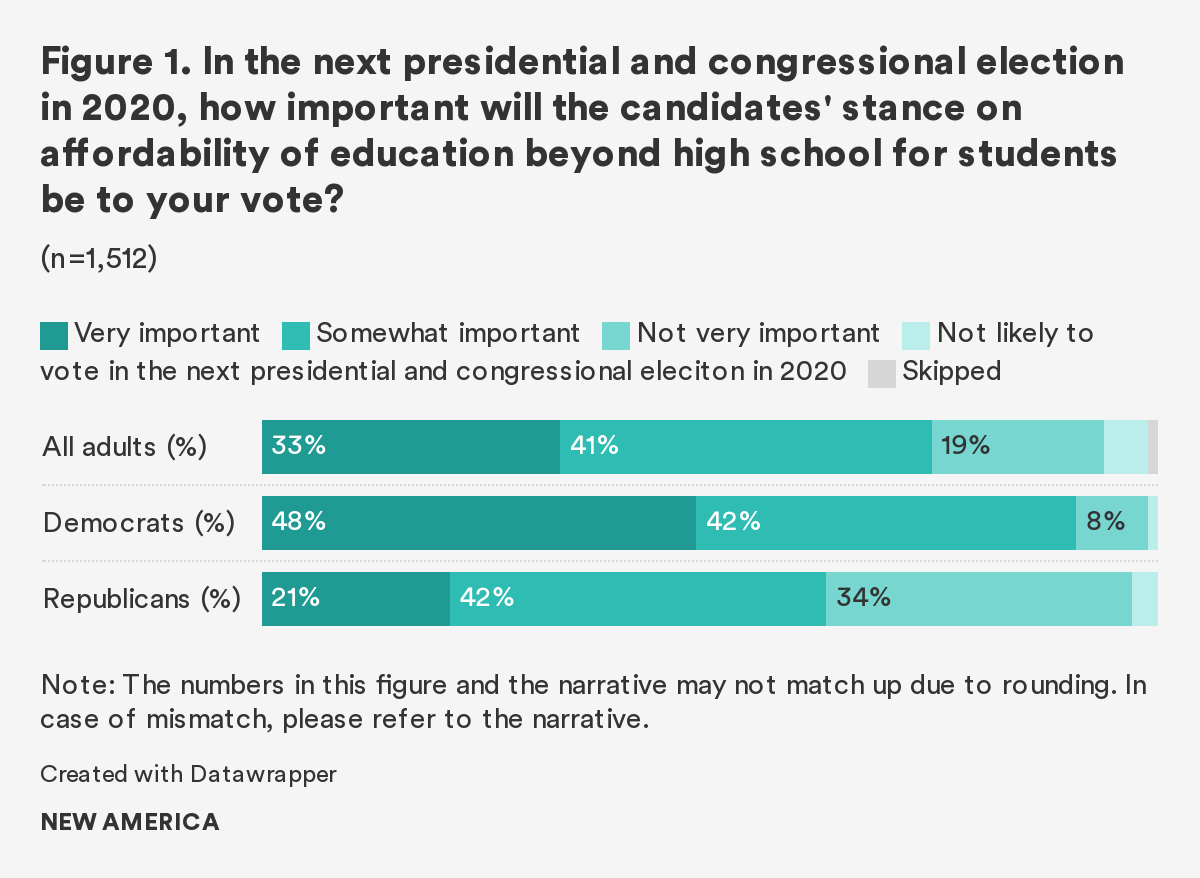
In general, Americans want policymakers to work towards ensuring affordable education opportunities beyond high school. One third (33 percent) of Americans agree that making postsecondary education affordable for students is a “very important” stance to have in order to receive their vote. A larger share of Americans(41 percent) believe that it is “somewhat important.” Nearly half of Democrats agree that such a stance is “very important” (48 percent), compared to less than one-quarter of Republicans (21 percent) who do so (Figure 1).
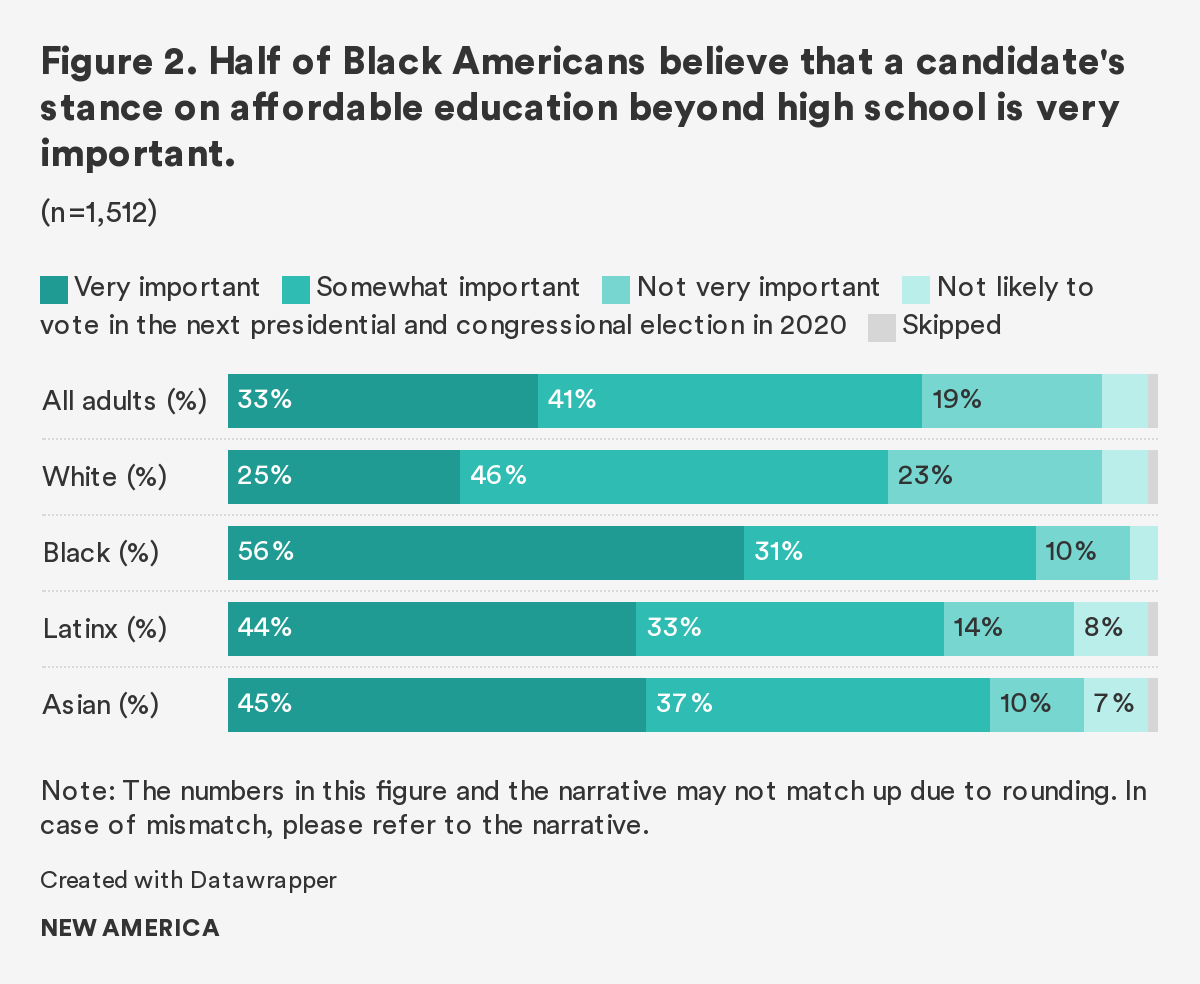
Responses vary among racial groups: 55 percent of Black respondents consider college affordability a “very important” issue for political candidates, as do 44 percent of Latinx respondents . In comparison, only 25 percent of white respondents agree (Figure 2).
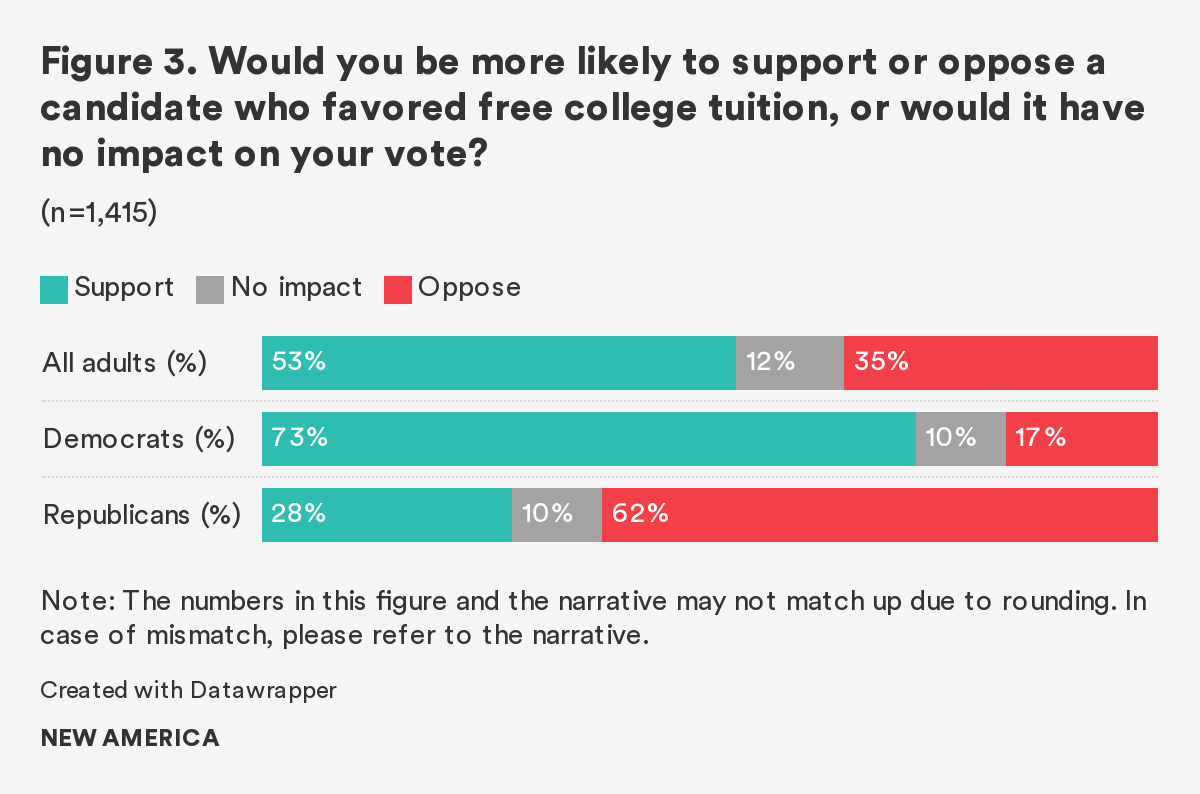
When asked if they would support a candidate who favored tuition-free college, 53 percent of likely voters said yes. This figure is roughly the same as last year. Democratic and Republican likely voters are significantly divided on this statement: 73 percent of Democratic voters would support a candidate who backs tuition-free college, while only 28 percent of Republican voters would support such a candidate (Figure 3).
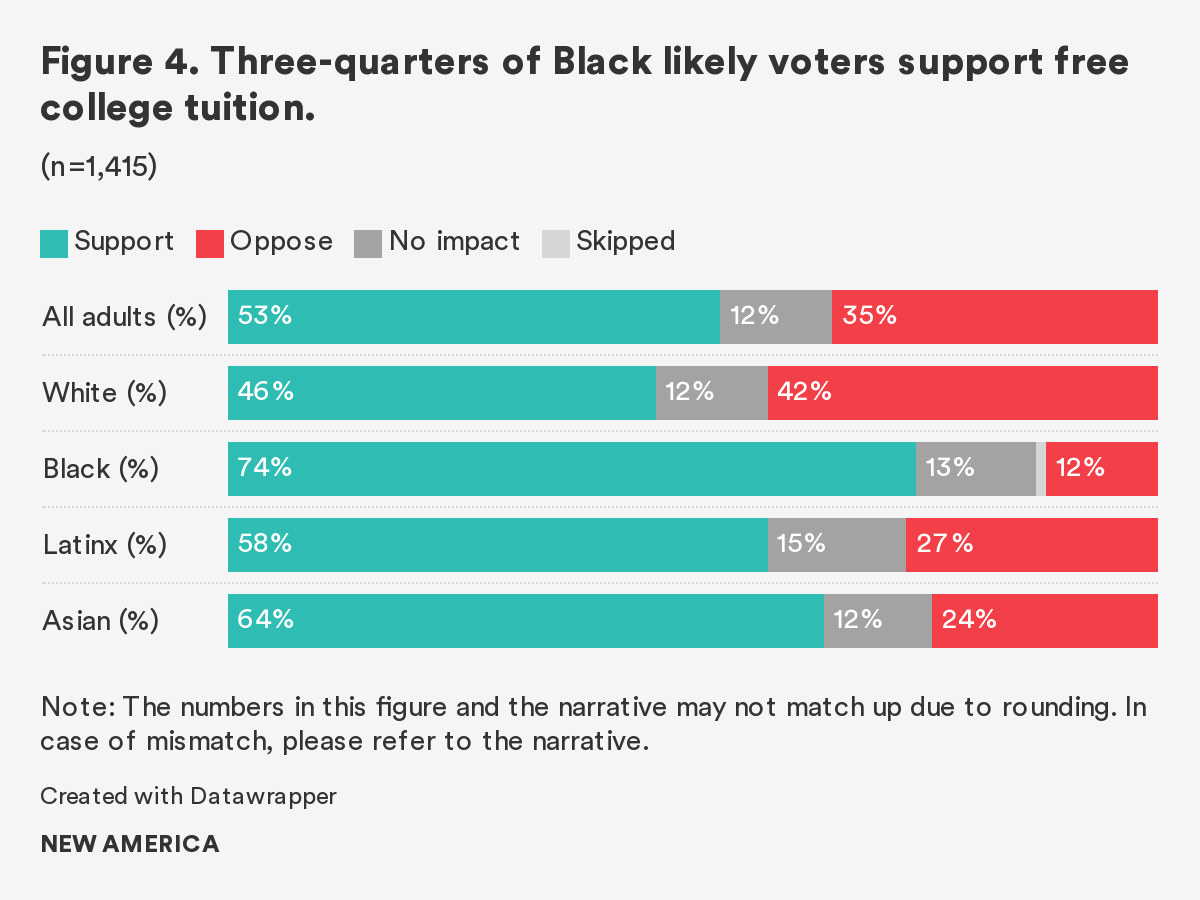
Likely voters from different racial groups think differently about free college (Figure 4). When asked if they would support a candidate who believes in free college, 74 percent of Black likely voters and 58 percent of Latinx likely voters said they would support such a candidate. A significantly less share of white likely voters (46 percent) said the same. There was also a significant difference between those with student loans and those without: 72 percent of likely voters with student loans say they would be more likely to support a candidate who favored free college tuition, compared to 48 percent of those without student loans.
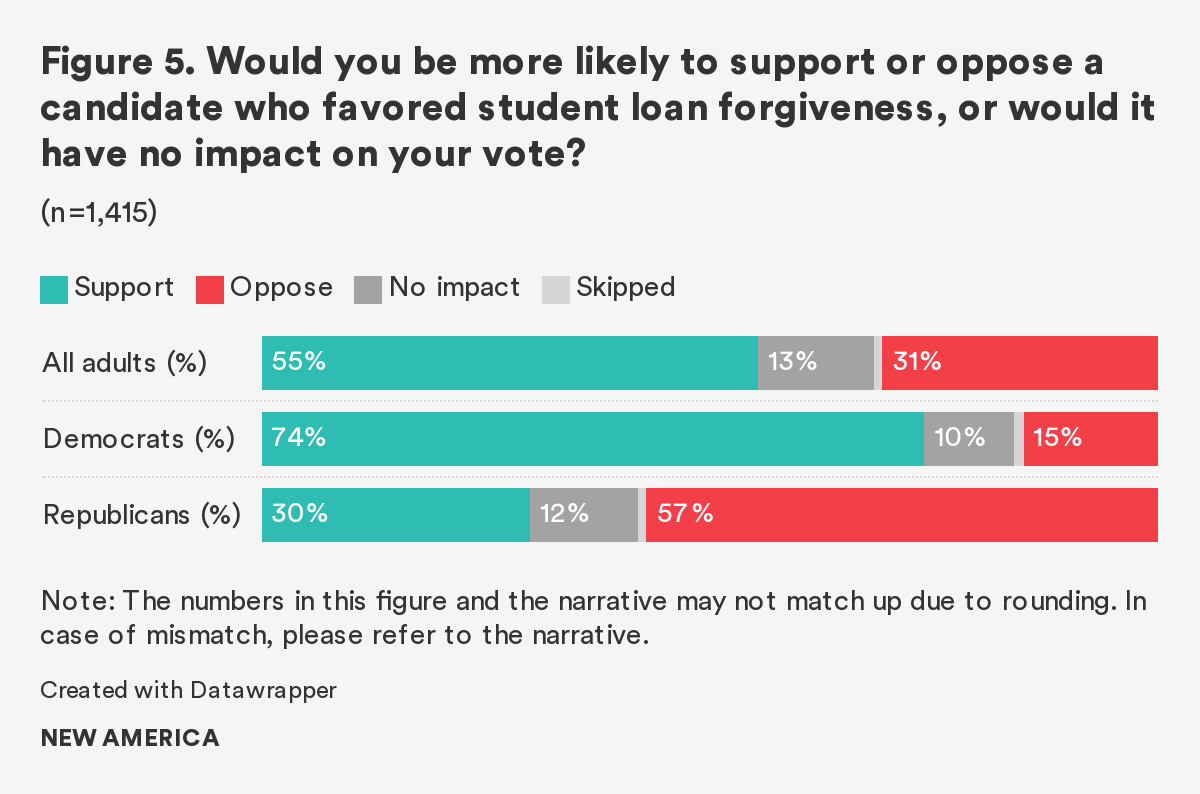
The staggering amount of student loan debt often makes headlines, and the possibility of widespread student loan forgiveness, which has been proposed by former presidential candidates Elizabeth Warren and Bernie Sanders, resonates with a majority of likely voters. In general, 56 percent of them would support a candidate who favored broad student loan forgiveness. As with free college, the partisan difference runs deep. While nearly three-quarters of Democratic likely voters (74 percent) would support a candidate in favor of widespread debt forgiveness, about one-third of Republican likely voters (30 percent) said they would do so (Figure 5).
There are not only sharp partisan divisions over these proposals, but generational ones as well. Unsurprisingly, the younger a likely voter is, the more likely that individual is to support them. When asked if they would support a candidate in favor of broad student loan forgiveness, 66 percent of Generation Z, 66 percent of Millennials, and 58 percent of Generation X said they would support such a candidate, but only 46 percent of Baby Boomers and 34 percent of the Silent Generation agreed.
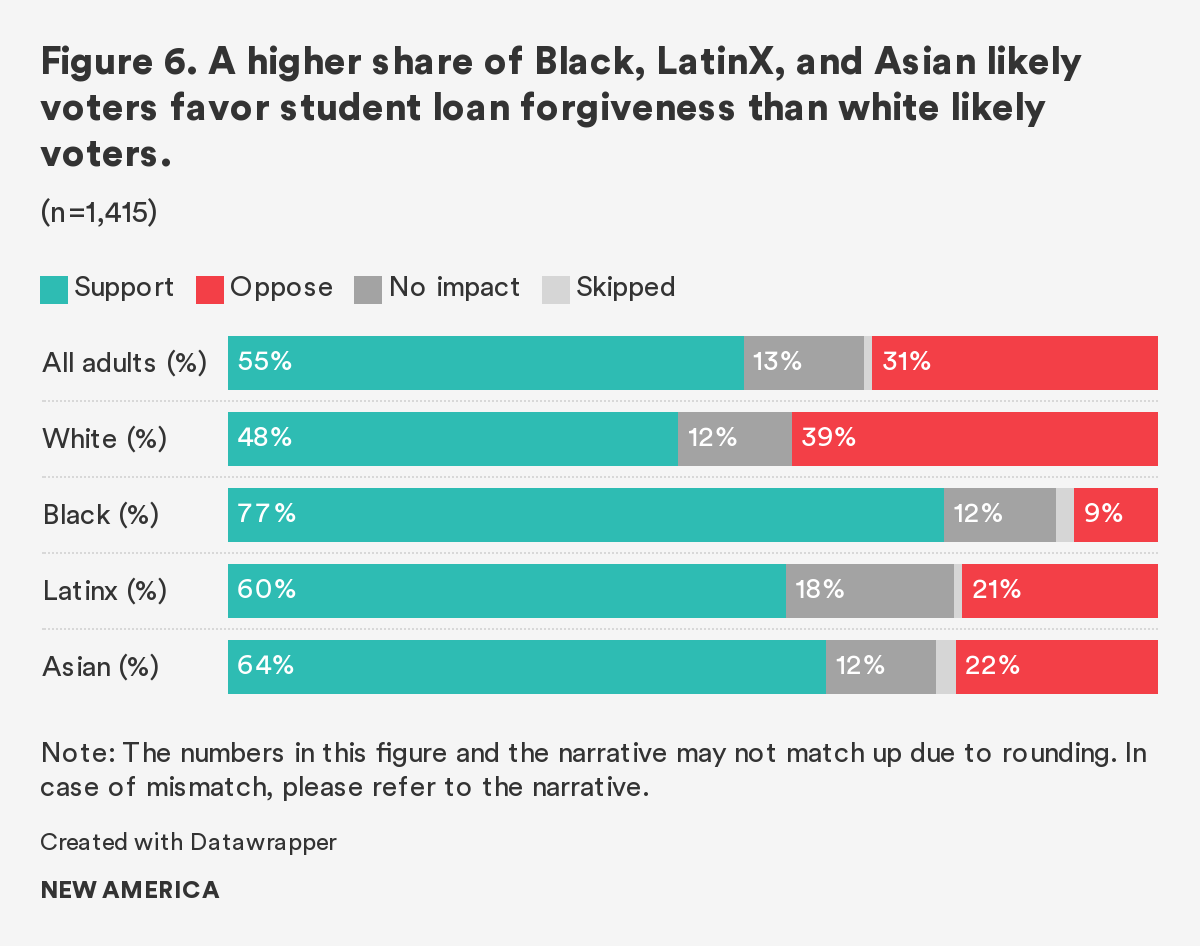
Some racial groups were more supportive of broad student loan forgiveness than others (Figure 6). Seventy-seven percent of Black likely voters said they would support a candidate who backed widespread loan forgiveness, while 60 percent of Latinx likely voters and 48 percent of white likely voters said they would support such a candidate.
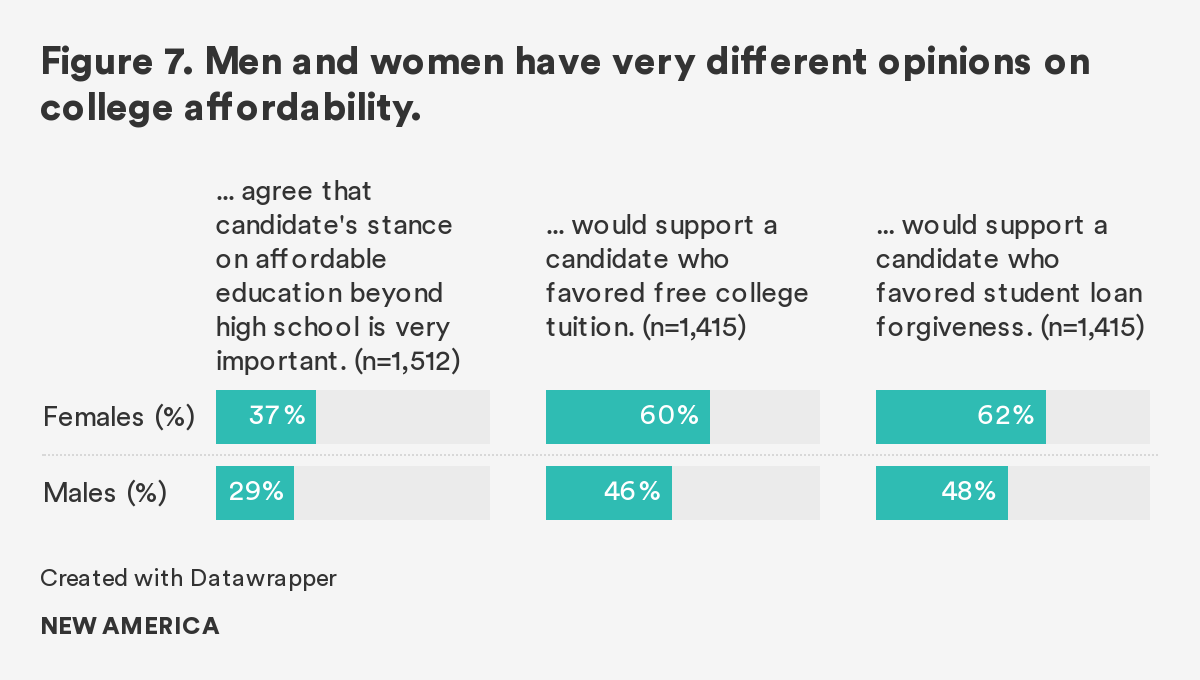
Gender also played a significant role in how one viewed these issues (Figure 7). A larger share of women (37 percent) said that a candidate’s stance on affordability is “very important” to their vote, compared to 29 percent of men who agreed. When asked how much they favored candidates who supported free college tuition, 60 percent of female likely voters said they favored such candidates, and 62 percent of them supported ones who supported broad student loan forgiveness. In comparison, less than half of likely male voters said they would vote for candidates who supported either position (46 percent for free tuition, 48 percent for widespread loan forgiveness).

Citations
- Joe Biden, “Joe Biden Outlines New Steps to Ease Economic Burden on Working People,” Medium, April 9, 2020, https://medium.com/@JoeBiden/joe-biden-outlines-new-steps-to-ease-economic-burden-on-working-people-e3e121037322
- Biden for President (website), “The Biden Plan for Education Beyond High School,” https://joebiden.com/beyondhs/