
Peter Warren Singer
Strategist & Senior Fellow, New America
A new wave of technology is rewiring our cities. Driverless cars move onto the streets and delivery drones begin to enter our skies. Smart homes and updated critical infrastructure are being networked together to save both money and energy. Much like electricity and automobiles changed a city like Washington, DC a century ago, so now will AI, automation, and the Internet of Things.
That all-connected world also, though, introduces a whole new kind of vulnerability that may make the crimes and terror attacks of the past seem like child’s play. One study this year found that 98% of all Internet of Things device traffic is unencrypted, while 57% of IoT devices are vulnerable to "medium- or high-severity attacks."
August Cole and P.W. Singer's new book Burn-In: A Novel of the Real Robotic Revolution explores this new world, though a vision of Washington DC of the future and how the tech that was once science fiction will be implemented in our reality. It uncovered the world of new crimes that will hit such a more vulnerable city, such as how a single hacker could potentially murder someone in a smart home without ever leaving the comfort of their desk. Or, they might go after not a citizen but a community. They even found how a terrorist could recreate digital versions of the Biblical 10 Plagues. What's more scary, though, is that they had 27 pages of research endnotes to document everything they envisions is possible in the real world.
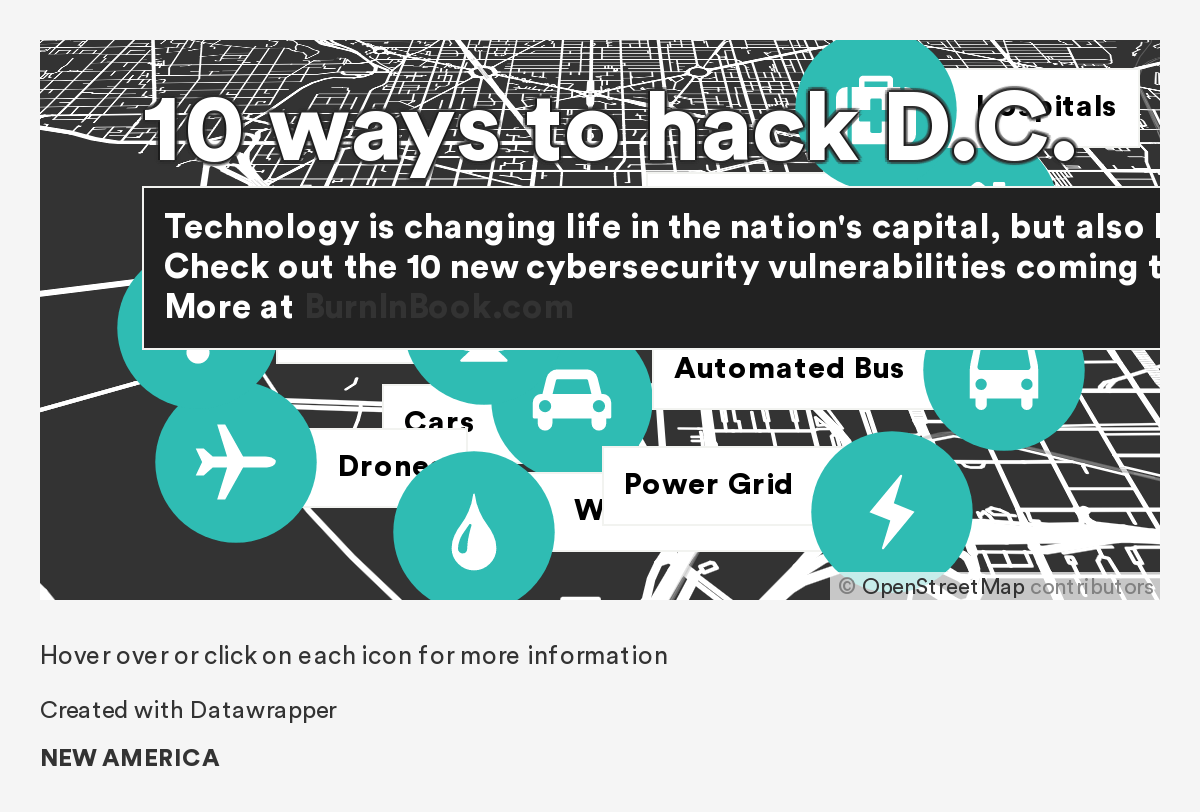
Explore the new tech, and risks, in 10 Ways To Hack DC.
Strategist & Senior Fellow, New America