A Chapter of: The Great Correction
Election Integrity
Even before the pandemic raised serious questions about election integrity and continuity in an environment of social distancing, the U.S. electoral process labored under the long shadow of the 2016 presidential election. Adding to the ongoing concerns about cyber vulnerabilities, voter suppression, and disinformation risks, the pandemic underscored how the lack of broad-based electoral options is a vulnerability.
Some state and local elections were postponed in order to help flatten the curve of the outbreak. Others, like Nebraska, Illinois, and Wisconsin, carried on with voting, much to the chagrin of public health officials and national figures. Even before the crisis, the fact that the United States does not enjoy anything close to an omnichannel voting experience that enfranchises citizens and enables votes to be cast and counted using technology, mail-in ballots, and other options was a pre-pandemic vulnerability. The pandemic, however, as with other areas in the U.S. economy, laid bare the difficulty and absurdity of long lines of people waiting to fulfill their civic duty.
Here too, the voting process weighs most heavily on the poor and vulnerable, who often have to endure a loss of productive time at work, may not be able to reach polling stations or are single parents, among other challenges. A recent study analyzed smartphone data to estimate that voters in African American neighborhoods waited 29 percent longer to vote. Secure mail-in ballots or e-voting options to facilitate as wide and participatory a process as possible is not a partisan matter, but a patriotic one. This is also true of overseas voters, the enlisted and the veterans, rural communities, among many others.
Sadly, calls for strengthening election integrity and security have largely gone unheeded since 2016 as the fiercely partisan fights rage on in Washington, D.C. With policymakers mostly focused on airing grievances from past elections, rather than protecting present and future ones, the pandemic proved to be as indiscriminate about political stripes as it is about national borders. The key here, as with other areas outlined in this report, is to increase optionality in the electoral process. Mail in ballots, e-voting, and lengthier voting windows, particularly for vulnerable segments of the population for whom voting is often a hardship, should be the rule, not an exception due to extraordinary circumstances.
It is true that for this optionality to exist nationally, a consensus approach is needed between state election commissions and national political parties. Citizens everywhere should demand a fairer, more secure, and easier electoral process that favors social-distance voting, as much as it does standing in line to cast a physical ballot, should that be a voter’s preference. Doing so will not erode a political party’s odds against their rivals. Rather, it will make electoral outcomes more resonant with the will of all people represented in U.S. society. These models will also enjoy a greater degree of disaster proofing and resilience, since the ability to carry on with elections despite the odds or the challenges of the day, should be a sacrosanct national priority. More voting options across the entire country can make it so.
One of the chief concerns with amplifying voting options is the potential introduction of fraud, miscounting ballots, cybersecurity, or the slow or erroneous tabulation of outcomes. Herein, as with other areas of the post-pandemic recovery, lies an opportunity to mend an already vulnerable system, rather than maintaining status quo. When asked to stand and be counted, whether in an election or a census (noting that the United States conducted a nationwide census in 2020 at the height of the pandemic), technology, optionality, and ease of use are key in driving participation.
High-assurance and privacy preserving digital identity authentication is at the crux of modernizing electoral systems, along with other areas of public-sector digital transformation. The state after all is the entity that gives people their government-issued identities, therefore the state should lead the way in easing the authentication and validation process, especially for key citizen services or areas of civic participation, like voting. Some promising experimentation with privacy preserving digital wallets, as well as other online citizen services examples from around the world offer promise.
The fact that the United States, like many countries around the world, administers a personal identification system that uses unchanging alphanumeric validators such as the social security number, often granted to children at birth, is troubling. This exposes people to the perennial threat of identity theft, which is amplified by the one-sided credit bureau system that monetizes people’s personal financial information, while granting them little control over the access, use, and financial determinations these vast databases empower. The upcoming section on the economy, credit and financial markets will delve a little deeper into how to recalibrate this one-sided issue, where user-controlled identity and personal information access is the key.
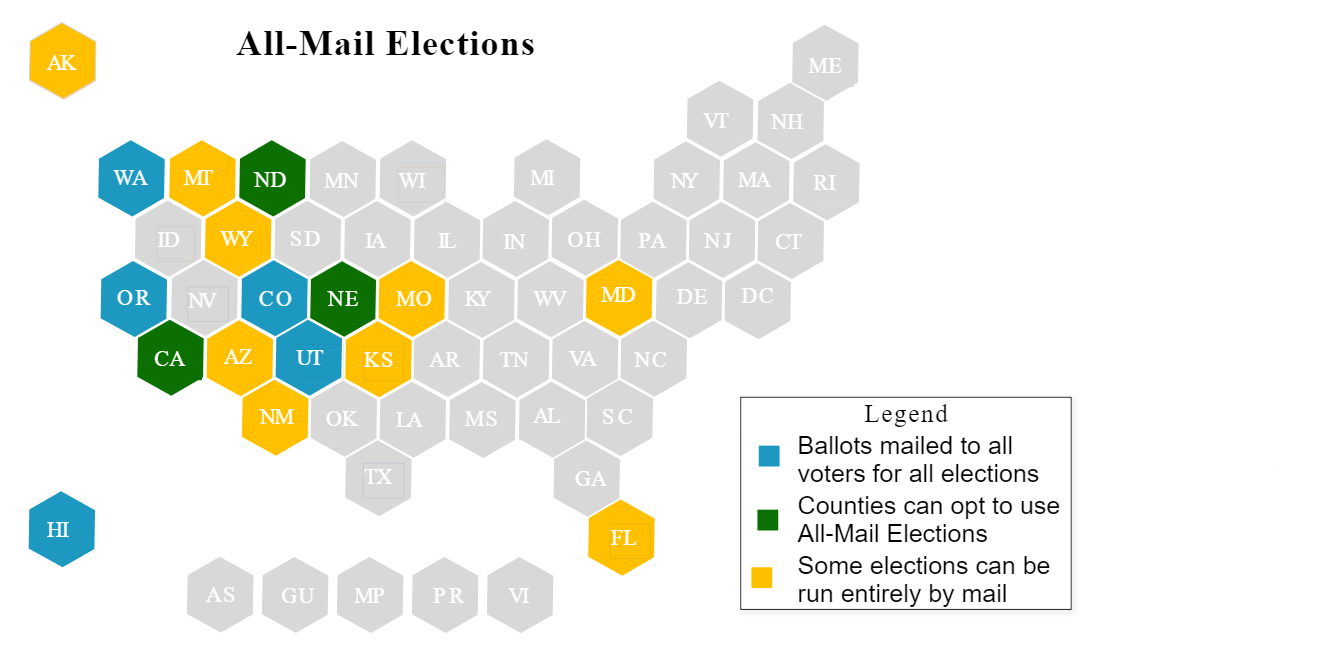
Things We Can Mail:
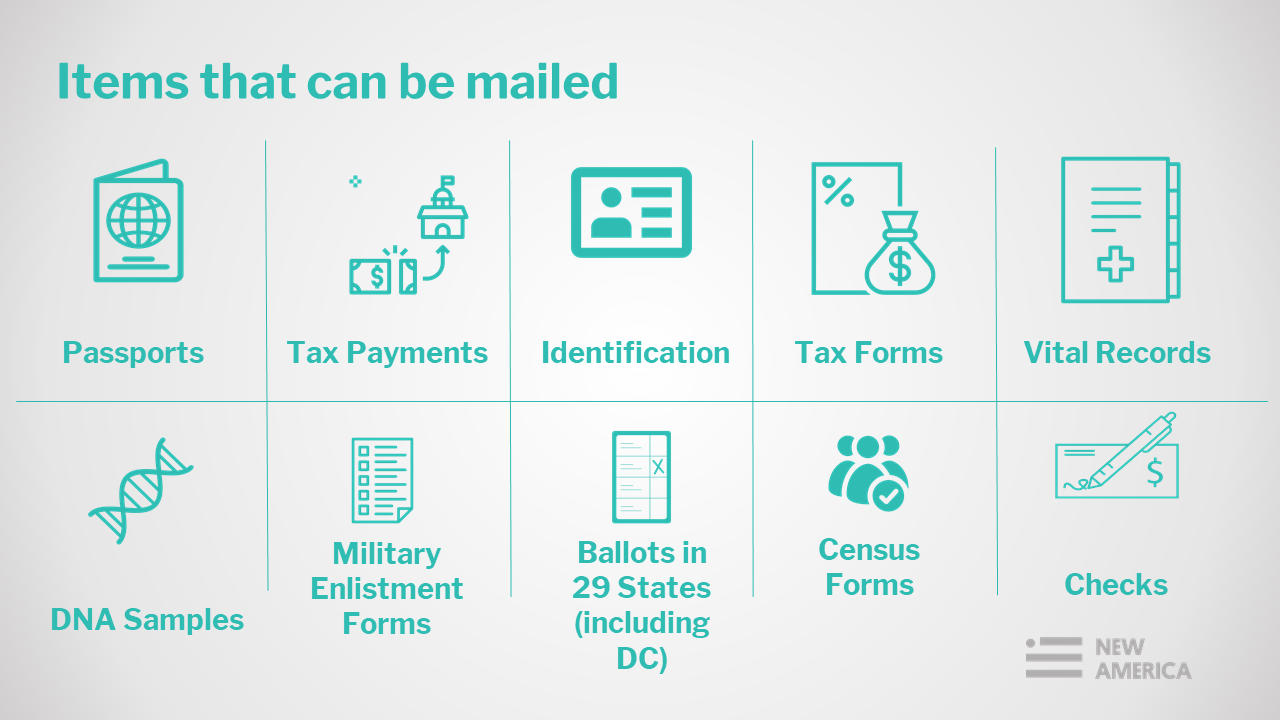
- Census Forms
- Ballots in 29 states plus DC
- Tax Forms
- Checks
- Tax Payments
- Identification
- Passports
- Vital Records
- Military Enlistment Forms
- DNA Samples
Improving election security and integrity from a pandemic, a cyberattack or an automated, population scale psyops campaign aimed at distorting public opinion, is a complex endeavor. The lack of optionality or multiple ways of casting a vote makes a flawed, complex system more vulnerable.3

The Great Correction
- Checklist
- Introduction
- Household Economy
- Community Resilience
- A Pandemic of Racism
- Election Integrity
- Healthcare Surge Capacity
- Supply Chain Management
- Universal Access to Digital Services
- Banking and Payment Systems
- Economic Resilience
- Future of Work
- Epidemiological Readiness
- Porous Lines of Defense
- Institutions
- Policy Considerations
Citations
- For more on New America’s work on electoral reform and election integrity, learn more about its Political Reform program, https://www.newamerica.org/political-reform/