A Chapter of: The Baccalaureate and Beyond
Average Wages for FCS Baccalaureate Graduates
Overall, baccalaureate graduates enjoyed higher earnings than graduates of associate programs one year after graduation ($55,620 and $45,660, respectively). However, there was considerable variation in earnings across different programs and population groups. As shown below in Figure 7, average wages for nurses of all three racial/ethnic groups depicted are above Florida median household income, with Black and Latinx nurses earning more their white peers.14 Black graduates earn slightly less than their peers in IT, and considerably less than Latinx and white graduates in business. The opposite is true in early childhood education, where Black graduates out earn these two groups. Meanwhile, Latinx graduates earned on average $19,476 more than their Black peers in the allied health professions included in this data set, and $16,560 than white graduates. Data for this area of study includes graduates from a variety of health professions programs, from dental hygiene to respiratory therapy. While data available for this analysis does not allow for further disaggregation of programs beyond the 2-digit CIP level, earnings disparities within the category may explain the large differences in wages among groups. It could also be that Black and Latinx Floridians are more concentrated in higher-paying labor markets within the state than white peers. These findings, in light of stubborn racial and ethnic income and wealth gaps, should be the focus of additional analysis.
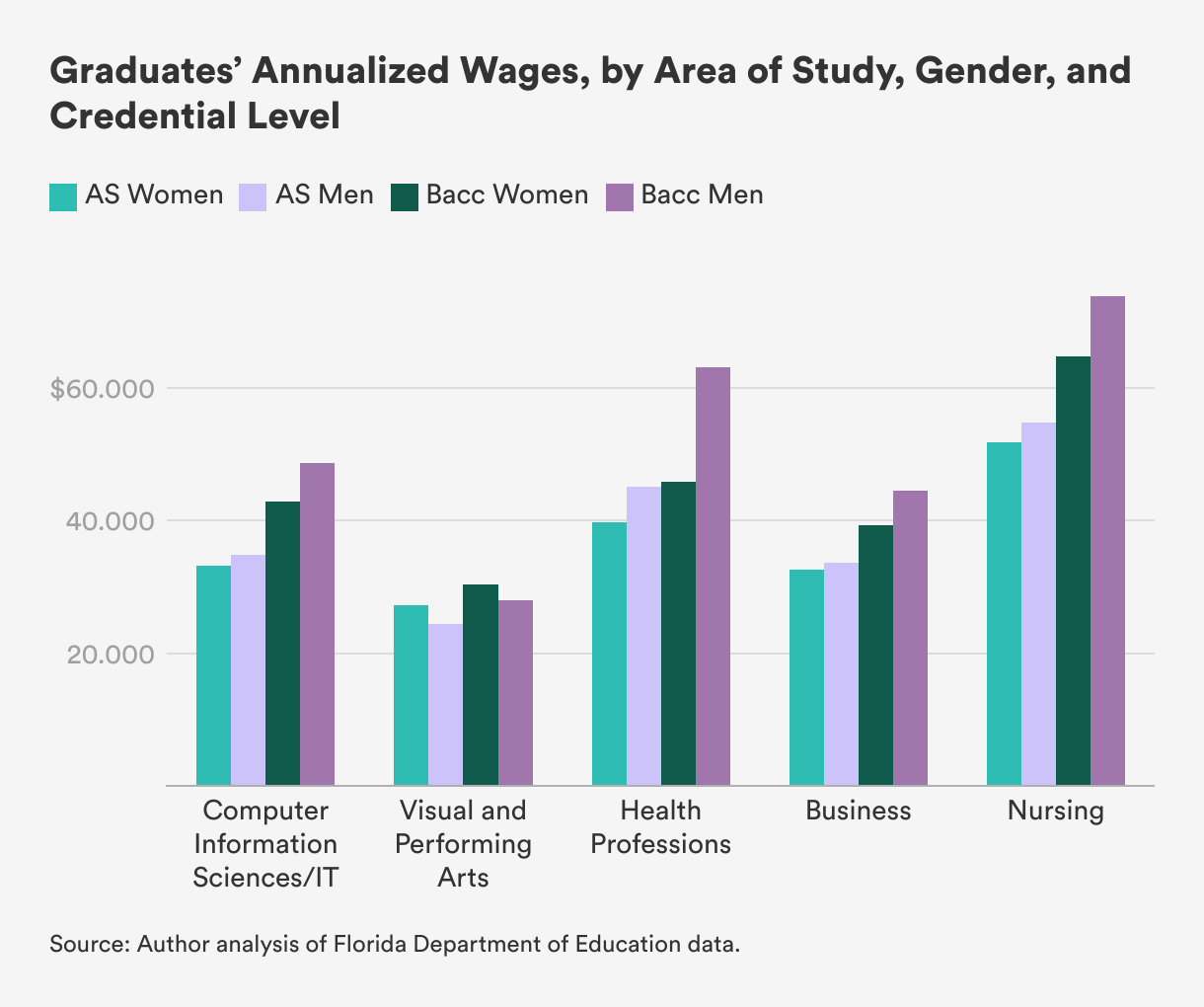
Disparities in pay by gender are strikingly clear across fields of study and education levels. In four of five fields with sufficient data for analysis, men earn more than women at the associate level, and the pay disparity is even greater at the baccalaureate level. For example, women with a bachelor’s degree in an allied health field only earn around $700 more per year than men with an associate degree in that area of study. Meanwhile, in business, men with associate degrees earn approximately $900 more per year than women with the same credential. But at the baccalaureate level, the pay gap is five times greater. Visual and performing arts is the only sector in which women earn more than men, which is true at both the associate and bachelor’s level, as shown in Figure 7. It should be noted that this is a particularly young cohort of graduates, which may explain both the small pay gaps and the generally low pay for both genders in the sector.
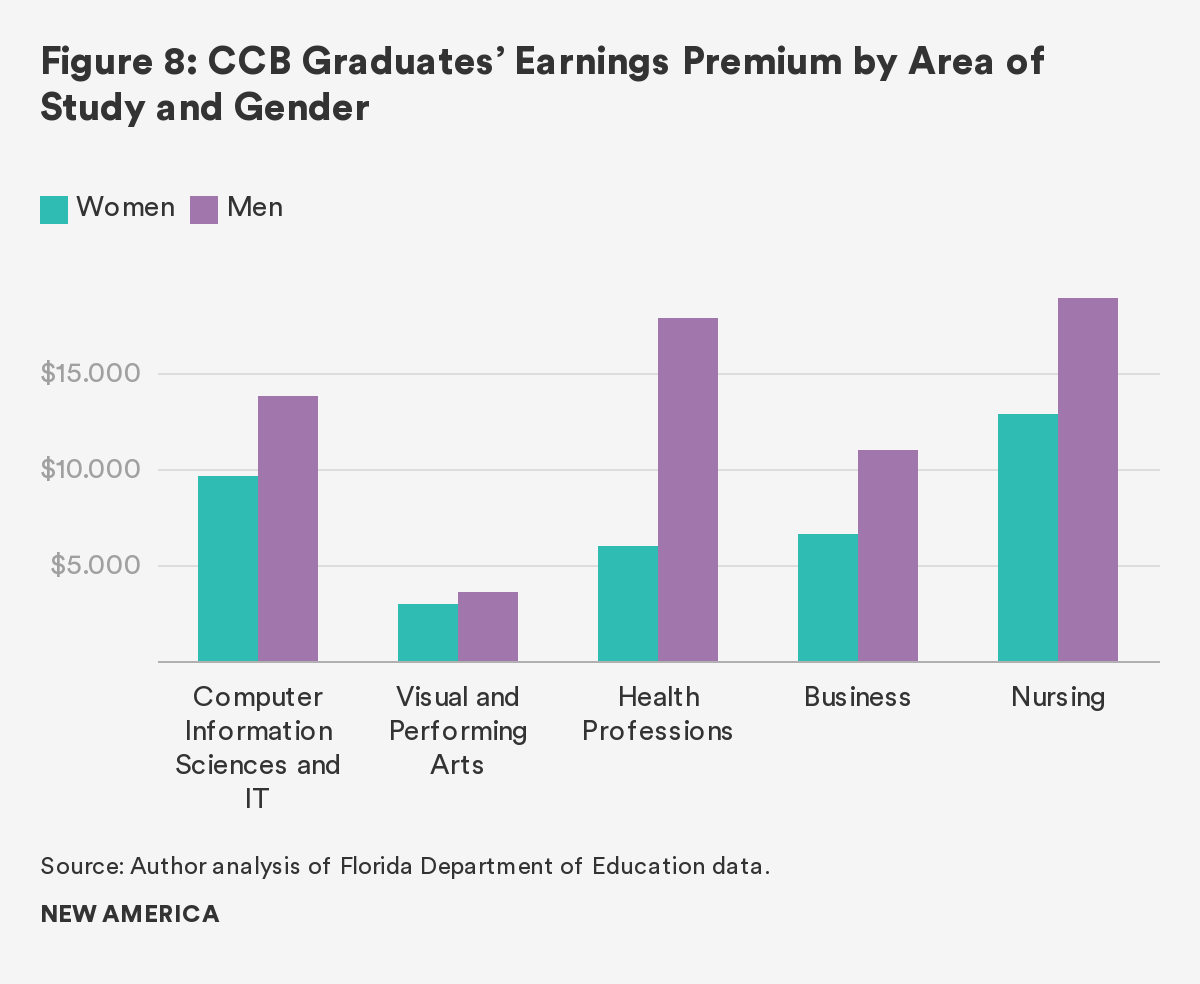
When considering the earnings premium that bachelor’s graduates enjoy, in all five sectors with sufficient data to analyze, men enjoyed higher earnings premiums from a bachelor’s degree than women, as shown in Figure 8.
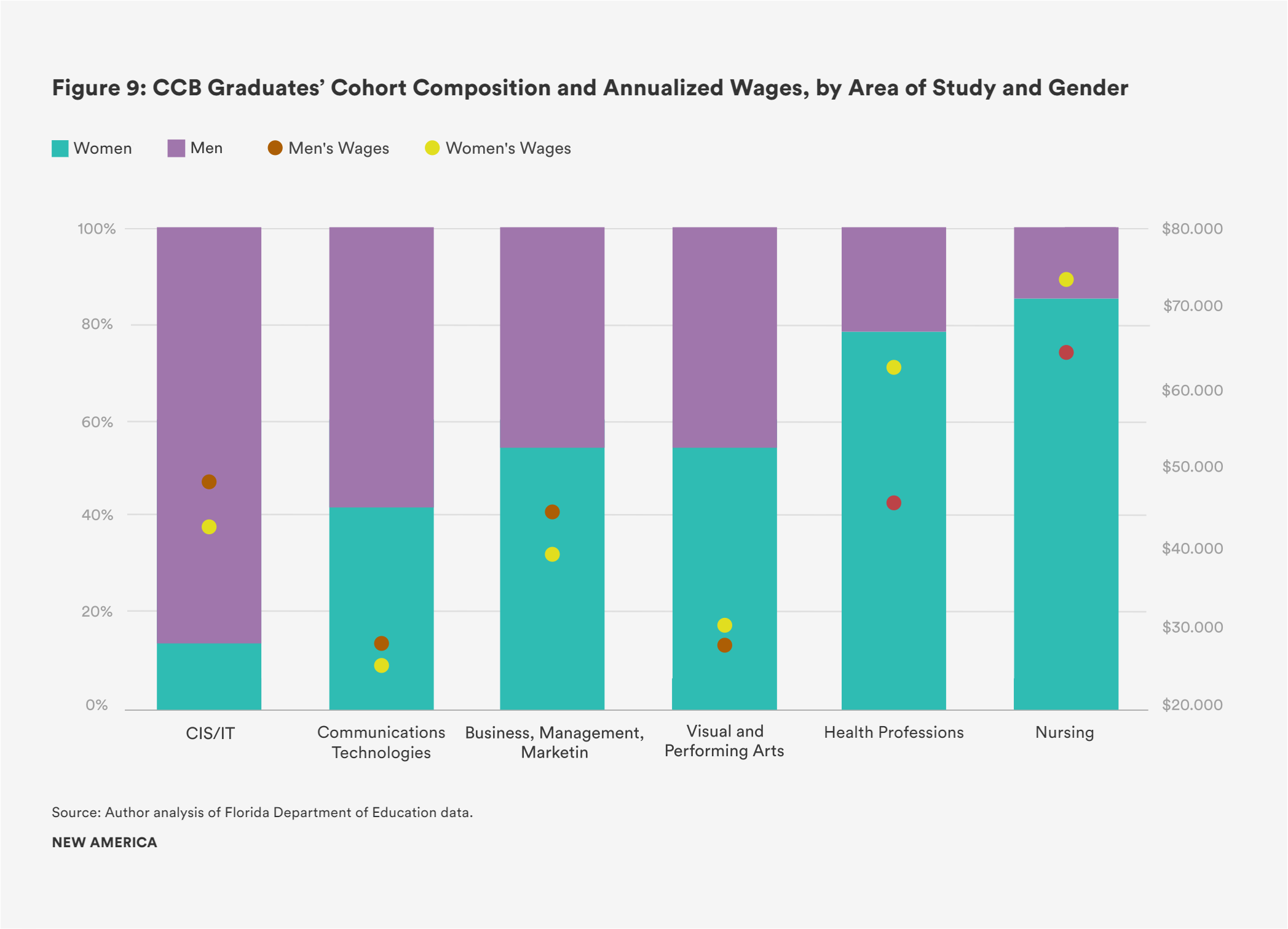
One common theory on the cause of gender pay gaps is the choice of occupation. Were women to choose higher-paying fields, pay equity issues would largely resolve. However, these data from Florida suggest that gender pay inequity exists within many fields. In fact, as Figure 9 below shows, pay gaps were greatest in the two areas of study with the highest share of women: health professions and nursing. Whereas the dataset for this analysis does not allow for cross-tabulation of race or ethnicity and gender, other patterns of results revealed in the data point to the need for better research to better understand the relationships between gender and earnings within and across areas of study, which is important context for the current discussion, as gender pay gaps are larger for Black, Latinx, and Native American women than white women.15
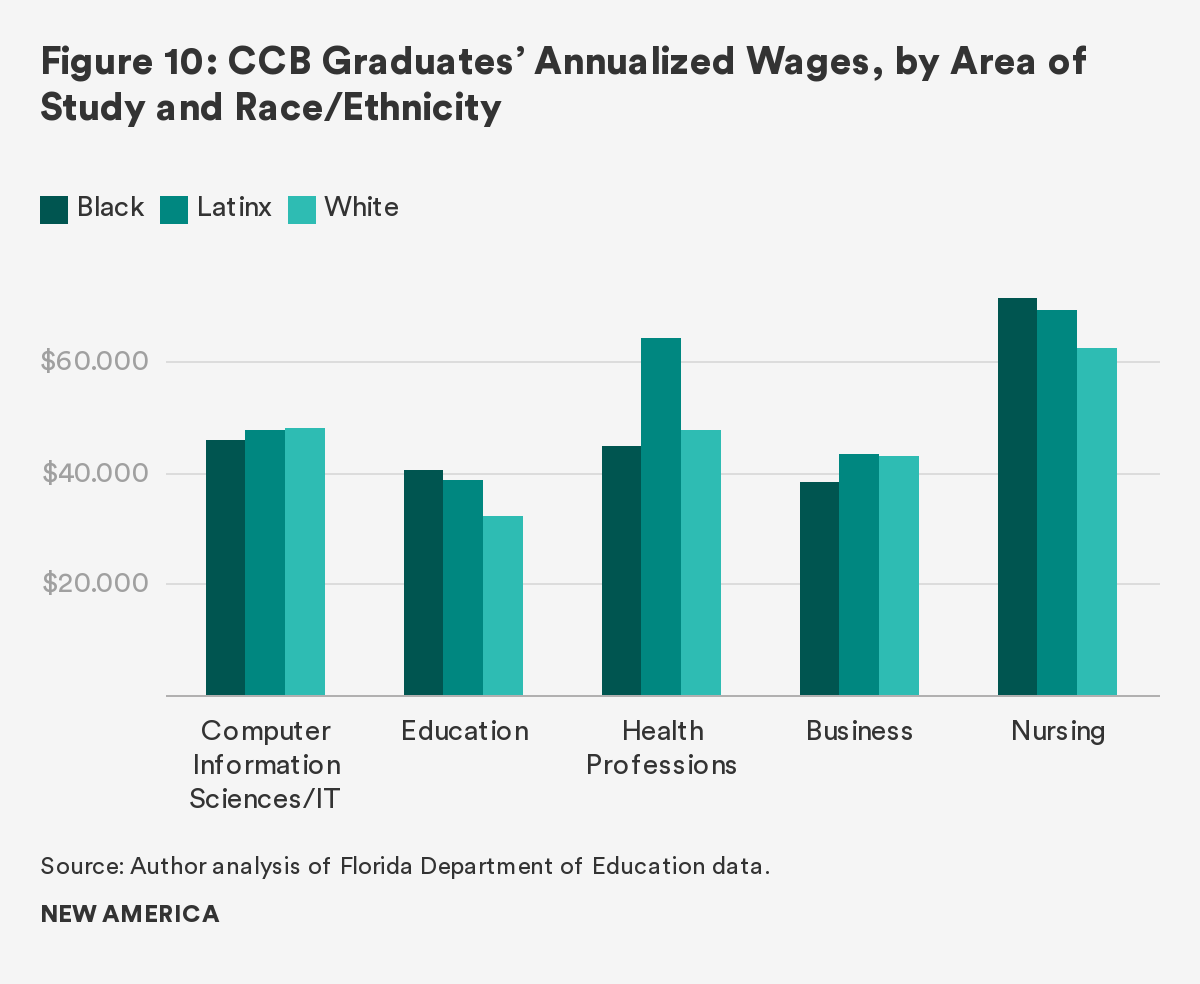
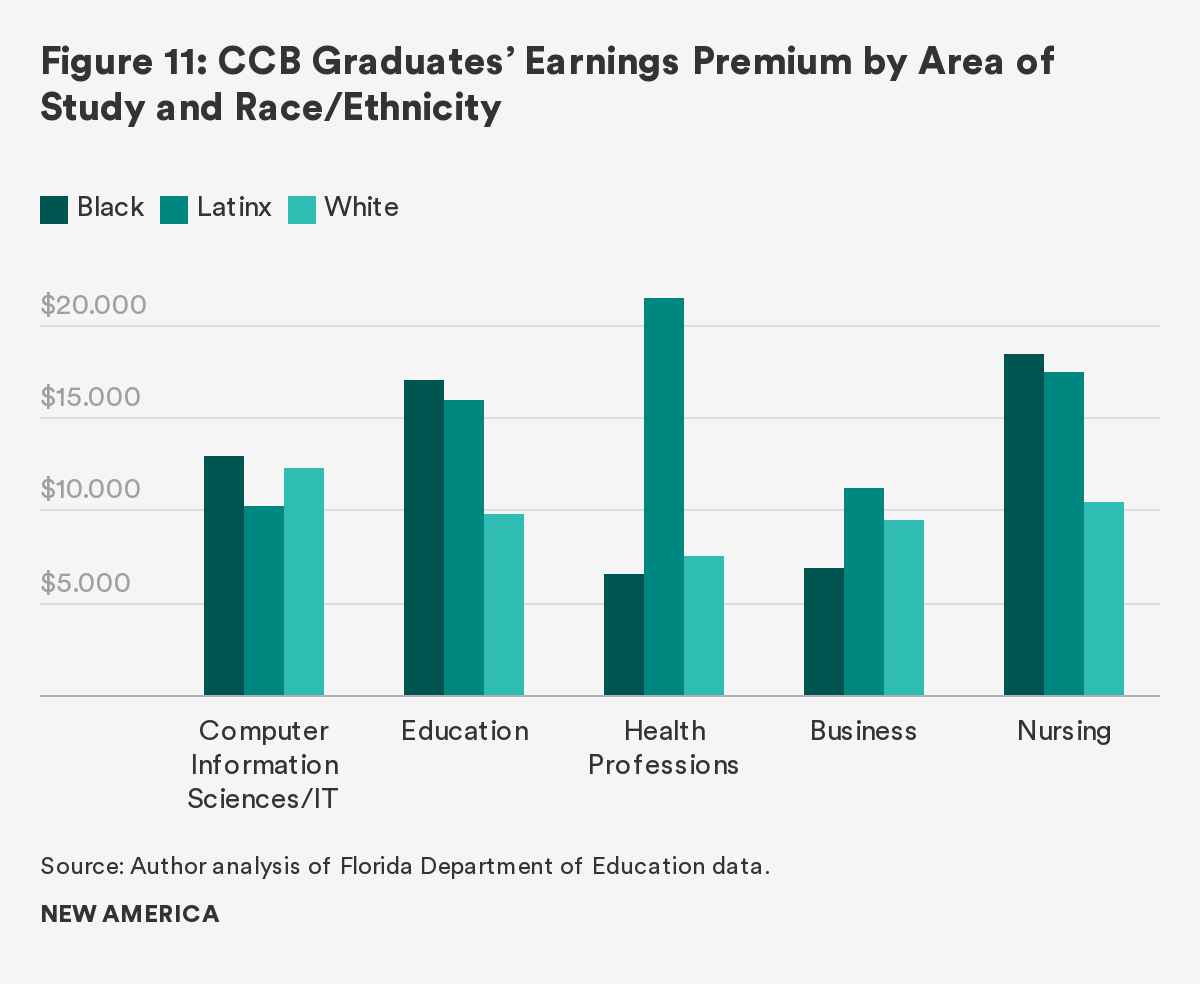
Another way to conceptualize the economic impact of earning a baccalaureate degree from a Florida community college is to consider the difference in earnings between associate degree graduates and baccalaureate degree graduates in similar fields one year after graduation. This difference, which I refer to as the baccalaureate earnings premium, varies by demographic group and area of study. Figure 11 depicts this difference across areas of study and by race and ethnicity. In IT, the earnings premium for Black baccalaureate graduates was highest, yet, as Figure 10 shows, Black graduates’ wages were still lower than Latinx and white graduates. Black graduates also have lower earnings premiums in health professions and business, while they enjoyed the highest earnings premiums in nursing, the highest paid field, and early childhood education, the lowest paid field, in this part of the analysis. Additional research is needed to understand the differential returns to bachelor’s degrees across these and additional occupational fields and for race and gender.

Citations
- The median household income for Florida was $53,267, according to U.S. Census Bureau, American Community Survey (ACS) and Puerto Rico Community Survey (PRCS), 5-Year Estimates for 2014–2018., https://www.census.gov/quickfacts/fact/table/FL/INC110218
- “Women’s and Men’s Median Annual Earnings.”