
The Baccalaureate and Beyond
Abstract
In this report explores the demographic characteristics and labor market outcomes of baccalaureate graduates from the Florida College System and compare them to associate degree graduates in similar fields. Better understanding of who CCB graduates are—including how they may differ from other students—and whether they reap better economic rewards than associate degree graduates will shed light on the value these programs bring to equity, access, and attainment conversations. Using state data on three cohorts of graduates, the report analyzes disaggregated data by race, age group, and gender. The three main sections of this analysis focus on the demographics of graduates in the sample and how they compare to the population of Florida, rates at which graduates are employed or pursue further education, and graduates’ wages. This research provides additional data on the outcomes of community college baccalaureate degrees for graduates, which can in turn inform state policy to support and target these types of degree programs.
Acknowledgments
This paper was made possible through the generous support of Lumina Foundation and Joyce Foundation. We are grateful for their shared commitment to furthering equity and opportunity in higher education. The views expressed in this report are those of the author.
I greatly appreciate the feedback and guidance of colleagues at New America and Community College Research Initiatives at the University of Washington as this analysis took shape, including Iris Palmer, Debra Bragg, Lul Tesfai, Elizabeth Meza, Monique Ositelu, Rachel Fishman, Taylor White, Brent Parton, Michael Prebil, and Mary Alice McCarthy. Many thanks to Riker Pasterkiewicz for communications leadership, Fabio Murgia for data visualization support, Hana Hancock for communications support, and Sabrina Detlef for editorial guidance. I owe a great deal of gratitude to the Florida Department of Education for sharing the data analyzed in this report, particularly Keith Richard, Zachary Reddick, Hayley Spencer, Avery Russ, and Carrie Henderson.
Downloads
Introduction and Context
In the late 1990s, Florida had one of the lowest rates of baccalaureate degree attainment per capita in the nation. The state legislature began exploring ways to help more Floridians earn a bachelor’s degree. One strategy was authorizing community colleges to confer limited bachelor’s degrees, expanding access to affordable and local opportunities to pursue further education. In 2001, the state legislature passed a bill changing St. Petersburg Community College to St. Petersburg College and allowing the institution to begin conferring bachelor’s degrees in nursing, education, and applied sciences.
There were good reasons for Florida leaders to consider increasing bachelor’s degree attainment an urgent priority. Earning a bachelor’s degree carries a litany of benefits, which are especially useful in difficult economic times. Americans with a bachelor’s degree make, on average, approximately $19,000 more per year than those with an associate degree.1 Bachelor’s degree holders, especially Millennials, are also less likely to be unemployed than peers who only have some college experience or an associate degree.2 In the recovery from the Great Recession, new jobs that emerged were much more likely to require a bachelor’s degree than the jobs that were lost.3 We are likely to observe a similar pattern once we emerge from the current pandemic-induced recession, meaning that Americans will need more opportunities to earn a bachelor’s degree. Even beyond the much-needed economic benefits of the degree, people with bachelor’s degrees are more likely than those with only an associate degree to report being in excellent health, voting frequently, and volunteering.4
Florida’s approach to increasing bachelor’s degree attainment by relying on community colleges was unusual – and may hold valuable lessons for other states that share the same goal. To distill lessons for other states and institutions, we need to better understand if Florida’s community college baccalaureate strategy is reaching students who may not be likely to earn a bachelor’s degree without these opportunities. We also need to know more about how well CCB graduates secured or maintained employment and whether they were earning good wages after completing their programs. A clearer picture of CCB graduates’ outcomes can help community colleges, like those throughout Florida, help people adapt to changes in the local and national labor market and enhance their quality of life by offering affordable bachelor’s degrees as part of an economic recovery strategy.
In this report, I explore demographic characteristics and labor market outcomes of baccalaureate graduates from the Florida College System and compare them to associate degree graduates in similar fields. Better understanding of who CCB graduates are—including how they may differ from other students—and whether they reap better economic rewards than associate degree graduates will shed light on the value these programs bring to equity, access, and attainment conversations. Using state data on three cohorts of graduates, I analyze disaggregated data by race, age group, and gender. The three main sections of this analysis focus on the demographics of graduates in the sample and how they compare to the population of Florida, rates at which graduates are employed or pursue further education, and graduates’ wages. This research provides additional data on the outcomes of community college baccalaureate degrees for graduates, which can in turn inform state policy to support and target these types of degree programs.
Citations
- I have annualized 2019 wage differences by education level using data from the Bureau of Labor Statistics to reach an $18,722 difference in wages between associate and bachelor’s degree holders. See Bureau of Labor Statistics (website), Unemployment rates and earnings by education attainment, https://www.bls.gov/emp/chart-unemployment-earnings-education.htm
- Overall unemployment rates by education level come from 2019 Bureau of Labor Statistics chart cited in note 1. The focus on Millennials comes from Pew Research analysis of 25-32 year olds in 2013. The Pew report indicates that individuals in the given age group were approximately 4.3 percentage points less likely to be unemployed if they had a bachelor’s degree than an associate degree or only some college. See Pew Research Center, The Rising Cost of Not Going to College (Washington, DC: Pew Research Center, 2014), https://www.pewsocialtrends.org/wp-content/uploads/sites/3/2014/02/SDT-higher-ed-FINAL-02-11-2014.pdf
- For analysis of the economic recovery from the Great Recession and how Americans fared based on education level, see Anthony P. Carnevale, Tamara Jayasundera, and Artem Gulish, America’s Divided Recovery: College Haves and Have-Nots 2016 (Washington, DC: Georgetown Center on Education & the Workforce, 2016), https://cew.georgetown.edu/cew-reports/americas-divided-recovery/
- See Philip Trostel’s 2015 report for Lumina Foundation, It’s Not Just the Money: The Benefits of College Education to Individuals and to Society, examining a litany of economic and quality of life indicators for people with different levels of education, https://www.luminafoundation.org/files/resources/its-not-just-the-money.pdf
Key Findings
This study revealed three key findings on the makeup of and outcomes for Florida’s community college baccalaureate graduates.
- CCB graduates are considerably older than both associate graduates and state university bachelor’s graduates. Fifty-eight percent of FCS bachelor’s graduates were 30 or over, compared to 45 percent of associate degrees in the same fields of study. Nursing graduates were considerably older than other bachelor’s graduates, but even when nurses are removed from this analysis, nearly half of CCB graduates from 2016–18 were 30 or older. For comparison, average upper-division students at Florida state universities were only 22.5
- Florida CCB graduates’ racial and ethnic composition is similar to the Florida population for some but not all groups. The share of Black, white, and Asian-American/Pacific Islander baccalaureate graduates fell within one percentage point of each group’s share of Florida residents. Latinx people, however, are still underrepresented among CCB graduates in this sample (20 percent) compared to the Florida population (26 percent).6
- CCB graduates earn more than associate graduates in similar fields. Four quarters after graduation, baccalaureate graduates enjoyed approximately $10,000 more in annual wages than peers who earned an associate degree. This wage premium associated with earning a bachelor’s degree varied by area of study, race/ethnicity, and gender.
- The bachelor’s degree wage premium is higher for men than it is for women, across nearly all areas of study covered in this report. Whether a generally low- or high-wage field, the difference in pay between bachelor’s graduates and associate graduates in the same area of study, which I refer to as the bachelor’s degree wage premium, was greater for men than women. Women with associate degrees earned less than men with the same credential in four of five areas of study with sufficient data for analysis. Gender pay gaps were greater at the bachelor’s level than the associate level.
Citations
- See Emily Sikes, Florida Legislature’s Office of Program Policy Analysis & Government Accountability, “OPPAGA Research on Florida College System Baccalaureate Degrees” (PowerPoint presentation, March 10, 2015), for descriptive data comparing FCS and Florida state university system students and graduates., http://www.trbas.com/media/media/acrobat/2018-01/70201696189400-18123310.pdf
- Here, I am comparing FLDOE CCB graduate data with American Community Survey 2018 1-Year Estimate for race and ethnicity in the state of Florida.
Research Questions, Data, and Methods
One of the key goals of this analysis is to better understand how earning an additional credential beyond the associate degree is related to earnings, employment, and pursuit of further education and who is benefiting from CCB degrees in Florida. Three main questions guided this descriptive analysis:
- What are the demographic characteristics of FCS baccalaureate graduates? How do they compare to associate graduates in similar areas of study? Better understanding the demographics of CCB students overall and by area will shed light on the access to bachelor’s degrees provided by these programs, particularly when analyzed by race/ethnicity.
- What are the employment outcomes of FCS baccalaureate graduates? How do their employment and/or continuing education rates vary by demographic group? Understanding how likely CCB graduates are to find work or pursue further education after graduating will illuminate how well these programs are connecting people to local economic opportunity, as well as if graduates’ employment outcomes vary by race, ethnicity, or gender.
- What are the wage outcomes of FCS baccalaureate graduates, and how do wages vary by demographic group? How do baccalaureate graduates’ wages compare to those of associate of science graduates in similar areas of study? As credential requirements rise to the bachelor’s level in several occupations, analysis of wages for graduates of associate degree and corresponding bachelor’s degree programs in these areas of study can shed light on the relative payoff for pursuing a bachelor’s degree. Beyond questions of bachelor’s program access, analysis of variation in wage outcomes for both CCB and associate degree programs by demographic group can help identify areas of persistent income inequity.
In 2019, New America requested data from the Florida Department of Education (FLDOE or Department) regarding CCB students and their labor market outcomes. The Department shared aggregate data on associate and baccalaureate graduate outcomes in February 2020. FLDOE data cover 9,955 baccalaureate graduates and 24,933 associate of science graduates who earned their degrees in 2016–18. The data include graduates in 6-digit Classification of Instructional Programs or CIP categories in which there was an associate degree program in the FCS system with a matching 6-digit CIP code. For example, there are both associate degree and bachelor’s degree programs in respiratory therapy at FCS institutions; graduates of both levels of respiratory therapy program are included in the data used for this analysis. On the other hand, the supervision and management bachelor’s degree, which covers nearly one-third of CCB graduates in the state, is not included because there is no associate degree program in the FCS with a corresponding 6-digit CIP code. Data in cells with fewer than 10 graduates were suppressed. FLDOE aggregated these data into 2-digit CIP categories to reduce the likelihood of suppressed data; these 2-digit CIP categories indicate what I refer to moving forward as the field of study. The data analyzed here cover 42 percent of baccalaureate degrees conferred at FCS institutions in the given years.7
Due to the large size of the nursing programs relative to other health care programs, the Department disaggregated data on nursing graduates to the more specific 6-digit CIP level, and I analyzed those separately from graduates of other allied health programs, which are smaller and include a variety of distinct occupations, such as radiation therapy and health care administration. In addition to data on overall outcomes by 2-digit CIP, FLDOE further disaggregated the outcomes data by race/ethnicity, gender, and age group in separate spreadsheets, precluding our team from running cross-tabulations between any two demographic groups (e.g., race/ethnicity and age group).
Outcomes included in the data and analyzed in this report include employment rate four quarters after graduation, mean annualized wages based on the fourth quarter after graduation, and share of graduates pursuing further education four quarters post-graduation.
Comparing the racial, ethnic, and gender composition of CCB graduating cohorts with that of state university graduates can be instructive to understand if, how, and in which sectors the CCB may be increasing access to baccalaureate education. However, given that CCB graduates are significantly older than university bachelor’s degree graduates, comparing earnings and employment between these groups presents challenges. Older graduates are likely to have more work experience and already hold an associate degree in a similar field. So, while CCB graduates may earn more than state university baccalaureate graduates one year post-graduation, that may be related to some extent to work experience and previous education credentials. We do not know the extent to which these factors explain outcomes.
Given these difficulties comparing labor market outcomes with university graduates, this analysis compares labor market outcomes of associate degree graduates with those in the same program areas at baccalaureate level. The benefit of this comparison is understanding how earning an additional credential beyond the associate degree is related to earnings, employment, and pursuit of further education. The limitation of this comparison is that associate and baccalaureate graduates may differ on characteristics that cannot be observed in this dataset, such as academic preparation or family income. Furthermore, by limiting our sample to graduates of FCS programs for which there is both an associate and a bachelor’s program, we exclude thousands of other FCS baccalaureate graduates in areas where associate and bachelor’s programs stack slightly less neatly. (See note 7 for additional information on bachelor’s programs of study not included in this analysis.)
To answer my research questions, I added graduates from 2016, 2017, and 2018 cohorts together and calculated shares of graduates in racial/ethnic groups, age groups, and genders from this total of the three available cohorts. I addressed the second and third sets of research questions by calculating the median value for a given area of study and, where relevant, demographic group for the three available cohorts. Wage data from FLDOE represent mean values. Therefore, wage data depicted in charts represent the median of mean values for a given area of study. For example, wage data reported for Black CCB graduates in nursing represent the median value of wages between the three years of data. Research questions related to employment and wages are explored overall and also through the lenses of race and gender.
Citations
- The supervision and management baccalaureate program accounts for approximately one-third of all baccalaureate degrees that FCS institutions conferred from 2016–18 and is excluded from this analysis because no associate degree program with a matching 6-digit CIP code exists within the system. Other excluded baccalaureate programs with at least 100 graduates statewide in any given year are: general biology, criminal justice, public safety management, human services, elementary education, exceptional student education, and technology management. Given that one of the chief aims of this analysis is to better understand the additional economic benefits associated with a bachelor’s degree above a similar associate degree, we limit our sample of program areas to those that neatly match up with specific associate degrees.
Demographics and Areas of Study of FCS Baccalaureate Graduates
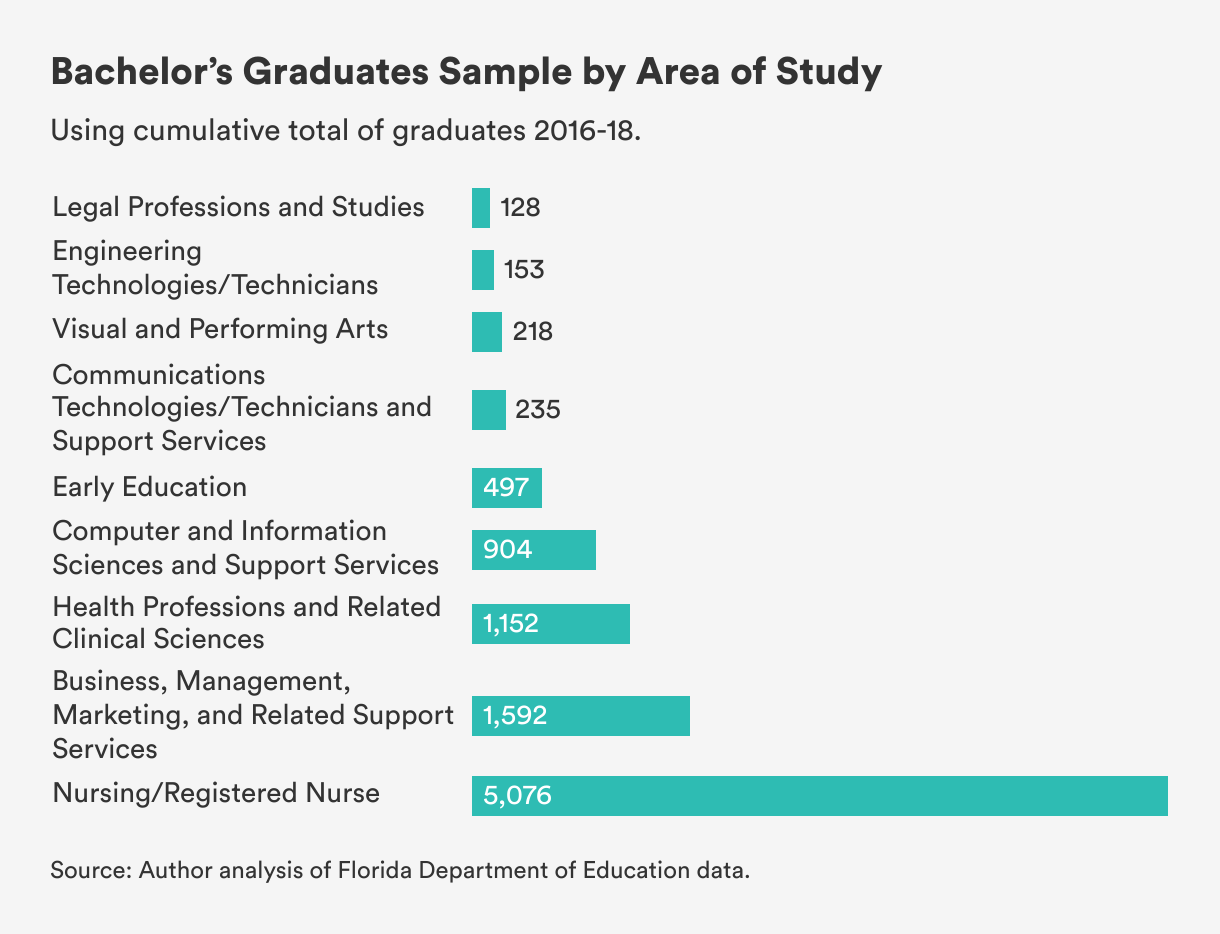
Florida’s community colleges offer bachelor’s degrees across a wide range of career fields, from health care to business to information technology. As Figure 1 depicts, bachelor of science in nursing programs are by far the largest in my sample, comprising 54 percent of bachelor’s degree conferrals in the data. While one can become a registered nurse with an associate degree, many employers are pushing current nurses to earn a bachelor’s degree and still others require a bachelor’s degree for leadership roles in care settings.8 Similar trends are apparent in other allied health fields such as respiratory therapy: an associate degree may provide entry into the field, but career advancement will likely require a bachelor’s degree. These labor market trends, in turn, help explain the large share of graduates from the health professions compared to other disciplines in this sample.
After health care, degrees in business are the largest in this data set followed by computer and information science. These programs can open up new opportunities for career growth for those who want to build on their associate degrees without having to enroll in a four-year institution that may not be as experienced in supporting working adult students who want to earn a bachelor’s degree.
Community colleges tend to enroll a more diverse population of students, and baccalaureate graduates in this analysis were very similar to associate graduates in terms of race and ethnicity. The share of baccalaureate graduates in the sample who were Black (16 percent), Latinx (20 percent), and white (53 percent) fell within one percentage point of those of associate degree graduates. Furthermore, the share of FCS baccalaureate graduates in several racial and ethnic groups closely mirrors that of the population of Florida. The share of Black; white; and Asian-American, Native Hawaiian, and Pacific Islander (3 percent) baccalaureate graduates fell within one percentage point of those respective groups’ share of the Florida population.9 However, Latinx individuals were underrepresented among FCS graduates (20 percent) compared to their share of the state population (26 percent). In comparison, graduates from Florida state universities in 2016–17 were more likely to be Latinx (27 percent) than FCS bachelor’s graduates in this sample, slightly higher than the share of Latinx people in Florida.
However, state university bachelor’s graduates were less likely to be Black (12 percent) than FCS graduates (16 percent) in this analysis.10
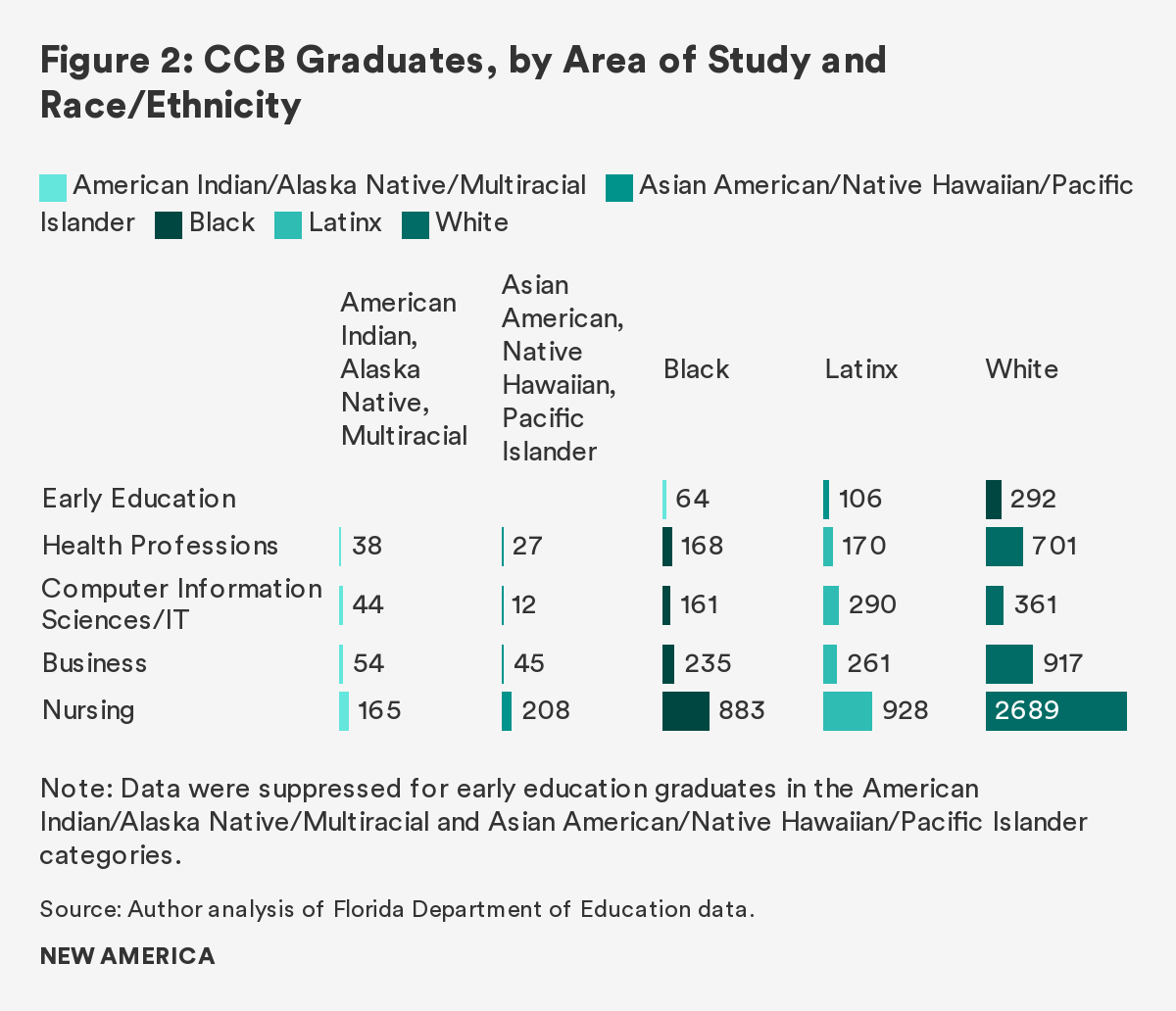
The racial and ethnic composition of CCB graduate cohorts varied by sector, as shown in Figure 2. Over half of IT graduates (58 percent) were people of color, with Black (19 percent) and Latinx (33 percent) graduates particularly well-represented. Approximately 47 percent of Floridians are people of color, and the remaining areas of study with data available for analysis fell short of this share of graduates of color, though nursing (45 percent) came close to mirroring the population.
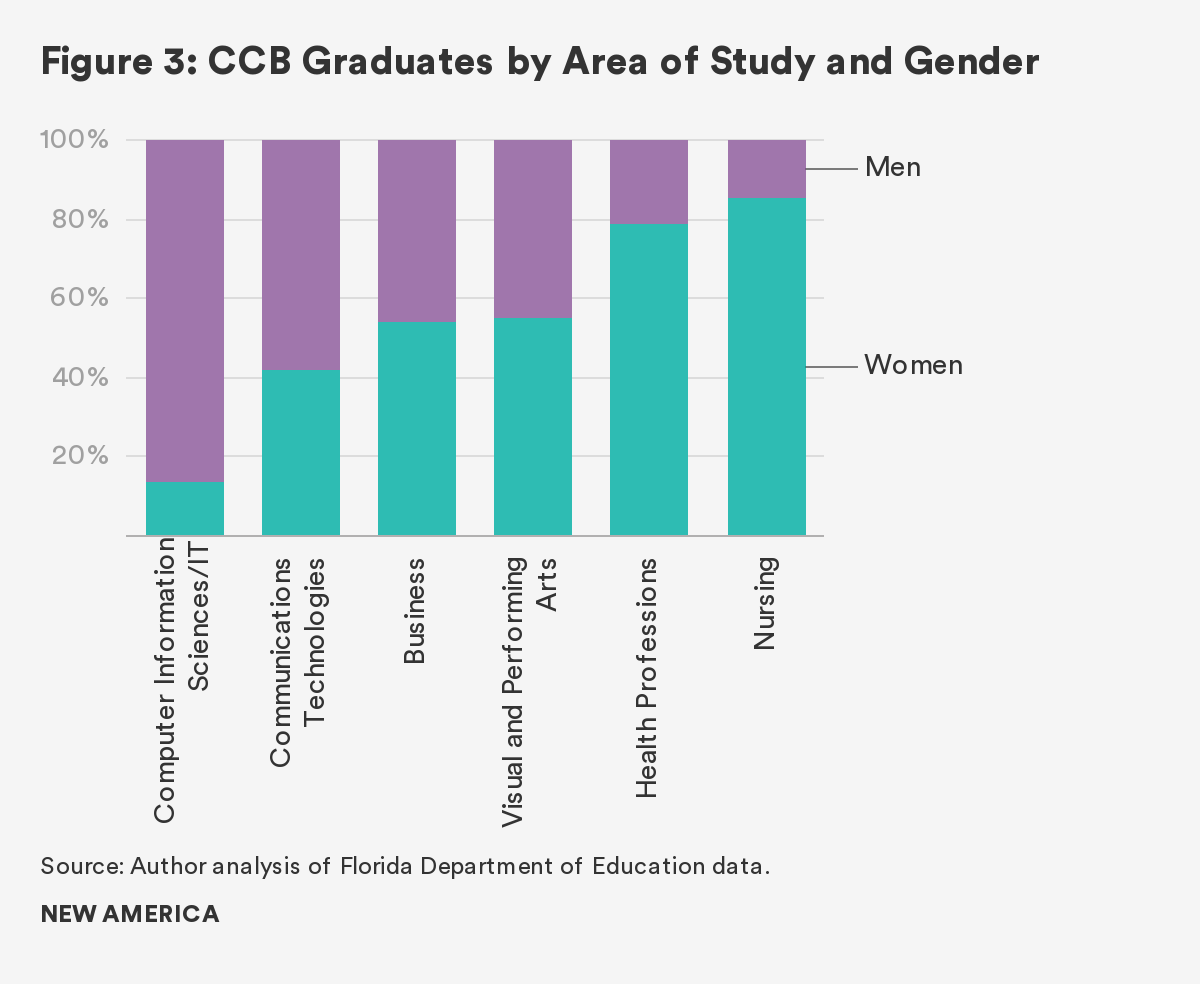
Overall, this sample of baccalaureate graduates is heavily weighted toward women, who comprised 70 percent of all graduates in the sample (Figure 3). Removing nursing graduates, the cohort is very similar to the gender breakdown of all baccalaureate graduates. In 2015–16, 57 percent of bachelor’s graduates nationwide were women, compared to 56 percent in this sample with nursing graduates removed.11 No great surprises emerged in the gender composition of various sectors of baccalaureate programs. Consistent with national trends, nursing and health professions were heavily female (85 percent and 79 percent, respectively), and computer science/IT was heavily male (86 percent). However, one noteworthy finding was over half (54 percent) of baccalaureate business graduates in the sample were women, compared to 47 percent of business bachelor’s graduates nationally.12
Education and engineering technologies graduates are absent from Figure 3. This is because there were 11 male graduates of early childhood education associate degree programs across the state of Florida in 2016; data for all other years at both levels of education were suppressed, meaning there were not even 10 graduates in a given year and credential level across the FCS. With all values but one therefore suppressed, I was unable to conduct a gender analysis for this sector. Similar challenges arose—in the reverse—for engineering technologies. In no year were there 10 or more female graduates of engineering technologies bachelor’s degree programs. These results suggest gender segregation is so strong in these two areas of study that analysis was impossible with available data.
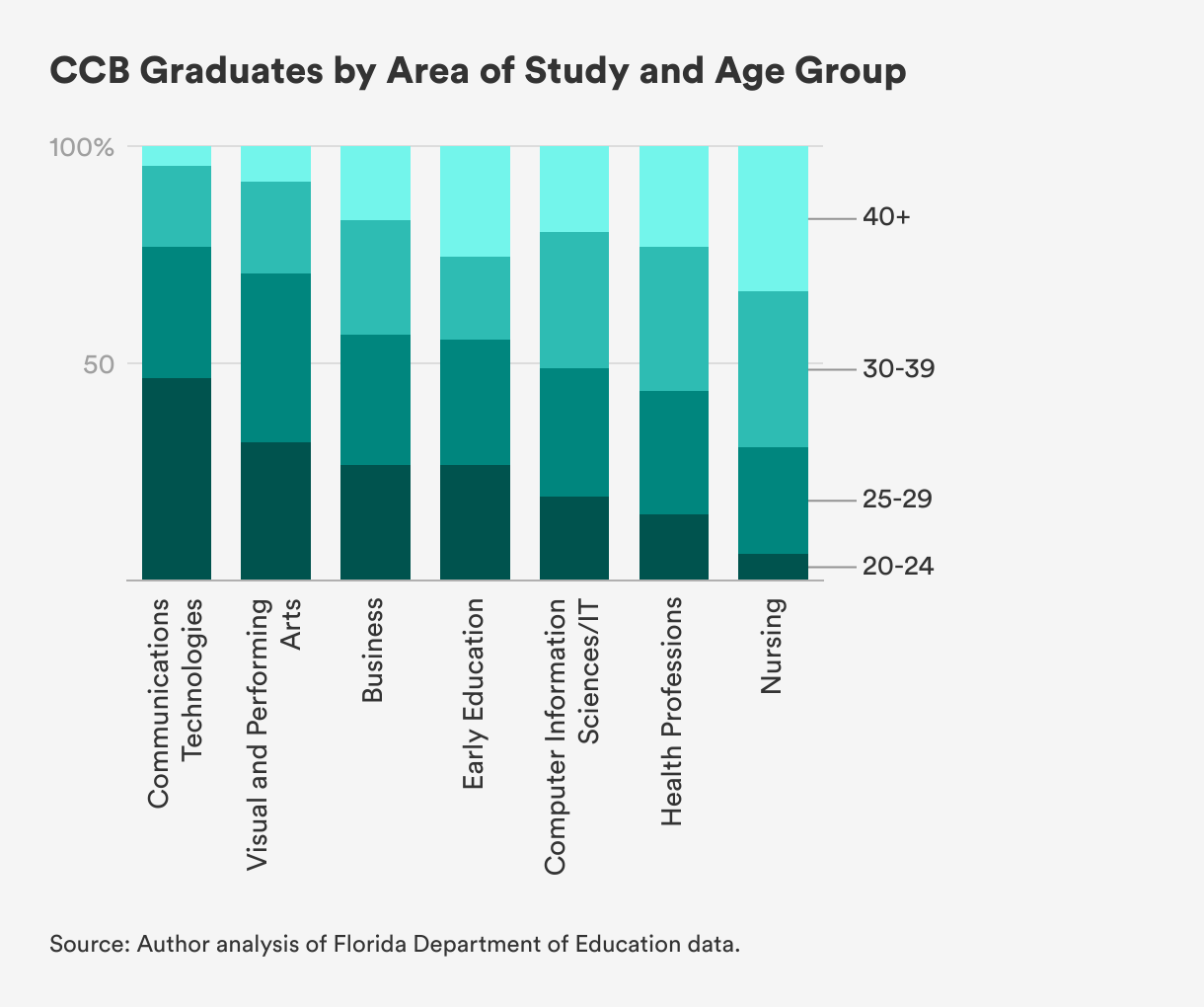
FCS baccalaureate graduates are, overall, older than associate graduates in similar fields. Fifty-eight percent of bachelor’s graduates were 30 or over, compared to 45 percent of associate degrees in corresponding fields of study. Even when excluding nurses—the area of study with the oldest graduates—from the analysis, 47 percent of FCS baccalaureate graduates were 30 or older. However, variability across programs suggests the baccalaureate cohort is comprised of both students who move quickly from an associate program into a bachelor’s program and those who may have been out of higher education for some time who returned to secure their bachelor’s degree.
For instance, baccalaureate graduates in business and education were younger than associate degree graduates in those areas of study. It could be that individuals in these sectors are intending to earn a bachelor’s degree from the time they enroll in the community college and are leveraging the lower cost of community college programs to do so in a more affordable way. On the other hand, nursing, health professions, and legal professions baccalaureate graduates were considerably older than associate graduates in the same sectors. One possible explanation would be increasing credential requirements in nursing and other allied health professions, such as respiratory therapy and dental hygiene, leading experienced professionals to return to college and pursue an additional degree. IT and engineering technologies graduates were very similar in age at the associate and baccalaureate level, with baccalaureate graduates very slightly older. And pay gaps were greater at the bachelor’s degree level in these same areas of study.
Citations
- While the push for bachelor’s degrees to be the educational standard for registered nurses dates from the mid-1960s, the pressure on nurses to earn a bachelor’s degree has accelerated since the publication of the Institute of Medicine’s 2011 report The Future of Nursing: Leading Change, Advancing Health, which called for 80 percent of registered nurses to hold a bachelor’s degree by 2020. Though the field fell short of this goal, it continues to push for increased bachelor’s degree attainment.
- U.S. Census Bureau (website), Florida Race and Ethnicity, 2018: American Community Survey 1-Year Estimates Data Profiles, https://data.census.gov/cedsci/table?q=Florida%20Race%20and%20Ethnicity&tid=ACSDP1Y2018.DP05&vintage=2018
- State University System of Florida Board of Governors, State University System of Florida 2017 Annual Equity Report, https://www.flbog.edu/wp-content/uploads/2017-SUS-Equity-Report.pdf
- U.S. Department of Education, National Center for Education Statistics (website), Table 318.10, “Degrees Conferred by Postsecondary Institutions, by Level of Degree and Sex of Student: Selected Years, 1869–70 through 2027–28,” April 2018, https://nces.ed.gov/programs/digest/d17/tables/dt17_318.10.asp?current=yes
- Here, I am looking at 2017–18 national data in tables 322.40 and 322.50 Bachelor's degrees conferred to males [and females, respectively] by postsecondary institutions, by race/ethnicity and field of study: 2016–17 and 2017–18., https://nces.ed.gov/programs/digest/d19/tables/dt19_322.40.asp and, https://nces.ed.gov/programs/digest/d19/tables/dt19_322.50.asp for males and females, respectively. This is a rough comparison because the sample from FLDOE does not include all business baccalaureate programs, only those that correspond to a specific program of study at the associate level.
Employment and Pursuit of Further Education for FCS Baccalaureate Graduates
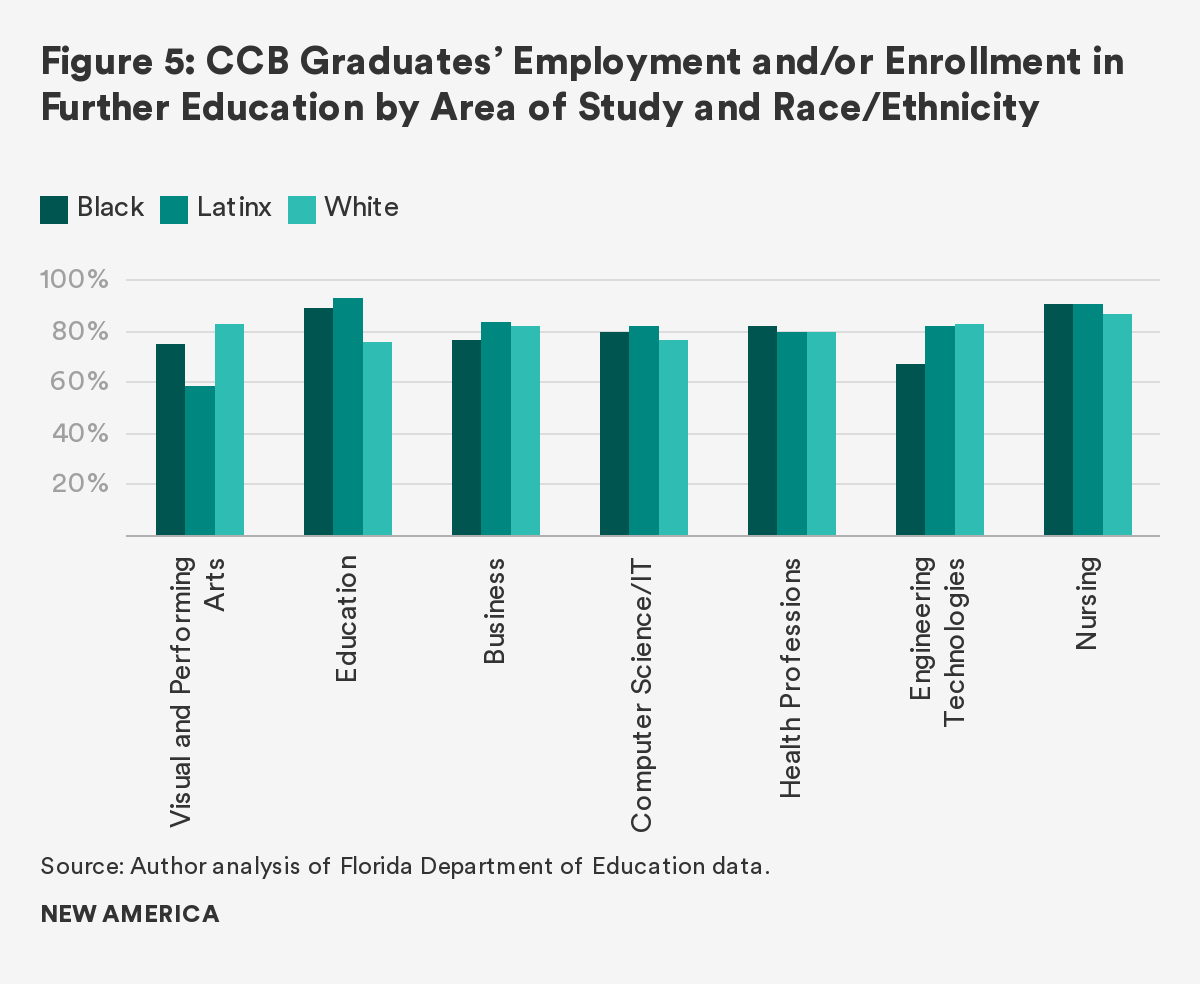
Employment outcomes were strong overall for FCS CCB graduates in this sample, 83 percent of whom were employed one year after graduation. Associate degree graduates in corresponding fields of study were equally likely (83 percent) to be employed. Within baccalaureate graduates, there are some notable differences in employment and further education rates by race/ethnic group that merit further study. For example, Black graduates in business and engineering technologies were considerably less likely than white or Latinx peers to be employed and/or enrolled in further education one year after graduation. Latinx baccalaureate graduates in visual and performing arts, likewise, did not have as positive of employment outcomes as Black or white graduates in the field. In other fields, Black and Latinx graduates outperformed white peers in terms of employment or enrollment in further education one year after graduating. In nursing, education, and IT, white graduates had lower employment and/or further education rates than Black and Latinx graduates, as Figure 513 depicts.
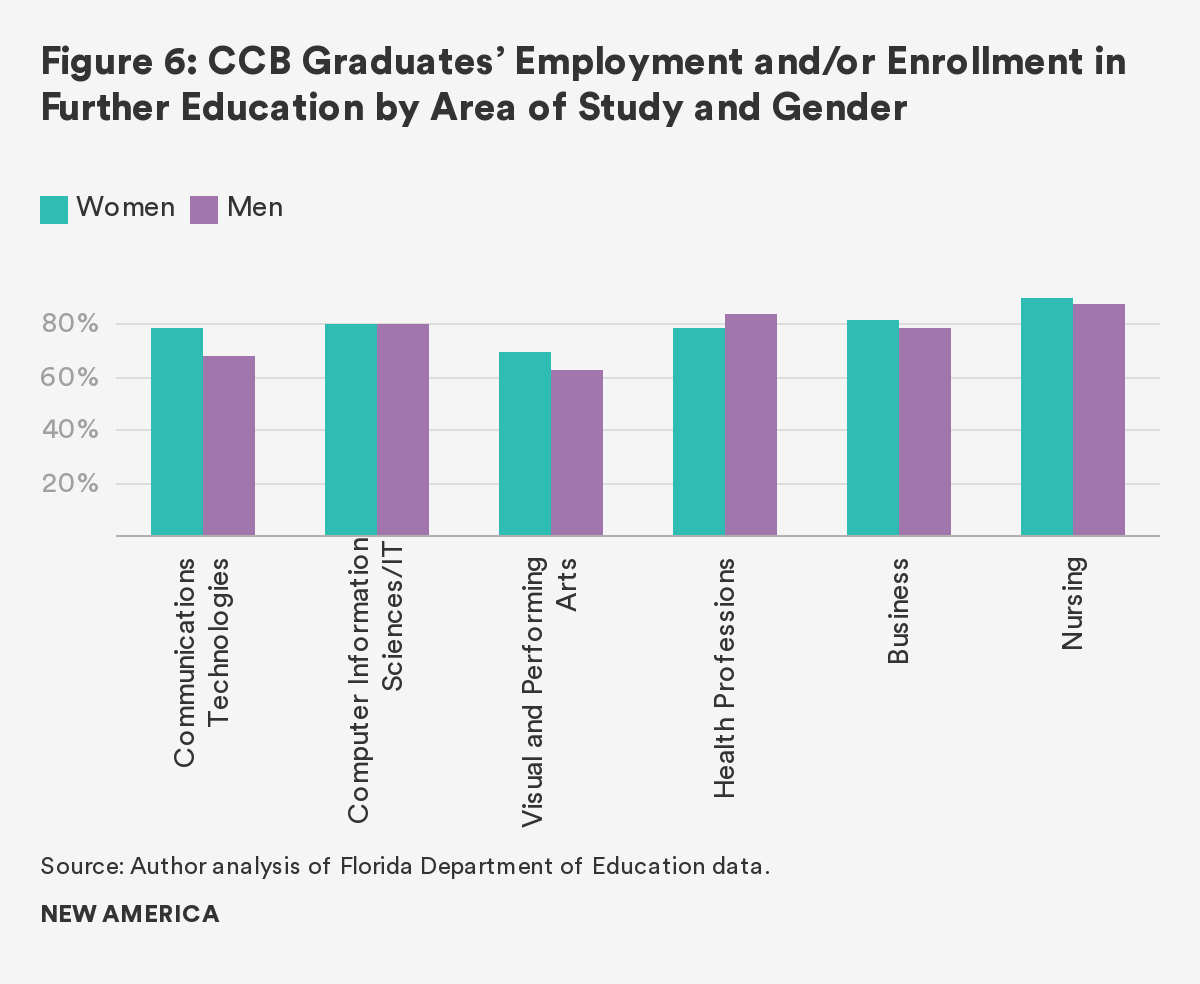
Findings also varied when employment and continuing education rates were disaggregated by gender. As Figure 6 shows, women were more likely to be employed or pursuing additional education one year after earning a bachelor’s degree than men in business, nursing, visual and performing arts, and communications technologies. Men, on the other hand, were more likely to be employed or continuing their education in other health professions. Women and men were equally likely to be employed or continuing their education in IT.
Citations
- Due to the many suppressed values for Asian American, Native Hawaiian, and Pacific Islander graduates and Native American and multiracial graduates, it was not possible to conduct reliable analysis on these groups’ employment or wage outcomes. Further study using other research methods is merited to understand these graduates’ representation in different areas of study and labor market outcomes.
Average Wages for FCS Baccalaureate Graduates
Overall, baccalaureate graduates enjoyed higher earnings than graduates of associate programs one year after graduation ($55,620 and $45,660, respectively). However, there was considerable variation in earnings across different programs and population groups. As shown below in Figure 7, average wages for nurses of all three racial/ethnic groups depicted are above Florida median household income, with Black and Latinx nurses earning more their white peers.14 Black graduates earn slightly less than their peers in IT, and considerably less than Latinx and white graduates in business. The opposite is true in early childhood education, where Black graduates out earn these two groups. Meanwhile, Latinx graduates earned on average $19,476 more than their Black peers in the allied health professions included in this data set, and $16,560 than white graduates. Data for this area of study includes graduates from a variety of health professions programs, from dental hygiene to respiratory therapy. While data available for this analysis does not allow for further disaggregation of programs beyond the 2-digit CIP level, earnings disparities within the category may explain the large differences in wages among groups. It could also be that Black and Latinx Floridians are more concentrated in higher-paying labor markets within the state than white peers. These findings, in light of stubborn racial and ethnic income and wealth gaps, should be the focus of additional analysis.
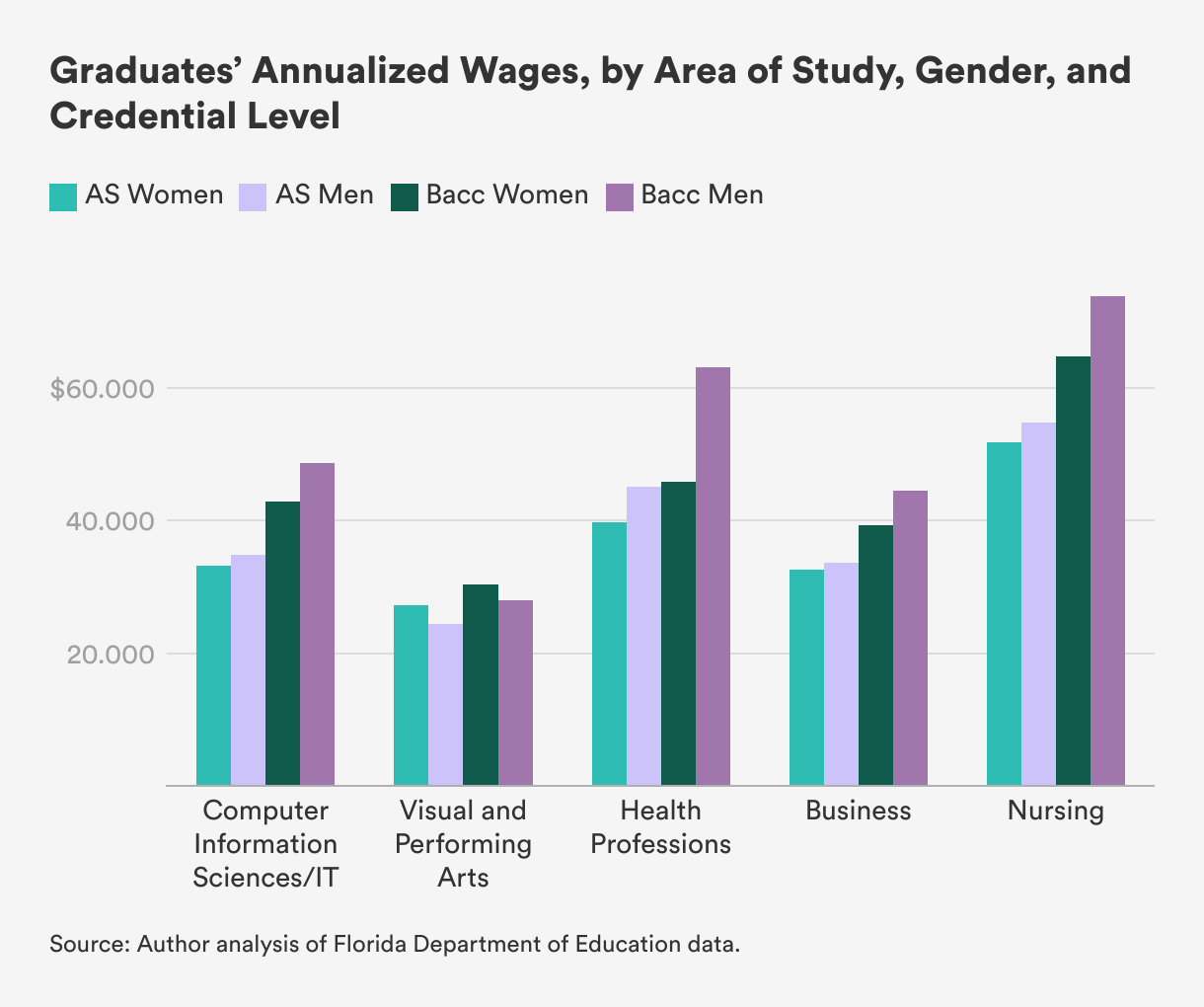
Disparities in pay by gender are strikingly clear across fields of study and education levels. In four of five fields with sufficient data for analysis, men earn more than women at the associate level, and the pay disparity is even greater at the baccalaureate level. For example, women with a bachelor’s degree in an allied health field only earn around $700 more per year than men with an associate degree in that area of study. Meanwhile, in business, men with associate degrees earn approximately $900 more per year than women with the same credential. But at the baccalaureate level, the pay gap is five times greater. Visual and performing arts is the only sector in which women earn more than men, which is true at both the associate and bachelor’s level, as shown in Figure 7. It should be noted that this is a particularly young cohort of graduates, which may explain both the small pay gaps and the generally low pay for both genders in the sector.
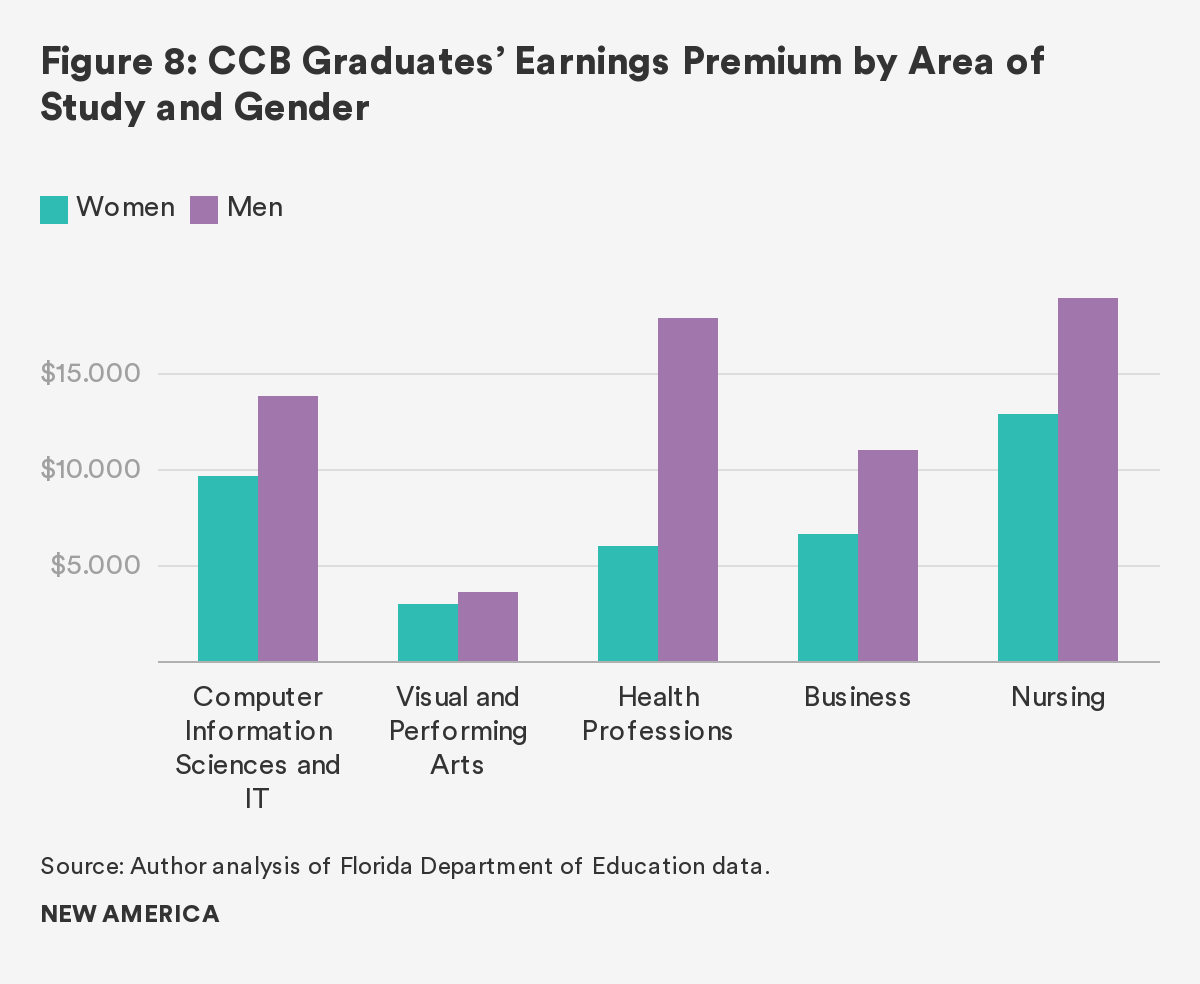
When considering the earnings premium that bachelor’s graduates enjoy, in all five sectors with sufficient data to analyze, men enjoyed higher earnings premiums from a bachelor’s degree than women, as shown in Figure 8.
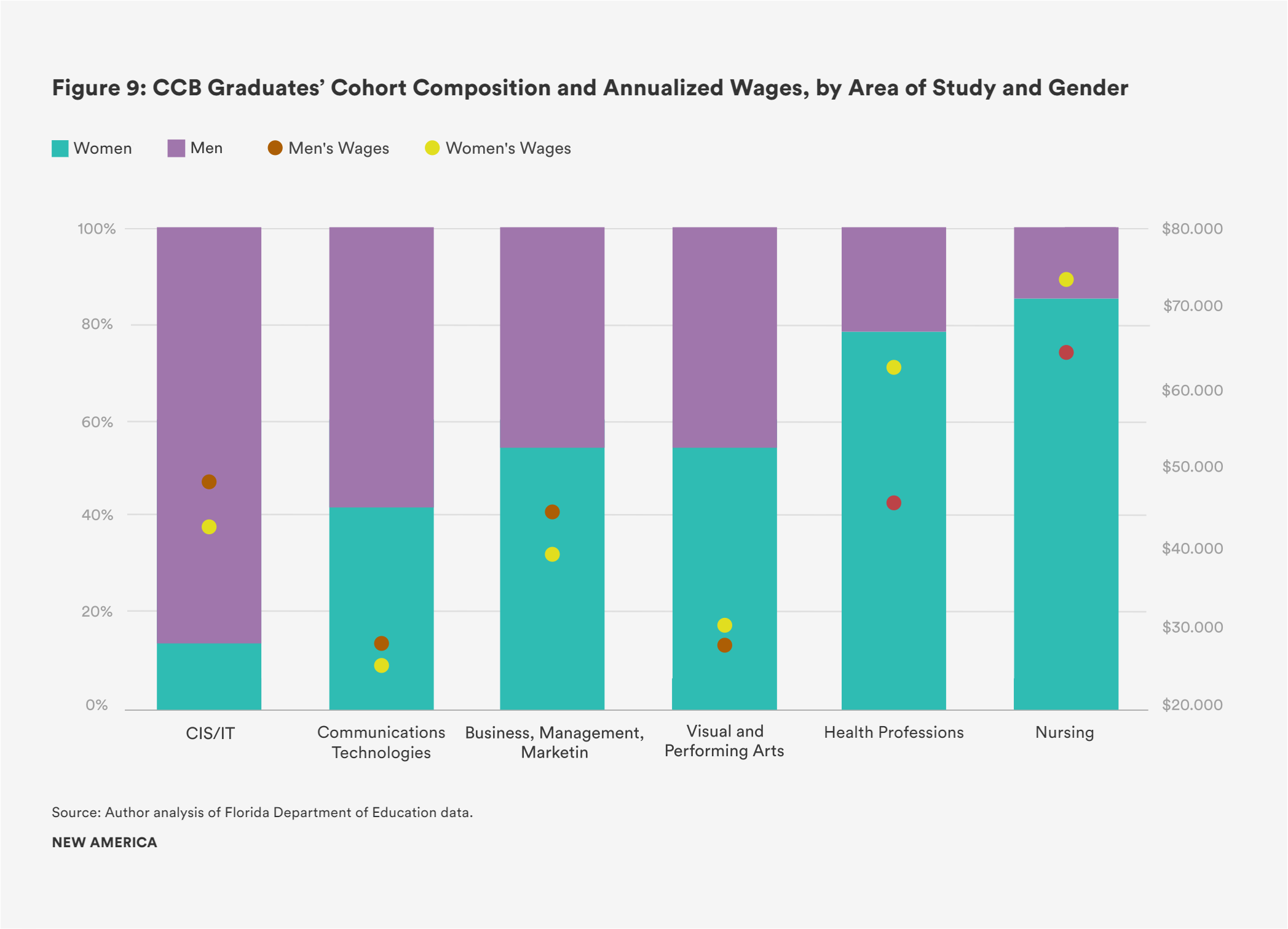
One common theory on the cause of gender pay gaps is the choice of occupation. Were women to choose higher-paying fields, pay equity issues would largely resolve. However, these data from Florida suggest that gender pay inequity exists within many fields. In fact, as Figure 9 below shows, pay gaps were greatest in the two areas of study with the highest share of women: health professions and nursing. Whereas the dataset for this analysis does not allow for cross-tabulation of race or ethnicity and gender, other patterns of results revealed in the data point to the need for better research to better understand the relationships between gender and earnings within and across areas of study, which is important context for the current discussion, as gender pay gaps are larger for Black, Latinx, and Native American women than white women.15
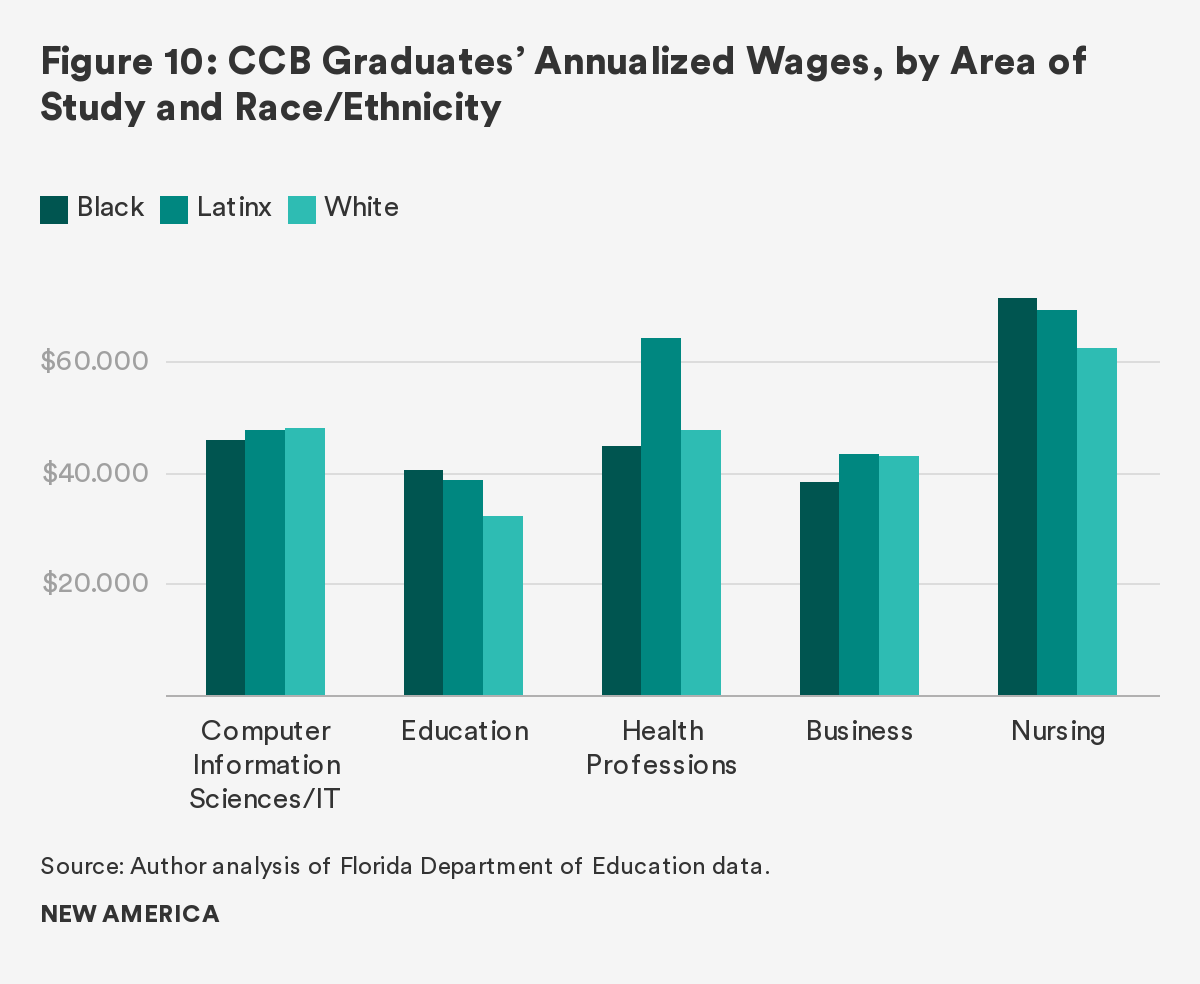
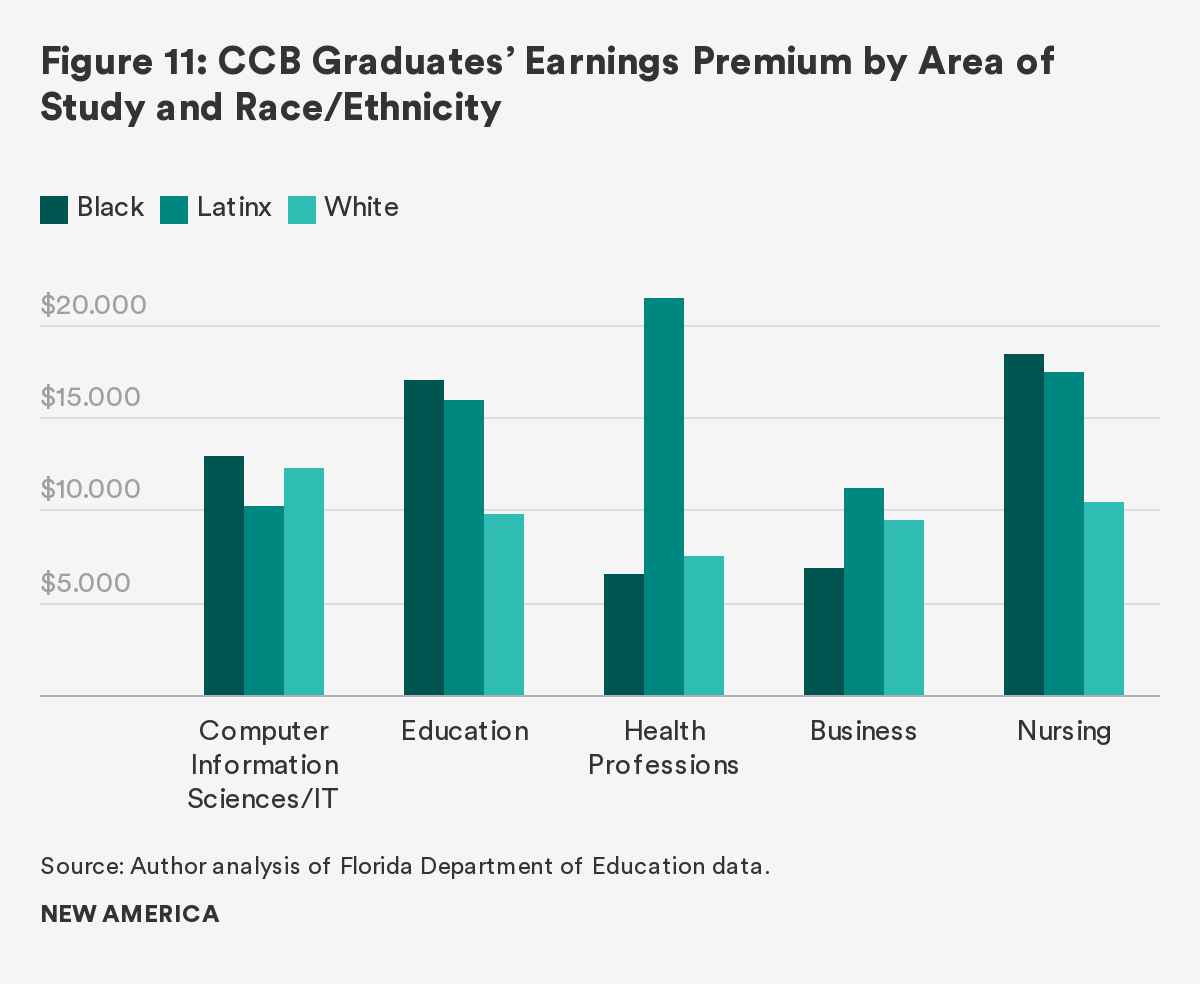
Another way to conceptualize the economic impact of earning a baccalaureate degree from a Florida community college is to consider the difference in earnings between associate degree graduates and baccalaureate degree graduates in similar fields one year after graduation. This difference, which I refer to as the baccalaureate earnings premium, varies by demographic group and area of study. Figure 11 depicts this difference across areas of study and by race and ethnicity. In IT, the earnings premium for Black baccalaureate graduates was highest, yet, as Figure 10 shows, Black graduates’ wages were still lower than Latinx and white graduates. Black graduates also have lower earnings premiums in health professions and business, while they enjoyed the highest earnings premiums in nursing, the highest paid field, and early childhood education, the lowest paid field, in this part of the analysis. Additional research is needed to understand the differential returns to bachelor’s degrees across these and additional occupational fields and for race and gender.
Citations
- The median household income for Florida was $53,267, according to U.S. Census Bureau, American Community Survey (ACS) and Puerto Rico Community Survey (PRCS), 5-Year Estimates for 2014–2018., https://www.census.gov/quickfacts/fact/table/FL/INC110218
- “Women’s and Men’s Median Annual Earnings.”
Conclusion
Next year, 2021, will mark the 20th anniversary of the landmark Florida legislation that first authorized community colleges to offer bachelor’s degree programs. As of this writing, 27 of 28 institutions in the Florida College System (FCS) offer at least one baccalaureate program, with a total of 191 programs operating throughout the state.16 While 23 states now authorize at least one community college to confer limited bachelor’s degrees, Florida operates community college baccalaureate programs at greater scale than any other state. In 2016–17, the middle year of data analyzed in this report, over 40,000 students were enrolled in FCS bachelor’s degree programs across the state,17 eclipsing undergraduate enrollment at the flagship University of Florida.18
The FCS has done much to offer affordable access to bachelor’s degree programs for Floridians across the state. With a wide range of programs tailored to local labor markets, residents—whether recent associate degree recipients or out of college for decades—can access further education and training to open doors of opportunity. Baccalaureate graduates are overall experiencing wage gains as well as strong rates of employment or enrollment in further education.
However, these data suggest that labor market inequities such as a persistent gender pay gap and some disparities in employment and earnings by race and ethnicity in particular fields are a reality for these FCS baccalaureate graduates. Once again, we see that education and training alone cannot make the labor market equitable. We need to use the promise of these bachelor’s degree programs to expand access while creating a holistic, partnership-based approach to education and labor market equity that leverages the strengths of both colleges and employers. This type of structure could help ensure all people can access both the education they need and the equitable labor market outcomes they deserve.
Citations
- For an updated list of colleges and programs, download the List of Approved Baccalaureate Degree Programs in the Florida College System from the Florida Department of Education website., http://www.fldoe.org/schools/higher-ed/fl-college-system/baccalaureate-degree-proposal-process.stml
- In addition to this data point, the 2016 Florida College System Baccalaureate Degrees Accountability Report provides a thorough look at the types of programs available and students who enrolled, a very useful complement to this report, for which I only analyzed graduates of select programs., http://www.fldoe.org/core/fileparse.php/7749/urlt/FCS-Bacc-Report.pdf
- The Integrated Postsecondary Education Data System (IPEDS) enrollment data for 2019–20 reported for the University of Florida on College Navigator put undergraduate enrollment at 35,405., https://nces.ed.gov/collegenavigator/?q=university+of+florida&s=all&id=134130#enrolmt
More About the Author

Ivy Love
Senior Policy Analyst, Center on Education & Labor