Framing the Problem
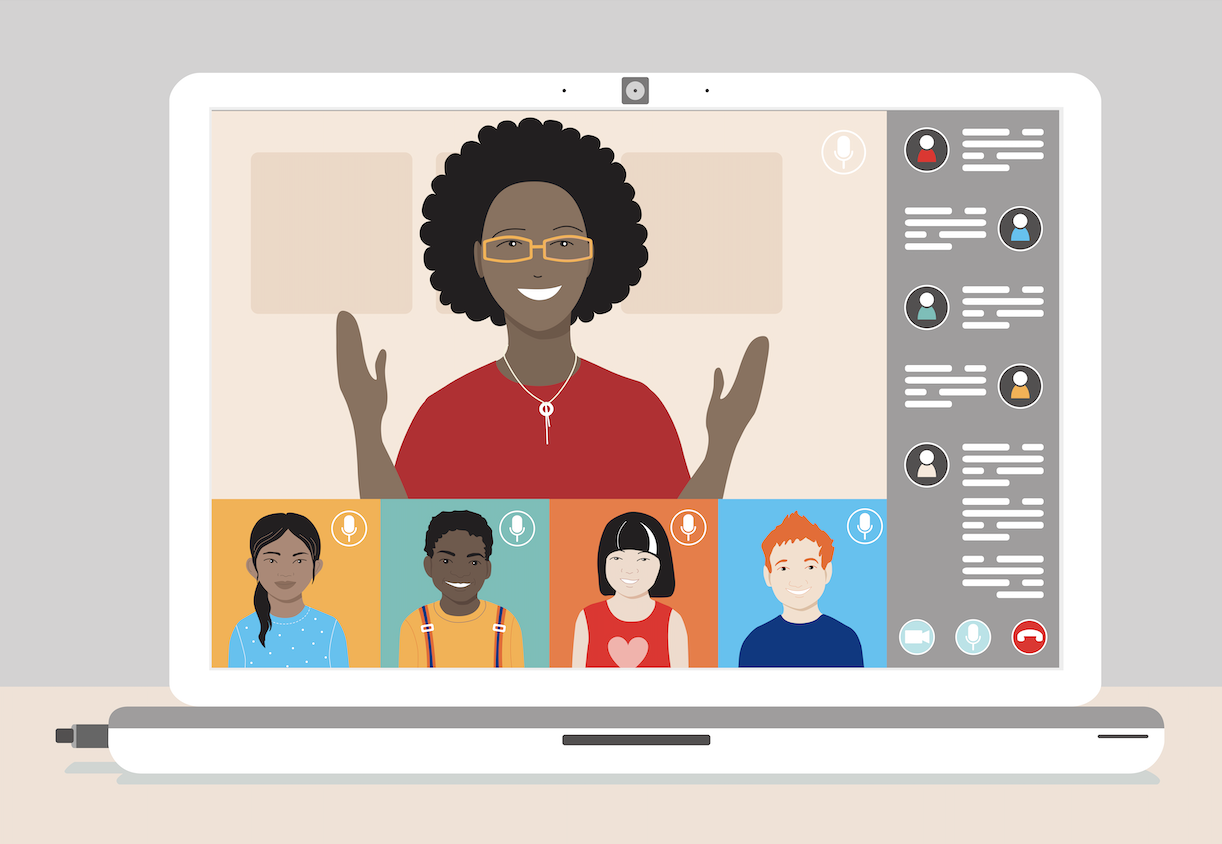
Since March 2020, the coronavirus pandemic has closed school buildings across the United States, at some point forcing remote instruction for virtually every public school. As COVID-19 cases continue to rise, many school districts have either required students to take courses remotely or are using a hybrid approach that switches between in-person instructional time and remote learning, which is typically online. Both models present unique opportunities for teachers and students to engage safely during the pandemic, but they may also exacerbate challenges teachers already faced in the classroom. While schools and districts must constantly adjust to new operating guidance and rapidly changing plans—many on shrinking budgets and staff rosters—teachers themselves are left to navigate many aspects of remote learning. Pandemic pedagogy, a nickname for remote and hybrid learning during the coronavirus crisis, requires educators to wear many hats, including, but not limited to, those of teacher, social worker, curriculum designer, and instructional technologist.
For the districts that are still remote or remote again following the spike in COVID-19 cases in the fall, the challenges of digital equity are particularly salient. Large numbers of students did not have the devices, broadband, or access to digital materials needed to learn remotely. While some districts found temporary solutions through community support and partnerships with internet service providers, they were not robust enough to ensure all students were reliably connected to the internet and able to fully engage in online instruction. Now, months later, there is growing evidence of the worsening digital divide, or the gap between roughly 15 million U.S. students with reliable home internet and those without. While this divide has existed as long as the internet itself, the pandemic has caused a full reliance on broadband that may mean significant learning loss for some students. Many teachers are now struggling to meet state and school standards while their administrations are faced with meeting digital needs of students in a sustainable way.
For the districts that are still remote or remote again following the spike in COVID-19 cases in the fall, the challenges of digital equity are particularly salient.
While schools are focused on getting digital instructional materials into the hands of students, political events unfolding around the country have renewed a national conversation about what exactly those materials ought to be. From the protests sparked by the murders of George Floyd and Breonna Taylor and the divisive rhetoric surrounding the 2020 presidential election, to mutual aid efforts trying to mitigate the effects of job loss and food shortages exacerbated by the pandemic—heightened public discourse around racial and social issues is building broad support for the types of culturally responsive education some Black education leaders and scholars have long called for.
Culturally responsive education (CRE), sometimes called culturally relevant pedagogy or teaching, is “an approach that challenges educators to recognize that, rather than deficits, students bring strengths into the classroom that should be leveraged to make learning experiences more relevant to and effective for them,” as defined by New America’s Jenny Muñiz. More than simply recognizing students’ traditions or history, CRE requires improvements toward equity at every level, including systemic changes toward a more diverse teacher workforce and rigorous, relevant learning experiences for all students. Gloria Ladson-Billings, an expert on American teaching practices and professor emerita at the University of Wisconsin at Madison, first introduced this concept more than 20 years ago. Since then, scholars and educators have built on the idea to account for today’s context, in which many instructional materials and common pedagogical practices do not reflect, represent, or validate the lived experiences of a now-majority of PreK–12 students. Evidence shows that many instructional materials—including books and textbooks, visual media, and primary sources—not only misrepresent or fail to represent multiple identities, but often perpetuate harmful stereotypes and biases through the use of a single, Eurocentric perspective.
To add to these challenges, pandemic pedagogy has starkly underscored the ways in which public schools are designed for those with technological, social, and economic privilege. As teachers are asked to deliver engaging, relevant, and responsive lessons to students with vastly different resources and capacities, often across different platforms and with little guidance from schools, they have less time, support, and capacity than ever. On top of that, many are being asked to do it all without regard for the mental and physical toll that comes with processing national (racial reckoning) and mass (global pandemic) trauma.
In part because of the breadth and depth of these challenges, the goal for many schools during the pandemic has been to maintain the status quo as seamlessly as possible, to keep students on track, engaged, and meeting the demands of teachers, families, and local and state standards. But the challenges exacerbated by the pandemic have made it clear that “normal” for many students wasn’t working before the pandemic and is not working now. “Normal” looked like deep digital divides and gross resource inequities. By aiming for the status quo, we may be missing out on an immense opportunity to leverage this moment for bold, transformational change.
What will it take to capitalize on this moment and create the sustained change that students have long needed? What are the biggest needs, challenges, and opportunities of this moment?
The Roundtable
To better understand the intersection of digital equity and CRE, and what it will take to use this moment as a catalyst for change, we convened 11 educators, scholars, and instructional technologists virtually in the fall of 2020 from different backgrounds: PreK–12 classroom educators, professors of teachers colleges, K–12 school leaders, and subject specialists. The goals of the conversation were to unearth the challenges, needs, and opportunities educators are experiencing around digital equity and CRE, and to understand how they have changed or have been affected during the pandemic (see appendix for list of participants).
This brief highlights key parts of this conversation and contextualizes what we’ve heard from educators who are rethinking what pandemic pedagogy can do. The conversation engaged those whose work focuses specifically on leveraging technology and digital tools for equitable, responsive education. Building on previous New America work on culturally responsive education, digital equity, teacher preparation, English learners, and students with disabilities, this project is the beginning of a new line of work exploring how to create a more inclusive and equitable education system.