
Displaced in the Sun Belt
Abstract
For nearly a year, tens of millions of American renters and homeowners have faced the specter of unemployment-driven housing loss. A patchwork of eviction and foreclosure moratoria have kept housing loss largely at bay, and occasional—though inadequate—rent relief has helped some renters make ends meet.
But what will happen when moratoriums lift and housing assistance runs out? And what can local governments do now to stabilize renters and homeowners before that happens?
We know evictions and foreclosures persistently affect the same communities, and that the people and places most vulnerable to housing loss before a crisis are often the ones who experience displacement most acutely during harder times. New America’s Future of Land and Housing Program and New Practice Lab teamed up with DataKind to analyze where evictions and foreclosures were most severe between 2017 and 2019—directly before the pandemic hit—and to speak with dozens of local stakeholders to understand how the COVID-19 crisis was impacting housing stability in real time.
We focused on seven metro areas in the U.S. Sun Belt, totaling nearly 17 million people: Phoenix, Las Vegas, Houston, Miami, Orlando, Winston-Salem, and Norfolk. We chose to work here because our prior research showed that the Sun Belt had the highest pre-pandemic eviction and foreclosure rates in the country, and because we know the pandemic has been particularly unkind to this part of our country.
In these areas, we created census tract-level eviction, foreclosure, and combined housing loss maps, used statistical analysis to explain who is most at risk of losing their homes, and relied on qualitative research to put context behind the numbers.
By identifying and examining which places experienced the most acute housing loss just before the pandemic, we can better predict where future housing loss will occur as a result of the COVID-19 crisis and who will be impacted, allowing decision-makers to direct resources and prevent harm before it proliferates.
This report was updated on November 9, 2022 to reflect changes in the methodology of the eviction analysis in the Norfolk City, Virginia.
Acknowledgments
Contributing Authors: Abbey Chambers, Alberto Rodriguez-Alvarez, Alexandria Drake, Cassandra Robertson, and Jack Portman
This research was conducted in partnership with New America's New Practice Lab, with support from Blue Meridian Partners. Thank you to Elizabeth Garlow and Vivian Graubard, especially, for their collaboration and support.
Our local partners in several case study locations were critical to the success of this research. Thank you to the following individuals for their collaboration and invaluable insights: Frank Wells in Orlando and Anne Ray at the Shimberg Center for Housing Studies at the University of Florida; Sherri Lawson Clark at Wake Forest University; and Patricia Solis and Lora Phillips at the Knowledge Exchange for Resilience at Arizona State University. We would like to extend our gratitude to all those interviewed for this project, as well.
Our work was also made possible with funding from Omidyar Network/PlaceFund. In particular, we would like to thank Amy Regas and Peter Rabley for their support.
Finally, we would like to thank all of our colleagues at New America that assisted with this report: Alison Yost, Maria Elkin, Joanne Zalatoris, Naomi Morduch Toubman, Joe Wilkes, Brittany VanPutten, and Samantha Webster.
Cover image photo credits: Clockwise starting in top left: Miami, Felix Mizioznikov / Shutterstock.com; Orlando, Noah Densmore / Shutterstock.com; Las Vegas, bumpus / Shutterstock.com; Phoenix, jessica.kirsh / Shutterstock.com; Houston, Trong Nguyen / Shutterstock.com; Winston-Salem, Real Window Creative / Shutterstock.com; Houston, Kamil Zelezik / Shutterstock.com; Las Vegas, Tupungato / Shutterstock.com
Introduction: Why the Sun Belt and Why Now?
The U.S. Sun Belt—broadly defined as the Southern swath of the country—is growing rapidly. Researchers at Rice University found that large Sun Belt metro areas accounted for almost half of all population growth in the entire United States between 2010 and 2016. Sun Belt cities are also increasingly diverse compared to the rest of the country, in all senses of the word: race and ethnicity, age of residents, socioeconomic strata, and the types of jobs added to the local economy.
Unsurprisingly, these rapid changes are leading to some growing pains. In particular, housing affordability has declined across the Sun Belt, and housing insecurity has increased.
The Sun Belt used to be known for its housing affordability. But over the last 20 years, Rice University found that housing prices in the Sun Belt have been rising rapidly. As a consequence, homeownership has been falling at some of the fastest rates in the country, and now, Sun Belt metro areas account for six of the 10 large metros with the highest share of severely cost-burdened households (i.e., owners and renters paying more than 50 percent of their income on housing). In fact, New America found that the Sun Belt has the highest combined eviction and foreclosure rates in the country, driven by Arizona, Nevada, Florida, Georgia, and South Carolina.
The economic impacts of COVID-19 have hit the Sun Belt hard, exacerbating existing housing pressures. Sun Belt cities are often vacation destinations, and as travel dried up in 2020, these cities experienced large labor contractions and high unemployment rates.
Thanks to a patchwork of federal, state, and local moratoriums, eviction and foreclosure rates in 2020 remained low compared to prior years, even as more than one-third of Americans say they have fallen behind on their rent or mortgage. Once these moratoriums lift, tens of millions of Americans will likely lose their homes without intervention. But if the wave of evictions and foreclosures has not started yet, how do we know who is most at risk?
This is where the Displaced in the Sun Belt research may prove most useful. We know that evictions and foreclosures persistently affect the same communities, and that the people and places most vulnerable to housing loss before an economic crisis are often the ones who experience displacement most acutely during harder times. By identifying and examining which places experienced the most acute housing loss just before the pandemic, we can better predict where future housing loss will occur as a result of the COVID-19 crisis and who will be impacted, allowing decision-makers to direct resources and prevent harm before it proliferates.
The Displaced in the Sun Belt report visualizes which neighborhoods across seven locations experienced acute evictions and foreclosures just before the pandemic, from 2017 to 2019, and analyzes the groups most at risk for housing loss. The report pairs these findings with local interviews of front-line housing advocates, conducted in the fall of 2020, to understand how housing loss is changing during the pandemic.
We believe that the combination of these analyses provides clues about where housing loss will be most acute once moratoriums lift, and who will be most impacted. We hope this analysis is useful to local policymakers and advocates as they race to distribute housing aid and keep families in their homes.
Methodology and Definitions
This report uses mixed methods research to examine housing loss resulting from evictions and mortgage foreclosures across the Sun Belt. In addition to a brief section on findings that are generalizable across the region, we focus on case studies of seven U.S. counties:
- Clark County, Nevada
- Forsyth County, North Carolina
- Harris County, Texas
- Maricopa County, Arizona
- Miami-Dade County, Florida
- Norfolk City, Virginia1
- Orange County, Florida
In each case study location, we analyzed geospatial and case data on evictions and mortgage foreclosures at the census tract level to visualize where housing loss was occurring. We utilized American Community Survey (ACS) data from the U.S. Census Bureau and tested for statistical relationships between housing loss and a number of socioeconomic variables to visualize who was most impacted by housing loss. And, we conducted key informant interviews (KIIs) to better understand the causes of home loss and the consequences of displacement, particularly within the context of the COVID-19 pandemic. These KIIs, along with desk research, helped to provide geographic, demographic, economic, social, political, and historical context to our housing-related findings.
Housing Loss Rate: Prior studies tend to examine different mechanisms of housing loss in silos. Eviction and mortgage foreclosure are analyzed separately, rather than as components of the same, broader problem. The processes of eviction and foreclosure may be different, yet the underlying causes are often the same, and each results in displacement and trauma—financially, physically, and emotionally. In most U.S. cities, a worker on minimum wage will be unable to make housing payments—either rent or a mortgage. The impact on a child who switches schools three times a year due to housing instability is likely similar whether home loss occurs via eviction or foreclosure. And residents of a blighted neighborhood likely do not care if their block of empty homes is a result of foreclosures or chronic evictions.
New America’s Displaced in America report addressed this problem by introducing a new measure that captures the overall magnitude of both evictions and mortgage foreclosures: the housing loss rate.
The housing loss rate combines the total number of evictions and the total number of mortgage foreclosures for a given geography, and then normalizes that sum by the total number of renters and the total number of homeowners with a mortgage within that given geography. The resulting rate shows the scale of housing loss within a given geography in relation to the number of households who could potentially experience such a loss.
Households: In keeping with the definition above, unless specified otherwise, "households" in this report refers to the combination of renters and homeowners with a mortgages, and not all households in the county. Specifically, we are excluding homeowners who have paid off their mortgage. These homeowners may be vulnerable to tax lien foreclosure, which we do not explore in this report, but they are generally not vulnerable to mortgage foreclosure or to eviction.

Case Study Selection Criteria: We decided to focus on the Sun Belt because of its rapidly growing and diversifying population, relatively high rates of pre-pandemic housing insecurity, and high rates of unemployment and housing insecurity during the pandemic. Within the Sun Belt we selected five locations based on a number of requirements:
- An early assessment of the prevalence of housing loss and instability, based on our Displaced in America report.
- The availability of granular and mappable data for evictions and mortgage foreclosures.
- The availability to leverage existing networks in order to engage with local stakeholders and conduct qualitative analysis.
- Regional variation, in order to account for differences in economics, politics, demographics, and histories.
In addition to the five newly-selected locations, we updated our findings from two of our Displaced in America case studies that happened to be in the Sun Belt: Maricopa County, Arizona and Forsyth County, North Carolina.
Quantitative Methodology: Together with our data science and visualization partner, DataKind, we located, cleaned, standardized, and visualized data on evictions and mortgage foreclosures for each case study location. In our analysis, we tested for any statistical relationships between housing loss and a number of socioeconomic variables via correlation analysis using five-year (2012-2016) ACS estimates from the U.S. Census Bureau. Where statistical relationships from the correlation analysis were strong, we visualized housing loss and that variable through maps and scatter plots. Note that for this analysis, we use the median housing loss rate such that 50 percent of census tracts fall below and above this metric, whereas in the rest of the report, we use the mean housing loss rate.
Project Data Sources
| Unit of Analysis | Unit of Visualization | Eviction Data Source | Foreclosure Data Source | |
|---|---|---|---|---|
| Miami-Dade County, Florida | Parcel | Census tract | Miami-Dade County Court | Miami-Dade County Court |
| Harris County, Texas | Parcel | Census tract | January Advisors | Foreclosure Information & Listing Service Incorporated |
| Orange County, Florida | Parcel | Census tract | Orange County Court | Orange County Court |
| Norfolk City, Virginia | Evictions - zip code Foreclosures - parcel | Zip code (evictions) Census tract (foreclosures) | Virginia Circuit and General District Courts, via [Virginiacourtdata.org ](https://virginiacourtdata.org/) | Attom Data |
| Clark County, Nevada | Evictions - zip code Foreclosures - Parcel | Census tract | Las Vegas Justice Court | Clark County Recorder’s Office |
| Maricopa County, Arizona | Parcel | Census tract | Maricopa County Justice Courts | Information Market / Arizona State University |
| Forsyth County, North Carolina | Parcel | Census tract | Forsyth County GIS Office (MapForsyth) | Forsyth County GIS Office (MapForsyth) |
Qualitative Methodology: From September to December 2020, a group of researchers comprising doctoral and undergraduate university students and New America staff conducted key informant interviews (KIIs) with a range of stakeholders, including government officials, housing advocates, real estate developers, journalists, lawyers, service providers, and community members in each case study county, in order to gain an in-depth understanding of local issues related to housing loss. Questions were developed collaboratively, and focused on:
- How often residents lost their homes;
- Who was most at-risk of losing their home;
- Where within the relevant county this loss was most acute;
- Why people were losing their homes;
- What happened after they did; and
- How the COVID-19 pandemic was impacting housing stability in the case study location.
The researchers provided us with recordings and transcripts of the KIIs, a written summary of each interview, and a summary of findings.
Definitions: For definitions of eviction and foreclosure, and the way in which we chose to measure these two mechanisms of loss, please see the methodology section of our Displaced in America report. Our only significant deviation from the methodology that we used in the Displaced in America study is that in the current report we did not include short sales in our definition of foreclosure. Short sales occur when a distressed homeowner gains permission from their lender to sell their property for an amount less than what is due on the mortgage. While some data collectors do include short sales in their foreclosure counts, we decided to exclude this mechanism because we felt that, for all of its negative impacts on the homeowner, it did not amount to a forced displacement. As a result of this choice, our foreclosure figures are generally lower than the figures we found in the national section of our Displaced in America report.
Data Notes and Caveats
Comparisons across Timeframes and Counties: Counties vary greatly in how they collect, store, and share eviction and foreclosure data, and even in how they define evictions and foreclosures. As a result, while comparisons of eviction and foreclosure rates across counties have some utility, they remain limited.
Undercounting: The eviction data included in this report are for formal evictions, or evictions carried out through the court system. We know through our qualitative interviews that informal evictions, which occur outside the legal system through buyouts or illegal lockouts for example, can be just as common, especially in Black and Latinx communities. As such, the housing loss occurring in communities across the country is likely greater than what is in this report.
Average Rates: In a small number of census tracts across our case studies, housing loss data was available for some years and unavailable for other years. Because we could not determine whether data was simply missing or that housing loss did not occur, we decided to calculate average rates only for those years in which data was available.
Clark County and Norfolk City Eviction Findings: In Clark County and in Norfolk City we were only able to source eviction data at the zip code level. In Norfolk City, we analyze evictions at the zip code level. In Clark County, our census tract visualizations (on average there are approximately two census tracts in every zip code) are estimates derived from an API service provided by the U.S. Department of Housing and Urban Development’s (HUD) Office of Policy Development and Research (PD&R), which is available here. This service allows the user to input a zip code and receive as an output the list of census tracts which comprise that zip code. Furthermore, the service provides information about the fraction of residential area found in each census tract, which allowed us to proportionally assign eviction records according to the amount of residential area. This is useful in that it enabled us to estimate evictions at a more granular level than what exists in our source data; however, it also means that evictions are calculated and visualized proportionately to their area, which may conceal census tracts with high numbers of evictions relative to their populations, or over-estimate evictions in census tracts with very large residential land areas but which are, in actuality, sparsely populated.
Additionally, while Clark County evictions are processed through eleven justice courts, we were only able to obtain eviction data from the Las Vegas Justice Court. This court accounts for 83 percent of eviction filings, however it must be noted that a significant number of evictions are missing from our data.
Orange County Calculations: We also produced some eviction estimates for Orange County census tracts. Our source data contains eviction filings from all of 2017, September through December 2018, and January through August 2019, but was missing filings from the first eight months of 2018 and the last four months of 2019. However, given that we had 24 months’ worth of data, and could not identify census tracts whose eviction totals were likely to vary widely year to year, we were able to take monthly eviction filing counts provided by the Orange County Clerk’s office and use information about the relative proportion of evictions for each tract to assign filings to tracts for the months for which we lacked individual filings.
Estimating Evictions or Eviction Filings: For Clark County, Norfolk City, and Orange County we were able to source eviction filings, but these filing records did not indicate whether the eviction case was decided in favor of the plaintiff (landlord) or defendant (tenant). Similarly, for Forsyth County, our source data contained dispositions in favor of the plaintiff, but not the number of eviction filings. Since not every eviction filing results in an eviction, for these cases we also used census tract-level eviction rate data from the Princeton Eviction Lab (averaged across 2014 through 2016) to estimate the number of evictions for those counties for which we had filings, but not evictions, and to estimate the number of filings for the county for which we had evictions, but not filings.
Citations
- The independent city of Norfolk, Virginia is a “county equivalent,” which is an area that is not within the geographic boundaries of any county but is defined as equivalent to a county by the U.S. Census Bureau for statistical purposes
Housing Loss in the Sun Belt
Updated at 9:00 a.m. on November 9, 2022: This report has been changed to reflect updates in the eviction analysis of Norfolk City, Virginia, including the aggregate eviction findings data. See more details on these updates in the Norfolk City, Virginia section of this report.
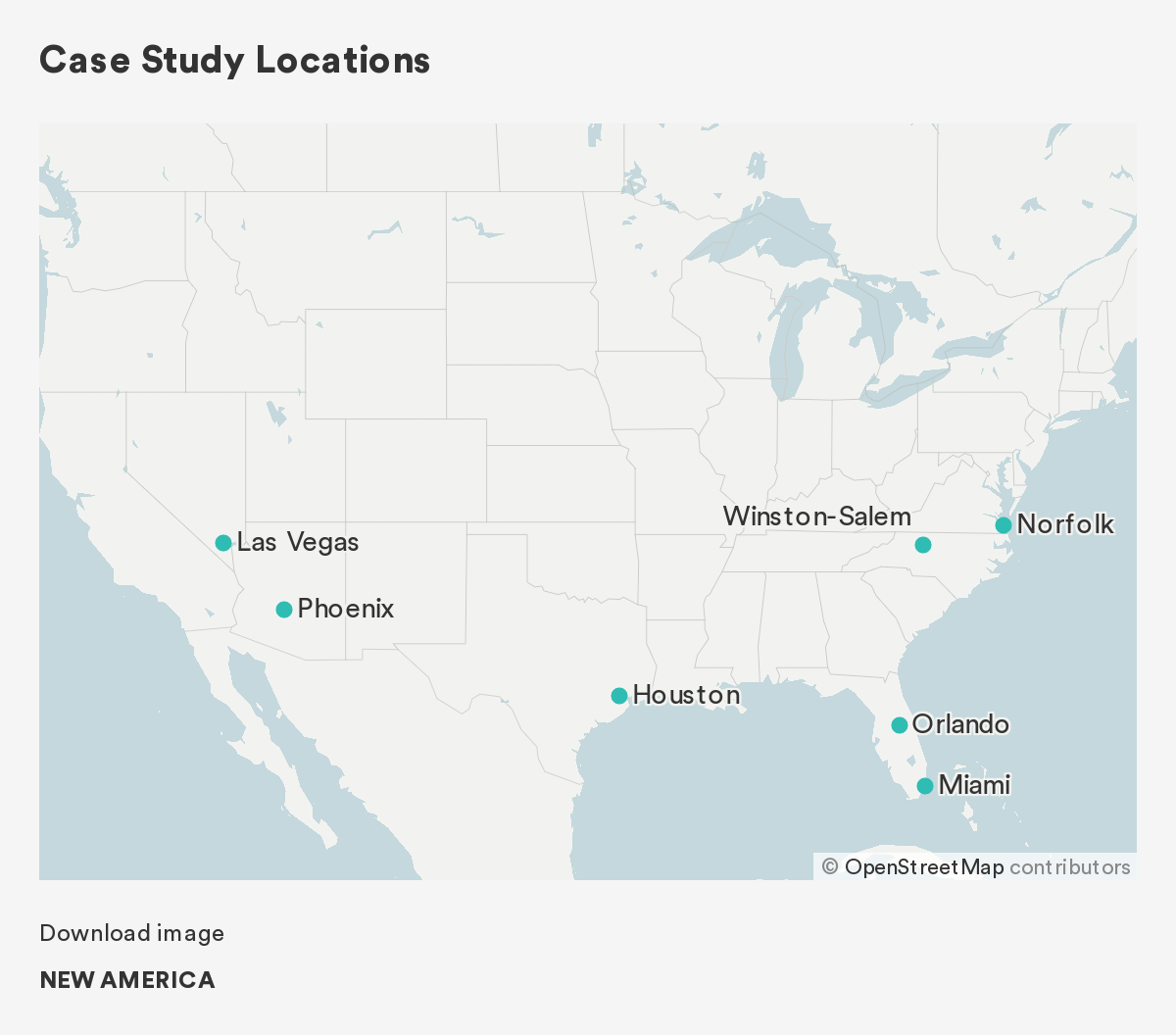
Each Sun Belt county is unique in its history, economy, racial and ethnic composition, and government policies, all of which shape local housing dynamics today. Relative to coastal cities like New York and San Francisco, cities in the Sun Belt have long been viewed as affordable places to live, growing rapidly as a result. However, stagnant wage growth, coupled with both an affordable housing shortage and increasing housing costs, has caused housing insecurity to rise in these counties, especially among low-wage workers.
When and Where are People Losing Their Home?
Overall Housing Loss: Between 2017 and 2019, the average rate of housing loss across our seven Sun Belt counties was 3.4 percent. This means that one in thirty households is losing their home to eviction or foreclosure each year. Roughly half a million people lost their homes each year, out of our 17 million person sample.
Housing loss has stayed steady across the three-year study period. However, it fluctuated greatly between study sites. Norfolk City, Virginia residents experienced housing loss at a rate of 5.4 percent, more than double that of residents in Orange County, Florida.
Evictions: The average eviction rate across all seven Sun Belt counties was 5 percent. Across the study period, we saw the eviction rate increase very slightly, by about 0.2 percent. Eviction rates in our case studies ranged from 2.4 percent in Miami-Dade County, Florida to 7.6 percent in Norfolk City, Virginia, meaning that in Norfolk, one in every 13 renters is being evicted each year.
Seasonal Variations in Evictions Across Seven Sun Belt Counties
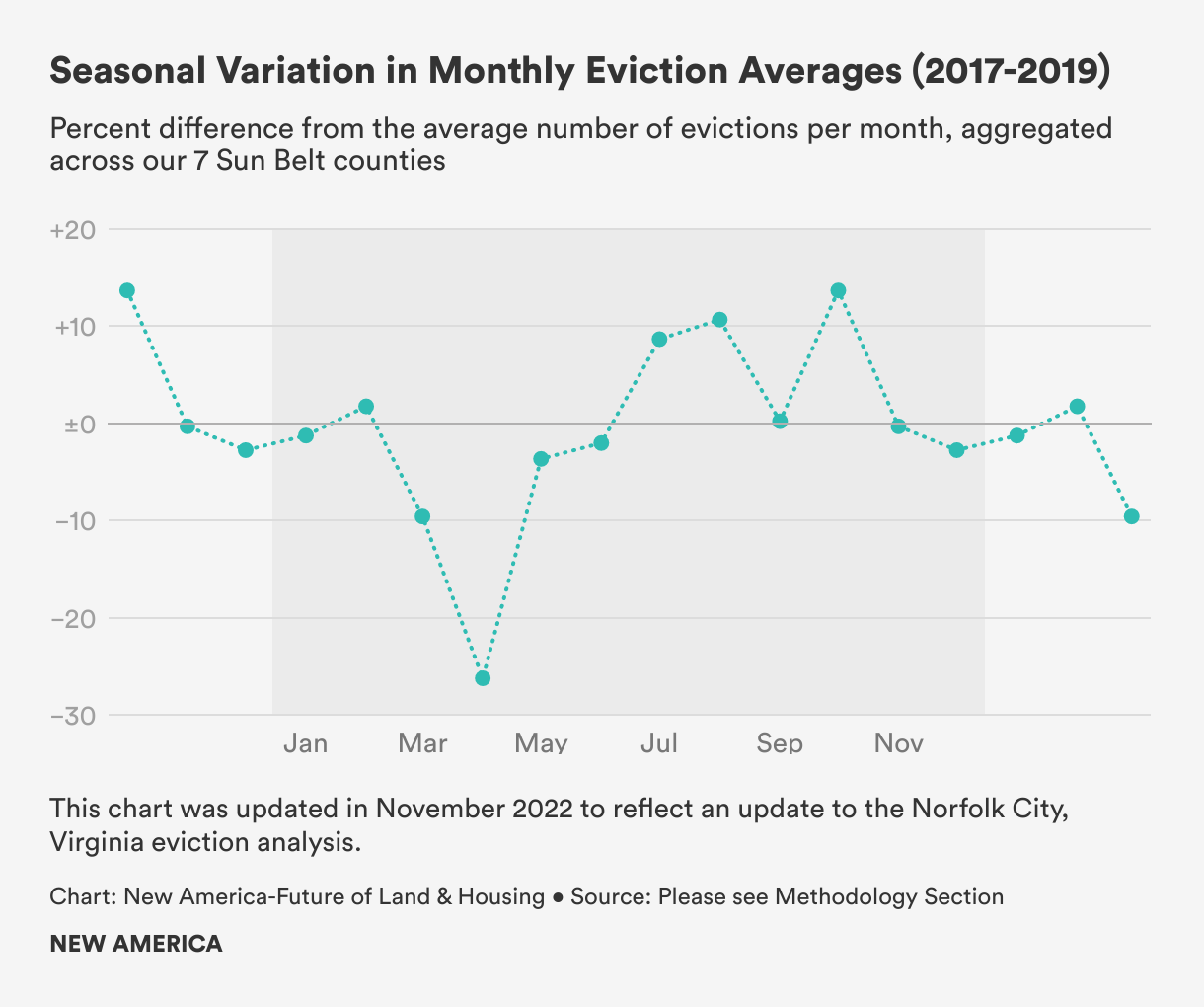
Across the seven Sun Belt counties, evictions fell during winter months and rose steadily until the late summer months. Evictions tend to drop in the month of September and peak in the month of October. On average, eviction rates were nearly 46 percent higher in October than in April.
However, aggregate trends mask important differences between the individual counties. For example, evictions in Clark County, Nevada fell sharply in July, a month when we would expect evictions to be high, and evictions in Forsyth County, North Carolina spiked in winter months instead of falling steadily as in other counties.
Mortgage Foreclosures: Between 2017 and 2019, the average mortgage foreclosure rate across the seven Sun Belt counties was 1.4 percent. Foreclosure rates are low relative to eviction rates, and we saw a 25 percent drop overall across the three-year study period. Of all case study counties, Maricopa County, Arizona had the lowest foreclosure rate, 0.3 percent, whereas Miami-Dade County, Florida had a highest foreclosure rate ten times higher. In every county except Harris County, Texas and Clark County, Nev., we saw a steady decline in foreclosure rates over the three-year time period. In Harris County and Clark County, foreclosure rates increased from 2017 to 2018 and then declined from 2018 to 2019.
Similar to evictions, we tend to see high foreclosure rates in major cities, often the center of economic activity within a county. Cities like Houston (Harris County), Orlando (Orange County), Phoenix (Maricopa County), Las Vegas (Clark County), and Miami (Miami-Dade) had foreclosure rates magnitudes higher than census tracts in other parts of the county.
Who Is Losing Their Home?
“Neighborhood racial composition is the biggest predictor of neighborhood eviction rate” – Researcher, RVA Eviction Lab at VCU2
Demographic Variables Associated with Housing Loss
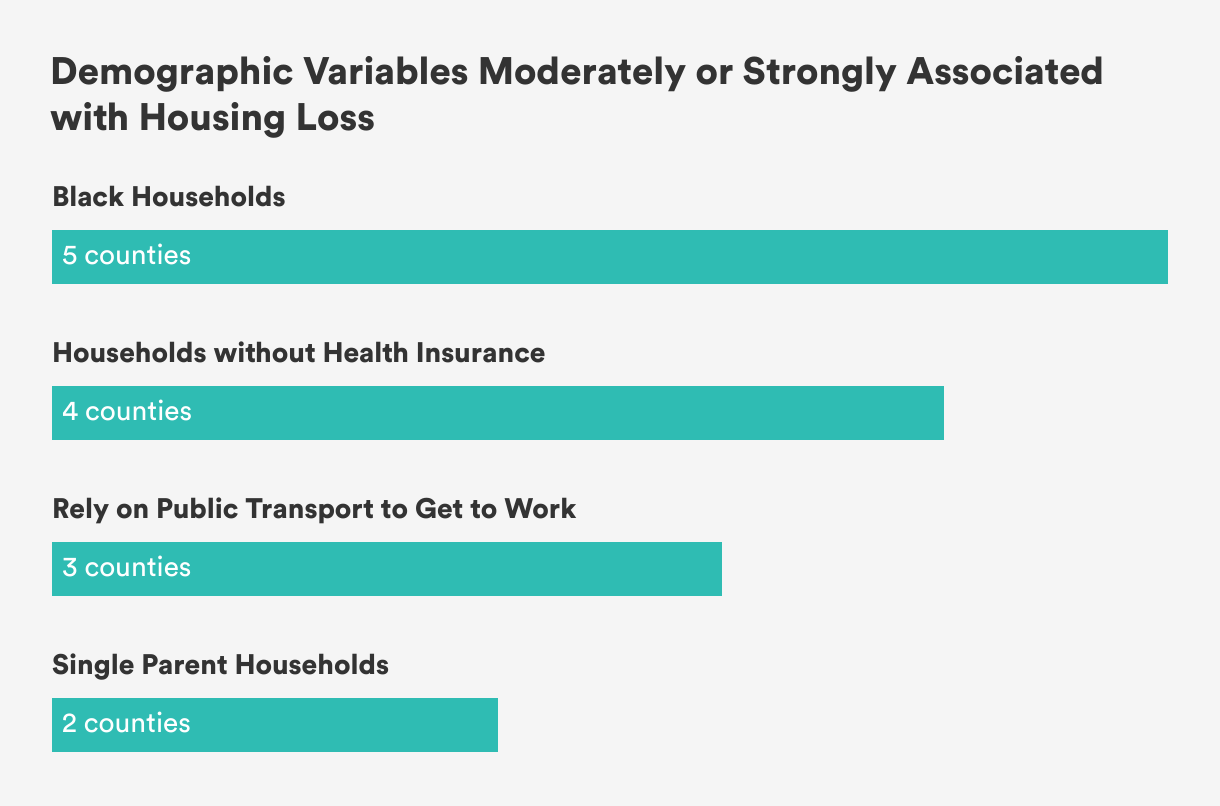
This chart illustrates the demographic variables that showed moderate or strong positive associations (defined as having an r value above 0.4) in the most Sun Belt counties, out of 6. To see which variables are associated with each county, please see the county-specific chapters.
To better understand who is losing their home, we tested the strength of the relationship between housing loss, eviction, and foreclosures and a host of demographic, socio-economic, and housing variables from the U.S. Census Bureau’s American Community Survey. This allows us to understand the degree to which increases in housing loss rates within a given census tract are associated with increases in certain demographic and other factors.
In nearly every Sun Belt county included in this report, we saw a strong relationship between race and housing loss. In particular, census tracts with higher numbers of Black households had substantially higher rates of both evictions and mortgage foreclosures.
We also found that as the percentage of residents without health insurance in a census tract increases, so does the rate of housing loss. Many poor-paying jobs do not provide health insurance, and this finding suggests that low-income households cannot pay for both housing and medical treatment following an unexpected emergency.
Finally, census tracts in which more residents took public transit to work had higher rates of housing loss. Based on our Displaced in America report, dependence on unreliable public transportation systems can lead to repeated tardiness or absence for work, leading to job loss and an inability to pay for housing.
Housing Loss and COVID-19 in the Sun Belt
Due to COVID-19, tens of millions of residents are at risk of eviction and mortgage foreclosure. Pandemic-related restrictions and lockdowns have led to mass job losses, particularly among low-wage Black and Latinx workers. Nationwide 1 in 6 renters is behind on rent and 1 in 3 express low confidence in next month’s ability to pay on time. Local housing experts across the Sun Belt counties emphasized that the communities most at-risk of housing loss prior to the pandemic are facing increased vulnerability as a result of COVID-19. As one researcher said, “the same communities are being impacted doubly by COVID and by eviction at the same time right now.”
2020 saw significant attention and activism around stabilizing renters and homeowners impacted by the COVID-19 pandemic. This work has resulted in a patchwork of national and local eviction and foreclosure moratoriums, as well as the implementation of billions of dollars in rental and mortgage relief programs and homelessness prevention through funding for motel and hotel stays from the first CARES Act passed in March 2020, and other sources of federal and local funding.
However, local housing stakeholders characterized the rollout of pandemic-related housing aid as slow, uneven, and often ineffective. Most counties relied on non-profit organizations embedded in local communities to facilitate the distribution of funds. According to several interviewees, several factors impeded non-profits’ ability to distribute aid efficiently, including differing application processes and eligibility criteria within the same locality, extensive documentation requirements, means-testing, and in one case, the requirement of in-person appointments. Local stakeholders also highlighted the discrepancy in cities’, and even non-profits’, access to resources and pre-existing distribution networks.
We also identified the following notable trends and innovations:
- Undocumented individuals are not eligible to receive federal CARES Act funding, so some counties used local dollars for relief efforts, which allowed them more discretion over who can receive aid.
- Outreach to impacted or at-risk communities about the existence of aid is perhaps more important than the distribution process itself, and this was also uneven across counties.
- Local innovations to safely housing the unhoused population amidst the pandemic could lead to longer-term solutions for this population, such as utilizing vacant spaces to ensure everyone has housing. This highlights that while the aim of relief funding is to mitigate housing loss and economic harm in the short-term, there are opportunities in COVID-19 responses to address inequalities that existed pre-pandemic in Sun Belt counties and beyond.
Local housing challenges preceding the pandemic are also hindering recovery efforts. A shortage of affordable housing not only contributes to housing loss, but exacerbates the consequences of displacement, as fewer and fewer available housing options exist for households who are evicted or foreclosed upon. The reasons underlying affordable housing shortages vary based on local dynamics, but common challenges include the availability and cost of land, labor and construction materials; a lack of adequate local, state, and federal funding for the development of affordable housing (i.e., through tax incentives, housing trusts, and voucher programs); and deteriorating conditions of older “naturally occurring” affordable housing. Further, once eviction moratoria expire, Sun Belt counties with poor tenant protections, widespread misinformation around evictions, or landlord-friendly court processes, may experience an unprecedented level of evictions.
Policy Recommendations
In the short-term, the ability of local and state governments to provide relief to tenants and homeowners is paramount to avoiding a massive wave of home loss, especially as eviction moratoriums and mortgage forbearances come to an end. In the medium- and long-term, it is essential that we tackle the underlying challenges that contribute to housing insecurity. While COVID-19 and the resultant economic fallout is indeed unprecedented, the fact that so many residents across Sun Belt counties, namely Black and Latinx residents, were just an unexpected expense away from housing loss is not just or sustainable. Below we briefly discuss short- and long-term policy recommendations.
Proposed Solutions to Mitigate Pandemic-related Housing Loss:
- Improve the disbursement of pandemic-related aid by simplifying application processes and reducing barriers to access (e.g., reducing onerous documentation requirements and means-testing, and dropping the requirement of in-person visits).
- Disburse aid directly to tenants, instead of to landlords, allowing at-risk communities to budget at their discretion.
- Strengthen tenant protections and slow down the eviction process once moratoriums lift, to provide tenants an opportunity to access funding, resources, and legal representation.
- Increase tenant education around the availability of aid, through robust outreach to vulnerable communities.
Medium- and Long-Term Proposed Solutions:
- Increase affordable housing options through better funding of housing trusts, voucher programs, and tax credits. Increase affordable homeownership, as well, through community land trusts and limited equity cooperatives.
- Invest in research to better understand public and private land ownership, from “mom-and -pop” rentals to large real estate investment trusts (REITs), in order to “demystify” the role that outside investment in local real estate markets and identify areas where affordable housing could be developed.
- Develop a holistic approach to addressing housing insecurity that reallocates money in state and local budgets for public housing, public transportation, education, childcare, healthy food options, and healthcare.
Citations
- From an interview with contributing author Jack Portman.
Clark County, Nevada
“Providing emergency assistance to the community is a daunting task. From a nonprofit standpoint, if you don’t have the capacity, it’s very challenging to do.” – Administrator, Las Vegas housing nonprofit3
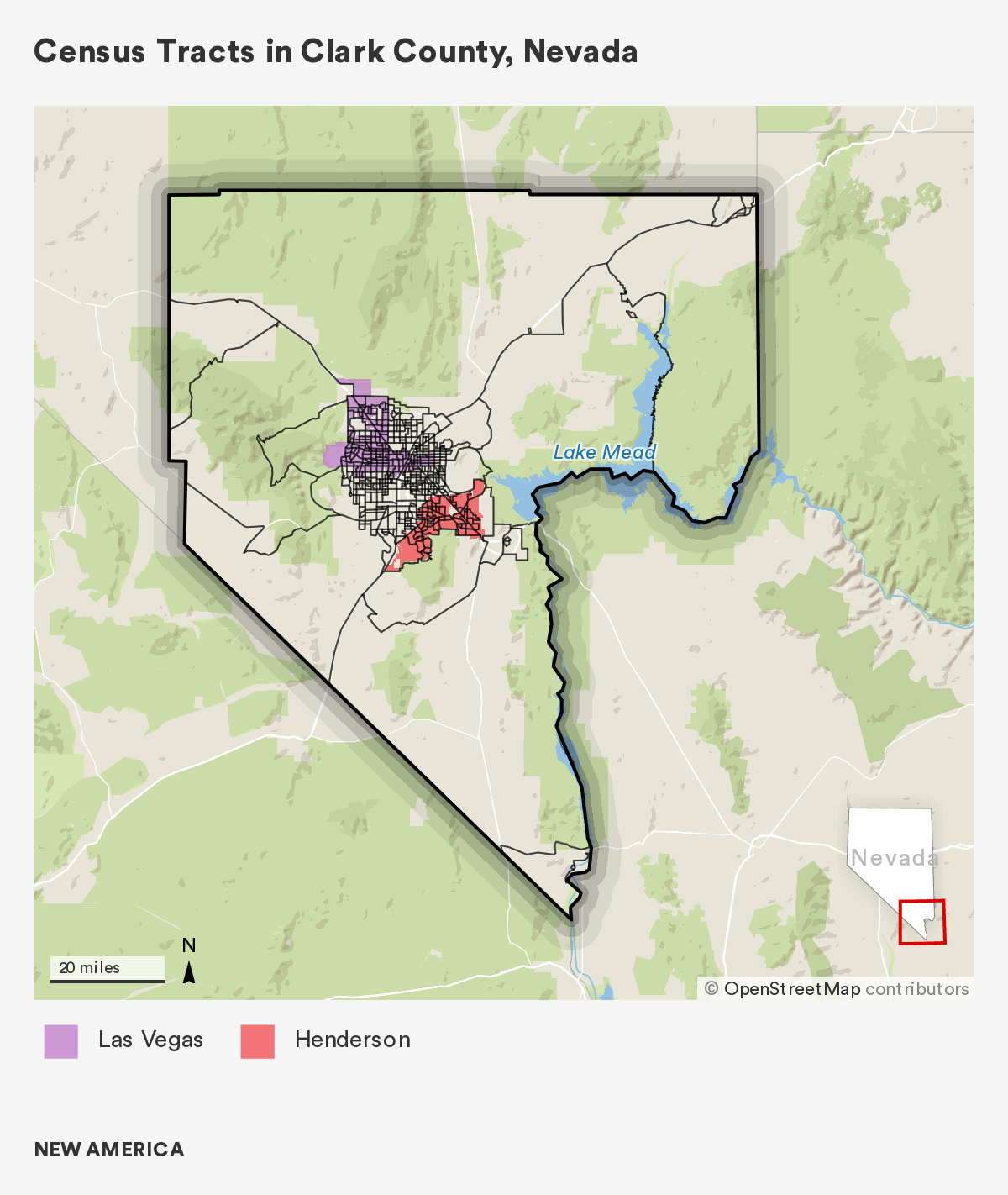
Clark County is located in the southernmost tip of Nevada, nestled between California and Arizona. By far the most populous county in the state, it is home to approximately 2.3 million residents. Most live in and around the state’s most populous city, Las Vegas. Las Vegas is the county seat, the largest city in the Mojave Desert, and an internationally renowned resort city, famous for its casinos and entertainment industries.
Forty-two percent of Clark County residents are non-Latinx white, 31 percent are Latinx, 12 percent are Black, and 10 percent are Asian. While racial segregation persists in the city, Las Vegas has one of the lowest levels of Black-white segregation relative to other major metropolitan areas. Majority white neighborhoods in Las Vegas are becoming more diverse, but this trend is mostly related to the in-migration and fast growth of Asian, Black, and Latinx communities.
With approximately 193,000 COVID-19 cases and 2,670 deaths since the beginning of the pandemic, Clark County accounted for approximately 75 percent of COVID-19 cases in Nevada. In addition to the health toll on its residents, the economic impacts in Clark County are severe. As of November 2020, unemployment in Clark County was 11.5 percent, up from 3.6 percent the previous year. And in the Census Bureau’s Household Pulse Survey, 35 percent of Nevada residents surveyed say that an eviction or foreclosure is somewhat or very likely in the next two months.
When and Where Are People Losing Their Homes?
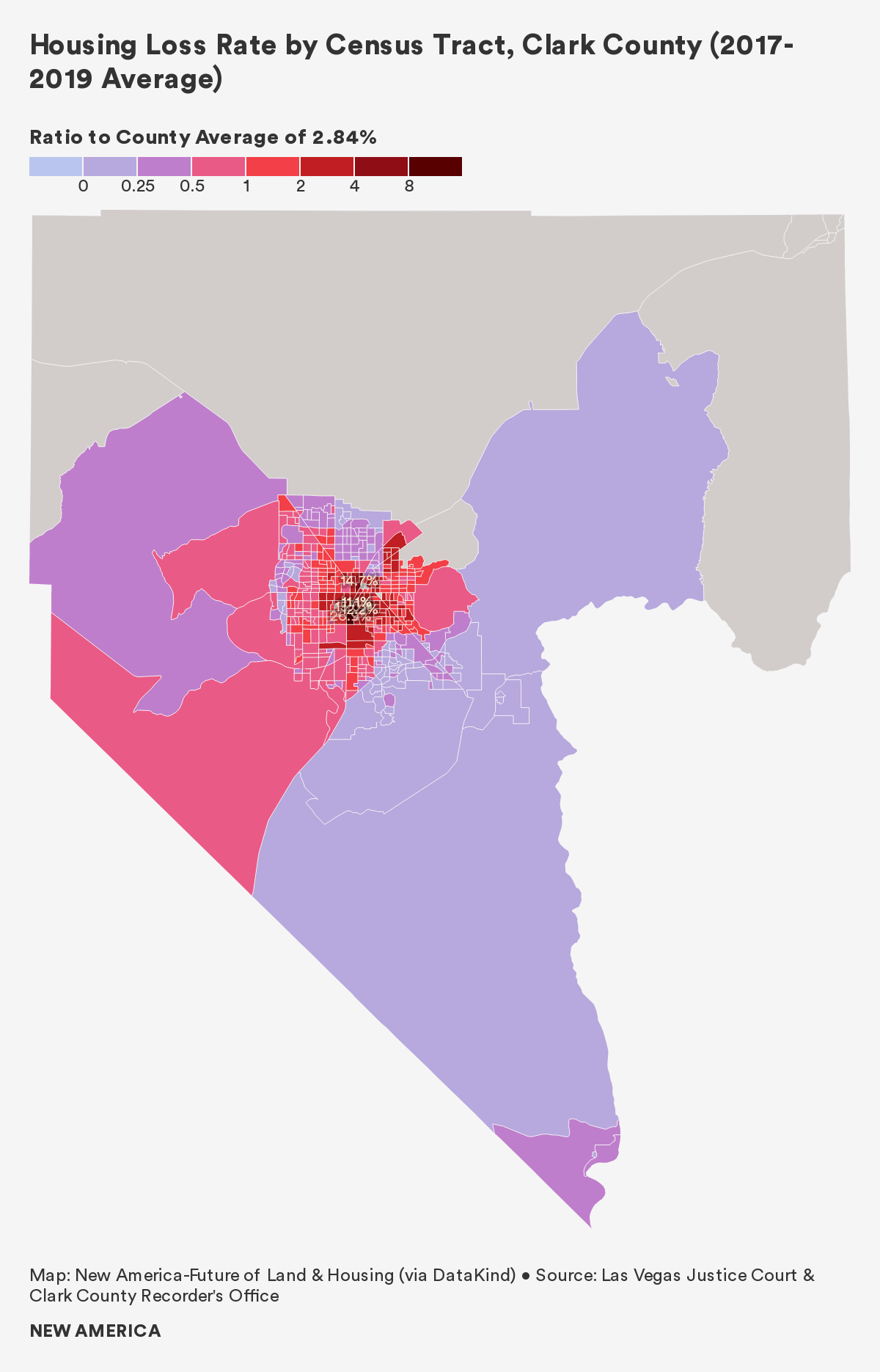
Overall Housing Loss: Clark County residents experienced housing loss at a rate of 2.8 percent between 2017 and 2019, meaning that approximately three out of every 100 renters and homeowners with a mortgage are losing their homes each year through eviction or foreclosure. The rate of housing loss is similar to that of other Sun Belt counties included in this report.
Housing loss is most acute in and around downtown Las Vegas, particularly in Winchester, Paradise, and Spring Valley, neighborhoods in the radius around the strip. Loss rates in these areas range from 4 percent to 9 percent, with tracts adjacent to the strip reaching rates as high as 15 percent.
Evictions: Only 46 percent of Clark County residents rent their homes, and yet evictions accounted for 79 percent of the housing loss from 2017 to 2019. More than 100,000 people were evicted in the three-year period from 2017 to 2019, an eviction rate of 4 percent. This is slightly lower than the eviction rate for the rest of the Sun Belt counties included in this report.
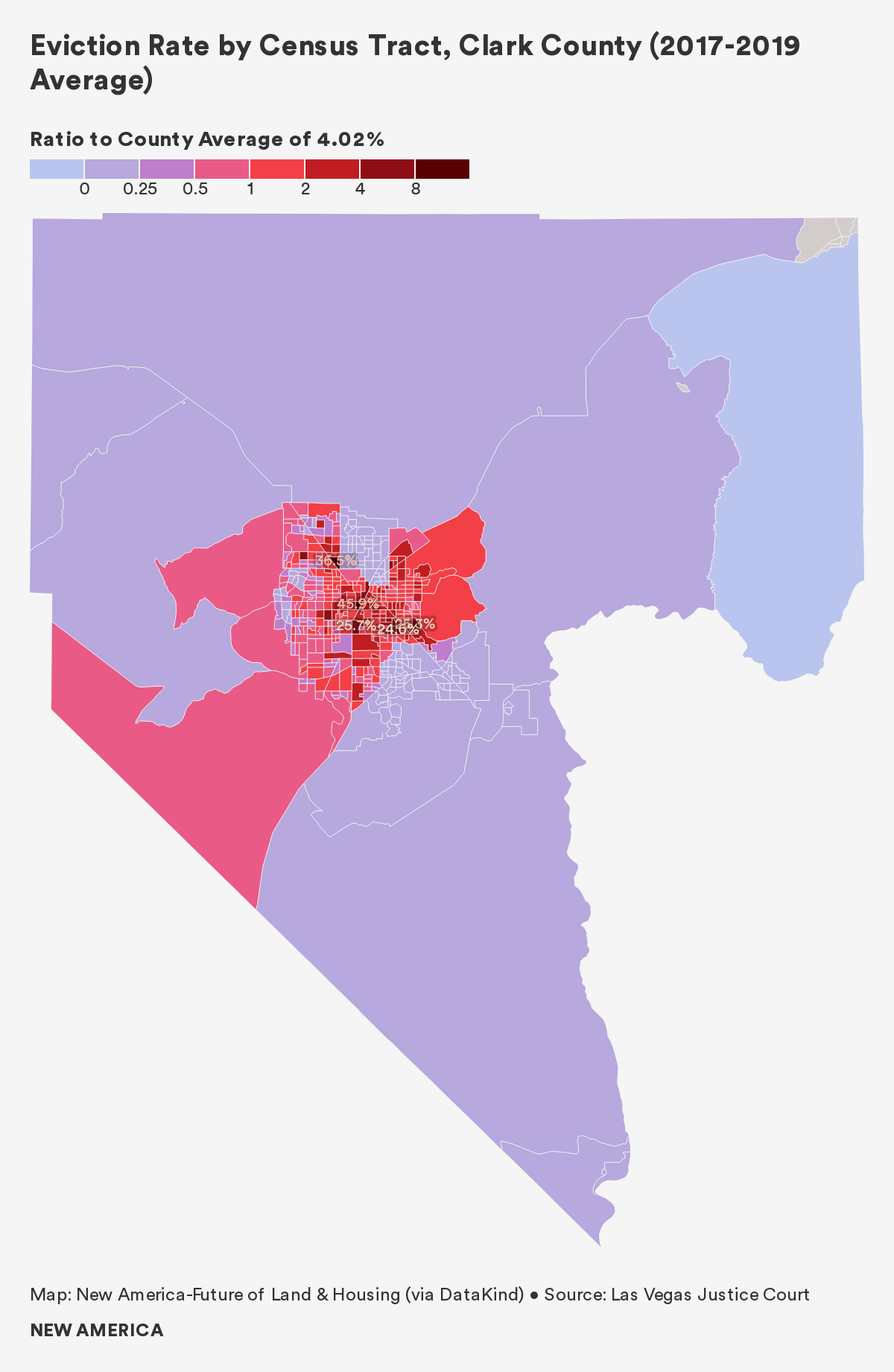
Not surprisingly, the highest eviction rates were clustered in and around Las Vegas. In some tracts in Las Vegas, one in five renters is being evicted each year. Two tracts had eviction rates that reached 35 percent and higher, however both of these tracts have few renters and may not be representative of overall dynamics in the county. Qualitative interviews suggest that housing instability was most acute in North Las Vegas and eastern parts of the county. Most of the larger census tracts surrounding Las Vegas have eviction rates significantly lower than average, with the exception of the tract where Goodsprings is located, which has an eviction rate of 3.3 percent.
A Spotlight on Summer Eviction
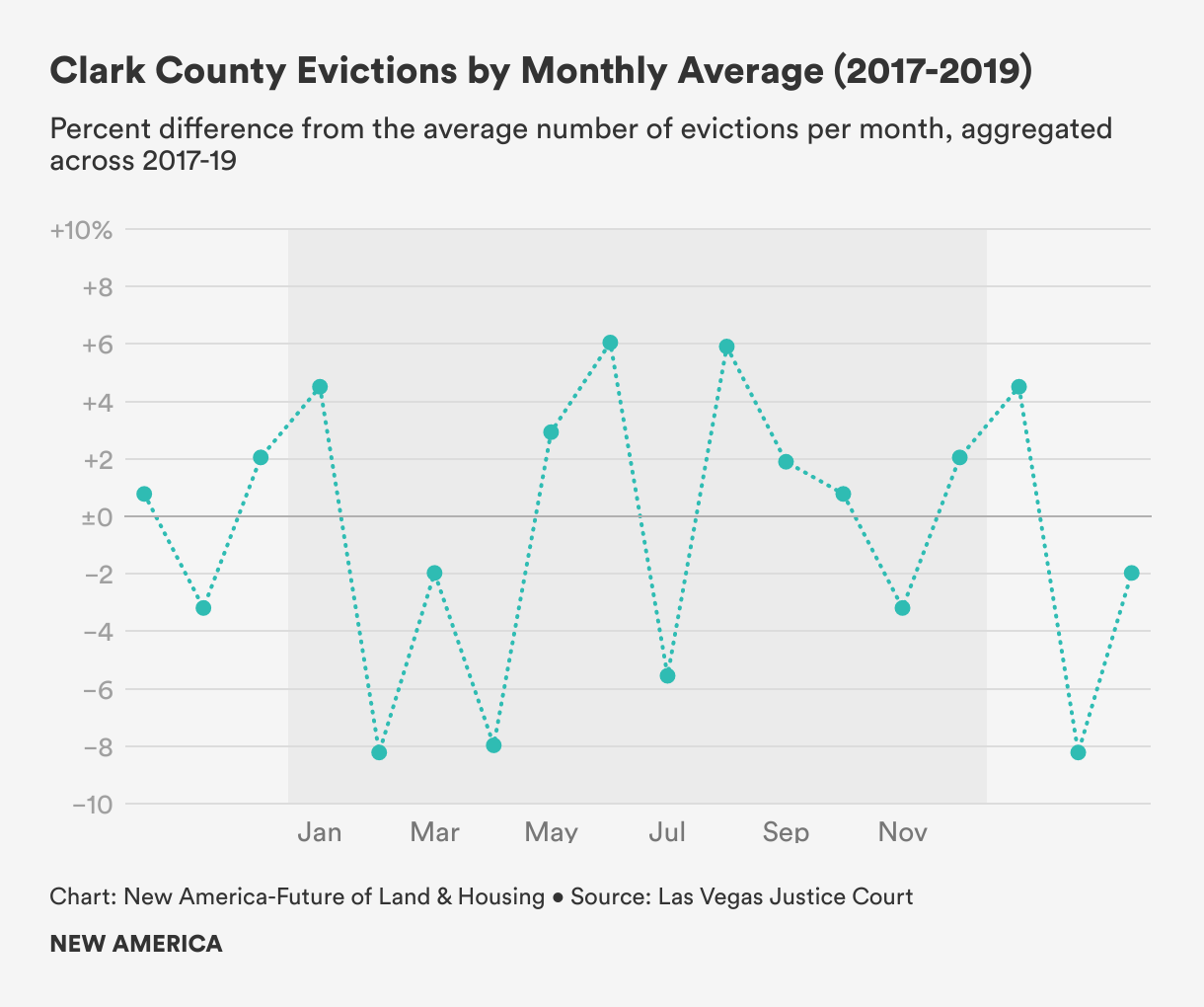
Similar to other Sun Belt counties, evictions in Clark County increased in summer months in 2017 and 2018. However, in July 2019, when we would typically expect evictions to spike, we saw a 35 percent drop in evictions. From June to July 2019, evictions fell from 1,211 to 792, an all-time low across the three years. By August 2019, evictions spiked back up to 1,106. We do not know the cause of this aberration in 2019.
Mortgage Foreclosures: Homeowners are less at risk of housing loss than renters. While 54 percent of residents own their homes, foreclosures only accounted for 21 percent of housing loss between 2017 and 2019. 11,136 households were foreclosed upon in this three-year period, resulting in a foreclosure rate of 1.3 percent, slightly lower than the average across the other Sun Belt counties.
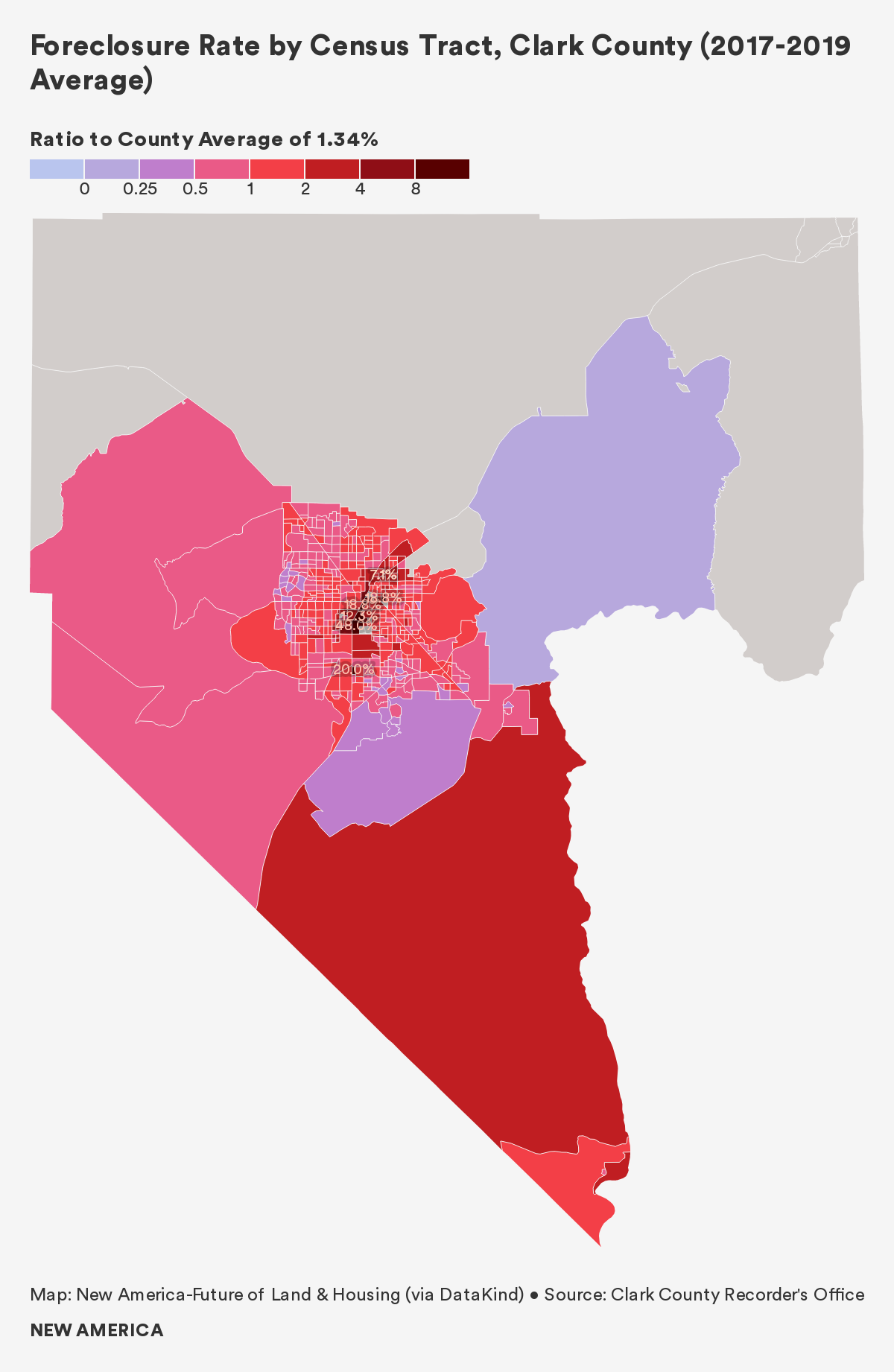
Most census tracts in Clark County experienced mortgage foreclosure rates between 1 and 2 percent. However, some tracts in downtown Las Vegas had foreclosure rates ranging from 6 percent to a staggering 18 percent (meaning that one in five homes are being foreclosed upon each year). One tract in downtown Las Vegas has a foreclosure rate of 48 percent, but it is located along the Vegas strip with a small number of homeowners with a mortgage and thus is not representative of county trends. The county's southernmost tracts, where Searchlight and Bullhead City are located, had higher than average foreclosure rates, around 3 percent.
Who Is Losing Their Home?
Of all the variables we examined to explain housing loss in Clark County, the relationship between housing loss and lack of health insurance was the strongest. As the percentage of residents without health insurance in a census tract increases, so does the rate of housing loss, and this correlation was stronger than any race or income-based correlations. Many low-paying jobs in the services and hospitality sectors do not provide health insurance, and this finding continues to suggest that at-risk households are housing-cost burdened, and cannot pay for housing and an unexpected medical emergency.
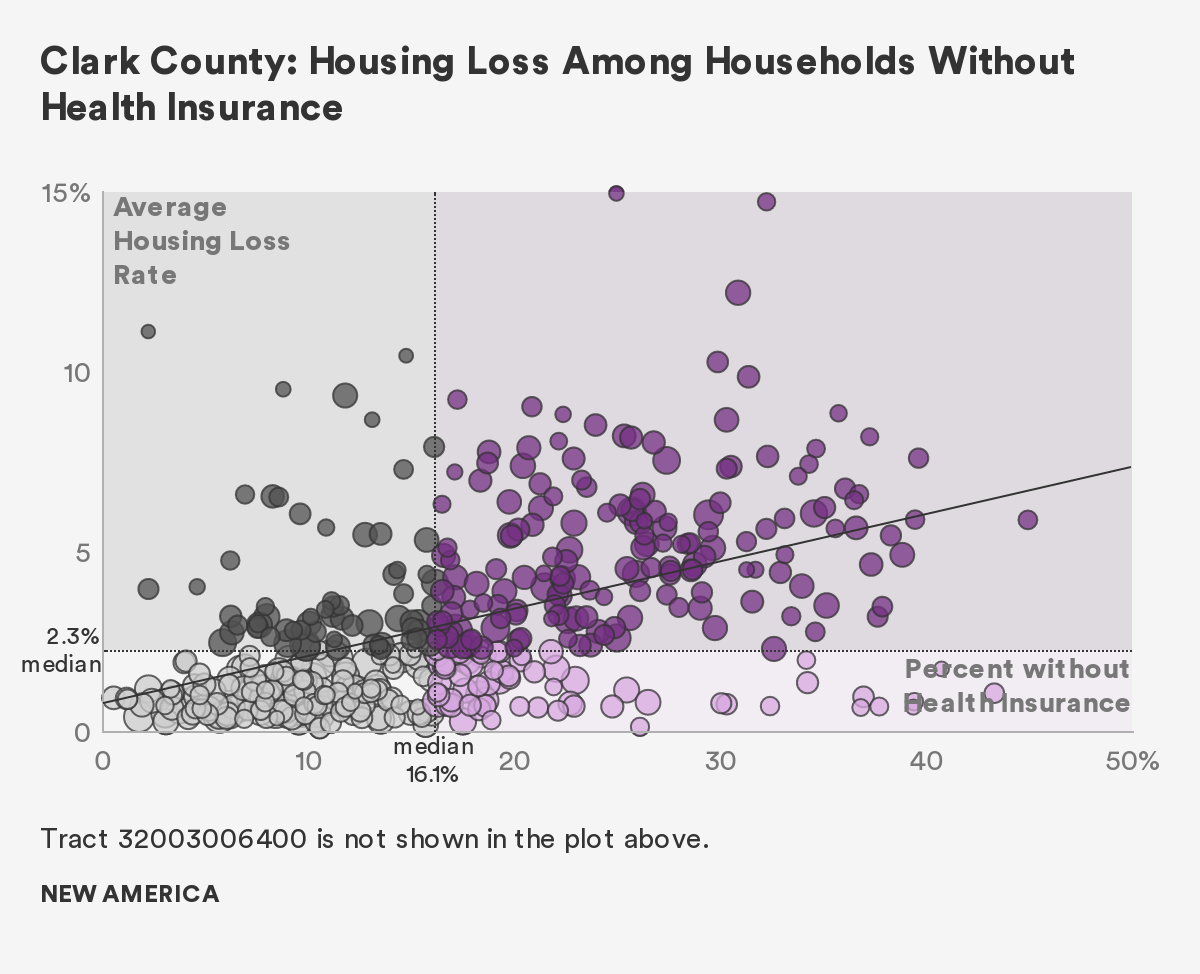
To better understand the relationship between lack of health insurance and housing loss, we categorized census tracts in Clark County as falling either above or below the median rate of uninsured households, which was 16.1 percent. We also categorized census tracts as above or below the median housing loss rate of 2.3 percent. We then combined these two measures, such that census tracts fell into one of four categories: either above or below the median percent uninsured and above or below the median housing loss rate.
These categories, displayed on a scatter plot, show that of the census tracts with high rates of uninsured residents, nearly three-fourths also had above median housing loss rates.
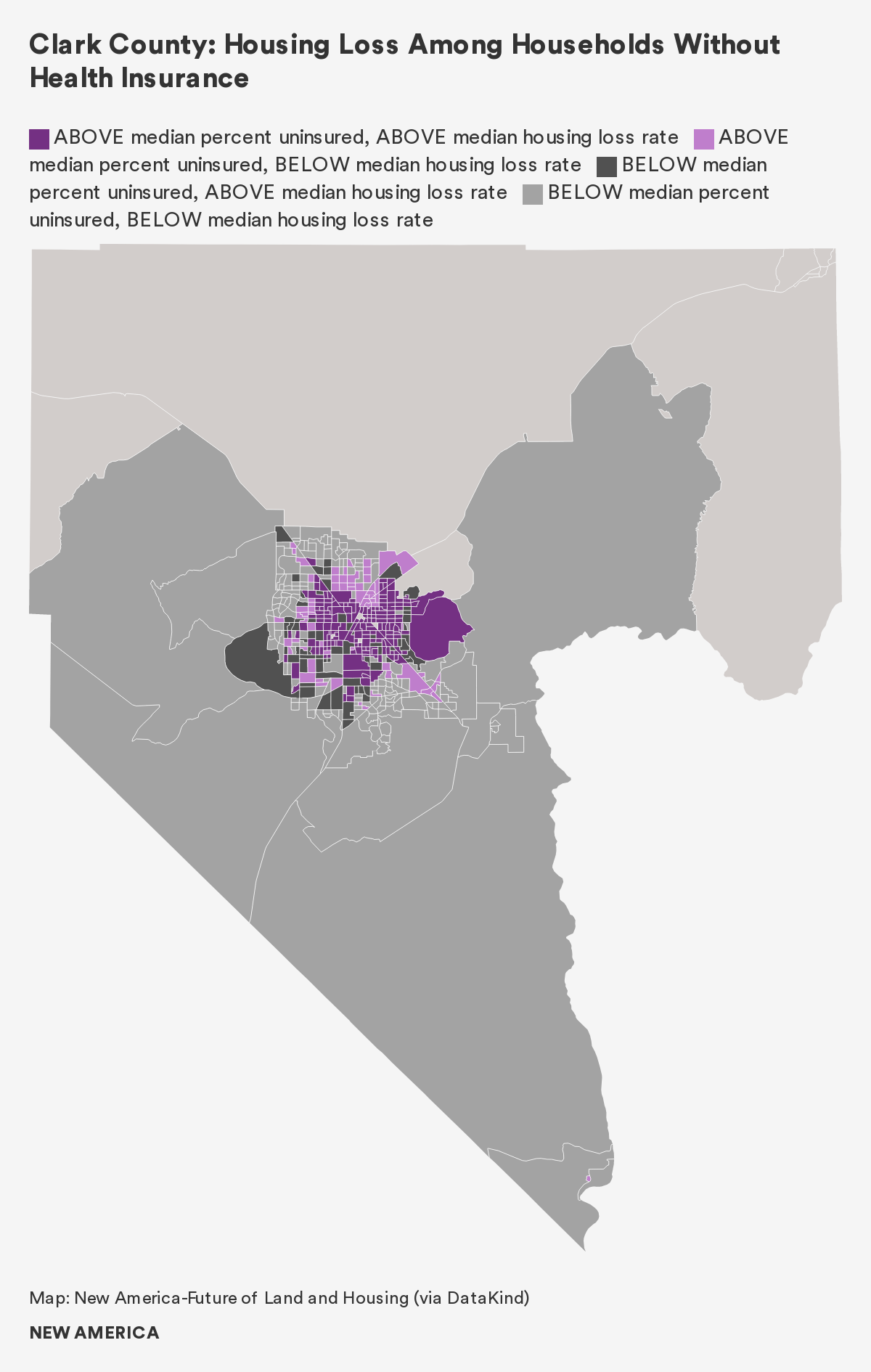
Displayed on a map, we see that census tracts with high rates of uninsured residents are clustered in Spring Valley, Paradise and downtown Las Vegas.
Additionally, we saw that census tracts with more vacant properties had higher rates of mortgage foreclosures. We know that vacancies and abandoned properties negatively impact home prices and can have reverberating impacts throughout a neighborhood, and these effects were more pronounced in Clark County than in any other county in our study.
Housing Loss and COVID-19
Local experts interviewed for this study reaffirmed how COVID-19 safety measures, including pandemic-related lockdowns and restrictions, have impacted Clark County’s tourist-based economy and its workers. Prior to the pandemic, local stakeholders identified the following groups as particularly at risk of housing loss: seniors on fixed incomes; single mothers with multiple children; communities of color (notably, the Hawaiian community); and undocumented immigrants. In the midst of the pandemic, this risk has increased among these groups and extended to a broader population.
In Clark County, nearly one-fourth of the workforce is in the service and hospitality industries, and many people have experienced job-related income losses since the start of the pandemic, exposing them to potential housing loss. One local stakeholder described Las Vegas as a “fast money in, fast money out” city. Another stakeholder characterized the prevalent gambling and other predatory industries as “debt treadmills that people can’t get off,” resulting in a lack of financial preparedness when emergencies arise.
Local stakeholders warned that a wave of foreclosures could begin as early as spring 2021 if banks do not sustain measures to keep homeowners in place.4 The threat of mortgage foreclosures in Clark County is especially concerning given the influx of institutional property investors that acquired and rehabbed properties after the 2008 financial crisis.
A wave of foreclosures could begin as early as spring 2021 if banks do not sustain measures to keep homeowners in place.
The potential wave of evictions after a moratorium ends is also concerning, especially given that most evictions in Nevada are summary evictions, a process that can easily be administered by landlords and can happen very fast. After receiving an eviction notice from their landlord, a tenant must file an affidavit about the eviction in court, followed by a hearing where both the tenant and landlord’s cases are presented before a judge. If the tenant does not file the affidavit, which is a common occurrence, the landlord can file a complaint and the tenant can be evicted by default with no hearing.
Local stakeholders emphasized that the distribution of emergency housing assistance has been a concern throughout the pandemic. As of fall 2020, the rollout of rental assistance was slow and aid had only reached a small portion of residents who needed it. Several interviewees noted that “there’s very little money out the door” and yet thousands of residents need rental assistance.
To distribute COVID-19 relief funds allocated to the county in the CARES Act, Clark County enlisted over a dozen non-profit organizations. An attorney at a local nonprofit legal services organization claimed they had “never seen more difficulty giving away money.” With no single application portal, process or criteria, residents ended up applying for funds through multiple channels, and the whole system became overloaded. Nonprofits and housing stakeholders feared that lack of uniformity in the process, different criteria, and lack of programmatic infrastructure would inhibit organizations’ ability to distribute all the funds allocated to the county by the end of year deadline.
On the other hand, one housing provider opined on a silver lining: Clark County has acted quickly to keep homeless residents safe during the pandemic, piloting programs that could become long-term solutions, including moving individuals out of congregate settings into hotels and assisted living facilities.
Policy Solutions
Our policy recommendations to mitigate housing loss amid COVID-19 can be found in the report section: “Housing Loss in the U.S. Sun Belt.”
Citations
- From an interview with contributing author Abbey Chambers.
- It is possible that President Joe Biden’s plan to extend foreclosure protections until the fall, which has not been passed as of the writing of this report, will hold off foreclosures further.
Forsyth County, North Carolina
“I haven’t heard of anyone getting assistance in a long time.” – Housing advocate, discussing pandemic-related rental aid in Winston-Salem5
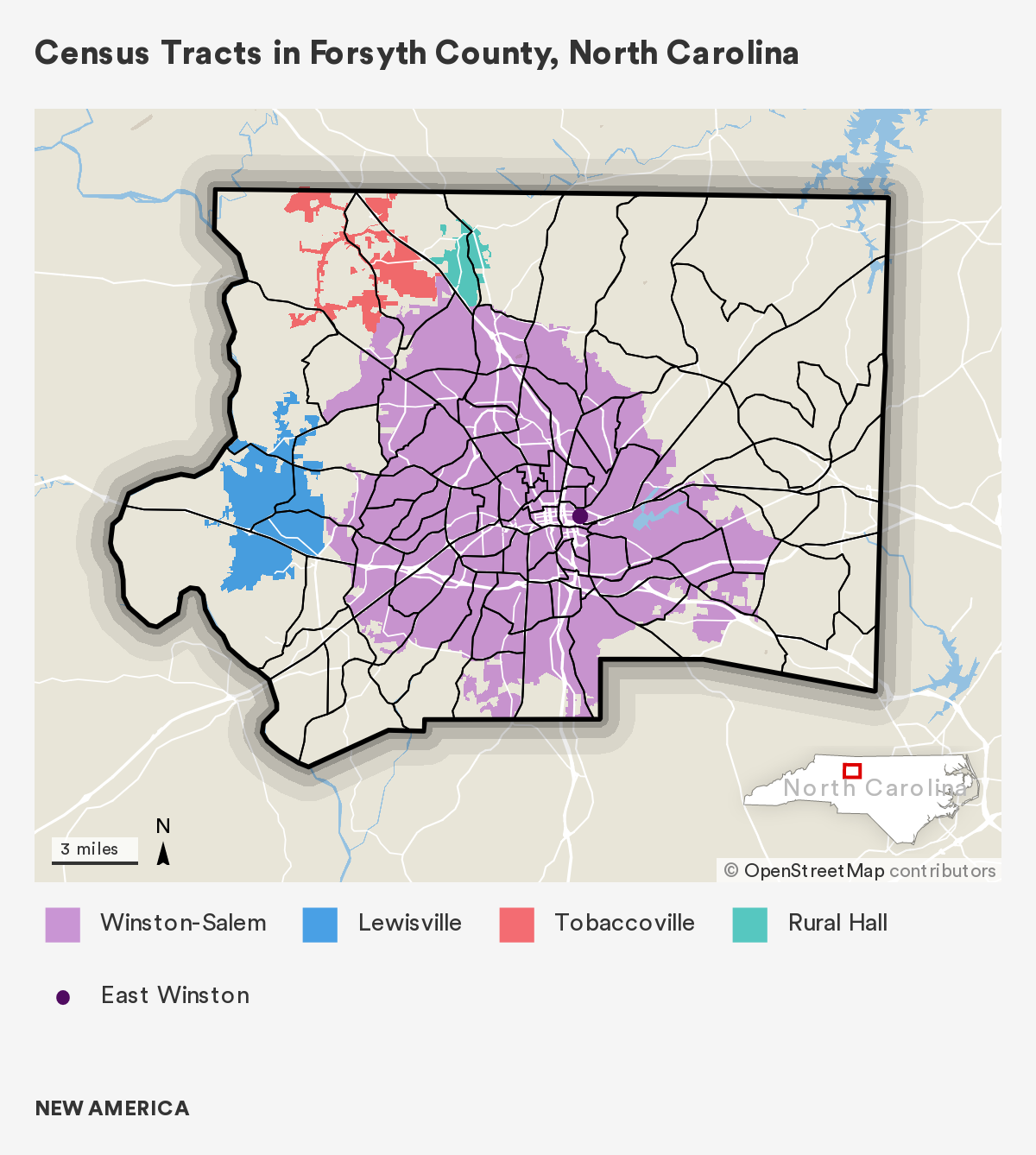
Forsyth County sits in the central Piedmont region of North Carolina, and is the fourth most populous county in the state, with approximately 380,000 residents. Winston-Salem, home to a quarter-million people, is both the county seat and largest city. Along with nearby Greensboro and High Point, Winston-Salem is part of the Triad, a significant regional metropolitan area.
Roughly 40 percent of the county population is Black or Latinx, and Winston-Salem has a long history of racial and socioeconomic inequality. The city is more or less divided racially by U.S. Route 52—Census tracts to the west of the highway are predominately white and wealthy, while the low-income tracts to the east are overwhelmingly Black and Latinx. Minority communities in East Winston continue to struggle with the transition to a post-industrial economy, contributing to high rates of housing loss in these neighborhoods.
A quarter of those surveyed in North Carolina by the U.S. Census Bureau reported that eviction or foreclosure is somewhat likely or very likely in the next two months.
The COVID-19 pandemic continues to significantly impact Forsyth County. December, 2020 had the highest number of recorded cases to date, at 6,245. The most recent numbers from the Bureau of Labor Statistics show that in November 2020, the county had an unemployment rate of 6.3 percent, nearly double the rate of the previous year. And housing insecurity is even worse: in the most recent Household Pulse Survey from the U.S. Census Bureau, a quarter of those surveyed in North Carolina reported that eviction or foreclosure is somewhat likely or very likely in the next two months.
When and Where Are People Losing Their Homes?
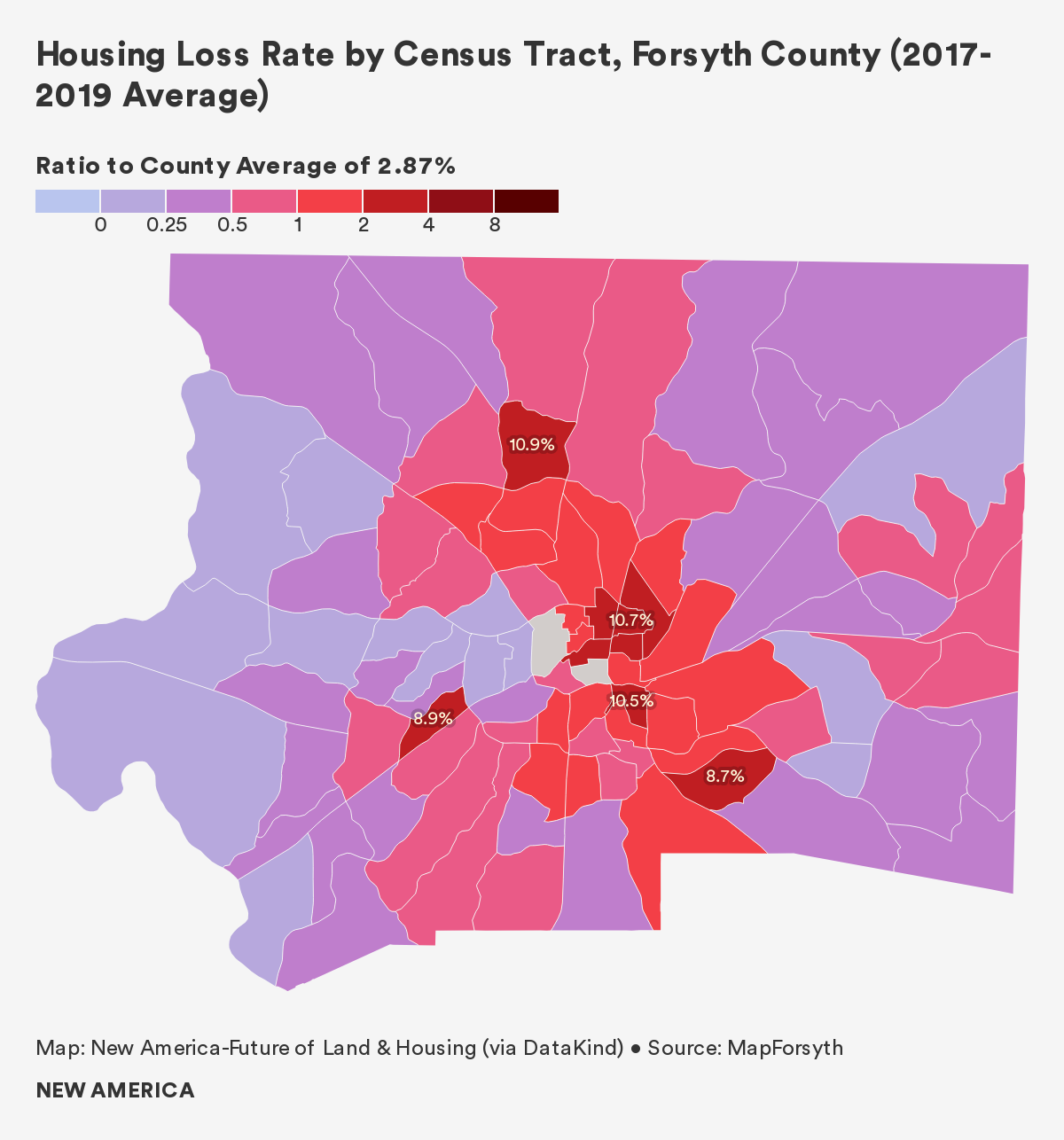
Overall Housing Loss: Forsyth County residents experienced a housing loss rate of 2.9 percent between 2017 and 2019, meaning that approximately one in 35 residents lost their homes each year through evictions or mortgage foreclosure. This rate increased slightly from the 2014-2016 rate of 2.4 percent, driven primarily by a rise in evictions.
Forsyth County Yearly Eviction and Mortgage Foreclosure Rates (2017-2019)
| 2017 | 2018 | 2019 | |
| Eviction Rate | 4.6% | 4.7% | 7% |
| Mortgage Foreclosure Rate | 0.7% | 0.5% | 0.4% |
A census tract to the north of Winston-Salem, in the unincorporated community of Stanleyville, displayed the highest housing loss rate in the county, at 10.9 percent. This rate is nearly 4 times the county average, and is driven primarily by a 16.1 percent eviction rate. According to the U.S. Census Bureau, the tract is half Black, has a median household income of $27,195, and 27 percent of people live below the poverty line.
Two other areas in the county are worth mentioning:
First, a large cluster of census tracts in East Winston expressed very high average rates of housing loss, between 6.2 and 10.7 percent. In some neighborhoods, therefore, more than 1 in 10 households was displaced every year.
Second, a census tract in southwest Winston-Salem, around the South Forks neighborhood, had an average loss rate of 8.9 percent. And while this tract carries many socioeconomic indicators that suggest housing insecurity, such as a median household income of $35,467, it is surrounded by tracts with rates at or below the county average. Further research is needed to determine the underlying factors that drive displacement in this tract.
Evictions: Roughly 39 percent of households in Forsyth County rent their homes, yet evictions accounted for nearly 90 percent of all housing loss in the county. Nearly nine thousand households were evicted during this three-year period, resulting in an eviction rate of 5.4 percent. By comparison, the 2014-2016 eviction rate was 3.7 percent, and this recent increase in evictions—driven by a surge to a 7 percent eviction rate in 2019—signifies growing renter vulnerability just before the onset of the pandemic.
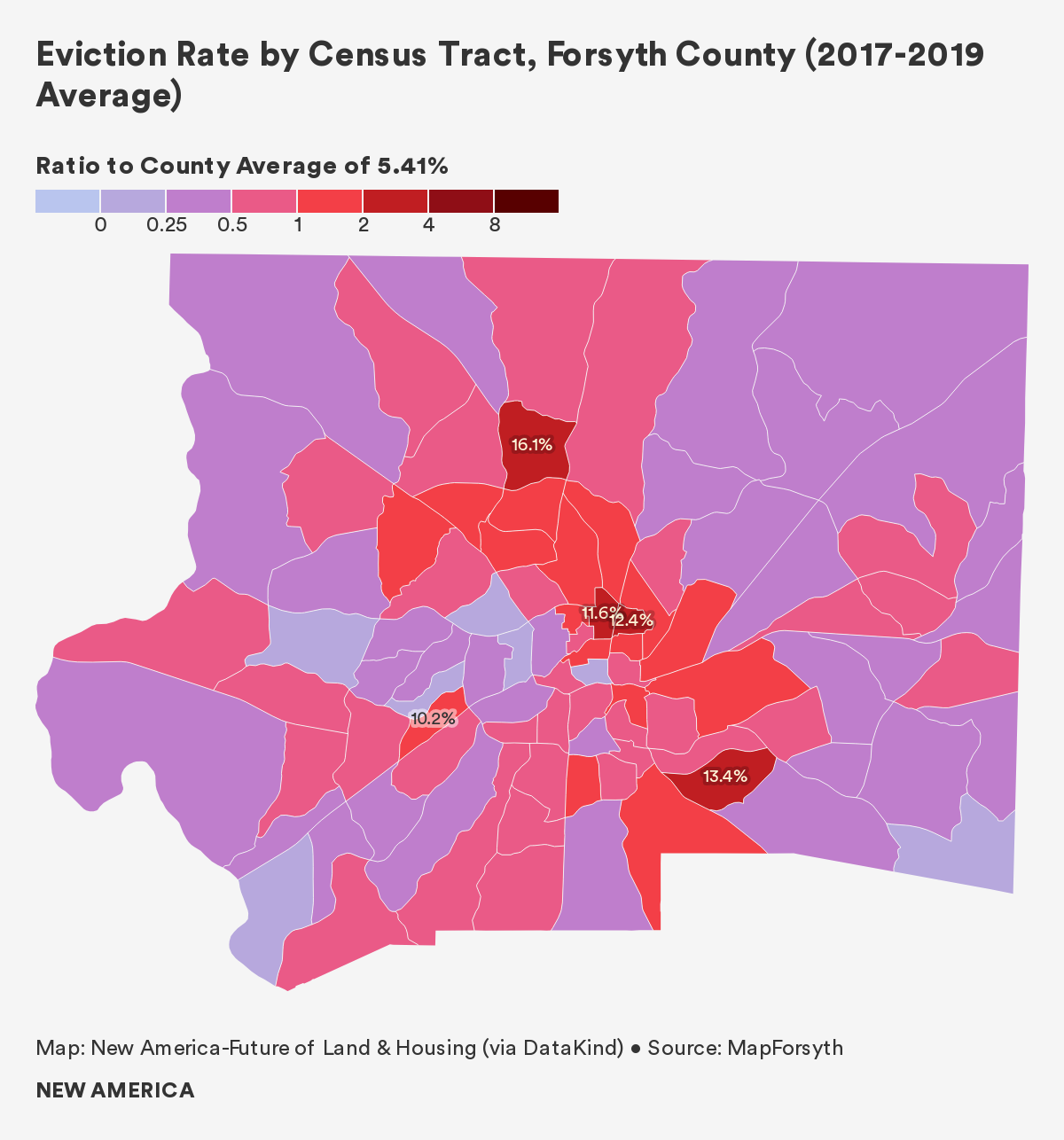
The highest eviction rates were generally clustered to the east and southeast of downtown Winston-Salem, in East Winston. In many of these census tracts, the eviction rate was between 5 and 10 percent, and one tract, 34.04, experienced a rate just over 13 percent. Many of these tracts are home to low-income, minority communities: Census tract 34.04, for example, is 31 percent Black and 50 percent Latinx.
Also notable, a tract well north of downtown Winston-Salem, in Stanleyville, expressed an eviction rate of 16.1 percent, while two tracts in the west of Forsyth County had rates higher than 9 percent.
A Spotlight on Summer Evictions
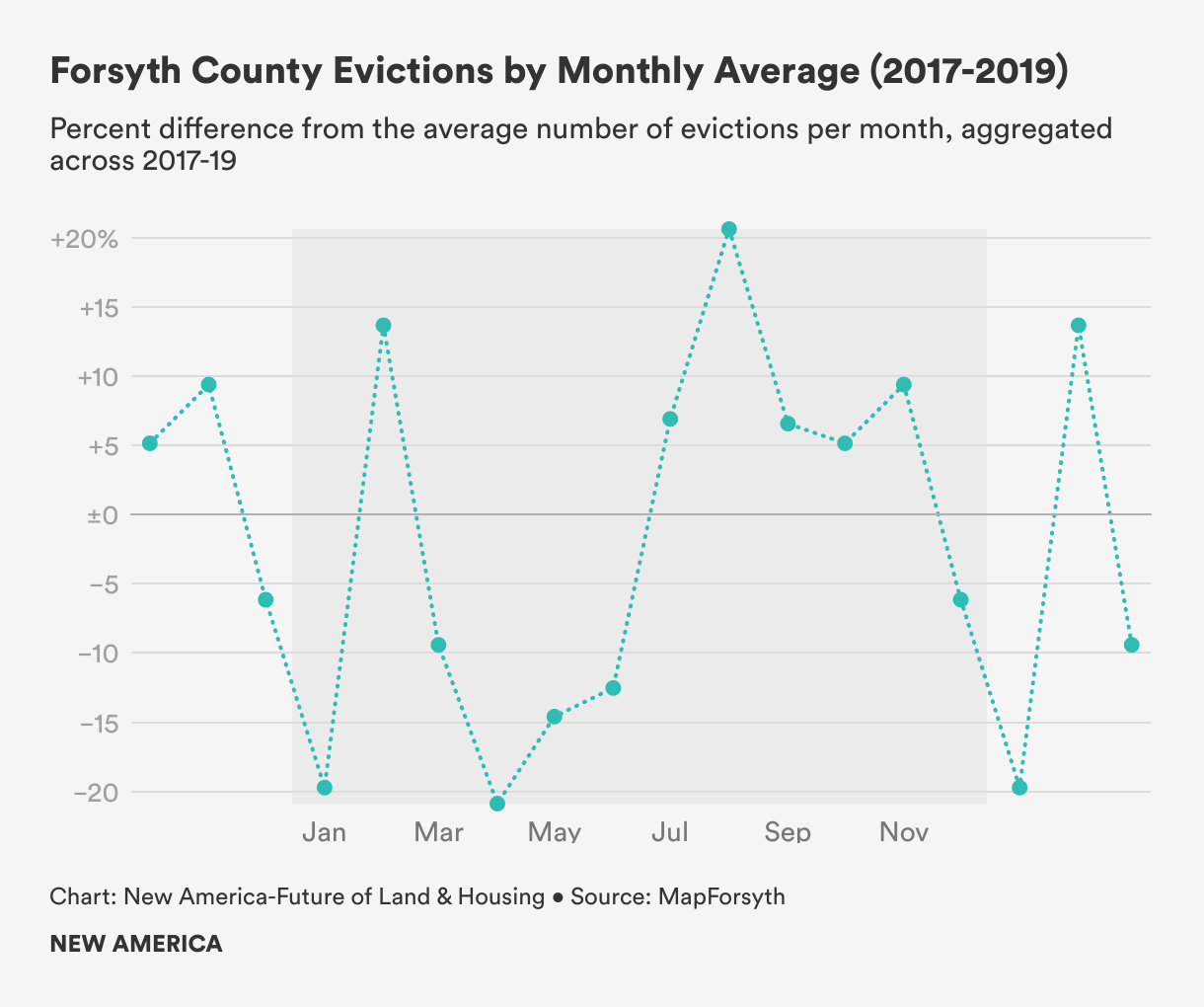
Evictions in Forsyth County rise steadily from April to August, when they peak. On average, August had the highest number of evictions with 315, a 52 percent increase over April, which had the lowest average number of evictions at 207.
We speculate that three factors could drive uptick during the warmer months: 1) the financial burden of high utility costs on renters; 2) the financial burden of childcare and groceries during summer vacation on renter families; and 3) high demand for rental housing during the summer, causing landlords to move forward with evictions.
Mortgage Foreclosure: The majority of Forsyth County households own their homes, yet mortgage foreclosures accounted for only 10 percent of all housing loss between 2017 and 2019. Just over 1,000 households were foreclosed upon during this three-year period, a rate of 0.6 percent. This rate is a significant decrease from the 2014-2016 rate of 1.2 percent.
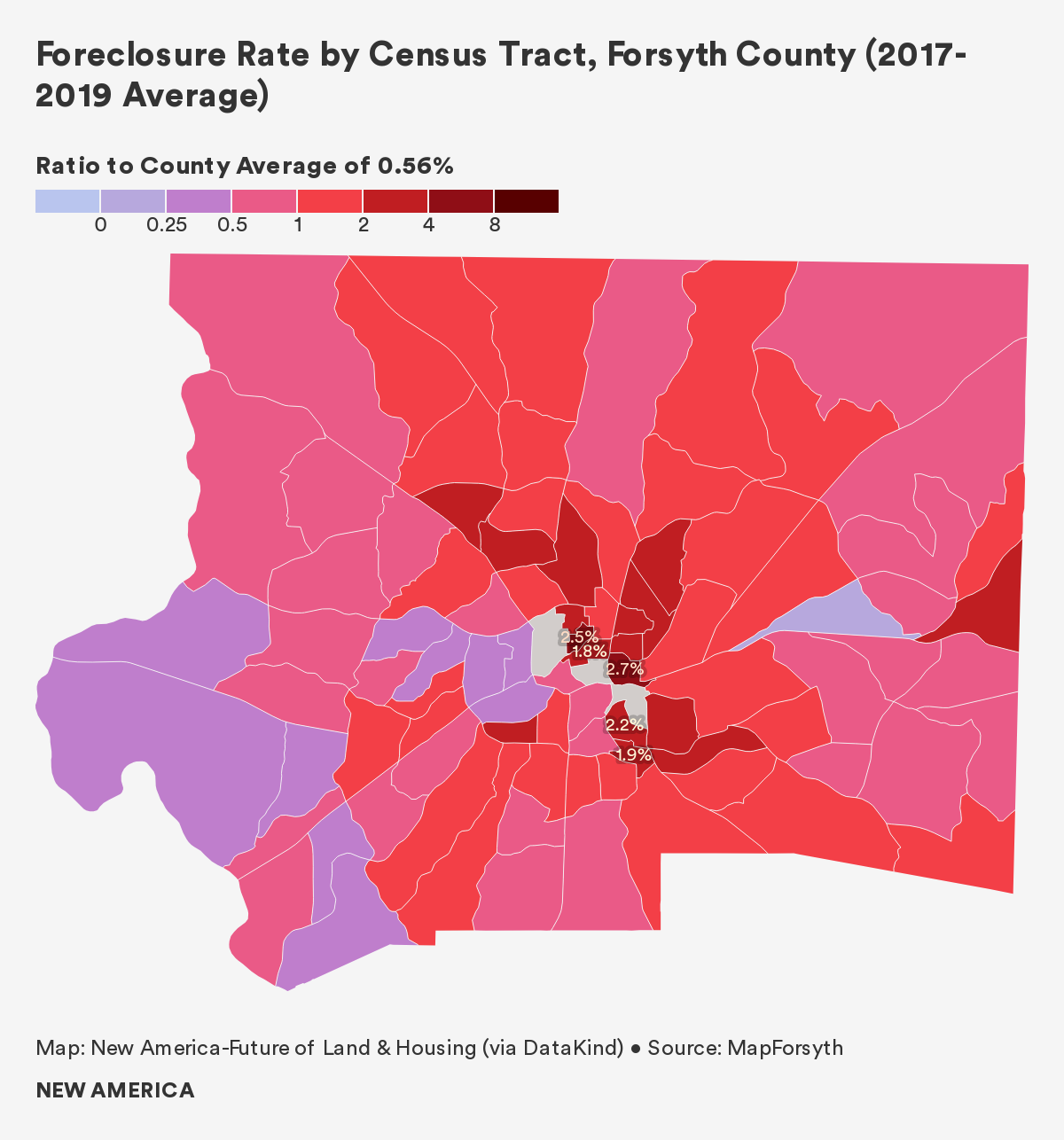
Many tracts in the county, especially to the west, express mortgage foreclosure rates well below half a percentage point. But a few census tracts in East Winston, and north of downtown Winston-Salem display rates above 2 percent. The most distressed tracts are over two-thirds Black, with median household incomes at $26,000 or less, far below the county average of $51,000. Property values in these tracts are also quite low at $86,000, or half the average value in Forsyth County.
Who is Losing Their Home?
Among all of the variables we examined, race was by far the strongest predictor of housing loss across the county. Census tracts with a higher percentage of Black households were substantially more likely to see both evictions and foreclosures; in fact, this relationship was more pronounced in Forsyth County than in any of the other counties we examined. By contrast, census tracts with more white households have a strong, inverse relationship with housing loss.
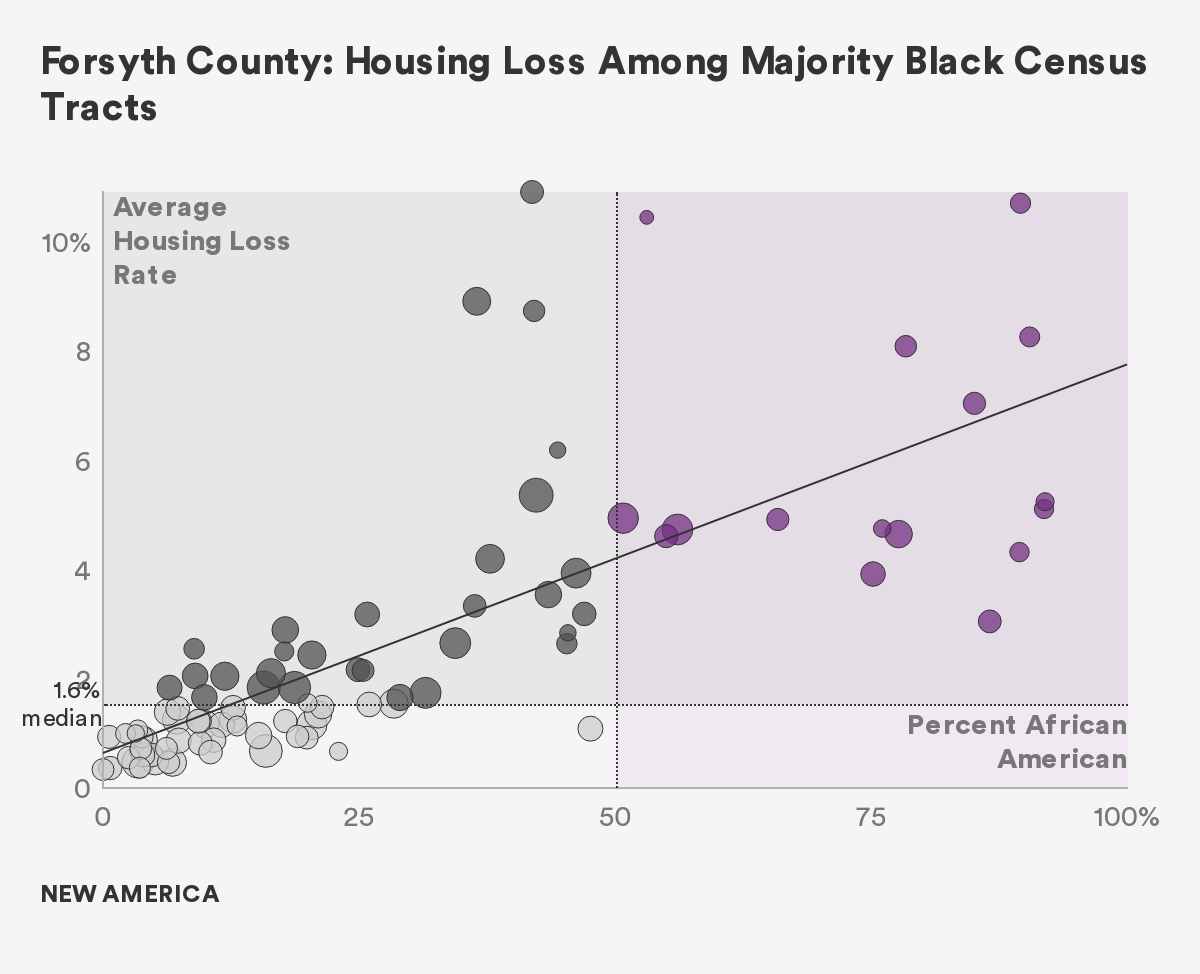
To better understand the relationship between housing loss and race, we categorized census tracts such that they fell into one of four categories: whether they were majority or minority Black (above or below 50 percent) and by the housing loss rate (above or below the county median of 1.6 percent). We see on the scatter plot that all census tracts that are majority Black have housing loss rates that are above the county median. Put differently, every single majority Black census tract has above average housing loss. We also see in the scatterplot that tracts that have large shares of Black households that do not quite reach 50 percent have housing loss rates well above the county median.
Every single majority Black census tract has above average housing loss.
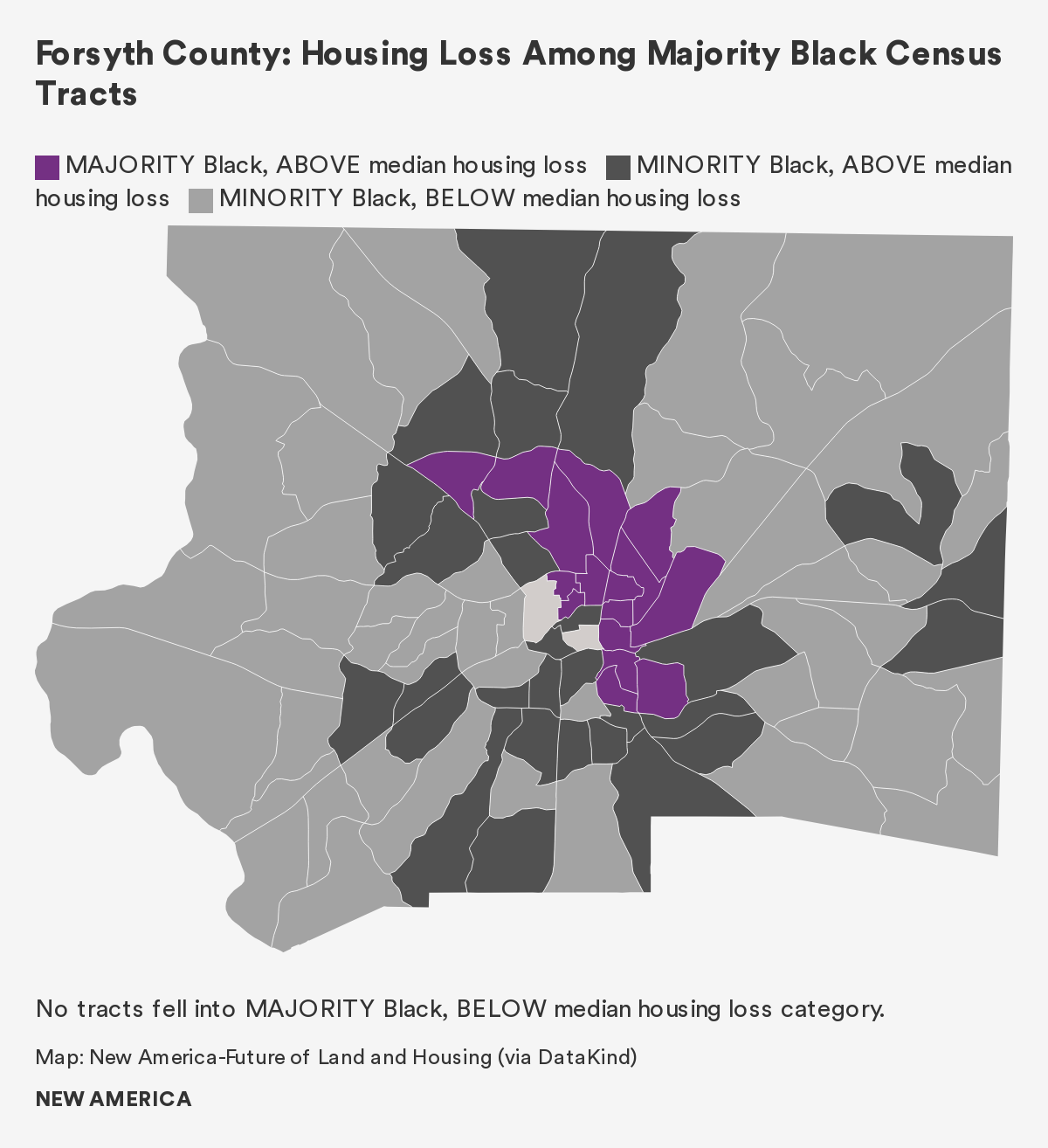
To see where in Forsyth County the relationship between race and housing loss is most prominent, we mapped this same information. Tracts that are majority Black and have above average housing loss (in dark purple) are clustered to the East of Route 52, and have lower median household incomes and property values as well.
We also found that, as the percentage of residents without health insurance in a census tract increases, so does the rate of housing loss. Many low-paying jobs do not provide health insurance, and this finding continues to suggest that at-risk households are housing-cost burdened on low income, or cannot pay for housing and an unexpected medical emergency.
Finally, tracts with a large share of households that rely on public transportation for work commutes had higher rates of housing loss. Based on research from the Center for the Study of Economic Mobility at Winston-Salem State University, it appears that dependence on unreliable public transportation in Forsyth County can lead to repeated tardiness or absence from work, job loss, and a subsequent inability to pay rent.
Housing Loss and COVID-19
Local stakeholders noted that many Forsyth County residents vulnerable to housing instability prior to the pandemic have lost income as a result of the pandemic-related shutdowns, and are now at greater risk of displacement. The economic downturn has also contributed to a “seller’s market” locally, leading some landlords to evict tenants in order to sell their properties.
The impact of COVID-19 is especially acute in East Winston, where minority communities generally cannot access public transportation, healthcare, affordable childcare, and economic opportunities. A disproportionate population of both frontline and service workers in East Winston makes households even more vulnerable to the spread of coronavirus, job loss, and housing loss.
Federal stipulations limited direct aid to U.S. counties with populations under 500,000, so Forsyth County received only $6.4 million CARES Act dollars.6 Alternative funding was therefore critical to the local pandemic response. The United Way of Forsyth County and the Winston-Salem Foundation responded by raising a COVID-19 Response Fund for Forsyth County, drawing from corporations, community groups, individuals, and local governments. The City of Winston-Salem pledged $1 million to this fund from unallocated development money from 2014 to 2018.
Despite this innovative funding model, housing advocates noted that the disbursement of housing aid throughout the county was highly ineffective. The nonprofit organizations responsible for allocating relief funding required extensive documentation and means testing, which considerably delayed the distribution of money. Some of these organizations also required in-person appointments, making funds inaccessible to medically vulnerable individuals, as well as to those without access to transportation or childcare. Distribution of rental aid also lacked transparency—one interviewee noted that applicants “perfectly suited for aid” were inexplicably denied.
Policy Solutions
Our policy recommendations to mitigate housing loss amid the pandemic can be found in the report section: “Housing Loss in the U.S. Sun Belt.”
Citations
- From an interview with contributing author Jack Portman.
- For reference, neighboring Guilford County, home to 537,000 residents, received $93.7 million CARES Act dollars, despite containing only 150,000 more people.
Harris County, Texas
“In Texas, we know that Black and Brown workers are absorbing direct health outcomes from this pandemic, and these problems converge and overlap with housing instability.” – Housing Data Specialist, Houston7
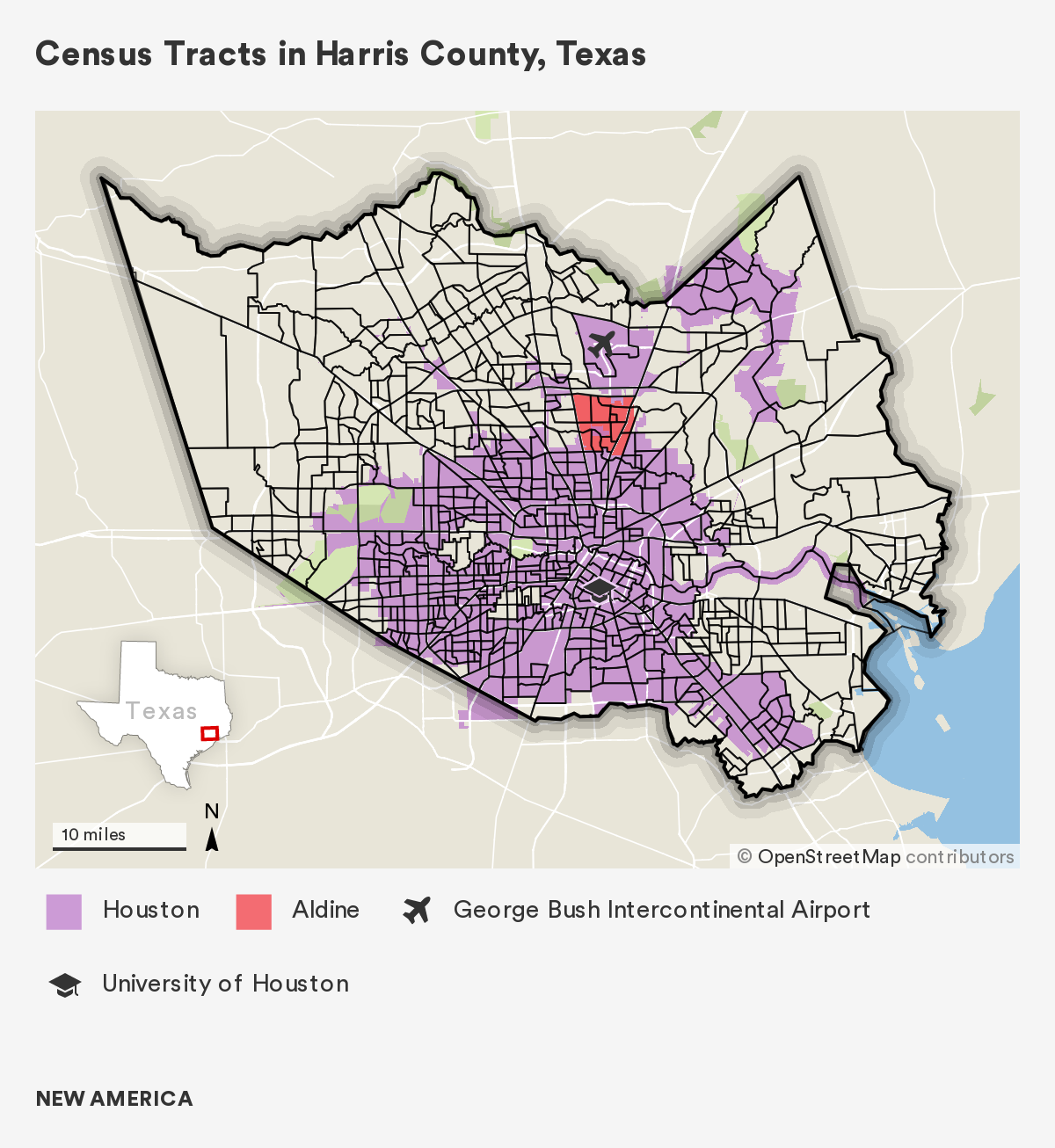
Sitting on Galveston Bay and the Gulf of Mexico in southeast Texas, Harris County is the third-most populous county in the United States, with approximately 4.7 million residents. The county is dominated by the city of Houston, a sprawling urban center and the fourth-largest city in the country. Known worldwide as the home to NASA’s Mission Control, major industries include energy, healthcare, and higher education.
Harris County is demographically diverse. According to the U.S. Census Bureau, 44 percent of the population is Latinx, 20 percent is Black, 7 percent is Asian, and 29 percent is non-Latinx white. Researchers at Rice University note that Houston is “often referred to as the most racially diverse metro area in the country and a harbinger of the types of demographic shifts the nation is likely to face in the future.” Yet Houston is also similar to other major cities throughout the United States, as minority communities have long suffered from discrimination in housing, education, employment, and policing. Income disparities persist between races, and many neighborhoods remain highly segregated.
Nearly one-third of those surveyed in the Houston-The Woodland-Sugar Land Metro Area believed that an eviction or foreclosure is somewhat or very likely in the next two months.
The county continues to experience a surge in recorded COVID-19 cases, with the Latinx community most impacted, among all races and ethnicities. Joblessness remains high—the most recent unemployment rate in November 2020 was 9 percent, a 143 percent increase from the previous year. Housing insecurity is also high—the most recent Household Pulse Survey, conducted by the U.S. Census Bureau, found that nearly one-third of those surveyed in the Houston-The Woodland-Sugar Land Metro Area believed that an eviction or foreclosure is somewhat or very likely in the next two months.
When and Where Are People Losing Their Homes?
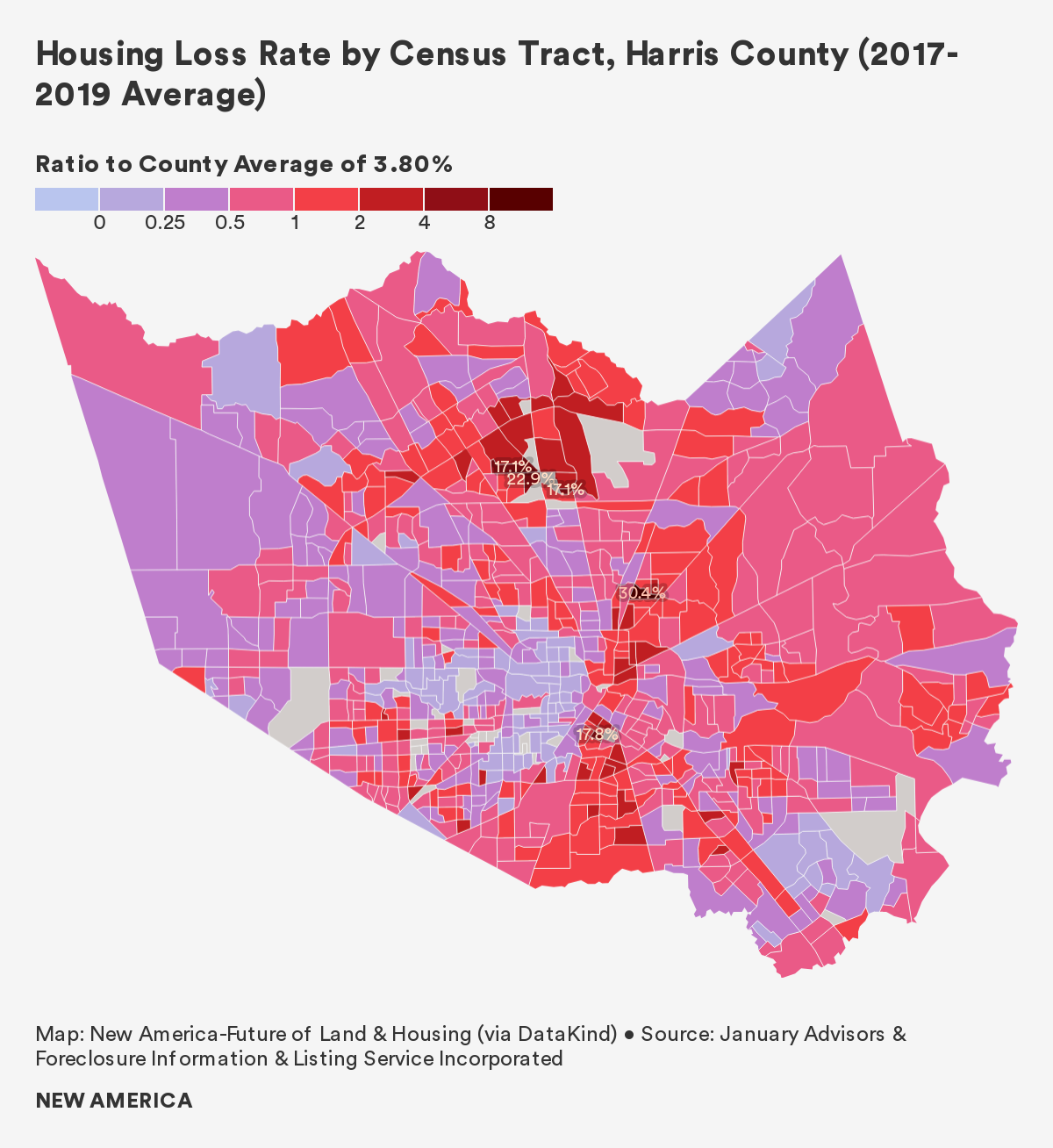
Overall Housing Loss: Harris County residents experienced a housing loss rate of 3.8 percent between 2017 and 2019. In total, approximately 400,000 people lost their home during these three years. The housing loss rate in the county slightly increased during our study period, driven primarily by an uptick in evictions.
Census tract 2307, in the Scenic Woods neighborhood northeast of downtown Houston, experienced the county’s highest average loss rate: just above 30 percent. Each year, nearly one in three households in this tract lost their home. Socioeconomic indicators further suggest a distressed and marginalized community: a third of residents live below the poverty line, as the median household income is a mere $25,313 and home values sit at $77,800, or two-fifths the county average. The tract is nearly 100 percent Black and Latinx.
Housing loss is also acute in a cluster of census tracts to the west of George Bush Intercontinental Airport, around the town of Aldine. Many tracts in this area expressed average rates of loss between 10 and 23 percent, up to 6 times the Harris County average. Of note, the geographical proximity of hard-hit census tracts to airports is a trend that we previously observed in other locations, such as Forsyth County, North Carolina and Maricopa County, Arizona.
Finally, a census tract very close to the University of Houston experienced a housing loss rate of 17.8 percent between 2017 and 2019. Three-fourths of residents in the tract are Black, and nearly 61 percent live below the poverty line. The median household income is only $15,538. In general, tracts squeezed between the university and William P. Hobby Airport expressed housing loss rates two to three times the county average.
Evictions: A little less than half of all Harris County residents rent their homes, but evictions accounted for 79 percent of all housing loss. In total, 111,038 renter households were evicted during our study period, at a rate of 5.3 percent per year.
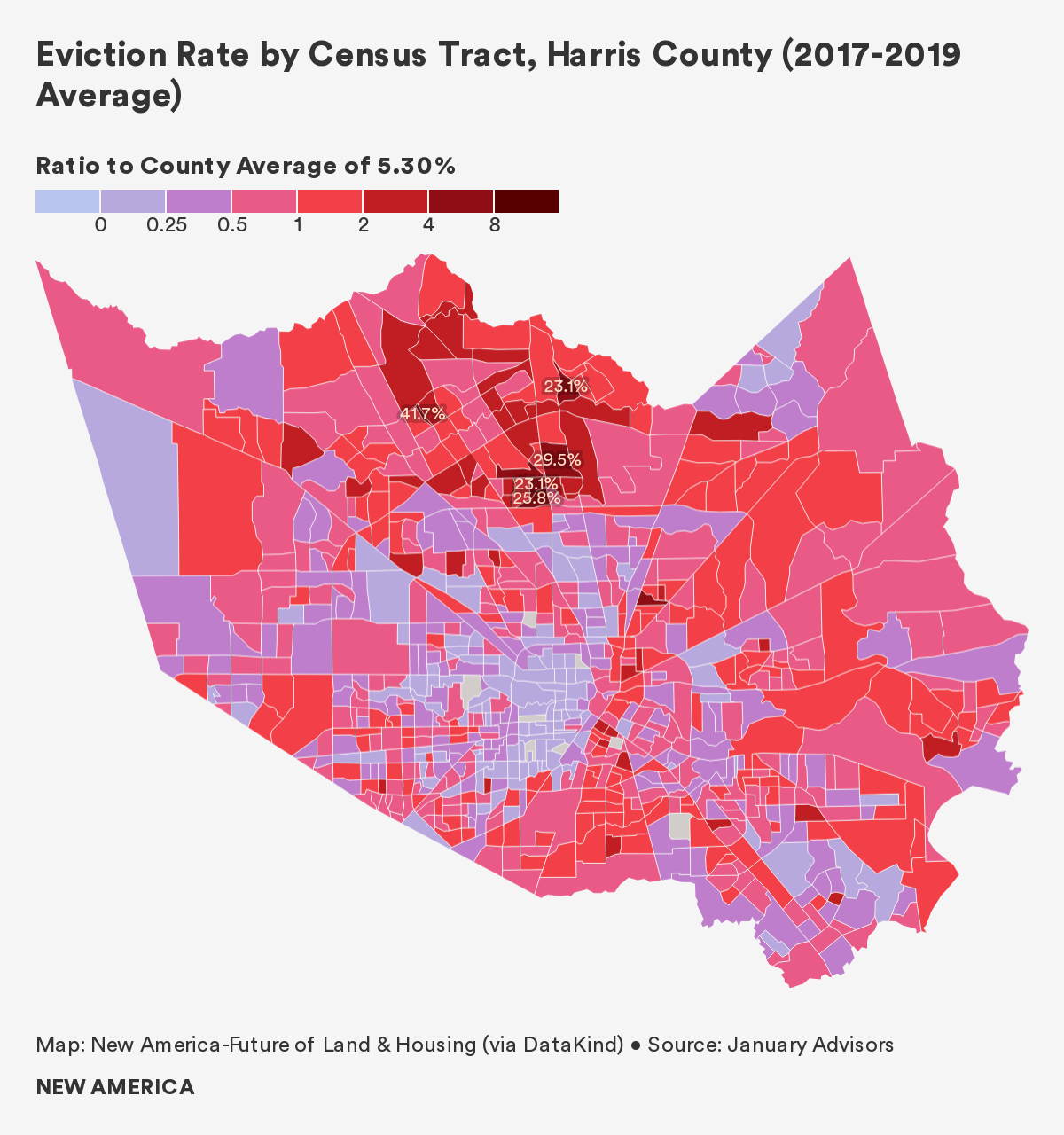
A cluster of census tracts to the north of downtown Houston, near George Bush Intercontinental Airport and the small town of Aldine, experienced some of the county’s highest eviction rates. A number of these tracts suffer from high poverty rates, and between one-fifth and one-third of renters experienced eviction in an average year. In particular, one census tract expressed an average eviction rate of 42 percent between 2017 and 2019, although it must be noted that only 4 renter households live in the tract.
Predominantly minority-majority census tracts to the northeast and southeast of downtown Houston also experienced high rates of eviction, areas that are predominantly minority-majority. The county’s second hardest-hit census tract sits in the northeast neighborhood of Scenic Woods and had an average eviction rate of 36 percent. This tract has a median household income of $25,313, only two-fifths the county average, and is two-thirds Black.
A grouping of census tracts in Baytown, a city towards the eastern edge on the county and sitting in Galveston Bay, experienced eviction rates nearly double the county average. According to estimates from the U.S. Census Bureau, Baytown is nearly half Latinx and 18 percent Black.
The Eviction Lab at Princeton University has been tracking eviction filings in Houston since the start of the pandemic.8 Filings dropped sharply in March and April 2020, and increased at a slow but steady pace for the rest of the year. Overall, Eviction Lab has recorded 19,423 filings in Harris County since March 15, 2020, approximately one-third of what the county usually sees. This finding is not surprising: state- and national-level eviction moratoriums, along with increased government aid, is likely contributing to this decline in filings.
The Seasonality of Evictions in Harris County: Bucking the Trend?
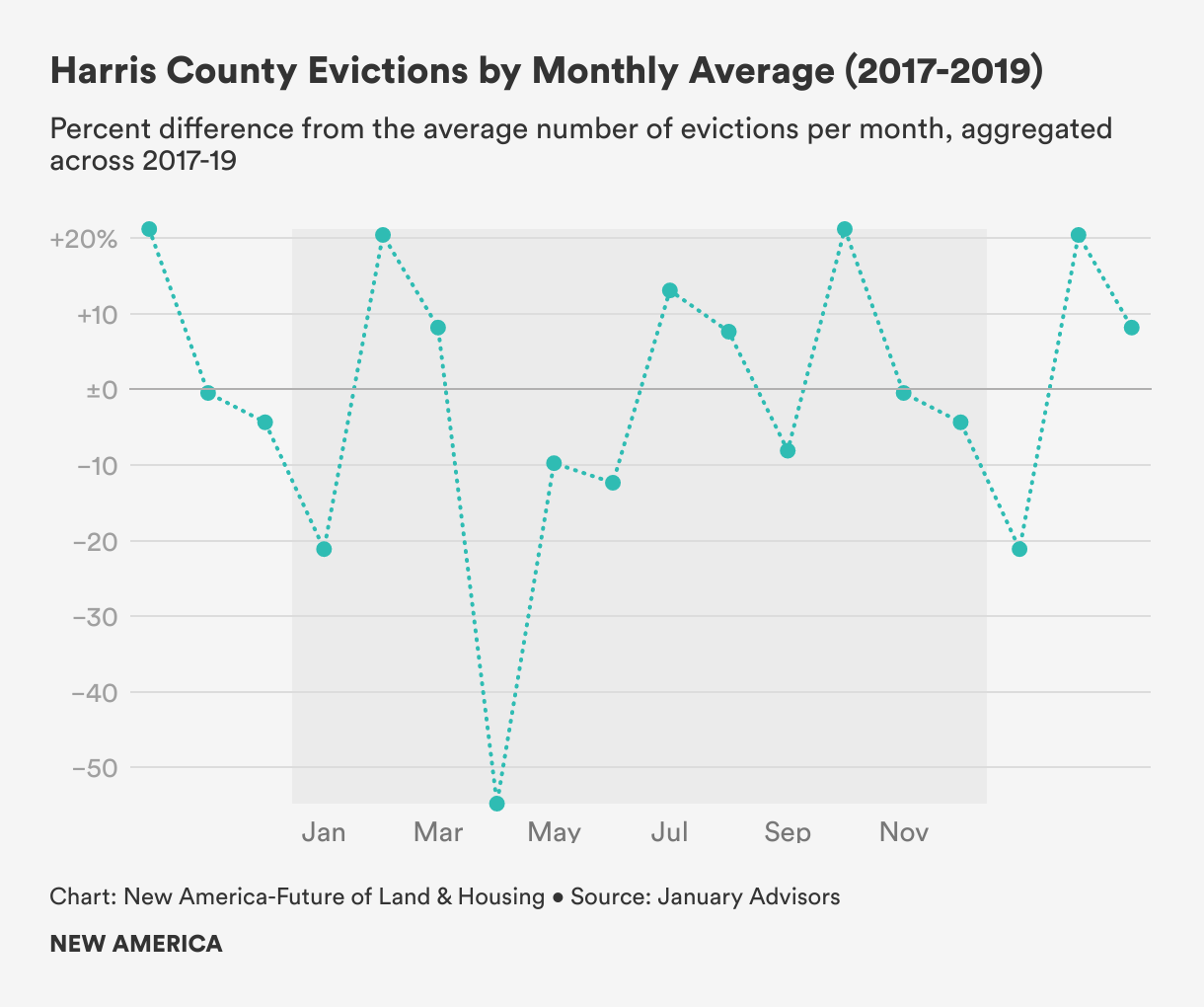
In contrast to our findings in many other U.S. counties, evictions in Harris County do not spike during the summer months. Instead, they spike in February, fall sharply until April, and then climb until the fall. October had the highest average number of evictions between 2017 and 2019, with 3,915. This peak is nearly a 96 percent increase from the average low of 1,992 in April.
We are unsure why this bimodal distribution occurs, and further research is needed.
Mortgage Foreclosure: Fifty-five percent of Harris County residents are homeowners, but mortgage foreclosure only accounted for one-fifth of all recorded housing loss during the three-year study period. Overall, 28,850 households were foreclosed upon, for a rate of 1.8 percent.
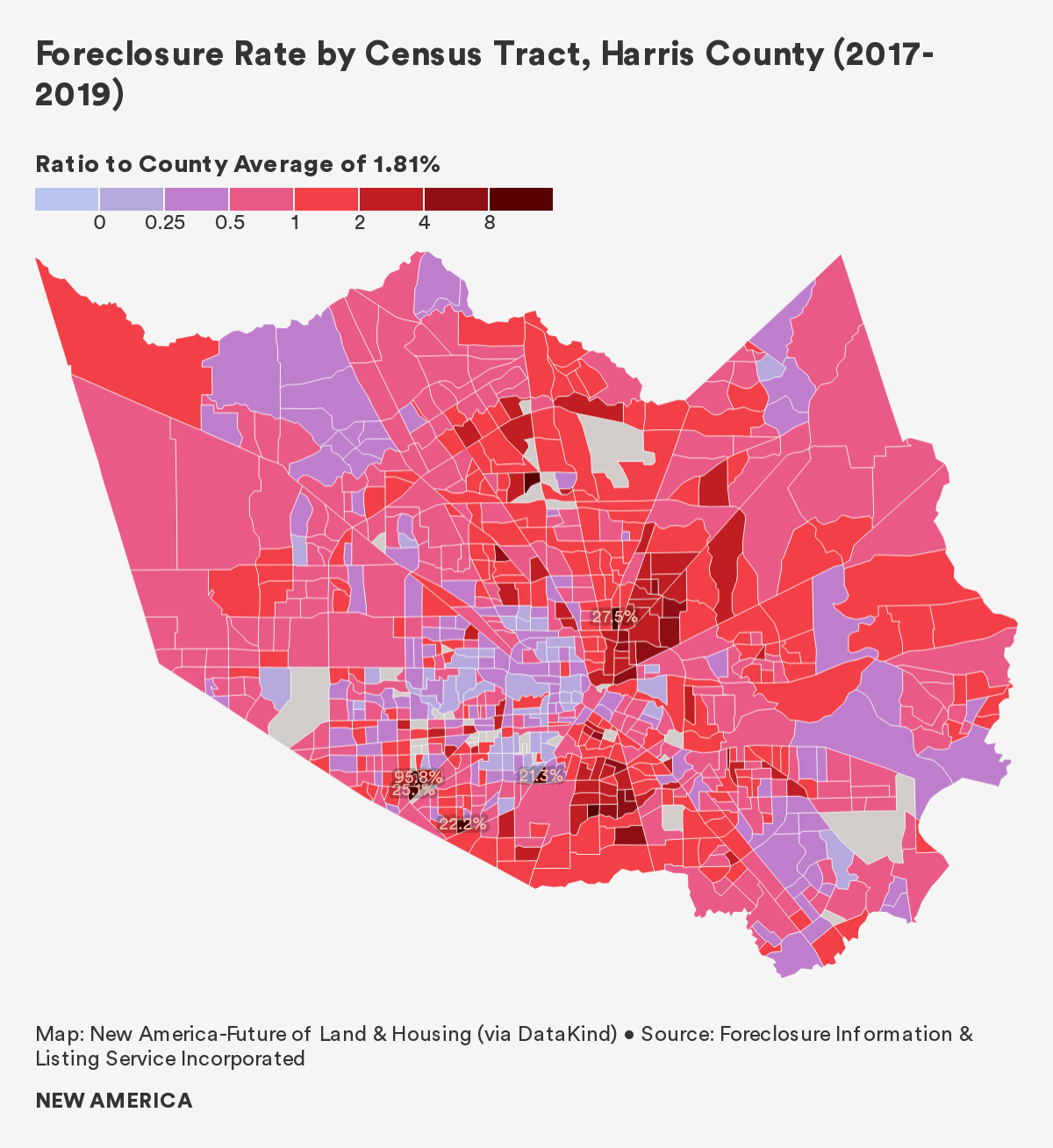
However, while the county average was relatively low, multiple neighborhoods experienced extremely high foreclosure rates (a variation we did not see in many of our other case studies). High mortgage foreclosure rates were clustered in three areas within Harris County: to the northeast of downtown Houston, near the neighborhoods of Scenic Woods and East Houston; to the west of William P. Hobby Airport, around the Myrtle, Sunnyside, and Westwood Park neighborhoods; and in the southwest of the county, close to Alief and Chinatown.9 In many of these neighborhoods roughly a quarter of all homeowners with a mortgage are losing their homes to foreclosure, nearly fourteen times the county average. In general, these areas are majority Black or majority Latinx.
Who is Losing Their Home?
Correlation analysis of Harris County shows that as the percentage of Black households in a census tract increases, so does the housing loss rate. By contrast, census tracts with more white households and with higher median household incomes had lower rates of housing loss.
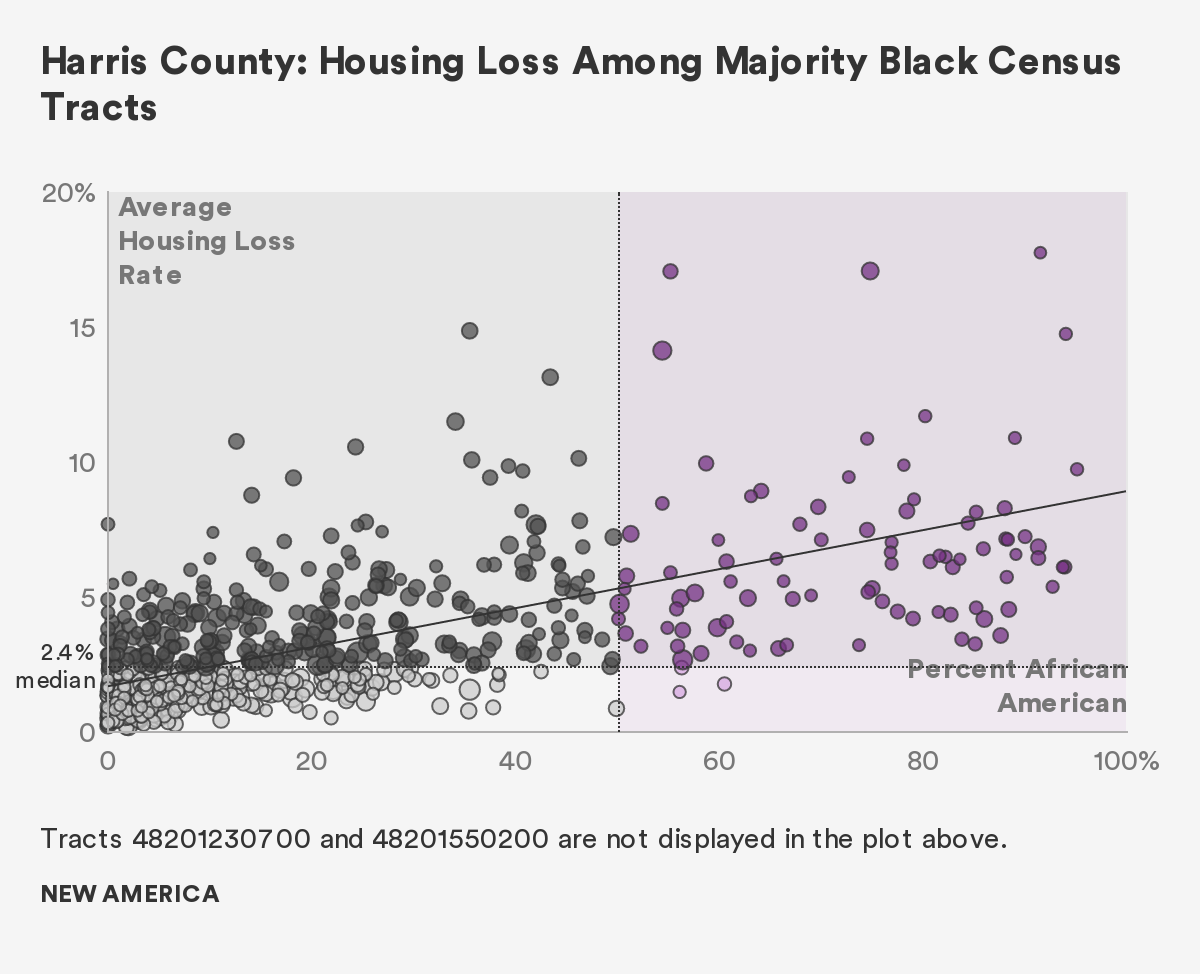
To better understand the relationship between housing loss and Black households, the strongest relationship we found, we categorized census tracts such that they fell into one of four categories: by whether the population was majority or minority Black (above or below 50 percent) and by the housing loss rate (above or below the county median of 2.4 percent).While we saw great variation in whether majority non-Black census tracts experienced above or below median housing loss rates (upper and lower left quadrants), we found that nearly all tracts with majority Black households, close to 95 percent, have housing loss rates above the median (upper right quadrant).
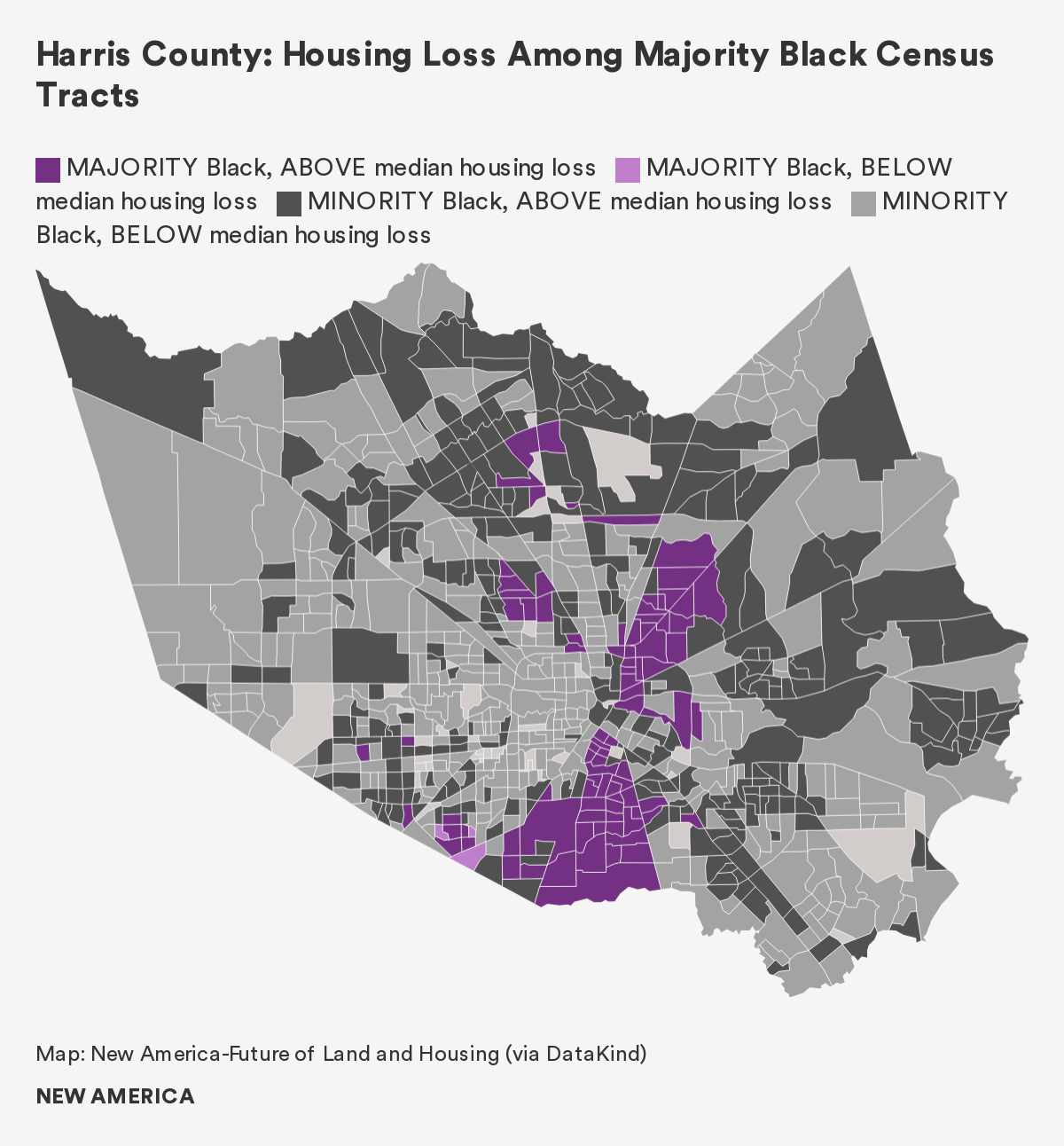
To see where in Harris County the relationship between Black households and housing loss is most prominent, we mapped this data and see that neighborhoods with majority Black households and above average housing loss are clustered to the northeast of downtown Houston and directly south, in Southeast Houston, Sunnyside and South Acres/Crestmont Park. Tracts that have minority Black populations with above average housing loss rates are geographically dispersed all over Harris County, both in Houston and in the surrounding areas.
Most surprising, census tracts with higher percentages of Latinx households displayed a slightly negative relationship with displacement, despite the fact that several interviewees noted that the Latinx community is generally at-risk of home loss, specifically evictions. We believe that correlation analysis fails to demonstrate this association because Latinx renters, and especially marginalized immigrant populations, may experience informal evictions that are not recorded by the county court system.
Housing Loss and COVID-19
Most interviewees in Harris County readily expressed that renter households were more vulnerable to housing loss than homeowners. The COVID-19 pandemic, along with the subsequent recession, only exacerbated existing pressures on renters, notably the lack of livable wages and an acute affordable housing shortage. Stakeholders pointed out that landlord-friendly laws, as well as a very quick eviction process, contribute to the heightened risk of displacement. A tenant can be served an eviction notice if they are three days late in paying rent.
In contrast to our quantitative findings, interviewees asserted that Latinx renter households, and especially immigrants and undocumented residents, are very at-risk of eviction. This incongruity may be due to the fact that informal evictions are prevalent in Latinx communities. Perhaps some tenants recognize that they are hopelessly behind on rent and move out on their own accord with the aim of keeping an eviction filing off their rental history. Alternatively, a landlord may change the unit’s locks or threaten a renter with an eviction filing, avoiding formal legal processes. One stakeholder estimated that informal evictions account for 30 percent of all evictions in Harris County.
A tenant can be served an eviction notice if they are three days late in paying rent.
One major consequence of displacement in Harris County is overcrowding, or the “doubling up” of households, which is extremely worrisome amid a pandemic. For low-income families, or families with frontline workers, overcrowding can lead to negative health consequences. “Doubling up” can also disrupt education if children have to switch school districts, or if the new living arrangement stretches resources related to remote learning.
A counterintuitive finding mentioned by three interviewees is that the cost of the cheapest rental units in Harris County is staying the same or actually increasing. Low-income rental households that usually rent Class C Properties are now aiming to save money by moving into even lower-quality housing. Demand and rent have increased as a result.
Pandemic rent relief has so far been insufficient. In Harris County, tenants apply for housing aid, but their landlords approve the grant. Money is then sent directly to the landlord. However, many landlords were not incentivized to participate in aid programs at the outset of the pandemic, and were unwilling to work with tenants to complete applications. Even when tenants do receive one-time aid, landlords can still file an eviction the next time rent is late. Most concerning is that undocumented immigrants are excluded from CARES Act funding, despite the fact that the undocumented community is particularly at-risk of housing loss. As a result, only a small amount of alternative aid was available to undocumented communities, and many were afraid to access it.
Policy Solutions
Our policy recommendations to mitigate housing loss amid COVID-19 can be found in the report section: “Housing Loss in the U.S. Sun Belt.”
Citations
- From an interview with contributing authors Alberto Rodríguez and Cassandra Robertson.
- Of note, an “eviction filing” is not the same thing as an “eviction.” An eviction filing initiates the formal eviction process within a court system. A filing does not mean that a tenant was actually evicted. Most times, a formal eviction is the result of a disposition or a summary judgment, and the tenant must vacate the rental unit in question. https://shelterforce.org/2018/07/30/eviction-filings-hurt-tenants-even-if-they-win/
- A census tract in southwest Harris County experienced a near unbelievable foreclosure rate of 96 percent, although it must be noted that only 8 owner-occupied households with a mortgage live in the tract.
Maricopa County, Arizona
“Rental assistance is something that has been happening forever, so it should be something that there is a clear process for.” – Housing advocate, Phoenix10
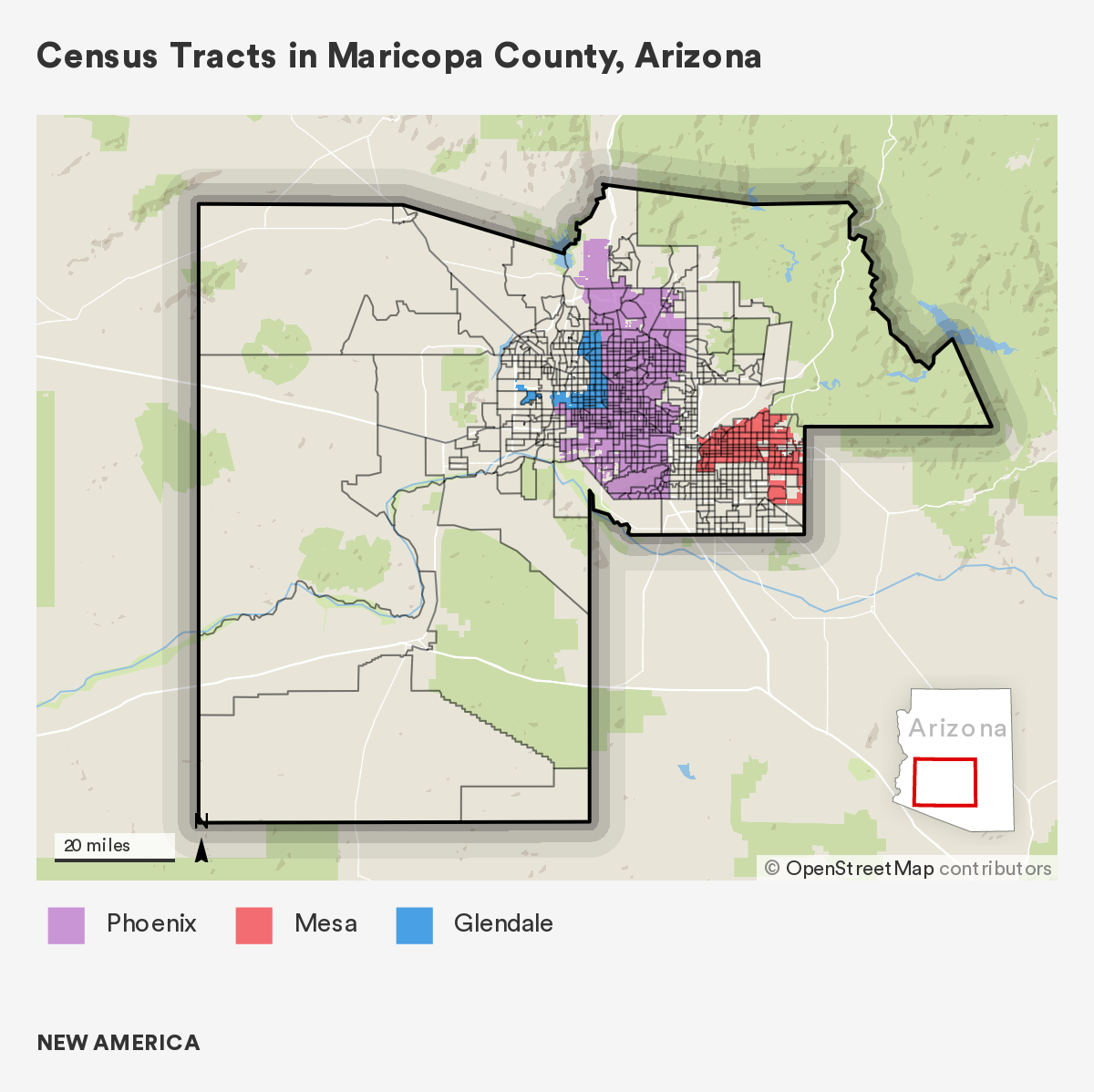
Nearly 4.5 million people, or 60 percent of Arizonans, live in Maricopa County, the fourth-most populous county in the United States. Built around Phoenix, the state’s capital and largest city, the metropolitan area sprawls out into the Valley of the Sun. To the east of downtown Phoenix sits Mesa, the largest suburb in the United States, with a population of nearly 520,000 people. Other major cities include Tempe, Scottsdale, Glendale, and Chandler.
Despite considerable economic growth and diversification following the Great Recession, socioeconomic challenges persist in Maricopa County. Approximately one-third of Maricopa County identifies as Latinx, and the county is also home to a significant Native American population, one of the largest in the United States. These groups, along with the Black community, have long suffered from discrimination in housing, education, employment, and transportation. And a large wealth gap and income disparity continue to worsen, as many people either work for minimum wage in the service sector, or in high-income, knowledge-based jobs.
Forty-two percent of those surveyed in the Phoenix-Mesa-Chandler Metro Area expect to experience an eviction or foreclosure in the next two months.
Maricopa County is currently experiencing a peak in confirmed and probable COVID-19 cases, with topline numbers far exceeding those recorded in the spring and early summer of 2020. Due to the ongoing recession, the county unemployment rate was 7.2 percent in November 2020, double the level of joblessness during the same time in 2019. Housing insecurity also remains acute, as results from the Census Bureau’s Household Pulse Survey indicate that 42 percent of those surveyed in the Phoenix-Mesa-Chandler Metro Area expect to experience an eviction or foreclosure in the next two months.
When and Where Are People Losing Their Homes?
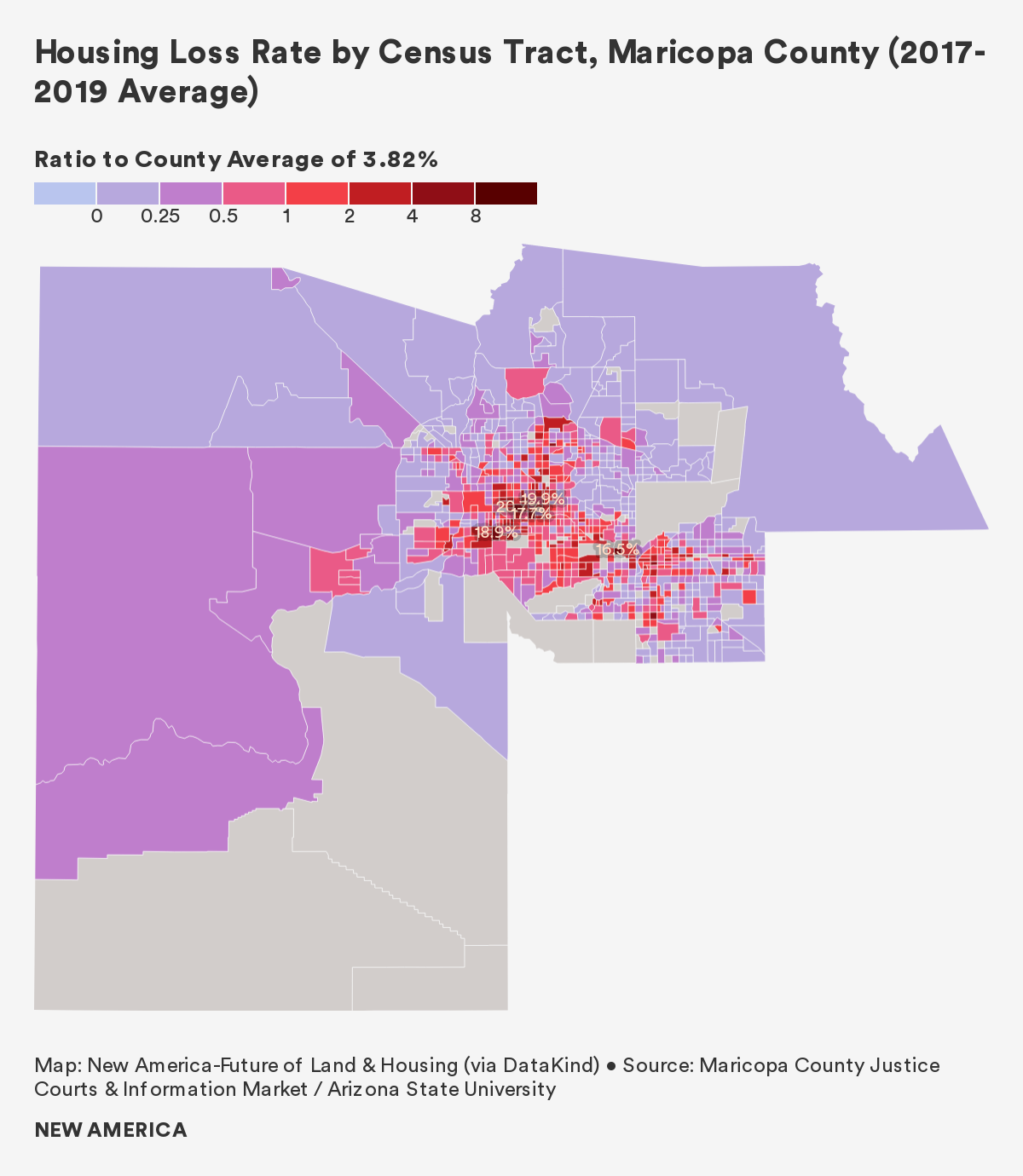
Overall Housing Loss: Maricopa County residents experienced housing loss at a rate of 3.8 percent between 2017 and 2019, meaning that nearly 380,000 county residents lost their home during this period. This rate is a significant jump from the 2014-2016 rate of 2.7 percent, and is driven largely by an increase in evictions just before the onset of the pandemic.
The census tract with the highest average housing loss rate is located between Phoenix and Glendale, along Grand Avenue. Over one-fifth of all households in this tract lost their homes each year during our study period. Several other tracts close by, in the Maryvale and Alhambra neighborhoods of west Phoenix also expressed high rates of displacement, between 10 and 19 percent. In general, these neighborhoods are home to a significant Latinx community and lower-income households.
A few areas in Tempe and northern Mesa also experienced rates of displacement that were three to four times the average in Maricopa County. Many of these census tracts have significant Latinx populations, low median household incomes, and high poverty rates, but most notable is the presence of mobile home parks in two Mesa tracts. In particular, 64 percent of residents in census tract 4207.07 live in mobile homes, and the tract has a loss rate just under 13 percent. During our previous research, we heard from interviewees that mobile home residents are particularly vulnerable to home loss, although this relationship must be explored further.
Another census tract in the far north of Phoenix expressed an average home loss rate of 15.6 percent. Located near the Autumn Ridge neighborhood, the tract has a median household income of $30,777, or half the county average, and 25 percent of residents live below the poverty line. Similar to the tracts in Mesa, this census tract has a sizable mobile home park.
Evictions: Only one-third of Maricopa households rent, and yet evictions account for 96 percent of housing loss between 2017 and 2019. During this three-year period, more than 360,000 renters were evicted, resulting in an average eviction rate of 7.6 percent. This is an enormous topline statistic, and the eviction rate increased noticeably, as well, when compared to the 2014-2016 average of 6.2 percent.
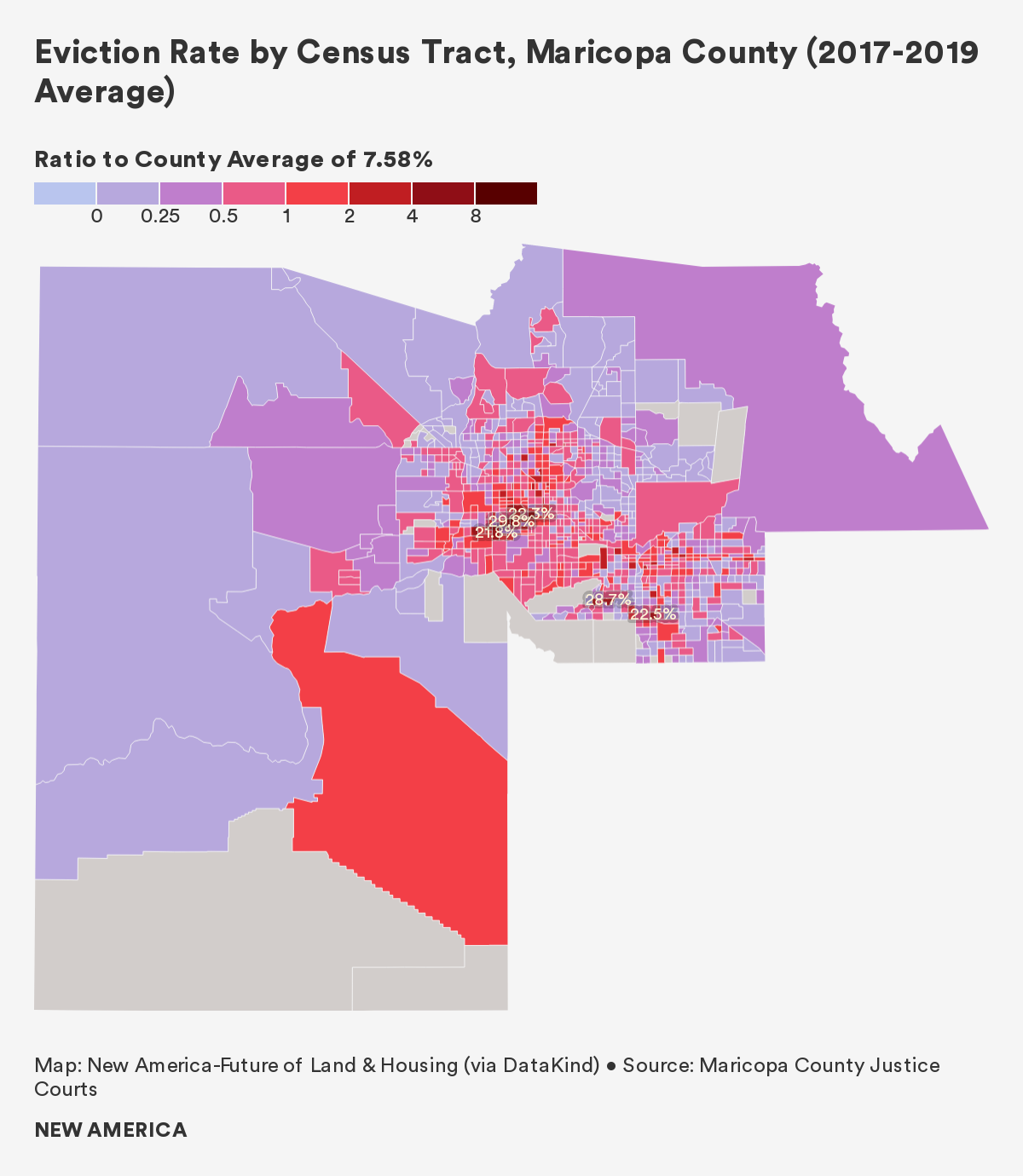
Very high eviction rates were clustered to the north and west of downtown Phoenix, in the direction of Glendale. These neighborhoods, including Maryvale and Alhambra, are home to a significant Latinx population, and characterized by low-income, renter households. In some census tracts within Maryvale, the eviction rate hovered between 20 and 25 percent, while one tract expressed a rate just under 30 percent, meaning that nearly one in three renters was evicted each year.
A tract in southwest Tempe experienced an eviction rate at 29 percent, the second highest in the county. Surprisingly, the median household income in this census tract is $111,691, nearly double the city average. The tract is also 70 percent white, a racial group that usually experiences fewer evictions in the county.
A few other census tracts in Tempe also expressed rates two to three times the country average—near Sky Harbor International Airport, and in the northeast and southeast of the city. It is also worth noting that a large number of tracts running along East Main Street in Mesa experienced evictions at a rate one-and-a-half to two times the county average. East Main Street is also home to a significant number of manufactured housing communities.
The Eviction Lab at Princeton University has been tracking evictions filings in Maricopa County since the start of the pandemic.11 Filings dropped sharply in April 2020, and increased very slowly for the rest of the year. Overall, Eviction Lab has recorded 23,490 filings since March 15, 2020, approximately half the normal amount. State- and national-level eviction moratoriums, along with increased government aid, is likely contributing to this decline in filings.
A Spotlight on Summer Evictions
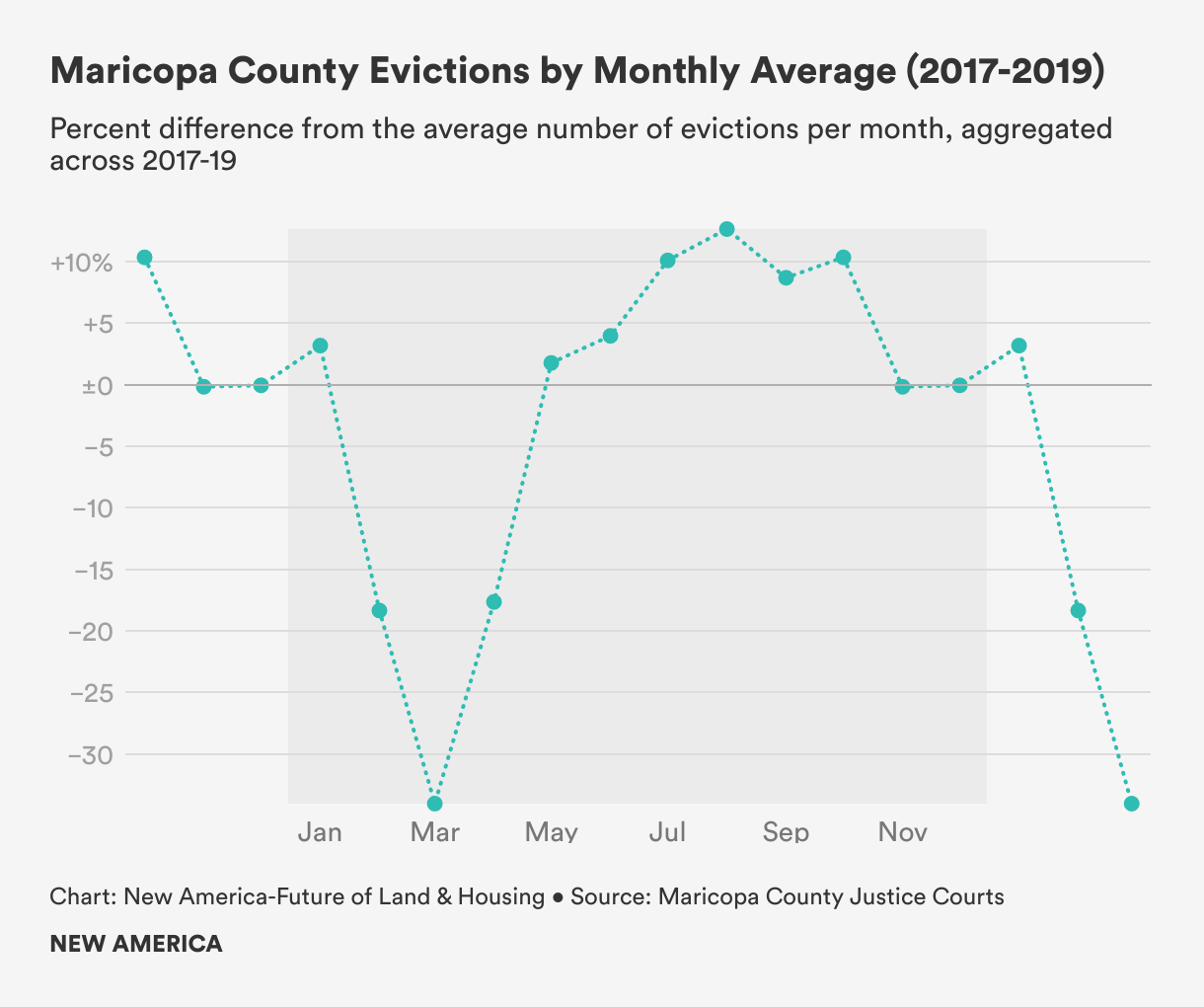
Evictions in Maricopa County drop steadily from January to March and then climb steadily until they peak during the scorching Arizona summer. Based on our analysis, August had the highest average number of evictions between 2017 and 2019, with 4,204. This spike is a 53 percent increase over the average low in March, at 2,740 evictions.
We speculate that three factors could drive uptick during warmer months: 1) the financial burden of high utility costs on renters;12 2) the financial burden of childcare and groceries during summer vacation on renter families; and 3) high demand for rental housing during the summer, causing landlords to move forward with evictions.
Mortgage Foreclosures: Homeowners are significantly less at risk of housing loss than renters in Maricopa County. Around two-thirds of housing units are owner-occupied in the county, but mortgage foreclosures accounted for only 4 percent of all housing loss in our three-year study period. Maricopa County had the lowest foreclosure rate of any county in our study, with just over 5,300 households, or .3 percent, experiencing foreclosures.
We calculate a 60 percent decline in the average mortgage foreclosures rate when comparing the periods 2014-2016 and 2017-2019. Given the impact of the Great Recession on the Phoenix real estate market, which recorded a foreclosure rate of 5.9 percent in 2007-2008, this is a significant finding. In the Valley of the Sun, at least, the long-term impacts of the last recession may be diminishing.
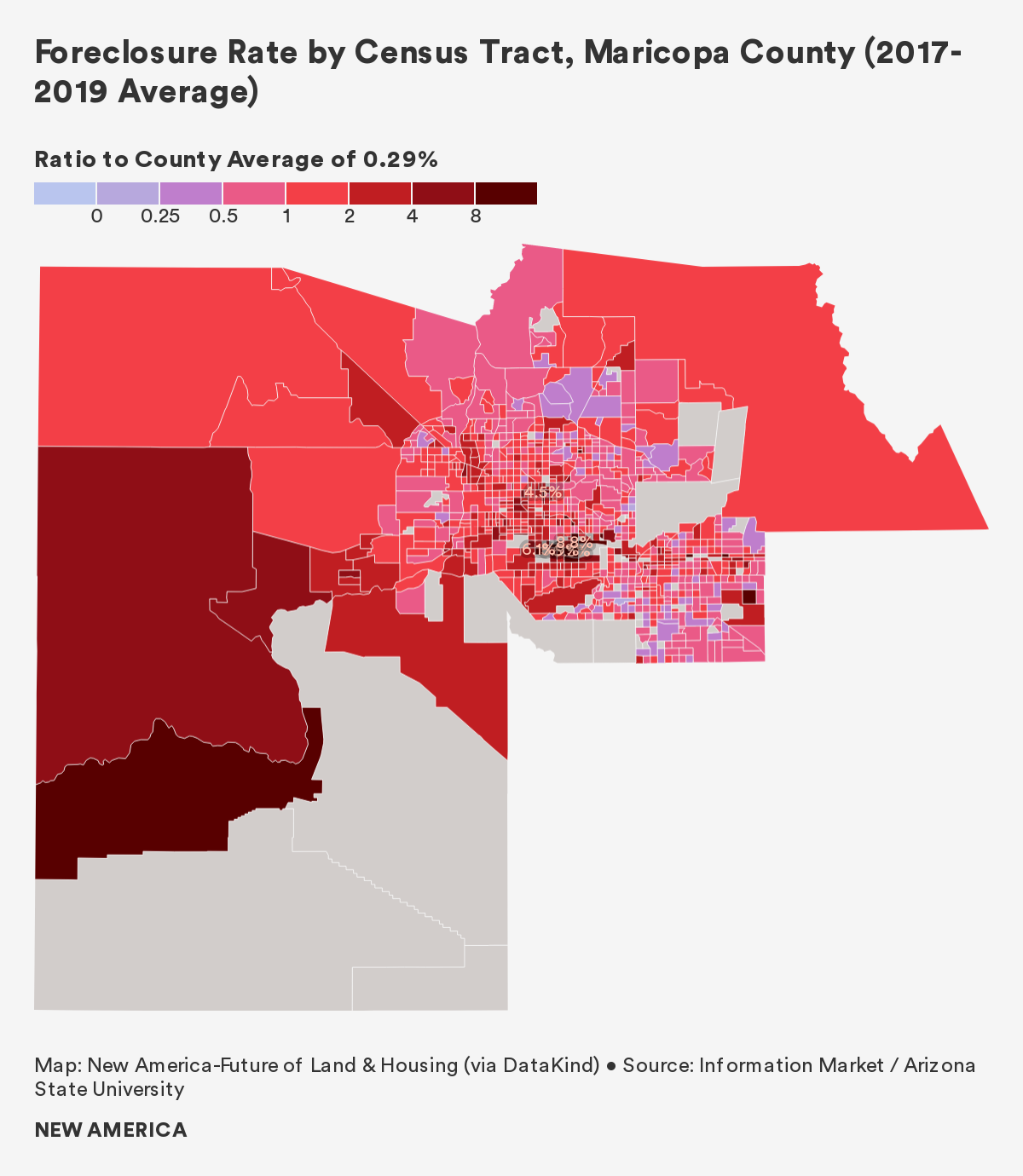
A notable exception to this trend is a group of census tracts in South Phoenix, to the west of Sky Harbor International Airport, where foreclosure rates jump to between 3 and 9 percent. Based on our previous conversations with local stakeholders in the county, we heard anecdotal evidence that neighborhoods in South Phoenix were steadily gentrifying, which could be contributing to this loss. A few tracts in the north and west of Phoenix also experienced high foreclosure rates, over 11 times the average in Maricopa County.
Who is Losing Their Home?
“…the poorest of the poor are paying more than 50 percent of their income for rent and that's not sustainable.” – Housing Nonprofit Leadership, Mesa13
Correlation analysis for Maricopa County confirms that traditionally marginalized communities experience housing loss most acutely. For example, tracts containing more households without health insurance experienced substantially higher rates of evictions and overall housing loss. Many low-paying jobs do not provide health coverage, and this finding may indicate that vulnerable households cannot pay for housing and healthcare, which is especially concerning amid the COVID-19 pandemic.
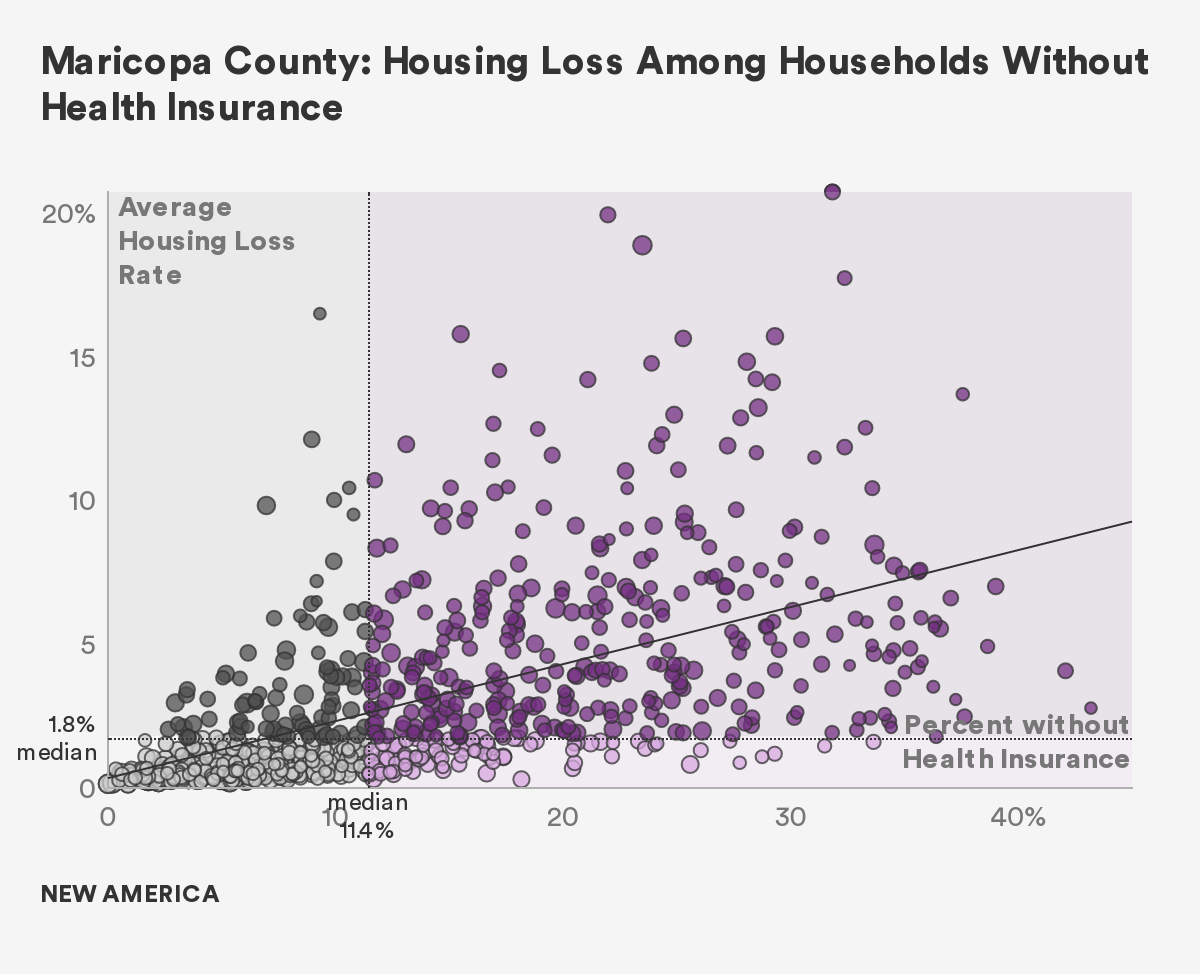
To understand this relationship between housing loss and percent uninsured, we categorized census tracts such that they fell into one of four categories: above or below the median percent uninsured and above or below the median housing loss rate in the county. Half the census tracts in the county fell below the median uninsurance rate, 11.4 percent, and half fell above it. Similarly, half the census tracts fell above the median housing loss rate, 1.8 percent, and half fell below it.
The scatter plot shows that of the census tracts with high rates of uninsured residents, nearly 80 percent had above median housing loss rates.
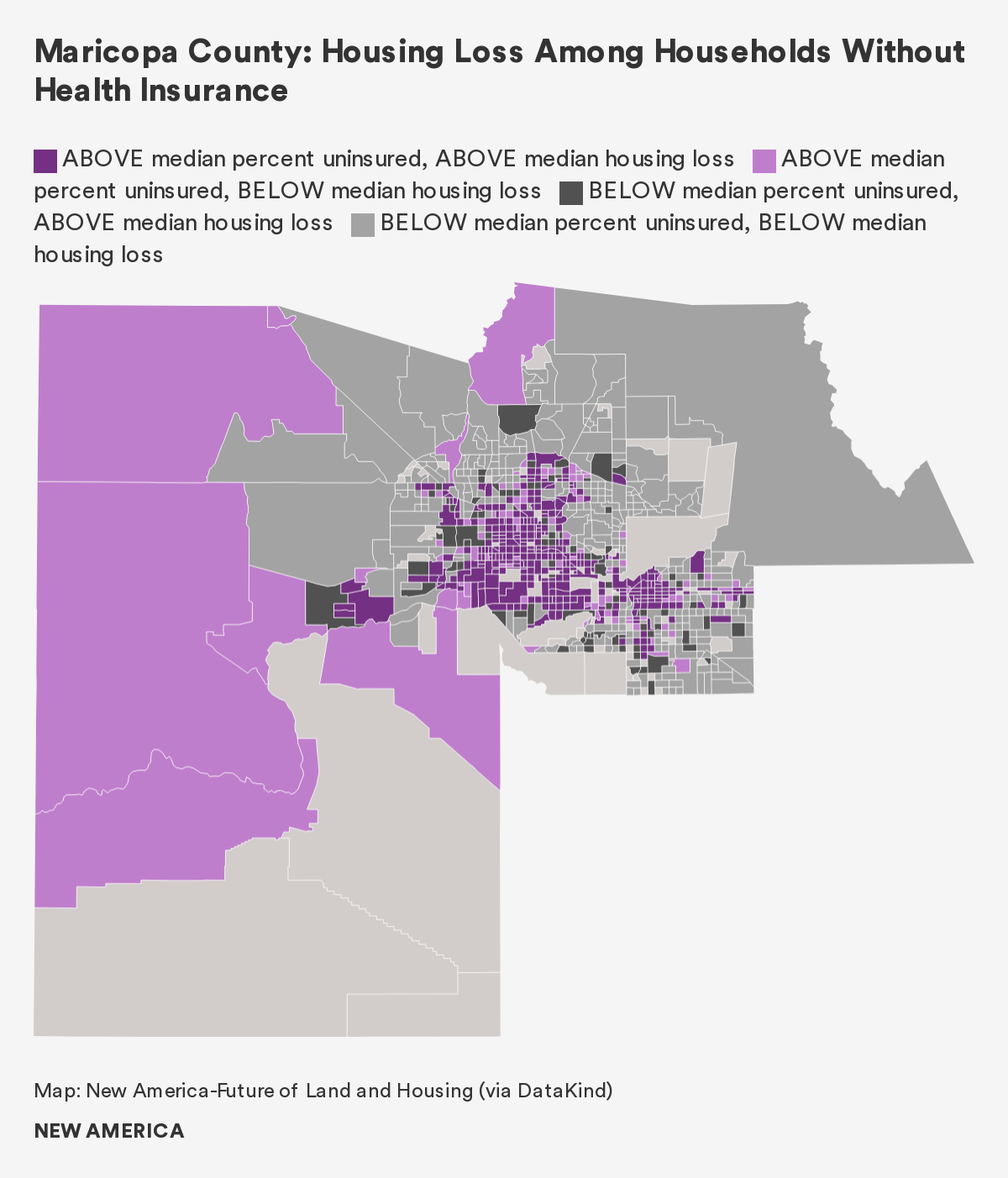
Displayed on a map, we see that the tracts with higher relative rates of uninsured residents and lower rates of housing loss are mostly on the outskirts of the major cities of Glendale, Mesa, and Phoenix. These cities are where we see a concentration of census tracts with above median households without health insurance and above median housing loss rates.
Additionally, census tracts with a higher percentage of immigrants experienced substantially greater rates of housing loss.
Tracts with more renters expressed substantially higher rates of home loss than census tracts with more homeowners, too. This relationship probably results, in part, from the fact that over half of Phoenix renters are housing-cost burdened, spending over 30 percent of their income on rent. These tenants may not be able to pay for housing and any unexpected expenses, leading to displacement.
Census tracts with a larger share of households that rely on public transportation for work commutes also had greater rates of overall housing loss. From previous research, we heard that dependence on unreliable public transportation systems can lead to repeated tardiness or absence from work, job loss, and a subsequent inability to pay for housing and other essentials. This scenario is quite plausible within Maricopa County, as access to bus and rail is generally limited, despite construction of the Valley Metro Rail in the early twenty-first century.
And tracts with more single-parent households experienced higher rates of displacement. The lack of two incomes, high costs of childcare, and difficulties in maintaining steady employment amid other responsibilities may contribute to this relationship.
Among all races and ethnicities, Latinx households had the strongest relationship with housing loss. Tracts with more Black households only show a marginally weaker relationship with displacement, in comparison. Similar to other Sun Belt case studies, as the percentage of white households in a census tract increased, housing loss rates declined.
Housing Loss and COVID-19
Interviewees in Maricopa County were quick to emphasize that populations currently at risk of housing loss, most notably wage workers in the service sector, were already vulnerable to displacement before the pandemic. The consequences of job loss are especially severe amid the COVID-19 pandemic, as many laid-off workers find it increasingly difficult to become re-employed.
The ongoing recession is also driving new groups into housing insecurity. For example, stakeholders mentioned many middle-class households are experiencing loss of income, or increased expenses as college- or adult-aged children move back home. Budgets tighten as a result, and these families increasingly become housing-cost burdened. Other groups now at risk of displacement include the self-employed, who are unable to access state unemployment benefits in Arizona, and single parents forced to quit their jobs in order to care for their children at home.
Wage workers in the service sector were already vulnerable to displacement before the pandemic.
The response to increased housing insecurity in Maricopa County was characterized as slow and uneven, particularly in regard to the disbursement of housing aid. Cities and towns with populations under 500,000 people did not receive CARES Act aid directly, and struggled to receive funds in a timely manner. Stakeholders noted that this inefficiency was due, in part, to Arizona Governor Doug Ducey placing the money in a general fund, which limited accessibility. These municipalities also lacked the resources, both public and private, of large cities, such as Phoenix or Mesa, perhaps compounding housing insecurity.
Interviewees highlighted a few successful responses to pandemic-related displacement as well. Local policy that allowed homelessness service providers to flexibly use funds for short-term hotel stays helped to lessen the burden of overcrowded shelters. And eviction moratoriums, enacted at both the state- and national-levels, helped to reduce displacement in Maricopa County. Still, many landlords are choosing not to renew leases, as demand for rental housing in the Phoenix area makes it easy to fill vacancies quickly.
Policy Solutions
Our policy recommendations to mitigate housing loss amid COVID-19 can be found in the report section: “Housing Loss in the U.S. Sun Belt.”
Citations
- From an interview with contributing author Alexandria Drake.
- Of note, an “eviction filing” is not the same thing as an “eviction.” An eviction filing initiates the formal eviction process within a court system. A filing does not mean that a tenant was actually evicted. Most times, a formal eviction is the result of a disposition or a summary judgment, and the tenant must vacate the rental unit in question. https://shelterforce.org/2018/07/30/eviction-filings-hurt-tenants-even-if-they-win/
- According to our previous research, the average cost to cool a home in Phoenix during the summer is $477, the most expensive rate in the country. For a family already spending more than 30 percent of their income on rent (i.e., a rent-burdened household), this extra cost adds a layer of economic vulnerability that can lead to housing loss.
- From an interview with contributing author Alexandria Drake.
Miami-Dade County, Florida
“The people who need stability the most are the people who are least able to lock in a stable housing cost.” – Housing Researcher, University of Florida14
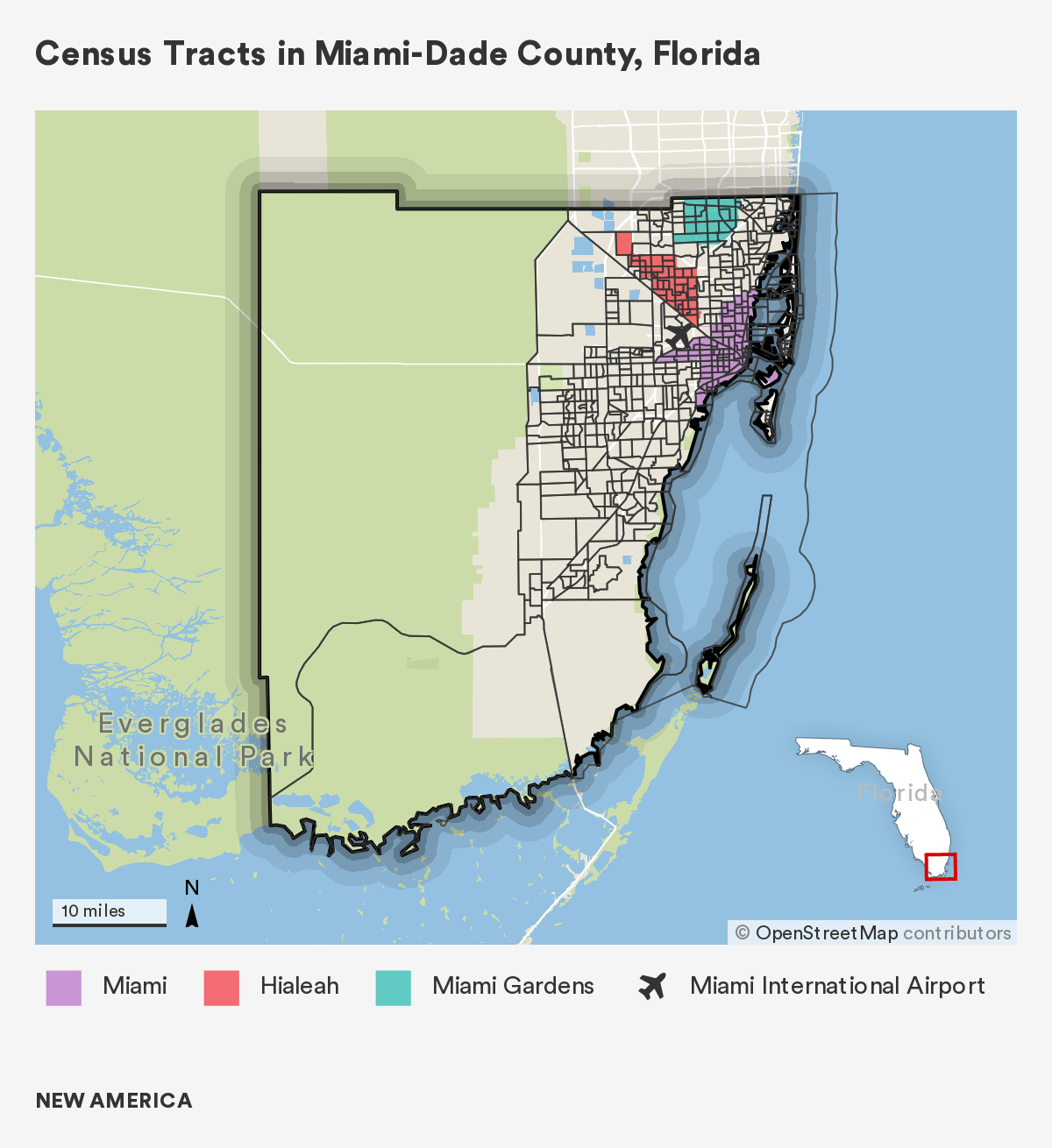
Situated on the Atlantic Coast in the southernmost tip of Florida, Miami-Dade County is home to the cities of Miami and Miami Beach, an international airport, and PortMiami, known as the “cruise capital of the world.” With 2.7 million residents, Miami-Dade is the most populous county in Florida.
Miami-Dade County has a multicultural, multilingual population. Sixty-six percent of the population speaks Spanish at home and over half the county’s residents are born outside of the U.S. The Latinx community makes up nearly 70 percent of the population and the Black community makes up 17.7 percent, while the non-Latinx, white residents account for 12.9 percent of the population.
Since the start of the COVID-19 pandemic, Miami-Dade County has experienced roughly 331,000 cases and 4,450 deaths. Adding to the public health toll, the unemployment rate in Miami-Dade County was 7.4 percent as of November 2020, which is over three times the level of unemployment during the same time in 2019. Housing insecurity was also acute: the Census Bureau’s Household Pulse Survey shows that 22.2 percent of residents surveyed in the Miami-Fort Lauderdale-Pompano Beach metropolitan area expect to be evicted or foreclosed upon in the next two months.
When and Where Are People Losing Their Homes?
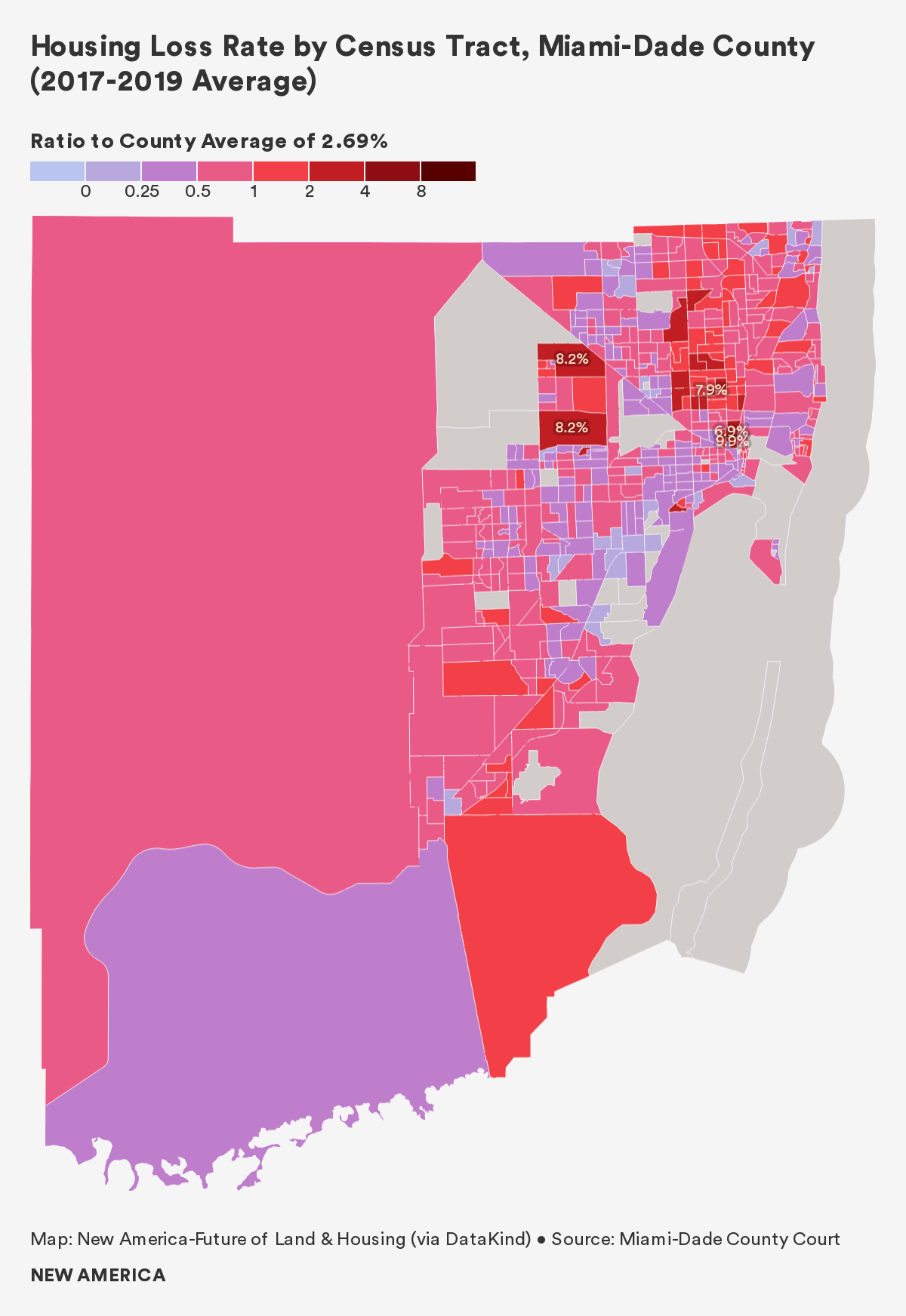
Overall Housing Loss: More than 150,000 people lost their homes through eviction and foreclosure between 2017 and 2019, a rate of 2.7 percent per year. This rate of housing loss is below average for the Sun Belt counties examined in this report.
Housing loss was most acute in tracts to the west of the Miami International airport and in the neighborhoods Opa-Locka, Westview, West Little River, Gladeview, and Brownsville. In these tracts, we saw housing loss rates two or three times higher than the rest of the county.
Evictions: In most of the counties we studied, evictions accounted for a disproportionate proportion of housing loss. By contrast, in Miami-Dade County evictions accounted for 53 percent of overall housing loss, closely aligning with the percent of residents in Miami-Dade who rent their homes, 49 percent. Roughly 29,000 households were evicted in Miami-Dade County, resulting in an eviction rate of 2.4 percent. This eviction rate is the lowest of the Sun Belt counties we studied, and fell by 10 percent over the course of the study period.
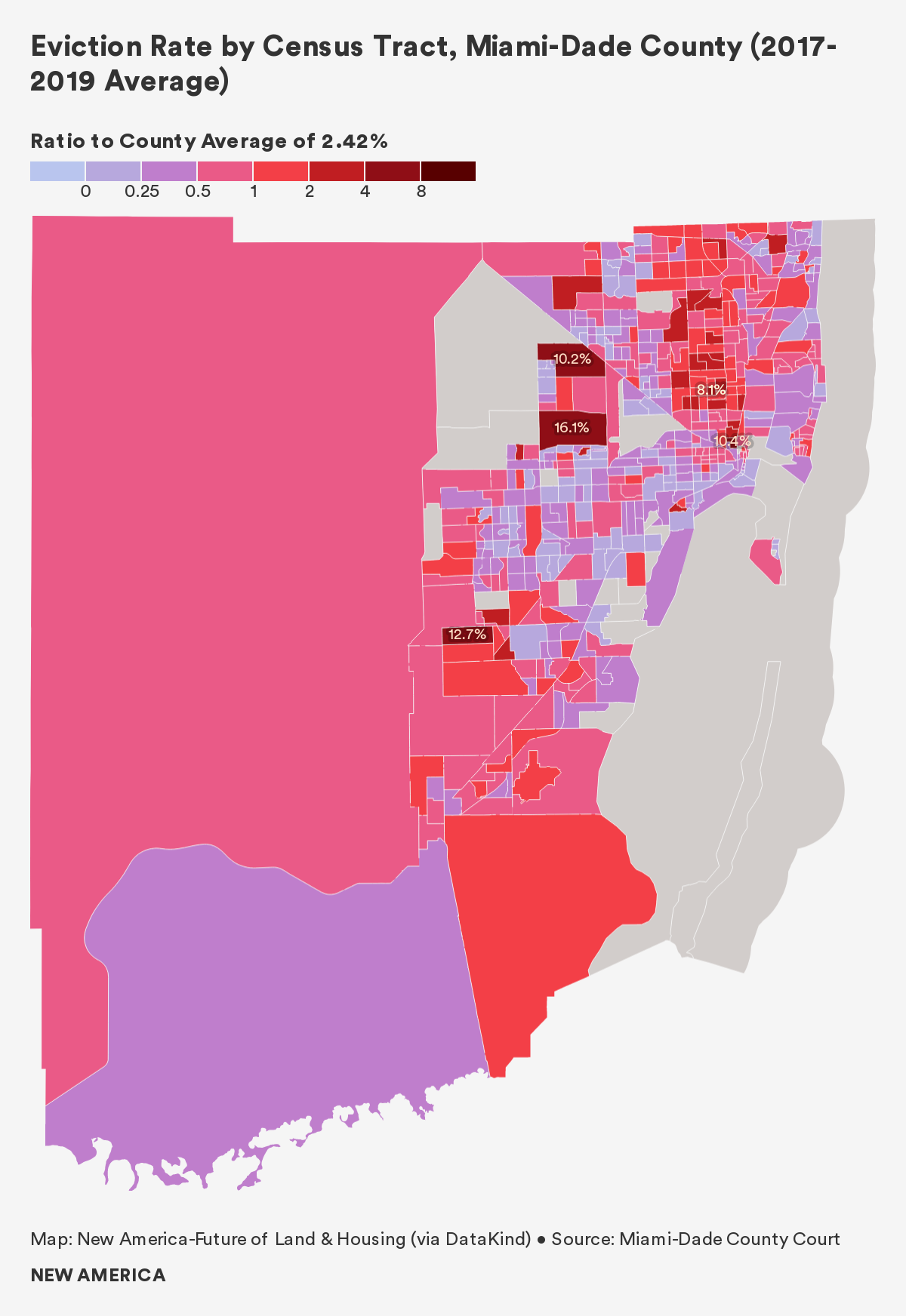
The highest eviction rates were in tracts west of the Miami International Airport, near Sweetwater and north of Doral. Two tracts in this area had eviction rates of 10.2 percent and 16.1 percent. A cluster of tracts around Opa-Locka and West Little River had high eviction rates, ranging from 4 percent to 8 percent. Close to downtown Miami, in Overtown, a historically Black neighborhood, the eviction rate is over 10 percent.
A Spotlight on Summer Evictions
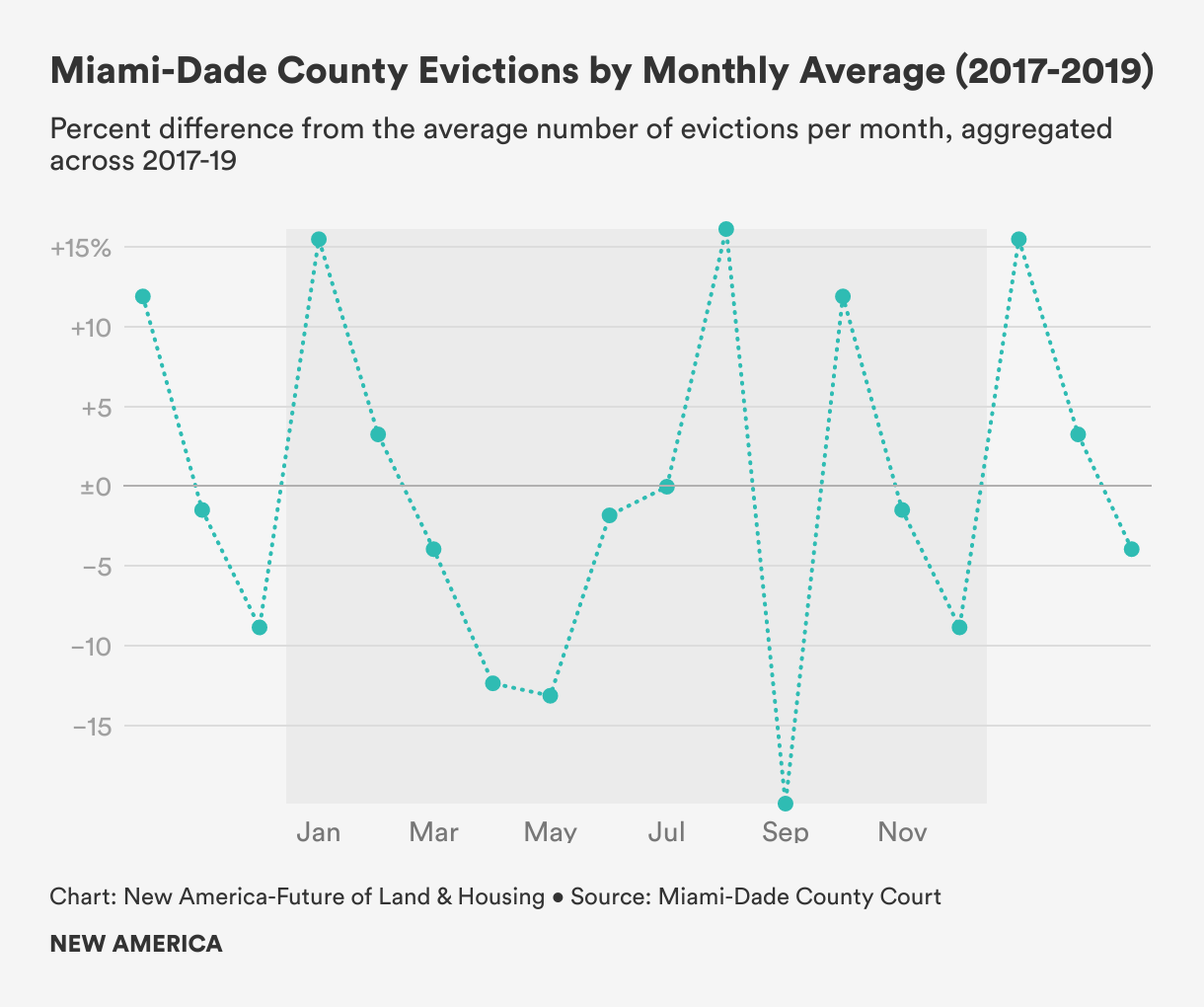
Similar to trends in other parts of the country and across the Sun Belt, evictions in Miami-Dade County drop steadily over the winter months and rise steadily from late spring until the end of summer. August had the highest average number of evictions at 971, followed by a 30 percent drop-off in September, which saw the lowest average number of evictions at 679.
Mortgage Foreclosure: The foreclosure rate for Miami-Dade is the highest of the seven Sun Belt counties included in this report. More than 26,000 households were foreclosed upon in Miami-Dade County over this three-year period, a foreclosure rate of 3.1 percent.
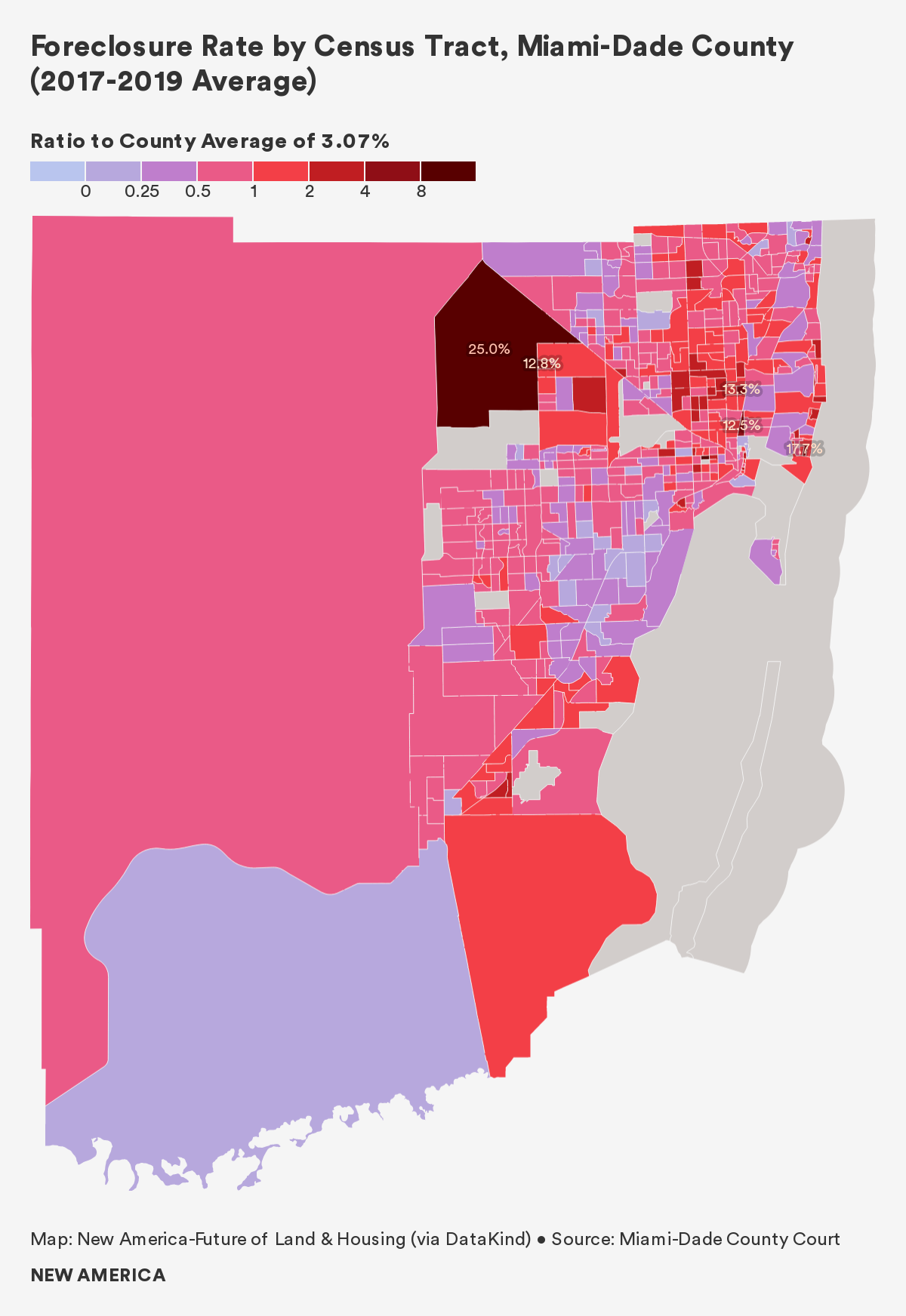
High foreclosure rates in Miami-Dade are clustered in two main areas: inland and to the northeast of the Miami International Airport in neighborhoods such as Brownsville, Gladeview, and West Little River; and along the coast in Mid-Beach and North Beach. The high foreclosure rates in these tracts range from 5 percent to 13 percent. There is a small tract in South Beach and a large tract to the west of Hialeah with foreclosure rates of 17.1 percent and 25 percent, respectively, but both have relatively few homeowners with mortgages.
Who Is Losing Their Home?
We found a strong relationship between home loss and racial composition in Miami-Dade County. We see that census tracts with a larger share of Black households are likely to experience higher rates of home loss than census tracts with fewer Black households. In other words, census tracts with more Black households are most at-risk of loss, notably via evictions, in comparison to all other races. Census tracts with higher percentages of Latinx households displayed a moderately negative relationship with evictions and housing loss.
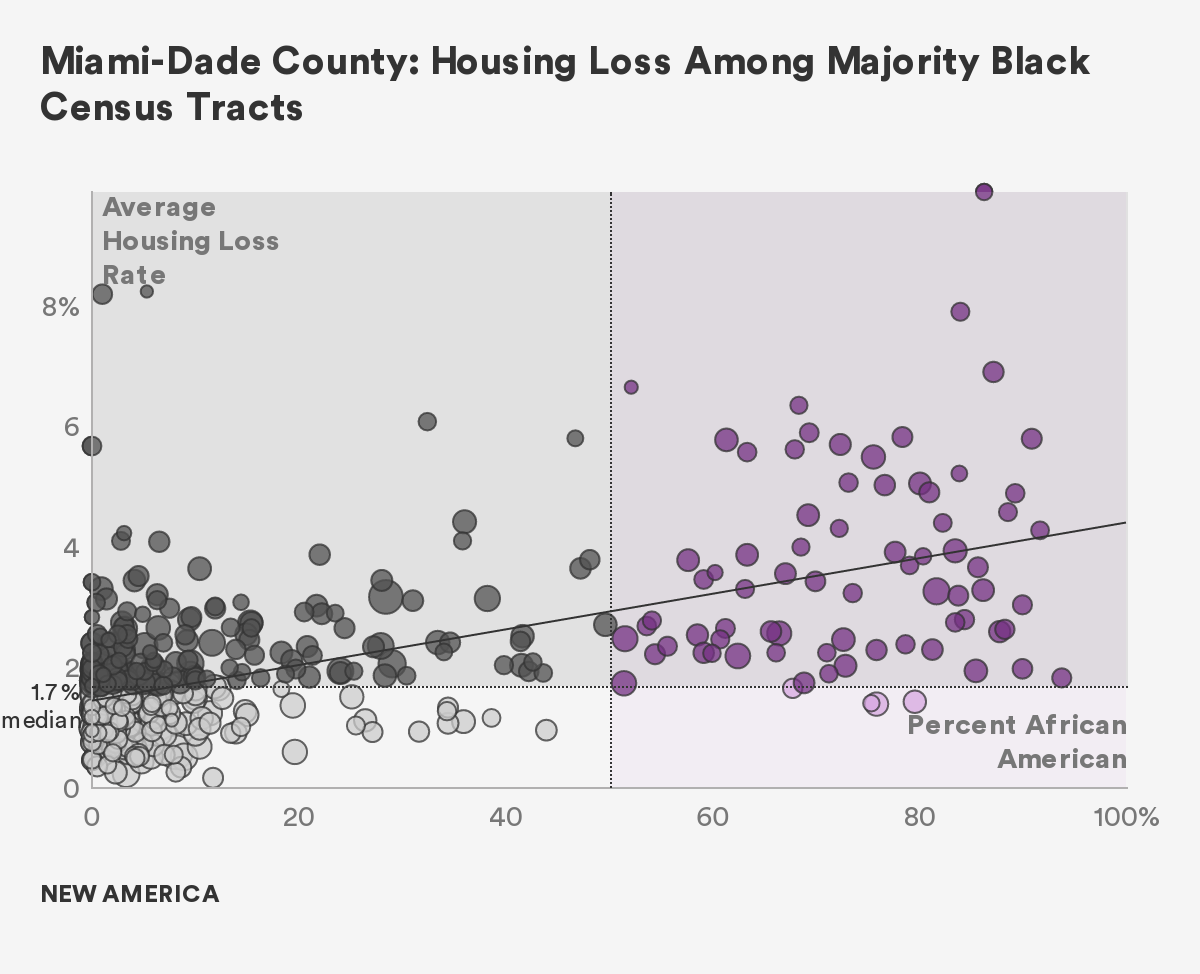
To better understand the relationship between housing loss and Black households, we categorized census tracts by whether they were majority Black (or whether the percent of Black households fell above or below 50 percent) and by whether the housing loss rate was above or below the county median of 1.8 percent. Categorized this way, census tracts fell into one of four categories. In the scatter plot, we can see that ninety-five percent of majority Black census tracts have housing loss rates above the median. We see there are only a few tracts that are majority Black and have below median housing loss rates, and these tracts do not fall too far below the median.
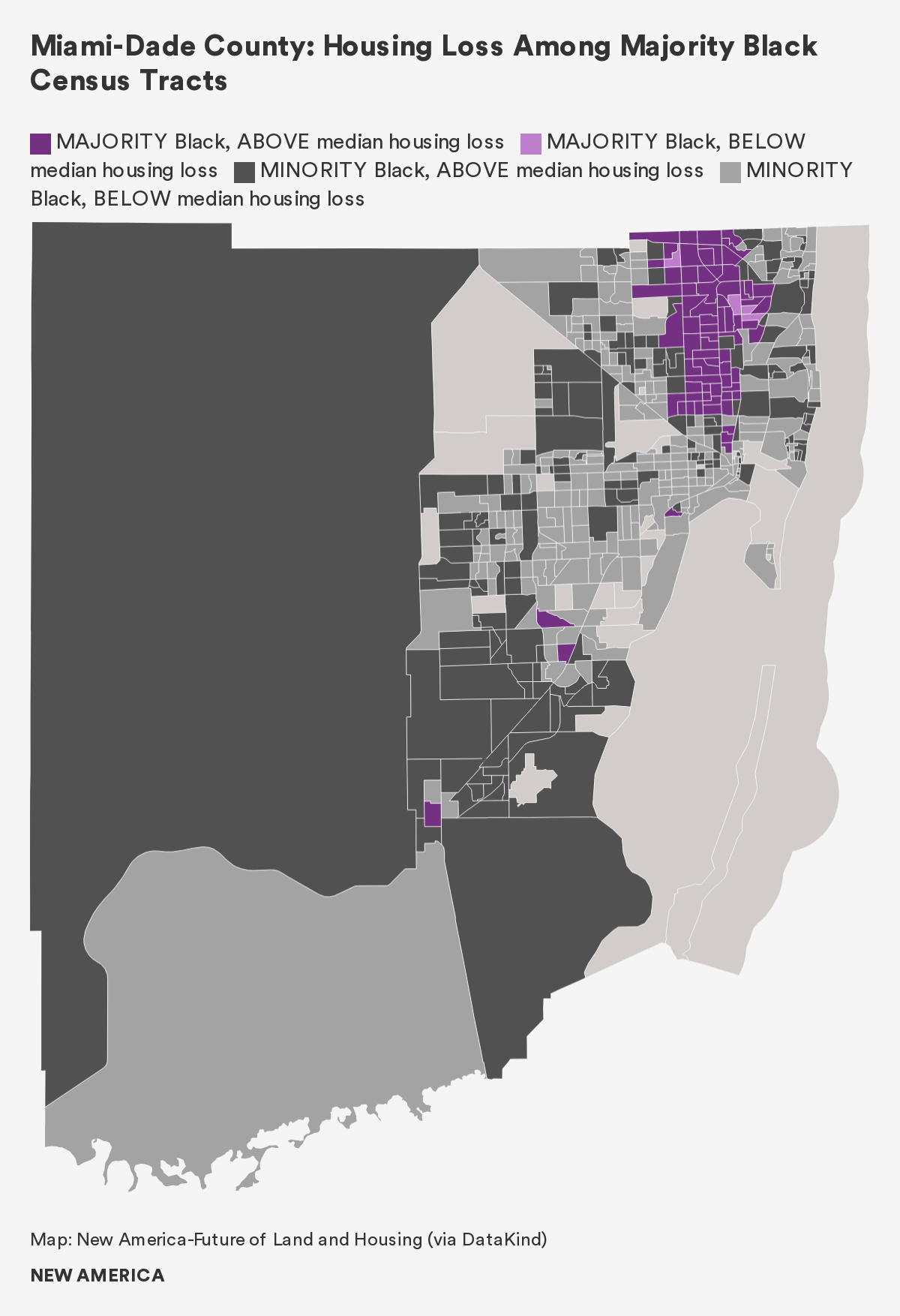
We mapped this data to better understand where in Miami-Dade County the relationship between Black households and housing loss is the most prominent. We see that majority Black tracts are nearly all clustered to the east of Hialeah, from Miami Gardens south to Model City, and almost 100 percent of these tracts have higher than median housing loss rates.
Notably, Miami-Dade County did not exhibit many of the relationships between social factors and housing loss that we saw in other Sun Belt counties. For example, we did not see noticeable correlations between high eviction and foreclosure rates and lack of health insurance or high percentages of single-parent households.
Housing Loss and COVID-19
Prior to the pandemic, housing experts identified two big sources of housing instability in Miami-Dade: the lack of quality affordable housing and the prevalence of outside investment in expensive housing. These forces made it difficult for even middle-income renters to afford homes, as they were often pitted against investors who paid in all cash. Interviewees discussed how incomes that were once high enough to support housing costs in Miami-Dade are no longer sufficient, and middle-income residents are increasingly cost-burdened. One example of this is in the historically Black Miami neighborhood of Liberty City, which is on higher ground than the surrounding neighborhoods, and where residents are seeing increasing in-migration from higher-income residents as part of “climate gentrification.”
COVID-19 has exacerbated existing challenges and increased housing instability across the county. Local stakeholders confirmed that residents in Miami-Dade who were “treading water” and “living on the edge” before the pandemic are the most vulnerable to housing loss. This includes seniors, undocumented immigrants, and low-income residents who mostly work in the informal economy, such as Lyft and Uber drivers, as well as those that are typically paid in cash (e.g., house painters, dog walkers, house cleaners, etc.).
One stakeholder said that the “scope and scale of need is so enormous” in Miami-Dade that COVID-19 relief funds will only go so far in alleviating housing instability. Local stakeholders explained that housing-specific COVID relief funds were split into three pots: one small and two big. The small pot was to fund specialized needs gaps, such as supportive housing for people with special needs or for existing organizations to make operational changes to how they house people. The two bigger pots went to a pre-existing collection of organizations that are part of the State Housing Initiatives Partnership (SHIP), specifically designed to distribute aid in crises, and to the Florida Housing Finance Corporation, which created a program for participating owners of state-sponsored affordable housing.
In describing housing-related aid, one stakeholder explained that Miami-Dade “got off to a late start and the implementation has been bumpy.” Several interviewees described significant variation in how funds have been distributed locally, from how much documentation organizations were requiring from applicants to whether organizations had the administrative capacity to process applications and distribute money. A local expert explained that while some organizations had preexisting processes in place to move money quickly, other organizations did not, and this created an access and equity issue in terms of who was able to receive assistance expeditiously.
Miami-Dade “got off to a late start and the implementation has been bumpy.”
Lastly, stakeholders described how critical the eviction moratoriums have been, especially for those living in housing that is not subsidized and whose rents do not fluctuate as their incomes fluctuate. One local stakeholder discussed the importance of robust advocacy on the changing status of tenant protections and eviction moratoriums as tenants that do not know their rights are more vulnerable to eviction.
Policy Solutions
Our policy recommendations to mitigate housing loss amid the pandemic can be found in the report section: “Housing Loss in the U.S. Sun Belt.”
Citations
- From an interview with contributing author Abbey Chambers.
Norfolk City, Virginia
“The same communities are being impacted doubly by COVID and by eviction at the same time right now.” – Researcher, RVA Eviction Lab at VCU15
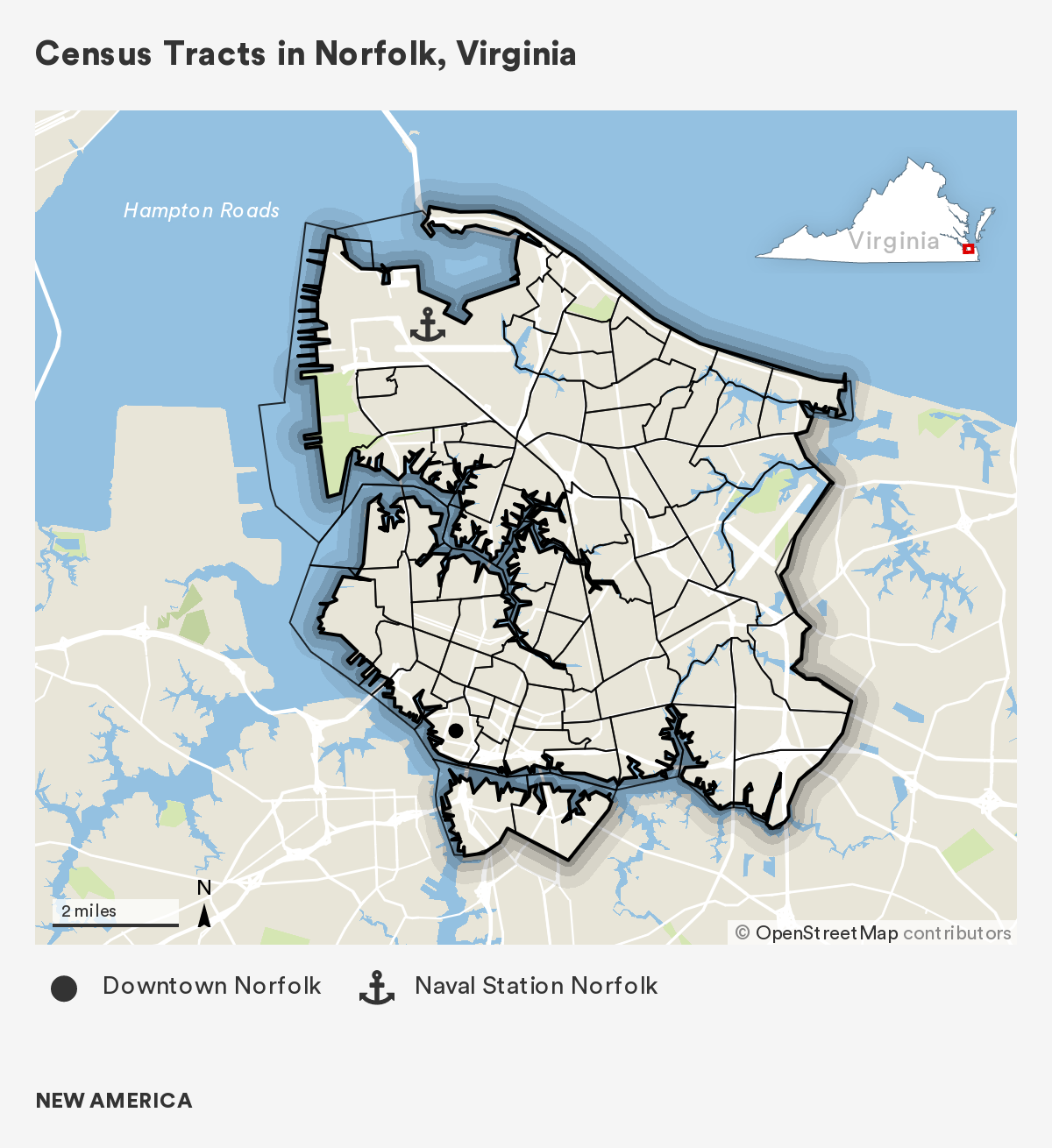
Norfolk City,16 an unincorporated county-equivalent in Virginia, is one of nine cities and seven counties that comprise the Hampton Roads metropolitan area. Located at the mouth of the Chesapeake Bay, Norfolk City is mostly surrounded by water, lending the city importance from a military and transportation standpoint. It is home to the largest naval base in the world, Naval Station Norfolk, as well as roughly 242,700 residents.
Forty-three percent of Norfolk City residents are non-Latinx white, and the rest of the city is 42 percent Black, 9 percent Latinx, and 4 percent Asian. Norfolk’s large military present accounts for 16 percent of residents, over double the nationwide average.
Since the start of the COVID-19 pandemic, Norfolk City has experienced roughly 10,500 cases and 120 deaths. As of November 2020, the unemployment rate in Norfolk was 6.8 percent, which is more than double the level of unemployment during the same time in 2019. Further, results from the U.S. Census Bureau’s Household Pulse Survey shows that 22 percent of Virginia residents expect to lose income from employment in the next month. This same survey revealed that 32 percent of renters and homeowners surveyed expected to be evicted or foreclosed upon in the next two months.
When and Where Are People Losing Their Homes?
Overall Housing Loss: Residents in Norfolk City, Virginia experienced housing loss at a rate of 5.4 percent between 2017 and 2019, meaning roughly one in 18 renters and homeowners with a mortgage lost their homes each year. This is nearly more than double the housing loss rate of the rest of Sun Belt counties we examined.
Unlike the other sections in this report, we are unable to produce a housing loss rate map for Norfolk City, as we analyze foreclosures at the census tract level, and evictions at the zip code level.
Evictions: Just over half of Norfolk residents rent their homes, and yet evictions accounted for 90 percent of housing loss from 2017 to 2019. Over this three-year period, 11,327 households were evicted, resulting in an eviction rate of 7.6 percent, among the highest in the country.
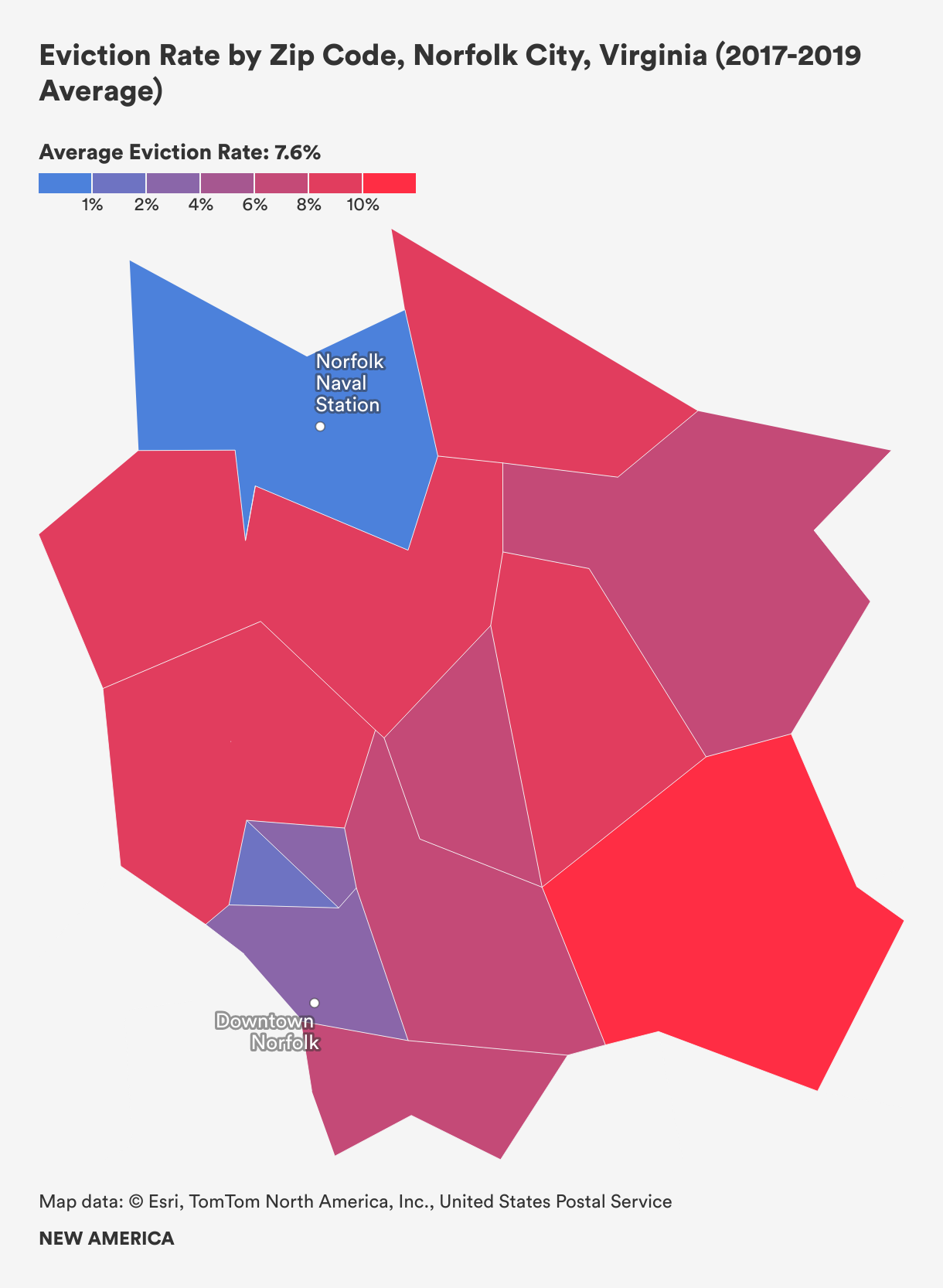
A Spotlight on Summer Evictions
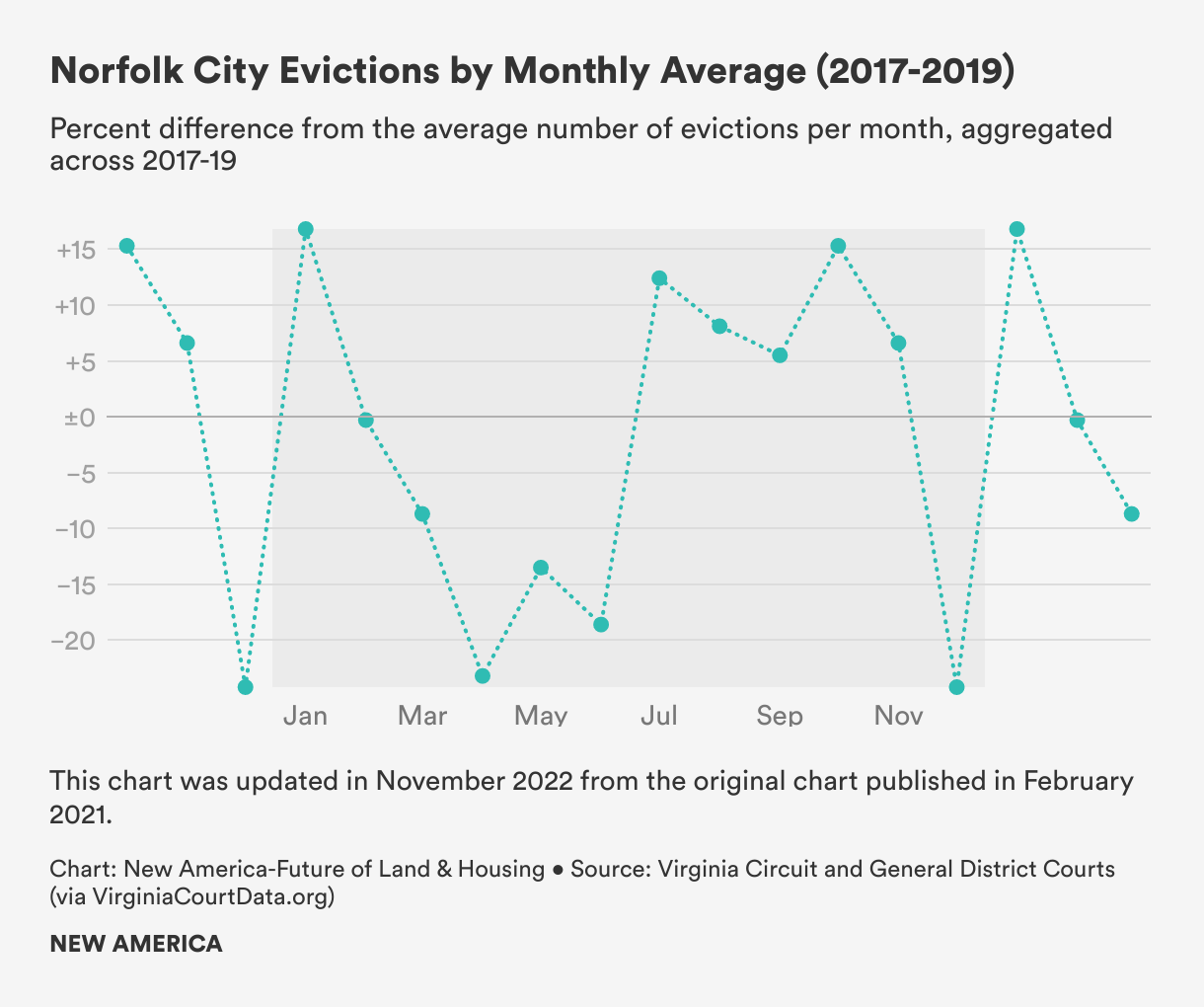
Evictions in Norfolk City peaked in July and remained steady and high throughout the summer and into the fall, before dropping sharply in October and November.
Mortgage Foreclosure: Homeowners are at much lower risk of housing loss than renters. Forty-three percent of residents own their homes, and yet mortgage foreclosures only accounted for six percent of housing loss from 2017 to 2019. During that time period 1,276 households were foreclosed upon in Norfolk City, resulting in a foreclosure rate of 1.5 percent. While this foreclosure rate is slightly higher than the average foreclosure rate across all Sun Belt counties, it is nowhere as acute as the city's eviction rate.
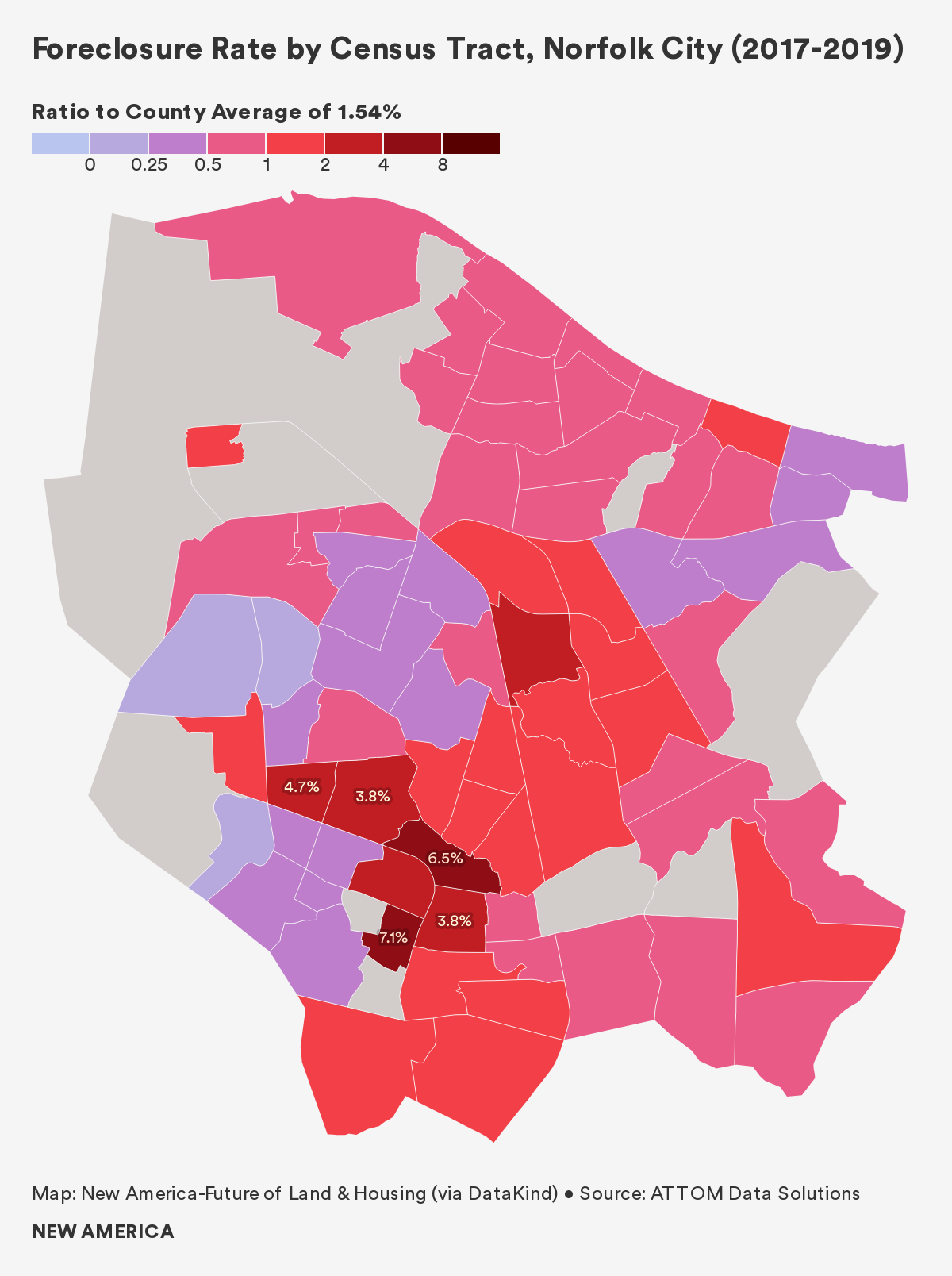
Higher foreclosure rates in Norfolk are clustered in tracts neighborhoods to the southwest of the Lafayette River, such as Lindenwood and Barraud Park. In these neighborhoods, foreclosure rates were four times the county average.
Who Is Losing Their Home?
Similar to other counties in the Sun Belt, we found a strong relationship between mortgage foreclosure and race. Census tracts with a larger share of Black households saw higher rate of foreclosure. We also saw higher rates of foreclosures in census tracts in which more residents took public transportation to work and in census tracts with higher proportions of single parent households.
Housing Loss and COVID-19
Local housing experts interviewed for this study explained that prior to the pandemic, affordable housing in Norfolk City was constrained by several factors. Little to no available land combined with flood risk means that new housing must be built vertically. Further, much of the existing affordable housing stock is older and in poor condition.
Norfolk’s large military presence impacts rent prices in Norfolk and surrounding areas. One interviewee noted that landlords periodically raise rents knowing that the military pays housing allowances to its employees. This practice has reverberating impacts for the rest of the residents living in Norfolk County, most of whom are severely housing cost-burdened. Interviewees also noted that displaced residents often move to more affordable Hampton Roads cities, including Chesapeake and Virginia Beach. Lastly, interviewees emphasized that homelessness is a major issue, in part because of inadequate shelter availability.
Stakeholders said they do not believe state and local governments have adequately stabilized households impacted by COVID-19 since the establishment of the statewide eviction moratorium. Norfolk City allocated $2 million to the Norfolk Redevelopment and Housing Authority (NRHA) to help fund rent and utility assistance, as well as programs offering rental and loss mitigation counseling. Aid is distributed through local non-profits. However, local stakeholders emphasized that the onerous application requirements for recipients of COVID relief funds, which include proof of loss of income, previous tax returns, among other documentation, has hampered aid distribution.
While program staff for a non-profit involved in aid distribution noted the high degree of interagency collaboration, another program director at a different local non-profit explained that outreach to low income and high impacted areas is limited. This stakeholder says there is virtually no visibility or awareness of resource availability in some communities, and that engagement and outreach to local nonprofits has been insufficient.
Policy Solutions
Our policy recommendations to mitigate housing loss amid COVID-19 can be found in the report section: “Housing Loss in the U.S. Sun Belt.”
Updated at 9:00 a.m. on November 9, 2022: This report has been changed to to update thee eviction analysis in this section and better reflect zip code-level data from virginiacourtdata.org. This update eliminates the need to proportionally assign eviction records from the zip code-level to the census tract-level. This update results in changes to any Norfolk City analysis or data visualization that relied on eviction rates, both in this section and in the Housing Loss in the Sunbelt section.
Citations
- From an interview with contributing author Jack Portman.
- We chose to omit Census Tract 51710990000 from our Norfolk City maps, as it is located entirely in the Chesapeake Bay and does not include any households.
Orange County, Florida
"At $15 an hour, there isn't a single apartment in the city of Orlando that you could live in." – Leader of Philanthropic Foundation in Florida17
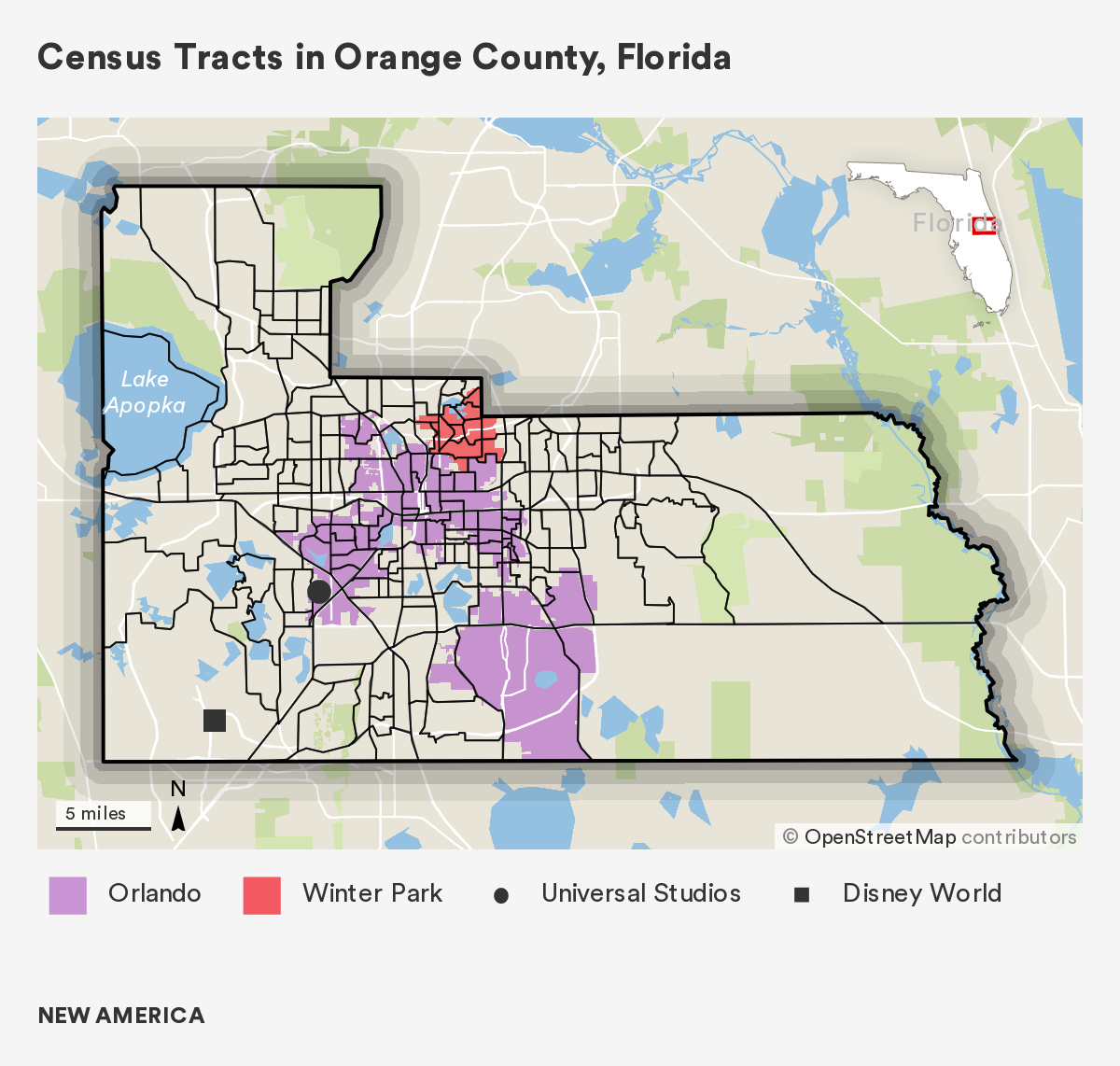
Orange County is located in central Florida and is home to Orlando. Approximately 1.3 million residents live in Orange County. The presence of Disney World and Universal Studios makes Orange County a world-renowned tourist destination.
Approximately 40 percent of Orange County residents are non-Latinx, white and 33 percent are Latinx. Black residents account for 23 percent of the population of Orange County, followed by Asians, who make up 6 percent.
Since the start of the COVID-19 pandemic, Orange County has experienced roughly 88,700 cases and 804 deaths. Adding to the public health toll, the unemployment rate in Orange County was 8.1 percent as of November 2020, more than triple the 2.8 percent unemployment rate during the same time in the previous year. Housing insecurity was also acute; the Census Bureau’s Household Pulse Survey shows that 37 percent of residents surveyed in Florida expect to be evicted or foreclosed upon in the next two months.
When and Where Are People Losing Their Homes?
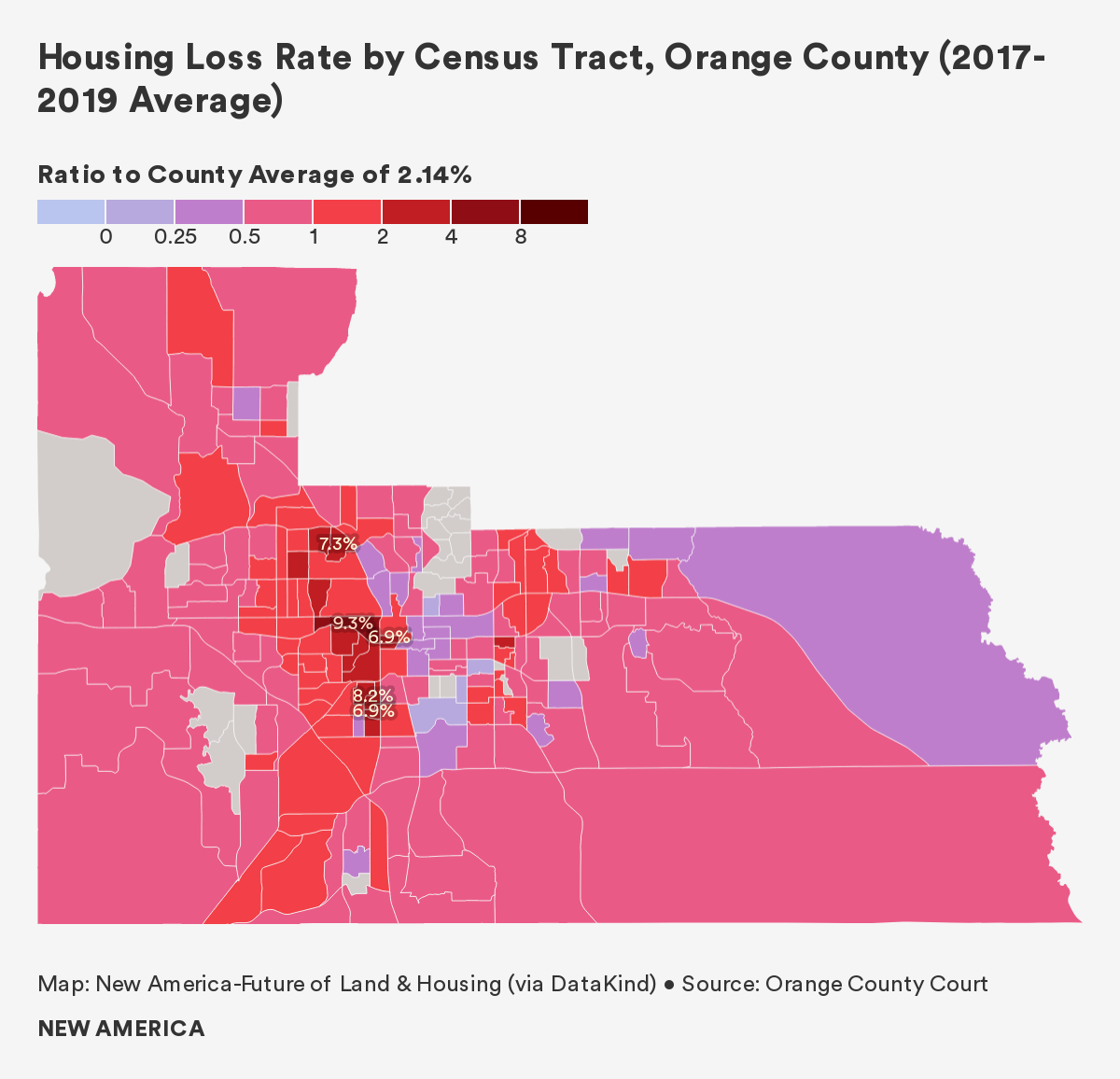
Overall Housing Loss: Residents in Orange County experienced housing loss at a rate of 2.1 percent between 2017 and 2019, meaning that each year one out of every 50 renters and homeowners with a mortgage lost their home. This rate was the lowest of all the counties we studied, however the average masks pockets of Orange County that experience acute housing insecurity.
Housing loss in Orange County is most acute in census tracts in west-central Orlando, particularly in and around the Parramore neighborhood where rates were three times the county average. Parramore was developed as a segregated Black community, and the legacy of segregation and racist housing policies that excluded Black residents from white neighborhoods are clear today.
Parramore was developed as a segregated Black community, and the legacy of racist housing policies and urban development that excluded Black residents from white neighborhoods is clear today.
Evictions: Forty-five percent of residents in Orange County rent their homes, but evictions accounted for 66 percent of housing loss from 2017 to 2019. Nearly 16,000 households were evicted in Orange County over our study period, resulting in an eviction rate of 2.6 percent. This is a significantly lower eviction rate relative to the other Sun Belt counties.
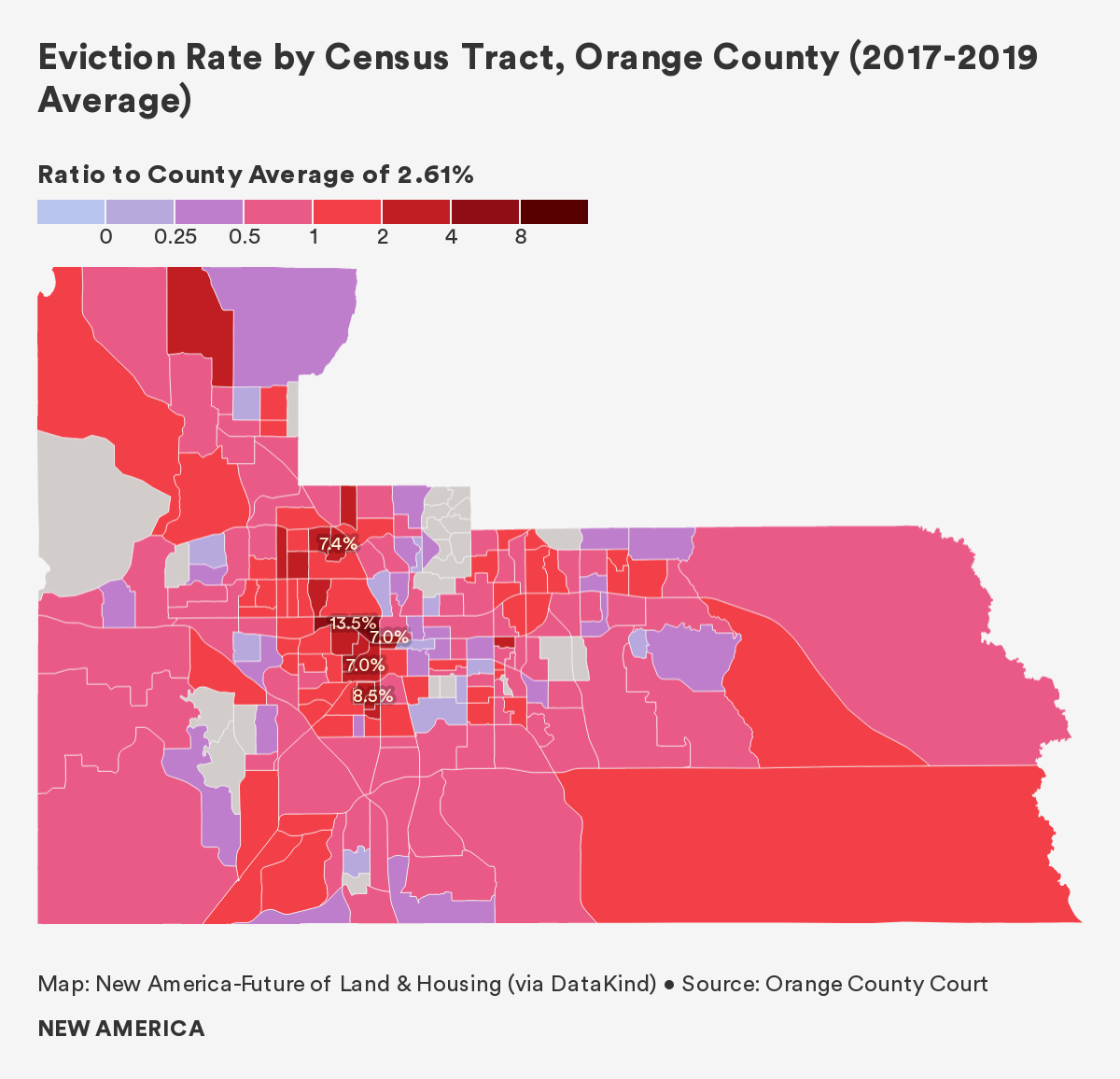
Eviction rates were most acute in census tracts to the west of downtown Orlando, around Parramore, Lake Sunset, Rio Grande Park and in the neighborhoods between Hiawassee and route 441. The tracts with relatively high eviction rates ranged from 5 percent to 7 percent, with one tract that included the neighborhoods Haralson Estates, Rock Lake, and Lorna Doone reaching as high as 14 percent.
The Seasonality of Evictions in Orange County: Bucking the Trend?
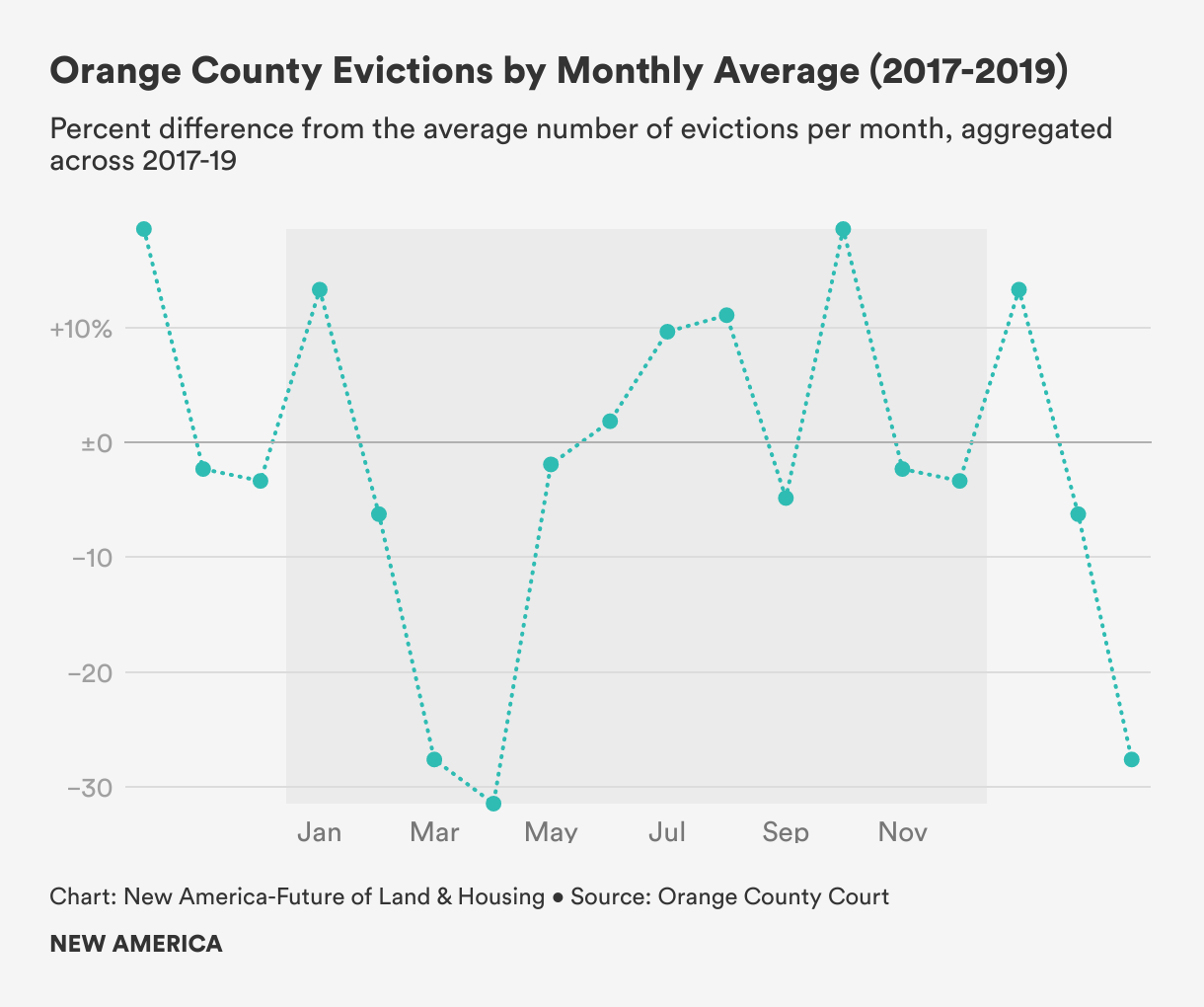
Average evictions in Orange County were high in January and fell steadily until April, falling on average 34 percent over these four months. From April to August, evictions rose steadily, until September when they fell sharply again. Average evictions spiked back up in October, only to decline again during the last couple of months of the year.
Mortgage Foreclosures: Homeowners are less at risk of housing loss than renters. While fifty-five percent of residents in Orange County own their home, mortgage foreclosure accounted for 34 percent of housing loss from 2017 to 2019. Just over eight thousand households were foreclosed upon in Orange County during our study period, resulting in a foreclosure rate of 1.6 percent.
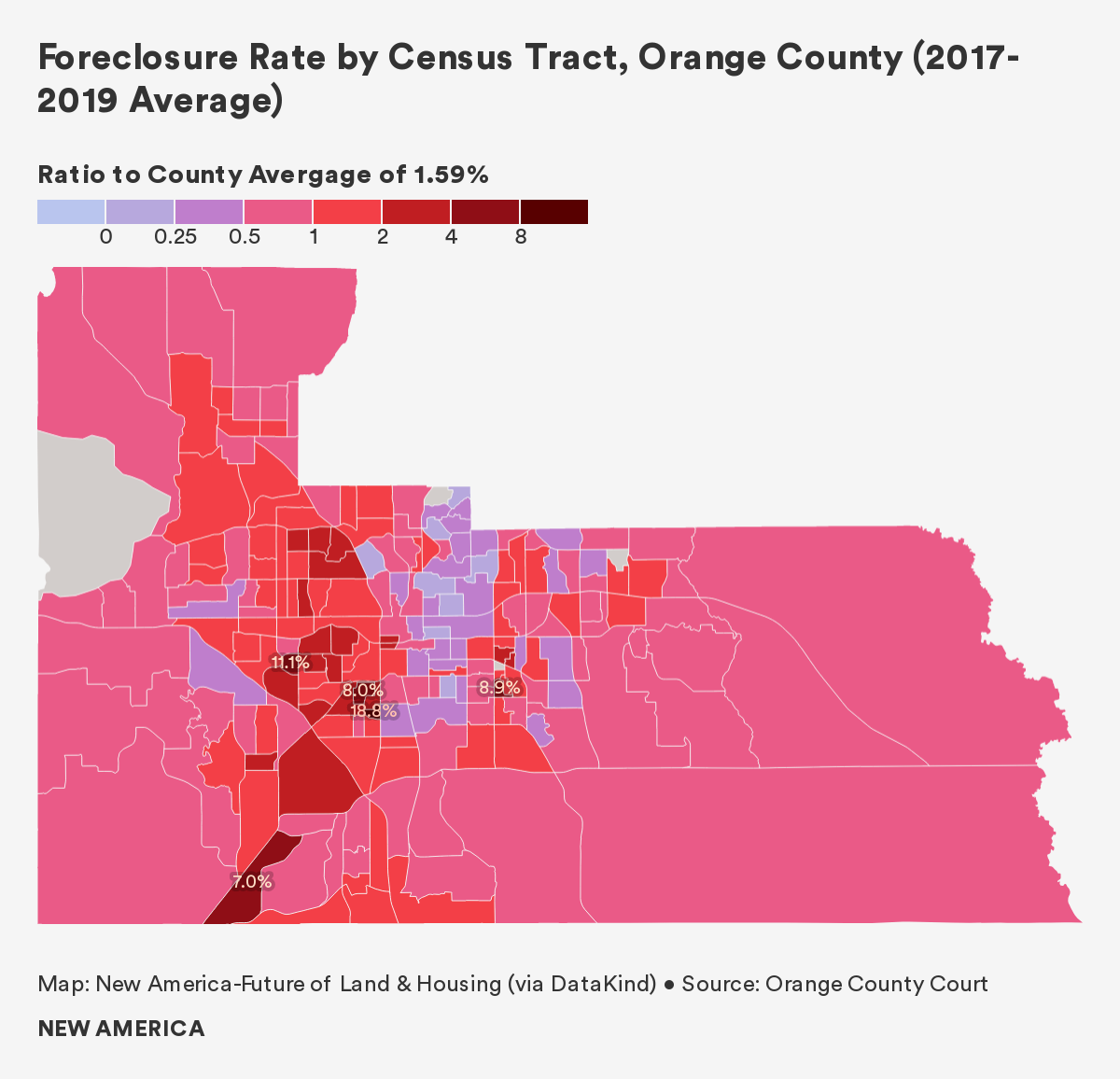
While foreclosure rates in Orange County were consistently higher than average in the neighborhoods to the west of downtown Orlando, these tracts also had fewer homeowners with mortgages than other parts of the county. These tracts had foreclosure rates ranging from 2 percent to 4 percent, with the exception of two tracts in Park Central, which had foreclosure rates of 8 and 19 percent, and another tract by Valencia College, which had a foreclosure rate of 11 percent. Though there are very few of them, tracts with foreclosure rates of 9 percent or above had less than 50 homeowners with mortgages, and are not typical of county dynamics overall. Relative to other counties, foreclosure rates in Orange County were relatively steady, with fewer fluctuations and fewer hotspots.
Timeshares and Foreclosures in Orange County
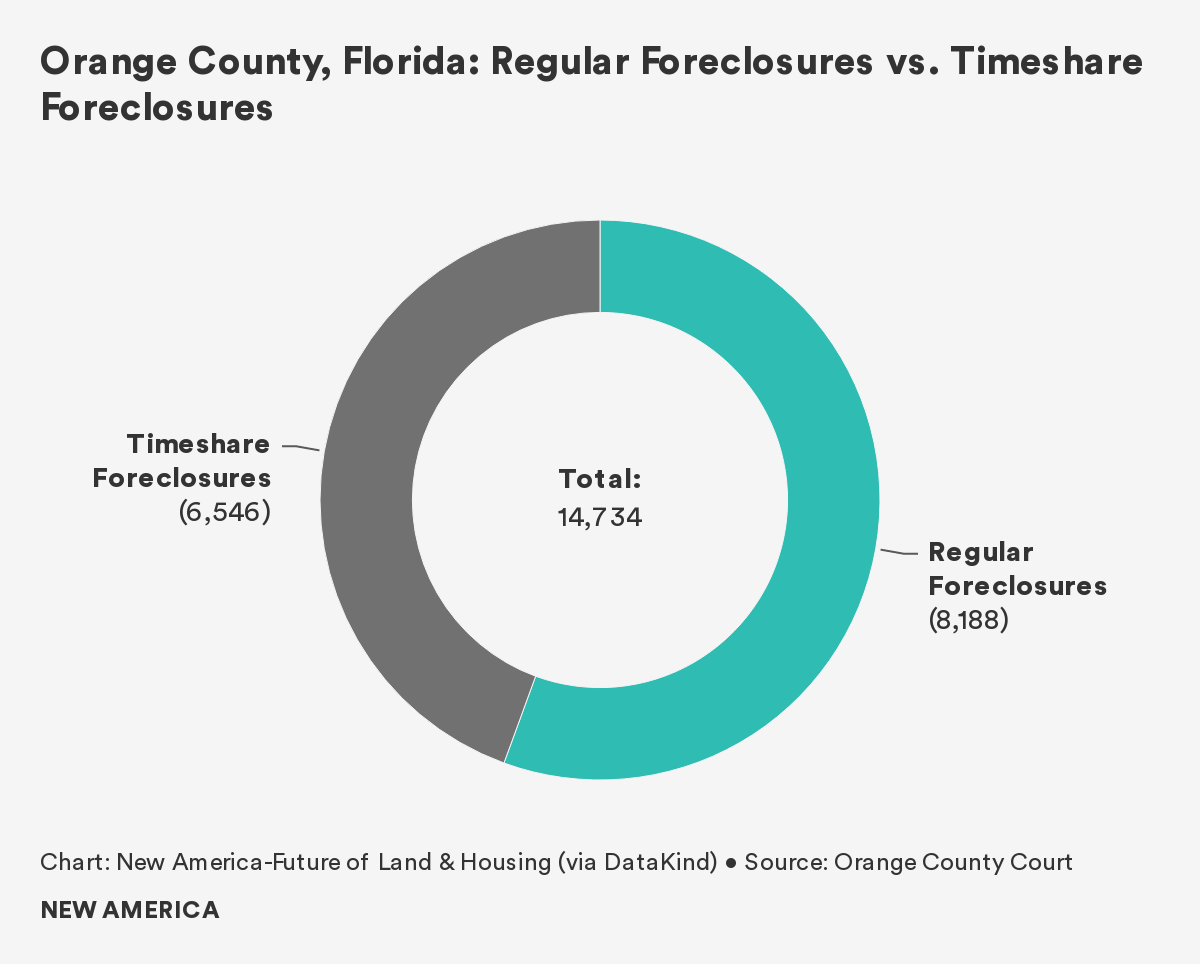
As our partners at DataKind cleaned and analyzed the foreclosure dataset they had received from the Orange County Court, they noticed a fascinating trend that we did not see in any of our other case study locations: approximately 6,500 of the county's 14,000 foreclosures were timeshares.
Perhaps unintuitively, it is possible for a timeshare to go into foreclosure. If a timeshare owner takes out a mortgage on their timeshare purchase, that mortgage is subject to delinquency and foreclosure just like a traditional home mortgage.
However, while a timeshare foreclosure certainly results in negative credit impacts, it is unlikely to lead to housing instability or homelessness as would the foreclosure of a primary residence. Since this report focuses on housing instability and loss, we decided to omit this data from our analysis. If we were to include "timeshare foreclosures" in our calculations, Orange County's foreclosure rates would nearly double.
Who Is Losing Their Home?
Orange County exhibited a strong relationship between home loss and race. Evictions, foreclosures, and overall housing loss was substantially higher in census tracts with a larger share of Black households. Tracts with a higher percent of households that rely on public transportation to get to work, and tracts with more households without health insurance, also showed higher housing loss rates.
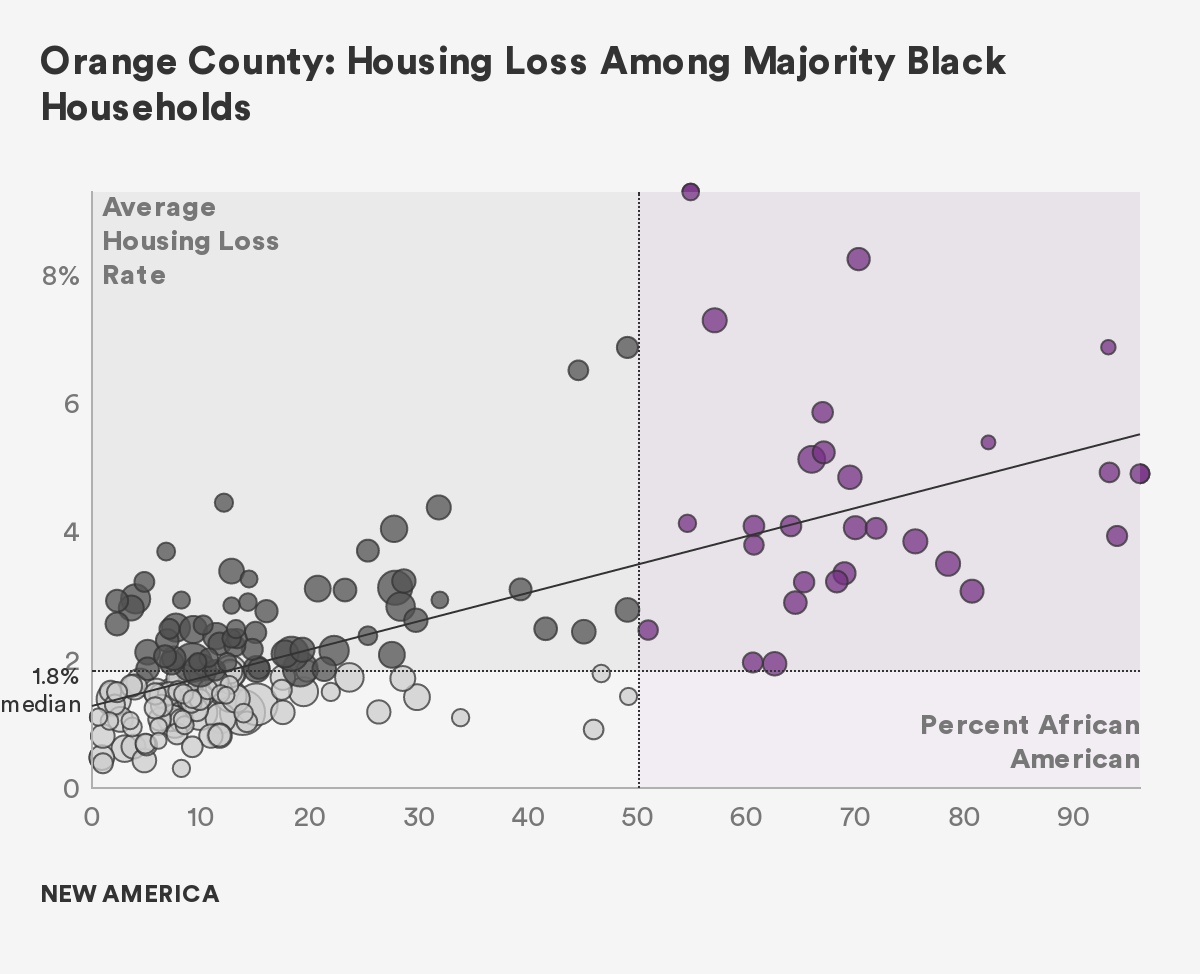
To understand the relationship between housing loss and Black households better, we categorized census tracts such that they fell into one of four categories: by whether they were majority or minority Black (in other words, whether the percent of Black households fell above or below 50 percent) and by whether the housing loss rate was above or below the county median of 1.8 percent. In the scatter plot, we see that all majority Black census tracts in Orange County had housing loss rates above the median.
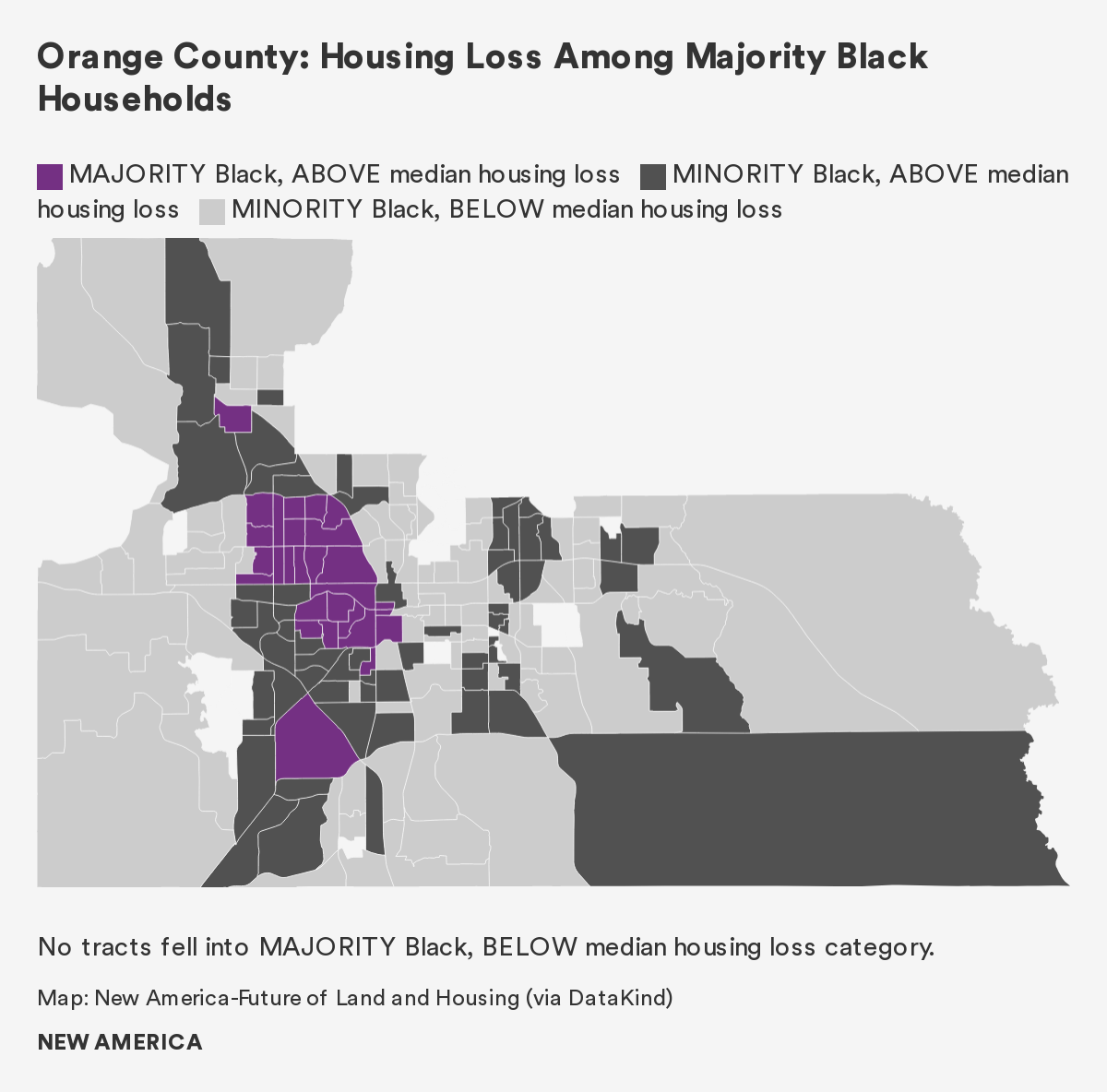
To better understand where in Orange County the relationship between race and housing loss is most prominent, we mapped this relationship. Census tracts with higher concentrations of Black households and above average housing loss rates are clustered in west-central Orlando from the Rosemont neighborhood south to Rio Grande Park.
Housing Loss and COVID-19
Prior to the pandemic, access to affordable housing was impeded by several factors. First and foremost, decades of population growth and yearly tourist traffic have resulted in increased rents in Central Florida that have outpaced wage growth throughout the region, particularly in Orange County. As a result, many residents live in areas outside Orlando where rent is more affordable and commute to Orlando.
Further, local affordable housing stock is limited by a widespread practice wherein developers convert available low-cost real estate into timeshare or rental properties. As a result, “naturally occurring” affordable housing has become increasingly unaffordable over time. According to one interviewee, state and federal business incentives, such as tax credits and funding available to developers, are not sufficiently lucrative to facilitate private development of affordable housing.
The county’s limited supply of affordable housing is in high demand, contributing to competition for what little affordable housing is made available. This may constitute a roadblock to rehousing families once they have been evicted. As such, many renters are displaced to older hotels and motels, like the ones along the route 192 corridor in Osceola County.
According to interviewees, COVID-19 has acutely impacted Orange County. Home to Disney World and Universal Studios, leisure and hospitality jobs account for 16 percent of the workforce in Orlando. This sector has seen a 31 percent drop in employment from the same time last year. The service workers facing eviction or economic hardship as a result of the pandemic were already vulnerable to housing loss because their low wages did not cover the rising cost of housing. This insecurity is now severely exacerbated in the wake of mass layoffs at Disneyworld and elsewhere. Interviewees expect evictions to dramatically increase after moratoriums end. Outside evictions, there has been an uptick in lease non-renewals, potentially indicating that people are being priced out as unemployment increases.
Orange County used its CARES funding to institute an eviction diversion program that circumvents civil court mediation and relies instead on mutual agreements between landlords and tenants. The program makes available up to $4,000 per rental property to cover housing debt. Some stakeholders noted that recruiting landlords, notably larger landlords, to participate in the program has been difficult. While the eviction diversion program expires at the end of January 2021, the program will continue in some form with funding from the recent federal relief package. The new program will increase the dollar amount of assistance available per household and cover a longer time span. As eviction moratoriums are extended, applications to the eviction diversion program are increasing.
The distribution of relief funds related to the pandemic has been hampered by several factors. The county deployed relief funding through existing channels, which already had numerous documentation requirements for residents. Further, existing aid distribution organizations lack the staffing capacity to handle misapplications and other issues. While Orlando distributed its $2.5 million allocation to residents before the end of the year, it is unclear whether Orange County utilized all of its allocated CARES Act funding before the spending deadline.
The modified loans that banks have offered homeowners to avoid foreclosure typically constitute brief forbearances followed by balloon payments. This could contribute to an even higher number of foreclosures once forbearances end.
Policy Solutions
Our policy recommendations to mitigate housing loss amid COVID-19 can be found in the report section: “Housing Loss in the U.S. Sun Belt.”
Citations
- From an interview with contributing author Jack Portman.
More About the Authors

Tim Robustelli
Deputy Director of Housing and Climate, Future of Land and Housing

Yuliya Panfil
Senior Fellow and Director, Future of Land and Housing

Emily Yelverton

Sabiha Zainulbhai
Deputy Director, Future of Land and Housing Program

Mallory Sheff

Caitlin Augustin
Issues
Programs/Projects/Initiatives
Related