#5 Students Think Hands-On Training is Useful, But Few Adults with Short-Term Certificates Receive This Training
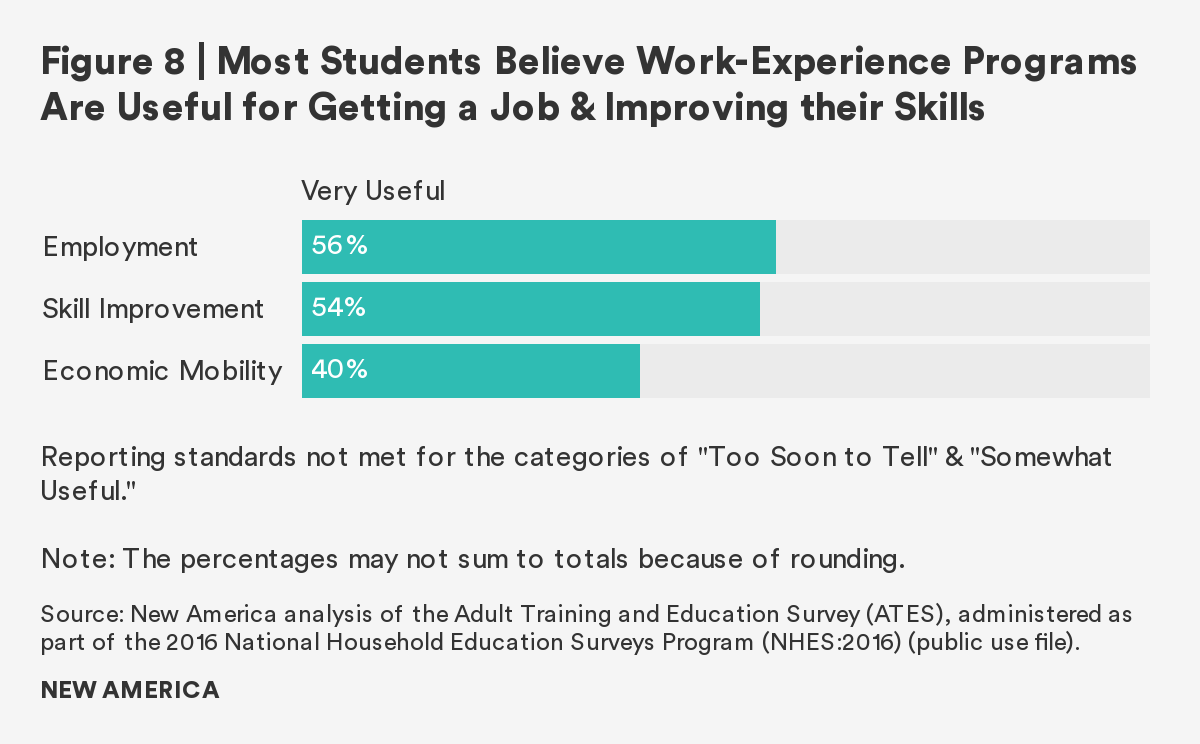
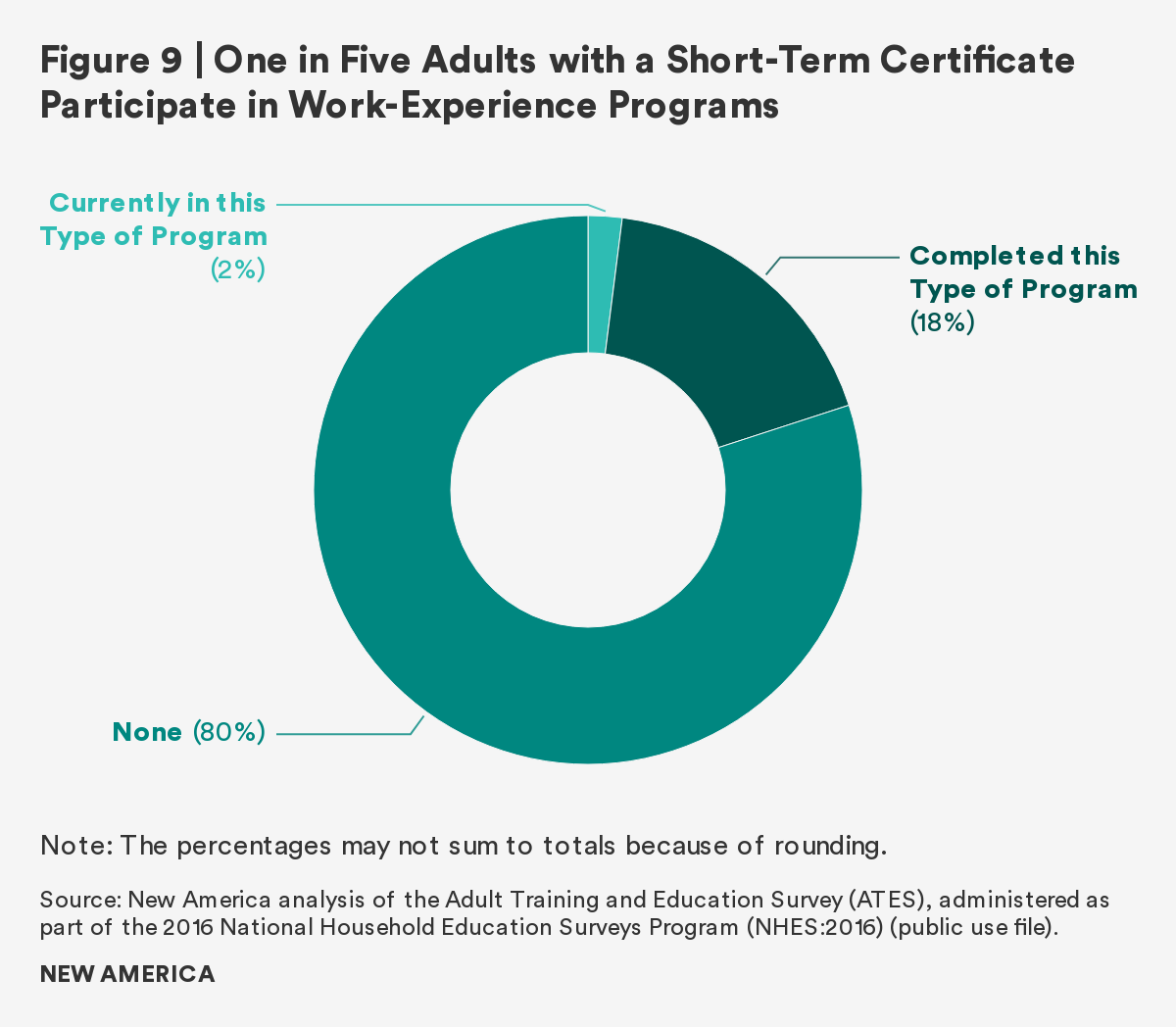
Although the majority of adult students who participate in work-experience programs31 (such as internships or apprenticeships) believe these hands-on experiences are very useful for getting a job and improving their skills, as shown in Figure 8, only one in five adults with a short-term certificate has the opportunity to participate in such experiences, as shown in Figure 9.
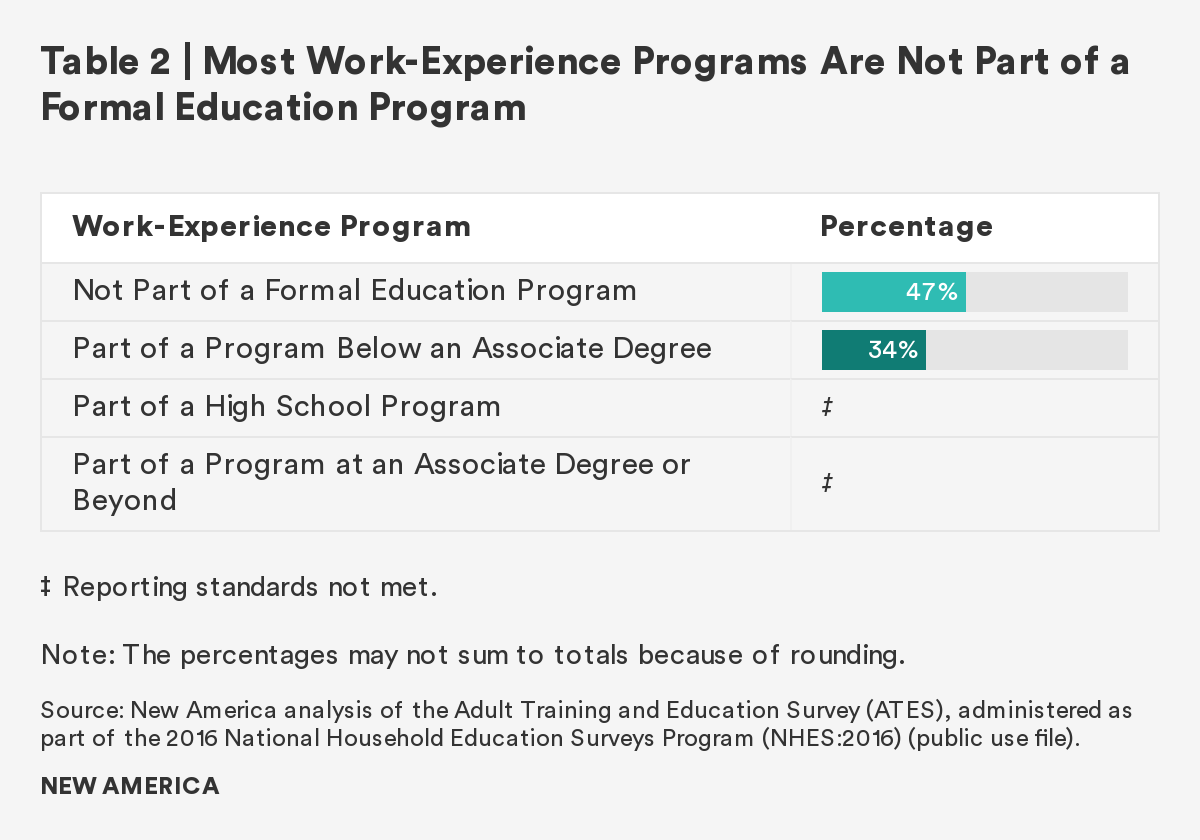
Contributing to the low participation rate in work-experience programs is the reality that most of these opportunities are not affiliated with an education program. Table 2 shows that about one-third of work-experience programs are associated with a sub-baccalaureate program, with most being separate from an educational course of study. That means students are responsible for identifying and pursuing their own opportunities to learn outside the classroom.
The field of study in which students pursue their short-term certificate may influence the extent to which they have access to on-the-job learning experiences. Our analysis found that the majority of students who do complete a work-experience program earn their short-term certificate in the field of health care.32
However, COVID-19 may further exacerbate the limited access to work-experience programs for students with short-term certificates. Most of the students in our focus groups felt that transitioning to online learning presented a challenge for curricula that requires hands-on work-experience, like clinicals for courses related to health care. One certified nursing assistant (CNA) student shared her frustration, saying “the majority [of students] said we were not getting what we want out of the class [primarily online modules due to the pandemic]. We need hands-on experience.”33
Many of the students in our focus groups agree that work-experience is essential, believing that the actual preparation and training happens once they enter the field. Students in the focus groups believe their short-term programs only help them get the certificate they need to get the job, rather than fully preparing them with the skill set they need to adequately perform day-to-day tasks. Many wish there had been an element of hands-on experience in conjunction with their course of study.34
Black and Brown Students with Short-Term Certificates Participate in Work-Experience Programs at Dismally Low Rates
When evaluating work-experience programs across race/ethnicity, we find the participation of Black and Latino/Latina students are so low that we are unable to report estimates of participation.35 These results emphasize the racial disparity in access to work-experience programs for Black and Brown students with a short-term certificate, as white adults disproportionately participate in and complete these opportunities.

Five Things Policymakers Should Know About Short-Term Credentials
- Introduction
- #1 Students Hold High Hopes That a Short-Term Credential Will Allow Them to Enter a New Field
- #2 Half of Working Adults with a Short-Term Certificate Earn Poverty-Level Wages
- #3 Most Adults Believe Their Short-Term Certificates Are Useful for Getting a Job—Even if the Job Is Unrelated to Their Credential
- #4 Many Adults with a Short-Term Certificate Are Not Employed
- #5 Students Think Hands-On Training is Useful, But Few Adults with Short-Term Certificates Receive This Training
- Discussion and Conclusion
Citations
- ATES counts work-experience as including internship, co-op, practicum, clerkship, externship, residency, clinical experience, apprenticeship, or similar programs.
- New America analysis of ATES.
- Lake Research Partners.
- Lake Research Partners.
- New America analysis of ATES.