A Chapter of: Working and Learning During the Pandemic
Introduction
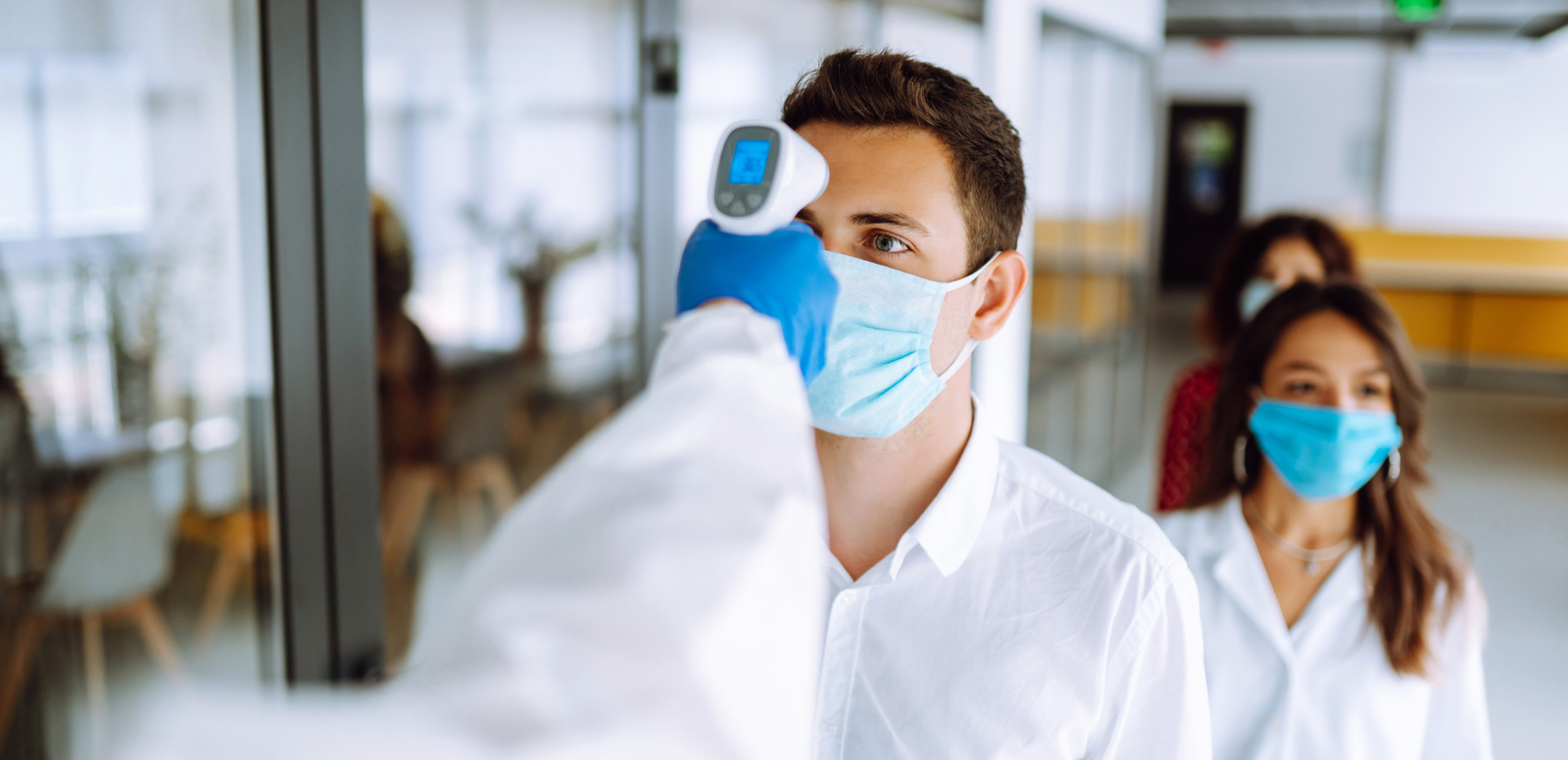
More than half a million lives have been lost to COVID-19 in the United States since the disease was first identified over a year ago.1 While vaccine distribution has increased across the country in the past few months, no one knows when the pandemic will end.2 Society has had to adapt over the past year, and standard education and workplace practices have shifted dramatically. Schools and workplaces operating in person, remotely, or both have had to find ways to safeguard the health of students and workers while successfully continuing operations. Under these circumstances, schools and employers have looked to, and continue to use, technological tools like exam-proctoring software and wearables.
Unfortunately, tools for monitoring student and employee behavior, both in person and remotely, are often deployed without meaningful safeguards to protect against privacy and equity threats to students and employees. Further, how institutions handle feedback to the deployment of these tools has also come under scrutiny. In response to equity, privacy, and civil liberties concerns around the use of such tools as segments of American society were reopened, Members of Congress introduced three bills in 2020.3 New America’s Open Technology Institute (OTI) supported the introduction of two of them: the Public Health Emergency Privacy Act4 and the Exposure Notification Privacy Act.5 Additionally, OTI also co-led the development of principles with 83 civil rights, civil liberties, labor, and consumer protection organizations that are designed to guide decisions about whether and when the use of such technologies is appropriate.6
This report builds on an event OTI held on October 15, 2020 that specifically explored technological tools deployed in the workplace and school environments to both ensure that individuals are not exposed to COVID-19 and monitor the productivity of students and employees.7 Moderated by OTI policy counsel Christine Bannan, this panel included Sarah David Heydemann, Senior Counsel for Education and Workplace Justice at National Women’s Law Center; Wilneida Negrón, Director of Policy & Research at Coworker.org; Anisha Reddy, Youth & Education Privacy Policy Counsel at Future of Privacy Forum; and Kent Wada, Chief Privacy Officer and Director of Policy and Governance at UCLA. The panel addressed the following questions: Are surveillance tools being deployed during the pandemic effective and appropriate responses to limiting the spread of COVID-19? What guardrails can and should be put in place to protect student and employee rights, along with their health?
Following the panel discussion, U.S. Rep. Anna Eshoo (D-Calif.), Chair of the House Energy and Commerce Committee’s Subcommittee on Health, discussed her bill, the Public Health Emergency Privacy Act.8
Citations
- “COVID-19 United States Cases by County,” Johns Hopkins University, Feb. 23, 2021, https://coronavirus.jhu.edu/us-map
- “Covid-19: The World Has Changed. So Has the Playbook for the Olympics.,” New York Times, Feb. 15, 2021, https://www.nytimes.com/live/2021/02/03/world/covid-19-coronavirus
- “Congress Considers Three Bills Addressing Privacy Protections During COVID-19 Crisis,” New America, July 14, 2020, https://www.newamerica.org/oti/blog/congress-considers-three-bills-addressing-privacy-protections-during-covid-19-crisis/
- “S.3749 - Public Health Emergency Privacy Act,” Congress.gov, May 14, 2020, https://www.congress.gov/bill/116th-congress/senate-bill/3749
- “S.3861 - Exposure Notification Privacy Act,” Congress.gov, Jun. 1, 2020, https://www.congress.gov/bill/116th-congress/senate-bill/3861
- “Civil Rights Groups Call for Protection of Democracy and Privacy as Tech Responds to Pandemic,” New America, June 11, 2020, https://www.newamerica.org/oti/press-releases/civil-rights-groups-call-protection-democracy-and-privacy-tech-responds-pandemic/
- “[ONLINE] - Working and Learning During the Pandemic: Surveillance of Students and Employees is Not the Cure,” New America, Oct. 15, 2020, https://www.newamerica.org/oti/events/working-and-learning-during-pandemic/
- “H.R.6866 - Public Health Emergency Privacy Act,” Congress.gov, May 14, 2020, https://www.congress.gov/bill/116th-congress/house-bill/6866