A Chapter of: Learning at Home While Under-connected
Reading
When schools and libraries closed, many educators and other stakeholders worried about how the pandemic would affect young children’s access to books. Would parents be able to find books for their children, especially if they had previously relied on libraries and cannot afford to purchase new books online? If print material is harder to come by, are families using e-books more often, as a cost-effective and COVID-safe way of bringing books into the household? And with families spending more time at home, are they reading together more often—or are the demands of remote learning, working from home, caring for sick family members, and surviving economically all coming together to push reading to the side?
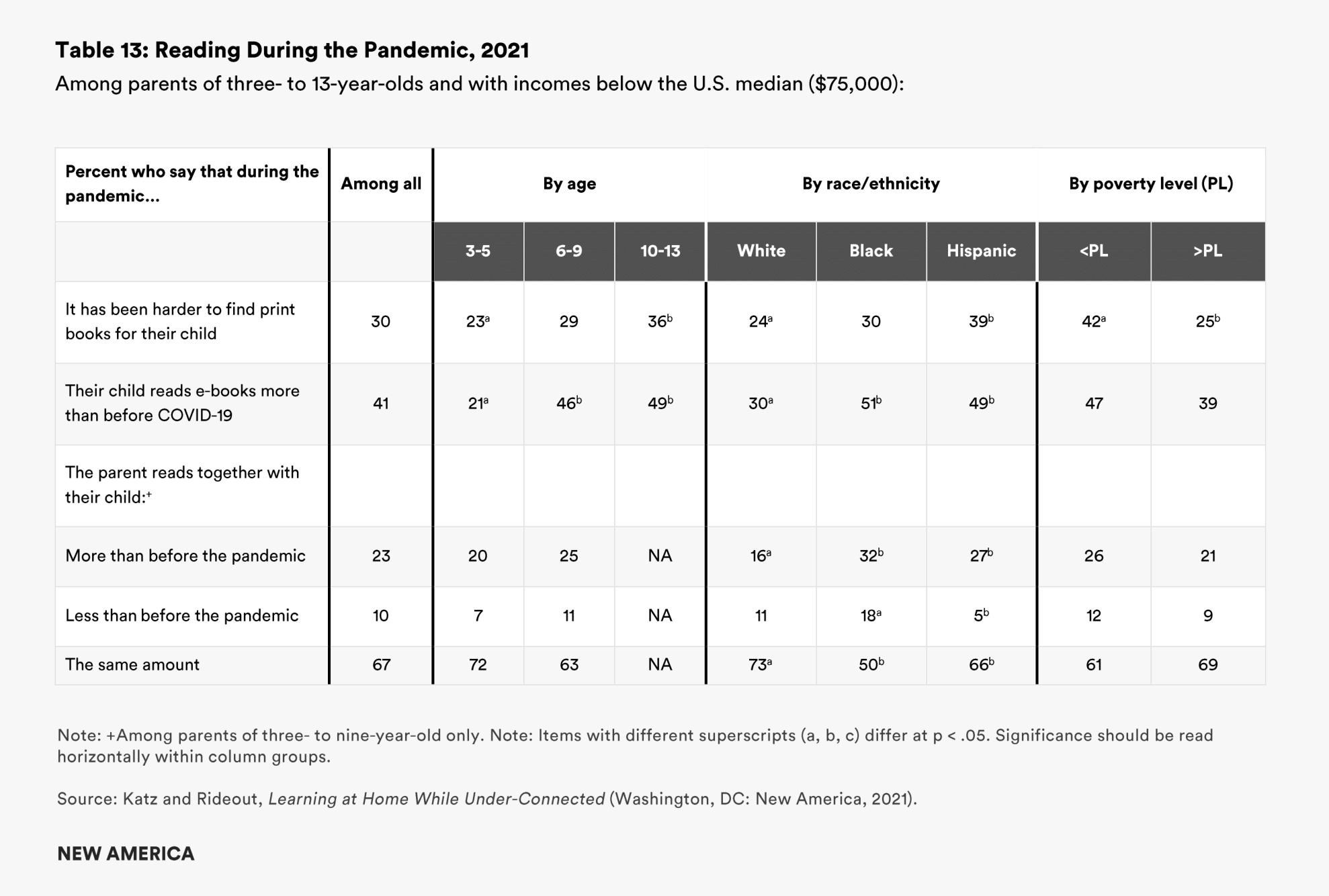
The survey did identify some important shifts in reading practices among lower-income families. Many parents—especially those with below-poverty-level incomes—found it harder to access print books during the pandemic. Overall, 30 percent of parents said they had a harder time getting books for their kids to read during COVID; 42 percent of parents with incomes below the federal poverty level reported this challenge. Constrained access to reading materials also affected children of color disproportionately, with 39 percent of Hispanic parents saying they had a harder time finding books for their children, compared with 24 percent of White parents (Black parents were in between, at 30 percent, not significantly different from either group). There were no significant differences among Hispanic families by immigrant generation.
At the same time, many parents (41 percent) report turning to e-books more often during the pandemic. This pattern is particularly prevalent among children of color: 49 percent of Hispanic and 51 percent of Black children read e-books more now than prior to the pandemic, compared with 30 percent of White children. E-books seem to have been a more attractive alternative to print books for older children: 46 percent of six- to nine-year-olds and 49 percent of 10- to 13-year-olds are reading more e-books since the pandemic began, compared with 21 percent of three- to five-year-olds. This pattern may also reflect some parental resistance to e-books for their youngest children. There were no significant differences in use of e-books between families with incomes below or above the federal poverty line, nor between Hispanics based on immigrant generation (see Table 13).
Overall, a majority of parents (67 percent) say the pandemic has not affected how often they read together with their children (this question was asked of parents of three- to nine-year-olds only, since older children are likely to be reading independently). About one in five parents (23 percent) say they read with their kids more during the pandemic, and 10 percent say they read less.
Black and Hispanic parents were more likely than White parents to say they read with their kids more during the pandemic than they had previously (32 percent of Black parents and 27 percent of Hispanic parents, compared with 16 percent of White parents), suggesting another family asset that educators could use to strengthen home-school connections as schools transition to being fully in-person in the fall. There were no significant differences in family reading practices by poverty level, nor by immigrant generation among Hispanics.