
Building Career Pathways for Diverse Public Interest Technology Entrepreneurs
Abstract
Diversity, equity, and inclusion (DEI) are key values and the primary motivation for this project. Our project sought input from BIPOC PIT (Public Interest Technology) entrepreneurs in understanding how race, class, and gender create friction on the pathways towards growth and sustainability for underrepresented practitioners in the field. We found that PIT entrepreneurs in our study wanted to address various social issues such as providing equitable healthcare access to Black communities, increase voter engagement, promote economic and social mobility through job placement, create innovative ways to reduce police violence, and reduce the barriers to entry for communities wanting to grow their own food.
Acknowledgments
We are grateful for the time and perspectives provided by the students and social entrepreneurs who participated in this research effort. Their input and knowledge has provided a foundation for the network to further explore career pathways into PIT for these segments.
We are also grateful for the vision provided by Dr. Robert Hampshire, our project’s former principal investigator, and we wish him the best on his appointment as the chief science officer and assistant secretary of Research & Technology at the Department of Transportation.
Downloads
Executive Summary
In 2019, the University of Michigan (U-M) received a Network Challenge grant from New America through their Public Interest Technology–University Network (PIT-UN). The network is a partnership that fosters collaboration among universities and colleges committed to building the nascent field of public interest technology and growing a new generation of civic-minded technologists. Our study utilized a mixed-methods approach to analyze the landscape of PIT entrepreneurs in the United States with the objective of:
- Gaining a better understanding of the socio-demographic landscape of Public Interest Technology (PIT) entrepreneurs in the United States.
- Identifying and documenting the career paths of BIPOC (Black, Indigenous, and persons of color) PIT entrepreneurs and developing an understanding of the constraints they face.
- Developing and implementing an effective experiential learning course that provides an understanding of PIT and career pathway into the field.
Diversity, Equity and Inclusion (DEI) are key values and the primary motivation for this project. Our project sought input from BIPOC PIT entrepreneurs in understanding how race, class, and gender create friction on the pathways towards growth and sustainability for underrepresented practitioners in the field. We found that PIT entrepreneurs in our study wanted to address various social issues such as providing equitable healthcare access to Black communities, increase voter engagement, promote economic and social mobility through job placement, create innovative ways to reduce police violence, and reduce the barriers to entry for communities wanting to grow their own food.
We found that their approaches, unique experiences, and stories navigating social issues were intersected with their identities–providing these practitioners with a unique problem-solving lens. This report suggests that marginalized communities possess crucial knowledge necessary to illuminate blind spots within the field of PIT. We explore how expanding knowledge networks can begin to address the lack of representation within public interest technology and create meaningful collaborations with people of color at the intersection of technology and policy in order to develop comprehensive, equitable, and innovative solutions.
We used a dual-pronged strategy that consisted of both a top-down and a bottom-up approach to deliver on our first two research objectives. This strategy afforded us a macro understanding of the landscape (top-down approach), while also providing a deeper understanding of the experiences of PIT entrepreneurs (bottom-up approach). For the top-down approach, we examined population estimates generated from the US Census 2018 Public Use Microdata Sample files (PUMS),1 restricting our analysis to individuals from the population records that were defined as tech entrepreneurs because data were not available to identify activities that fall under “social entrepreneurship”.
We found that there are an estimated 2.52 million tech entrepreneurs across the United States and found proportionate representation of BIPOC tech entrepreneurs relative to the overall population. Given this proportionate representation, the issue is less about the availability of BIPOC individuals with characteristics similar to PIT entrepreneurs but more of these individuals self-selecting into the PIT field. While still in the infancy stage, PIT must be intentional about building the field with diverse individuals, ensuring that these practitioners feel comfortable self-selecting into the field.
Using the bottom-up approach, we conducted ten virtual, semi-structured interviews with PIT entrepreneurs who were recruited by the project team. Interviews lasted between 30 to 60 minutes, and the interview protocol emphasized a narrative inquiry which allowed for the appreciation of participants' lived experiences and lessons learned. The virtual interviews were recorded and transcribed, transcriptions were coded, and a thematic analysis was conducted.
Another element of the bottom-up approach which comprises the third component of our project was a semester-long experiential learning class for Ford School of Public Policy and the School of Information graduate students at U-M. The class was held in winter 2020 and was designed to facilitate project collaboration and group learning through classroom discussions. Participants in the class included seven students across five projects, paired with five PIT entrepreneurs. The experiential learning class focused on:
- developing an understanding of Public Interest Technology as a career field
- building and catalyzing policy and data science/technology solutions
- examining the role of racial equity, technology, and data in each entrepreneur's area of social impact
- developing solutions or programmatic interventions that address problems within entrepreneurs’ areas of impact
- strengthening the social capital for all participants through meaningful collaboration and working relationships.
A summative evaluation was carried out to assess the class’s effectiveness and focused on ascertaining the extent to which the class has been able to identify and address the factors that negatively impact social entrepreneurship from Black and Brown communities. A total of four surveys—one pre-, one post-, and two during the class—were completed by participating students and entrepreneurs to document changes that came about as a result of the program.
Overall–across the three components itemized for our project, the salient findings include the following:
- Data that is representative of the population of BIPOC PIT entrepreneurs in our study are limited. This is due in part to how the secondary dataset used in our study was collected.
- Current funding structures are not serving BIPOC tech social entrepreneurs well. Participants expressed significant difficulties in navigating funding structures and gaining access to capital
- BIPOC PIT entrepreneurs face challenges finding supportive and values-aligned ecosystems to recruit talent, raise funding, develop research, and experiment with social innovations and these challenges are particularly onerous for BIPOC female PIT entrepreneurs.
- The lived experiences of PIT entrepreneurs bring a vital lens to the field when trying to make a positive impact in their communities—an acknowledgement of the importance of diversity, equity and inclusion in the field of PIT.
- University collaboration with PIT entrepreneurs generated positive results for students and PIT entrepreneurs alike.
Citations
- U.S. Census Bureau. (2019). 2018 American Community Survey 1-year Public Use Microdata Samples. Retrieved from https://factfinder.census.gov/faces/nav/jsf/pages/searchresults.xhtml?refresh=t.
Introduction
Technology impacts every facet of daily life, from scrolling through your social media feeds to determining eligibility for a credit card. However, these ubiquitous technologies can reinforce the marginalization of traditionally underrepresented groups.2 Given the increased recognition of this shortcoming, support for the field of Public Interest Technology (PIT) has grown.3 As a burgeoning area of interest, several definitions of PIT exist. The Ford Foundation, for example, defines PIT as “technology used to serve the public good,”4 while New America states that, “Public Interest Technology adopts best practices in human-centered design, product development, process re-engineering, and data science to solve public problems in an inclusive, iterative manner — continuously learning, improving, and aiming to deliver better outcomes to the public.”5 More recently, a New America working group of academics have defined it as the “study and application of technology expertise to advance the public interest/generate public benefits/promote the public good.”6
Given multiple definitions of the field, we should explore who should be included in the PIT ecosystem. New America states that the field “should include people who may not identify as technologists but are at the forefront of equalizing access to technology and promoting inclusive tech policy.” Supporting this sentiment, the Beeck Center for Social Impact and Innovation, believes in the importance of bringing as many people to the conversation as possible. These two examples illustrate the differing view of public interest technology and the goal of incorporating more voices into the field. In addition, it is vital that the PIT space be intentional in including and empowering diverse voices. Critics of the “public interest technology” framing view it as a top-down approach that lacks diversity. Feedback from practitioners in the field reported that it was “predominantly White, male, D.C. focused, and funder-driven.”7
Although the term public interest technology is recent, interest in PIT began nearly twenty years ago and has gained a foothold across the government, non-profit, and private sectors.8 A range of terms are used to refer to work leveraging technology to advance the public interest, the common good, social justice, government and corporate accountability.9 This work has been known in the government sector as “civic tech” and “digital government.”10 PIT gained significant recognition during the Obama administration with the creation of the Open Data Initiatives, establishment of the Presidential Innovation Fellowship and the commitment to tech training programs via the TechHire Initiative, and the creation of the Office of Social Innovation and Civic Participation.11 In contrast to the public sector, PIT efforts in the non-profit sector are less known; however, they do exist. A report from the Tech for Social Justice Project called #MoreThanCode identified over 40,000 nonprofit organizations working on PIT initiatives.12 Even more unrecognized are the PIT efforts undertaken in the private sector, in which companies often work on PIT projects through corporate social responsibility efforts.13
Our study provides more clarity on the PIT ecosystem by examining the private sector to better understand tech social entrepreneurs and the impact they are having through their social ventures. The research considers the lived experiences and a racial equity lens when considering tech social entrepreneurs in the context of public interest technology and thus examines BIPOC tech social entrepreneurs given their unique characteristics important to policy making and implementation. Using a mixed-methods, dual-pronged approach we sought to meet the following research objectives:
- Gain a better understanding of the socio-demographic landscape of PIT entrepreneurs in the United States.
- Identify and document the career paths of BIPOC PIT entrepreneurs and develop an understanding of the constraints they face.
- Develop and implement an effective experiential learning course that provides an understanding of PIT and career pathway into the field.
BIPOC Tech Social Entrepreneurs
The term social entrepreneurship first appeared in the social change literature in the 1960s and 1970s14 and although the term has been used in scientific discourse for several decades, there is no conclusive agreement on a definition.15 For our study, we have defined tech social entrepreneur based on an adaptation that adheres to Dee’s (1998) definition:
“Social entrepreneurs play the role of change agents, in the social sector, by; adopting a mission to create and sustain social value (not just private value) [through the creation or use of technology]; recognizing and relentlessly pursuing new opportunities to serve that mission; engaging in a process of continuous innovation, adaptation and learning; acting boldly without being limited by resources currently in hand; and exhibiting heightened accountability to the constituencies served and outcomes created.”16
Through the creation of or use of technology, tech social entrepreneurs seek to address social problems caused by shortcomings in existing markets and government systems.17 These entrepreneurs often collaborate with stakeholders across sectors and disciplines; synthesizing learnings and developing innovative solutions. As the proliferation of technology continues, it is critical to shape PIT into a more diverse, inclusive, and equitable environment for tackling social problems. Because technological solutions are often designed to reflect the lived experience and education of their creators, our study focuses specifically on tech social entrepreneurs that identify as Black, Indigenous, Person of Color (BIPOC).18 By definition, BIPOC tech social entrepreneurs share many qualities of public interest technologists. Despite this, a report from the Tech for Social Justice Project called “#MoreThanCode,” found that over half of the 188 people interviewed did not self-identify as working in the field of public interest technology, or as the Ford Foundation has defined as “technology practitioners who focus on social justice, the common good, and/or the public interest.”19
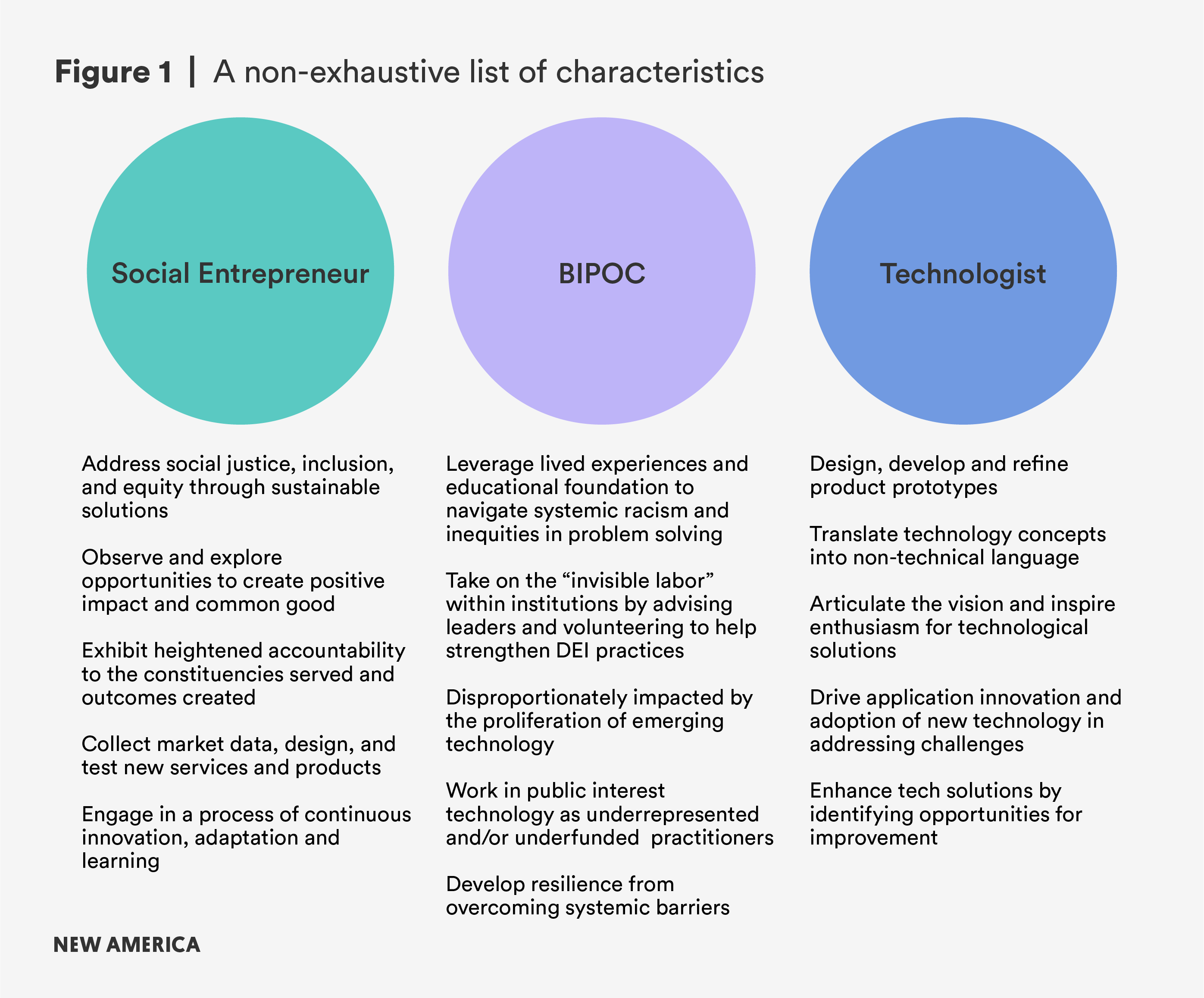
When examining the literature on tech social entrepreneurs and public interest technologists, many shared defining characteristics exist. A non-exhaustive list of these attributes are provided below:
Tayo Fabusuyi, Jessica Taketa, and Raymar Hampshire
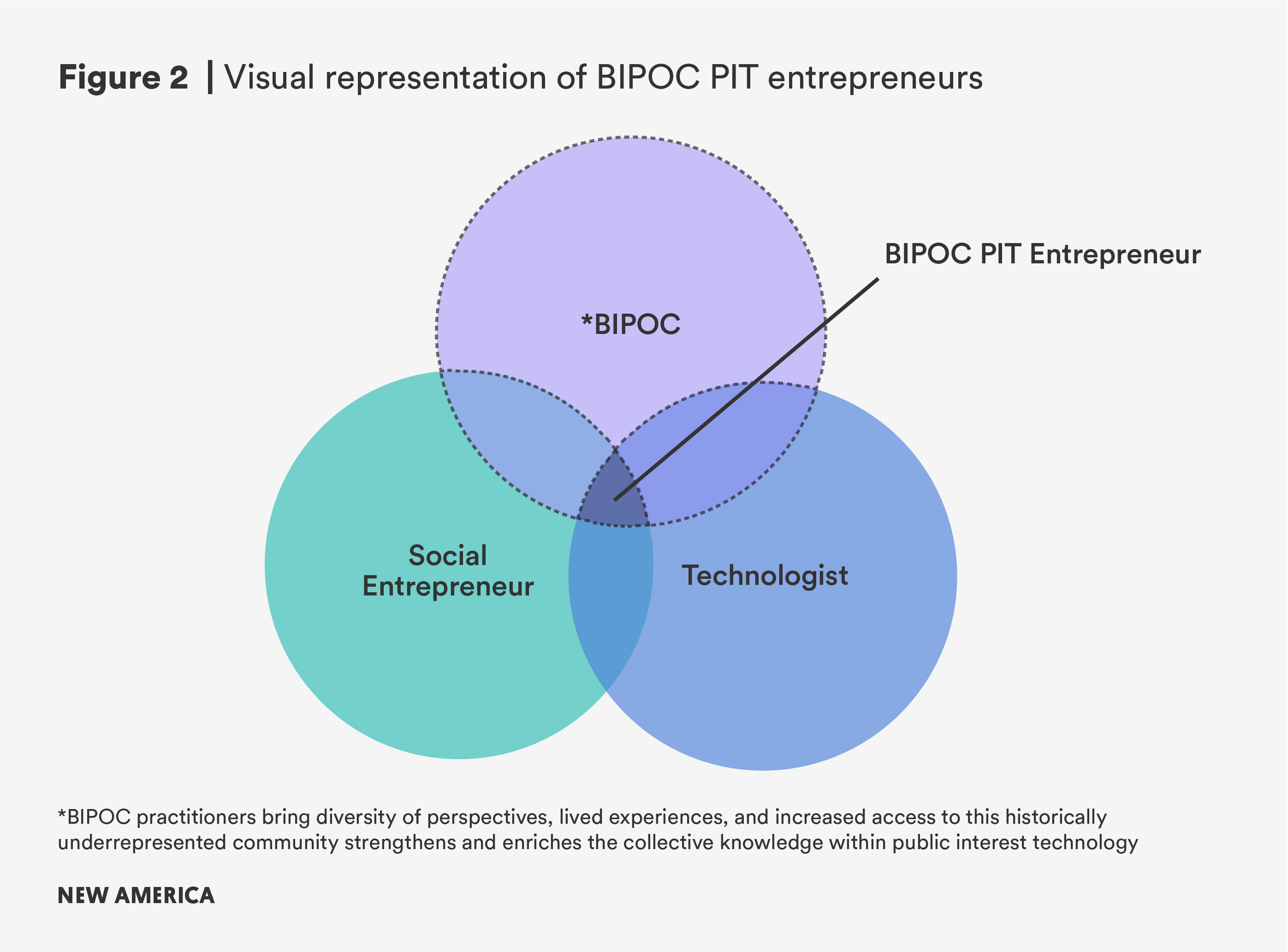
Given the overlap in defining characteristics, we consider tech social entrepreneurs to reside within the PIT ecosystem and we refer to them as “PIT entrepreneurs.” BIPOC PIT entrepreneurs bring a diversity of perspectives and proximal experiences of being marginalized into problem solving. Access to this segment of the population can strengthen and enrich the collective knowledge of the public interest technology field:
Tayo Fabusuyi, Jessica Taketa, and Raymar Hampshire
Citations
- Harrison, Dominique. 2020. Civil Rights Violations in the Face of Technological Change. The Aspen Institute.
- Hines, Michael. 2020. As public trust in the tech industry wanes, support for the field of public interest technology has grown; In 2016, the MacArthur, Ford, Knight, Open Society and Mozilla foundations announced $18 million worth of grants in support of PIT initiatives, and by 2020 43 universities from across the country had formed the Public Interest Technology University Network with the goal of collaborating to expand the PIT field.
- The Ford Foundation. 2021. Public Interest Tech.
- The New America Foundation. 2021. Public Interest Technology.
- Eaves, David, et al. Defining Public Interest Technology.
- Sasha Costanza-Chock, Maya Wagoner, Berhan Taye, Caroline Rivas, Chris Schweidler, Georgia Bullen, & the T4SJ Project, 2018. #MoreThanCode: Practitioners reimagine the landscape of technology
- Hines, Michael. 2020. As public trust in the tech industry wanes, support for the field of public interest technology has grown.
- Sasha Costanza-Chock, Maya Wagoner, Berhan Taye, Caroline Rivas, Chris Schweidler, Georgia Bullen, & the T4SJ Project, 2018. #MoreThanCode: Practitioners reimagine the landscape of technologyfor justice and equity. Research Action Design & Open Technology Institute
- Beeck Center for Social Impact + Innovation. 2020 Public Interest Technology Workforce Survey.
- U.S. White House. 2016. Technology.; U.S. White House. 2009. The President's Social Innovation Agenda.
- Sasha Costanza-Chock, Maya Wagoner, Berhan Taye, Caroline Rivas, Chris Schweidler, Georgia Bullen, & the T4SJ Project, 2018. #MoreThanCode: Practitioners reimagine the landscape of technologyfor justice and equity. Research Action Design & Open Technology Institute.
- Hines, Michael. 2020. As public trust in the tech industry wanes, support for the field of public interest technology has grown.
- Gray, E. (2012). For-profit social entrepreneurship. In T. S. Lyons (Ed.), Social entrepreneurship: How businesses can transform society (pp. 47–70). CA: ABC–CLIO.
- Light, Paul. (2005). Searching for social entrepreneurs: Who they might be, where they might be found, what they do. Paper presented at the Annual Meetings of the Association for Research on Nonprofit Organizations and Voluntary Action. Washington, D.C., Nov. 17 – 19.; Mort, Gillian, Weerawardena, Jay, and Carnegie, Kashonia. (2003). Social Entrepreneurship: Towards Conceptualization. International Journal of Nonprofit and Voluntary Sector Marketing, 8(1), 76-87; Peredo, Ana, and McLean, Murdith. (2006). Social Entrepreneurship: A Critical Review of the Concept. Journal of World Business, 41(1), 56-65; Seelos, Christian, and Mair, Johanna. (2004). Social Entrepreneurship: The Contribution of Individual.
- Dees, J. G. (1998). The meaning of social entrepreneurship. Innovation, 2006(11–4–06), 1–6. doi:10.2307/2261721
- Mair, J., J. Robinson and K. Hockerts: 2006, ‘Introduction’, in J. Mair, J. Robinson and K. Hockerts (eds.), Social Entrepreneurship (Palgrave Macmillan, Houndmills, Basingstoke, Hampshire).
- Coleman, Emma and Lili Gangas. 2018. You get better design when there’s a diverse representation of lived experiences.
- Sasha Costanza-Chock, Maya Wagoner, Berhan Taye, Caroline Rivas, Chris Schweidler, Georgia Bullen, & the T4SJ Project, 2018. #MoreThanCode: Practitioners reimagine the landscape of technology
Methodology
We used a mixed-methods, dual-pronged strategy that comprises both a top-down and a bottom-up approach to accomplish our research objectives. We focus particularly on BIPOC PIT Entrepreneurs to better understand how we can embrace and support their work as part of the PIT ecosystem on both a macro and micro level. The strategy afforded us a macro understanding of the landscape (top-down approach), while also providing a deeper understanding of the experiences of PIT entrepreneurs (bottom-up approach). Our experiential learning course provided an opportunity for students and PIT entrepreneurs to gain hands-on experience in working in PIT. The participative, interactive, and applied nature of the experiential learning course allows for collaborative knowledge development with BIPOC PIT entrepreneurs.20
Top-down Approach
To understand the landscape of PIT entrepreneurs in the United States, we provided descriptive statistics obtained from population estimates generated from the US Census 2018 Public Use Microdata Sample files (PUMS).21 We restricted our analysis to individuals from the population records that are defined as tech entrepreneurs because data were not available to identify activities that fall under social entrepreneurship. The definition of tech entrepreneurs in the data are individuals who are both 1) self-employed, individuals with reported income from some self-employed activities even though they could also be employed elsewhere and 2) individuals with STEM education based on the National Science Foundation’s (NSF) definition.22
Bottom-up Approach
Qualitative Interviews with BIPOC PIT Entrepreneurs
To gain a better understanding of career trajectories in PIT and barriers BIPOC PIT entrepreneurs face in the field, our team conducted ten virtual, semi-structured interviews with PIT entrepreneurs. The PIT entrepreneurs in our study were recruited by the project team. Our team conducted interviews from late September to early December 2020. Each interview lasted between 30 to 60 minutes and participants were compensated for their time. The interview protocol emphasized a narrative inquiry as a methodological approach which provided researchers a “unique sensitivity to participants’ idiosyncratic perspectives.”23 This approach allows for the appreciation of participant’s lived experiences and lessons learned. The virtual interviews were recorded and transcribed. Transcriptions were coded and a thematic analysis was conducted.
BIPOC PIT Entrepreneur Participants
Our sample consisted of ten PIT entrepreneurs. Of these participants, eight identified as female and two identified as male. Two participants identified as Asian, four participants identified as Black or African American, one participant identified as Latino or Hispanic, and three participants identified as both Black or African American and Latino or Hispanic. Eight of the ten PIT entrepreneurs completed a bachelor's degree, with three of them holding advanced degrees. Four PIT entrepreneurs resided in the Northeast, four resided in the South, and two resided in the Midwest. Six of the PIT entrepreneurs have been in their role for three or more years and four have been in their role from one to three years. Eight of the participants work full-time on their social enterprise.
Experiential Learning Course
The third component of our research methodology is a semester-long experiential learning class for graduate Ford School of Public Policy and the School of Information students at U-M that was launched in winter 2020. The experiential learning class focused on 1) developing an understanding of Public Interest Technology as a career field, 2) building and catalyzing policy and data science/technology solutions, 3) examining the role of racial equity, technology, and data in each entrepreneur's area of social impact, 4) developing solutions or programmatic interventions that address problems within entrepreneurs’ areas of impact, and 5) strengthening the social capital for all participants through meaningful collaboration and working relationships. In addition to the course curriculum, seven students worked in teams with five entrepreneurs of color based in Detroit, where they engaged with PIT research and developed consulting and project management skills.24 The five Detroit-based PIT entrepreneurs were identified through a local Blacks in Tech Slack channel with the support of TechTown, a start-up incubator located in Detroit, Michigan and the PIT entrepreneurs received a stipend for their participation.A total of four surveys—one pre-, one post-, and two during the class—were completed by participating students and entrepreneurs to document changes that came about as a result of the program.
Citations
- Gentry, James. 1990. Guide to Business Gaming and Experiential Learning. Chapter 2: What is experiential learning?
- U.S. Census Bureau. (2019). 2018 American Community Survey 1-year Public Use Microdata Samples. Retrieved from https://factfinder.census.gov/faces/nav/jsf/pages/searchresults.xhtml?refresh=t.
- Gonzalez, H. and Jeffrey J. Kuenzi. 2012.
- Jones, Natasha. 2017. Rhetorical Narratives of Black Entrepreneurs: The Business of Race, Agency, and Cultural Empowerment. Journal of Business and Technical Communication. Page 327
- See section “Experiential Learning Course with PIT Entrepreneurs” for more detail.
Findings
Our study uses a mixed-methods approach to understand the U.S. PIT landscape with focus on PIT entrepreneurs who identify as BIPOC. As part of our study, we designed and implemented a graduate-level experiential learning course to support the career pathways and placement of students in public interest technology, as well as provide support to BIPOC PIT entrepreneurs. Graduate students were matched with Detroit-based BIPOC PIT entrepreneurs to work on projects.25 Key findings from the study include:
- Data that are representative of the BIPOC tech social entrepreneurs in our study were limited.
- There are significant gaps in funding, social capital, and a lack of outside development support along PIT entrepreneurs' career paths.
- Despite their lived proximal experiences, a disconnect exists among the PIT entrepreneurs in our study and policy creation, policy implementation, and public interest technology conversations taking place to address challenges of local and national importance.
- University collaboration with PIT entrepreneurs generated positive results for students and PIT entrepreneurs.
BIPOC PIT Entrepreneurs’ Data Limitations
Demographics of Public Interest Technology
The field of social entrepreneurship and public interest technology are similar in that there is no agreement on their definition and there is little data to describe the composition of professionals in the field. For example, there have been few studies that shed light on understanding the ecosystem of the field. These studies however show a lack of representation of BIPOC individuals in the field of public interest technology. In a study by the Tech for Social Justice Project, which included individuals who work at the intersection of technology and social justice, social good, and/or the public interest, 55 percent of the 121 participants identified as white, with 45 percent identifying as persons of color (PoC). Seventeen percent of respondents identified as Black, 9 percent identified as Hispanic/Latino, and 2 percent identified as American Indian or Alaskan Native.26 The Public Interest Technology Workforce Survey led by the Beeck Center for Social Impact and Innovation, included individuals who are studying, applying and/or leveraging data, design, technology, and innovation in service of the public interest.27 Of the 196 survey responses, 68 percent identified as white and 30 percent as PoC. Eleven respondents identified as Black, seven identified as Latinx, and one identified as Indigenous.
These demographic data could be interpreted as the field not being diverse or they could be highlighting a potential sampling bias in the existing studies, in which the data thus far are not representative of those that exist in the field. If the latter, an argument could be made that the PIT organizations are limited by social networks that have a shortage of BIPOC PIT practitioners. There is a potential need to strengthen the pipeline by supporting organizations and research efforts that can fill the gaps caused by bias in their social networks. Utilizing existing organizations that contain a diverse network of tech practitioners, such as the #BlackTechFutures Research Institute, could be useful in mitigating this sampling bias.
Similar to PIT, the field of social entrepreneurship lacks an extensive demographic study of social entrepreneurs. A database of social entrepreneurs is provided by Echoing Green through their database of fellowship program applicants.28 Across four application cycles (2016-2020) they contain over 14,000 applications from social entrepreneurs.29 Project Dianne conducts a biennial demographic study to provide a snapshot of the current landscape for Black & Latinx women in the U.S. innovation and entrepreneurship space.30 As of 2020, Project Dianne’s database contains 680 U.S. start-ups in their database.31 These databases serve as a resource to understanding the landscape of social entrepreneurship in the United States, and in addition, provide an opportunity to learn how these founders can help answer questions in the field of PIT.
Landscape of Tech Entrepreneurs
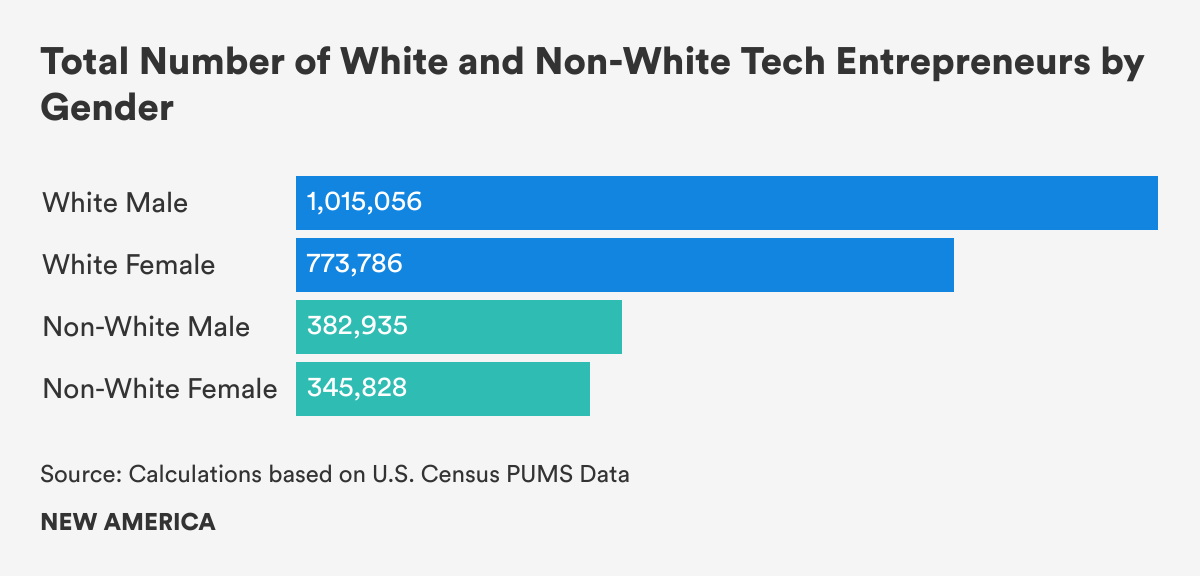
To gain a better understanding of the landscape of tech entrepreneurs in the United States, our study utilized the 2018 U.S. Census PUMS survey data to generate population estimates of tech entrepreneurs.32 We define tech entrepreneurs as individuals who are 1) are self-employed with reported income from self-employment activities even though they could also be employed elsewhere and 2) have STEM or related education based on NSF definition.33 According to our analysis, there are an estimated 2.52 million tech entrepreneurs across the United States.34 A higher proportion of these individuals reside in the Southern and Western regions, .33 and .29 respectively, in comparison with the Northeastern (.22) and Midwestern (.15) regions. In addition, the data suggest that the demographics of tech entrepreneurs are proportional to national demographics, suggesting that there is not a supply shortage of BIPOC tech entrepreneurs and therefore could contribute to PIT efforts. Tech entrepreneurs are predominantly (more than 70 percent) white.35Black tech entrepreneurs make up 11.5 percent (590,903) of all tech entrepreneurs.36 Only 2.7 percent (44,417) of tech entrepreneurs are Native.37 According to 2019 U.S. Census data, white individuals compose 76 percent of the population, Black individuals represent 13.4 percent of the population and Native38 make up 1.5 percent.39
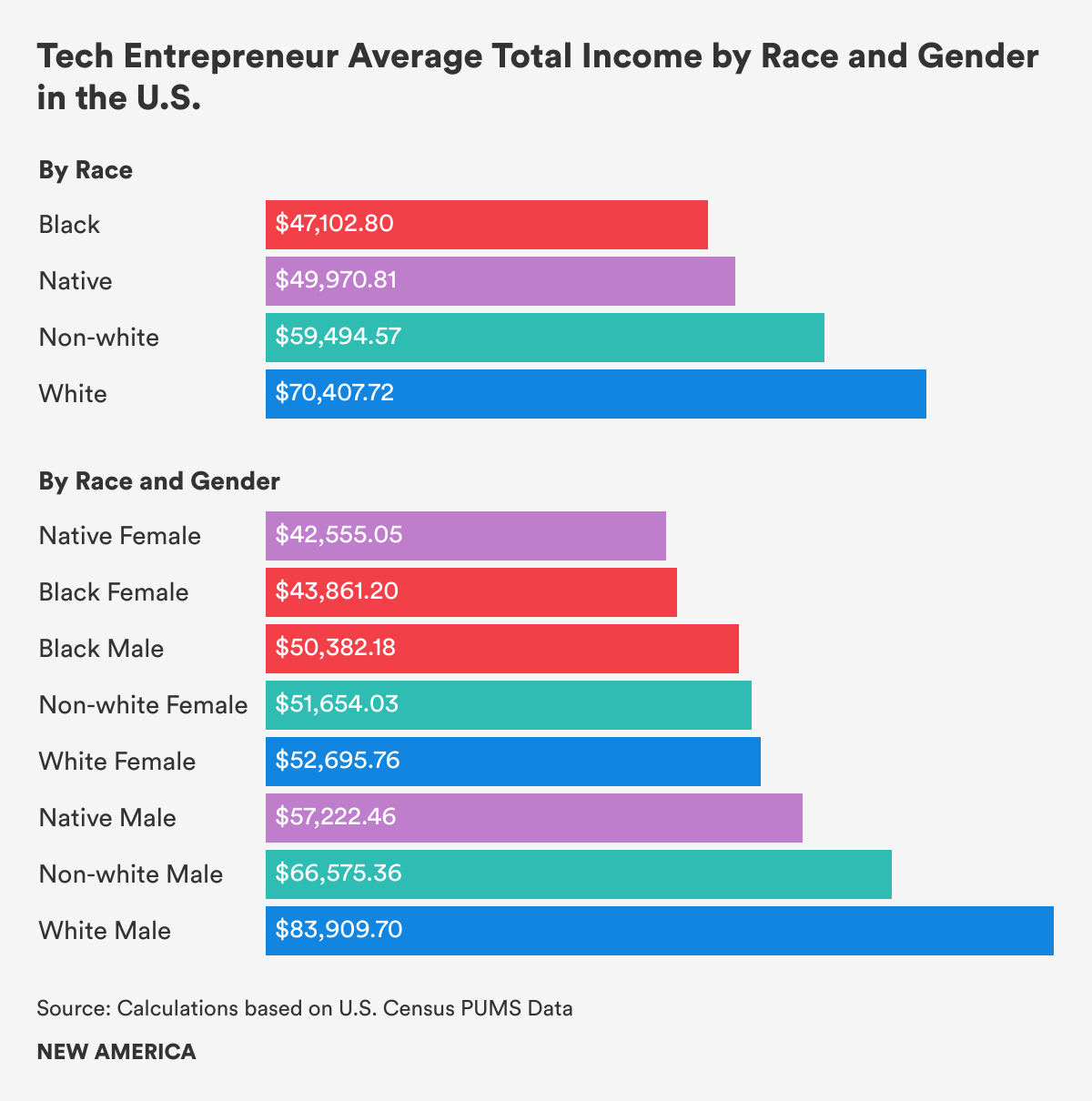
Men are slightly more represented in the field. Of the estimated 2.52 million tech entrepreneurs, approximately 53 percent are men and 47 percent are women with white male tech entrepreneurs having the highest presence in the field. In addition, there are more White female tech entrepreneurs than both non-white male and non-white female tech entrepreneurs combined. However, there are more Black female tech entrepreneurs than Black male entrepreneurs. When examining the incomes of U.S. tech entrepreneurs, we found that, on average, white male tech entrepreneurs make more than other individuals.40 They make almost double of what Black female entrepreneurs in the field make.
Despite the data limitations, our analysis found that a supply of BIPOC individuals with characteristics similar to PIT entrepreneurs exist, such as being self-employed and having a background in STEM. Therefore, diversity in the supply of individuals might not be the issue, rather the inclusion of individuals into the field might be more important. While still in the infancy stage, PIT must be intentional about building the field with diverse individuals, ensuring that these practitioners feel comfortable self-selecting into the field.
PIT Entrepreneurs’ Lived Experiences
The PIT entrepreneurs in our study were motivated to create their social enterprise to help better serve their communities and were greatly influenced by their own personal experiences navigating the social problems that their mission seeks to improve. The complex problems that the PIT entrepreneurs sought to tackle included various social issues such as providing equitable healthcare access to Black communities, increasing voter engagement, promoting economic and social mobility through job placement, and creating innovative ways to reduce police violence. All participants in our study had a close personal connection to the problem that their technology hoped to solve—or alleviate. On many levels, their personal experiences are interconnected with the intersections of their identities.
From their own lived experiences stemming from their identities these PIT entrepreneurs identified a gap that was felt closely and sought to close it. Examples of the types of the tech social enterprises and what motivated participants to create their tech social enterprise are below:
- A social enterprise that uses tech to bring people together to make it easier to navigate the healthcare system for Black and Brown folks. The primary motivation related to her family, the majority of which has diabetes. In terms of connecting their community with their healthcare providers, she wanted to “bridge that gap a bit – have an outlet to do so."
- A social tech startup that works with K12, higher education, and employers who help students and entry level talent have the skills, resources, and social capital they need to thrive. The founder noted that, “I was impacted by another Black man being killed at the hands of the police, this was Alton Sterling out of Baton Rouge. I'm from Ferguson, Missouri, and I was crying for days at work. And I thought it was time that the next generation should be able to feel, be seen, be heard, and be valued. And I wanted to dedicate myself to this mission now.”
- A mental health app specifically targeted for Black folks. The founder expressed she created the app because, “I'm a mental health advocate and I have major depressive disorder. First focused on mental health generally, but then started focusing on the cultural competency aspect. That's the point of why I have a mental health app for Black people because racial trauma is a real thing in this country. And just to see all of the emotions that are going on today (Breonna Taylor) and how it's making especially the Black community feel like it was one of the main reasons I thought that an app like this was important.”
- A nonpartisan platform that enables people to select the issues they care about and then receive alerts before Congress is about to vote on any of those issues. The founder attributed her motivation behind the app from her childhood, “My dad's family fled Communist China… so I think even at a young age I just grew up with parents who saw it [voting] as their civic duty.”
- A social enterprise that is the “LinkedIn for the LinkedOut” which connects graduates of alternative education to jobs through talent marketplace. The founder expressed her motivation to create the enterprise as, “I just had this epiphany that it wasn't the people. It was a system and we needed to figure out how to work outside of the system and build new systems for people like my brother who, you know, most people don't go to college, not because they don't like school or because they're not smart. It's because they can't afford it. So then that motivated me to launch my [social venture] to help people like my brother who fall through the cracks.”
- An application that allows officers to communicate with a person at a traffic stop via technology and also allows a person to pay their court charges over the app. As the founder noted, “And in a split second, I was staring down the barrel of an officer's weapon, right? That really led into, especially seeing all the things taking place, right, all over media, other Black men getting killed by police, right? That became the mission, the driving factor of, how do we save a life.”
Included in their lived experiences are the diverse skill sets the PIT entrepreneur participants obtained from previous work at the intersection of government, community organizing, business, and technology. Having previous knowledge in various fields and thinking about the role that technology plays in these spaces informed their work in the field of PIT. About half of the participants had previous work experience in the field of their social enterprise. For example, the founder of an app providing healthcare access to Black communities had worked in the pharmacy tech industry for 22 years. Additionally, the founder of a voter engagement app had prior experience as a campaign manager in Iowa.
Significant Challenges Exist Along PIT Entrepreneurs’ Career Paths
Lack of Funding
The most prevalent challenge in the field expressed by participants was their difficulty in navigating funding structures and gaining access to capital. As one entrepreneur noted, “Funding is hard to get, it's hard to get in the right rooms and get access to relationships and sources of capital.” This finding is in alignment with existing literature on founders of color being heavily underrepresented in entrepreneurship and receiving far less start-up capital than their white counterparts.41 For example, in 2015, Black and Latinx entrepreneurs made up 14 percent and 8 percent of all entrepreneurs in the United States respectively, but their reported combined revenue was less than 2 percent of $33.5 trillion.42 These demographic disparities are well-documented and can be attributed to structural barriers to entrepreneurship.43 For instance, evidence from previous research shows that a variety of factors limit women and people of color as they consider starting and growing businesses, including disparities in educational attainment, personal wealth, and access to capital.44
The main pathways to early seed capital—friends and family, angel investors, grants, and venture capitalists—were reported as being inaccessible by participants. The first type of early-stage funding often comes from angel investors and from friends and family networks. More than two-thirds of entrepreneurs use personal savings as a source of funding, and more than one-in-five rely on family for funding.45 The entrepreneurs in our study reported that relying on friends and family in their networks for early-seed funding was not a viable source, as many of them did not come from well-resourced backgrounds. On average, Black, Latinx, Native American, and other minority households have much less wealth than white households.46 For example, the typical Black entrepreneur starts a business with $35,000 in capital, a third of the startup capital for the typical white entrepreneur, and other entrepreneurs of color face similar challenges.47 As one participant explained, “As a working-class Black Latina, most of the people that I know didn’t make it to college. It's a really big endeavor to leave, you're probably like the highest earner in your entire family to leave a good job for basically, you're opting into being poor again by being an entrepreneur.” These tech social entrepreneurs are more likely to be on a path to climbing their way out of generational poverty and therefore lack the social and economic capital in their networks to secure angel investments.
The next funding source reported by our participants was funding from grants—typically provided by foundations and philanthropic sources. Half of our participants reported being involved in diversity-focused incubators and/or accelerator programs. Three big obstacles were highlighted in gaining access to funds through these grants’ opportunities. First, many of the entrepreneurs reported that the costs were too high. Participants highlighted that the long application process usually was not worth their time. The applications were described as taking many hours and requiring a significant amount of data that the entrepreneurs usually do not have this early on. As one tech social entrepreneur noted, “The laborious process typically doesn’t yield the return.” There are a limited number of these funding opportunities, making them highly competitive. As one participant noted, “You run out of these [grant] avenues.” For this reason, our participants reported having to travel to different cities in order to participate in the incubators and accelerator programs that exist. The additional travel and resulting travel fatigue are extra costs incurred by BIPOC entrepreneurs seeking access to funding. As one participant noted, “To be a founder of color you gotta work, they make you go to all these places just to get money for underrepresented founders.” Another concern raised by participants was that BIPOC entrepreneurs still face a credibility challenge in the foundation and philanthropic space—“even on the philanthropic side, you face a credibility challenge as a younger person and/or if you are a founder of color.”
The last funding source our participants spoke about were venture capitalists (VCs). Venture capital firms review, assess, and invest in new and emerging businesses. As a result, VCs look at a very high volume of deals, and on average only invest in 1 out of every 100 deals.48 Historically, VCs have not provided much capital to founders of color, as women and founders of color are viewed as high-risk. About a third of our entrepreneurs mentioned that they wished they had not spent so much time trying to get funding from VC sources as they did not align with the vision of their enterprise. When asked what they would do differently in leading their social enterprise, one participant mentioned, “Spending less time to win the approval of a community that isn’t really right for our kind of business.” Another challenge was that VCs are not inclined to support early seed funding. They primarily target “those enterprises that have already built something with a verifiable customer base. Which leaves those at the bottom out.” Although conversations of VCs funding founders of color have become more prevalent, the participants in our study felt that it wasn’t enough—“venture capitalists don’t care – even [social impact investors] that say they are committed to racial equity work.”49 The entrepreneurs do not feel that there is anything on their behalf that needs to change, rather “investors need to behave differently.” As one participant highlighted, “We need to see more intentionality on behalf of funders; funders who are putting real skin in the game, and just like they fund the entrepreneur without a lot of traction when that entrepreneur is White or male, or both they need to start just doing the same for people who look like me.” Too often, navigating these funding structures bear additional costs on BIPOC entrepreneurs making it difficult to access funding and capital.
Racial and Gender Inequities
The women in our study observed how their intersectional identities made it even more difficult for them to navigate the field and gain access to capital. Women entrepreneurs raise less money in comparison to their male-counterparts. In 2017, women-only teams raised an average of $82 for every $100 of seed-funding all male-founded teams raised. 50 These funding gaps are intensified for women of color, especially for Black and Brown women. Although the national median seed round funding for a startup is $2.5 million, the median seed round raised by Black women founders is $125,000 and the median seed round raised by Latinx women founders is $200,000.51 This represents a nickel and less than a dime, respectively, for every dollar raised in comparison to the median seed round funding for a startup.
The women in our study explained the barriers to access capital and the emotional toll endured throughout the process. A common thread described by our participants was having to constantly prove themselves to investors. As one participant told a story of her participation in a pitch competition in 2020. She explained how she was asked questions that “prove how competent [she is],” such as “why am I the person to do this, what skills do I have to ensure that I would make this a success?” These were all questions that were not asked to her male counterparts in the competition. Unfortunately, this is a common theme for BIPOC women entrepreneurs, in which they are often asked different questions than their male counterparts. According to a recent study of Q&A interactions between venture capitalists and entrepreneurs at the TechCrunch Disrupt annual funding competition, VCs posed different types of questions to male versus female entrepreneurs. They tended to ask men (promotion) questions about the potential for gains, and they tended to ask women (prevention) questions about the potential for losses. The difference in questioning explains much of why female entrepreneurs received five times less funding than their male counterparts.52 One participant in our study spoke about how her achievements were always downplayed while speaking with investors. In her conversations with investors she would always get a response of “oh, that’s a great idea” which bothered her because “it’s not an idea, it’s something that thousands of people are using.” In addition, women in our study shared that their worth was never appreciated. Too often they were expected to participate in speaking engagement and events [hosted by organizations] without any compensation. As one entrepreneur explained, “As a Black woman, they do not know my worth. People know about it [her app] now, yet some people think I should do things for free.” Overall, the bar is set higher for BIPOC women tech social entrepreneurs making it more difficult to gain access to capital.
A majority of the women entrepreneurs reported a significant impact on their emotional and mental health due to the interactions and process of accessing capital. Navigating the field was explained as being “mentally and emotionally draining.” As one participant explained that it is emotionally draining “having to balance your identity and how you show up in these spaces where you don't see yourself a lot of times.” In addition, being held up to such a high standard by investors was noted as contributing to an “inferiority complex.” As one participant mentioned, “When I see some of my peers get $15 million on a vision, and they [her enterprise] actually have a product and are saving lives right now, at some point I question my belief in myself.”
Lack of Skills Coordination
Along their career pathways, the PIT entrepreneurs in our study highlighted how they had to actively fill in gaps in their professional development to support their social enterprise’s mission. These gaps included not having the technical skill set, not knowing the language of the space, having difficulty finding the team members with values that aligned with their mission, and lacking a sense of community.
The majority of the PIT entrepreneurs in our study do not come from a STEM-related background and therefore reported having to learn technical skills such as coding. Of the 15 PIT entrepreneurs in our study (including the PIT entrepreneurs that participated in our experiential learning course), 13 of them had bachelor’s degrees and six of them had graduate and/or professional degrees. Of these, only one holds a degree in a STEM discipline. This is consistent with findings from the Project Dianne report in which 70 percent of founders in their database do not have a STEM degree at the undergraduate or graduate level, suggesting that Black and Latinx women founders find their way to entrepreneurship through a variety of educational backgrounds and pathways. In addition, the PIT entrepreneurs reported having to learn the language of the field, as one participant noted having to know, “How a product is described, how it fits into the landscape, especially as a non-technical founder and then be able to talk fundraising…it’s a very different language.” Another challenge was being able to find teammates who possess values that aligned with their mission. This was expressed in stories of struggling to find the “right developers to translate their vision” and trouble finding a co-founder. Throughout the interviews with the PIT entrepreneurs, the importance of community was often highlighted, especially in regard to combatting the mental and emotional toll that the field creates.
Despite these disparities in support along their career path, the entrepreneurs in our study actively sought out the community, skills, and support they needed to be successful. Social media networks were often reported as a way to build community, share knowledge, and to expand their network. Various social media avenues, such as Slack, Twitter, Instagram, Pinterest, LinkedIn, and Facebook, were mentioned as creating a space to build and engage with a community of founders like themselves. As one participant discussed, “With underrepresented founders you get to talk about real topics and be vulnerable… so those things have been helpful on the community side, really feeling like I'm not alone.” These groups offered support and offered a hopeful space to support “people that have come before her, people beside her, and then people up and coming behind.” In addition to creating a supportive community, various social media sites were said to be a place to “build knowledge.” As one founder explained how a group on Facebook called Build Brand Launch helped her figure out how to build her app. The founder explained that, “I feel like it has helped me to be a better business owner and to be more efficient like learning things from groups and Facebook.” Participants also noted that through technology, they were able to build their network. As one person mentioned how social media “helped aid in networking and helped accelerate relationship building. It pushed her visibility [to others].”
While participants noted these platforms as being helpful in connecting individuals to like-minded communities, accessing, and sharing knowledge and building their networks, many did not believe it was a way to directly access economic and social capital. As one person noted, “To access capital, you need to access folks that don’t look like you, because unfortunately, that’s where the capital is.” One participant recommended that “having a pilot partner that gives startups the chance to test” would be helpful. The PIT entrepreneurs that participated in our experiential learning course also noted that having access to more research and students with diverse skill sets would have helped them when they were first entering the field of PIT.
Disconnect Between BIPOC PIT Entrepreneurs and the Broader PIT Ecosystem
Absence of Diversity in PIT
The PIT entrepreneurs highlighted that diversifying the field of tech social entrepreneurship can play a significant role in the impact that technology can have in solving complex problems, especially those that disproportionately impact communities of color. The entrepreneurs generally viewed technology as a tool to create systemic change; however, noted that this impact would be determined by who is behind the technology. For example, a few of the entrepreneurs noted the idea of “technology as a tool,” noting that “it’s not tech, it’s the people behind it.” The ability to participate and create technology was reported as exciting and a potential way for marginalized voices to be heard. As one participant reported, “The innovation of technology has provided a landscape for those often at the margins to take up space,” outlining that “the future landscape of technology can give a voice to people that are voiceless. They [the users] will see themselves in that technology.”
Many of the participants expressed that the lack of racial, class, and gender diversity in the field of tech social entrepreneurship contributed to a dissonance of how social problems are experienced and ways to solve them. As one participant expressed, “Identity and lived experiences are exactly what made me be successful. I can tap into that knowledge – you can’t learn that.” The closer to the social issue that you personally have been, the better position you might be to try and solve it. One person noted that, “It’s about allowing the people with the right intentions and motivations and lived experiences to be behind the crafting of a lot of the new stuff that comes out.” Participants described how their diverse experiences, stemming from their own identities, are not always understood, or accepted. For example, one participant described how she felt that “her experiences seemed to be gaslighted. The people there lacked context of the government failures and corporation’s exploitation.” This participant went on to explain the frustrations and need to “convince others why this is really a problem if they don't have any proximity to it. It's disheartening and it's really exhausting.” A sense of inclusion in the field was also not felt by the PIT entrepreneurs. As one participant explained how she knows “a lot of people that worked for Obama that are White and went to an ivy league school” and that made her feel like “she never fit in when she worked with Obama folks.”
The overall lack of diversity in the field of PIT feeds into limitations of PIT problem definitions and approaches to solving these problems. For this reason, PIT entrepreneurs raised concerns of needing to be critical of the field of PIT. Just as tech can be used as a tool to make a positive impact, it can also knowingly, or unknowingly exacerbate existing social inequities.53 For this reason, several participants noted that folks should be wary of social entrepreneurs who seek to leverage technology to deliver new services and products. As one participant put it, “There are a lot of people trying to use it for good at a surface level but may have nefarious intentions beneath.” Several other examples included the “Silicon Valley approach to democracy” which ended up becoming a way to sell poll data. The increased focus on health equity spurred by the inequitable impact of COVID-19 on Black and Brown communities worried one entrepreneur. The market becoming “saturated with people that don’t have the lived experiences” worried her. When forging a path for PIT entrepreneurs, it will be vital to define what falls within the domain of the public interest.
Experiential Learning Course with PIT Entrepreneurs
Launched in winter 2020, a semester-long experiential learning class for graduate Ford School of Public Policy and the School of Information students at U-M was implemented. The experiential learning class focused on 1) developing an understanding of Public Interest Technology as a career field, 2) building and catalyzing policy and data science/technology solutions, 3) examining the role of racial equity, technology, and data in each entrepreneur's area of social impact, 4) developing solutions or programmatic interventions that address problems within entrepreneurs’ areas of impact, and 5) strengthening the social capital for all participants through meaningful collaboration and working relationships. The curriculum was designed to facilitate project collaboration and group learning through classroom discussions. The class analyzed fundamental texts such as the Freedman Consulting reports that broadly covers the area of PIT and Ruha Benjamin’s Race After Technology which provides a primer on how implicit biases permeate technology and the implications of these biases on society.54
In addition to the course curriculum, seven students worked in teams with five entrepreneurs of color based in Detroit, where they engaged with PIT research and developed consulting and project management skills.55 The five Detroit-based PIT entrepreneurs were identified through a local Blacks in Tech Slack channel with the support of TechTown, a start-up incubator located in Detroit, Michigan and the PIT entrepreneurs received a stipend for their participation. The course was structured in three phases: discovery, design, and build. At the end of their project, student teams presented their innovative solutions to participating entrepreneurs and faculty from the Ford School of Public Policy. Below are the projects:
- Selene Ceja (MPP ‘20) with support from Sarah Gruen (MPP ‘21) worked with Dwayne Barnes of Social Tech. Social Tech is a think tank that studies the creation, consumption and impact of technology in urban communities. Selene’s project assessed the ecosystem of coding bootcamps in the Detroit City area.
- Jaklyn Nunga (MSI ‘20) with support from Paul Capp (MPP ‘21) worked with Deirdre Roberson of Motor City S.T.E.A.M. Motor City S.T.E.A.M. is an organization dedicated to providing STEAM (Science. Technology. Engineering. Art, Mathematics) related educational programs and opportunities for minority and underprivileged students. Jaklyn created a reference guide for the EdTech development of their Lab Drawer product, specifically outlining approaches to user-design (UX).
- Julie Singh (MPP ‘20) worked with David Merritt of Merit Goodness. Merit Goodness designs and sells products that help kids get to college, with 20 percent of their profits funding college scholarships for students in Detroit. Julie analyzed data across several years to measure the impact of the program and created a promotional brochure to share the results.
- Kaushal Solanki (MSI ‘20) worked with Kwaku Osei of Farmacy. Farmacy Food is an application that creates tasty meals around peoples’ dietary needs. Kaushal designed the UX for user onboarding onto their main application.
- Darrell Williams (MSI ‘21) worked with Jonathan Quarles of SolAir Water Inc. SolAir uses a first-of-its-kind renewable drinking water technology to harvest water from sunlight and air. They strive to provide all communities with clean drinking water, while preserving the environment. Darrell performed data analysis on market sizing, data strategy, and market projection, furthering Sol Air’s data foundation.
A summative evaluation was used to assess the class’s effectiveness and focused on ascertaining the extent to which the class has been able to identify and address what factors constrain the interest and business growth of minorities in social entrepreneurship. A total of four surveys—one pre-, one post-, and two during the class—were completed by participating students and entrepreneurs to document changes that came about as a result of the program.
The experiential learning course generated positive results for the participating students and the BIPOC PIT entrepreneurs. According to our survey results, students reported an increase in their understanding of PIT and were able to apply the course curriculum to the project they were working on. On a rating scale of 1-10, 1 being the lowest understanding and 10 the highest understanding, the class average understanding of PIT in the beginning of the course was a 5 and by the end of the course, students average understanding of PIT was a 7.8. Students were also able to showcase their understanding of the connections between their project and PIT generally. As one student reported:
“The readings were helpful. At first, I thought why would anyone use biased datasets to design products and services that are focused for a particular community but now that I am in a similar situation, I understand that there are business goals to fulfil and a lot of time constraints. Due to these constraints, we must use all that is available. Although this will create a 'faulty' product, if we know the concept of biases as indicated by 'Ruha Benjamin,' we as product owners know the improvements that we need to make.”
Most importantly, students reported that the course allowed them to build project management skills, research skills, and tech and non-tech problem solving skills. Students also expressed the value in working with another student from a different department, as one policy student shared, “I learned a lot about product development and UX design cycle from [team partner].” Students expressed that there should be more interdisciplinary opportunities that not only connect students across the university to one another, but also connect students to entrepreneurs that are addressing social issues. When asked about how they thought their work on this project might be helpful in their future development, all of the students noted how the skills would be applicable in their future work. One student stated, “This class and project has definitely strengthened my desire to be intentional about who I work for and how I choose to work. Another student reported that, “I now have a name for the discipline, and it's what I plan to pursue.” Additionally, two students were offered the opportunity to extend their work on their project and one student added a dual-degree in the School of Information due to interest garnered from the class.
According to our survey results, participating PIT entrepreneurs also reported an increase in their understanding of PIT. On a rating scale of 1-10, 1 being the lowest understanding and 10 the highest understanding, the entrepreneurs’ average understanding of PIT in the beginning of the course was a 7.25 and increased slightly to a 7.5 by the end of the course. The PIT entrepreneurs found value in participating in the program. As one participant noted the importance of the PIT field:
“PIT is a growing field and has the potential to grow exponentially in the next 1-3 years from businesses to research and everything in between. I think students of color and entrepreneurs can benefit through practice and research.”
According to our survey results, the PIT entrepreneurs reported an average of $3,000 in generated value for each team, and across all teams, students saved the social entrepreneurs of color an estimated $15,000. The students were able to provide foundational research to support the development of the entrepreneurs’ projects’ future efforts. After the course ended, one student was able to help an entrepreneur apply for a COVID-19 relief grant. In addition to capacity building support, PIT entrepreneurs also received a stipend for their participation, which provided some business relief during very uncertain times on the heels of the pandemic. All of the entrepreneurs expressed interest in future opportunities to collaborate with students, as one entrepreneur shared, “This is phenomenal and very much needed! I think it's a huge win-win for students getting practical experience and community-based orgs getting smart talent and support.”
As with most programs, our experiential learning course was altered due to COVID-19. Although both the students and entrepreneurs reported COVID as impacting the course, such as having to miss class sessions and re-scope the work; the participants did appreciate the ability to discuss the ongoing pandemic through the PIT framework during our class discussions. As one student noted, “The idea of Public Interest Technology has been especially important to me these past few weeks with the uprisings that are currently happening due to the systemic racism that is constantly unchecked in the U.S.”
Despite the positive feedback received from both students and entrepreneurs, a few limitations came up during the implementation of our program. In designing the course, it would have been helpful to have access to more materials that other programs are utilizing. In addition, more attention should be focused on the scoping of projects and accountability of the partnering entrepreneurs. Based on feedback, we would have assigned at least two students per team, as both students and entrepreneurs reported more benefit from various perspectives. Also, having two students provided more availability and flexibility in scheduling with entrepreneurs. Outside of the stipend and capacity support from students, more additional support might be offered. For instance, one entrepreneur noted that access to research journals through the university would be helpful.
Citations
- See section “Experiential Learning Course with PIT Entrepreneurs” for more detail.
- Sasha Costanza-Chock, Maya Wagoner, Berhan Taye, Caroline Rivas, Chris Schweidler, Georgia Bullen, & the T4SJ Project, 2018. #MoreThanCode: Practitioners reimagine the landscape of technology
- Beeck Center. 2020. U.S. Public Interest Technology Workforce Survey. Georgetown University.
- Echoing Green. 2020. State of Entrepreneurship 2020.
- These represent applications, not applicants, as individuals could have applied across multiple years.
- Project Dianne. 2020. The State of Balck & Latinx Women Founders.
- Project Dianne. 2020. The State of Balck & Latinx Women Founders.
- U.S. Census Bureau. (2019). 2018 American Community Survey 1-year Public Use Microdata Samples. Retrieved from https://factfinder.census.gov/faces/nav/jsf/pages/searchresults.xhtml?refresh=t.
- Gonzalez, H. and Jeffrey J. Kuenzi. 2012.
- Based on our definition of tech entrepreneur, this may leave out individuals that are entrepreneurs who don’t have an educational background in STEM. In addition, this cohort includes people who may have an educational background in STEM, but aren’t involved in tech entrepreneurship, i.e. those that run a small business or complete taxes on the side for extra income.
- White recode (White alone or in combination with one or more other races)
- Black or African American recode (Black alone or in combination with one or more other races).
- Native status includes those who report being American Indian/Alaskan Native; Native Hawaiian or Pacific Islander.
- Native status includes those who report being American Indian/Alaskan Native; Native Hawaiian or Pacific Islander
- U.S. Census Bureau; generated using American FactFinder
- For this analysis, total income is the sum of wages or salary income in the past 12 months and income from self-employment income in the past 12 months.
- Fetsh, Emily. 2016. Including People of Color in the Promise of Entrepreneurship. Kauffman Foundation.
- Case Foundation. 2018. The State of Inclusive Entrepreneurship: By the Numbers.
- Liu, Sifan and Joseph Parilla. 2020. Businesses owned by women and minorities have grown. Will COVID-19 undo that?. The Brookings Institute.
- Klein, Joyce. 2017. Bridging the Divide: How Business Ownership Can Help Close the Racial Wealth Gap. The Aspen Institute.
- Fetsh, Emily. 2016. Including People of Color in the Promise of Entrepreneurship. Kauffman Foundation.
- Asante-Muhammad, D., Collins, C., Hoxie, J., and Emanuel Nieves. 2017. The Road to Zero Wealth: How the Racial Divide is Hollowing Out America’s Middle Clas s. Prosperity Now.
- Fairlie, R., Robb, A., and David Robinson. 2016. Black and White: Access to Capital among Minority-Owned Startups.
- Fundable. 2021. Guide to Investing: Types of Investors.
- Schwab, Kristin. 2020. Inequities in venture capital hinder founders of color well beyond seed funding.
- Teare, Gené. 2017. It’s 2017, And Women Still Aren’t Being Funded Equally.
- These data do not include individuals who have raised over 1M; Project Diane. 2020. The State ofBlack & Latinx Women Founders: 2020.
- Kanze, D., Huang, L., Conley, M., and Tory Higgins. 2017. Male and Female Entrepreneurs Get Asked Different Questions by VCs — and It Affects How Much Funding They Get. Harvard Business Review.
- Carson, Biz. 2020. Protocol Pipeline: Is This Week Going To Change VC Forever? It's Up To You.; Tweh, Bowdeya. 2020. Black Lives Matter Is Influencing VC Investment Strategy, Survey Finds.
- Katrina Pugh and Laurence Prusak, (2013). Designing Effective Knowledge Network
- Davenport, T. H., and Prusak, L. Working Knowledge, Harvard Business School Press, Boston,1998.
Recommendations to Tackle Challenges
BIPOC PIT entrepreneurs are passionate about making a positive impact in their communities and understand the vital role that technology plays in society. As technology accelerates and impacts marginalized communities, it is imperative that the voices of BIPOC PIT entrepreneurs be elevated. For this to be effective, individuals’ tacit knowledge has to be made explicit for it to be shared. Having a shared-knowledge space where practitioners contribute to learning through their lived experiences has the potential to benefit all participants. Given that PIT is still in a development phase, the opportunity exists to proactively shape the nascent field while emphasizing diversity and inclusion. A foundational step in this direction will be creating an open knowledge network of BIPOC PIT practitioners.
In addition, the existing funding structures need to be re-imagined. As they exist now, the lack of access to funding and capital to BIPOC PIT entrepreneurs potentially prevents the possibility of innovation and alleviating some of society’s toughest social problems. While the Black Lives Matter protests throughout the country have forced a reckoning with profound racial injustices and have caused the venture capital industry to look at its track record on race in a new light, system change is not expected to happen instantly.56 Therefore, it is time to consider the role of alternate institutions supporting the impressive work of BIPOC PIT entrepreneurs. For this reason, we propose that the field of PIT should consider the role of Colleges and Universities as an avenue for funding and support. These partnerships could be similar to the experiential learning course offered in our research, offering capacity support and stipends to BIPOC PIT entrepreneurs. From our work on this project, our research team was able to provide one of the participating entrepreneurs access to various policy departments to support ongoing research and application development. This interaction demonstrated a knowledge transfer and potential shared knowledge space for further collaboration.
These knowledge transfers among the BIPOC PIT Entrepreneurs in our study offer potential to strengthen policy creation and develop effective social innovation. The PIT field is increasingly interdisciplinary and there is no one pathway into the field. Our study examined only the pathways of BIPOC tech social entrepreneurs, however it is imperative that BIPOC practitioners from all disciplines are provided the opportunity to build community, share knowledge, and work together to solve society’s most pressing issues.
Recommendations: Developing a Public Interest Technology Knowledge Network
Our findings begs the need for a system to develop and manage knowledge throughout the PIT network that can help address the potential funding challenges, skill development, and pave pathways and support for BIPOC PIT practitioners and students into the field. Our team has been funded by New America to begin building a PIT Knowledge Network (PIT-KN). Knowledge networks are not new and are rather ubiquitous in the private sector. Most knowledge management projects have one of three aims: 1) to make knowledge visible and show the role of knowledge in an organization, mainly through maps, yellow pages, and hypertext tools; 2) to develop a knowledge intensive culture by encouraging and aggregating behaviors such as knowledge sharing (as opposed to hoarding) and proactively seeking and offering knowledge; 3) to build a knowledge infrastructure—not only a technical system, but a web of connections among people given space, time, tools, and encouragement to interact and collaborate. 57
The PIT-KN seeks to integrate many individuals and groups onto the platform to create and share knowledge. The intended outcome of this knowledge network would connect BIPOC PIT Entrepreneurs and practitioners to university resources and allow their work to be seen by potential funders, thus increasing their chances of funding. Current discovery efforts have been focused on understanding the dynamics that can establish a culture of knowledge creation, sharing, and innovation with multidisciplinary individuals and groups working within the field of PIT. Using our own project team as a model—that has diverse talents and perspectives to share.
Unlike conventional knowledge networks, intentionality must be taken into consideration of the PIT-KN to ensure that the experiences and learnings particularly from underrepresented BIPOC practitioners are not crowded out by existing practitioners who may benefit from unequal access to support and resources within the field. The PIT-KN implements “diversity by design” by intentionally embedding in a diversity, equity, and inclusion practice led by underrepresented PIT practitioners. An MIT Sloan Review report, Designing Effective Knowledge Networks, states that, “Knowledge network members come together around a common goal and share social and operational norms.”58 Our approach is to develop a system that will help elevate the localized, subjective, and lived experiences of these practitioners. By doing so we expect to have robust contextual information and a shared understanding of how marginalized communities experience technology, how technology often accelerates inequities (often unintentionally) when layered on top of systemic racism, and what can we do to build a more diverse, equitable, and inclusive field of PIT at scale. The PIT-KN will elevate knowledge of BIPOC practitioners through blogs, white papers, reports, as well as story-centric mediums such as speculative fiction, art, and essays. The PIT-KN will look to incorporate learning from a wide range of submissions and will encourage diverse practitioners and students to bring their wares to be highlighted and build the foundation for further community exploration and knowledge transfer. The PIT-KN efforts represent an opportunity to scale DEI values using technology. For this reason, the team has engaged in a co-design process that centers segments of BIPOC practitioners in the field to help better mitigate implicit biases, establish comprehensive problem definitions, and implement a tech-based solution that benefits all communities.
Safeguards in our design efforts must also be extended to development and implementation of the PIT-KN. The project team is well aware of the historical and contemporary narratives associated with the strong resistance, violence, and subjugation of physical and digital spaces of BIPOC thought, scholarship, and entrepreneurship. For example the firing of Timnet Gebru from Google and the resistance of Joy Buolamwini by Amazon for developing knowledge that pointed out algorithms with harmful implicit biases can not be overlooked. Historically, events such as the Tulsa Race Massacre in the Greenwood neighborhood of Tulsa, Okla. (and many other places that represented economic sustainability and an opportunity to build wealth) where residents were met with racial violence, death, and destruction—and where justice has yet to be delivered a century later suggests that systemic racism is still very deep seated. More recently, digital spaces such as Facebook, Reddit, and Twitter have become hostile places as the accounts of online harassment of BIPOC users, specifically Black women, have been reported and largely ignored. A governance structure and rules of participation need to be adopted in order to actively address these concerns that undermine our DEI efforts. This can be accomplished by assigning practitioners to roles (moderators, facilitators, project managers, etc.) that safeguard and protect those in the process of knowledge creation and the sanctity of knowledge development. Introducing new assessment tools and onboarding requirements that seek to vet potential knowledge network users and ascertain whether or not their values are aligned will be helpful in community building.
Lastly, exploring new approaches of valuing the voices of BIPOC practitioners is a considered necessary function of inclusion within the PIT-KN—to include underrepresented voices without demonstrating that the field values their lived experiences, skills, and knowledge would lead to frustration and low participation. It’s important to leverage the platform to crowdsource knowledge and insights on how to best achieve this at scale and build this insight into the development feedback loop. The PIT-KN will provide a space for skill development through guided modules as well as knowledge sharing from one another.
The importance of knowledge development and innovation on the actual practice of inclusion with BIPOC practitioners can not be overstated. Many college and university leaders within the PIT-UN have announced new initiatives to diversity, equity, and inclusion—a renewed motivation sparked by current social justice and protest efforts—an opportunity exists to develop critical knowledge that has the potential to create innovative models of inclusion. As a first step, to address funding needs of PIT entrepreneurs and secure their maximum participation we recommend providing catalytic funding support to kick off knowledge creation and provide new discovery opportunities within the PIT-KN. Doing so could help bridge the early stage funding gap or the “valley of death” as it’s often referred, where many new ideas and efforts stall. The PIT-KN would offer PIT entrepreneurs and other practitioners who have been underrepresented the ability to access new resource opportunities, including funding, in-kind support, and recognition within the field of PIT as knowledge creators. Along with these catalytic supports, access to university resources such as students, pilot partnerships, and to journals via the university library will alleviate potential funding challenges. This research and knowledge development effort represents an invitation to join as a collaborator and contributor to this nascent initiative.
Citations
- Davenport, T. H., and Prusak, L. Working Knowledge, Harvard Business School Press, Boston, 1998.
- Katrina Pugh and Laurence Prusak, (2013). Designing Effective Knowledge Network https://sloanreview.mit.edu/article/designing-effective-knowledge-networks/
- Benjamin, Ruha. 2019. Race after Technology: Abolitionist Tools for the New Jim Code.
More About the Authors

Tayo Fabusuyi
Jessica Taketa