A Chapter of: Negotiated Rulemaking 2021
Negotiated Rulemaking 101
While Congress passes laws, it is up to the Executive Branch (usually in the form of federal agencies, like the Department of Education) to implement the laws. In order to implement the law, the Department needs to resolve ambiguity or clarify the meaning around certain terms in order to make implementation possible. It does this by creating “rules,” through a process known as regulation.
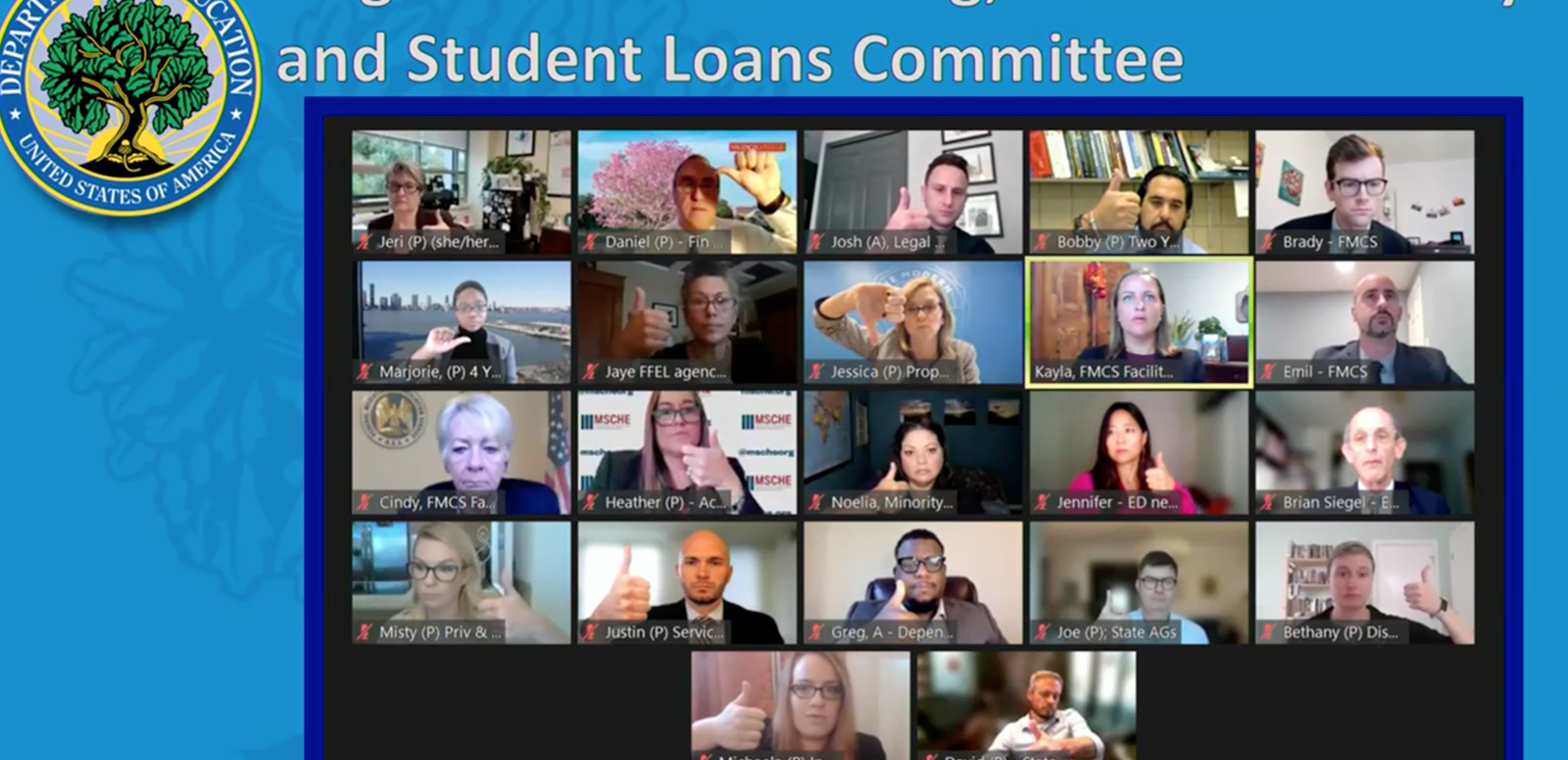
While most other federal agencies are allowed to issue regulations without going through a “negotiated rulemaking” process, the Department of Education is different. The Higher Education Act requires that the Department obtain “the advice of and recommendations from individuals and representatives of the groups involved in student financial assistance programs” before issuing regulations on federal financial aid programs (e.g. grants, loans, work-study). The Department must convene a group of stakeholders to provide input on the proposed set of issues, topics, and regulatory language the Department is considering for regulation. According to the law, these representatives, or negotiators, may include “students, legal assistance organizations that represent students, institutions of higher education, State student grant agencies,” and more. If the stakeholders and the Department negotiate and reach agreement, or consensus, on what the proposed regulatory language should look like, the Department is required to propose that language when developing its regulations. If an agreement is not reached, the Department is provided wide latitude in developing its regulations. This process is known as negotiated rulemaking, or “neg-reg.”