A Chapter of: Soleimani’s Shadow
Conclusion: Soleimani’s Legacy and What it Means for the Future of Proxy Warfare
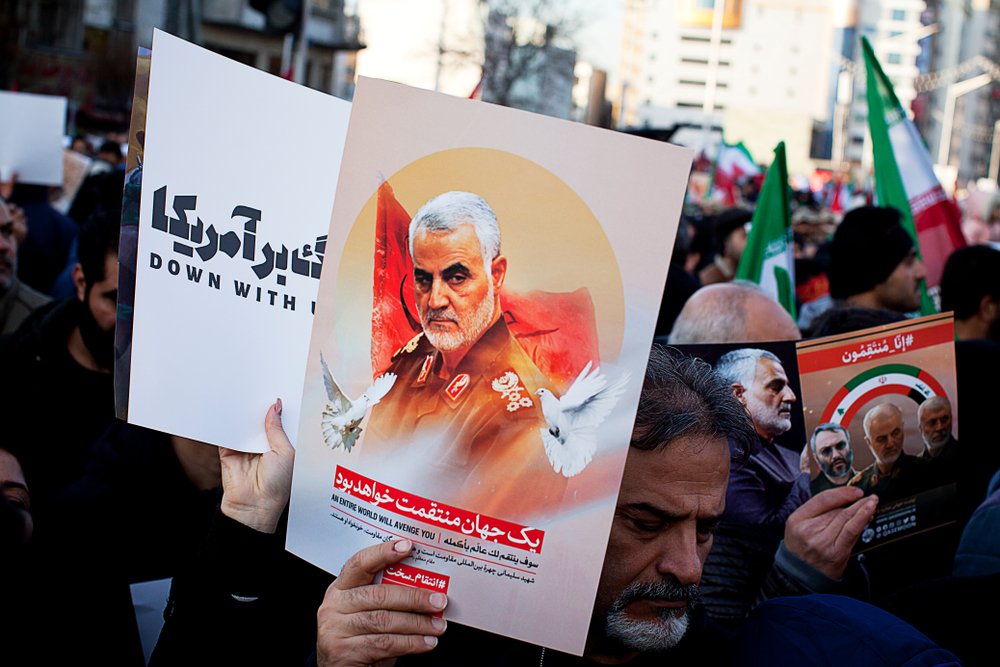
Paramilitary groups like the Fatemiyoun have sought to stress that they could continue the path of Soleimani's legend following his death. The Fatemiyoun and the Islamic Republic have stressed the bond between Fatemiyoun and Soleimani, affectionately known as the "commander of hearts," because of his perceived ability to win over hearts and minds.371
Yet, Soleimani as a cultural and political icon is irreplaceable. The circumstances that led to his legend, starting from the Iraq war, Syria, and the war in Iraq against the Islamic State cannot be replicated. This helps explain why Islamic Republic officials have sought to reassure their followers and warn adversaries that the Quds Force would continue in Soleimani's path.372 In the order appointing former Deputy Commander Esmail Ghaani as the force chief, Khamenei declared that Soleimani's path must proceed.373 While the Islamic Republic and its myriad factions and organizations have wrangled over Soleimani's legacy, there was a general consensus within the system about how to respond to Soleimani's death, a term coined harsh revenge.374
Leading up to and after Iran’s retaliatory missile strike against U.S. forces in Iraq, IRGC commanders and officials gave different ideas of how to fulfill that revenge, such as a sustained asymmetric campaign against U.S. forces in the Middle East. Eventually, Tehran agreed on launching missile launches against U.S. forces in Iraq's Ayn al-Assad, which resulted in no fatalities but dozens of traumatic brain injuries. Iranian propaganda said that dozens and even over a hundred U.S. forces were killed.375 That was meant to provide cover for an option that, at least compared to other options, minimized the risk of U.S. retaliation while saving face.
Sometime after Soleimani's death, the unnamed commander of the Fatemiyoun defined what it means for the Fatemiyoun to continue Soleimani’s path. Speaking at a commemoration ceremony in Kerman, Iran, the commander called the formations of paramilitary groups Soleimani's largest legacy, and that he left the groups' management to the people.376 The commander said that Soleimani, on the day of his death, convened a meeting in Syria in which he invited the leaders of IRGC-led groups there. He laid out a five-year plan for the Fatemiyoun, that "may be his last will," but the Fatemiyoun commander did not discuss the details of that. The commander also said that the Fatemiyoun would exact vengeance by driving the United States from areas like Afghanistan. While that was probably posturing for the moment and the United States will exit Afghanistan in 2021, it does underscore the probability of Fatemiyoun deployment into Afghanistan.
The Fatemiyoun's commemoration of Soleimani has reflected that of the Islamic Republic and other paramilitary groups, projecting a narrative that Soleimani led a unified transnational Shiite-Islamist force. At the same time, Soleimani and Fatemiyoun had a strong bond. The group and Iranian officials have credited Soleimani with establishing the group and forming a strong bond with fighters. Ali Shirazi, the Supreme Leader's representative to the Quds Force who also acts as the force's chief ideologue, said during an interview that Soleimani loved the Fatemiyoun and other groups.377
The Fatemiyoun have participated in major ceremonies commemorating Soleimani, for instance, a prayer station near Khomeyni's Mausoleum in Tehran on the 40th day of Soleimani's death, which in Shiism is a significant milestone.378 The Fatemiyoun said that the station was reminiscent of prayer stations held during Ashura ceremonies, further stressing the spiritual and religious nature of the event. He then said that Soleimani's formation of the Fatmeiyoun drove a cultural shift in Iranian society, improving the "dignity" of Afghans in their eyes.
Since Soleimani's death, the Fatemiyoun have reiterated their oaths to the revolution, participated in a revolution anniversary march, and reiterated their commitments to fighting Israel. The new IRGC chief commander Hossein Salami has paid attention to the Fatemiyoun, releasing a statement addressed to the group on the anniversary of the death of Tavassoli in February 2020.379 IRGC Khatam ol-Anbiya Construction Base, the Guard's engineering arm, has announced the construction of a tailoring factory to help create jobs for the Fatemiyoun’s families.380
The recruitment and deployment of thousands of Afghan paramilitaries at the knife’s edge of Iran’s proxy wars by the Islamic Revolutionary Guard Corps (IRGC) represents a watershed moment in the evolution of Tehran’s information warfare capabilities. Fatemiyoun fighters were the first forces to be deployed by Tehran at the peak of the age of militarized online astroturfing, and the IRGC has accordingly used social media to build and grow the Fatemiyoun brand online. Along the way, Iranian-financed propaganda about Afghan foreign fighters in Syria and Tehran’s support to Fatemiyoun’s media center and cultural affairs unit has played a vital role in making the IRGC’s proxy strategy a success. The Iranian support for the units’ media production illustrates the increased Iranian reliance upon and use of strategic narratives that bind together transnational mobilizations in the wake of the Arab Spring. How these narratives will figure in future iterations of Iran’s proxy warfare calculations is anybody’s guess, but there can be no doubt that keeping an eye on Fatemiyoun’s media channels will be a must for understanding where escalation risks may come up next.
Soleimani’s Shadow
- Executive Summary
- I. Introduction
- II. The Origins of Iran’s Afghan and Pakistani Shi’a Networks
- III. Crossroads in Khuzestan: Afghan Shi’a Mobilization During the Iran-Iraq War
- IV. The Arab Spring: A New Phase of Iranian Proxy Warfare Strategy
- V. Keeping the Faith in Sacred Defense
- VI. Spinning the Fatemiyoun: Raising an Army of Disposable Afghan Diaspora Online
- VII. The Future of the Fatemiyoun Division
- Conclusion: Soleimani’s Legacy and What it Means for the Future of Proxy Warfare
- Appendix I-Timeline: The Rise of Iran’s Afghan Shia Cadres
- Appendix II-Prominent Fatemiyoun Propaganda Organizations and Groups
Citations
- “چرا حاج قاسم را سردار دل ها می نامند؟” (“chera haj qasem ra sardar-e delha minamand,” “Why Do They Call Haj Qassem The Commander of Hearts”), Defa Press, June 2, 2016. https://defapress.ir/fa/news/85721/.
- “انتصاب سردار سرتیپ قاآنی به فرماندهی نیرو قدس سپاه پاسداران انقلاب اسلامی” (“entesab-e sardar sartip qa’ani be farmandehi-ye niru-ye qods-e sepah-e pasdaran-e enqelab-e eslami,” “Appointment of Commander Brigadier General Qa’ani to Command of Islamic Revolution Guard Corps Quds Force”), Office for the Preservation and Publication of the Works of Grand Ayatollah Khamene’i, January 3, 2020. https://farsi.khamenei.ir/message-content?id=44555.
- “انتصاب سردار سرتیپ قاآنی به فرماندهی نیرو قدس سپاه پاسداران انقلاب اسلامی” (“entesab-e sardar sartip qa’ani be farmandehi-ye niru-ye qods-e sepah-e pasdaran-e enqelab-e eslami,” “Appointment of Commander Brigadier General Qa’ani to Command of Islamic Revolution Guard Corps Quds Force”), Office for the Preservation and Publication of the Works of Grand Ayatollah Khamene’i, January 3, 2020. https://farsi.khamenei.ir/message-content?id=44555.
- Alexander Smith, “Iran vows revenge and 'harsh retaliation' after U.S. kills its top general,” NBC News, January 3, 2020. https://www.nbcnews.com/news/world/iran-vows-revenge-harsh-retaliation-after-u-s-kills-its-n1109856.
- “Iranian state TV says 80 'American terrorists' killed in Iran missile strikes,” Reuters, January 8, 2020. https://www.reuters.com/article/uk-iraq-security-iran-casualties/iranian-state-tv-says-80-american-terrorists-killed-in-iran-missile-strikes-idUKKBN1Z70LU; “کشته شدن بیش از ۱۰۰ نظامی آمریکایی در حمله موشکی ایران به پایگاه عینالاسد” (“koshte shodan-e bish az 100 nezami amrika-yi da hamle-ye mushaki-ye iran be paygah-e ayn al-asad,” “More Than 100 American Military Personnel Killed in Iran’s Missile Strike on Ayn al-Asad Base”), Hamshahri Online, January 18, 2020. https://www.hamshahrionline.ir/news/478752/کشته-شدن-بیش-از-۱۰۰-نظامی-آمریکایی-در-حمله-موشکی-ایران-به-پایگاه.
- “فرمانده یگان فاطمیون: حاج قاسم در آخرین دیدار برنامه مدون ۵ ساله تیپ فاطمیون را دادند” (“farmande-ye yegan-e fatemiyoun” haj qasem dar akharin didar barname-ye modavvan-e 5 sale-ye tipp-e fatemiyoun ra dadan,” “Fatemiyoun Unit Commander: Haj Qasem Gave 5-Year Plan To Fatemiyoun Brigade in Last Meeting”), Tasnim News, January 15, 2020. https://www.tasnimnews.com/fa/news/1398/10/25/2182524/فرمانده-یگان-فاطمیون-حاج-قاسم-در-آخرین-دیدار-برنامه-مدون-5-ساله-تیپ-فاطمیون-را-دادند.
- “مصاحبه نماینده رهبری در نیروی قدس سپاه با وبگاه لبنانی؛ تأکید بر حمایت از مقاومت تا آزادی قدس” (“mosahebe-ye namayande-ye rahbari dar niru-ye qods ba vebgah-e lobnani; ta’keed bar hemayat az moqavemat ta azadi-ye qods,” “Leader’s Representative Speaking With Lebanese Website; Emphasis on Supporting Resistance Until Jerusalem’s Liberation”), Al-Alam, May 21, 2020. https://fa.alalamtv.net/news/4942391/مصاحبه-نماینده-رهبری-در-نیروی-قدس-سپاه-با-وبگاه-لبنانی؛-تأکید-بر-.
- “حضور موکبهای اربعین حسینی و لشکر «فاطمیون» در مراسم چهلم شهادت حاج قاسم سلیمانی + تصاویر” (“hozur-e movakkebha-ye arba’een-e hoseini va lashkar-e ‘fatemiyoun’ dar marasem-e chehellom-e shahadat-e haj qasem-e soleimani + tasavir,” “’Fatemiyoun’ Division and Hossein-Like Aid Stations at Fortieth Ceremony To Commemorate Haj Qasem Soleimani + Footage”), Defa Press, February 13, 2020. https://defapress.ir/fa/news/384102/حضور-موکب%E2%80%8Cهای-اربعین-حسینی-و-لشکر-فاطمیون-در-مراسم-چهلم-شهادت-حاج-قاسم-سلیمانی-تصاویر.
- “پیام فرمانده کل سپاه به همسر فرمانده فاطمیون” (“payam-e farmande-ye koll-e sepah be hamsar-e farmande-ye fatemiyoun,” “Message of IRGC Chief Commander To Spouse of Fatemiyoun Commander”), Khabar Online, February 27, 2020. https://www.khabaronline.ir/news/1357913/پیام-فرمانده-کل-سپاه-به-همسر-فرمانده-فاطمیون.
- “اشتغالزایی قرارگاه خاتم برای خانوادههای شهدای فاطمیون” (“eshteghalzodayi-e qarargah-e khatam baray-e khanevadeha-ye shohada-ye fatmeiyoun,” “Khatam ol-Anbiya Creating Jobs For Families of Martyred Fatemiyoun”), Fars News, November 29, 2019. https://www.farsnews.ir/tehran/news/13980908000036/اشتغالزایی-قرارگاه-خاتم-برای-خانواده%E2%80%8Cهای-شهدای-فاطمیون.