A Toolkit for Effective and Supportive Transitions for Children, Families, and Educators in Fall 2021 and Beyond
Abstract
State and local officials must establish effective and supportive transition policies that recognize an ongoing process and include collaboration across ECE settings and elementary schools. This toolkit offers immediate steps needed to strengthen children’s transition this coming year and beyond.
This project is a collaboration between New America and EducationCounsel.
Acknowledgments
Thank you to individuals who attended our National Transition Summit and offered expertise and insights that informed this toolkit. We appreciate Hedy Chang, Scott Groginsky, Sherri Killins, Edward Manuszak, and Scott Palmer for reviewing the toolkit and offering helpful suggestions. We’d also like to thank Sabrina Detlef for her expert and editorial insight; and Julie Brosnan, Riker Pasterkiewicz, Maria Elkin, and Joe Wilkes for their help in the design, publication, and dissemination of this toolkit.
We are grateful to the Heising-Simons Foundation, the Alliance for Early Success, the Bainum Family Foundation, and the W. Clement & Jessie V. Stone Foundation for funding this work. The views expressed in this paper are of its authors alone.
This project is a collaboration between New America and EducationCounsel.
Downloads
Introduction
Our youngest learners and their families and educators will feel the effects of the COVID-19 pandemic for years to come. For many, especially among Black, Indigenous, and people of color and in low-income communities, the year has left long lasting damage. And for young children, the trauma, uncertainty, and loss they endured will last a lifetime. At the same time, many families are stronger and more connected and parents are engaged in their children’s learning in a way they have not been before.
As decision-makers look forward and plan for the next several school years, supportive and effective transitions from early childhood programs into kindergarten and the early grades will be crucial to begin to address these issues. States, school districts, center-based and family child care programs, Head Start programs, and the communities in which they are located must plan together and thoughtfully connect children’s and families’ experiences across these years. Families and educators will need more support as they work to meet young children’s needs and help them thrive.
Policy is needed at the state and local level to strengthen systems that prioritize this kind of work. Without leadership, vision, supportive policy, and careful planning, transition work is not the direct responsibility of any one official in school districts or at state departments of education, human services, or equivalent agencies. Despite its importance, this means transition is often overlooked or neglected and too often left to discrete activities leading up to the start of a new school year.
In order to ensure a seamless transition for children, families, and educators, state and local officials must cooperate to establish permanent effective and supportive transition policies and practices that recognize this as a year-long process that includes collaboration across early childhood settings and elementary schools. They must also align what children and families experience and how they experience it, as well as continuous improvement efforts. Covid-19 provides an opportunity to reimagine and recommit to transitions between early childhood and K-12 systems. It is up to states and local communities to make those changes for the long-term.
This project is a collaboration between New America and EducationCounsel.
How to Use this Toolkit
This toolkit conceptualizes the system of transition in two main ways: (1) children’s transition from a home or community-based early childhood setting to the public school setting of pre-K, kindergarten, or the early elementary grades; and (2) children’s transition into a post-COVID learning environment both in fall 2021 and the years that follow.
The toolkit takes both a short-term and long-term view of strengthening transition. There are immediate steps needed to strengthen children’s transition this year and beyond. And this period of crisis and uncertainty presents a moment to reimagine children’s pre-K, kindergarten, and early grade experiences while also laying the foundation for improved, integrated systems across early care and education and K-12.
Officials in state government, local education agencies, and local government must work to create supportive and effective transitions. In coordination with early childhood stakeholders and advocates, local and state officials should prioritize policies that improve outcomes for the children, families, educators, and communities that have suffered the most disruptions and harm over the last year, while creating permanent changes to the ways children, families, caregivers, teachers, and other stakeholders experience the transition process.
While this toolkit focuses on what state and local officials should consider as they enact solutions, other entities play an important part in ensuring this work gets done. For example, state and local advocacy organizations should elevate under-recognized issues and those that need the most attention. Advocacy organizations can help connect decision-makers with educators and families. Philanthropy can help spur state and local innovation to find solutions to complex problems, make targeted investments for meaningful engagement with stakeholders in policymaking and implementation, and help sectors collaborate on the best ways to enable children, families, educators, and communities to thrive. Libraries and museums can be neutral places for families to gain information and experience.
The sections that follow delve into challenges stemming from the COVID-19 pandemic that will impact future school years, and they provide state and local policy solutions. This period of crisis also presents a time to dramatically improve children’s transition into learning environments in early childhood and elementary education settings, value and support educators, and strengthen family wellbeing.
We see this as a dynamic online toolkit: we will update and expand it over the next year as we learn more from states and communities and as we have new examples and ideas to put forward.
Before we get into the policy solutions, we will delve into how the COVID-19 pandemic has impacted children, families, educators, and ECE and why it matters for transition.
This project is a collaboration between New America and EducationCounsel.
Definitions
- Early care and education (ECE): Nonparental care and education for children from birth to third grade that occurs outside a child’s home
- Early childhood educators: Adults who work for pay with young children from birth to third grade in roles focused on teaching and caregiving
- Early childhood settings: The various settings in which ECE is delivered to young children, including Head Start, family and center-based child care programs, public schools, and community-based organizations
- Head Start: Federal program established in 1965 that provides high-quality early childhood education and health, nutrition, and family engagement and support services to three- to four-year-old children living in poverty
- High-intensity transition activities: Transition activities that involve individualized contact with parents, encourage teacher communication between grades/settings, and occur before the first day of school
- Low-intensity transition activities: Transition activities that do not involve individualized contact with parents/teachers and are often one-time activities
- Pre-K: Educational programs designed to serve three- and four-year-olds that occur in a variety of settings
- Transition: A year-long, systemic process that includes actions at the state and local level to support the process of moving from one grade level or school setting to another, such as moving from parental care to pre-K or pre-K to kindergarten; a key focus of the transition process is ensuring that curriculum, instruction, and assessment are aligned
Acronyms
- ARP: American Rescue Plan
- CARES: Coronavirus Aid, Relief, and Economic Security Act
- CCDBG: Child Care and Development Block Grant Act
- CCDF: Child Care Development Fund
- CRRSA: Coronavirus Response and Relief Supplemental Appropriations Act
- ESSA: Every Student Succeeds Act
- ESSER: Elementary and Secondary School Emergency Relief Fund
- LEA: Local Educational Agency
- MIECHV: Maternal, Infant, and Early Childhood Home Visiting
- MOU/MOA: Memorandum of Understanding/Memorandum of Agreement
- PD: Professional development or professional learning
- SEA: State Educational Agency
- TANF: Temporary Assistance for Needy Families
This project is a collaboration between New America and EducationCounsel.
Scenarios to Consider in Response to COVID-19
While transitions are important every school year, they have become even more critical due to the widespread disruptions caused by COVID-19. After more than an entire school year of pandemic-related changes, there are multiple scenarios that schools may face this fall. Concerns and new expectations from families—especially families of color and families living in under-resourced communities—must be reflected in the design of transition activities. Review of recent research and major news stories, as well as conversations with states, districts, and other leaders, produced the following scenarios that schools and districts should consider and plan for over the next year. Each of these scenarios will require additional supports for the teachers and other staff with whom children interact.
- COVID-related changes in fall 2020 enrollment could play out in three primary ways in fall 2021:
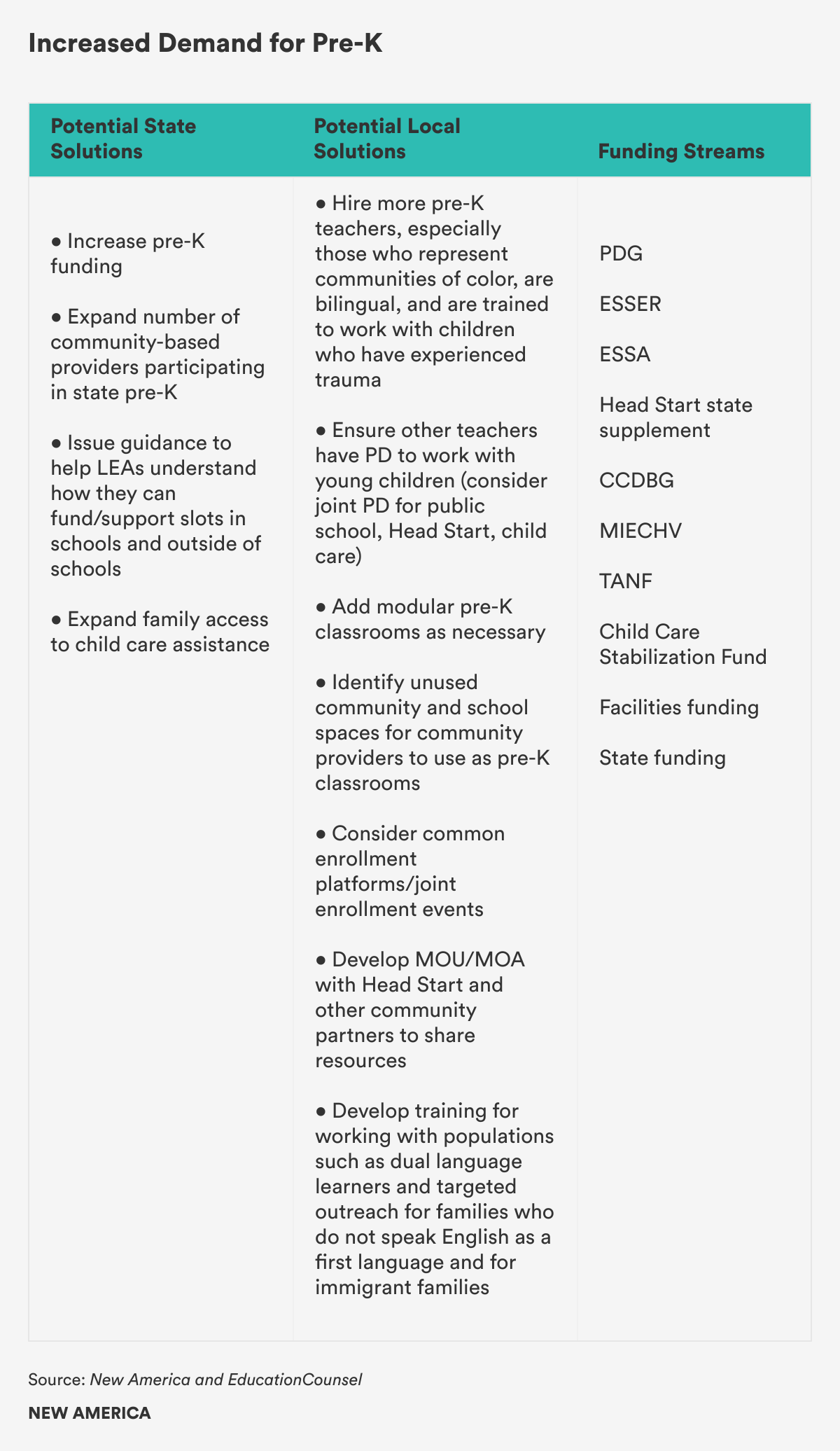
- There may be an increased demand for pre-K after many parents chose to keep their children out of formal pre-K programs last year. These parents may be interested in enrolling in pre-K instead of going straight into kindergarten. Also, more parents of three- and four-year-old children may be interested in the developmental and social benefits of pre-K after a year of turmoil.
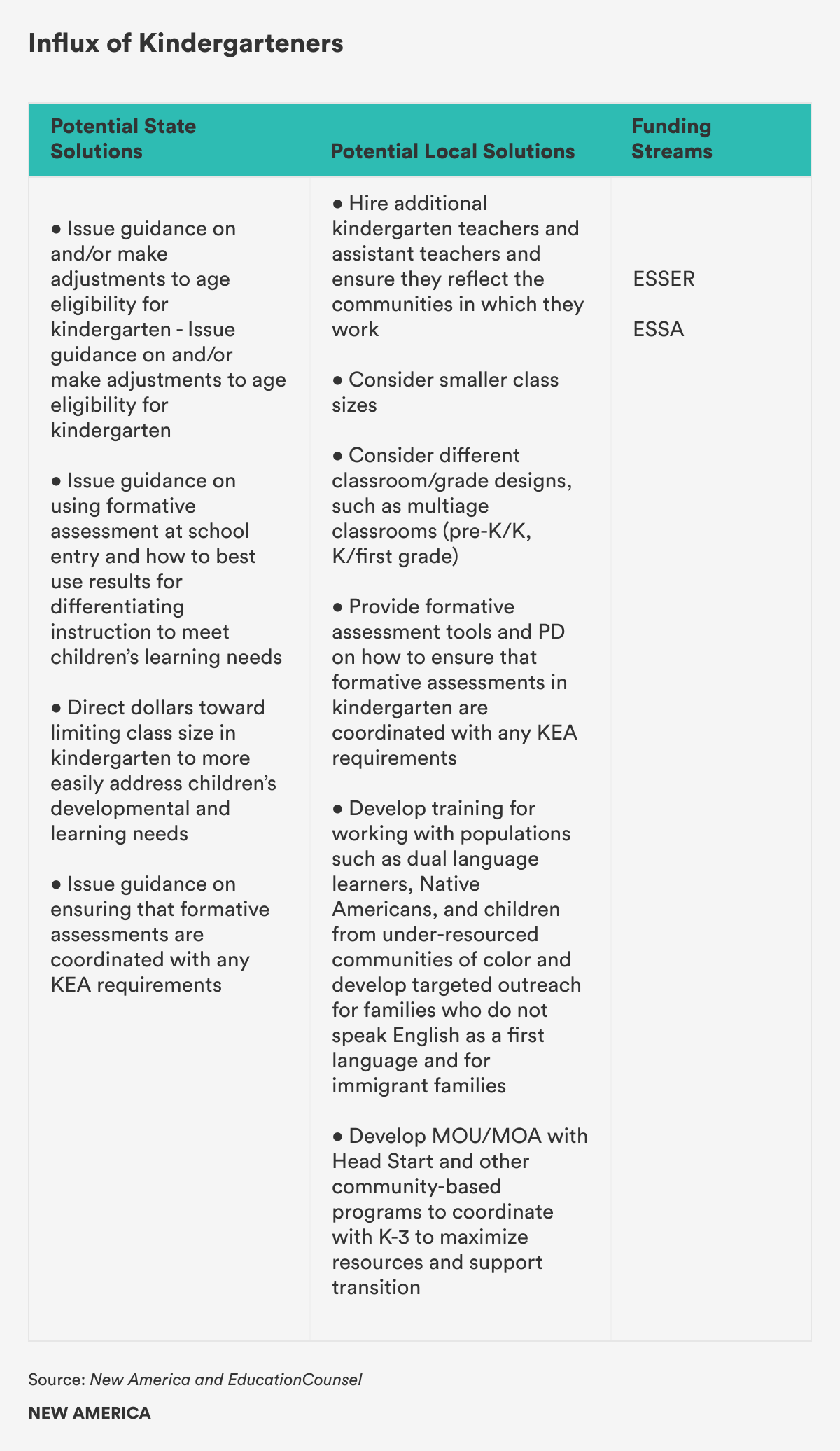
- Drops in pre-K and kindergarten enrollment last year suggest that there may be an influx of kindergarteners in fall 2021. This kindergarten class may have greater variation in skills because of children’s divergent experiences in the past year. There will also be more variation in age based on state policies and whether parents chose to wait a year to enroll their children in school.
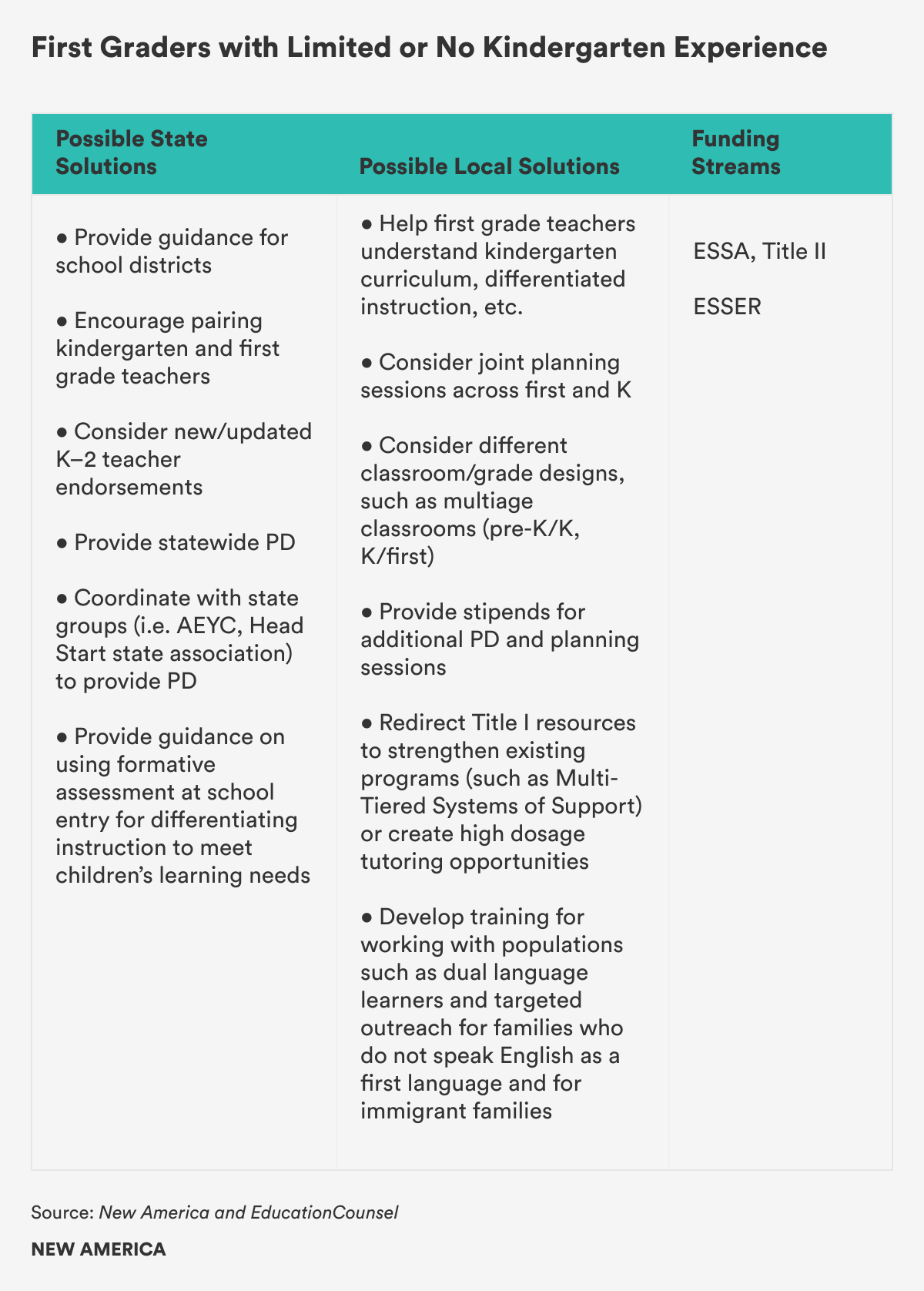
- Teachers may have first graders with limited or no kindergarten experience. Based on what we know about young children’s learning, it is likely that children who attended virtual or hybrid kindergarten classes will not come to first grade as prepared as those in prior years. In states or districts where kindergarten attendance is not required, children may end up skipping kindergarten altogether and enter first grade with no formal school experience.
How do we know?
- A survey of 100 school districts conducted by NPR found that the average district saw a decline in kindergarten enrollment of 16 percent when official counts were taken for the 2020–21 school year last October.
- A study by the National Institute for Early Education Research (NIEER) found that participation in preschool programs declined from a pre-pandemic level of 71 percent of four-year-olds to just 54 percent of four-year-olds in the fall of 2020. In-person enrollment, according to NIEER, dipped most sharply for low-income children, as just 14 percent of children from the lowest-income families were enrolled in in-person pre-K compared to 64 percent pre-pandemic.
- There may be significantly undercounted enrollment declines of the past year, as researchers estimated that 400,000 fewer children and youth experiencing homelessness were identified by schools last year, even as housing instability and joblessness claims reached historic highs.
- Many are predicting a possible “kindergarten bubble” in the 2021-22 school year and now we are seeing districts planning for a surge.
- Children will have different needs than a typical incoming class, depending on what they experienced during the pandemic.
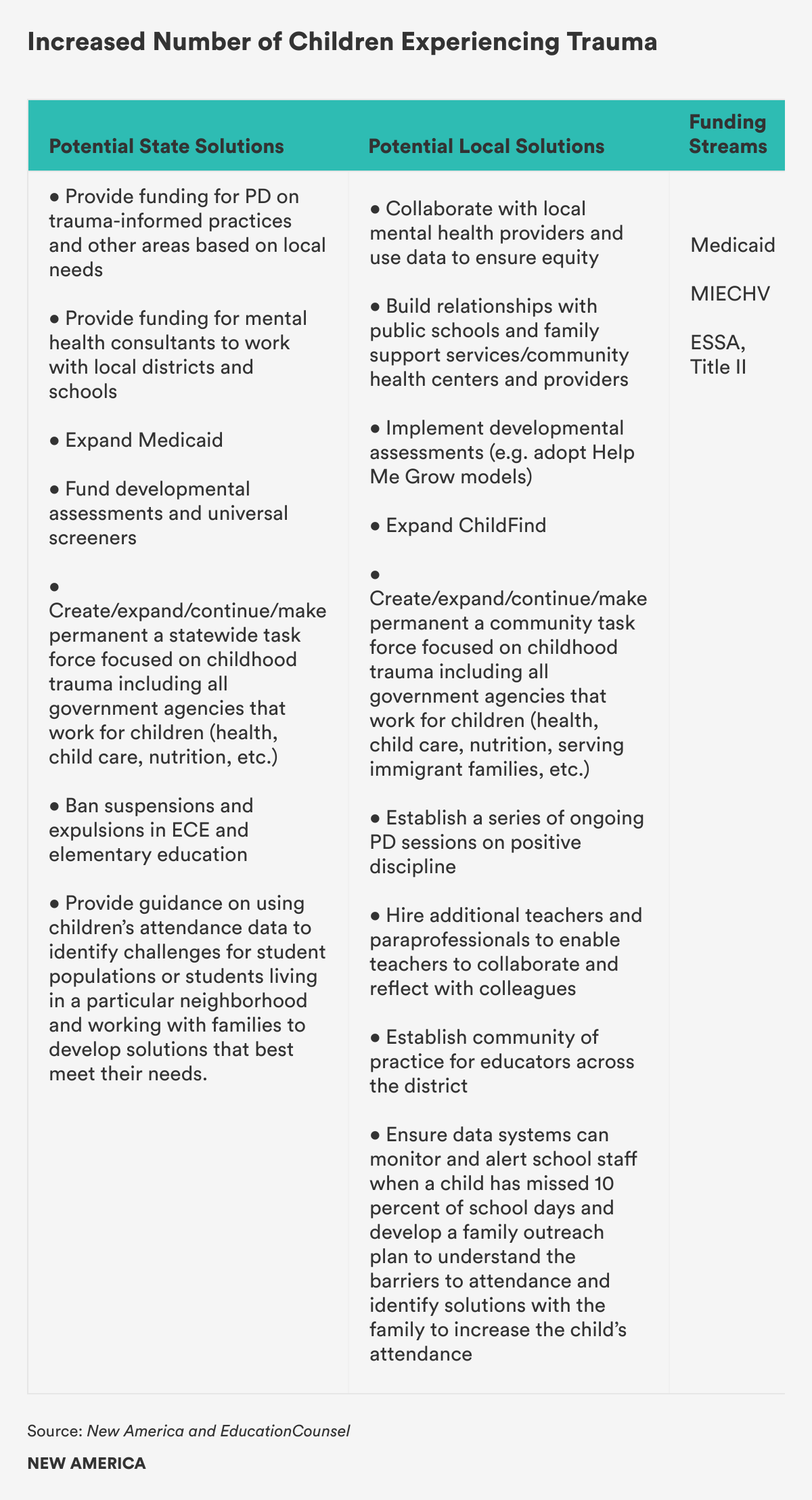
- There will be an increased number of children experiencing trauma in fall 2021 and beyond. Over the last year, more families experienced economic hardship, job loss, food insecurity, homelessness, substance abuse, illness, and loss of loved ones, in addition to general social isolation and major disruptions to normal activities. Everyone was impacted by COVID-19 in some way, and some groups experienced disproportionate hardships. COVID-19 itself may be considered an adverse childhood experience.
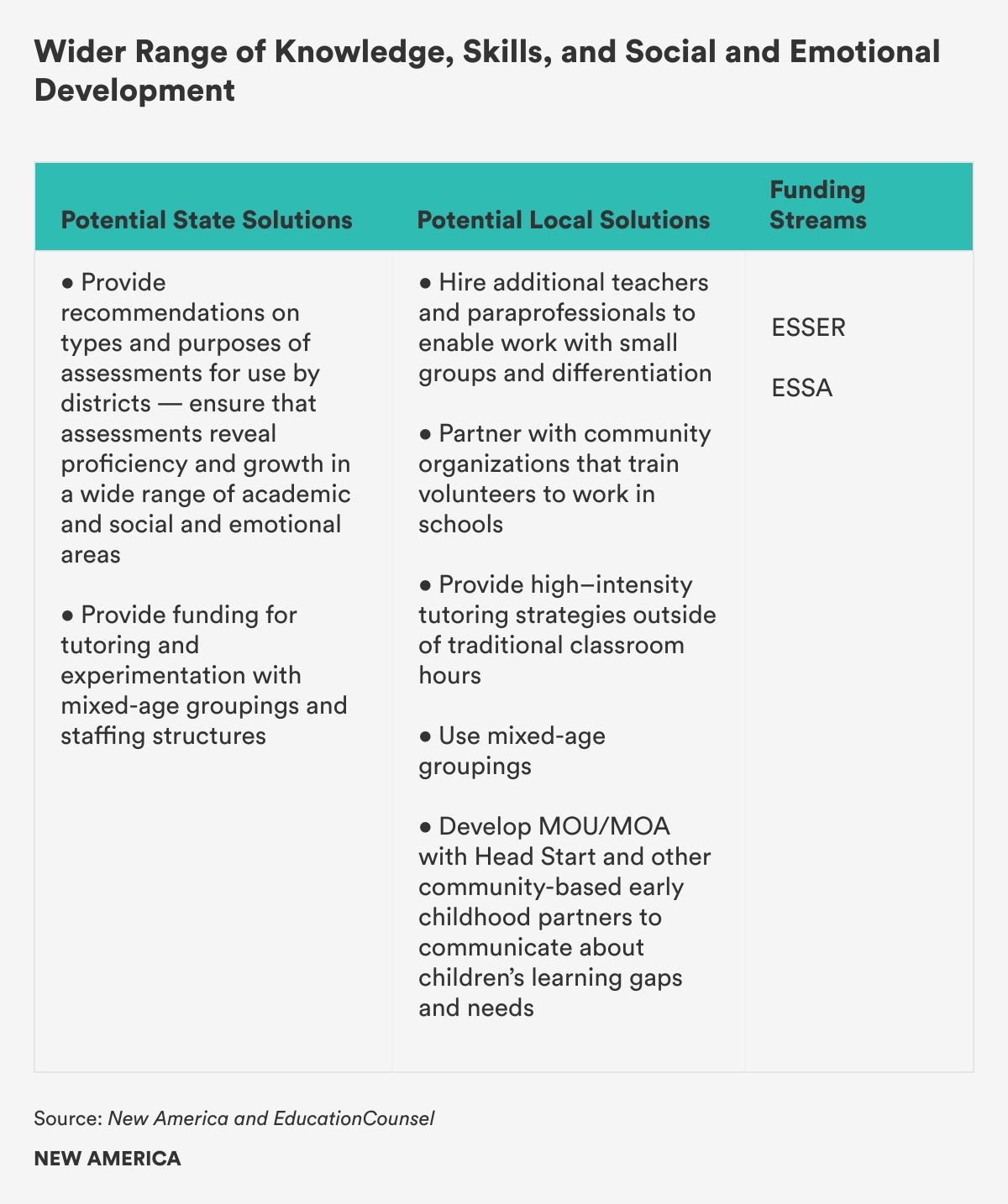
- Many children’s developmental and learning needs were not met well in the 2020-2021 school year. Coupled with the enrollment changes explained above, children in the same classroom will likely have a wider range of knowledge, skills, and social and emotional development.
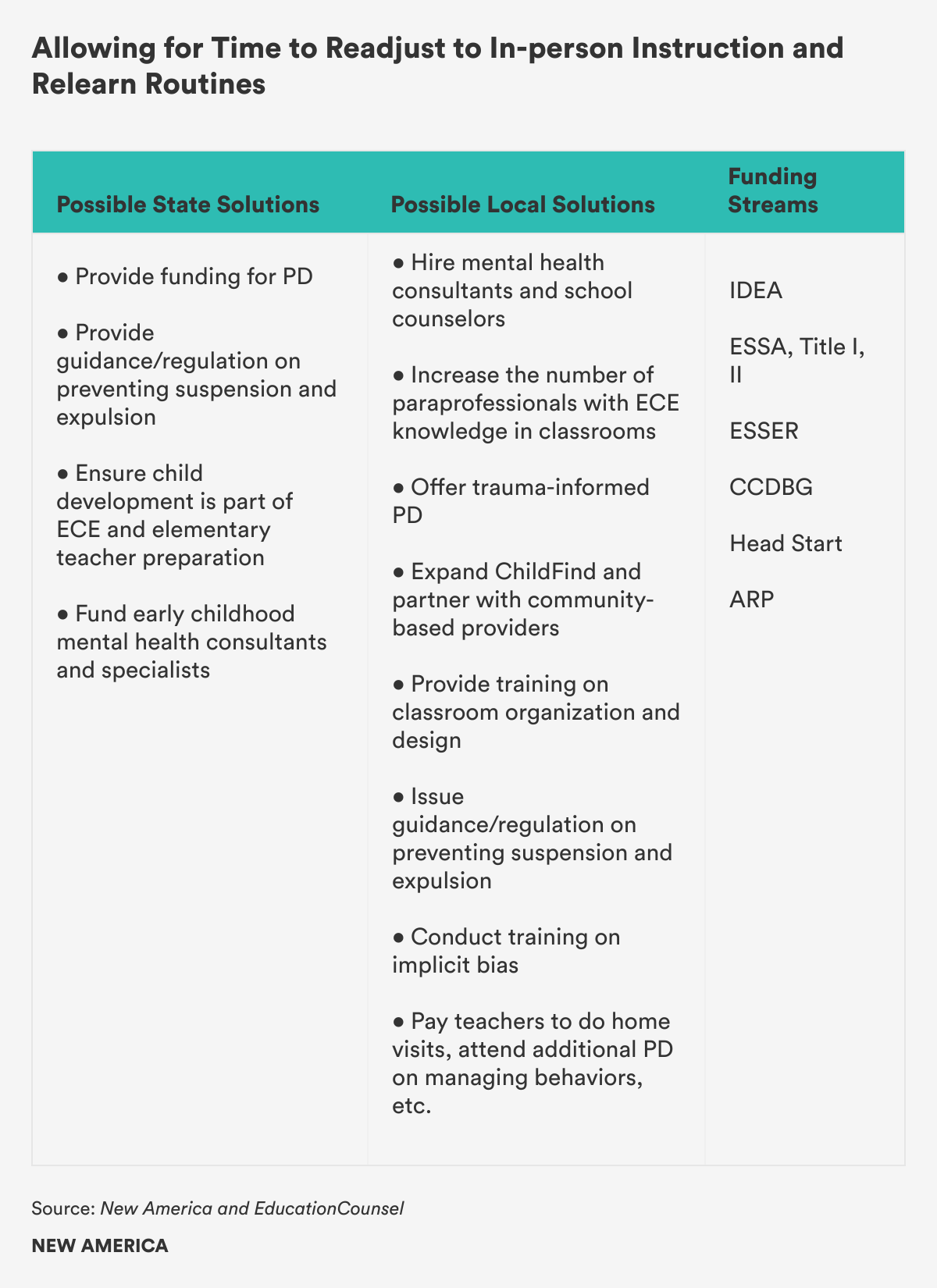
- Children of all ages and adults will need time to readjust to in-person instruction and relearn routines or learn them for the first time. Teachers, paraprofessionals, and other school staff need to be equipped to respond appropriately. Punitive action is likely not the appropriate response and children should not be excluded from the learning environment.
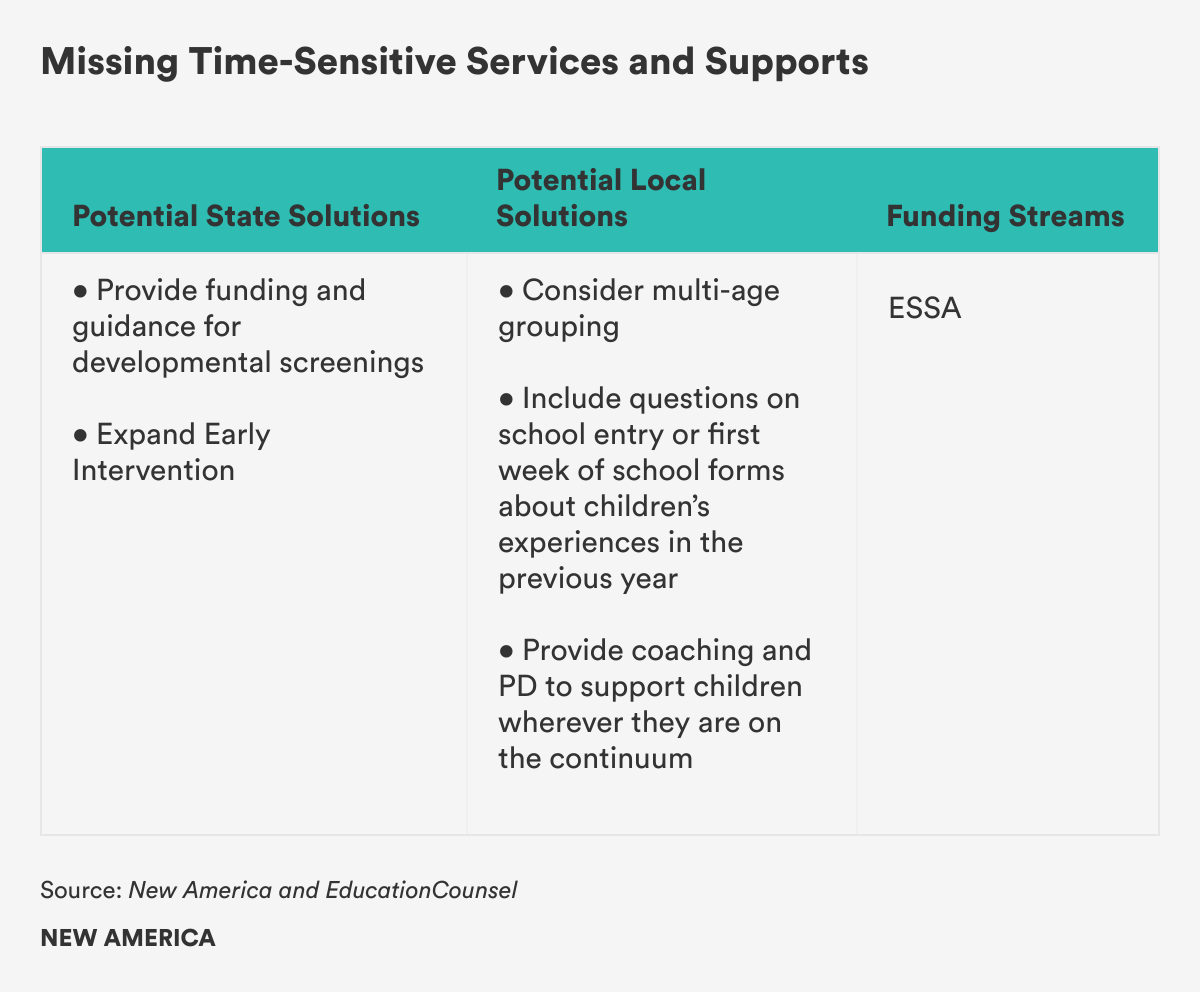
- Children may have missed out on time-sensitive services and supports usually provided through their schools or districts over the past year, resulting in academic decline. LEAs may have been particularly ill-equipped to meet the needs of children experiencing homelessness, students with disabilities, and dual language learners through virtual learning or hybrid models. Children new to the public education system have likely not been screened for services, supports, or access to additional resources, or may not have had appropriate supports to move from IFSP (early intervention) to IEP (preschool and school-aged services).
How do we know?
-
- Initial data paint a grim picture of children’s social and emotional wellbeing during the pandemic. In 2020, pediatric mental health-related visits to emergency rooms increased by 24 percent compared to 2019.
- A representative survey of more than 30,000 caregivers of Chicago public school students conducted during the height of the pandemic found that child mental health worsened significantly after school closures began. Negative social and emotional characteristics like loneliness, anger, stress, and anxiety were reported at much higher rates, while characteristics of positive mental health dropped across the board.
- Detrimental social and emotional and mental health impacts of the pandemic are likely to further complicate the stress children already experience as they transition into kindergarten.
- The pandemic has harmed children’s cognitive and academic development. State assessments were not widely administered in the spring of 2020, but the limited data that do exist from national tests administered early in the 2020–21 school year suggest that many elementary school children have experienced at least some level of academic decline.
- Given limited assessment data and insight into academic experiences of young children over the last year, many experts are calling on school districts to approach the learning and recovery needs of kindergarteners and others in early grades as directly linked to social and emotional wellbeing and mental health.
- According to a recent Ed Trust survey of state early intervention coordinators, referral rates dropped, wait times increased, and access to early intervention services dropped in many states.
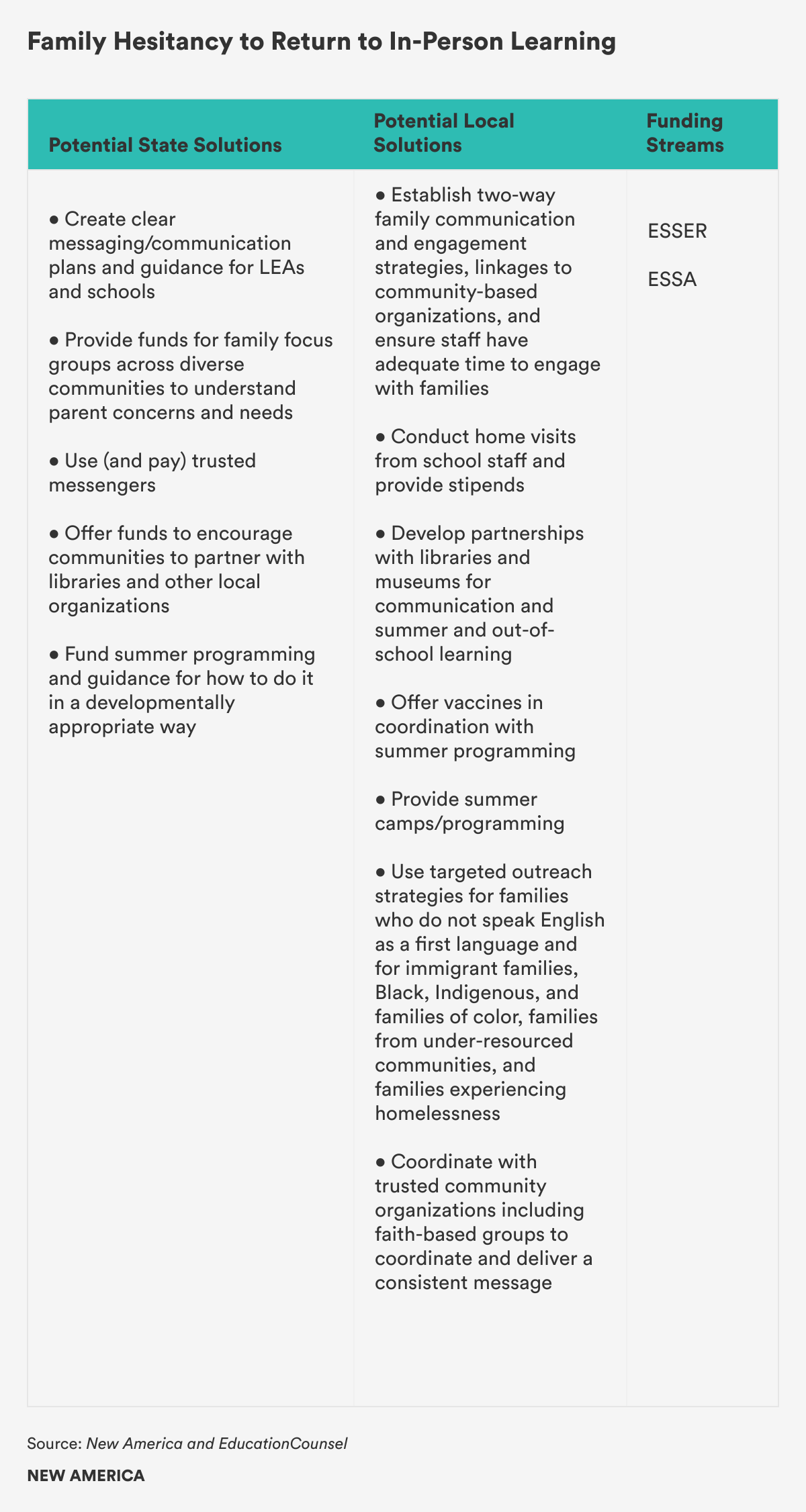
- The pandemic has had a negative impact on families as a whole. For reasons ranging from fear of COVID-19 spread and skepticism about public schools’ crisis management abilities after a challenging year, to a preference for virtual learning, there may be family hesitancy to return to in-person learning. There also may be families that need to be brought back into the school system.
One example of how we know:
- A spring 2021 New York Times article discussed the concept of “school hesitancy” and the number of families, oftentimes families of color, who have been unable to reconnect with school or are not ready to return to in-person learning.
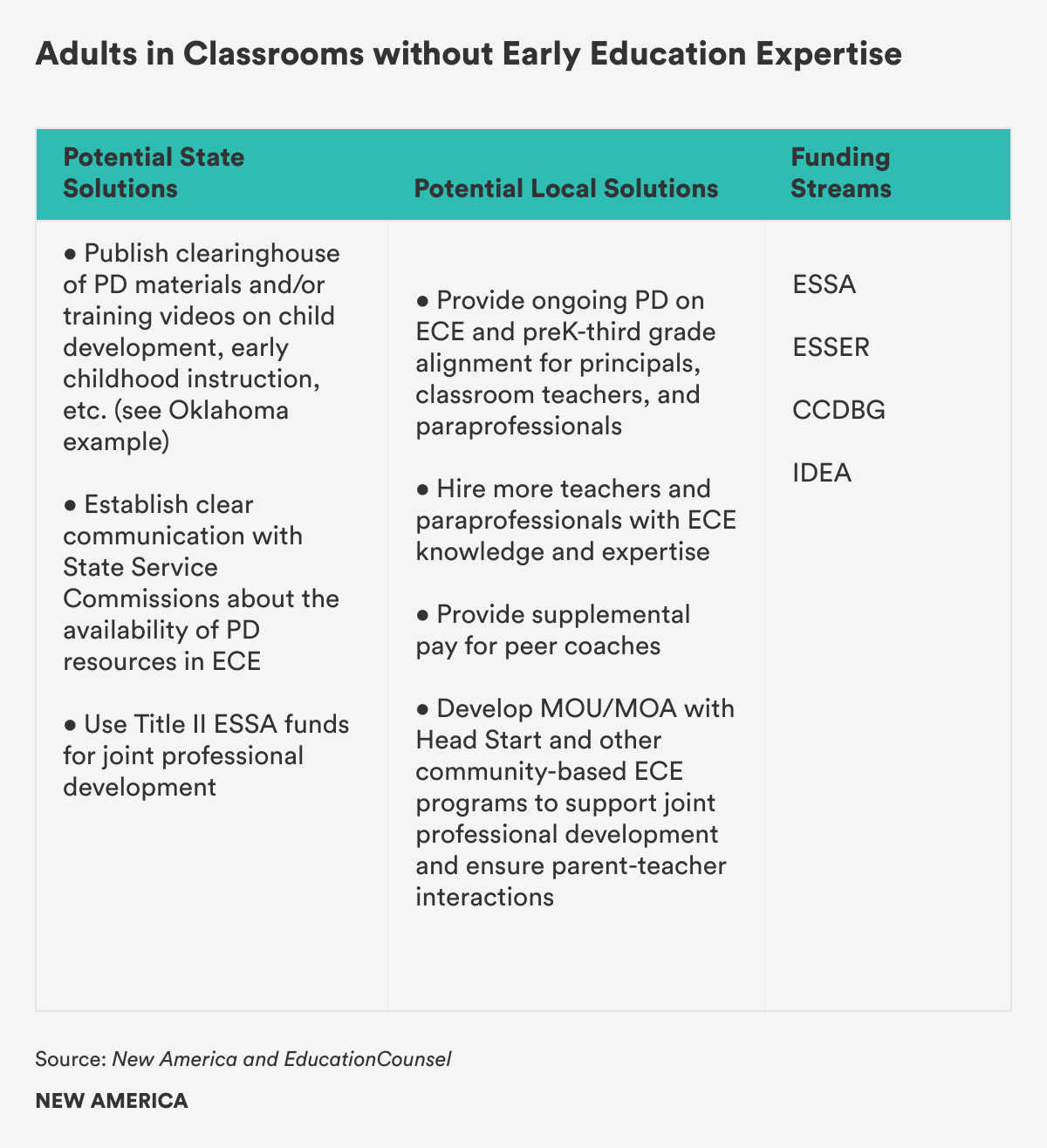
- With children coming in at different skill levels and staff potentially being moved around to accommodate fluctuations in enrollment, there may be more adults in classrooms without early education expertise.
How do we know?
- Previous research has found that elementary teacher preparation typically emphasizes teaching strategies that are more appropriate for older students.
- Paraprofessionals or teacher assistants are not typically required to have early childhood development training.
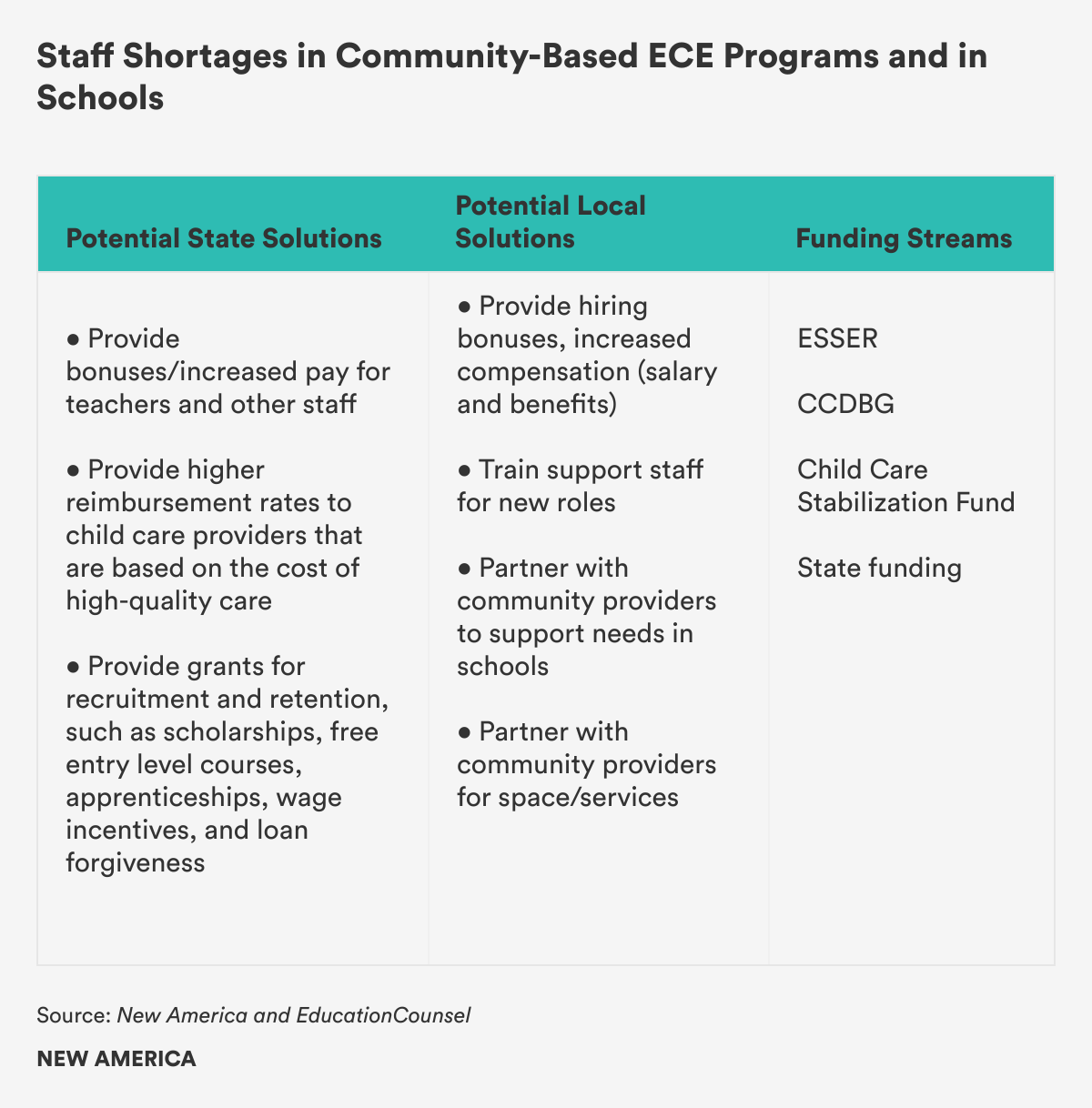
- Between early educators leaving the workforce during COVID-19 and staffing changes needed to accommodate the different potential scenarios, staff shortages in community-based early education programs and in schools may be a challenge. Educators in community-based programs may choose to work for the public school system instead as paraprofessionals, which are likely to be in higher demand, or as classroom teachers if they have the required education and training.
How do we know?
- Turnover has long been a serious problem in ECE settings and research shows that poor compensation is the primary reason. Wages, benefits, and working conditions tend to be significantly better in public school settings. Early childhood educators often leave community-based organizations for better paying jobs, including as paraprofessionals or teachers in elementary schools when they have the appropriate qualifications.
- As the country recovers from the pandemic, research already shows staffing shortages in child care settings, although the data do not specify where early childhood educators are working instead.
This project is a collaboration between New America and EducationCounsel.
Guiding Framework: How Policy Can Help Meet the Needs of Young Learners
As we move past the COVID-19 pandemic, policymakers will need to consider numerous factors as they develop transition plans this fall, revise them throughout the year, and strengthen them for the next year and beyond. The nine areas discussed below provide a framework for states and local leaders to implement in order to create an effective system of transition that will meet the needs of SY 21-22 and beyond. Thoughtfully addressing the following questions through the planning process described in section 6 can help guide policy development and create an opportunity for continuous improvement to ensure that the lessons of COVID-19 are embedded in policy and practice.
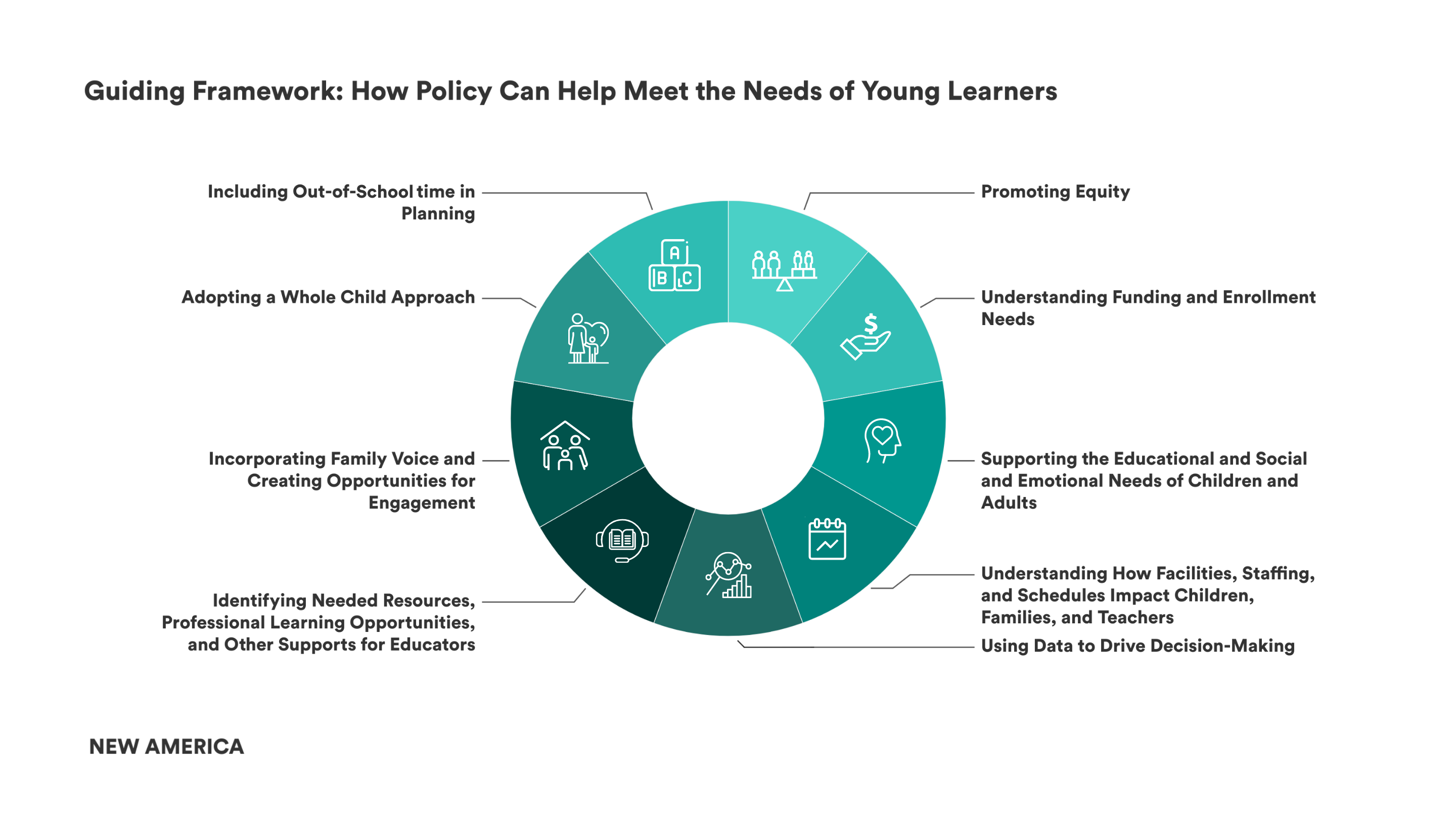
Promoting Equity:
- How can schools and districts use transitions as a lever for advancing equity through increased opportunities, removal of barriers, and distribution of support for children from families with low incomes, children of color, children experiencing homelessness, children with disabilities, and dual language learners?
- How can we ensure any new dollars are used equitably to tailor strategies for children to remove barriers or increase opportunity to appropriately meet young children’s needs given the influx of federal dollars?
- What disaggregated data (e.g. chronic absenteeism, suspensions, remote vs. in-person learning, etc) are needed to understand and address the experiences of children from families with low incomes, children of color, children experiencing homelessness, children with disabilities, and dual-language learners?
Understanding Funding and Enrollment Needs:
- What additional funding may be necessary to address the needs of young children and their families moving into pre-K, kindergarten, and early elementary classrooms?
- What other funding streams (including those targeted for COVID-19 relief) can be leveraged to support the needs of children moving into early elementary classrooms?
- Are ECE eligibility levels set too restrictively to ensure enough children qualify for services?
Supporting the Educational and Social and Emotional Needs of Children and Adults:
- How will educators accurately assess where children are academically, socially, and developmentally?
- How can educators be supported to ensure that children who need the most support are getting it?
- How can schools, programs, and communities better help teachers thrive?
- What are ways to support program alignment (e.g. curriculum, assessment, learning environments, teaching strategies) across child care, pre-K, and kindergarten?
- What tools, assessments, health information, and other data are necessary to understand the needs of children entering school?
- How will educators address gaps with grade-level expectations? How can methods such as differentiation, grouping, tutoring, after school programs, and summer programs be used?
Understanding How Facilities, Staffing, and Schedules Impact Children, Families, and Teachers:
- Will expanded facilities, staffing (teachers and paraprofessionals), and classroom or school schedules be needed?
- How will stakeholders ensure that community-based early education facilities are sufficient and not crowded by expanding elementary school facilities?
- How will stakeholders ensure that the community-based early education workforce is not negatively impacted by staffing changes in the public school system (i.e. community-based early educators leaving to be paraprofessionals in public schools)?
- Do schools or districts need to increase investments in mental health consultants or other professionals equipped to support children and staff who have experienced trauma?
- If an LEA chooses to extend the school day or year, what are the implications for facilities, staff, and schedules?
Using Data to Drive Decision-Making:
- What information is needed to enable district and state leaders to answer questions about children and families’ experiences (both as individuals and as an incoming cohort) during the 2020-21 school year and make investments to address needs that will likely be different from previous years?
- How is data used to understand the experiences available to young children prior to entering K-12?
- How can child attendance data be used in a supportive way to address barriers families may have?
- What data is needed on school staff and teacher wellbeing to ensure they have access to support?
- What data do community-based organizations already collect?
- What are best practices for collecting, sharing, and using data to support transitioning children?
- Is data used for continuous improvement?
- Do states have data systems that show what programs individual children have enrolled in that transfers from early childhood through K-12, higher education, and the workforce?
- How are states, schools, and communities understanding teacher and family experiences and needs and using that information to shape policy choices?
Identifying Needed Resources, Professional Learning Opportunities, and Other Supports for Educators:
- With new challenges for teachers, what are the implications for equity, classroom management and climate, instructional strategies, curriculum, assessment, learning environments, and professional learning?
- Particularly in 2021, how will districts support teachers in classrooms with wide kindergarten readiness disparities?
- Is professional development appropriately geared towards the needs of educators working with young children?
- Are stakeholders equipped to collect and use data effectively?
- How are districts and schools addressing educators’ wellbeing?
Incorporating Family Voice and Creating Opportunities for Engagement:
- What is needed for schools to rebuild trust with families, understand their needs, and include them more meaningfully as partners in students’ learning and development?
- What strategies could be used to understand family perspectives, engage them in school decisions, and build stronger relationships?
- Are resources for families available in simple language, translated into multiple languages, and accessible to families who are unable to read them?
- Is there a plan to reach families that the school has lost contact with and reconnect?
- Do staff have adequate time and resources to engage with families in a meaningful, authentic way over the course of the year?
- Are there ways to leverage the deeper engagement that parents played in their children’s education during the pandemic going forward?
Adopting a Whole Child Approach:
- What additional investments and resources will be needed to address children’s social and emotional needs and physical development, build supportive relationships in the classroom and school, and establish partnerships with community organizations to meet families’ health and economic security needs?
- What guidance is needed at the state and local level to ensure that the full range of children’s needs are supported?
- How are teachers, caregivers, and other staff at the school and community supported to understand and respond to children’s needs?
- How can state and local agencies (including human services, health, public benefits, job training, and family support) work together to more effectively use funding and program supports to encourage healthy child development across the full range of developmental domains?
Including Out-of-School Time in Planning:
- What scheduling shifts, strategies, and additional investments will be needed in the summer or after school to better support children and families and address individual learning needs?
- How can out-of-school programs be used as an opportunity to get resources to students who need individualized support?
- In what ways can districts form new partnerships to support children outside the classroom?
- How can schools and ECE programs collaborate with museums and libraries to provide programming for children and engagement opportunities for families?
Planning for the Future
- With the first day of 2021–22 school rapidly approaching, it is no surprise that most local and state leaders are focused on preparing for it, especially given the scenarios discussed in the previous section. Educational impacts of the COVID-19 pandemic, however, are unlikely to be limited to the 2020–21 and 2021–22 school years. When businesses and workplaces closed, schools moved to virtual instruction, and child care and Head Start programs closed or reduced their capacity in spring 2020, life changed dramatically for everyone, including for infants, toddlers, and preschoolers. They were, for the most part, much too young to understand what was happening. While the pandemic is subsiding 18 months later, we still face uncertainties. For children under four, a significant chunk of their lives has been during this particularly rocky time.
- Given what we know about the impact of stress on young children and the importance of trusted caregivers in mitigating this impact, it is critical that we enact and continuously improve policies supportive of the whole child, that strengthen family wellbeing and economic security, and that elevate community needs and voices.
- There will be much to learn from, analyze, and act on over the 2021–22 school year. Our goal, though, should not be to “return to normal,” but instead to use this moment of crisis, the attention on early education, and the burst of federal dollars, to strengthen the coordination of ECE and K-12 education systems that support effective transitions and set children up to thrive later in school and life.
This project is a collaboration between New America and EducationCounsel.
Six Steps to Strengthen Transitions
When early learning experiences are connected from birth through third grade (B–third), children and their families can more easily transition into pre-K, kindergarten, and the early elementary grades. Improving transitions for children and families requires careful planning, effective policies and practices, and sustainable funding. Educators can establish practices that put families more at ease, but the planning must begin well before the first day of school. On day one, teachers and schools should already have enough information to begin tailoring instruction, strategies, and environments to meet the needs of every student.
Undoubtedly, children and families need activities that engage them early and provide them with information and comfort as they begin the school year. But when enacting policy, state and local decision-makers and administrators must address the systems that support young children’s learning and development and establish conditions that ensure consistent learning environments and experiences across settings and sectors before school, in kindergarten, and beyond.
Educators across PreK–third are key to making this happen. District efforts that bring adults together to align expectations, discipline strategies, curricula, assessments, instructional strategies, family engagement approaches, and learning environments and to share data, jointly plan, and participate in PD may be less visible to children and families but no less significant. In fact, these pieces may be the most critical for creating a seamless transition into pre-K, kindergarten, and each early grade thereafter. State policymakers, from departments of education and health and human services agencies, governors’ offices and state boards of education, and more have an important role to play in setting policy goals to enable effective and supportive transitions.
There are six steps to establishing effective and supportive transition policy at the state and local level.
Step 1: Assess current transition policies and practices
Identifying a transition self-assessment tool and taking stock of current transition activities at the state and local level is the place to start. A number of self-assessment tools exist for this purpose, such as New York’s transition effectiveness assessment tool. Results of the transition self-assessment can provide an overview of current efforts as well as areas where more focused work is needed. This self-assessment should also include listening to families, prioritizing children and families who are farthest from opportunity, and tailoring investments to address their needs.
Since the transition process will be impacted by the pandemic, transition team members should also consider the possible COVID-19-related scenarios highlighted in section 4 and answer the guiding questions posed in section 5 of this toolkit.
Step 2: Determine who should help design policy
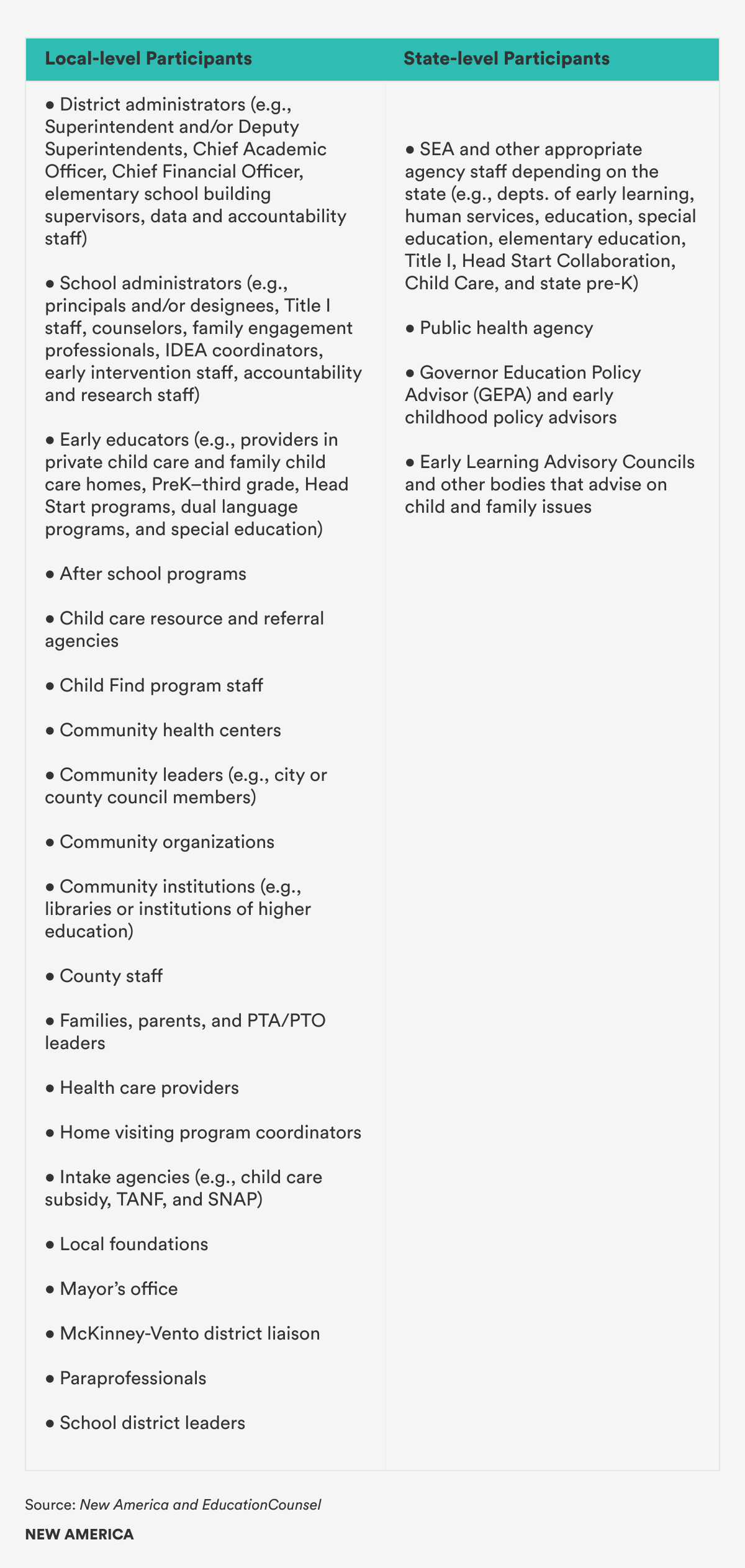
To ensure that children and families experience transitions that meet their needs, it is important for a range of stakeholders to be involved in the policy design process. While classroom teachers play a crucial role in successful transitions, the work goes far beyond them. Anyone who is a touchpoint for a child, family, and teacher during these critical years of development can play a role in ensuring that families and educators have the information they need. To this end, some states have developed resources that detail how to ensure that there is a truly representative planning team. For example,
- Wyoming's Department of Education held a Pre-K to Kindergarten Transition Summit and provided resources related to best transition practices, which are still evolving and flexible due to the re-opening of schools in the fall. In terms of transition planning, one suggestion is maintaining virtual meetings between team members to continue to foster communication, even after school re-open.
- Maine has developed online resources for early educators that detail possible transition team members, as well as ways to build and nurture relationships with families and young children, other early educators, and community organizations.
- Nevada’s Department of Education has developed a guide for supporting the transition to kindergarten that details various possible transition team members to create an inclusive group with meaningful participation.
Professionals and entities in the list below should help design policy and deliver effective and supportive transitions. This list is not exhaustive, and the appropriate participants will vary from one community to the next.
Step 3: Create a plan for improvement
The next step is creating a plan that identifies the policy changes needed to help strengthen what is happening in local communities. These policy changes may require legislative or regulatory action, but they might also be accomplished through guidance and collaboration with other state agencies or bodies. Local leaders, school districts, and other community leaders, can use what they learn from the transition policies and practices in place at the schools, community ECE programs, and other community organizations to inform the policies needed to strengthen and build upon what is already happening.
State and local improvement plans should include three buckets for policy action: (1) alignment, coordination, and collaboration; (2) transition planning and direct support; and (3) guidance, evaluation, and resources. These should plan for transition, not just as one point in time — the start of the school year — but as an ongoing process of relationship building, collaboration and coordination, and feedback loops to inform changes for future iterations.
It’s also important for transition plans to be developed by a group of diverse stakeholders representing parents, educators, and others across the early childhood and K-12 communities as well as other connected sectors such as health and family well-being.
Step 4: Decide on strategies to adopt and funding streams to support them
A core component that makes transition teams successful is establishing common, shared baselines for prioritizing ideas and initiatives generated through planning processes for implementation. In fact, an early step in kickoff meetings of state and local transition teams is creating a tool or framework for analyzing proposals for policy change. Teams should work together to select the handful of metrics or baselines for the costs and expected benefits that any policy proposal must pass to move forward. In general, this is best practice for policy analysis and implementation, but it also can be a tool for bringing diverse interest groups and stakeholders together under a shared framework and set of goals.
Implementation of individual policies should be agreed upon by relevant team members and stakeholders, but also be connected to the broader systems in place for supporting young children and their families. This requires planning that accounts for the existing capacity and responsibilities of school district and community partners, and that considers funding streams already in place that could be repurposed or expanded to support transitions. Just as transition teams develop a common framework for choosing which policies to evaluate, they should also map out how selected activities contribute to a more detailed guidebook for serving transitioning children. For example, the Louisiana Department of Education utilizes IDEA Parts C and B funding to support young children and their families throughout the various stages of early childhood transitions – with a family service coordinator serving as a liaison between families and school staff to support such transitions. Reference section 7 of this toolkit for policy recommendations with relevant funding streams and section 8 for a comprehensive list of potential funding streams.
Step 5: Develop a timeline for implementation
The timeline for implementing transition activities can and should vary depending on the needs and priorities identified at the local level. It should be nimble enough to respond quickly to new funding opportunities, information revealed from data and evaluation, and other local challenges. At the state level, timelines should be more rigid so that local transition teams are aware of consistent deadlines for reporting information to state agencies, applying for grant funds, and so on.
To ensure work plans of transition teams at all levels are clear and actionable, anticipated time frames for development, implementation, and evaluation should be embedded throughout. Timelines should also be developed with clear leaders of workstreams, ensuring that transition team members are aware of and know who is responsible for the many moving components of implementation. It is also important to approach both planning and implementation of transition activities as a consistent, ongoing, and cyclical process. During any month of the year, teams can be working to revise or update plans, publish and review data, or implement activities.
Step 6: Evaluate success and make changes as needed
Regular assessment and evaluation of state and local transition policies is a critical step for ensuring that initiatives remain timely and effective. Work plans should be developed by state and local actors with evaluation and data collection in mind. Preparing for policy to be evaluated should at least include a review of existing data reporting and collection systems as a component of the self-assessment completed in step 1, but should also consider plans for studying and updating policies based on findings.
As initiatives are implemented and policies changed, transition teams can partner with state and local accountability and research staff at early childhood and K–12 agencies for technical assistance with evaluation. Researchers can leverage data from existing systems of evaluation to understand how cohorts of children participating in transition activities performed compared to their peers. They can also administer pre- and post-surveys or other methods of evaluation to parents, children, and teachers to understand how transition planning influences family engagement, teacher satisfaction, and other goals outside the realm of traditional accountability systems. Data should be disaggregated by race, gender, primary language, and socioeconomic and disability status to ensure disparities in access or outcomes are identified.
Plans should also exist to ensure that research or trends in one community informs efforts in other communities. State education agencies play a critical role in convening school districts and localities, especially through gathering and clearly displaying data in statewide longitudinal data systems. Such evaluation and information sharing post-implementation are crucial for ensuring that the timeline for supporting child transitions is cyclical, with data and assessment informing new activities and policies adjusted for future kindergarten cohorts.
This project is a collaboration between New America and EducationCounsel.
Policy Ideas
These policy ideas are organized by state and localities and grouped into themes:
- Alignment, coordination, and collaboration
- Transition planning and technical assistance
- Guidance, evaluation, and resources
These themes are a useful way to organize the policies most important for transforming how children enter pre-K and kindergarten and move through the early grades. In this uncertain moment, as we begin to move beyond the global COVID-19 pandemic, there are additional considerations and strategies (discussed earlier) that should take precedence in the next three-to-five years to best meet children’s immediate needs:
- Prioritize investment, planning, and guidance to address the scenarios that are pressing for the state or local community (see section 4) and in response to the guiding questions (see section 5).
- Distribute funding equitably to communities most affected by COVID-19 and engage local community leaders and diverse stakeholders (see section 6) in determining the needs not currently being met, and planning for how funds should be spent.
- Work across silos to support children and their parents or guardians and to strengthen family economic recovery and security.
Both state and local leaders can lead on transition and alignment efforts. ESSA requires LEAs to form coordination agreements with Head Start programs and also applies this requirement to coordinating with other early childhood programs, if feasible. The federal law specifies the areas which these agreements must cover at a minimum: data and record sharing; joint professional development; staff communication; parent-teacher connections; and educational services. Although it is LEAs that must establish these agreements, states can facilitate, educate, and encourage LEAs to do so. States can also provide oversight by holding LEAs accountable if they don’t develop the agreements.
States can support local education agencies and communities in ensuring effective and supportive transitions in three main areas: facilitating alignment, coordination, and collaboration; supporting transition planning; and providing guidance and resources.
Alignment, Coordination, and Collaboration
- Identify an office at the state level that has responsibility for transition. (Possible funding stream: PDG B–5)
- Establish an interagency working group to guide state-level transition efforts. (Possible funding stream: ESSA)
- Work with county/community agencies to partner to streamline the registration process between federal Head Start and state and local pre-K programs (Possible funding streams: ESSA, Head Start)
- Remove barriers and provide incentives for establishing data-sharing agreements across ECE, elementary schools, child welfare, and health systems. (Possible funding stream: PDG B–5)
- Fund cross-grade, cross-sector ongoing professional development opportunities that are focused on post-COVID needs: social and emotional learning, trauma-informed practices, accelerated learning, developmentally appropriate practice. (Possible funding stream: ESSA)
- Provide resources to bring together school leaders and licensed child care centers and family child care homes. Encourage opportunities such as virtual or in-person joint professional learning opportunities, meet-and-greet activities, participation on planning councils, and coordination of activities as part of funding applications. (Possible funding streams: ESSA Title I and II, CCDBG, PDG B–5)
- Share data across early childhood and elementary school settings. (Possible funding streams: PDG B–5, Head Start, ESSA Title I)
- Pass legislation to require kindergarten for all children, require districts to provide kindergarten for the same length of time as first grade, and fund it at the same level as first grade. (ARP)
State Examples
- Illinois established a Kindergarten Transition Advisory Committee to review kindergarten transitions in the state and make recommendations for improvement. The committee was made up of lawmakers, state agency personnel, educators, administrators, and advocates.
- Oregon's Early Learning Kindergarten Readiness Partnership and Innovation grant program (KRPI) was designed to establish models for P-3 alignment at the local level, with a focus on shared professional development for early learning providers and kindergarten teachers. The grants have enabled hundreds of educators to participate in cross-grade, cross-sector PD, with a focus on understanding the experiences and expectations of children in pre-K and kindergarten.
- Through a partnership with Child Care Aware of Washington, Washington is promoting early learning collaboration between elementary schools and child care providers. Principals can fill out a data request form to receive a list of local child care providers and connect with Child Care Aware regional offices. The regional offices provide follow-up services and resources to build collaboration between local child care providers and elementary schools.
- West Virginia requires all districts to offer a full-day kindergarten program that is equivalent in length of day to first grade. Kindergarten programs are funded through the same funding formula used for first grade through 12th grade.
Transition Planning and Technical Assistance
- Include transition activities—such as detailed community-wide plans, connections with community providers, and review and use of data—in monitoring protocols used by the state department of education. (Possible funding streams: Head Start, ESSA Title I)
- Establish a grant program to encourage districts to develop local plans to prioritize transition and alignment activities. This is one way to encourage LEAs and local communities to work together on a key state priority, to learn what works and what does not and for whom, and to develop a plan for sharing and expanding successful strategies across the state. A grant program like this could also be used to focus on prioritizing equity in transition and alignment planning and activities. (Possible funding streams: ESSA Title I, Title II if focused on educators, CCDBG quality funds, state pre-K dollars)
- Require LEAs to develop district transition strategies with the participation of stakeholders that include representatives from Head Start and other early childhood programs, teachers, parents, representatives from relevant district offices, and principals. These strategies should pay attention to populations such as children with disabilities, children from low-income families, children in tribal communities, homeless children, and dual language learners. (Possible funding streams: Head Start and ESSA Title I)
State Examples
- In North Carolina’s MOU guidance, the state requires LEAs to confirm that a set of activities have been addressed in the agreement. These include data sharing, coordination, and transition— all of which are important for effective and supportive transition.
- The Oregon state legislature established and funded the Early Learning Kindergarten Readiness Partnership and Innovation grant program (KRPI). This program included four priorities, one of which is focused on transition and another on increasing alignment, connection, and collaboration.
- In West Virginia counties are required to establish transition teams that develop local plans. These teams must include a set of diverse stakeholders. There is a similar structure at the state level.
- The District of Columbia’s Office of the State Superintendent has created an MOA that is designed to be used with school districts, Head Start programs, and other early childhood programs. It lays out plans for coordination and collaboration in data sharing, communication, family engagement, joint professional development, and standards, curriculum, and instruction.
Guidance, Evaluation, and Resources
- Develop guidance for LEAs and schools to strengthen transition efforts and deepen alignment, coordination, and collaboration across the PreK–third and even B–third continuum. States can foster opportunities for these diverse early learning leaders to come together for joint professional development and discussions of how to better connect pre-K, kindergarten, and the early elementary grades. (Possible funding streams: CCDBG, ESSA)
- Gather information on models of effective transition practices (with special attention to immigrant families, English learners, children from low-income families, children with disabilities, and children in tribal communities) at the local level that can be shared with school and community leaders across the state. (Possible funding streams: ESSA, PDG B–5, Head Start, CCDBG, ESSER)
- Include transition policies and activities in state-level planning committees, such as a State Early Learning Council. (Possible funding streams: PDG B–5, CCDBG, ESSA)
- Develop state professional learning modules for teachers, child care providers, and school leaders that include specific activities that support transition with a focus on equity concerns, implicit bias, and effective and authentic family engagement practices. (Possible funding stream: ESSA)
State Examples
- In Connecticut, the State Department of Education and the Office of Early Childhood convened a PreK to Kindergarten Transition Workgroup, which created a guidance document detailing how districts and school leaders can implement successful transitions. It includes information on coordinating professional development across settings, meaningfully partnering with families, leveraging existing resources, and improving communication across settings and with families.
- Kentucky’s Early Childhood Advisory Council included developing an early childhood transitions framework as a key goal in the state’s Early Childhood Strategic Plan. The transitions framework is meant to improve children’s and families’ experiences transitioning from one early childhood setting to another, across the B–third continuum.
Local education agencies and communities play a critical role in the implementation of state transition policies, but also in organizing community partners, school-level leaders, and parents to ensure that transition activities are responsive to locally identified needs and priorities.
Alignment, Coordination, and Collaboration
- Go beyond the ESSA requirement to establish agreements with Head Start programs and extend agreements to other early childhood programs serving children likely to attend district schools. The ESSA requirement (Section 1119) in fact requires such agreements with other early childhood programs, if feasible. These agreements, which are specified in ESSA, should include elements such as data sharing and joint professional development and plans to align curricula, teaching strategies, discipline practices, family engagement strategies, and ways to meet community needs. The Head Start Act also requires coordination with school districts on these and other transition points, including addressing facilities and transportation issues. (Possible funding streams: ESSA, ESSER, Head Start)
- Create opportunities to build elementary school principal knowledge of early childhood education and how to support PreK–third teachers. (Possible funding streams: ESSA, ESSER, CCDBG, Head Start)
- Get to know organizations supporting Head Start and other early childhood programs, and come up with strategies for connecting principals, program administrators, and teachers to build relationships across pre-K and the early grades of elementary school. This should become a two-way learning opportunity. School districts could also work with regional child care referral offices to establish processes for connecting schools and early education programs. (Possible funding streams: local school funding for staff capacity, ESSA)
- Take steps to ensure children are able to transition into kindergarten at the elementary school parents have chosen for pre-K. Work to establish feeder relationships and agreements with other community-based pre-K programs within a school’s attendance zone. (Possible funding streams: ESSA, ESSER, Head Start, CCDBG)
Transition Planning and Technical Assistance
- Develop strategies needed to encourage collaboration across pre-K, kindergarten, and the early elementary grades to share information and data, and to align discipline approaches, instruction, environments, curricula, and other areas as needed. (Possible funding streams: ESSA, ESSER, CCDBG, Head Start, IDEA)
- Establish community transition teams with working groups to identify areas of need. Ensure that families representing underserved populations are included and compensated for their time. (Possible funding stream: ESSA)
- Provide joint professional development on aligning routines and expectations for pre-K, kindergarten, and early elementary teachers. (Possible funding streams: ESSA, ESSER, CCDBG, Head Start, IDEA)
Guidance, Evaluation, and Resources
- Direct funds to ensure there is an ECE-trained paraprofessional/assistant teacher in each kindergarten and first grade classroom. (Possible funding streams: ESSA, ESSER)
- Provide bonuses/stipends for kindergarten teachers who engage in home visits. (Possible funding streams: ESSA, ESSER)
- Provide grants to child care providers to implement innovative curriculum around kindergarten expectations. (Possible funding streams: ESSA, ESSER)
- Gather information from families about children’s previous ECE experiences on enrollment and registration forms. (Possible funding streams: ESSA, ESSER, CCDBG, IDEA, McKinney-Vento)
- Develop guidance for LEAs and schools to strengthen transition efforts and deepen alignment, coordination, and collaboration across the PreK–third and even B–third continuum. States can foster opportunities for these diverse early learning leaders to come together for joint professional development and discussions of how to better connect pre-K, kindergarten, and the early elementary grades. (Possible funding streams: ESSA, ESSER, IDEA)
Local Examples
- The City of San Antonio’s Pre-K 4 SA program provides professional learning grants for elementary school principals to participate in the New Teacher Center’s (NTC) Early Learning Leadership Program, a year-long training and coaching initiative to help elementary school leaders better understand early childhood systems and pedagogy.
- The Brunswick, MO R-II School District will create opportunities to improve coordination between and across early childhood and early elementary grades by establishing data teams that include the preschool teacher, kindergarten teacher, Title I Reading teacher, federal programs representative, school counselor, an administrator, and parents. The plan requires teams to meet throughout the year to analyze data and help design transition plans.
- Portland Public Schools in Maine offers pre-K classrooms in both Portland Public Schools buildings and in partnership sites, with a goal of identifying a slot for every child that enters the pre-K lottery.
- The Ready Freddy program, an initiative between Pittsburgh Public Schools and the University of Pittsburgh, provides technical assistance and resources to local transition teams to help prepare children, parents, and schools for the start of kindergarten. Teams supported by Ready Freddy support enrollment and transition activities and are made up of kindergarten teachers, early childhood educators, principals, community agencies, and parents.
This project is a collaboration between New America and EducationCounsel.
Funding Streams to Support Transition
There are numerous federal funding streams that can be used to support transition activities. States and localities can coordinate different funding streams to meet state goals for supportive and effective transitions.
ESSA (Every Student Succeeds Act): Administered by the U.S. Department of Education (ED), ESSA was signed into law December 2015 and governs K–12 public education policy. ESSA includes attention to children’s transition from pre-K to K. State education agencies (SEAs) and local education agencies (LEAs) can use Title I and Title II dollars to support transitions, which can include joint professional training activities for pre-K and early elementary. LEAs must develop a MOU with Head Start programs to, among other things, support smooth transitions. LEAs using Title I funds for pre-K must describe how they will coordinate a transition plan with those programs. They are also required to include other early childhood education programs in such MOUs with LEAs, if feasible, which could include those offered in a variety of settings.
ED’s 2016 non-regulatory early learning guidance suggests possible transition activities such as sharing assessment data, offering summer learning opportunities, engaging families, and providing joint professional development opportunities. ED’s guidance also elevates the recurring themes in ESSA of alignment, collaboration, and coordination and points to vertical alignment up through third grade as one way to meet these goals. Vertical alignment means linking pre-K and K–12 data and coordinating standards, curricula, instruction, assessment, expectations, and classroom strategies, which can ease the transition for children and families.
The Preschool Development Grant Birth-to-Five (PDG B–5) program, which was established through ESSA, is focused on strengthening states’ integrated ECE systems to prepare children for kindergarten. States are encouraged to build relationships across early childhood programs and improve transitions into kindergarten. Recent applications have encouraged states to assess their current transition practices and needs.
Child Care & Development Block Grant (CCDBG): CCDBG is administered by the U.S. Department of Health & Human Services (HHS), and funds states, territories, and tribal entities to create child care subsidy programs for low-income families with children under age 13. States have significant discretion in CCDBG implementation. They must explain how they will coordinate with other early childhood programs. They can leverage CCDBG dollars to bring educators together for planning and training purposes. Additionally, through dollars required to be set aside for quality, states can fund training as well as other activities they deem necessary to improve outcomes for children entering kindergarten.
Head Start: Administered by HHS, the Head Start Act includes a section dedicated to transition and alignment with K–12 education as well as several other mentions of transition throughout the law. Funding can be used for training with both Head Start and school staff to smooth transitions, and programs are encouraged to think about all areas of transition for children and their families, as well as for partners. Funding can be used to promote family involvement in school once children are in kindergarten by preparing families for elementary school expectations. Head Start programs are also required to establish MOUs with local school districts. The National Center on Quality Teaching and Learning has developed guidance to improve the quality and content of transitions at the district level.
Individuals with Disabilities Education Act (IDEA): Administered by ED, IDEA emphasizes smoothing transitions from early intervention to special education preschool to K–12 special and general education. IDEA Part C provides early intervention services to infants and toddlers with disabilities and their families. IDEA Part B provides special education and related services to children and youth ages three through 21. Under Title I of ESSA, SEAs must coordinate with other programs providing services to young children, including IDEA. Additionally, states must provide parents with guidance to help with transitions.
Maternal, Infant, and Early Childhood Home Visiting Program (MIECHV): Administered by HHS, MIECHV supports states, territories, and nonprofit organizations in implementing evidence-based home visiting programs. Home visiting programs support the transition into parenthood and may serve families until their children enter kindergarten. MIECHV connects parents to needed social services and encourages the coordination of such programs.
The McKinney-Vento Homeless Assistance Act: Authorized under the Every Student Succeeds Act (ESSA), McKinney-Vento provides supports and protections for children experiencing homelessness. The act requires LEAs to coordinate with local social services agencies or other entities that serve this population of children and their families. It also requires students to be able to stay in their original school, and requires schools to register students experiencing homelessness even if they lack required documents.
Coronavirus relief funds: Over the last year and a half, there has been an influx of federal money to support early education programs in COVID-19 recovery. They include the Coronavirus Aid, Relief, and Economic Security Act (CARES Act), Elementary and Secondary School Emergency Relief Fund (ESSER), Coronavirus Response and Relief Supplemental Appropriations Act (CRRSA), and the American Rescue Plan (ARP).
- CARES Act: Signed into law March 2020, the CARES Act provided $2.2 trillion in economic relief, which included $3.5 billion in CCDBG funding. These funds are intended to provide continued payment and assistance to child care providers that experience decreased enrollment or closure due to the pandemic as well as help providers reopen their programs if they were forced to close. The money was also designated to provide child care to essential workers, including health care employees, emergency responders, and sanitation workers without regard to the usual income eligibility requirements. The CARES Act included $750 million for Head Start programs to respond to the needs of children and families. The CARES Act also established ESSER (Elementary and Secondary School Emergency Relief Fund) with $13.5 billion to assist schools in recovering from the pandemic. States receive funds based on the same proportion used for ESEA Title-IA.
- CRRSA Act (Coronavirus Response and Relief Supplemental Appropriations Act): Signed into law December 2020, CRRSA provided $10 billion in supplemental CCDF funding to prevent, prepare for, and respond to coronavirus. States, territories, and tribes have until September 30, 2022 to obligate the funds.
- ARP (American Rescue Plan): This $1.9 trillion economic stimulus bill was signed into law March 2021. The bill includes $39 billion in child care relief funding: $15 billion for CCDBG and $24 billion for a Child Care Stabilization Fund. It also includes $1 billion for Head Start programs and an expansion of the child tax credit, the earned income tax credit, and the child and dependent care tax credit.
TANF (Temporary Assistance for Needy Families): TANF assists families with children when parents or other responsible relatives cannot provide for basic needs. The federal government provides grants to states to run the TANF program and each state and territory decides eligibility criteria and benefits.
Private money, such as money from local philanthropies or community organizations can provide funding to strengthen alignment across sectors and programs.
This project is a collaboration between New America and EducationCounsel.
Resources
- Attendance Works, Pathways to Engagement: A Toolkit for COVID-19 Recovery through Attendance
- Chief State School Officers/ National Head Start Association, ESSA Coordination Toolkit
- Connecticut State Department of Education and Connecticut Office of Early Childhood, “ESSA Student Transition Resources – PreK to Kindergarten”
- Covid Collaborative, "Infection Prevention and Control in Schools"
- Education Commission of the States, “50-State Comparison: State K-3 Policies”
- Education Commission of the States, “State Policies to Enhance Transitions Into Kindergarten”
- Education Commission of the States, “Transitions and Alignment From Preschool to Kindergarten
- Education Development Center, "All Children Learn and Thrive: Building First 10 Schools and Communities"
- Foresight Law+Policy, Center for the Study of Education Policy, EducationCounsel, Erikson Institute, and Start Early, “Using Every Student Succeeds Act (ESSA) Funds for Early Childhood”
- Head Start Early Childhood Learning & Knowledge Center, “Transition to Kindergarten”
- National Children's Facilities Network, CLASP, NAEYC, EducationCounsel, NAFCC, "How States Can Improve Child Care Facilities & Physical Spaces Using Federal Relief Dollars"
- National Institute for Early Education Research, “Ideas and Inspiration for Targeting Federal American Recovery Act Funds to Early Childhood Education”
- National Institute for Early Education Research, "Seven Impacts of the Pandemic on Young Children and their Parents: Initial Findings from NIEER’s December 2020 Preschool Learning Activities Survey"
- National P-3 Center, “Framework for Planning, Implementing, and Evaluating P-3 Approaches”
- National P-3 Center, “Transition to Kindergarten: Findings from Recent Research”
- Nevada Department of Education and EducationCounsel, “Supporting the Transition to Kindergarten in Nevada”
- New America, "English Learners Resource Hub A compendium of cutting edge research, new ideas, and policy recommendations related to English Learners"
- New America, “Going Big for Little Kids: Why Kindergarten is Critical in the COVID-19 Recovery”
- New America and Rutgers University, "Learning at Home While Under-connected Lower-Income Families During the COVID-19 Pandemic"
- New America, “Smoothing the Transition to Kindergarten”
- New America, “Using Local, State, and Federal Dollars to Improve Pre-K to K Transitions”
- Office of Head Start, “OHS & Public School Collaboration Demonstration Project: Summary and Practice Implications”
- Understood, "6 Ways the COVID Crisis Can Help Children Build Strength and Skills"
- University of Oregon, "Rapid Assessment of Pandemic Impact on Development Early Childhood Household Survey"
This project is a collaboration between New America and EducationCounsel.
More About the Authors

Laura Bornfreund
Senior Fellow, Early & Elementary Education

Danielle Ewen
Principal, EducationCounsel

Abbie Lieberman
Senior Policy Analyst, Early & Elementary Education

Aaron Loewenberg
Senior Policy Analyst, Early & Elementary Education

Davida McDonald
Senior Policy Advisor, EducationCounsel

Joe Fretwell
Policy Associate, EducationCounsel
Issues
Programs/Projects/Initiatives
Related