A Chapter of: Terrorism in America After 9/11
Why Do They Engage in Terrorism?
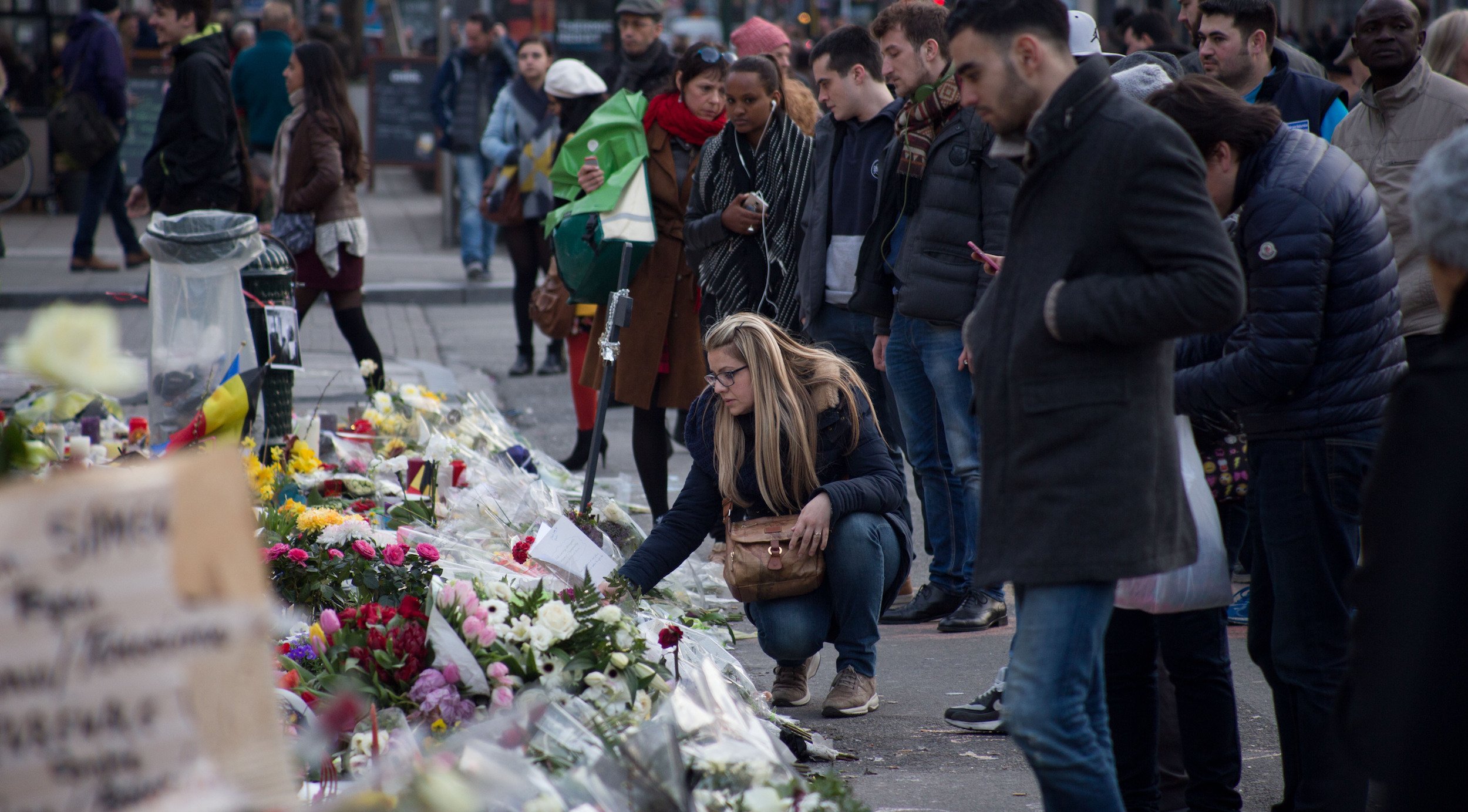
CRM / Shutterstock.com
Motivations Are Complicated
The motivations of jihadists in the United States are difficult to disentangle. After reviewing hundreds of cases in this database, thousands of pages of court documents, and interviews and correspondence with extremists and their family members, it is far from clear there will ever be a straightforward answer. Complaints regarding American foreign policy certainly play some role as does religious ideology, but so do profoundly personal attributes. Some jihadists appear to follow understandable paths of radicalization while others don’t. Nor does it appear that the extremists are simply mentally ill or criminals. In the end, as Immanuel Kant put it, “From the crooked timber of humanity not a straight thing was ever made.”
The Importance of Social Media
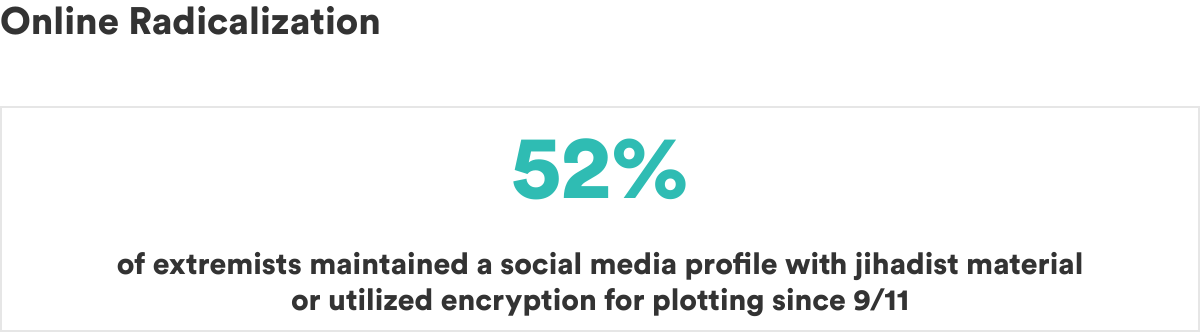
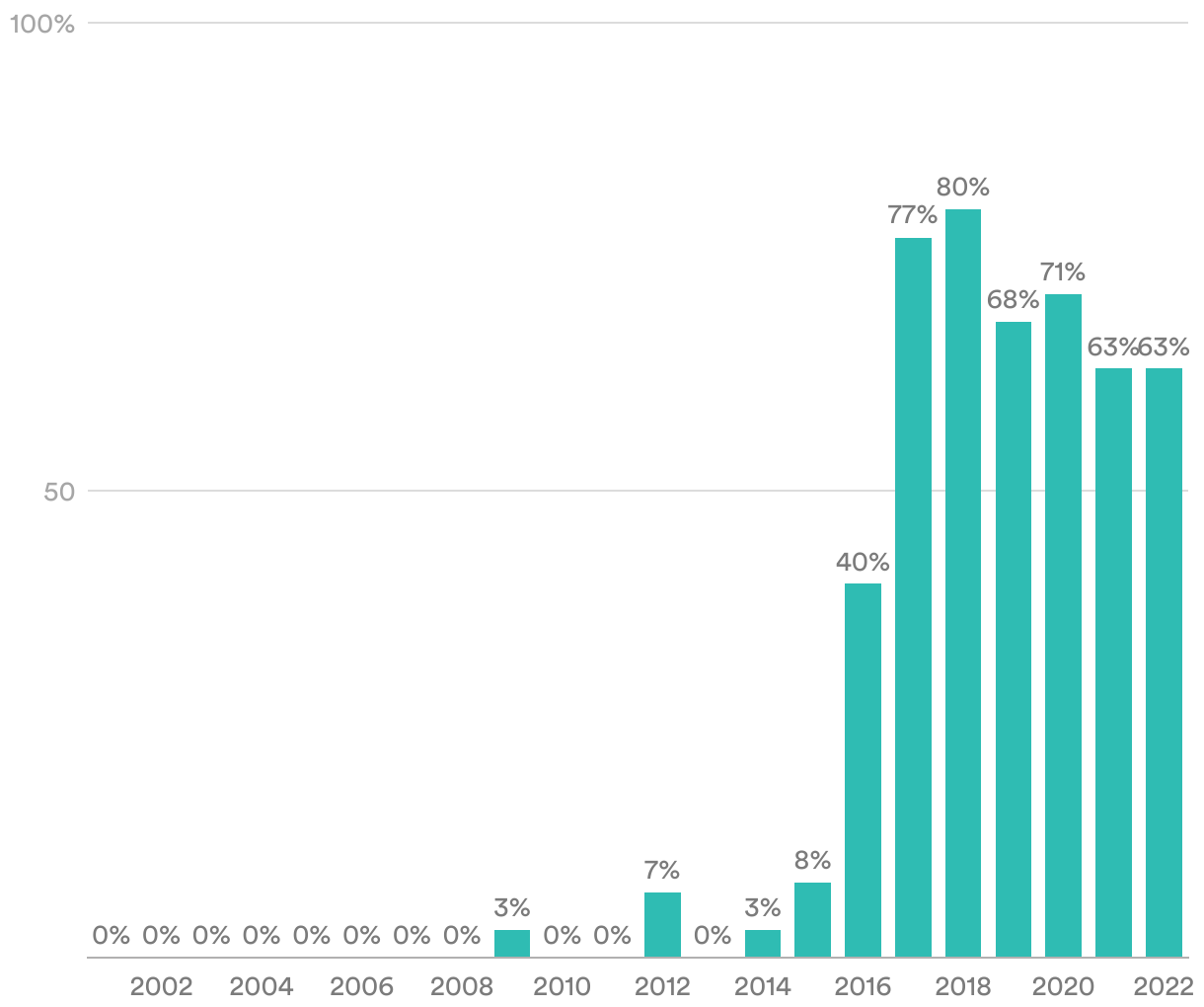
The rise of social media as well as the use of the Internet more broadly to disseminate propaganda and connect people to extremist groups, including encryption, has reshaped the jihadist scene. Many extremists today either maintain public social media profiles displaying jihadist rhetoric or imagery or have communicated online using encrypted messaging apps. The percentage of cases involving such online activity has increased over time.
The Influence of Anwar al-Awlaki
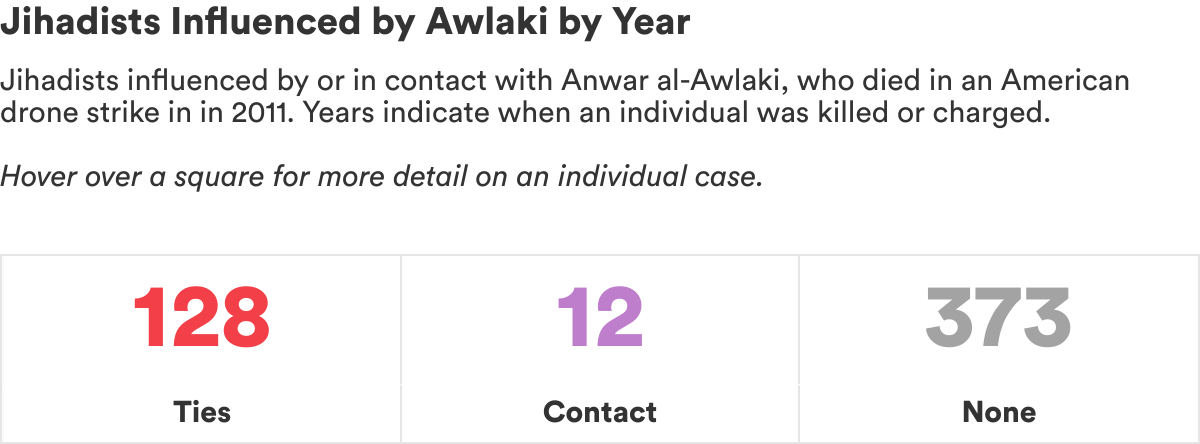
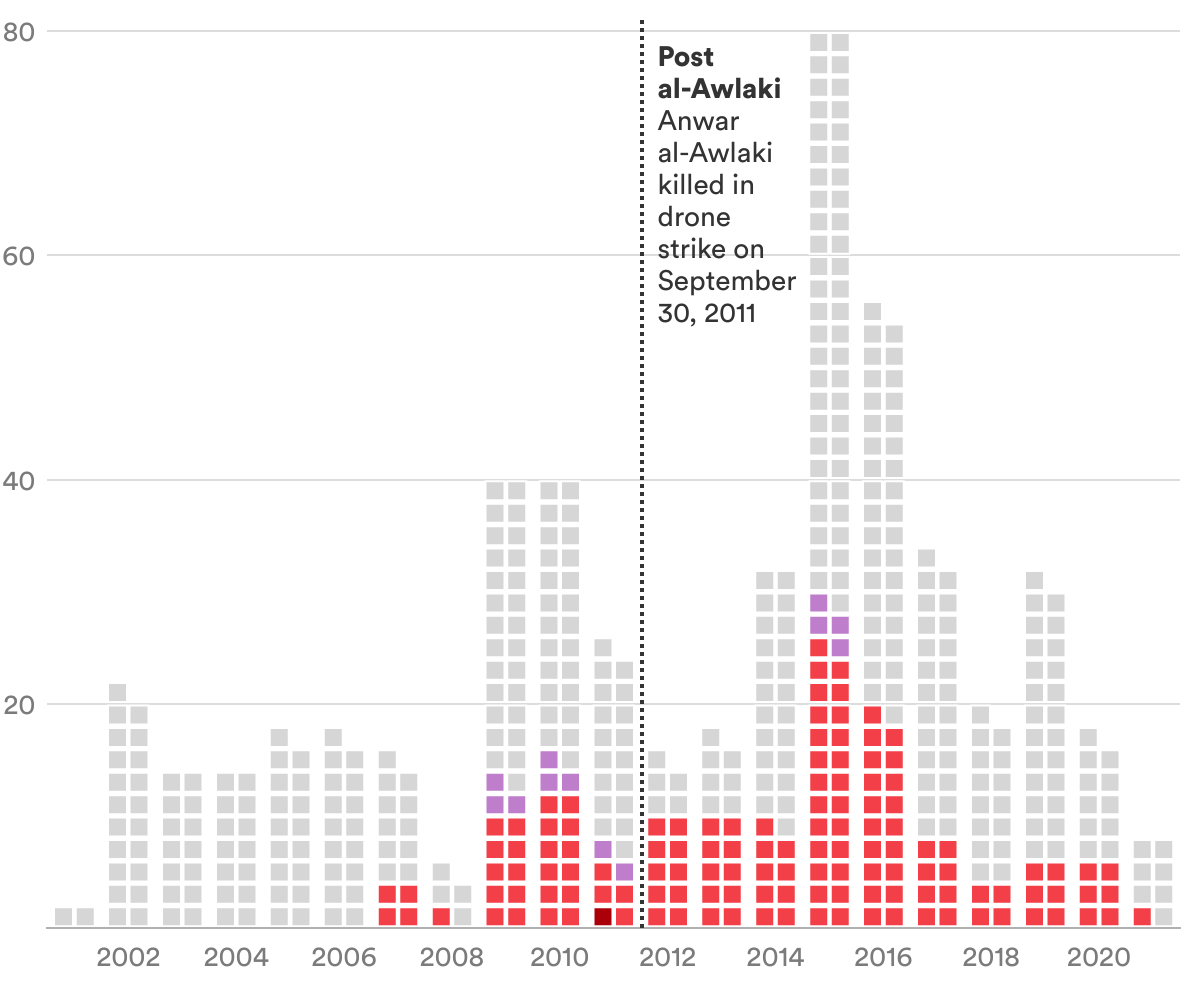
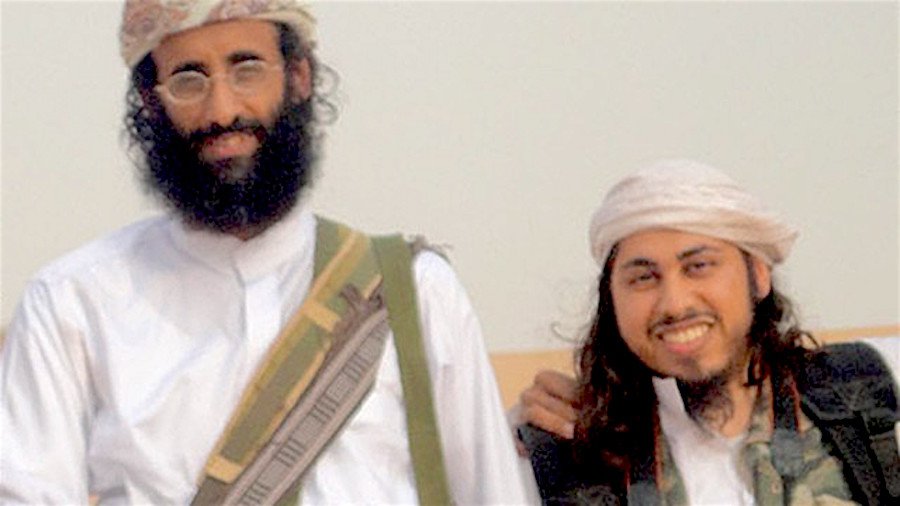
The rise of social media and the Internet as a force in the proliferation of jihadism in the United States was facilitated by a number of key figures who fine-tuned the message and the distribution apparatus. Among them were Samir Khan, the North Carolinian who would come to edit al-Qaeda in the Arabian Peninsula’s (AQAP) propaganda magazine, Inspire, and Zachary Chesser, who became involved with Revolution Muslim, an organization that put out extremist propaganda via websites and YouTube videos, and made the infamous threat against the South Park television show creators. But the extremist with the most widespread influence was the American-born cleric Anwar al-Awlaki, whose influence continues to play a role in radicalization half a decade after his death in an American drone strike in Yemen.
File