A Chapter of: The Abu Dhabi Express
Conclusion
Since the start of U.S. sanctions against Russia in the wake of Russian military interventions in Ukraine in 2014 and Syria in 2015, the Kremlin has gone to great lengths to suppress information about how it continues to supply its proxies in contravention of international arms embargoes. The Kremlin and Prigozhin have expended a considerable amount of effort to spin the narrative about Russian mercenary operations, practically inventing the Wagner Group whole cloth after several shipments of military material were interdicted in transit from Russia en route to destinations in the Middle East.156 Russia’s covert arrangements with regional partners like the UAE have been as critical to the Kremlin’s narrative building about the Wagner Group’s operations as they have been for the fortunes of companies linked to Prigozhin.
The ceasefire agreement in Libya following the 2019-2020 Tripoli offensive came as Russia and Prigozhin seemed to be consolidating hard-fought gains from the Wagner Group’s strategic seizure of major oil and gas facilities across Syria. In January 2020, the independent Russian news outlet Novaya Gazeta reported that Syria’s state oil ministry had granted production rights to two companies linked to Prigozhin’s web of enterprises.157 Several months later, another Prigozhin-linked company, Kapital LLC, sealed another deal with the Syrian government that granted Kapital leases for offshore oil and gas extraction.158 Sealed after lengthy battles to secure Syria’s oil and gas infrastructure by the Wagner Group, deals in Syria are worth millions and are representative of just how much Russia and Prigozhin likely thought they stood to gain if they could replicate the same measure of successes during the LNA offensive on Tripoli.
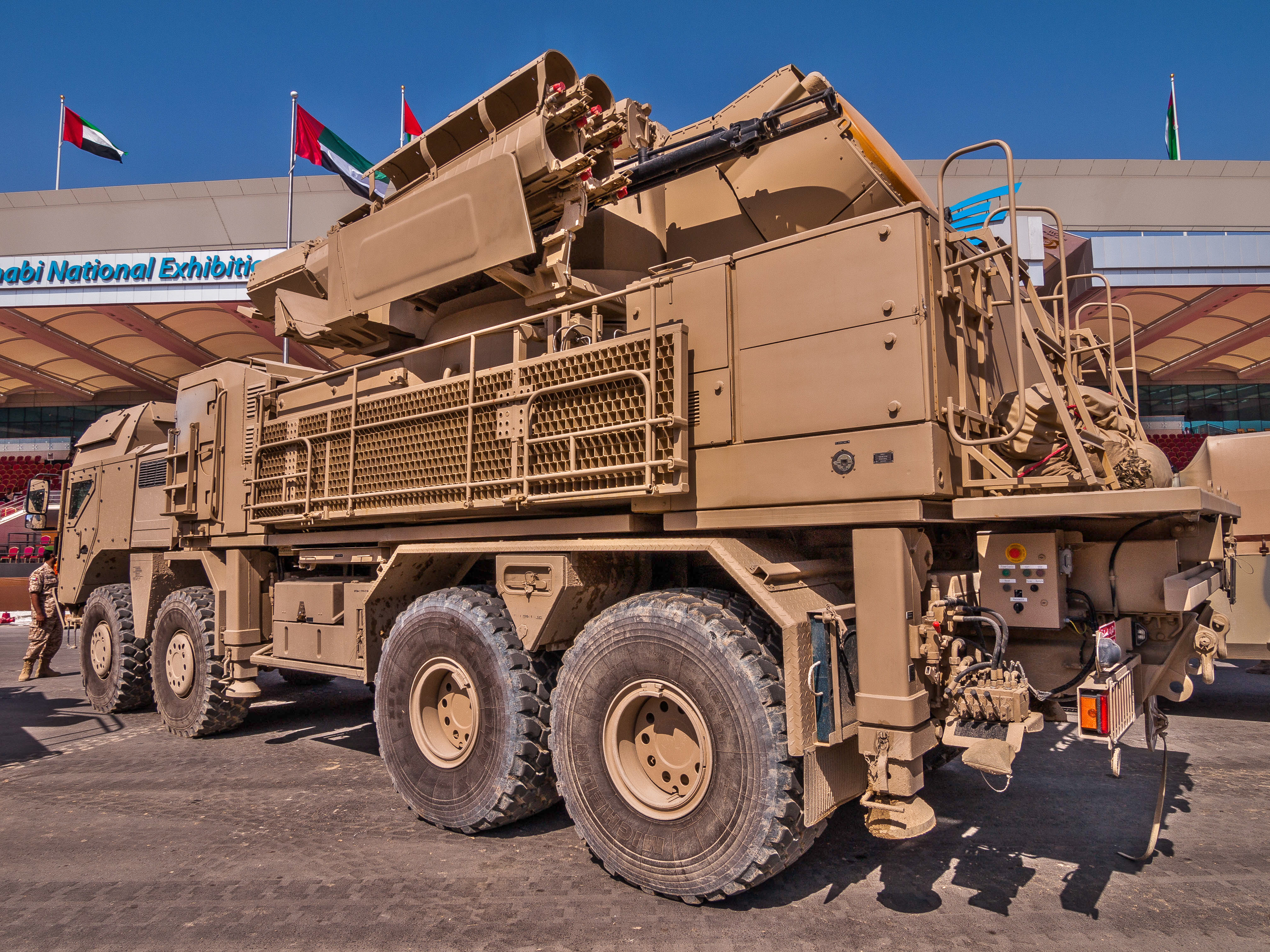
Yet, as the record of successful strikes on Pantsir S1’s in both Libya and Syria show, the Kremlin and Prigozhin’s adventurism has not come without significant material costs for Wagner Group operatives and the civilians they’ve encountered on the ground in both theaters.159 There are indications that nearly a dozen Pantsir systems were destroyed by Israeli jets or Turkish drone strikes in Syria and Libya from May to June 2020, according to a Russian security expert.160 In Syria, the Pantsir S1 was often deployed with an electronic warfare jamming platform, and a team meant to defeat drone swarms.161 As our analysis suggests, Pantsirs deployed in Libya during the early stages of the Tripoli offensive may not have been equipped with the same level of sensing technology, which may be one reason there were so many successful strikes on the platforms there.
Pantsir S1 losses in both theaters add up to nearly two dozen platforms destroyed. The losses have been financially and tactically costly, and triggered a new effort to upgrade what was once thought to be Russia’s premier mobile surface-to-air missile system. The latest addition to the market is the Pantsir S1M, which includes an upgraded missile detection system capable of handling incoming from drones. It may be too early to say what effect, if any, the Wagner Group’s notable Pantsir losses in Libya have had on demand for this new model.
A related key takeaway from Russia’s use of Wagner Group operatives to run its expeditionary operations with proxy forces in the Middle East—and in Libya specifically—is that perceived poor performance at the tactical level can have larger strategic costs for Russia’s military-industrial complex. On the one hand, the use of poorly paid mercenaries to operate and field test expensive military kits like the Pantsir could be considered a cheap and low-risk means of trying out concepts of operations. On the other hand, the Wagner Group’s clear failure to perform to task in Libya in particular, has resulted in reputational damage for one of Russia’s leading state-backed weapons manufacturers, denting demand for Russian arms in key markets. In the long run, that could have real material costs for Russia’s strategic positioning as the second-largest arms purveyor in the world after the United States.
Starting around 2018, in fact, several big, regular Rosoboronexport customers began to back out of weapons purchase deals for fear of the potential for sanctions risk. Indonesia, for instance, backed away from the purchase of 11 SU-35 fighter jets after encountering pressure from the United States.162 CAST cites are another example of the chilling effect of Tunisia’s February 2019 interdiction of a cargo vessel sailing under a Turkish flag that was carrying Russian-made armored Ural trucks off the coast of Tunisia.163
Yet, it is hard to fully evaluate with certainty how the Wagner Group’s mixed performance in Libya and the public relations hit from U.S. and UN reporting about breaches of the arms embargo on Libya. Though Russian analysts report that U.S. sanctions may have added up to as much as $3 billion in canceled arms contracts or lost bids, the Middle East and Africa still constituted an estimated 20 percent new arms deals for Russia; and Russia remains the world’s second largest arms purveyor. Some governments seem undeterred by the high level of scrutiny the Wagner Group’s operations in Libya have triggered. Reports that the Wagner Group is angling to seal a deal to provide weapons and training to the beleaguered government forces of Mali,164 and continued reports of its expansive operations in the Central African Republic, suggest, in fact, that Russia will continue to use Africa and the Middle East as proving grounds and showcase its military goods and services there for some time to come.
The goal of our investigation was to get a clearer picture of Wagner Group operations in Libya during a pivotal turning point in the conflict there and to learn how and whether Emirati support factor into Russian thrusts toward Tripoli. We set out to learn where the Wagner Group’s Pantsir S1 crews operated, who the Wagner Group fighters were, and how Pantsir S1 maneuvers under the Wagner Group’s command fit into the overall 2019–2020 offensive. What we learned was that the UAE—a key U.S. ally in the Middle East and the recipient of billions in American arms—served as a critical conduit for the transfer of military material that likely made the Wagner Group’s assault on Tripoli possible. We also learned that years of cooperation between Russia and the UAE in the military-industrial sphere have transformed regional dynamics in ways that may endure for some time to come.
Russia’s willingness to openly flout the arms embargo in Libya is a telling warning sign of what could be to come as it seeks to replicate its business model for deployments of Wagner Group operatives in new theaters of war. What is more troubling for the U.S. and potentially its allies in the region is that cooperation between the UAE and Russia in the Libyan theater may become a more permanent fixture of security dynamics in the region. The unique commercial interface between Russian and Emirati commercial proxies that supported the Wagner Group’s air bridge and logistics chain during Haftar’s Tripoli offensive helped the UAE and Russia maintain a patina of plausible deniability while mitigating risks of potential interdiction of military goods and further U.S. and EU sanctions.
Moreover, the Biden administration’s approval of the UAE arms deal despite substantial evidence of Emirati support for the Wagner Group and standing U.S. sanctions against the PMSC, and its primary financier Prigozhin only appears to reinforce the sense that American policy on Russia is not only inconsistent and incoherent, but also is not grounded in sound intelligence. It is too early to say how and when these deficiencies will influence future U.S. confrontations with Russia in the region and on the world stage. But we can be fairly certain it does not bode well.
Citations
- Candace Rondeaux, “Decoding the Wagner Group: Analyzing the Role of Private Military Security Contractors in Russian Proxy Warfare,” New America, Nov. 7, 2019, pp.49. https://www.newamerica.org/international-security/reports/decoding-wagner-group-analyzing-role-private-military-security-contractors-russian-proxy-warfare/
- Denis Korotkov, “For Wagner It’s Oil First,” (“Вагнер. Первая нефть”) Novaya Gazeta, January 20, 2020. http://web.archive.org/web/20200120073322/https://novayagazeta.ru/articles/2020/01/19/83514-vagner-pervaya-neft
- Amy Mackinnon, “Putin’s Shadow Warriors Stake Claim to Syria’s Oil,” Foreign Policy, May 17, 2021. https://foreignpolicy.com/2021/05/17/putin-shadow-warriors-stake-claim-syria-oil-energy-wagner-prigozhin-libya-middle-east/
- Strategy Page, “Winning: Not Pantsir,” June 26, 2020. https://www.strategypage.com/htmw/htwin/articles/20200626.aspx#foo
- DefenseWorld.net, Some “23 Russian Pantsir Air Defense Systems Destroyed in Syria, Libya: Reports,” June 9, 2020. https://www.defenseworld.net/news/27161/Some_23_Russian_Pantsir_Air_Defense_Systems_Destroyed_in_Syria__Libya__Reports#.YRVDF4hKg2w
- DefenseWorld.net, “Russian Pantsir Air Defense System- Sitting Duck or Top Dog?” June 19, 2020. https://www.defenseworld.net/feature/42/Russian_Pantsir_Air_Defense_System__Sitting_duck_or_Top_Dog_#.YQsO8dNKifR
- Donald Greenlees, “Russia Sanctions Putting Strain on U.S. Relationship with Indonesia,” The Strategist, June 27, 2019. https://www.aspistrategist.org.au/russia-sanctions-putting-strain-on-us-relationship-with-indonesia/; Centre for Analysis of Strategies and Technologies, “Russian Arms Exports in 2018,” Moscow Defense Brief, Special Issue 2019, pp.3-4.
- Centre for Analysis of Strategies and Technologies, “Russian Arms Exports in 2018,” Moscow Defense Brief, Special Issue 2019, pp.3-4. http://cast.ru/eng/books/moscow-defense-brief-special-issue-2019.html
- Deutsche Welle, “Berlin and Paris Concerned over Russian Mercenaries in Mali,” https://www.dw.com/en/berlin-and-paris-concerned-over-russian-mercenaries-in-mali/a-59201331