A Chapter of: The Abu Dhabi Express
Introduction: Operation Flood of Dignity–Haftar’s Tripoli Blitzkrieg
In November 2018, Libyan strongman Gen. Khalifa Haftar flew to Moscow to meet with Russia’s minister of defense, Sergei Shoigu.1 The meeting between the two men—a one-time CIA informant turned Russian military proxy and the longtime head of Russia’s military forces—was one of several showy attempts by the Kremlin to signal its strong support for forces allied against the U.S.- and UN-backed Government of National Accord (GNA) faction in Tripoli, which was headed then by Prime Minister Fayez al Sarraj. It was also the prelude to one of the most significant chapters in Libya’s lengthy and highly internationalized civil war.
Up until that moment, Moscow’s outreach to Haftar, a one-time key adviser to Libya’s longtime dictator Muammar Qaddafi, might have been best characterized as lukewarm to middling. The civil war in Libya had by then been raging for seven years, and Russia clearly was flirting heavily with Haftar. But Haftar’s past CIA ties, muddled battlefield strategy, and Russia’s clear preference for another Libyan faction led by Qaddafi’s son, Saif al-Islam Qaddafi, meant Haftar was far from having a lock on Kremlin support.2 The Kremlin’s attitude appeared to shift, however, soon after Haftar’s late 2018 meeting with Shoigu when Haftar’s Libyan National Army forces—known as the LNA—notched a significant tactical win with the capture of the massive El Sharara oil field in southwest Libya.3
Situated just a three-hour drive west from the small town of Sabha, the El Sharara, at the time, supplied the GNA-controlled National Oil Company with an estimated 315,000 barrels of oil a day.4 The LNA’s seizure of El Sharara signaled the opening salvo of a spring offensive against the embattled GNA government, and became a critical turning point in a bloody proxy war that has drawn in as many as seven countries. If Shoigu needed proof that Haftar had the potential to become a significant asset in Russia’s years-long campaign to gain a stronger foothold in the Eastern Mediterranean, he certainly got it the day Haftar’s forces overran the perimeter of El Sharara.
Haftar’s capture of the massive El Sharara oil field in late 2018 set the stage for what was meant to be the last leg of the LNA’s arduous slog westward to take the capital of Tripoli. Dubbed “Operation Flood of Dignity,” the Blitzkrieg-style military offensive spearheaded by Haftar’s LNA forces, came on the heels of Haftar’s successful bid to seize control of major oil and gas production and transport nodes in eastern Libya.5 At the time, Russia and the UAE counted among the countries most actively engaged in providing support to proxy forces aligned against the GNA in Tripoli. Turkey, meanwhile, backed the GNA under a military cooperation agreement signed several months after the start of Haftar’s westward advance from near the LNA’s main redoubt in the eastern city of Tobruk.6
The seizure of one of Libya’s largest oil fields marked a major turning point in the war for Haftar and the LNA, but it would prove to be an equally big boon for one of Haftar’s most important Russian contacts: Yevgeny Prigozhin. Known the world over as “Putin’s Chef,” for his previous role as the Kremlin’s official caterer, Prigozhin has been the subject of U.S. scrutiny for years for his central role in a sprawling network of front companies, mercenary contingents, internet troll farms, spies, gun runners, and shady covert operatives that have figured prominently in conflicts spanning from Ukraine, to Syria, to Libya, and beyond.7
For years, American law enforcement agencies have tried and, so far, failed to bring Prigozhin to justice for his alleged role in orchestrating Russian interference in the 2016 and 2018 elections. In 2018, the Department of Justice indicted Prigozhin with conspiracy to defraud the United States, and more recently, in early 2021, the FBI placed him on its most wanted list, offering a reward of $250,000 for information leading to his arrest.8 Cast as the titular chief financier of the Wagner Group, a Kremlin-backed network of contract military contingents, Prigozhin has also been sanctioned by the U.S. Treasury department for his alleged role in financing Wagner’s network of Russian private military security contractors (PMSC) and their mercenary operations.9
The Pentagon’s Africa Command, or AFRICOM, has also linked the Wagner Group to Libya’s proxy war, and AFRICOM military leaders have repeatedly testified in Congress about the destabilizing presence of Russian mercenaries in Africa in recent years.10 The Kremlin’s backing of Wagner Group forces during the LNA offensive in 2019–2020, in fact, constituted a major escalation in a conflict that was already rapidly internationalizing, and witnessed the insertion of hundreds of Russian operatives into the Libyan fray.11
Much as Prigozhin aided Russia in pushing its proxies in Syria to prioritize military action aimed at capturing control of the country’s strategic energy reserves, it seems the Kremlin advised the same tactics for Haftar’s LNA forces in Libya.12 By early 2019, the civil war in Libya had been raging for nearly eight years, and Haftar had already met at least once with Prigozhin, Russia’s key liaison for covert military support to the LNA.
At the time, Prigozhin’s cameo appearance in a series of photographs and videos, shot during a meeting between Haftar and Russian defense officials, triggered a feeding frenzy of speculation in the international press about a potential Wagner Group intervention in Libya.13 In addition to their links to Prigozhin’s web of businesses, the Wagner Group has been accused of committing war crimes in Syria and, more recently, in the Central African Republic.14 Haftar’s meeting with Prigozhin raised concerns among branches of the UN charged with monitoring Libya’s arms embargo as well as adherence compliance with human rights protections and international humanitarian law (IHL) that more such incidents might also crop up in Libya as the Wagner Group prepared to ramp up its support to the LNA.15
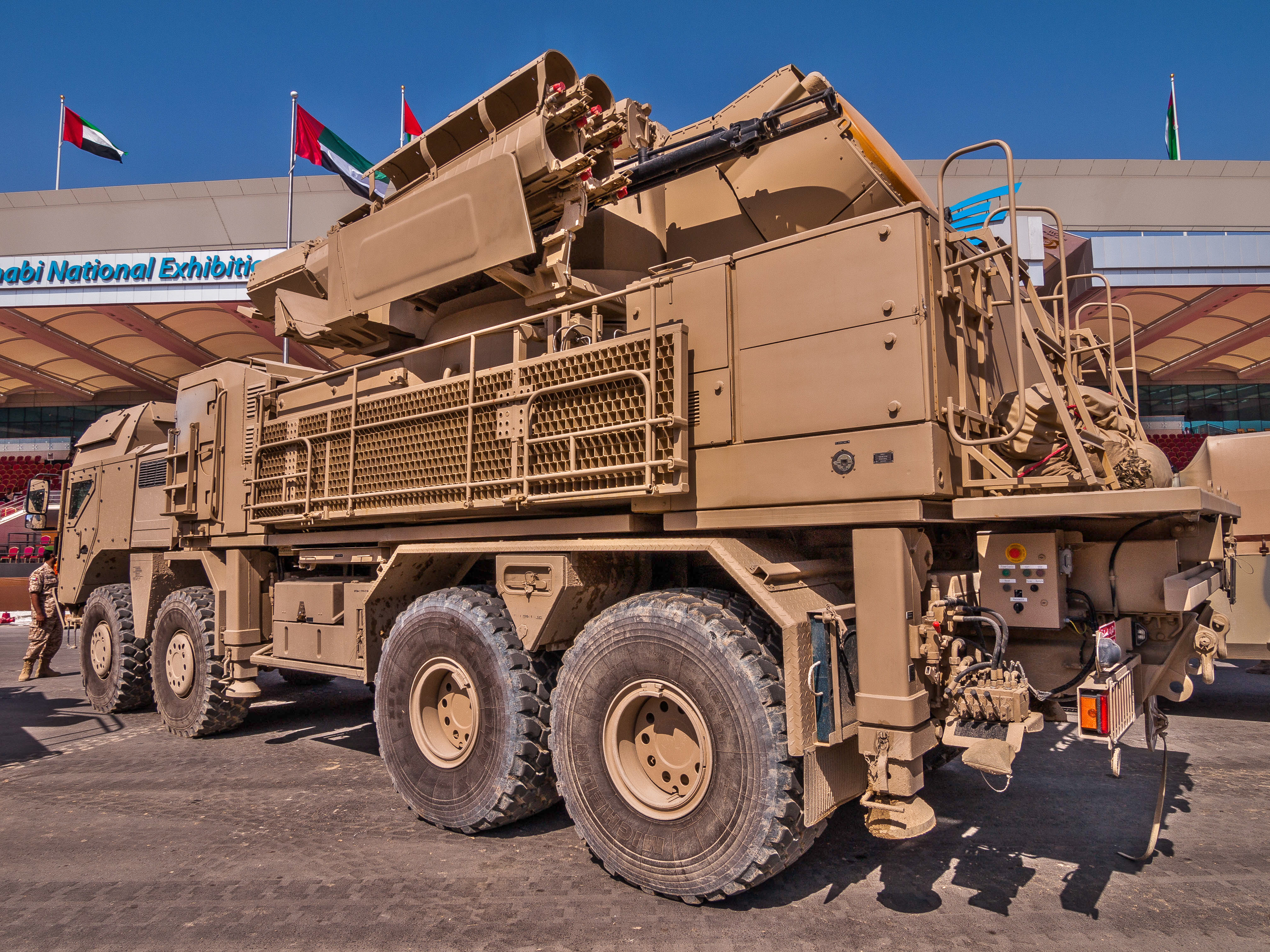
Despite Haftar’s high hopes at the outset that the Russians would help secure victory over Tripoli, the joint LNA-Wagner Group offensive ultimately failed, in part because of Turkish drone strikes that penetrated the air defenses of forces allied with Haftar and struck several Wagner Group-operated mobile Pantsir S1 surface to air missile batteries. There is still an active debate among analysts about just how decisive Turkish drone strikes were in boxing in the Wagner Group’s operations in Libya.16 One analyst suggests, for instance, that Turkish propaganda around its Libya drone campaign is more reflective of spin than success, noting the high attrition rate for Turkish-made Bayraktar TB2 armed drones during the counteroffensive against Haftar’s LNA and Wagner Group forces.17
A July 2020 Drone Wars assessment also suggested that as many as 24 drones were downed in the first six months of 2020 when the offensive was likely at its most intense; 16 of those were Turkish Bayraktar TB2’s and eight were UAE supplied Chinese Wing Loongs.18 The Drone Wars study also notes that Pantsir S1’s took out many of the Turkish drones, and another report suggests that Pantsirs destroyed as many as a dozen TB2’s.19 There is little argument, therefore, about the fact that the Wagner Group’s reported use of Pantsir S1’s and Russian fighter jets, to create a defensive bubble for advancing LNA forces at the outset of Haftar’s offensive on Tripoli, initially provided an added battlefield advantage. After multiple Turkish drone strikes on Pantsir battery crews, however, the Wagner Group’s battlefield successes proved to be relatively short-lived. This raises two related questions: what happened and why?
It turns out that to answer those questions, it is important to ask and answer a few more: How did Russian made Pantsir missile batteries exported to the UAE wind up in Libya? How and why did the United Arab Emirates—a longtime key U.S. ally in the Middle East—decide to team up with Russia to help send thousands of Wagner Group operatives to fight in Libya against U.S. interests? Is there any evidence to support U.S. and UN claims about the connections between the UAE and the Russian mercenary contingent’s involvement in war crimes in Libya?
To answer these questions, New America and C4ADS analyzed open source publicly available data and found that the Wagner Group’s Pantsir ground maneuvers provide significant clues about Russian-Emirati collaboration in support of the LNA offensive on Tripoli. Our findings outline how a string of costly airstrikes on Pantsir S1’s likely manufactured by a Russian arms company for the UAE and operated by a combination of Wagner Group and Emirati operatives in cooperation with the LNA led to major battlefield reversals in Libya.
More importantly from a strategic perspective on the ongoing proxy war competition between Russia and the United States in the Middle East and Africa, the destruction of more than $100 million worth of Russians weapons platforms in Libya along with similar losses in Syria, has forced Russia to modify and upgrade the Pantsir to be more resistant to drones and to revamp its approach to air defense.
All this suggests that there is much more than meets the eye to how the Wagner Group and Prigozhin fit into Russia’s strategic maneuvers in Middle Eastern and African conflict zones. While U.S. government officials have long cast Kremlin-insider Prigozhin as the main mastermind behind the sprawling web of Russian shell companies responsible for recruiting and deploying Wagner Group contractors to global hot spots like Libya, the mechanics of the covert logistics pipeline that flows from Russia to the UAE and onto the Wagner Group is far too complex to be boiled down to the machinations of a single Russian oligarch.20 The Wagner Group and Prigozhin constitute just one node in a tangled network of nominally private firms that service Russia’s military-industrial complex and extractive industry.
The Kremlin and Prigozhin have repeatedly denied having any direct ties to Wagner Group operations in Libya, but there is sufficient evidence and analysis to indicate that Russia's plausible deniability where Prigozhin and the Wagner Group are concerned, is highly implausible.21 The U.S. AFRICOM has issued several reports and public statements about the Wagner Group’s operations in Libya, saying it believes an estimated 2,000 Russian military contractors are in the country.22 The U.S. Defense Intelligence Agency, or DIA, has said that reports about who funds the Wagner Group’s operations are “ambiguous,” but has indicated that the UAE “may provide some financing for the group’s operations.”23 Our investigation into the Wagner Group’s operations in Libya, in fact, provides fresh evidence of close cooperation on Libya between the UAE and Russia, a top rival of the United States.24
In this briefing, we describe how Turkish drone strikes on Pantsir S1 anti-aircraft missile batteries killed and wounded scores of Russian Wagner Group fighters who began pressing toward Tripoli in the summer of 2019. Our analysis also traces numerous flights between the UAE and Libya that appeared to peak during a brief ceasefire during Haftar’s push to reach the Libyan capital, which was controlled at the time by the UN- and U.S.-backed GNA. Several flights suspected of supporting the covert air bridge from the UAE to Libya were conducted by an American-made C17. Based on a meticulous analysis of social media, satellite imagery, flight data, customs, and corporate registry data, evidence uncovered during our research appears to corroborate the allegations lodged by the Pentagon and the UN, indicating that the UAE-supported and -financed Wagner Group military operations during Haftar’s bloody assault on the Libyan capital of Tripoli from April 2019 to September 2020.
The goal of our investigation was to get a clearer picture of Wagner Group operations in Libya during a pivotal turning point in the conflict and to learn how and whether Emirati support factor into Russian thrusts toward Tripoli. We set out to learn where the Wagner Group’s Pantsir S1 crews operated, who the Wagner Group fighters were, and how Pantsir S1 maneuvers under the Wagner Group’s command fit into the overall 2019–2020 offensive.
We surmised that a thorough understanding of how the Wagner Group used Pantsir surface-to-air missile batteries in the Libyan theater would also provide insights into what type of equipment was being used on the ground—as well as how that equipment was likely transported into Libya, despite the standing UN arms embargo. Another important aim was to try to develop a damage assessment that would provide insight not only into the Wagner Group’s material military losses but the number of casualties sustained by Russian mercenary contingents, as well as civilian harm caused by their operations.
It was not a simple task. Open-source research on Libya can be challenging, as local sources are often highly partisan, and freedom of speech and information is constrained. Because much of the combat in Libya takes place in remote desert locations, it can be difficult to distinguish who is doing what from a distance, and to verify information. It also needs to be stated up front that it was difficult to separate out damage and casualties stemming from Wagner Group operations versus the LNA forces’ operations. In most instances, reporting on the ground from local sources indicates that Wagner Group forces were so deeply enmeshed in LNA maneuvers, that it would be hard to give a full accounting of Wagner Group losses.
Our analysis relied, in part, on data about publicly reported field sightings and casualties resulting from airstrikes and landmines provided by our partner Airwars, a London-based research organization focused on documenting the impact of military air campaigns on civilians.25 We additionally reviewed traditional media and social media reporting about battles involving the Wagner Group and LNA during Haftar’s offensive from local Libyan news outlets and social media. These sources were also used to identify the Wagner Group’s general presence in Libya and with information culled from Vkontakte and Telegram social media accounts that track the activities of Russian PMSC fighters.26
Interviews with American and Libyan officials as well as journalists who reported on Libya’s war from the field, helped fill in gaps from media sources. Additionally, the UN panel of experts’ report on Libya issued in March 2021 was a critical resource, detailing equipment used by various combatants in the Libyan theater as well as providing documentation on airstrikes and arms shipments.27 We checked the panel’s assertions and took deliberate steps to verify the trail of evidence connecting Abu Dhabi-based defense and air transport providers to shipments of Russian-made Pantsir missile batteries. To establish the identities of Wagner operators and their connections to the Kremlin, we used a combination of strike reports and casualty information reported by Russian media outlets.
While Wagner Group casualties in Libya have been sporadically reported by the Russian press, our analysis also provides a first-of-its-kind assessment for Wagner Group forces in Libya who operated some of the very same Russian-made and UAE-financed anti-aircraft surface-to-air missile platforms, or SAMs, that were shipped via a covert pipeline. Our review of available data also finds that both Turkish strikes on Wagner Group air defense units and Wagner Group ground operations resulted in a substantial number of civilian casualties.
Analysis of publicly available data, provided in part by C4ADS and Airwars, indicates that UAE-supplied Pantsir S1’s may, in fact, have been the weakest link in the UAE and Russia’s bid to support Haftar’s LNA during the 2019-2020 offensive. In fact, research reveals that Wagner Group operatives in Libya likely sustained at least 42 fatalities during Haftar’s offensive between September 2019 and July 2020, when the LNA offensive was winding down.
This detailed assessment of Wagner Group operations comes amid recent reports that Russian mercenaries may be poised to expand their reach in Mali even as Russia and Turkey reached a tentative agreement in late June to withdraw hundreds of foreign fighters from Libya.28 Yet, while the potential Libya deal calls for Turkey and Russia to recall up to 300 Syrian mercenaries, the status of the hundreds of Russian mercenaries who oversaw several Syrian contingents and who continue to support Haftar’s LNA in the south and east of the oil and gas-rich North African country remains unclear. This is especially concerning given that a UN fact-finding mission has now reportedly determined that Wagner Group operatives have been implicated in war crimes in Libya.29
Part of ongoing research into how state-backed Russian irregular forces and the Russian business and government networks that support them are changing the character of war, our independent assessment in effect confirms a widely held consensus view that Turkish targeting of Russian-made and operated Pantsir S1 mobile air defense systems was a significant factor in Wagner Group losses and represented a key turning point in the war.30
The study’s findings suggest that if the past is in any way precedent, the Russians have learned hard-fought lessons about the challenges of running defensive anti-aircraft operations in the age of drone warfare. There is also substantial evidence to indicate that, despite heavy losses incurred by Wagner Group operatives in Libya, Russia’s political and military leaders view the payoff from conducting war by other means on the cheap and testing new approaches to integrated warfare as well worth the risk. That should be instructive for any state seeking to design strategic responses to Russia’s resurgence, especially the United States.
Citations
- Reuters, “Libya Commander Haftar Visits Russia Ahead of Conference,” Nov.7, 2018. https://www.reuters.com/article/us-russia-libya-haftar/libya-commander-haftar-visits-russia-ahead-of-conference-idUSKCN1NC2OB
- Same al-Atrash, “How a Russian Plan to Restore Qaddafi’s Regime Backfired,” Bloomberg, March 20, 2020. https://www.bloomberg.com/news/features/2020-03-20/how-a-russian-plan-to-restore-qaddafi-s-libyan-regime-backfired
- Patrick Wintour, “Conflict Erupts for Control of Libya's Largest Oil Field,” The Guardian, Feb.8, 2019. https://www.theguardian.com/world/2019/feb/08/conflict-erupts-for-control-of-libyas-largest-oil-field
- Reuters, “Libya's Sharara Oilfield Declares Force Majeure after Brief Shutdown,” June 9, 2020. https://www.reuters.com/article/us-libya-oil/libyas-sharara-oilfield-declares-force-majeure-after-brief-shutdown-idUSKBN23G0YX
- Yousuf Eltagouri, “Haftar’s Final Play: Operation Flood of Dignity and the Fight for Tripoli,” Foreign Policy Research Institute (FPRI), April 12, 2019. https://www.fpri.org/article/2019/04/haftars-final-play-operation-flood-of-dignity-and-the-fight-for-tripoli/
- Al-Jazeera, “Libya’s GNA Accepts Turkish Offer of Military Support,” December 19, 2019.https://www.aljazeera.com/news/2019/12/19/libyas-gna-accepts-turkish-offer-of-military-support
- The Moscow Times, “FBI Adds ‘Putin’s Chef’ to Wanted List, Offers $250K Reward,” February 27, 2021. https://www.themoscowtimes.com/2021/02/26/fbi-adds-putins-chef-to-wanted-list-offers-250k-reward-a73090
- See: U.S. vs. Internet Research Agency LLC, et.al., Case 1:18-cr-00032-DLF, February 16, 2018. https://www.justice.gov/file/1035477/download; FBI, “Most Wanted-Yevgeny Viktorovich Prigozhin,” https://www.fbi.gov/wanted/counterintelligence/yevgeniy-viktorovich-prigozhin
- U.S. Department of Treasury, press release, “Treasury Targets Financier’s Illicit Sanctions Evasion Activity,” July 15, 2020. https://home.treasury.gov/news/press-releases/sm1058
- Gen. Stephen J. Townsend, “A Secure and Stable Africa Is In American Interest,” Statement to the Senate Armed Services Committee, January 30, 2020. https://www.armed-services.senate.gov/imo/media/doc/Townsend_01-30-20.pdf; Candace Rondeaux, “Russia Is Getting More Than It Bargained For in Libya and Syria,” World Politics Review, May 29, 2020. https://www.worldpoliticsreview.com/articles/28798/russia-is-getting-more-than-it-bargained-for-in-libya-and-syria
- Frederic Wehery, “This War Is Out of Our Hands,” New America, Sept.14, 2020. https://www.newamerica.org/international-security/reports/this-war-is-out-of-our-hands/
- Candace Rondeaux, “Decoding the Wagner Group: Analyzing the Role of Private Military Security Contractors in Russian Proxy Warfare,” New America, Nov. 7, 2019, pp.4-5. https://www.newamerica.org/international-security/reports/decoding-wagner-group-analyzing-role-private-military-security-contractors-russian-proxy-warfare/
- Lead Command Media Bureau, Libyan Armed Forces, “Scenes from the Moment When Commander-in-Chief, Field Marshal Khalifa Haftar, Arrived at the Headquarters of the Russian Ministry of Defense,” Nov.7, 2018: https://www.youtube.com/watch?v=Vp4e8u71o20
- Candace Rondeaux, “Russian Paramilitaries Accused of Torture and Beheading in Landmark Legal Case Against Wagner Group,” The Daily Beast, March 15, 2021.https://www.thedailybeast.com/wagner-group-paramilitaries-accused-of-torture-and-beheading-in-landmark-legal-case; Declan Walsh, “Russian Mercenaries Are Driving War Crimes in Africa, UN Says,” New York Times, June 27, 2021. https://www.nytimes.com/2021/06/27/world/asia/russia-mercenaries-central-african-republic.html
- Phone interview with senior UN official, May 2020.
- Seth J. Frantzman, “How Did Turkish UAVs Outmaneuver Russia's Pantsir Air Defense in Libya: Lessons and Ramifications,” Middle East Center for Reporting and Analysis, May 28, 2020. https://www.mideastcenter.org/post/how-did-turkish-uavs-outmaneuver-russia-s-pantsir-air-defense-in-libya-lessons-and-ramifications
- Aaron Stein, “Say Hello to Turkey’s Little Friend: How Drones Help Level the Playing Field,” War on the Rocks, June 11, 2021. https://warontherocks.com/2021/06/say-hello-to-turkeys-little-friend-how-drones-help-level-the-playing-field/
- Chris Cole and Jonathan Cole, “Libyan War Sees Record Number of Drones Brought Down to Earth,” Drone Wars, July 27, 2020. https://dronewars.net/2020/07/01/libyan-war-sees-record-number-of-drones-brought-down-to-earth/
- DefenceWeb, “Libyan Pantsir-S1 air defence systems have apparently destroyed a dozen Turkish UAVs,” April 16, 2020. https://www.defenceweb.co.za/land/land-land/libyan-pantsir-s1-air-defence-systems-have-apparently-destroyed-a-dozen-turkish-uavs/
- Candace Rondeaux, “How a Man Linked to Prigozhin, ‘Putin’s Chef,’ Infiltrated the United Nations,” The Daily Beast, Nov. 27, 2020.https://www.thedailybeast.com/how-a-man-linked-to-prigozhin-putins-chef-infiltrated-the-united-ations
- Candace Rondeaux, “Decoding the Wagner Group: Analyzing the Role of Private Military Security Contractors in Russian Proxy Warfare,” New America, Nov.7, 2019. https://www.newamerica.org/international-security/reports/decoding-wagner-group-analyzing-role-private-military-security-contractors-russian-proxy-warfare/forward-operations-from-deir-ezzor-to-donbas-and-back-again; Candace Rondeaux, “Inquiry into the Murder of Hamdi Bouta and Wagner Group Operations at the Al-Shaer Gas Plant, Homs, Syria 2017,” New America, June 8, 2020. https://www.newamerica.org/international-security/reports/inquiry-murder-hamdi-bouta/
- See: U.S. Department of Defense Lead Inspector General, “East Africa Counterterrorism Operation, North and West Africa Counterterrorism Operation,” Report to the United States Congress, July 1, 2020-September 30, 2020, pp.36-37. https://media.defense.gov/2020/Nov/25/2002541626/-1/-1/1/LEAD%20IG%20EAST%20AFRICA%20AND%20NORTH%20AND%20WEST%20AFRICA%20COUNTERTERRORISM%20OPERATIONS.PDFU.S. Africa Command, Press Release, “Russia and the Wagner Group Continue to be Involved in Ground, Air Operations in Libya,” https://www.africom.mil/pressrelease/33034/russia-and-the-wagner-group-continue-to-be-in
- U.S. Department of Defense Lead Inspector General, “East Africa Counterterrorism Operation, North and West Africa Counterterrorism Operation,” Report to the United States Congress, July 1, 2020-September 30, 2020, pp.36-37. https://media.defense.gov/2020/Nov/25/2002541626/-1/-1/1/LEAD%20IG%20EAST%20AFRICA%20AND%20NORTH%20AND%20WEST%20AFRICA%20COUNTERTERRORISM%20OPERATIONS.PDF
- Alex Emmonns, Matthew Cole, “Arms Sale to UAE Goes Forward Even as U.S. Probes Tie between UAE and Russian Mercenaries,” The Intercept, December 2, 2020. https://theintercept.com/2020/12/02/uae-arms-sale-wagner-group/
- See: www.airwars.org
- Over the last several years since the Russian incursion in Crimea and the eastern Ukrainian region of Donbas, a number of Telegram channels and Vkontakte groups dedicated to cataloging the exploits of the so-called Wagner Group and the Russian military have cropped up. Two of the most well-known include the Military Informant (Voenniy Osvedomitel, Военный Осведомитель) and Reverse Side of the Medal. While both are widely considered by many disinformation researchers to be propaganda channels managed by Russian security agencies they have often proven to be useful starting points for research and further triangulation. An archived version of the Reverse Side of the Medal Vkontakte group can be found here: https://archive.is/wip/KyqTW; and an archived version of the Military Informant can be found here:https://archive.is/wip/yaYzf
- United Nations Panel of Experts on Libya report, March 8, 2021. https://undocs.org/Home/Mobile?FinalSymbol=S%2F2021%2F229&Language=E&DeviceType=Mobile
- John Irish and David Lewis, “Deal allowing Russian Mercenaries into Mali is Close,” Reuters, September 13, 2021. https://www.reuters.com/world/africa/exclusive-deal-allowing-russian-mercenaries-into-mali-is-close-sources-2021-09-13/; Angus Mcdowall and Humeyra Pamuk, “Libya's Foreign Minister Sees Progress on Removal of Foreign Mercenaries,” Reuters, June 24, 2021. https://www.reuters.com/world/africa/libya-needs-hold-election-december-ensure-lasting-peace-blinken-2021-06-23/
- Peter Beaumont, “War Crimes and Crimes Against Humanity Committed in Libya since 2016-says UN,” The Guardian, October 4, 2021. https://www.theguardian.com/world/2021/oct/04/war-crimes-and-crimes-against-humanity-committed-in-libya-since-2016-says-un
- Ben Fishman and Conor Hiney, “What Turned the Battle for Tripoli?” Washington Institute for Near East Policy, PolicyWatch 3314, May 6, 2020. https://www.washingtoninstitute.org/policy-analysis/what-turned-battle-tripoli