A Chapter of: The Abu Dhabi Express
Executive Summary
In November 2020, only a month after the UN brokered a ceasefire agreement between warring parties in Libya's decade-long proxy war, the Pentagon issued a report suggesting that the United Arab Emirates, or UAE, co-financed the Libya operations of the Wagner Group, a shadowy Kremlin-backed network of Russian private military security contractors. Although the Pentagon report presented no direct evidence of financial ties between the UAE and the Wagner Group, it drew media scrutiny and raised questions about the UAE’s links to the Russian military outfit and its chief financier, Yevgeny Prigozhin.
Buried in a dense 100-page report, the Pentagon’s glancing reference to intelligence about Emirati support for Libyan strongman Khalifa Haftar, and funding for the Wagner Group’s operations in Libya, surfaced in the news just as members of Congress and human rights groups called for a halt to a pending $23 billion U.S. arms deal with the UAE. The Pentagon report also noted that U.S. Africa Command estimated that there were approximately 2,000 Russian-backed Syrian fighters in Libya. It also echoed similar reporting from a special UN body of experts that tracks mercenary activity around the world, and the UN panel of experts charged with monitoring an arms embargo against Libya that has been in place almost from the start of the civil war there in 2011.
Most importantly, the Pentagon’s findings hinted at the possibility that the UAE was not only doing business with a major rival of the U.S.- and UN-backed government of national accord in Tripoli, but with a prominent Russian oligarch who has played a leading role in a series of violations of international law by Russia that has led to deep fissures between Washington and Moscow. That key player, Yevgeny Prigozhin, is a wealthy St. Petersburg caterer turned defense logistics impresario whose close ties to Russia’s President Vladimir Putin and Moscow's security establishment have won his companies hundreds of millions of dollars worth of Russian defense ministry contracts. Prigozhin has not only figured prominently in several scandals involving the targeted killings of journalists and the intimidation of Russian dissidents, but has also been placed at the center of Russia’s aggressive influence campaigns by U.S. authorities. In early 2021, the FBI added Prigozhin to its most wanted list for his alleged role in financing the internet troll farm implicated in interfering in U.S. elections from 2016 to 2018. The U.S. Treasury Department has also sanctioned Prigozhin for his role in financing the Wagner Group’s mercenary operations in Ukraine and Syria. The European Union sanctioned Prigozhin as well for supporting the Wagner Group’s operations in Libya.
The Pentagon’s allegations of suspected UAE financing for the Wagner Group appear to corroborate widely documented evidence of Prigozhin’s involvement in Libya’s proxy war. Yet, evidence also suggests that Prigozhin’s web of enterprises is only one node in a complex network of commercial proxies that Russia and the UAE rely on to mitigate the risk that the two country’s illicit arms transfers will be interdicted by U.S. and NATO allies, and to manage associated conflict escalation risks. The unique set of arrangements between Prigozhin’s shell companies, Russian state-backed arms manufacturers, and UAE-based defense and transport firms is designed to provide maximum cover and plausible deniability for Russia’s proxies. The elaborate logistics pipeline that supported the Wagner Group in Libya at the peak of one of the most pivotal military offensives in the country’s long proxy war matters even more to the Kremlin because it provides Russia with an inexpensive, lower-risk means of testing and adapting its operational concepts in a variety of settings where it seeks to compete with NATO, the United States, and allies.
For a key U.S. ally like the UAE, doing business openly with the Wagner Group is theoretically akin to crossing an unstated but bright red line in Washington. But there is no debating that the Russian contingent provided the Emiratis significant influence over outcomes in a region long roiled by instability. The Wagner Group proved crucial in changing facts on the ground in Libya for Haftar’s Libyan National Army, or LNA, and Russian contingents operating under a complex web of shell companies were especially key to the launch of a major LNA offensive against the U.S.-backed and UN-supported Government of National Accord, or GNA, in Tripoli.
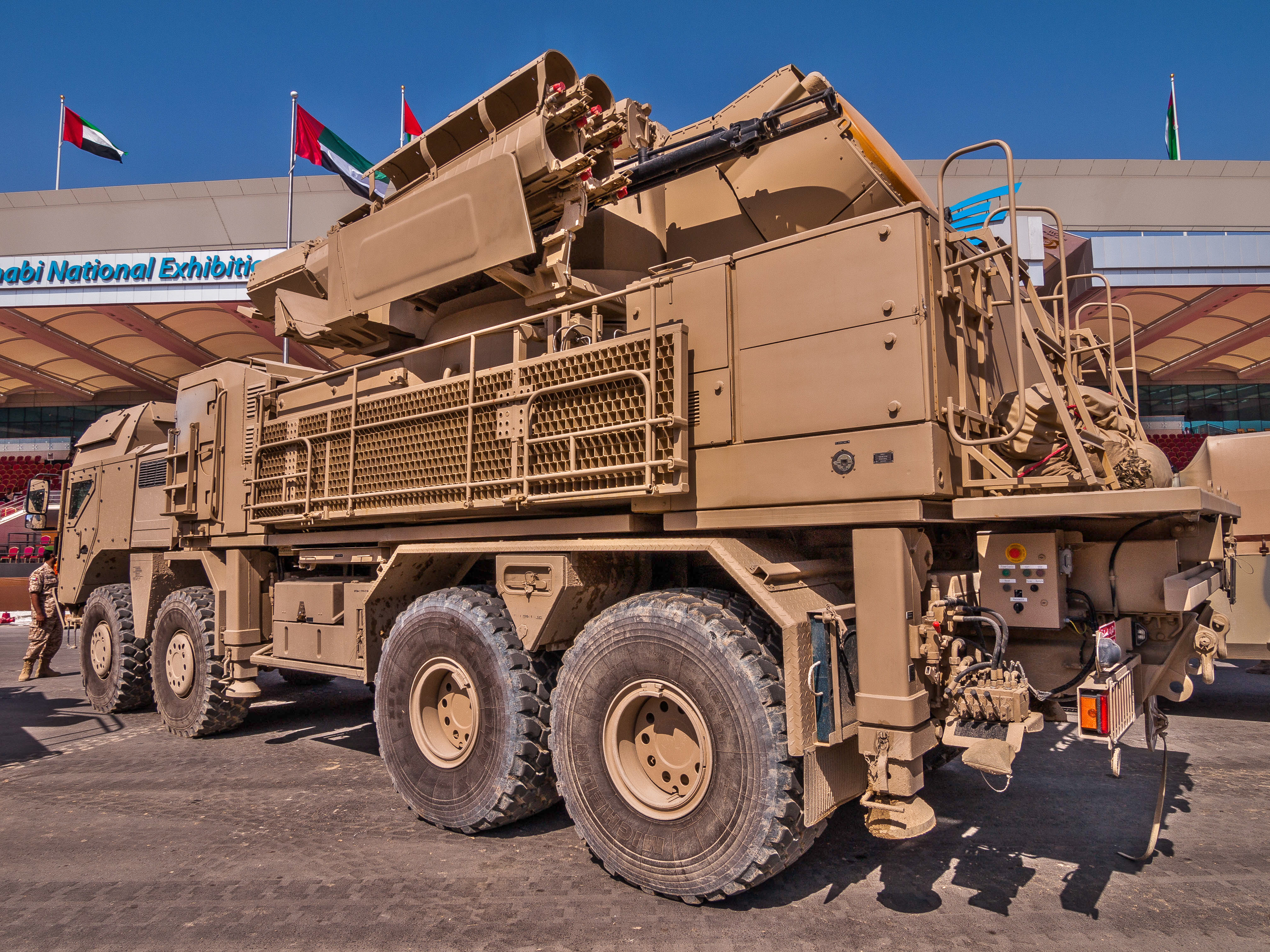
The start of the LNA assault in Tripoli in the spring of 2019 constituted a major escalation in a conflict that was already rapidly internationalizing, and triggered the insertion of thousands of Russian operatives with the Wagner Group. Analysis of publicly available data about Russian-made mobile surface-to-air missile batteries, operated by the Wagner Group during the LNA offensive on Tripoli, indicates that Russian and Emirati military cooperation was a critical enabling factor. But despite Haftar’s high hopes at the outset that the Russians would help secure victory over Tripoli, the joint LNA-Wagner Group offensive ultimately failed, in part, because of Turkish drone strikes that penetrated the air defenses of forces allied with Haftar and struck several Wagner Group-operated mobile Pantsir S1 surface-to-air missile batteries.
A review of open-source data reveals that Russian citizens and companies tied to a Wagner Group contingent that has been spotted across the Middle East, Africa, and in Ukraine appear to form the backbone of a sprawling military supply and logistics chain that spans from central Russia to the General Headquarters of the Armed Forces in Abu Dhabi in the UAE. Analysis of flight data also identified suspect flight patterns for dozens of cargo planes that departed from the UAE and then seemingly disappeared as they approached the eastern coast of Libya and the western border regions of Egypt. Dozens of flights identified by our team traveled from the Emirates using an American-made C17 military transport plane.
Although these findings do not offer conclusive proof of direct UAE financing for the Wagner Group in Libya, they are significant for three reasons. First, they come on the heels of recent UN allegations that the Wagner Group has been implicated in war crimes in Libya, and the publication of two reports separately released by the Pentagon and the UN over the last year—suggesting that the UAE co-financed Wagner Group operations in Libya. Second, recent reports that the government of Mali is negotiating a deal that would permit the Wagner Group to train and equip its military forces has set off high anxiety in France and Germany, which both have military forces deployed on counterterrorism and stabilization missions in the country. Last, but by no means least, the body of evidence we have surfaced raises questions about how—or even whether—the Biden administration has factored allegations of UAE support for the Wagner Group into its approval this spring of a controversial deal that calls for the sale of billions of dollars worth of U.S. weapons to the UAE.
The data reviewed for this study are indicative of patterns seen in other warzones where Prigozhin’s contingent contractors are active. The most notable similarity is with Ukraine, where the same Russian logistics firm that arranged Pantsir transfers to the UAE also broke with existing international embargos on pro-Russian separatist parts of the Donbas region to deliver military material to mercenary contingents. Additional data provides insights into how a multi-million-dollar military-technical agreement between Russia and the UAE set the stage for Wagner Group air defense maneuvers and resulted in significant Russian and civilian casualties during the pivotal battle for Tripoli from early 2019 to late 2020.
At minimum, these findings suggest that the logistics pipeline that supports Russia’s military cooperation with the UAE in Libya is worthy of much closer scrutiny. But what is more troubling, is that these revelations show that Russia—a permanent member of the UN Security Council with tremendous sway over the outcome of conflicts around the world—has developed a seemingly durable model for conducting a war on the cheap in contravention of international law and in breach of UN resolutions, and it has done so with the help of an ostensible American ally.