Table of Contents
- I. Introduction
- II. Asset Allocators, Principles, and Criteria
- III. The RAAI Index and Leaders List
- IV. Why the Leaders Matter
- V. Key Findings: Are Global Asset Allocators Becoming More Responsible?
- VI. What’s New? Comparing the 2021 and 2019 RAAI Leaders List
- VII. Methodology
- VIII. Glossary of Terms
- IX. Scorecards
- X. Previous and Current Award Winners
- XI. Appendix: Ten Recommendations for Success in Responsible Investing
IV. Why the Leaders Matter
The total assets controlled by the top 30 funds on the Leaders List—$7.9 trillion—is…
- Larger than the GDP of every country in the world except the United States and China
- One-hundred times larger than the total commitments and disbursements made by the World Bank in 20201
- Larger than the combined GDP of 145 countries2
- Thirty-seven times bigger than all official development assistance (ODA) extended in 20203
Channeling just 1 percent of the total capital of the leaders toward responsible investing and related sustainable development goals would create a pool of resources…
- Larger than the GDP of 139 countries4
- Two times larger than total climate financing made by multilateral development banks (MDB) and the World Bank in developing countries in 2020
- Almost four times all COVID-19 related financial support extended by the World Bank in 20205
- Twice the amount of interest free loans and grants to the world’s poorest countries extended through the International Development Association (IDA) in 20206
The 30 asset allocators on the Leaders List…
- Received an average total score of 98 (out of 100) on the Responsible Asset Allocator rating system; the minimum score needed to earn a spot on the list is 96
- Represent funds from South Africa, Asia, Australasia, Europe, and North America
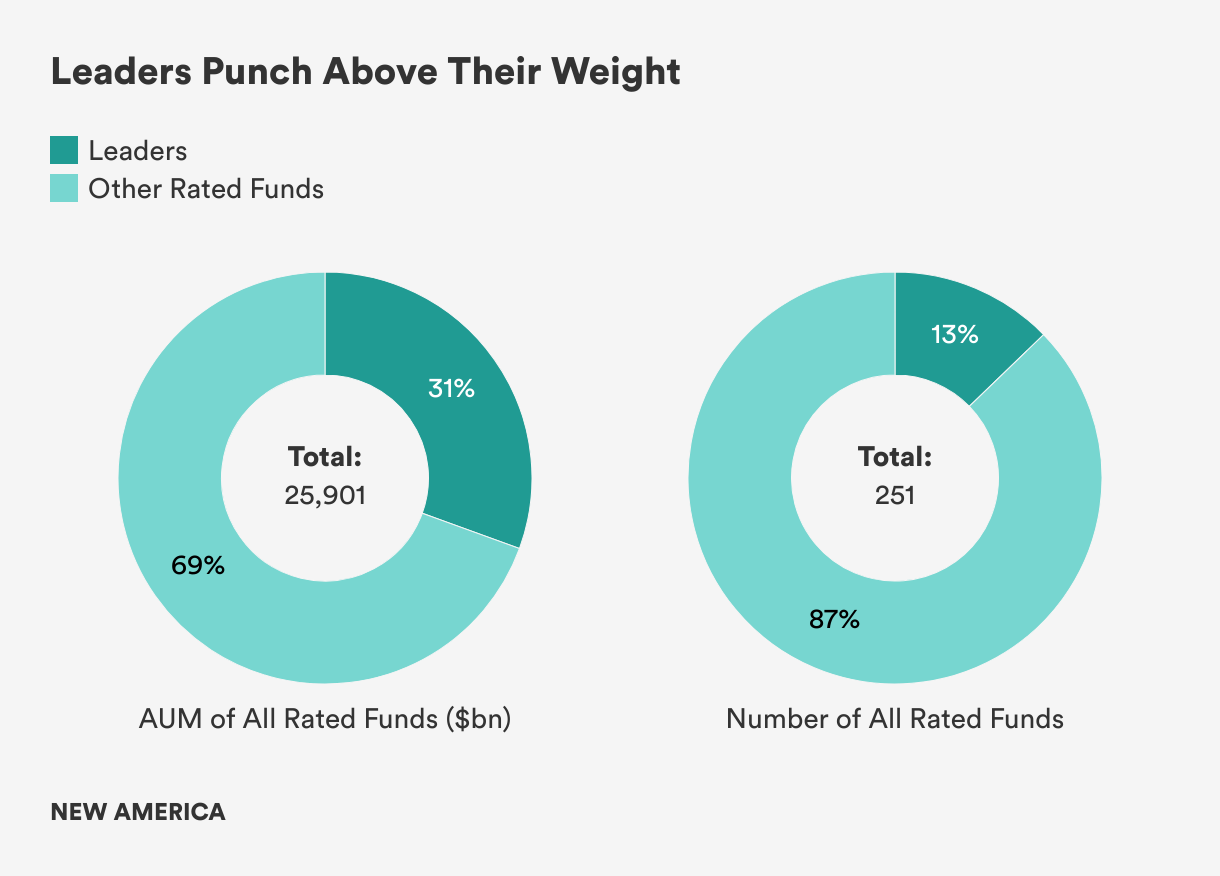
- Punch above their weight, comprising 13 percent of the 251 total rated funds but 31 percent of total assets