Table of Contents
- I. Introduction
- II. Asset Allocators, Principles, and Criteria
- III. The RAAI Index and Leaders List
- IV. Why the Leaders Matter
- V. Key Findings: Are Global Asset Allocators Becoming More Responsible?
- VI. What’s New? Comparing the 2021 and 2019 RAAI Leaders List
- VII. Methodology
- VIII. Glossary of Terms
- IX. Scorecards
- X. Previous and Current Award Winners
- XI. Appendix: Ten Recommendations for Success in Responsible Investing
II. Asset Allocators, Principles, and Criteria
The RAAI focuses primarily on SWFs and GPFs (“asset allocators”)—a group of institutional investors that have the scale, scope, and inclination to make a positive impact on global ESG challenges.
Together, these asset allocators manage $36 trillion of assets on behalf of savers in their respective nations, to help ensure their financial security and to pay for their retirement, healthcare, and long-term savings needs. SWFs and GPFs are accountable to their contributors and beneficiaries, who, in addition to wanting stable returns, want to make sure their savings have a positive impact on issues related to the SDG: for example, climate action, gender equality, innovative sustainable infrastructure, education, and healthcare.
SWF and GPF are particularly well-suited to be trailblazers in responsible investing and sustainable development, given their long-term investment horizons (that often span generations), scalable assets, large internal resources, and investment capabilities. Where SWFs and GPFs go, companies and capital markets tend to follow.
While there is a general consensus among academics and practitioners on the importance of responsible investing to long-term value creation, some asset allocators still face challenges integrating ESG considerations into their investment portfolios. Although numerous ESG tools exist, they are often onerous and complicated to implement, and sometimes, are not customized for the needs of the asset allocator community.
This is where the Responsible Asset Allocator Initiative comes in. The RAAI provides a benchmark of excellence among asset allocator best practices, enables knowledge-sharing among peers, and helps set a policy agenda and advocacy program to mobilize more capital into responsible investments. Asset allocators are already shifting investment practices to achieve financial goals without extracting social and environmental value. The notion of investing people’s savings in companies that pollute the environment or that employ child labor, in order to make an extra ten cents of returns, is going away. While supporting this trend, the RAAI takes the next step: helping asset allocators to add social and environmental value in line with the preferences of savers, while generating the risk-adjusted returns they require.
Principles and Criteria
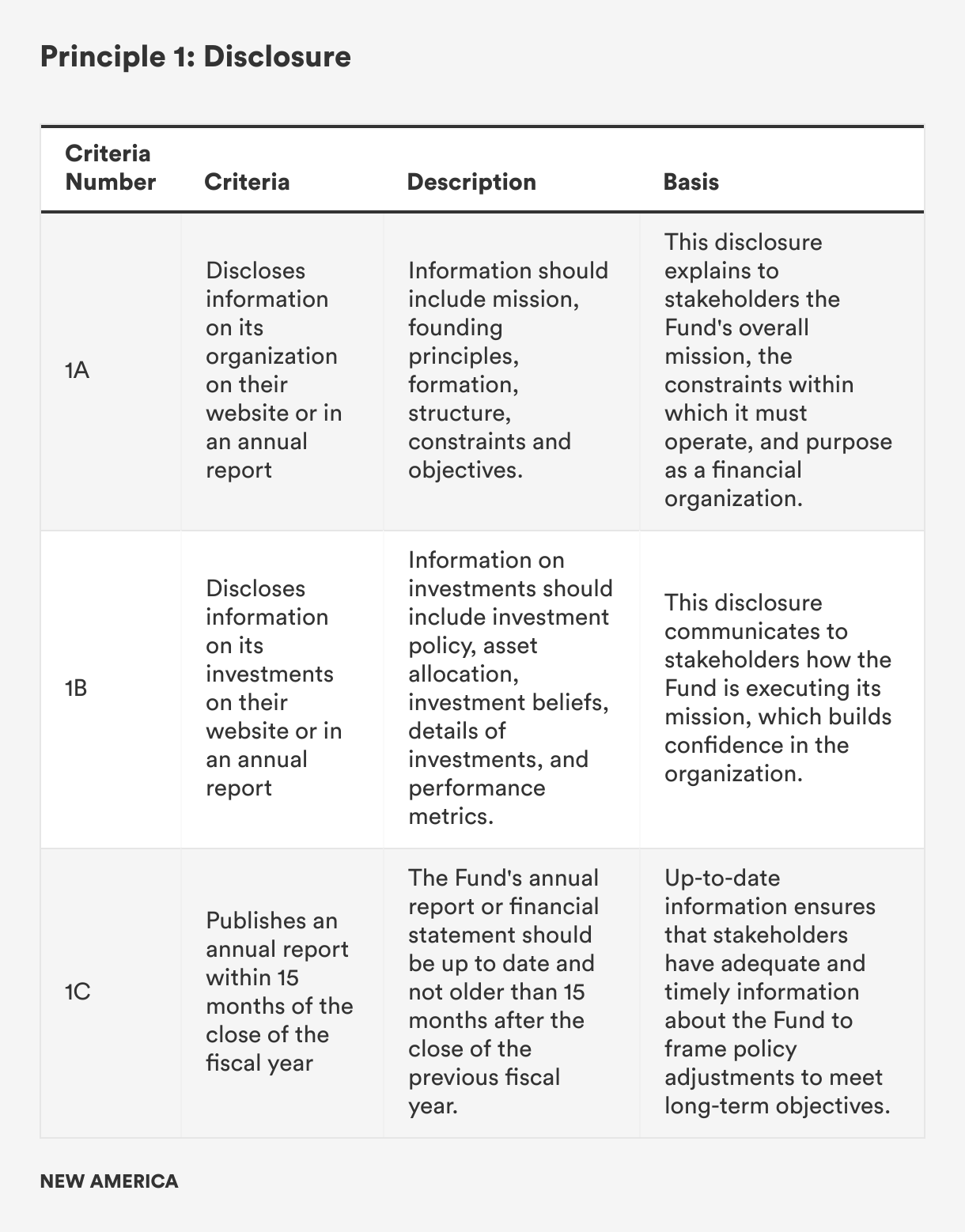
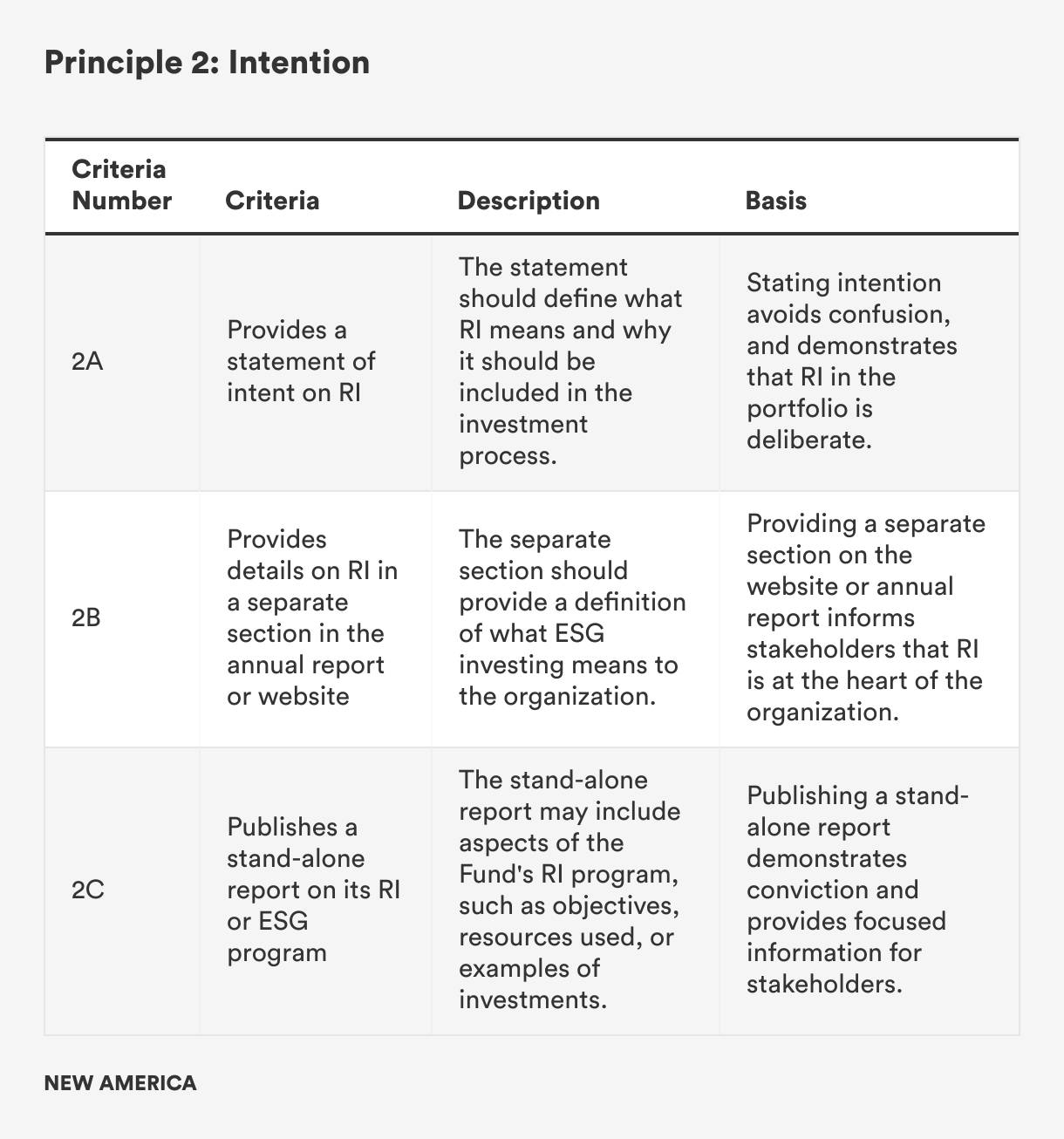
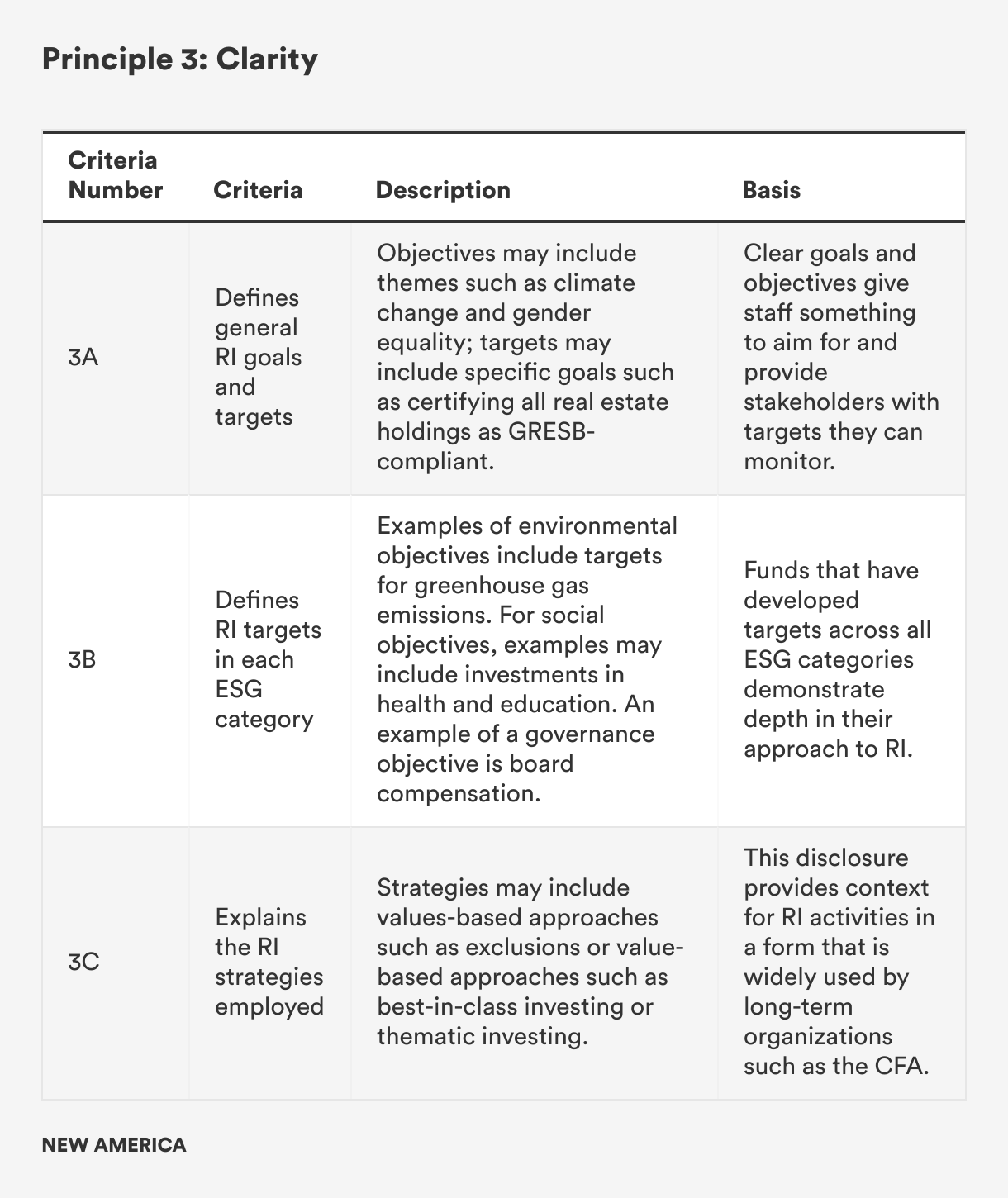
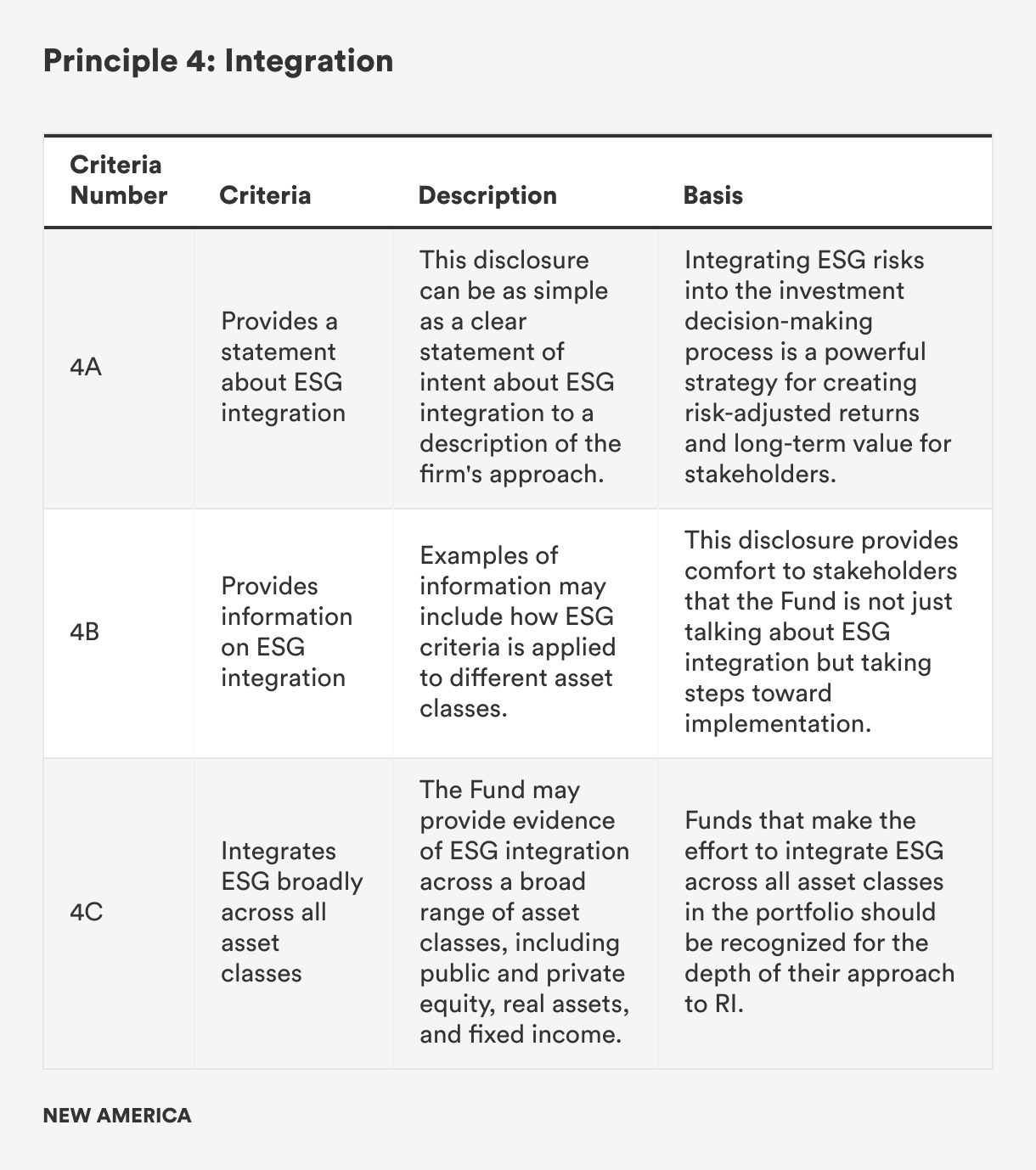
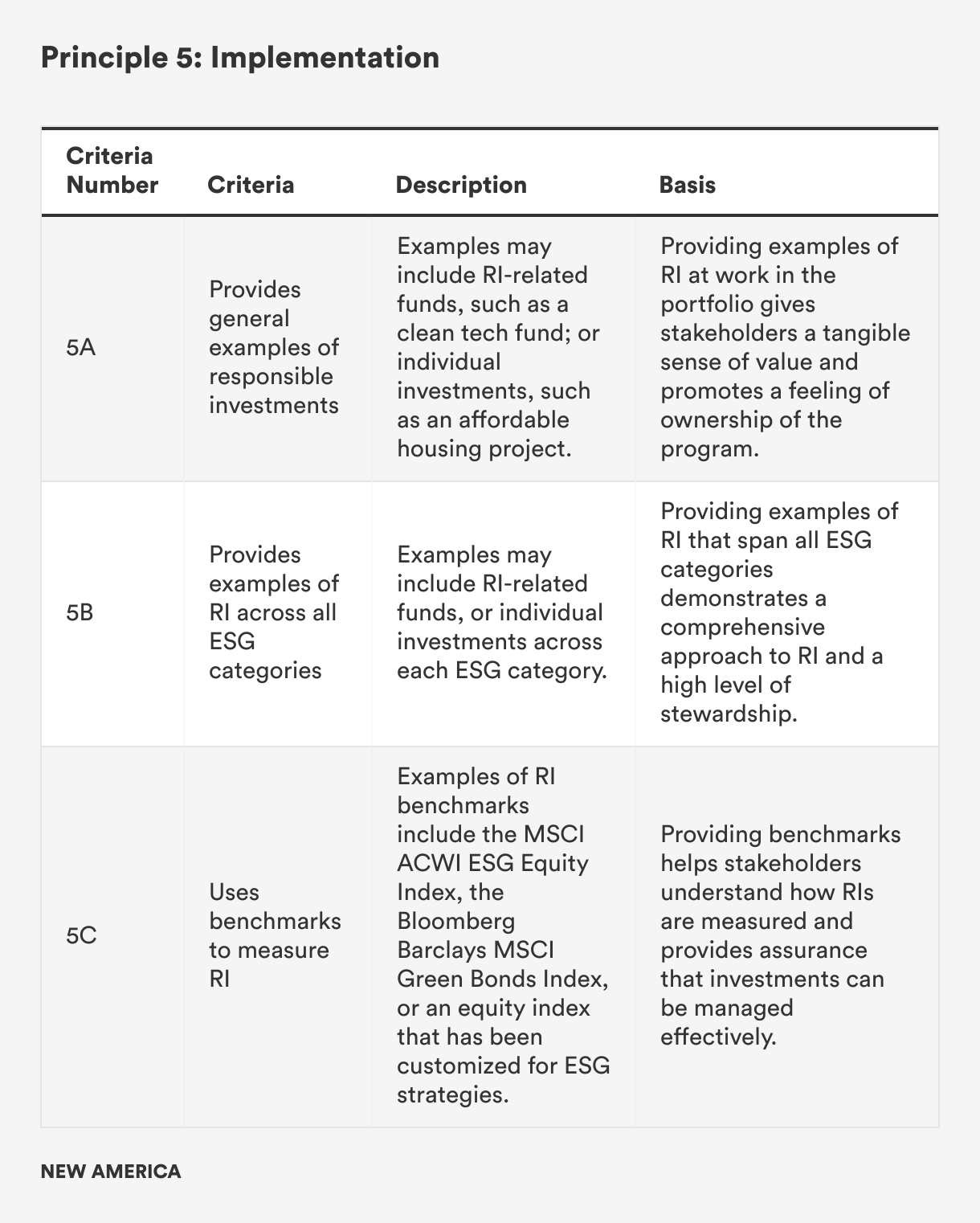
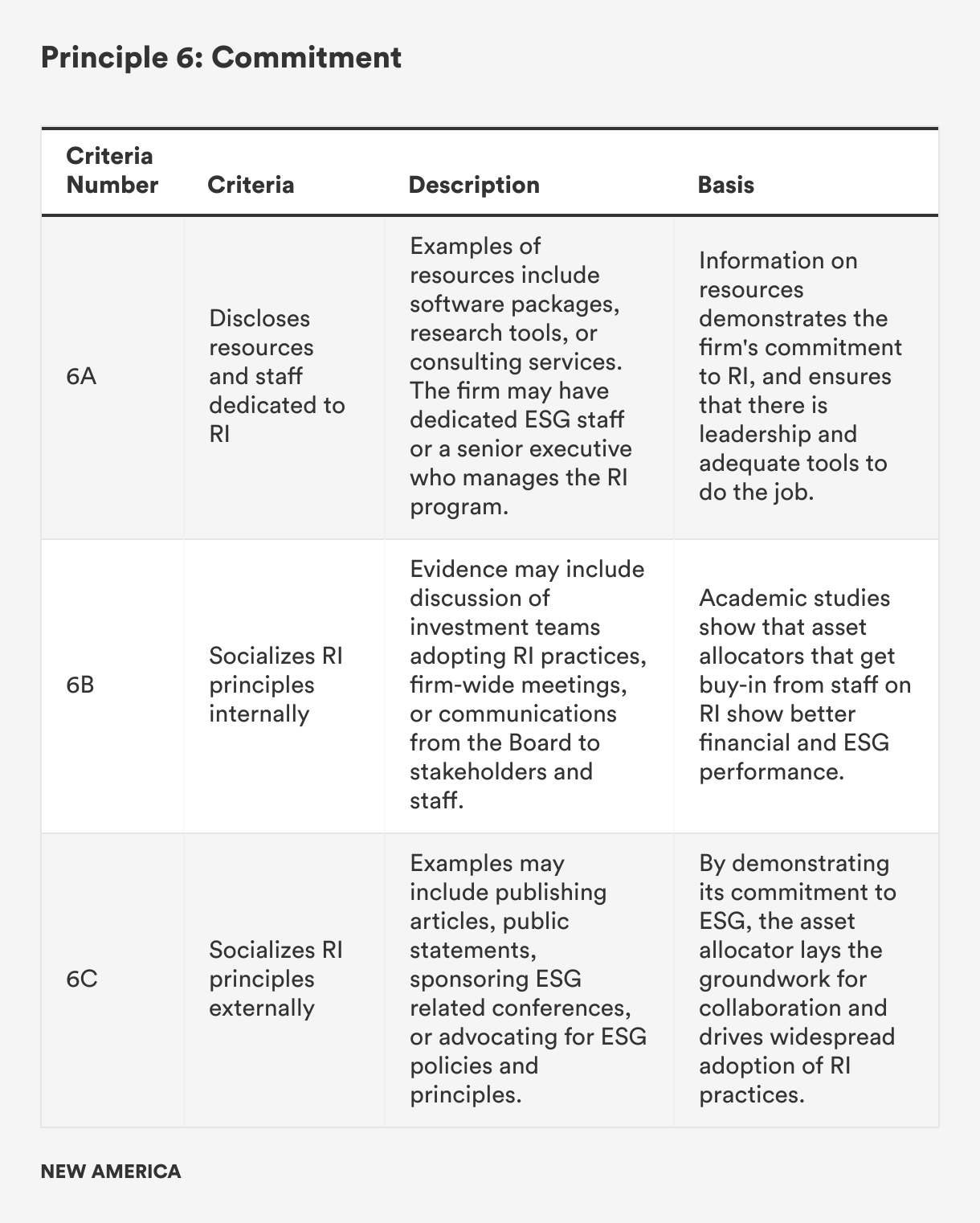
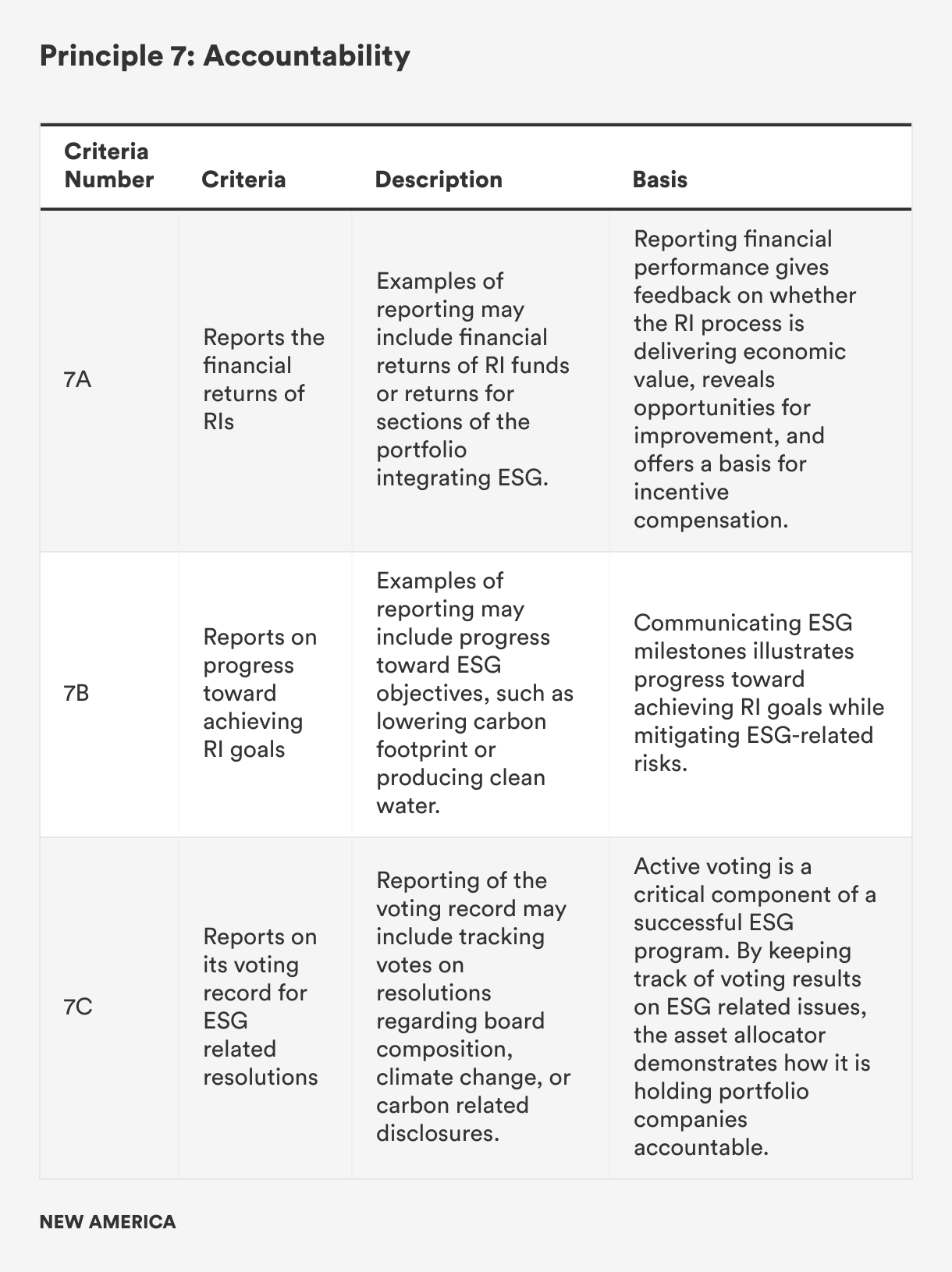
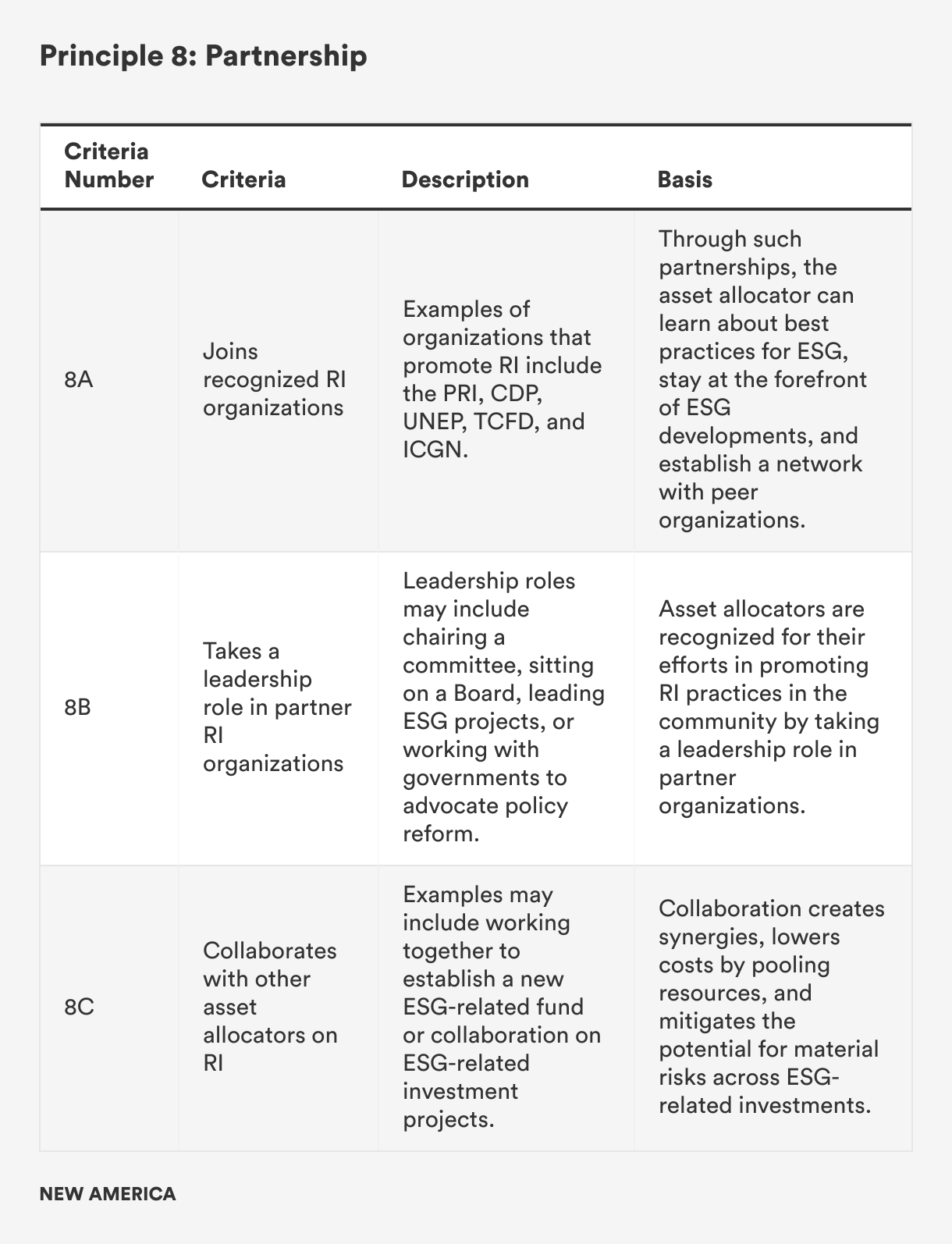
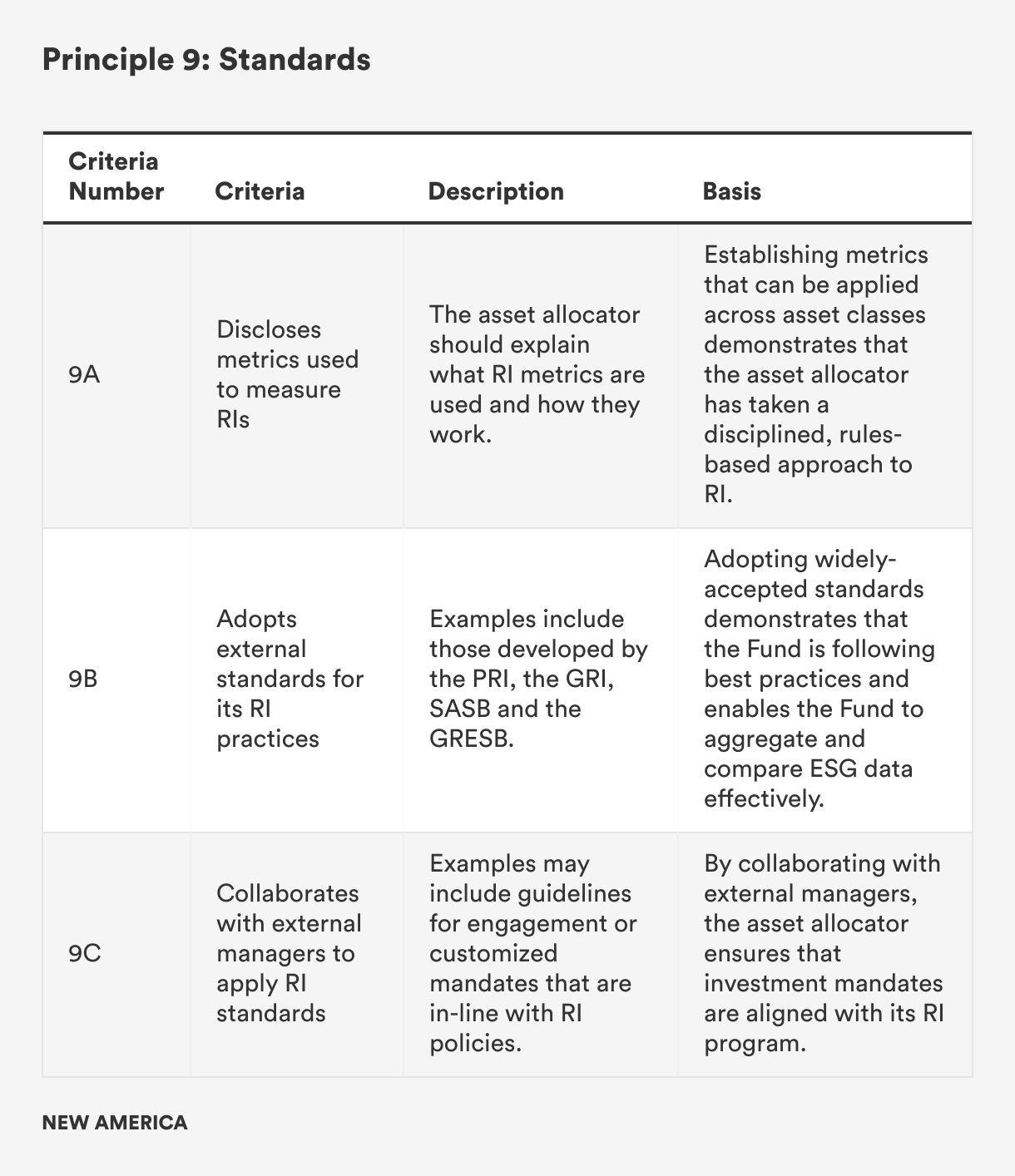
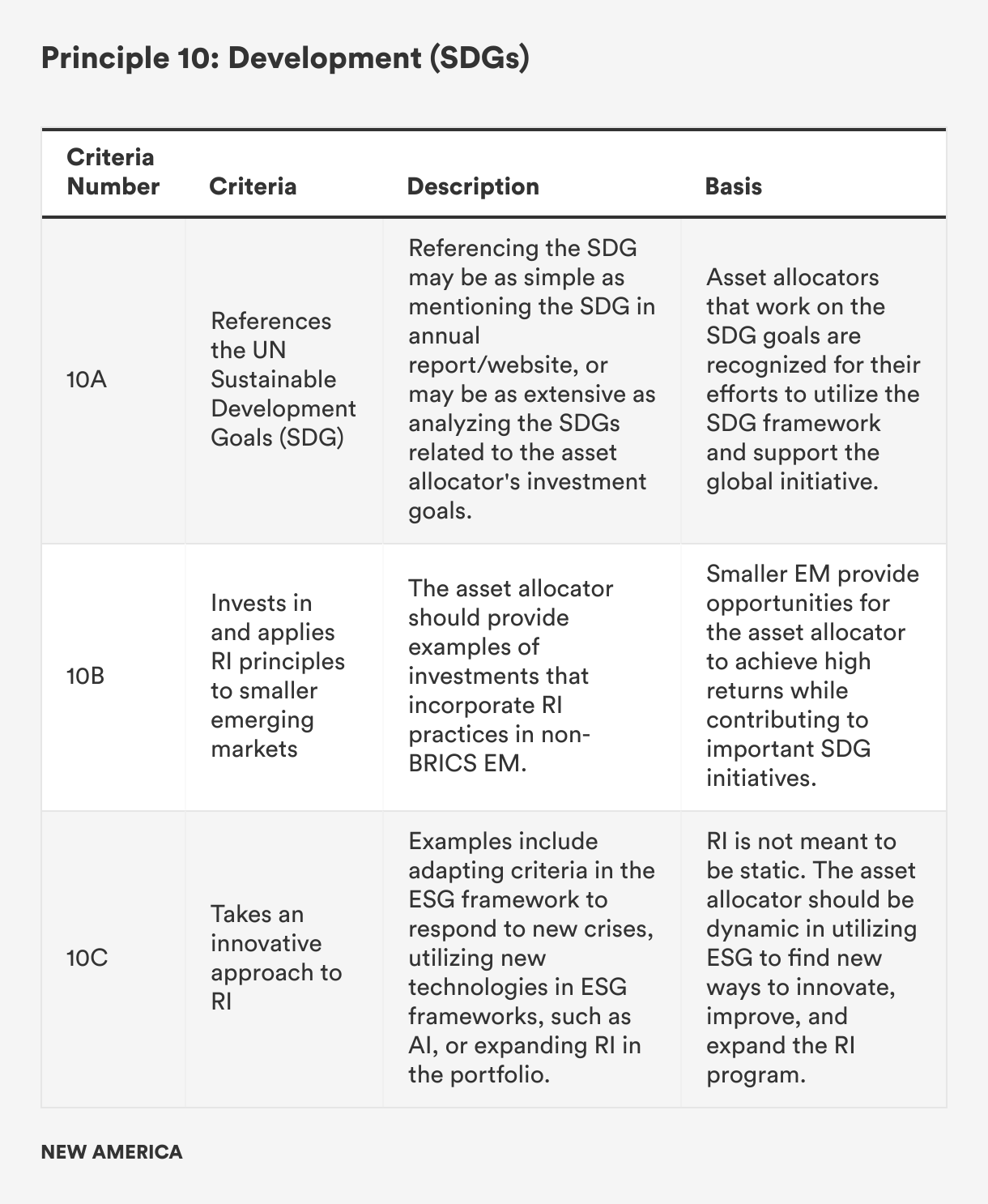
As part of the RAAI, New America partnered with the Fletcher School at Tufts University to analyze and rate over 250 SFWs and GPFs against principles and criteria for responsible and sustainable investing. RAAI constantly seeks to refine its processes and outputs. As a result, researchers increased the number of criteria for evaluation from 20 in 2019 to 30 in 2021—with three criteria per each of the 10 principles: disclosure, intention, clarity, integration, implementation, commitment, accountability partnership, standards, and development.
By assessing and scoring the performance of asset allocators against these principles, and highlighting the performance of the leaders (the 30 highest scoring SWFs and GPFs), RAAI provides a benchmark of peer excellence that serves as a catalyst for responsible investing among the broader community.
The 10 core principles and 30 associated criteria were selected based on discussions with asset allocators and from guidelines by multilateral institutions and agreements across the field of ESG and sustainability, including, but not limited to, the Principles for Responsible Investing (PRI), the United Nations Global Compact (UNGC), the OECD Principles of Corporate Governance, regional and global sustainable investment forums (Eurosif, RIAA, GSIA), the Investor Network on Climate Risk (INCR/CERES), the UN Sustainable Development Goals, the International Forum on Sovereign Wealth Funds (IFSWF), the Task Force on Clima (TCFD), Climate Action 100+, CDP Worldwide, GRESB, the Institutional Investors Group on Climate Change (IIGCC), and the Sustainability Accounting Standards Board (SASB).
The 10 principles and 30 criteria can be reviewed below.