What Practitioners Are Saying: Themes from Illinois Listening Sessions
Multiple themes arose in our listening sessions with Illinois practitioners.
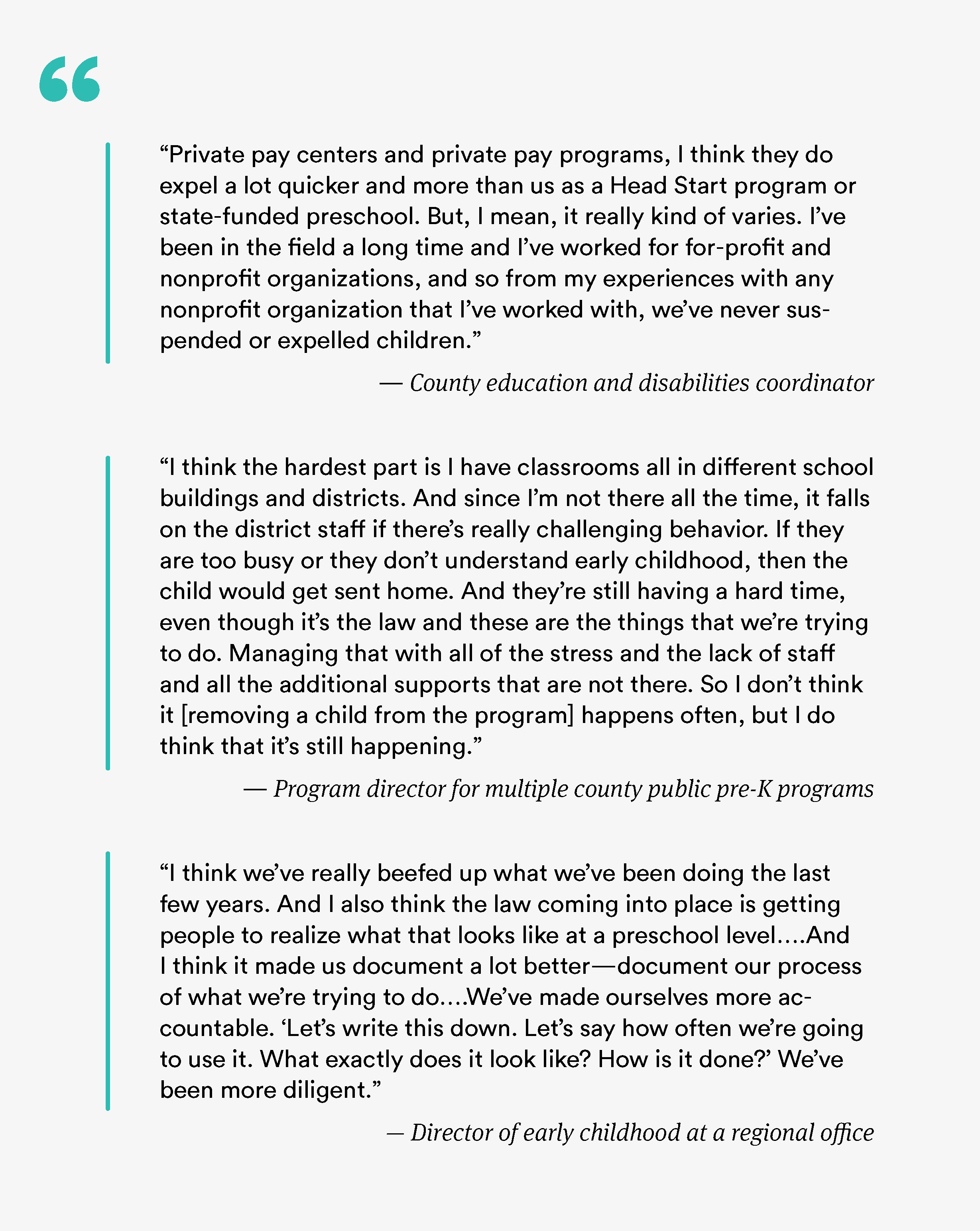
The law banning expulsion has made programs more intentional and changed practices of some, but it could go further. We heard that using exclusionary discipline practices is often a matter of program culture. Most practitioners said that they did not have experience with suspending or expelling young children before or after the law went into effect. Others felt that programs with a history of engaging in these practices responded to the law in various ways—some changed their practice, others engaged in soft expulsions instead, and others went through the required documentation process just as a formality.
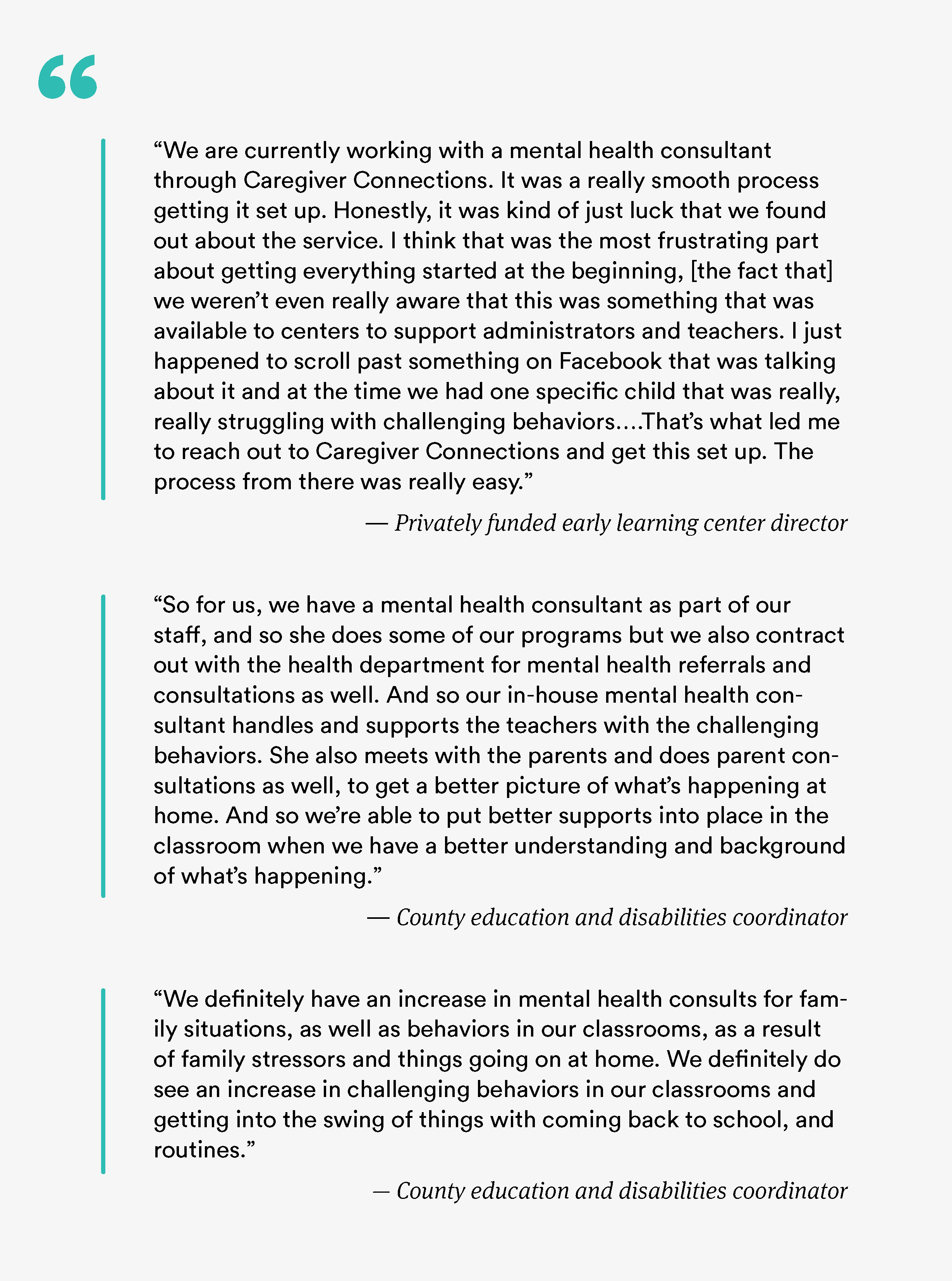
Access to mental health consultation differs across programs and can be more challenging for some. Some ECE programs have in-house mental health consultants, some are part of a consortium that provides support, some access a consultant through their child care resource and referral agency, and others seem to lack access. For programs without a mental health consultant on staff, waiting lists to receive services can be long, making it difficult to address program needs in a timely manner. This is exacerbated by increases in mental health needs due to the pandemic.
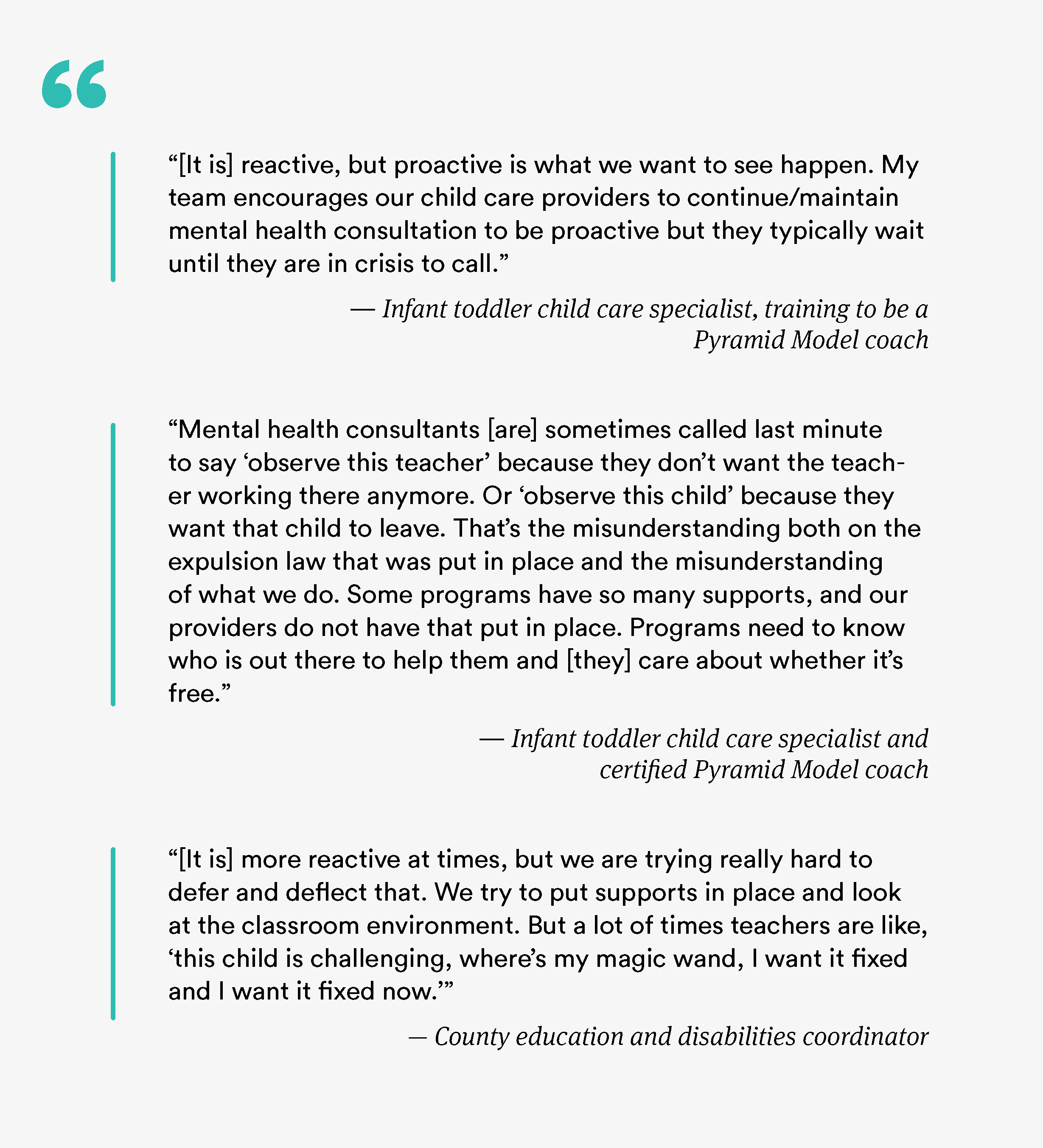
While the Illinois mental health consultation model is meant to be a preventive strategy, it is often used as a reactive strategy. Practitioners also expressed variations in understanding about what constituted mental health consultation.
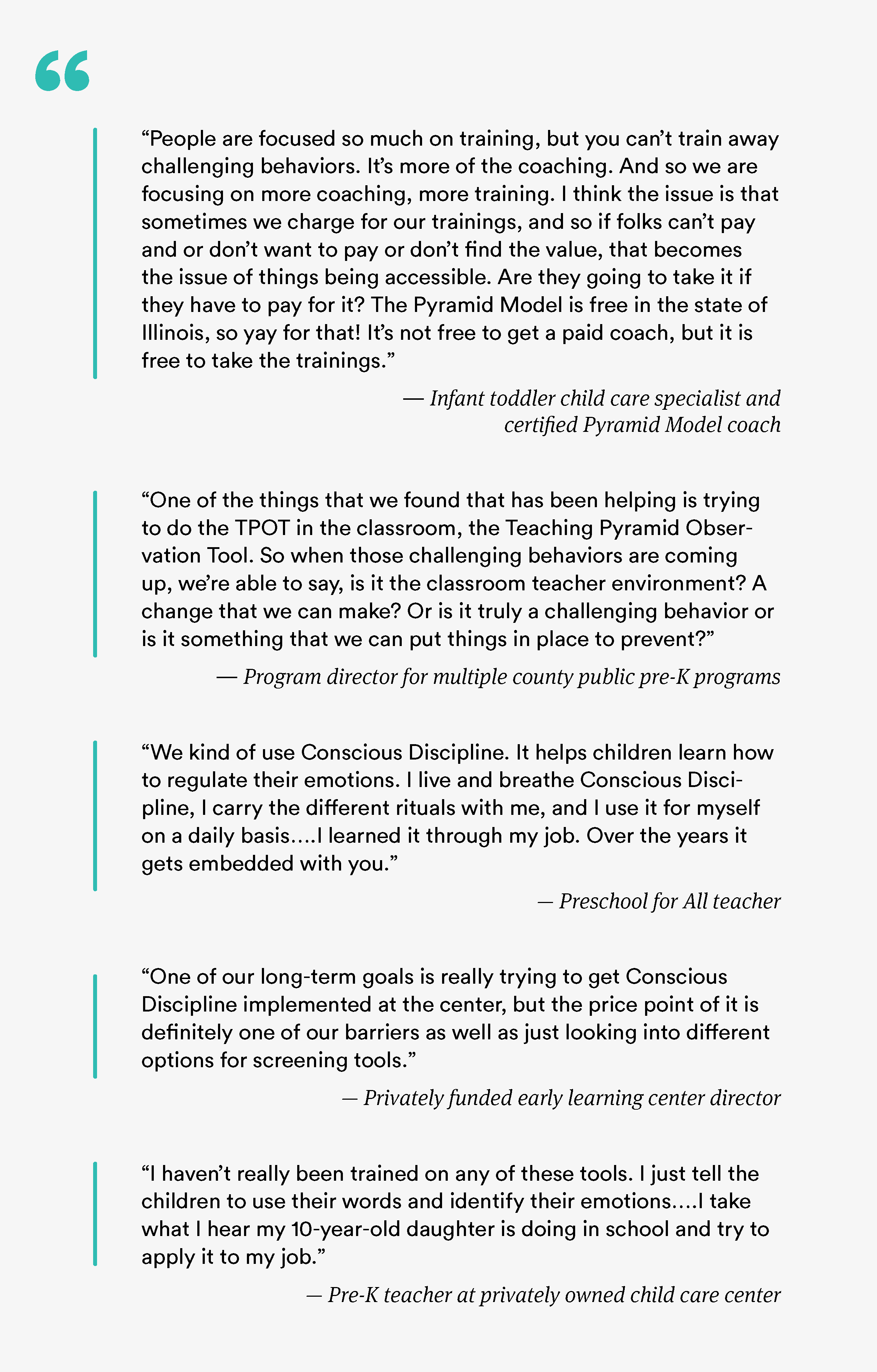
Practitioners found multiple professional development opportunities and resources helpful for dealing with challenging behaviors and supporting children’s social and emotional development. However, there is unequal access to these supports. Professional development tools are often prohibitively expensive for private providers. The tools mentioned favorably in our listening sessions included the Pyramid Model, Playworks training, Conscious Discipline, the Erikson Institute’s Facilitating Attuned Interactions (FAN) training, CHAMPS, and Zone of Regulation.
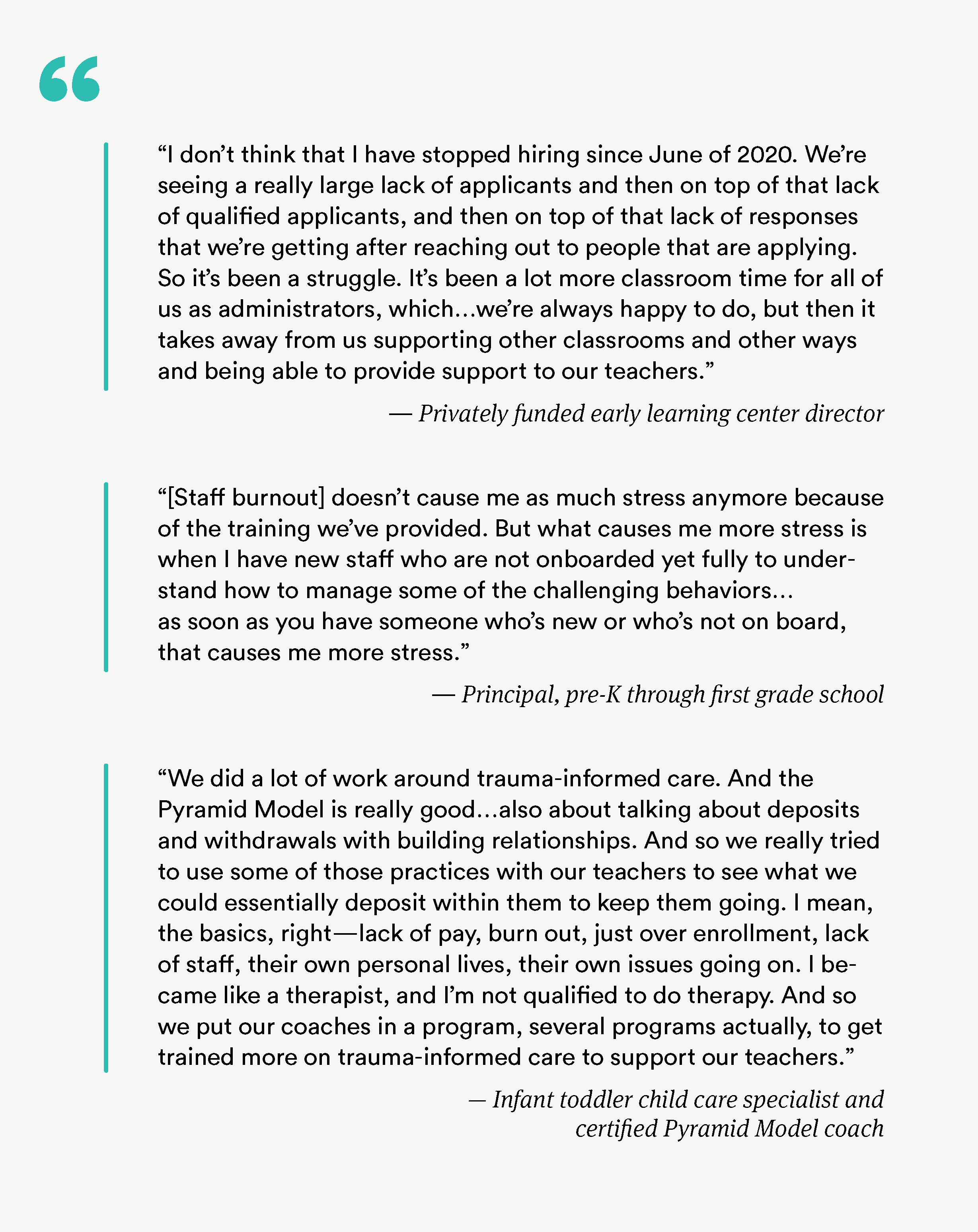
Staffing is a primary challenge for programs. Programs need more support staff or smaller adult-child ratios to handle challenging behaviors. Staffing challenges have been exacerbated by COVID-19.
Classroom teachers lacked familiarity with these topics and expressed confusion. Despite efforts to expand access to ECHMC and Pyramid Model training, most teachers in our focus groups did not have experience with these supports.
While classroom teachers in our listening session had a lot to say about the challenges of teaching during COVID, access to different types of professional development, and the importance of professional peer relationships, they did not say much on suspension and expulsion. They were not familiar with the law banning expulsion and did not see changes in the way programs have handled discipline in recent years. There was confusion among teachers about what constitutes mental health consultation versus other available supports, and they were not clear if they had participated in mental health consultations. Most of the teachers did not have experience using the Pyramid Model. The public pre-K providers had received varied amounts of formal training on social-emotional development, and the one private provider had not received any formal professional development on this topic.