A Chapter of: Toolkit for Using Policy to Enable Effective and Supportive Transitions for Children, Families, & Educators
Appendix C: Self-Assessment Tool
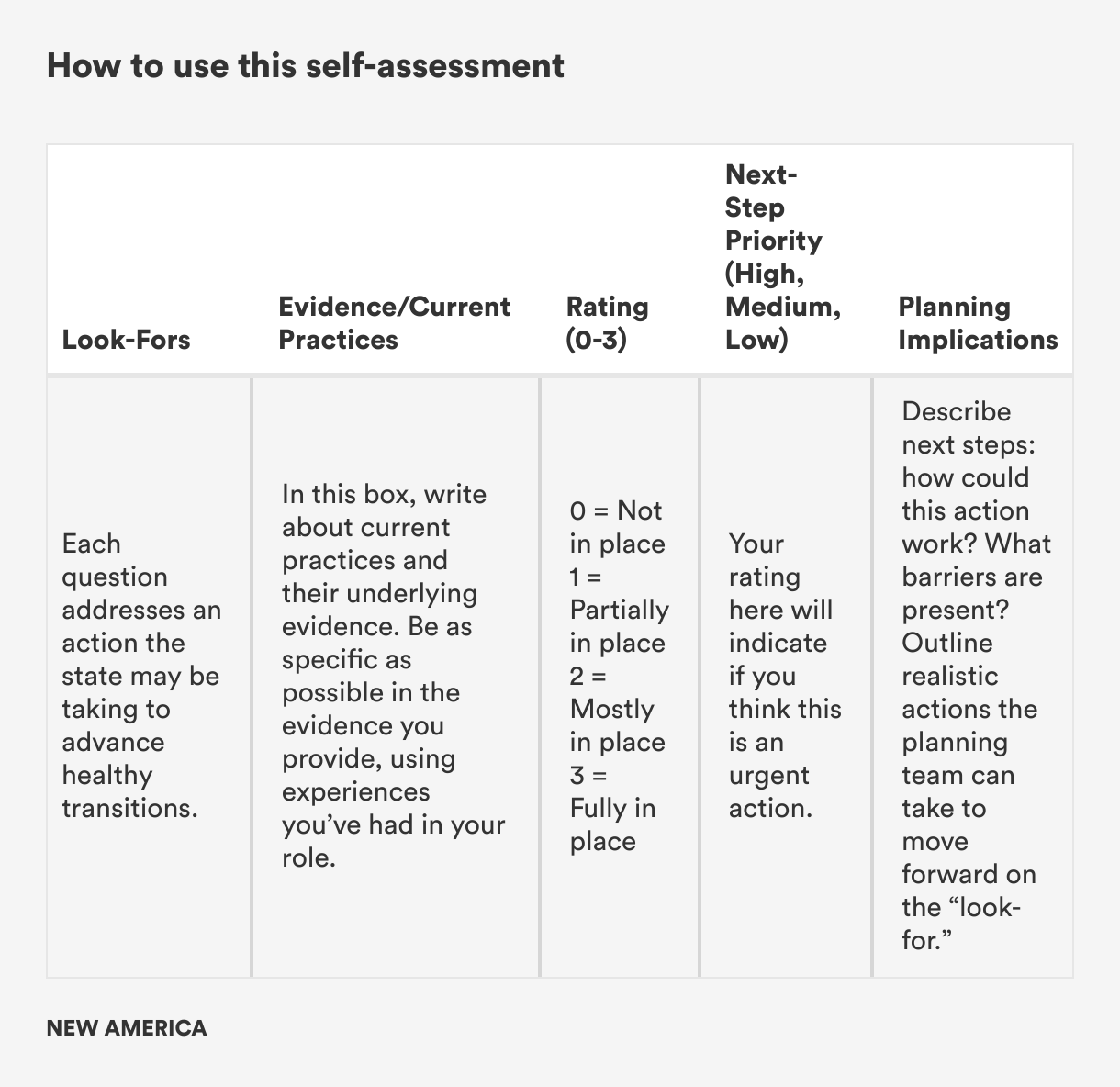
Transition to Kindergarten: Self-Assessment Template for Systems Leaders and/or Planning Teams
Considerations for effective transitions planning:
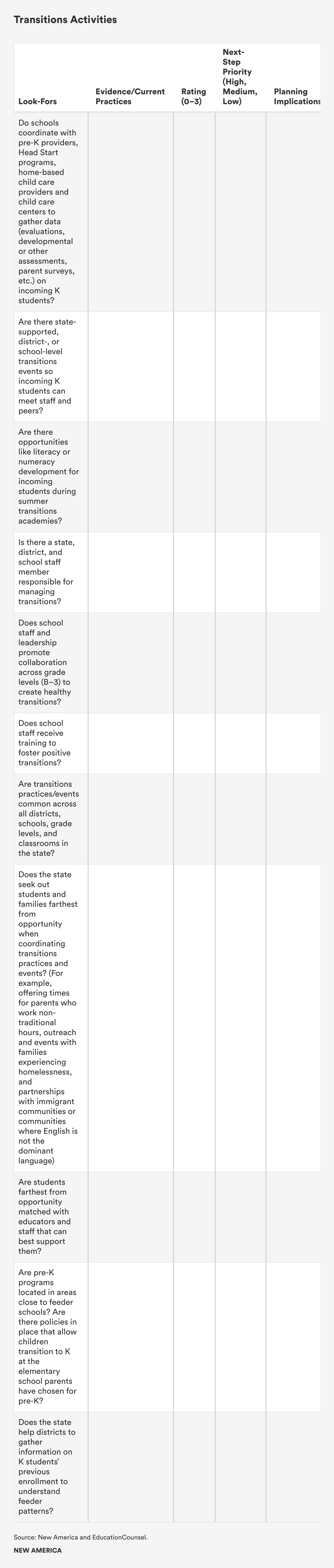
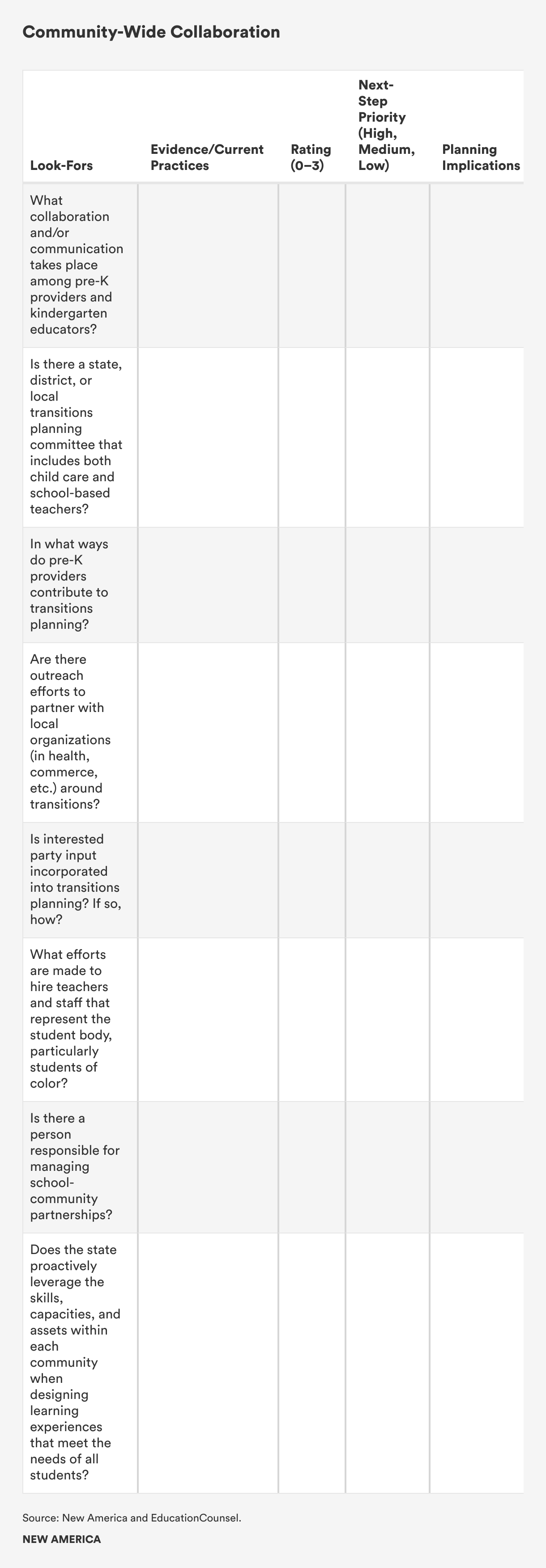
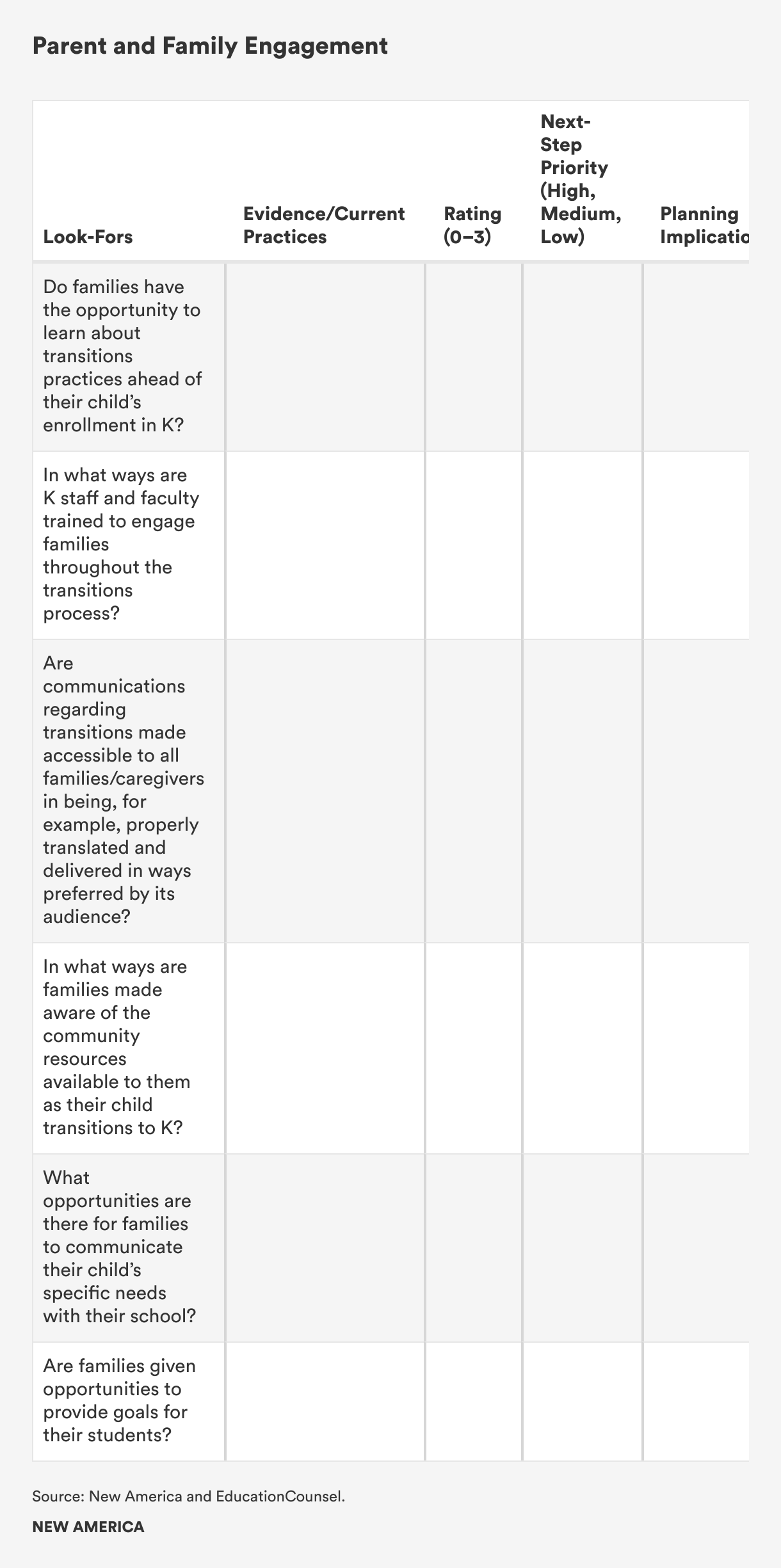
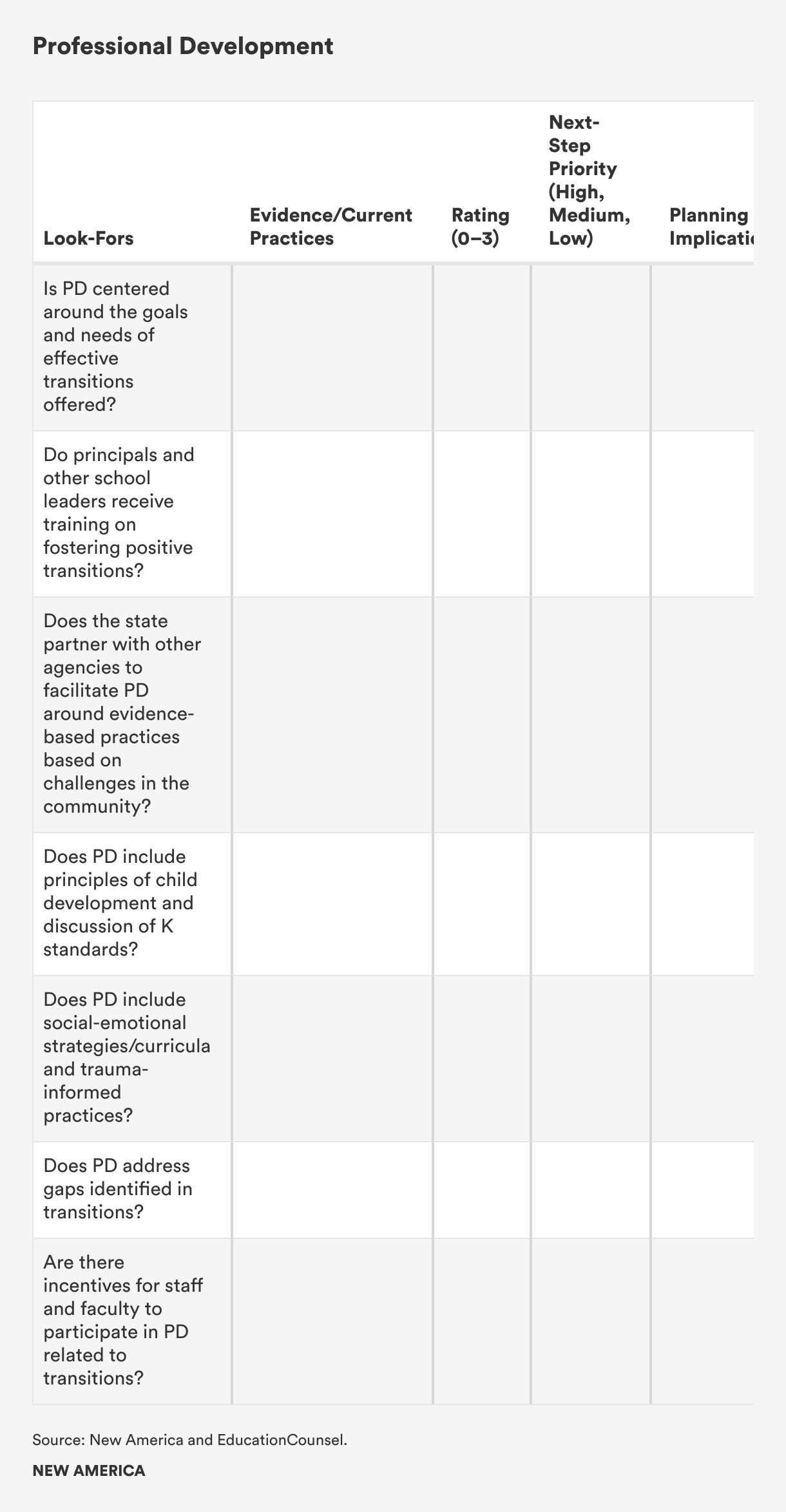
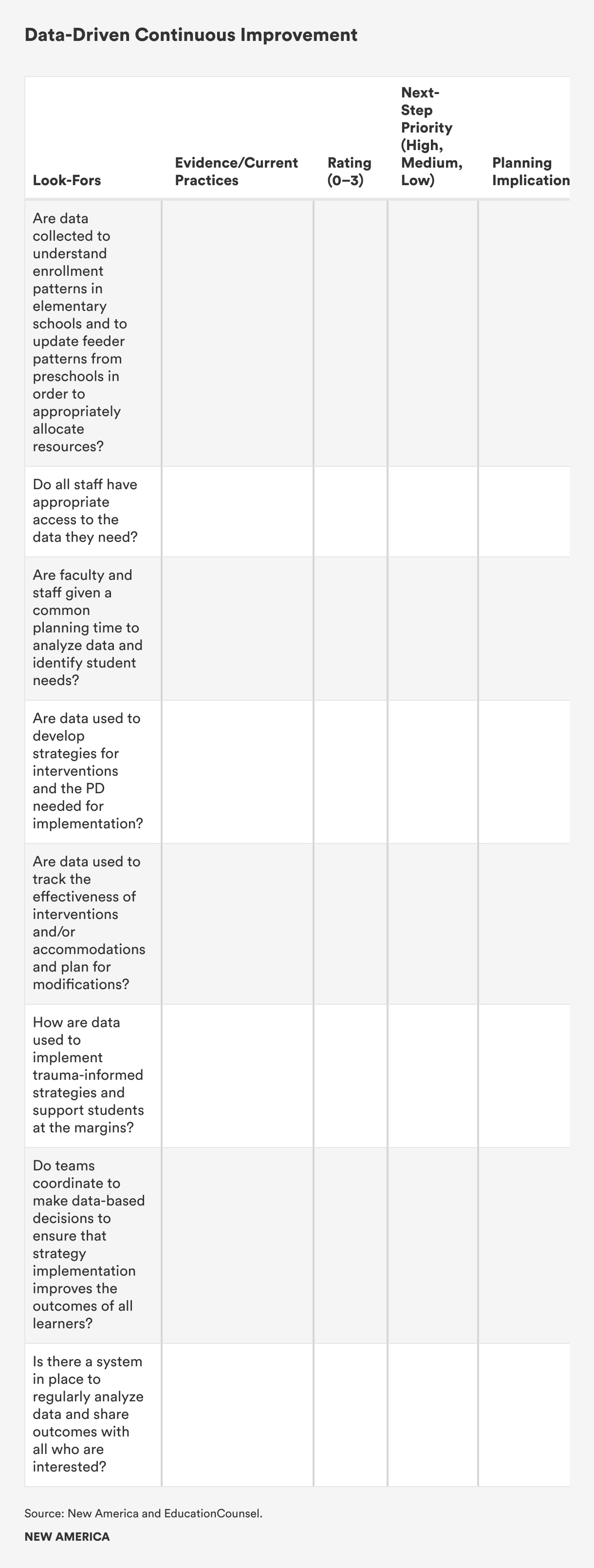
Identifying a transitions self-assessment tool and taking stock of current transitions activities at the state and local levels is an important first step in planning. In creating this tool, we used the self-assessment tools from New York, Massachusetts, and Illinois as models. It is designed to be used by both state and district offices to understand the work districts and schools have done to improve transitions. Results from this self-assessment will show current efforts as well as areas where more work is needed. Assessment should include listening to families, prioritizing children and families who are furthest from opportunity, and tailoring investments to address their needs. Planning should include continuously checking to ensure that those farthest from opportunity are a focus of policy considerations and everyday practices.

Toolkit for Using Policy to Enable Effective and Supportive Transitions for Children, Families, & Educators
- 1. Introduction
- 2. How to Use this Toolkit
- 3. Definitions & Abbreviations
- 4. The State of Children, Families, & Educators in the Second Year of COVID: Challenges & Solutions
- 5. Guiding Framework: How Policy Can Help Meet the Needs of Young Learners
- 6. Six Steps for Educators and Systems Leaders to Strengthen Transitions
- 7. Nine Takeaways from Our Work with States, School Districts, & Communities
- 8. State & Local Policy Ideas with Examples
- 9. Federal COVID Relief Dollars and How They Can Help Fund This Work
- 10. Other Funding Streams that can be Used for Early Learning and Transitions
- Appendix A: Resources by Topic
- Appendix B: Focus Group Questions
- Appendix C: Self-Assessment Tool
- Appendix D: Work Plan