Factors Affecting the Development, Deployment, and Acceptance of Digital Solutions
There are several factors affecting the development, deployment, and acceptance of digital solutions in the Lower Mekong Region. This section covers critical factors such as the impact of the COVID-19 pandemic, connectivity and digital access, and digital and cyber governance concerns. This includes concerns about internet freedom, censorship, internet shutdowns, and data security—all of which understandably take a toll on trust in governments in the region. To take a closer look at each country’s digital development, please see the Country Briefs in this report’s appendix.
The COVID-19 Pandemic’s Impact on the Digital Landscape
The COVID-19 pandemic contributed to significant loss of life, disturbances in public health screenings and treatment, food security challenges, and education gaps. It also had a mixed effect on the trajectory of digital transformation in the region. With the pandemic limiting in-person activities and everyday interactions, the number of online users skyrocketed, digital literacy accelerated by necessity, and governments invested in tech infrastructure for their populations to combat the impacts of COVID-19.5 The outbreak also exacerbated development challenges and existing concerns surrounding human rights, privacy, security violations, and content moderation.
An increase in reliance on digital infrastructure necessitated increased government investment. For example, Freedom House’s Freedom on the Net reported that the COVID-19 pandemic actually spurred technology infrastructure investment and innovation in Thailand. At the start of the pandemic, Thailand saw a 30-percent increase in internet usage. In response, the National Broadcasting Telecommunications Commission (NBTC) provided 10 gigabytes to all mobile users and, in January 2021, ordered all mobile and broadband operators to increase their speed and capacity to support increased internet usage. Later, low-cost mobile packages were introduced to offer faster speeds and unlimited data. Similarly, Vietnam saw a movement to increase access to public services in the wake of the pandemic. After a wave of new services were provided on Vietnam’s National Public Service Portal, the portal saw a steep uptick in views.6 Although demand for digital products and opportunities increased, so did privacy and security concerns, especially around digital exposure trackers and quarantine enforcement.
Many governments quickly created, often replicated, and deployed new digital technologies to meet urgent societal needs. For example, Vietnam achieved a fast system rollout using NCOVI, an existing disease monitoring and data sharing platform, to track and analyze COVID-19 data and provide suspected and confirmed case information to the public in real time. Similarly, Laos harnessed District Health Information Software 2 (DHIS2)—a widely available global open source software platform for health data collection, access, and use at the local level—to quickly respond to pandemic-related concerns. As one of the first countries to employ the platform for COVID-19, Laos enhanced it by using locally produced apps to add specific features facilitating vaccine delivery, web-based vaccine appointment scheduling, and vaccine status tracking.
Digital Connectivity and Access
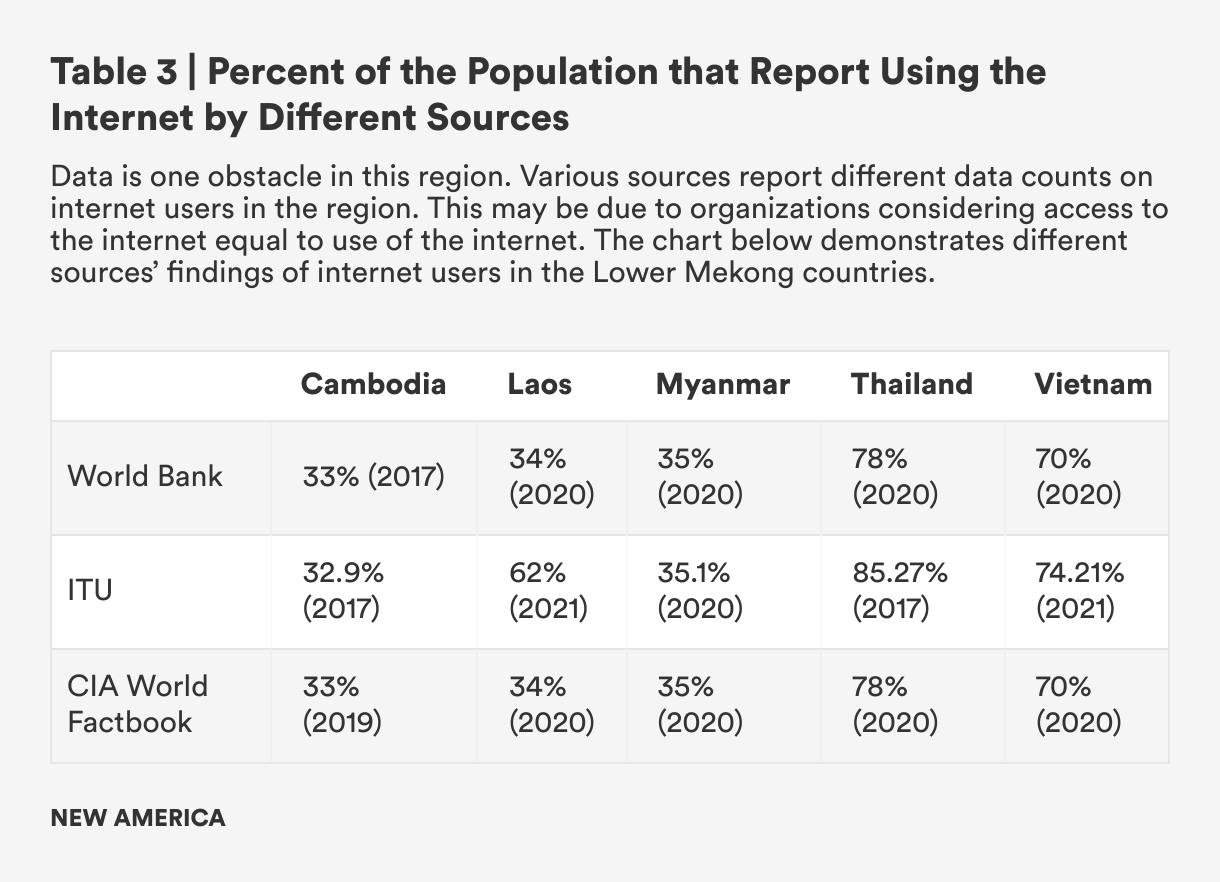
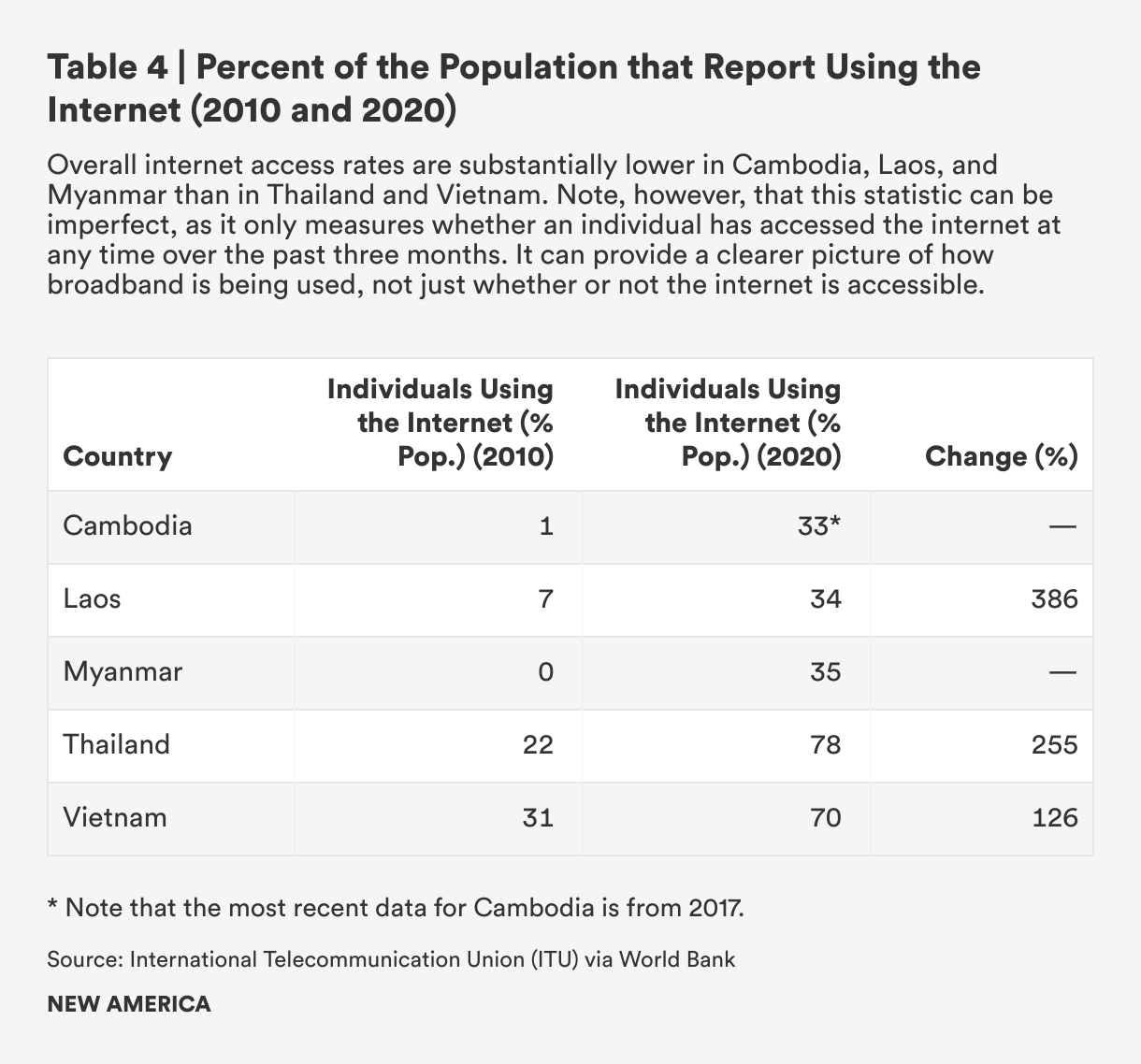
Internet usage varies significantly by country, but general trends span the region—urban users, men, and younger people are the most online (see Table 3). Thailand and Vietnam have larger percentages of their population online than Cambodia, Laos, and Myanmar (see Table 4). The number of online users is a difficult statistic to calculate and different sources provide different estimates.
These numbers may not account for the widespread use of virtual private networks (VPNs), which allow users to access blocked or restricted content and browse anonymously by encrypting and rerouting their internet service provider (ISP) location. VPNs are also often used to circumvent government control and monitoring, contributing to the fact that it is difficult to accurately measure VPN usage. According to the Global Web Index, in 2018, the greater Asia-Pacific region accounted for 30 percent of global VPN usage. Thailand was ranked within the top 10 global VPN markets, with 38 percent of users surveyed reporting VPN use. VPNs are legal in the region with the exception of Myanmar, where the ruling military junta has publicly proposed blocking and criminalizing the technology. It is unclear where the decision currently stands. In addition, the Thai government has blocked access to some websites that sell VPNs as a way to restrict access to the tool.
According to the Roland Berger Digital Inclusion Index (based on accessibility, affordability, ability, and attitude), the Lower Mekong Region is generally on par with global averages but lags behind more developed nations. Thailand and Vietnam score the highest in digital inclusion; Cambodia, Myanmar, and Laos follow, respectively. Across the region, data seems to point toward three development indicators that follow general internet use trends around the world, rather than being specifically unique to the Lower Mekong Region:
- Urban users outpace rural users. While there is not accessible information on urban-rural user discrepancies in all Lower Mekong countries, the International Telecommunications Union (ITU) reports that, in 2020, urban internet users in the Asia-Pacific region outpaced rural users 75 percent to 39 percent. In addition, while rural populations may have growing online coverage (such as in Vietnam, where 91 percent of the rural population had access to the internet in 2020), costs, low digital literacy, and limited access to devices often keep rural populations from actually accessing the internet.
- Gender gaps persist with more men online than women (see Table 4). In Thailand, gender gaps online are quite small, with 79 percent of men and 76.8 percent of women accessing the internet in 2020. Meanwhile, data from Myanmar shows a 30 percent gender gap for mobile internet users in 2020, with men outpacing women as internet users in every age group. Overall, the ITU reports that, in 2020, 54 percent of women and 59 percent of men in the Asia-Pacific region were internet users.
- Younger generations are more likely to be online. As of 2021, nearly 99 percent of those surveyed aged 15 to 34 reported using the internet in Thailand, while only 64 percent of those aged 50 and older reported doing so. Similarly in Myanmar, data from 2019 showed a huge drop-off in internet use after the age of 34. While there is no easily accessible data on age breakdown of internet use in Laos, Cambodia, or Vietnam, it is likely that their populations follow similar trends, given similarities in other categories.
In addition to digital literacy and skills, affordability, and relevance of services or activities to individual users, security and privacy concerns across the region may also be an inhibiting factor for device ownership and usage.7 For example, users in Vietnam and Thailand report higher distrust of tech companies and platforms.8 Other countries report distrust of government usage of technology. For example, 68 percent of Cambodian users reported feeling cautious when interacting with an e-government service. Meanwhile, in Myanmar, users increasingly fear a “digital dictatorship” and cyber hacks, particularly since the 2021 military coup and the resulting internet blackout, surveillance, and criminalization of speech online.9
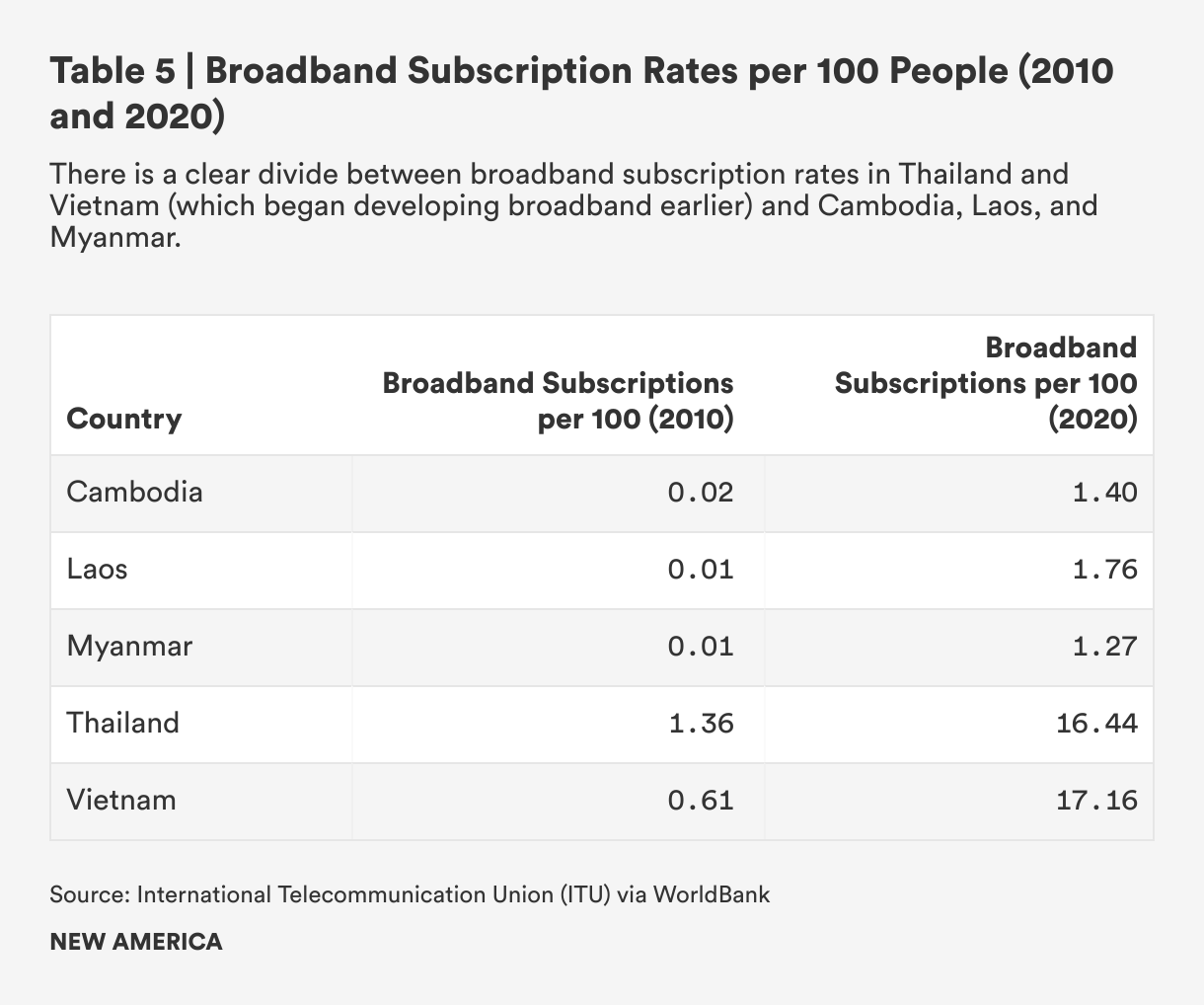
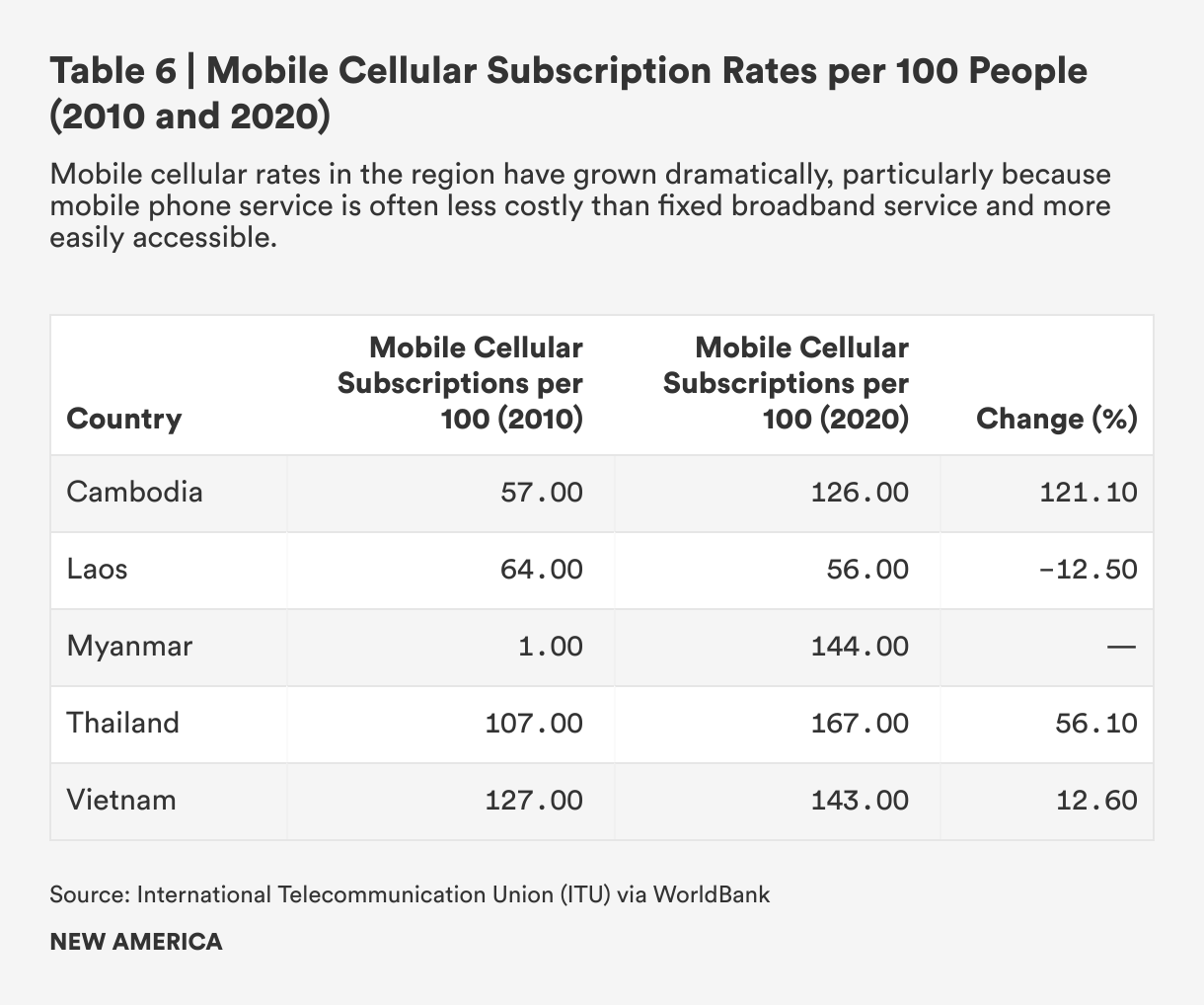
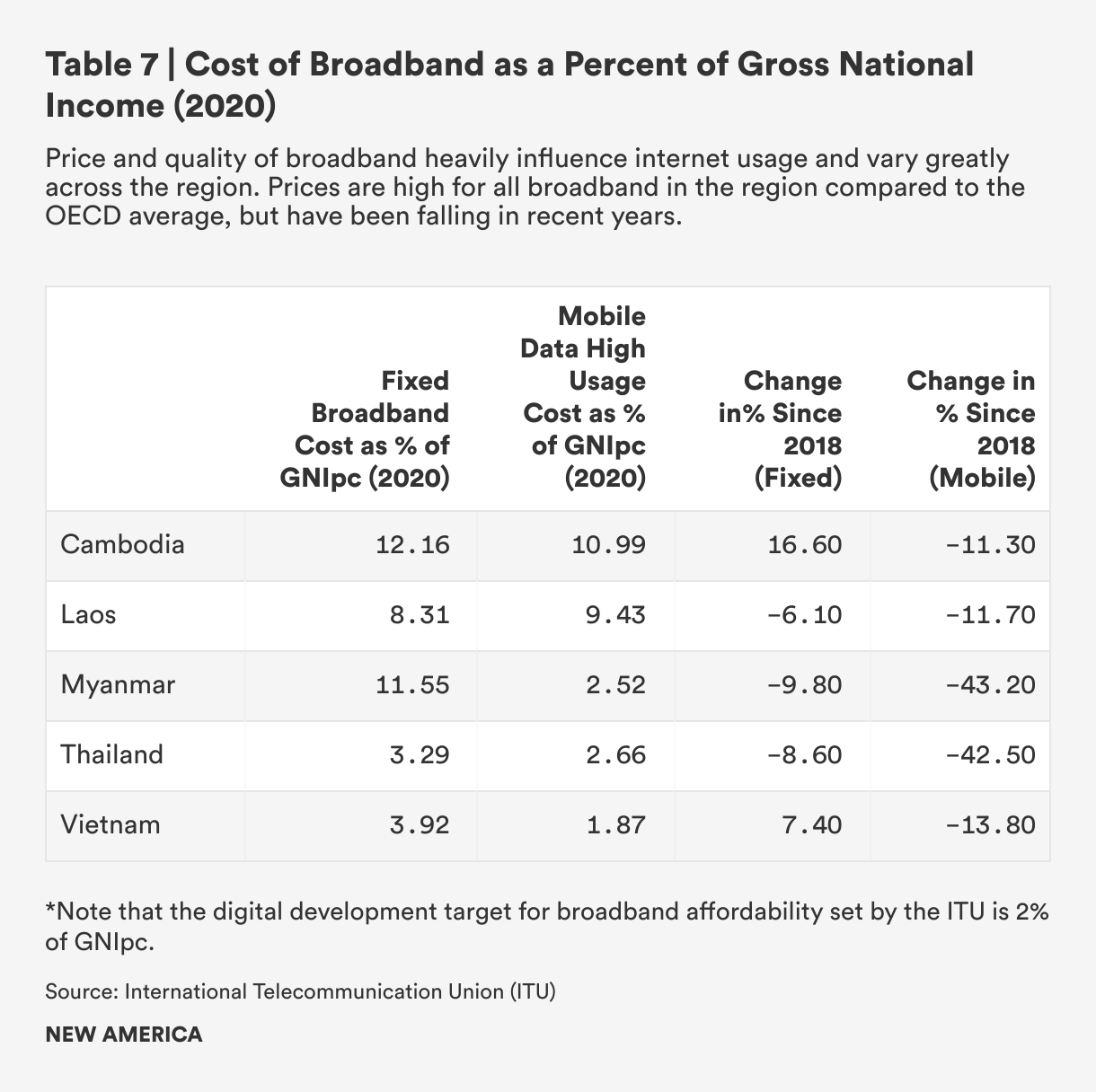
Across the region, while both broadband internet and mobile cellular phone connections have grown substantially, internet access and usage rates are not equal across or within these countries. With respect to fixed and mobile broadband coverage, the region has some infrastructure in place. Thailand and Vietnam often place comparably to international and OECD standards, while Cambodia, Laos, and Myanmar trail behind. Thailand and Vietnam also have higher broadband subscription rates, as they developed broadband access in 2018 before their neighbors (see Table 5). Many developing regions around the world prefer mobile broadband, as it is often less costly for users than fixed broadband service. The Lower Mekong Region is no different, as mobile cellular subscription rates per 100 people greatly outnumber fixed broadband subscription rates across all five countries (see Table 6). The price and quality of broadband heavily influence internet usage and vary greatly across the region. Altogether, regional fixed and mobile broadband prices are high compared to the OECD average (using gross national income per capita, or GNIpc, data) but have been falling in recent years (see Table 7). This drop in relative cost is expected, as incomes are rising faster than the price of broadband—especially for mobile broadband, where there is significant market competition.10 However, since the coup, the military in Myanmar has imposed price hikes and introduced new taxes that have greatly reduced affordable access to mobile phones and data.
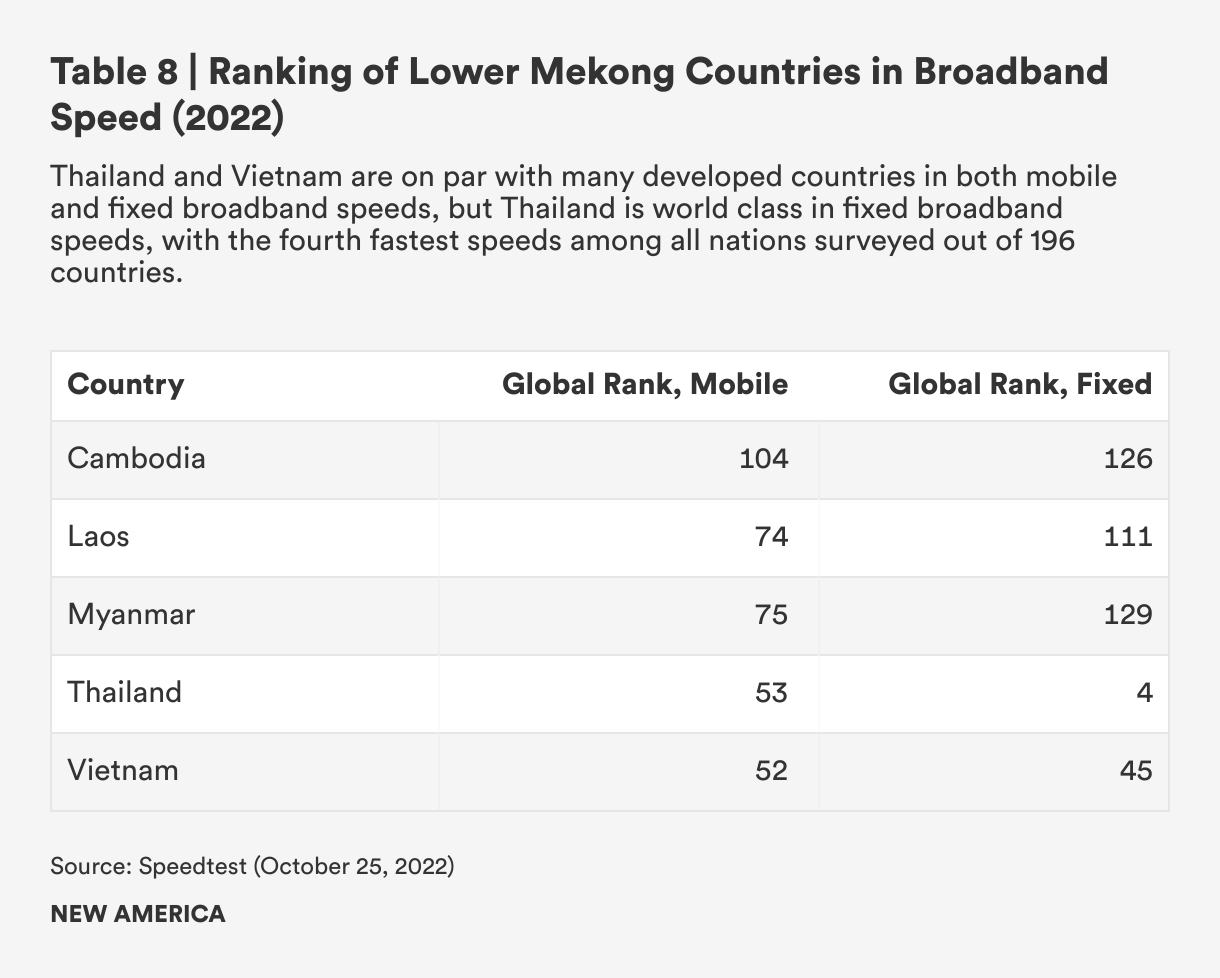
Thailand is doing better and is world-class in fixed broadband speeds, with the fourth-fastest speeds among all nations surveyed. Thailand and Vietnam perform even better on median speed metrics than broadband subscription rates. The other three nations lag significantly on both mobile and fixed broadband speed, placing 50 to 100 spots behind Thailand and Vietnam (see Table 8). As economic development continues across the region, it is likely that the growing number of competitive regional and international internet service providers will help drive the deployment of high-speed 4G/5G bandwidth in urban areas, with smaller cities and rural villages trailing behind.
Digital Governance: Implications for User Data, Privacy, and Internet Freedom
Where they exist, the regulatory regimes of the Lower Mekong countries vary but generally show an increasingly authoritarian approach to digital governance. Digital governance issues, cyber and telecommunications regulations, and internet freedom affect how useful digital services and tools can be for personal and business use. Each government in the region has several institutional bodies that regulate telecommunications services and various issues such as privacy, cybersecurity, digital government resources, and data governance. However, governments in the region frequently use vague, broad laws and regulations to assert authority, limit dissent, and enforce national agendas through a complicated patchwork of cyber and telecommunication bills that often perpetrate, justify, and obfuscate human rights violations and privacy abuses.
Cyber and Telecommunications Regulations and User Data and Privacy
The Lower Mekong countries have enacted several cybersecurity, cybercrime, and data protection and privacy laws, many of which intentionally or unintentionally cause internet freedom and human rights concerns. In most cases, cyber laws nominally protect individuals from bad actors and often carry severe penalties for transgressions. However, most of these laws also give government authorities unbridled access to data and the right to ban or censor information. For example:
- Cambodia: Cambodia’s 2015 Law on Telecommunications increased government control over the telecommunications sector, allowing government officials to temporarily suspend company services and staff, criminalizing any use of telecommunications that leads to “national insecurity,” and allowing for state surveillance of individuals online.
- Laos: In 2015, the Law on Prevention and Combating Cyber Crime was implemented with the stated purpose of strengthening cybersecurity measures and preventing cybercrime. However, some human rights groups have raised concerns that the vague law criminalizes criticism of the government and circulation of “fake news.” While Laos does not have comprehensive data regulations, in 2017, the government enacted the Electronic Data Protection Act to help strengthen user data protections.
- Myanmar: The data localization provision in Myanmar’s 2022 cybersecurity bill requires all data to be physically stored on local servers and allows the government—now the military—access to and oversight of all personally identifiable information (PII), putting users at greater risk.
- Thailand: In Thailand, the 2007 Computer Crime Act (amended in 2017) provides the government with “unlimited powers to restrict online speech, undertake surveillance and warrantless searches of personal information and data, undermine the right to use encryption and anonymity, and force service providers to facilitate government surveillance and censorship.” However, there is also a more recent measure of note. Thailand’s Personal Data Protection Act (PDPA), a policy to protect user data, went into effect in June 2022. The PDPA is similar to the EU’s General Data Protection Regulation, which governs how personal data of individuals in the EU may be processed and transferred. It is still too early to determine if the act will have a net positive or negative impact on the Thai digital ecosystem.
- Vietnam: Vietnam’s Law on Information Security requires technology companies to provide user data and decryption keys upon state request. In addition, Vietnam’s 2018 Law on Cybersecurity created data localization requirements for domestic and foreign companies. The 2022 Decree 53 requires personal data of Vietnamese users be stored on local servers. While the Vietnamese government states that the requirements are intended to protect national security and improve safety, they have also led to increased online censorship and content moderation, putting user data at risk.
Read more about these developments in the Country Briefs.
Concerns about Internet Freedom
Given regional tendencies toward authoritarian cyber and telecommunications regulations, laws, and practices, internet freedom in the region is severely limited. These approaches can be seen in Freedom House’s internet freedom score for each country (see Table 2). These scores note how the internet is governed, how the government censors, how individual rights are affected, how privacy is protected, and how the government collects data for purposes of repression. Based on this assessment, Cambodia has the most-free internet in the Lower Mekong Region with a score of 43 out of 100, although it is still considered limited by democratic standards and may be moving in a more digital authoritarian direction if the country implements its National Internet Gateway legislation (for more, see the Country Briefs). Thailand and Vietnam follow behind with scores of 39 and 22, respectively. Myanmar’s internet freedom score is the second lowest in the world at 12, ahead of only China at 10. Freedom House does not rate Laos in internet freedom due to its underdeveloped digital infrastructure. However, based on political freedom and civil liberties, Laos receives an overall “not free” score of 13, ahead of only Myanmar in the region. It is worth noting that none of the five countries analyzed in this report signed on to the 2022 Declaration for the Future of the Internet, particularly when regional neighboring countries South Korea, Japan, Taiwan, Australia, and New Zealand did join in support of an open internet for all.
Internet Shutdowns and Disruptions
Internet shutdowns—a tool of digital authoritarians—are intentional disruptions of internet services and can be used to exert control over the flow of information. Most internet shutdowns last a few hours; some can last days or weeks, while others persist for months or even years. In Myanmar, the junta periodically shuts down multiple communication channels, including the internet, effectively controlling the spread of news and information and providing cover for the arrests of key members of the political opposition and civil society. In 2021, Myanmar imposed the second-highest number of internet disruptions, second globally only to India. From June 2019 to February 2021, the Rakhine State in Myanmar experienced an internet shutdown for 593 days, during which mobile internet, independent and ethnic news media, and over 2,000 other websites were blocked, some under the guise of them being “fake news.” Other governments in the region have also used similar disruption strategies, though not to the same scale. Thailand has blocked specific website URLs, while Vietnam has blocked specific online platforms. Given the risks of government-related internet disruptions and surveillance, VPN use is popular across the region and helps users access blocked platforms or sites and anonymize online activity.
Censorship and Content Moderation
Since internet shutdowns and disruptions garner greater international attention and can have a negative impact on development dollars flowing into the region, many governments in the Lower Mekong Region use other censorship and content moderation methods to manipulate and limit online freedoms. Authorities also impose economic costs to deter online access, such as social media taxes, data usage fees, or SIM card registration requirements. Additionally, governments may intimidate users, pressure companies to take down content, and institute legal restrictions to access. As a result, individuals and groups who use online or digital platforms for dissent and protest do so with serious risk of repression, prosecution, and imprisonment. Governments in the Lower Mekong Region have taken the following actions:
- Cambodia: Under the cover of pandemic concerns, Cambodia implemented the Law on Measures to Prevent the Spread of COVID-19, which has effectively increased the number of people fined and arrested for online activity throughout the pandemic by criminalizing criticism of COVID-19 management. The proposed National Internet Gateway, which would route all internet traffic through a government-run portal and give more power to the government to censor and moderate content, has been postponed due to technical issues and the COVID-19 pandemic.
- Laos: In 2021, Lao government authorities announced a task force to monitor social media use, focusing especially on fake news and postings that criticize the government.
- Myanmar: According to Freedom House’s Freedom on the Net report, given the widespread internet shutdowns, “whitelisting” of select websites and applications, restricted internet access, and increased online censorship under the military regime, most internet users in Myanmar can access only 1,200 government-approved websites. As a result, VPNs are a popular tool to access the internet. However, a proposed cyber law would make all VPN usage illegal in the country, although it is unclear whether the law has been implemented.
- Thailand: Following pro-democracy protests that began in July 2020, Thailand has seen a sharp increase in government crackdowns on free online expression. Thailand’s military cyberwarfare unit, technology crime suppression division, and Ministry of Digital Economy and Society’s “anti-fake news center” monitor and report activity deemed harmful to the government.11 Thailand has also worked with Facebook, YouTube, TikTok, Twitter, and other social media platforms to remove content critical of government activity.12 Under Thailand’s Computer Crime Act, companies are subject to penalties for failing to comply with content removal requests.
- Vietnam: A 2018 cybersecurity law in Vietnam allowed the Vietnamese government to require social media platforms to remove anti-government content within 24 hours of receiving notice from a government official. Under this law, platforms such as Facebook, Google, and TikTok have been required to take down content, much of which is related to government criticism.
To read more about digital governance concerns in each of the Lower Mekong countries, please refer to the Country Briefs.
Digital Transformation Opportunities and Challenges in the Lower Mekong Region
- Overview
- Introduction
- A Closer Look at the Lower Mekong Region
- Factors Affecting the Development, Deployment, and Acceptance of Digital Solutions
- A Brief Landscape of the Regional Digital Ecosystem
- Broad Recommendations for People-Centered Digital Transformation
- Conclusion
- Appendix 1: Country Briefs
- Appendix 2: Catalog of Digital Solutions in the Lower Mekong Region
- Additional Readings
Citations
- Charmaine Jacobs, “Southeast Asia has added 70 million online shoppers since the beginning of the pandemic, report finds,” CNBC, September 15, 2021, https://www.cnbc.com/2021/09/16/southeast-asia-added-70-million-online-shoppers-since-covid-report.html.
- “Services on National Public Service Portal now number 2,700,” Vietnam Plus, December 30, 2020, https://en.vietnamplus.vn/services-on-national-public-service-portal-now-number-2700/194060.vnp.
- GSM Association, “Connected Women: The Mobile Gender Gap Report 2020,” GSM Association, May 2020, https://www.gsma.com/mobilefordevelopment/wp-content/uploads/2020/05/GSMA-The-Mobile-Gender-Gap-Report-2020.pdf; Ha Vy, “Vietnamese consumes more trusting in online activities,” Vietnam Investment Review, October 17, 2017, https://vir.com.vn/vietnamese-consumes-more-trusting-in-online-activities-52996.html.
- “Study Reveals That as APAC Embraces Digital, Consumer Trust Is in Short Supply,” Yahoo, November 12, 2017, https://www.yahoo.com/lifestyle/study-reveals-apac-embraces-digital-010000701.html;“Only 32% of Vietnamese consumers trust personal data security,” Vietnam Plus, June 19, 2019, https://en.vietnamplus.vn/only-32-of-vietnamese-consumers-trust-personal-data-security/154607.vnp.
- Rina Chandran, “Fears of 'digital dictatorship' as Myanmar deploys AI,” Reuters, March 18, 2021, https://www.reuters.com/article/myanmar-tech-protests/fears-of-digital-dictatorship-as-myanmar-deploys-ai-idINKBN2BA24E.
- Note that we use 2020 broadband service prices as a benchmark, despite the fact that 2021 data is available from the ITU. For purposes of assessing relative affordability, it is imperative to use price and income data from the same year, and 2020 is the most recent year for which income data was available. Recent inflation has increased prices for services in 2021, but we do not know whether that effect is driven mostly by higher rates or lagging wage and income growth.
- Patpicha Tanakasempipat, “Thailand unveils 'anti-fake news' center to police the internet,” Reuters, November 1, 2019, https://www.reuters.com/article/us-thailand-fakenews/thailand-unveils-anti-fake-news-center-to-police-the-internet-idUSKBN1XB48O; Gerard McDermott, “Thailand’s Creeping Digital Authoritarianism,” Diplomat, February 17, 2021, https://thediplomat.com/2021/02/thailands-creeping-digital-authoritarianism/.
- “Thailand gives Facebook until Tuesday to remove 'illegal' content,” Reuters, May 12, 2017, https://www.reuters.com/article/us-thailand-facebook/thailand-gives-facebook-until-tuesday-to-remove-illegal-content-idUSKBN188168.