Revitalizing Civic Engagement through Collaborative Governance
Abstract
This report was updated October 17, 2023.
A growing level of political dysfunction and hyper-partisan polarization has led us to a critical point in the way we govern. With democracy under threat and deep distrust of democratic institutions, how can we instill innovative reforms centered around real influence and decision-making power? At a moment of extreme vulnerability, communities and civic organizations need to have genuine political agency by directly influencing policy decision-making. Collaborative governance—or “co-governance”—offers an opportunity to create new forms of civic power. This report offers lessons from across local, city, state, and federal policymaking and highlights effective models of co-governance from community leaders and those in government.
Downloads
Introduction (Hollie Russon Gilman and Mark Schmitt)
Introduction
By Hollie Russon Gilman and Mark Schmitt
Co-governance offers a model for shifting decision-making power to ordinary people and re-building their trust in government. Co-governance models break down the boundaries between people inside and outside government, allowing community residents and elected officials to work together to design policy and share decision-making power. Cities around the world are experimenting with new forms of co-governance, from New York City’s participatory budgeting process to Paris’s adoption of a permanent Citizen Assembly. More than a one-off transaction or call for public input, successful models of co-governance empower everyday people to participate in the political process in an ongoing way. Co-governance has the potential to revitalize civic engagement, create more responsive and equitable structures for governing, and build channels for Black, Brown, rural, and tribal communities to impact policy-making.
Still, co-governance models are not without challenges. The hierarchical and ineffective nature of our current governing structure is difficult to transform. Effective collaboration between communities and politicians requires building lasting relationships that overcome deep distrust in government. So far, successful models of co-governance tend to be local and community-specific—making it critical that we share stories of success and brainstorm ways to scale.
Building on our first co-governance case studies from across the country published in 2021, New America’s Political Reform program recently launched a new series of case studies to spotlight innovative examples of co-governance initiatives occurring across rural and urban communities. The series highlights the work of community organizations including CivicLex (Lexington, Ky.), DelawareCares, Local Progress (based in 5 states), Puget Sound Sage (Seattle, Wash.), and Georgia STAND-UP, as well as case studies highlighting local governments in Petaluma, California and New York City.
Innovative forms of civic engagement and co-governance models are not a new phenomenon, but a continuation of strategies and tools to make democracy more participatory. Community organizers, advocates, neighborhood leaders, and local governments from across the country have been providing lessons for redistributing political power as they build effective collaboration between communities and politicians. This year’s case study series aims to elevate and learn from efforts on-the-ground to help communities across the country break down barriers to decision-making and restore trust in civic institutions.
This work is happening nationally and internationally—in cities, rural communities, tribal communities, suburbs, and exurban places. Everyday people exercise voice and expertise, applying hyper-local first-hand experience as they work alongside government to solve civic problems. Co-governance models give added form to this ecosystem of practices and interventions, highlighting how community members build civic power, gain political agency, and become experts in co-designing policies. Our series captures the importance of both public officials and local leaders working together on issues ranging from passing specific legislation to fostering constructive discussions. Most importantly, co-governance creates new pathways for new audiences to enter into policymaking, influencing its outcomes to be more relevant to and representative of the public.
Communities benefit from co-governance in the long-term, even if legislative wins and action stemming from discussion are not immediate. As community members become co-creators and lead advocates of policies, they also create new channels for other forms of civic engagement with government that stretch beyond policymaking and towards fundamental democratic reforms. Each of these case studies provides critical insights and lessons on innovative models to strengthen civic engagement and provide hope for the future of participatory democracy.
Participatory democracy is not solely about ensuring that community residents are given an opportunity to directly participate, but also about ensuring that their voices are heard, welcomed, and intertwined at every stage of the policymaking process. To that end, we are inspired by the words of john a. powell, an internationally recognized social justice advocate, “Belonging means more than just being seen. Belonging entails having a meaningful voice and the opportunity to participate in the design of social and cultural structures. Belonging means having the right to contribute to, and make demands on, society and political institutions.”
Widening Political Participation in Lexington, Kentucky (Richard Young of CivicLex)
Widening Political Participation in Lexington, Kentucky: An Interview with Richard Young of CivicLex
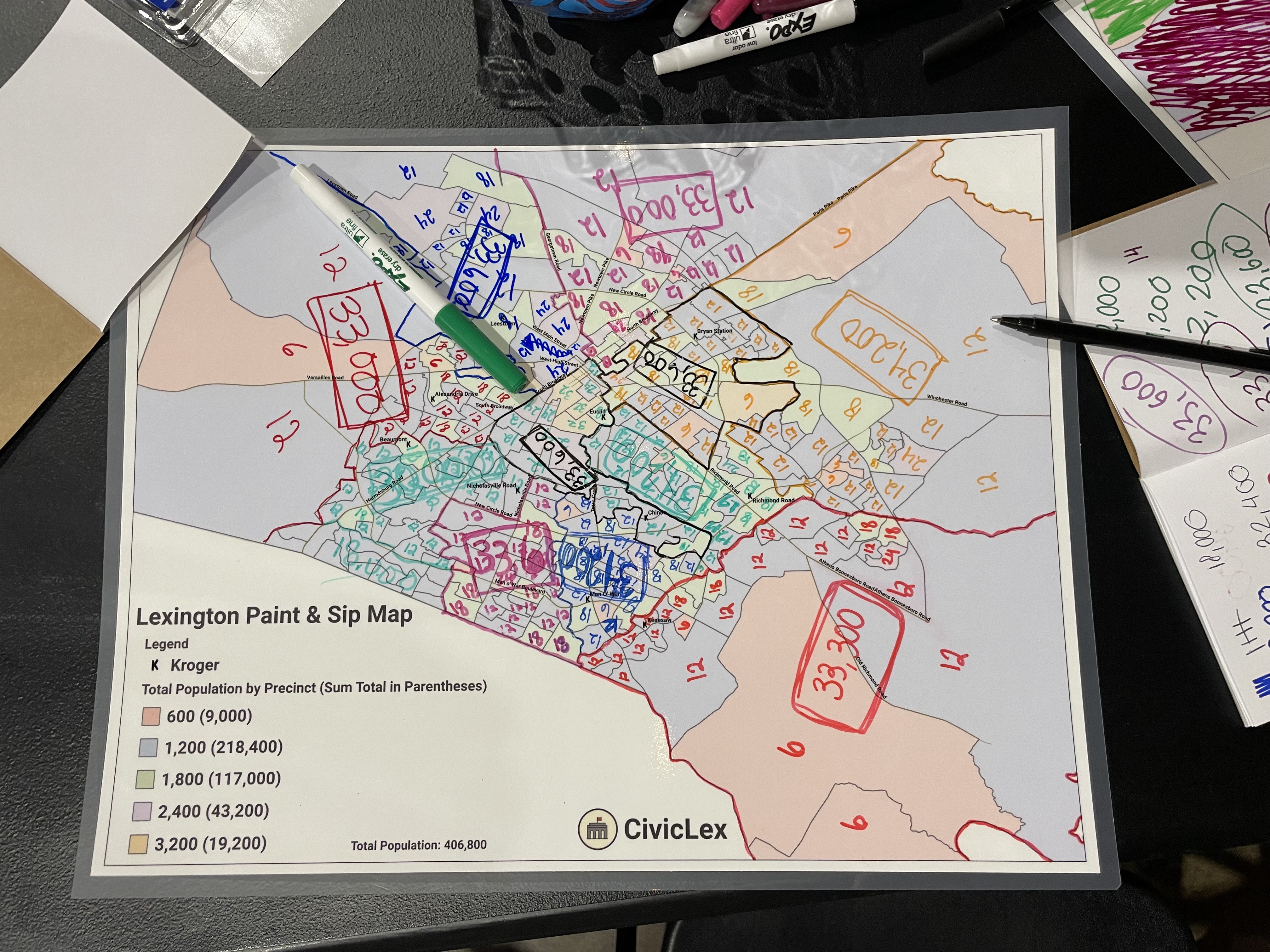
Image courtesy of CivicLex / https://www.civiclex.org/
Introduction
Collaborative governance—or “co-governance”—offers a model for shifting power to ordinary people and re-building their trust in government. Co-governance models break down the boundaries between people inside and outside government, allowing community residents and elected officials to work together to design policy and share decision-making power. Cities around the world are experimenting with new forms of co-governance, from New York City’s participatory budgeting process to Paris’s adoption of a permanent Citizen Assembly. More than a one-off transaction or call for public input, successful models of co-governance empower everyday people to participate in the political process in an ongoing way. Co-governance has the potential to revitalize civic engagement, create more responsive and equitable structures for governing, and build channels for Black, brown, rural, and tribal communities to impact policy-making.
Still, co-governance models are not without challenges. The hierarchical and ineffective nature of our current governing structure is difficult to transform. Effective collaboration between communities and politicians requires building lasting relationships that overcome deep distrust in government. So far, successful models of co-governance tend to be local and community-specific—making it critical that we share stories of success and brainstorm ways to scale.
In this series, we share stories of co-governance in practice. For this interview, New America’s Hollie Russon Gilman and Lizbeth Lucero spoke with Richard Young, the executive director of CivicLex, an organization in Lexington, Ky. that builds civic health through education, civic transformation, and relationship building. Here are edited excerpts from our conversation about Young’s vision for Lexington residents to meaningfully participate in the decisions that shape where they live.
Q&A with Richard Young, Executive Director of CivicLex
Could you tell us more about the work you’ve been doing at CivicLex and how you’ve engaged with local communities to build civic power?
New America’s work on co-governance is essentially our entire mission at CivicLex. Our organization brings community members into direct relationships with people in positions of political power in order to move our city towards a more participatory local democracy. Relationship building is central to what we do, and we have different types of work that blend into each other.
The first type is adult civic education, which is focused on helping residents understand how policy gets created. When people don't understand the important issues that are going through city government, they are much less likely to be engaged. One of the ways we operate is essentially as a local news outlet, keeping people up to date on what's happening inside City Hall, in committees, and at various levels of government. We conduct in-person educational workshops to help people understand everything from the budgeting process to local redistricting. All of these are done with a focus on relationship building and creativity to bring together local residents and people inside city government.
For example, we used a creative lens to conduct our redistricting work and hosted a redistricting paint-and-sip workshop at a local brewery. Residents were able to paint their own redistricting process while following the official redistricting rules. What’s really important is that the workshops also had members of the redistricting commission, GIS analysts, and people from different departments in city government who influence the redistricting process. They were not necessarily there to say, “This is how it's done,” but to see and hear how people were reacting to the process, learn from people's experiences, and use the workshop as an opportunity to make informed policy decisions.
We do the same thing with the city’s budgeting process, bringing people from the city’s revenue, finance, and budgeting departments together to help residents better understand the process and build human relationships. In a mid-size city like Lexington, we can start to build authentic relationships. And it's vital, especially for people that are in marginalized communities, to have access to these relationships with decision-makers in a way that is typically not available to a lot of people.
Another type of work we do is civic transformation projects, which are focused on altering how our city government functions in order to make it more participatory. For example, we are working with our city council to change its formal meeting structure. We led a big participatory process, interviewing a thousand people across the city on how they engage with city government. We asked what it would look like to change the legislative process so that the public can provide input earlier in the process, at a point when it can make a difference as opposed to during the final council meeting when things are simply getting approved. We took that feedback and worked with residents and the city government to develop a set of recommendations that are now being considered by the city council.
We also just wrapped up a civic artists-in-residence program, where three artists were embedded in city government, focusing on the ways in which different departments engage the public, telling their stories about what it's like to work in city government, and showing how city government functions on a very human level.
We recently launched a new project with a community gardening organization and the city’s planning and parks departments to train local residents on how to advocate for policy change. The hope is that in a year, we will have thirty to forty people who know when, where, and how to show up to public meetings and advocate for policies related to public space, green space, and connectivity in collaboration with city staff. An important distinction for us is that we're not trying to direct what policies change. We're trying to open the door to having more people involved in policymaking.
How do you build trust with community members, especially with traditionally marginalized communities or people who are skeptical about the role of government?
To create trust, we start with being vulnerable, showing up in spaces when we’re welcomed, and building relationships over time. I've been doing community development and civic engagement work for a decade in my city. I have a lot of relationships and people who trust me and this organization.
It also really matters who's in the room when we're building these programs. We generally have around 100 [people] involved in the decision-making of our organization. The boards for our civic transformation projects are generally made up of about fifty percent community members and fifty percent city staff, which creates a lot of opportunities for people to connect and understand things on a different level.
We also do not take positions on various issues, like those raised in upcoming bills. This practice has gotten us a lot of buy-in across the political spectrum and is really important for navigating a political climate. And at the local level, people don’t fall neatly into partisan lines when it comes to things like potholes, parks, housing, jobs, and transportation. We also have the added benefit of a nonpartisan local government – which means candidates do not run on political party affiliation. This is essential to how well our city functions.
Non-partisan local elections are really unique to city government. Can you explain how the non-partisan nature of your local elections impacts local governance?
Many local governments use non-partisan elections, but we are also a unique city in a lot of other ways. We are a consolidated city-county government, which makes our work very easy compared to working in a place where there's a county government in addition to five different city governments. We are also a city that is open to thinking a little bit differently about local governance. While Lexington is a unique place, other communities could absolutely learn from our experience developing civic engagement projects.
You mentioned facilitated workshops. Who is moderating those events?
One of my staff members or I will facilitate, or we will partner with a community organization. Our philosophy on facilitation really comes out of the Kentucky Rural-Urban Exchange, a statewide leadership initiative and cultural organizing space that's very different from political organizing. It has been incredibly influential for our organization to learn that place is more important than ideology. Processes that allow us to ground conversations in place, even the small conversations before a meeting, are really important to us. Talking about everyone’s favorite places to go in Lexington, asking how people’s kids are doing at the local school—we are very intentional about including those important chit-chats in our daily work.
If you were talking to other city leaders or government officials, what are the top lessons you’d share about your work at CivicLex?
A couple of things. I don't really know if the work that we're doing could be done in a city that's larger than ours at the scale on which we're doing it. I have a really deep interest in cities the size of Lexington and smaller, and the possibility for this work to be done there. But when I think about New York, how do you even scale? Building authentic relationships and a concept of place in a city like New York is challenging for me to think about. The human scale aspect really drives what we do because relationships are key—it’s how political change happens.
There are organizations very similar to us that focus on transparency and that's great, but transparency without relationships, without a broad-based understanding of civic knowledge, without understanding how it all works, and without agency is pointless. For me, all of those things have to be done in tandem.
Relationship-based interventions must be grounded in a common understanding of civic issues and truthful, factual information while also recognizing that people have emotional reactions to these topics. For us, it's really about making sure all the components fit together in a cohesive unit, to the point where we would rather not have people engage than have people engage and be disappointed.
How did you all engage with community members during COVID and how are you tracking data in your engagement efforts?
During COVID, we facilitated virtual conversations with people from different sectors, including the health department, about how COVID was impacting them professionally and personally. We then started organizing outdoor meetings in parks and ultimately started hosting in-person workshops again with masks. We did workshops around ARPA funding and pushed the city into meeting us halfway for a participatory budgeting process.
A topic we have been focusing on internally is data tracking. How do we ethically track the success of our work? Early on, we built a database that tracked individuals’ program participation, but because of ethical concerns, we shifted our focus away from individuals and toward specific areas and geographies. We also check in with council members to see whether they are getting more feedback on a particular issue.
About four months ago, we worked with our city’s Division of Planning to run the public input process for the update to Lexington’s comprehensive plan. From conversations with residents and accompanying surveys, we were able to capture well over 10,000 public comments on different issues across the topics covered in the comprehensive plan. We tracked geography down to the neighborhood cluster level so we could track how different areas engaged with different issues over time. Moving forward, we want to use this neighborhood cluster framework to measure our success in engaging specific geographies, because many things that happen in Lexington are place-based and neighborhood-based instead of citywide.
Are there other organizations with similar models that you know of doing work in civic engagement and power building?
There are not many organizations like us, which is really puzzling. I have a hard time finding them—I find different elements in different organizations in different places, but it is challenging to find other folks to share with and learn from. More place-based organizations that solely focus on building a healthy and informed civic fabric in a community are desperately needed.
Smaller places are what will determine the political future of this country. So we need to really focus on the civic health of our small towns, small cities, rural communities, and tribal areas.
The culture of all of our local civic fabrics creates our national political culture. Most people think about it the other way around, but that's just because we're so underinvested in the local, that the national dominates. If we invested more energy, money, and time into the local, then we would be able to make real progress on the challenges that we're seeing. The level of alarm about our country’s civic culture is pretty high, but it is not high enough, particularly for smaller or rural communities. We owe it to people around the world to actually get our houses in order. To that end, we’re currently looking at ways to adapt our model to other communities. We’re starting with communities in Kentucky but are interested in places outside of here as well.
Are there any additional civic engagement models that you know about?
Yes. I think about the work Appalshop’s Letcher County Culture Hub is doing and has done, particularly within the cultural space. The Kentucky Rural-Urban Exchange and the new one that just launched in Minnesota are doing some really fantastic work. I want to emphasize that building a national network of organizations doing that work is something that's really desperately needed.
One of my very favorite organizations is in Denver, called Warm Cookies of the Revolution. They were a big inspiration for me when I started CivicLex. I am also thinking of the Department of Public Transformation, which does a lot of this work through arts and culture.
Planting the Seeds for Movement Building (Deborah Scott of Georgia STAND-UP)
Planting the Seeds for Movement Building: An Interview with Deborah Scott of Georgia STAND-UP
Introduction
Collaborative governance—or “co-governance"—offers a model for shifting power to ordinary people and re-building their trust in government. Co-governance models break down the boundaries between people inside and outside government, allowing community residents and elected officials to work together to design policy and share decision-making power. Cities around the world are experimenting with new forms of co-governance, from New York City’s participatory budgeting process to Paris’s adoption of a permanent Citizen Assembly. More than a one-off transaction or call for public input, successful models of co-governance empower everyday people to participate in the political process in an ongoing way. Co-governance has the potential to revitalize civic engagement, create more responsive and equitable structures for governing, and build channels for Black, brown, rural, and tribal communities to impact policy-making.
Still, co-governance models are not without challenges. The hierarchical and ineffective nature of our current governing structure is difficult to transform. Effective collaboration between communities and politicians requires building lasting relationships that overcome deep distrust in government. So far, successful models of co-governance tend to be local and community-specific—making it critical that we share stories of success and brainstorm ways to scale.
New America’s Jessica Tang, Grace Levin, and Lizbeth Lucero spoke with Deborah Scott, CEO of Georgia STAND-UP, a “think and act tank” for working families that is part of the PowerSwitch Action network, and its 501(c)(4) organization, We Vote. We Win. Scott is a lifelong advocate of economic inclusion, community empowerment, and progressive civic engagement. In this interview, which has been edited and condensed, Scott discusses how Georgia STAND-UP builds civic power, educates voters, and develops leaders.
Q&A with Deborah Scott, CEO of Georgia STAND-UP
Can you talk about how Georgia STAND-UP builds civic power, particularly among communities that have been disproportionately impacted by systemic disparities?
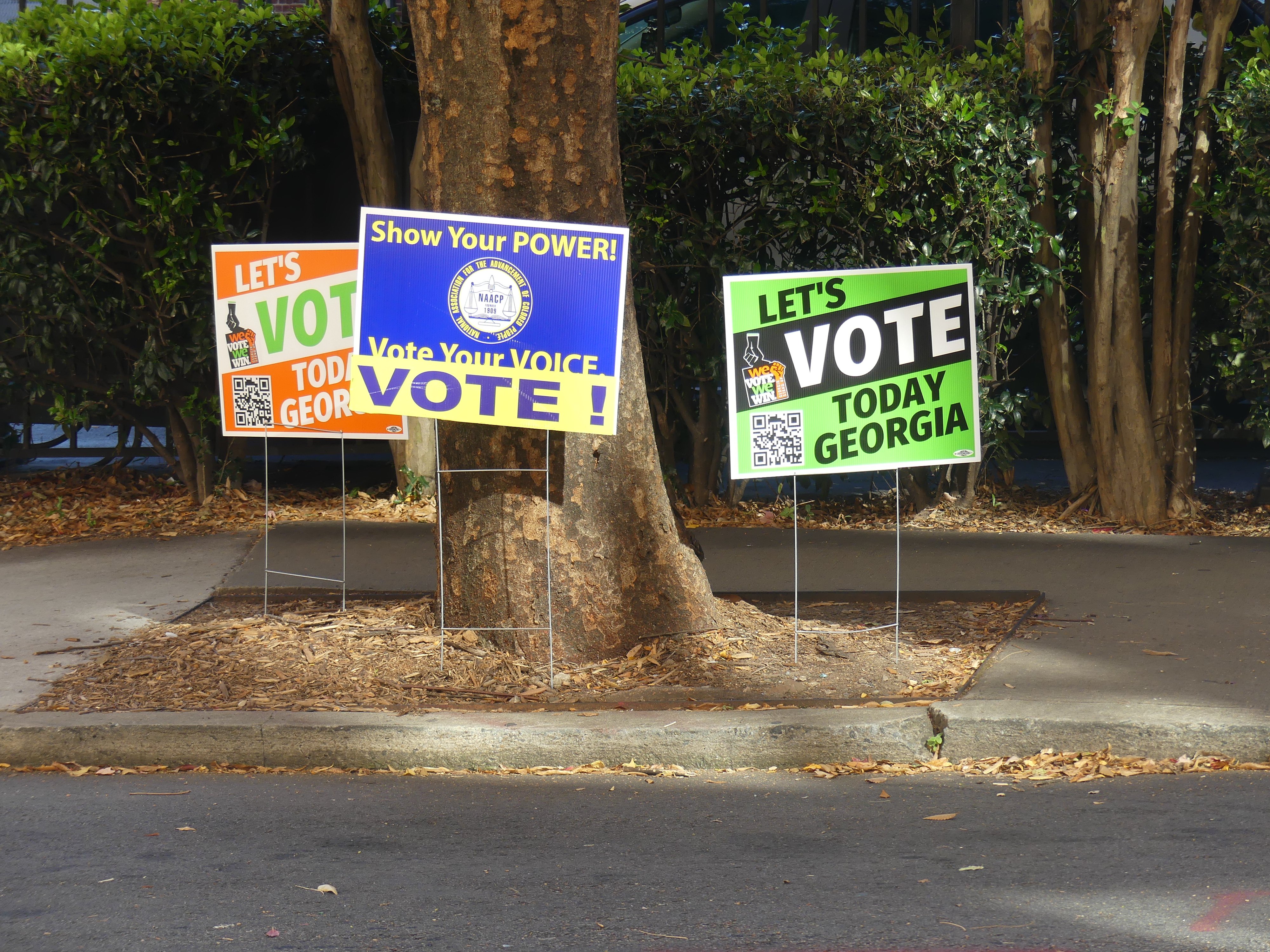
Georgia STAND-UP aims to equalize the playing field by giving community members the tools they need to gain access to power. We provide the civic infrastructure to compensate for the lack of civic education. Our literature aims to provide information covering key questions, such as: What is the role of the Governor’s Office? What responsibilities does the Secretary of State have? We do this throughout the entire ballot so that people really know who and what is on the ballot each year.
We have learned that a lot of people do not vote all the way down the ballot because they feel uninformed about the races and offices listed on the ballot. We are aiming to eliminate this barrier by giving people information early in the process so they feel confident at the polling booth.
When we engage with our community members and design outreach strategies, we really focus on two different key constituents and think about their interests and needs. The first is someone like Mrs. Jackson, who may be a grandmother now in a caregiving role raising her grandchild and who may not be as engaged on social media. This older Black woman is the base of the progressive voters here in Georgia. The other key constituent we focus on is someone like Ms. Johnson, a young mother who is trying to get an education, seeking access to childcare or a better job. We figured if we center our work around these women who are between ages 18 and 80 and the communities that they represent, we will reach the core of who we are trying to impact, the issues they care about, and the resources they need. It starts with voter education on where the election is, when the election is taking place, and why it’s important to vote now and in the long run.
We connect kitchen table issues to what's at stake on the ballot and what's happening in the economy. We try to translate policies in a way that is relatable and concrete. In our work, we really center people and build trust by acknowledging the work that’s already happening in the community. So our first call starts with a thank you and a check-in, asking residents, “How are you doing? How are things at home? Do you need any mutual aid support?” And then we talk about everyday issues that are affecting them. If we show up as an outside organization, instead of neighbors, we'll lose their interest. At STAND-UP, we strengthen the civic infrastructure of the trusted leaders that are already in the community.
We also run a leadership development program, which is our policy institute, where we work hand-in-hand with community leaders and activists already embedded in the community, who might not realize their own power to effect change. At our policy institute, we usually have 20 students in a class to discuss topics on race, class, and politics in the southern region. We focus on how development decisions get made and why we need community leaders involved throughout the decision-making process. That way, when we advocate to city and state elected officials, our community representatives are well-informed about what’s happening at different levels of government.
How do you discuss kitchen topic issues at the policy level?
Because we're located in the Bible Belt, our kitchen table conversations will sometimes vary to reflect the makeup of our residents. For instance, when we talk about reproductive justice, we might not use the same framing that other communities use—however, we know our community members can all agree on the need to access safe and affordable healthcare. This election season, we have really been focused on Medicaid expansion. In our state, the Governor gets to decide whether we expand Medicaid or not, which has made it even more critical for us to do voter outreach.
This campaign season, we also produced an Orange Book, which informs our residents where to get free voter IDs. Just like how the Negro Motorist Green Book provided travelers with information on which businesses would serve them during the Jim Crow era, our Orange Book provides residents the names of offices and people they can contact to access a free ID to vote in this midterm election.
Our other literature includes information on where people, including those with a criminal record, can go to register to vote, request an absentee ballot, or get free rides to the polls. Most importantly, we’re not telling them who to vote for but are showing them what’s at stake and why it’s worth waiting in line for six, seven, eight, or nine hours. The state of our democracy is too vulnerable not to show up to the polls.
How do you build trust in communities given the high level of distrust in government?
Trust is important in all of this, especially because we’re based in a state that suppresses votes. Having organizations on the ground that are already trusted by communities is critical. We are a part of a network called ProGeorgia, which is part of the State Voices Family and comprises about 40 different nonprofits. In this network, we come together and decide how to most effectively allocate time for voter registration, phone banking, canvassing, social media outreach, newsletter, and rallying. We share information and find ways to collaborate. We continuously support each other by organizing joint fundraising events and sharing data and tools, such as the Voter Action Network, to track our outreach efforts.
In the city of Atlanta, we've had 40 years of Black elected officials. They understand the importance of partnering with nonprofits like ours. This administration has really opened up its doors to collaborate on voter registration. They're welcoming us to do voter registration at the recreation centers and at city hall. This is especially important in our current state of democracy. We have to work together to mobilize change.
Do you think Georgia STAND-UP’s model could be replicated in different parts of the county?
One of the great things about Georgia STAND-UP is that we are a think-and-act tank for working communities and organizations. To that end, we use lessons from our work to teach others how to replicate and apply them in their communities. Not only does this build our network, but it grows the movement.
We have groups coming down all the time to learn how to canvass, phone bank, run a policy institute or leadership development program, and how to show up for their communities. Launching this kind of work from the ground up really starts with hiring the right people to run the programs and training staff and volunteers to understand the value of building trust with community members.
I have also learned that we need to empower young people, particularly those ages 18 to 35. We have to be open to new techniques and new ways of thinking about organizing by letting young folks lead in the spaces that they know best. First, we have to teach young people the value of organizing. We use the Civil Right Movement to highlight how strategic action and organizing can lead to change. Rosa Parks, for example, didn't just happen to be tired one day and decide to sit down in the “white" section of the bus. As Secretary of the Montgomery chapter of the NAACP, she pursued a strategic act of civil disobedience that she had learned at the Highlander Folk School, now known as the Highlander Research and Education Center.
Because of the role that Georgia played in this last election and the way in which we turned out, people are really curious about what we were able to do here. It was really about organizations coming together, registering people to vote, getting them out to vote, registering more people to vote, getting them active, and getting them engaged, long-term. We focus on strategy, organizing, mobilizing, and activism, and then we rinse and repeat.
Can you talk more about the Policy Institute for Civic Leadership Work?
Over the last 18 years, we’ve helped train over 400 leaders with thought leaders in academic institutions such as the Atlanta University Center, Georgia Tech, Georgia State, and Emory University. They teach in a way that is more community-friendly by incorporating more storytelling and information sharing. We discuss issues and specific campaigns that are happening within the community, and we try to embed those into the Policy Institute to brainstorm project ideas.
Currently, we’re focusing on more grassroots efforts related to issues that are happening in real-time. We are currently planning ahead for the 2026 FIFA World Cup that is scheduled to take place in Atlanta. As with the Olympics in Atlanta in 1996, we anticipate a lot of displaced Atlantans from neighborhoods and public housing as well as the illegal arrest of thousands more if we don’t prepare accordingly. The City of Atlanta has historically disinvested in the infrastructure of Black communities. For example, we are currently finishing up a campaign that has been going on for ten years in Peoplestown, which has continuously experienced flooding due to inadequate sewer lines and highway expansion. The city attempted to redevelop the infrastructure by building a retention pond to protect the neighborhood from massive floods, but it failed to tell people they would be displaced in the process. As a result, twenty-four families moved away, with less than $300,000 paid for their homes. Ten families resisted this inequitable process and refused to move. We have actively supported their position to stay in their homes. Finally, under Mayor Dickens, some cases have been settled, with two families receiving $1.9 million and one family receiving $1.4 million in litigation settlements.
Our organization is not a transactional organization. One thing I learned is that if you're not at the table, you're on the menu. Our efforts are going to teach our communities how to eat, how to bring food to the menu, to the buffet, and how to hold open the door and bring others along.
How are you working with different stakeholders?
One of the best examples I can give is our Clayton County Transit campaign. Clayton County is home to one of the busiest airports in the world and houses a large population of working-class families. When the City of Atlanta took down the housing projects, some of the only affordable housing remaining was located in Clayton County; we needed to new push for new forms of transportation. In 2014, we formed a community coalition to expand our city bus system. Over the course of a couple of years, we grew the campaign beyond community residents because, as we know, multiple stakeholders benefit from increased public transportation. We made the campaign appeal to the city government, homeowners, and businesses. Sure enough, the ballot measure passed in November. Within three months, we rode that first bus and helped install new bus stops throughout the county.
Specifically for NGOs and nonprofits, I think their role is to work with government in partnership but also to hold government accountable. We can't alienate either group entirely. We have to continue working cooperatively with public agencies, nonprofit organizations, and other entities, even when there’s not a big fight, in pursuit of a collaborative model.
Is there anything else that we're leaving out that you want to make sure we include in this piece?
Saving democracy is hard, but it's necessary and needs to be funded. We have to pay people for the work—this is not a volunteer campaign. The more money we raise, the better wages we can offer. In this sense, democracy is not free.
I'm also very excited about this next generation of advocates. We have already seen how this generation organizes electronically and through social media, and the reach we can generate. I believe in our young people and at some point, I can retire. In the meantime, I still have work to do.
Winning Paid Family Leave in Delaware (Liz Richards of Delaware Cares)
Winning Paid Family Leave in Delaware: An Interview with Liz Richards of Delaware Cares
Introduction
Collaborative governance—or “co-governance”—offers a model for shifting power to ordinary people and re-building their trust in government. Co-governance models break down the boundaries between people inside and outside government, allowing community residents and elected officials to work together to design policy and share decision-making power. Cities around the world are experimenting with new forms of co-governance, from New York City’s participatory budgeting process to Paris’s adoption of a permanent Citizen Assembly. More than a one-off transaction or call for public input, successful models of co-governance empower everyday people to participate in the political process in an ongoing way. Co-governance has the potential to revitalize civic engagement, create more responsive and equitable structures for governing, and build channels for Black, brown, rural, and tribal communities to impact policy-making.
Still, co-governance models are not without challenges. The hierarchical and ineffective nature of our current governing structure is difficult to transform. Effective collaboration between communities and politicians requires building lasting relationships that overcome deep distrust in government. So far, successful models of co-governance tend to be local and community-specific—making it critical that we share stories of success and brainstorm ways to scale.
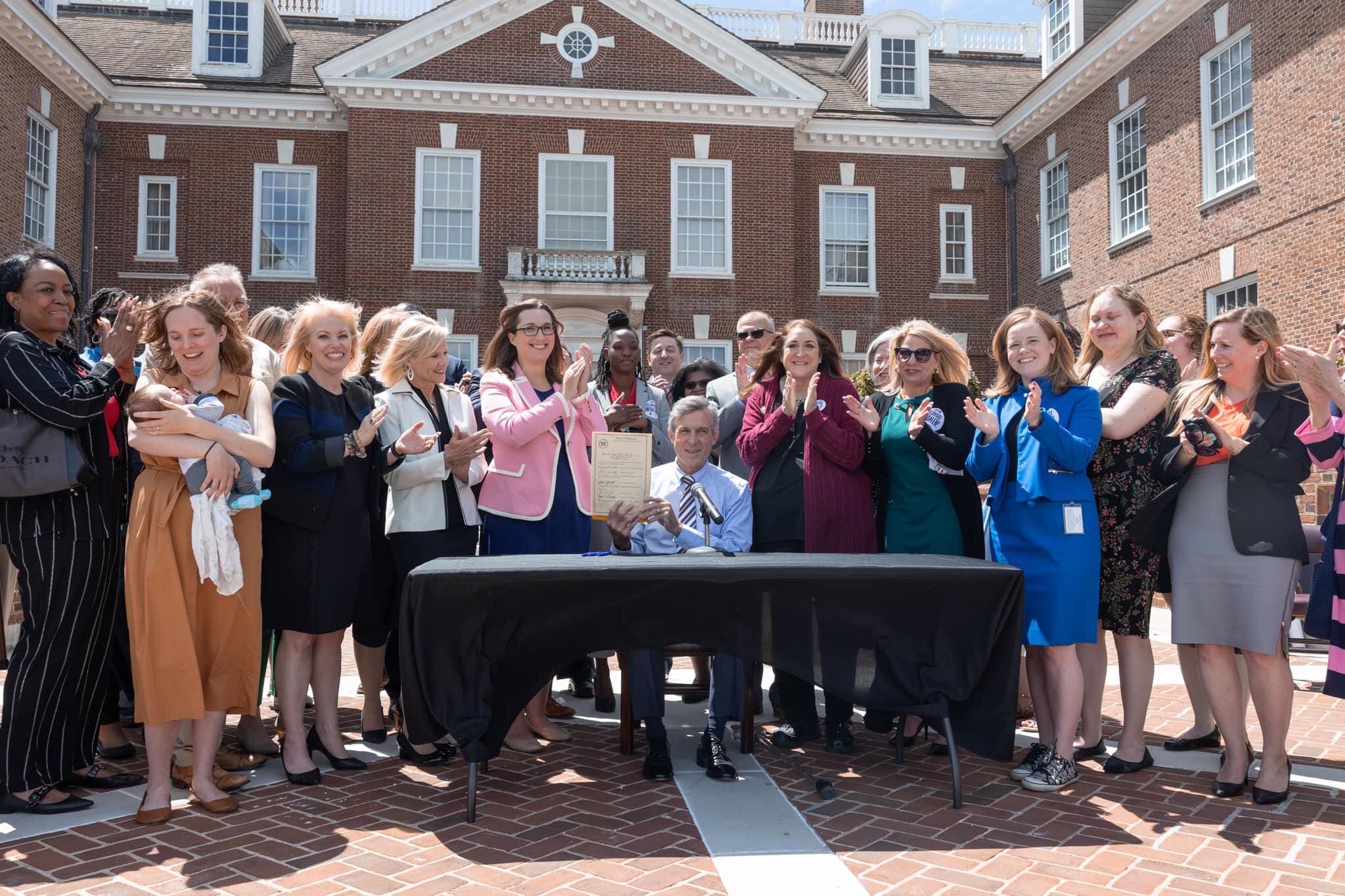
New America’s Hollie Russon Gilman and Lizbeth Lucero sat down with Liz Richards, executive director of the Delaware Cares Coalition for Paid Leave and a leading expert in passing state paid leave policies. In 2017, Liz managed the successful campaign to pass Maryland’s landmark paid sick days law, achieving veto-proof majorities in both chambers. She has since returned to her home state of Delaware, where she helped pass the Healthy Delaware Families Act in 2022. We talked about how she planted the seeds for the bill, formed a coalition from the ground up, and elevated people-power along the way.
Q&A with Liz Richards, Executive Director of Delaware Cares
Could you walk us through your strategy to pass the Healthy Delaware Families Act?
I knew we needed both inside and outside support for a large bill. The bill would involve major changes, people’s pocketbooks, and strong opposition from the political [world] and parts of the business community. While some bills are smaller, such that a legislator can almost single-handedly explain the issue to their caucuses, get the votes, and get it done quietly, this bill needed more than an inside strategy to pass.
When I returned to Delaware, my home state, I knew that a number of recently elected and existing legislators had been talking about paid family medical leave but had yet to introduce it. When we started organizing at the end of 2020 and the beginning of 2021, paid family leave was not considered a serious, immediate priority in either chamber. So I asked Senator McBride, who was, at that point, already the bill’s lead sponsor with Representative Debra Heffernan, “Are there any organized groups pushing this bill forward?” Frankly, this didn’t exist yet.
I talked with different organizations, starting with ones that were interested in economic justice. We branched out from Delaware United and Network Delaware, two progressive groups that had a lot of grassroots energy and knew a network of other organizations. I reached out to every organization that might be aligned with us on this issue and said, “If enough of us band together, we can put this on the agenda in a big way. It won’t be something that lawmakers only like in concept, but an issue they will take seriously.”
Once core advocacy groups were on board, we reached out to faith organizations. We reached out to labor, the Delaware Nurses Association, National Coalition of 100 Black Women, and Black Mothers in Power. To that end, organizing for the bill was no longer framed as, “if you want this to happen, then you have to make it happen.” Now, the pitch was, “if you care about this, we're going to push with you to move it ahead.”
By February 2021, we had a coalition of twenty-five groups and good media exposure. After the next several months, we grew to fifty groups, continuing to engage proactively and talk about the issue. Eventually, groups began to approach us, like the Alzheimer's Association and Prevent Child Abuse Delaware, and then heavy hitters, like the American Association of Retired Persons, got engaged. Our coalition-building efforts had a massive snowball effect.
At the same time, we didn’t have the resources, beyond forming a coalition, to do large-scale outreach, like making phone calls to grassroots voters. So when anyone who cared about the issue contacted us, regardless of whether they were affiliated with an organization, we brought them into the fold. Some wrote blog posts, and many others just wanted to tell their story, which we adapted for social media.
Ernesta Coursey is a great example, and her story was featured in the press. She was a hairstylist for many years and had to save tips for nine months just to take a couple of unpaid weeks off when she had kids. When I met Ernesta, she was studying public policy and getting her Bachelor’s degree. She frequently used us as a platform to make incredible speeches, becoming an advocate and now a major community leader. She wants to continue advocating on other issues that matter to her. So the opportunity for people to share their stories and use their voices to effect change has been critical to our campaign.
What does external and internal power mean to you in your work on paid family leave?
Before paid leave was on the agenda in Delaware in a real way, several organizers, including political outsiders, ran for office and won in 2020. Prior to 2020, many people on the "inside" making policy decisions talked very little about how paid leave was personal to them and their constituents. Since then, the bill's lead sponsors and other legislators have openly shared their personal connections to the importance of passing this bill. They essentially became the lead inside advocates, which was critical because there was no money on the coalition side to have a hired lobbyist. Our job from the outside, then, became to build excitement, apply pressure, and leverage our power. As a small state, we had an advantage in that we had less ground to cover in the legislature than a larger state would, but we also had fewer resources.
How were you able to find community leaders like Ernesta who are willing to speak publicly about their personal experiences?
Once we had a coalition of twenty-five organizations, which was significant enough for the press to latch onto, we did a launch event and an op-ed that was published in the Delaware News Journal. I reached out to Councilwoman Shané Darby, founder of Black Mothers in Power, who was really well-connected to mothers with personal experience regarding the lack of paid leave. Shané introduced me to several women with whom I had conversations that usually lasted around 45 minutes. I took notes on the key details of the stories of these women, then wrote up paragraph-length summaries to send back to them to see if they accurately reflected their experiences. With their approval, I put the stories on social media. We tried to make it as easy as possible for people to tell their stories and participate because that’s often a barrier for people. Sometimes, it’s easier for people to explain what happened and have someone else write it down. Working parents are powerful advocates, but they are also incredibly busy!
Were there any national conversations that helped elevate your strategy for getting this bill passed?
We had a goal to get this bill passed during the small window of time before redistricting changed the makeup of the Delaware legislature. We had a supermajority in both chambers, which was needed to pass paid leave because of its taxation implications. Even though we didn’t succeed in 2021, we used that summer to advocate for the federal Build Back Better bill while our legislature was out of session, especially since we were the home state of President Joe Biden. We sent handwritten letters, with all of our signatories, to our congressional delegation and to the President. And Build Back Better ended up elevating paid leave to another level. I remember a specific New York Times graphic that fueled a national conversation on social media on how the United States is one of six countries that doesn't have paid leave. There was a TikTok about a woman from Pennsylvania who was crying because she had a baby in the NICU and needed to be at work to save her paid leave for when her baby got out of the NICU. The paid leave portion of Build Back Better was not enacted into law, but after the national exposure we received, we went back into the legislative session with an intense fire in the belly to pass paid leave in the First State.
What are the key lessons that people can take away from your paid family leave advocacy efforts?
Stories are very important. Connecting on a personal level helps illuminate the policy issue. That’s just generally good advocacy.
Another thing is that you have to meet people where they are in terms of their life experiences, but also meet the legislators where they are and consider their concerns. During the first part of our campaign, which was during a deadly period of the pandemic, we framed the paid leave campaign as a solution to some of the major issues we were seeing during the pandemic. It helped working parents, particularly women who bore the brunt of pandemic job losses, balance work, and family—and enabled them to stay in the workforce.
Once the national labor shortage began to eclipse the pandemic in political consciousness, we spent a lot of time focusing on paid leave as an employee retention strategy—that people will stay in their jobs if they are able to take time off and come back instead of quitting. As inflation really started to take off and the labor market became strained, the biggest pushback against paid leave was that absences couldn’t be permitted. Having people out of work was not an attractive option, and we stressed that paid leave was part of the solution.
So we were really serious about that message discipline. We talked with both legislators and the public about the issues they cared most about. We targeted messaging to the State House around the economics of paid leave and why it makes smart business sense, while still approaching the public about the need for people to take care of their families and keep their jobs. And the polling we did at the very end showed that the message—that people shouldn’t have to choose between their jobs and families—resonated across parties, with Democrats, Republicans, and independents.
Now that the Healthy Delaware Families Act has been passed, what are some of the next steps? Are you thinking of applying what you’ve done to other states?
What we did can absolutely apply across states. I was operating from an existing playbook of lessons that I learned in Maryland and applied them here in Delaware. In terms of what's next for Delaware and Delaware Cares, we sent a survey to our members asking that exact question. There are a few options. We could focus on new issues like childcare or workplace justice. Or we could focus on implementation and education about paid family medical leave and stay on that issue. We’re going to be thinking about this and other major issues impacting everyday people for the next several months.
Building a Movement of Women and BIPOC Leadership (Sarah Johnson of Local Progress)
Building a Movement of Women and BIPOC Leadership: An Interview with Sarah Johnson of Local Progress
Introduction
Collaborative governance—or “co-governance”—offers a model for shifting power to ordinary people and re-building their trust in government. Co-governance models break down the boundaries between people inside and outside government, allowing community residents and elected officials to work together to design policy and share decision-making power. Cities around the world are experimenting with new forms of co-governance, from New York City’s participatory budgeting process to Paris’s adoption of a permanent Citizen Assembly. More than a one-off transaction or call for public input, successful models of co-governance empower everyday people to participate in the political process in an ongoing way. Co-governance has the potential to revitalize civic engagement, create more responsive and equitable structures for governing, and build channels for Black, brown, rural, and tribal communities to impact policy-making.
Still, co-governance models are not without challenges. The hierarchical and ineffective nature of our current governing structure is difficult to transform. Effective collaboration between communities and politicians requires building lasting relationships that overcome deep distrust in government. So far, successful models of co-governance tend to be local and community-specific—making it critical that we share stories of success and brainstorm ways to scale.
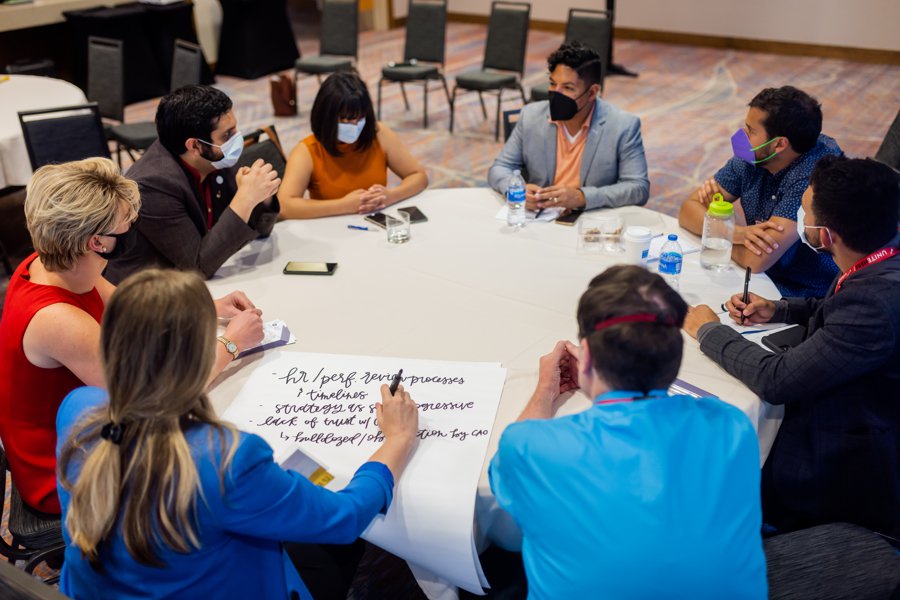
New America’s Hollie Russon Gilman and Lizbeth Lucero spoke with Sarah Johnson, executive director of Local Progress, a non-profit organization that works with local elected officials to build power for underrepresented communities at the local level. We talked about the growing leadership of women and people of color across the country, Local Progress’s approach to organizing in suburban and rural areas, and why relationships are so important to building power. The interview has been edited and condensed.
Q&A with Sarah Johnson, Executive Director of Local Progress
How are you thinking about building civic power at this moment, especially with communities disproportionately impacted by systemic inequality?
Local Progress is a national network of 1,300 elected officials at the city, county, and school board levels working to advance racial and economic justice. We are in the midst of a tremendous sea change in who governs our communities at the local level. We are seeing historic waves of folks elected as the first woman or person of color to hold office in their communities. When we held our national convening of members this summer, we asked the elected officials, “What’s your vision for this political movement in ten years?” Gabriela Santiago Romero—a community organizer from We The People of Michigan who was elected to the Detroit City Council—envisioned that, in ten years, we no longer celebrate “firsts” because underrepresented communities will soon become the governing majority. She noted that even at the local level, the demographics of elected representation have significantly fallen short of a truly reflective democracy.
Our work at Local Progress is deeply centered on the leadership of women and people of color moving into governing roles. Over half of our active members are women and over half are people of color, which is not what you find in local elected bodies writ large. A big part of our mission is focused on how to help folks who are coming from communities disproportionately impacted by systemic disparities move into leadership positions. We also focus on working with elected officials to engage and center the people most impacted by governing decisions made in the policymaking process. The core of our theory of change is to move beyond a version of civic engagement that re-establishes existing status hierarchies and towards a model of engagement that builds civic power. Both representation and civic engagement need to be enhanced if we are going to fundamentally change how we govern in this country.
How do we highlight what is working and also the limitations that exist for people who are trying to build power in their communities?
I think one of the areas the broader progressive movement is not paying enough attention to is how to capture the changing demographics of suburban areas and small towns, including how to leverage civic power and accountability in these places.
We had an amazing panel at our conference about how city management is often a very challenging system for elected officials and community members to have a real democratic impact because power is often consolidated within individual people. Eddy Morales, a Local Progress board member and City Council President in Gresham, Ore., shared about the demographic shift in his community, which became close to majority people of color. But the entire City Council at the time was white, and the whole city enterprise was essentially an old-guard establishment. Eddy ran for City Council and won, unseating the long-term incumbent City Council president. He also helped run a slate of candidates both in Gresham and the broader Portland metro area to change who was at the table for different municipalities and school boards. He instituted a management system to figure out how to move the city bureaucracy to be more accountable to the elected officials. This move involved a culture shift and created greater oversight focused on the role of the city manager, which is primarily HR and implementation of the work plan established by the City Council. Above all, he found new ways to exercise the levers of power and accountability now available to him as an elected official. It can be easy for newly elected officials to see the things that are out of their control and feel discouraged, but they can use levers like appointments and oversight to build new systems of power for communities.
I think suburbs and smaller towns are challenging but also fertile places for innovation and progress. It’s a very different thing to try and reimagine public safety in a small town with a police department of 40 officers than it is in a larger city with 7,000 officers. There is a lot that becomes possible in places that are smaller where people can organize, build power, and bring communities into the process. The progressive movement too often ignores these places, which do present challenges but also significant opportunities.
Are there any lessons you’ve learned from efforts with smaller communities?
A lot of political and narrative work in this country holds big cities as progressive outliers. But we have found from our organizing that people are fighting for a better future everywhere. They want to be part of something bigger, and they don’t want to be doing it alone. In the weeks following the Supreme Court decision that overturned Roe v. Wade, we saw half a dozen municipalities in Texas pass the GRACE Act, a law that says city funds shouldn’t be used to investigate reports on abortion and the local police should make investigation a low priority. This passed in places you might expect, like Austin, San Antonio, and Dallas, but also in places like Denton, Texas. Denton was actually the first municipality to pass the act, with a local council member leading the initiative. We also introduced it in El Paso and in Waco, where it failed but there is momentum to push for it again. But the main lesson here is that we need to have these fights everywhere and anywhere across the country—even in areas where we think we might not win. We use these fights to build power and resist the ways in which broader culture wars make assumptions about where progress can and can’t happen.
I’ve also been thinking a lot about the local level in relation to the federal level at the current political moment. Obviously, we should be fighting for change at the federal level. Winning at the national scale has an enormous impact and unlocks the ability for states and localities to do so much more. But localities are particularly important at this moment when we might be able to eke out incremental wins in local communities, even if we are structurally disempowered at the federal level. Let’s control the institutions we can control and then use all of their power to build some semblance of inclusive, multiracial, democratic participation—and fight for state and federal power.
What are the changing roles of cities and civic engagement in places like Orlando or Kingston or Saint Paul?
I started at Local Progress in 2015 and it was an emerging time when we began to think about transforming municipal government and shifting our ideas of what was possible. I think things like the fight for a $15 minimum wage opened people’s imaginations about what could be accomplished at the local level. People realized that local governments are more than just municipal services and can be inclusive places that reflect the needs and interests of our communities. The Trump era had a significant influence on how people thought about national issues, and the sanctuary cities movement showed there was a local way to fight back. Take a city like Austin, Texas, where we’ve seen so many amazing progressive wins over the past decade—I think ten years ago people in Austin thought the role of city government was to approve liquor licenses and zoning variances.
There’s been a lot of talk, especially in the housing discourse, about how civic engagement is flawed and can end up entrenching certain privileges. But the conclusion that we should throw out civic engagement altogether is not effective. For example, a community task force can be a terrible tool the government uses to stall progress on an important community demand. Or it can implement a meaningful engagement process that builds consensus and centers people who are crucial for that conversation.
Our work is challenging because structural interventions that are designed to help could actually do harm, depending on how you use them. For example, Local Progress doesn’t have opinions about the best universal municipal election system. But we do believe that every decision we make has to be grounded in asking where we are now, what we’re trying to achieve, and whether this is the right system to get us there. That is, we could do more work to evaluate the pros and cons of different forms of government, but the important thing is understanding how people actually interact with and understand these forms of government and adapting something to work for them.
Are there other players who are helpful in moving this work forward?
It’s easy to think of the bureaucracy as a singular force when in fact, depending on the size of the jurisdiction, there might be a dozen or a hundred people in the bureaucracy, some of whom might share common goals and objectives as the political leadership, and some of whom might not. We work hard to support elected officials to understand the power dynamics in their jurisdictions.
There are formal ways to think about power, like who can vote for what, who controls the money, who can bring a bill forward, who implements it, and so on. I was trained as an organizer with the concept that access is not the same thing as power. But relational access, like knowing who in the organization to talk to get something approved, can be a sort of informal power, especially with an internal system like bureaucracy. We have to know how to navigate both the formal mechanisms of power and informal mechanisms of relationships and their relevance for how people operate.
Can this kind of relational work be extrapolated to other contexts?
Our members work in every type of community from Los Angeles, Calif. to Meadville, Pa. So, we do think a lot about what works and doesn’t in different contexts. I come from doing political work in New York City, N.Y. and when I started doing work outside of New York, I spent the first two-to-three years just learning how nothing I learned in New York would apply anywhere else. Traditionally, our political work started out with building a coalition of labor unions, community groups, and a couple of council members. We figured if we could hold that coalition together for long enough, then we could actually take over the City Council, get laws passed, and give people jobs. That was my paradigm. When we talk about the suburbs and working in different contexts, a big part of my work recently has been about adapting this paradigm to different scales and places, where politics and government can be significantly less professionalized.
What is the approach for states where you may have small counties with candidates interested in joining Local Progress?
The way we build our state chapters is very iterative and based on energy and interest alignment from elected officials, community organizations, and other people on the ground. We are not the kind of national organization that has a 2024 political map targeting the five most important states, because we believe in fundamentally rebuilding governance from the ground up with energy and leadership that comes from communities. Our work is centered around where that energy and leadership exist. Of course, like any organization, we have to figure out how to fund that, but it is important to note that we don’t have some grand national political strategy. We think about where the most local change is possible.
Since we started Local Progress, we have been trying to figure out how to build better and more effective recruitment strategies, especially in smaller municipalities and rural areas. It’s much easier to do that where we are able to have staff in the communities. At the beginning of Local Progress, we had about five staff, three of whom were focused on specific states. Right now, we’re really experimenting. We are expanding more of our work in Texas, and because it’s really a country of its own, we have a part-time organizer who is working in its border counties. We’re also expanding our New York staff by two people to have someone focused on the metro region and the other focused on upstate. Our approach is mainly influenced by [organizational] capacity.
Developing Community Power to Influence, Lead, and Govern (Leadership at Puget Sound Sage)
Developing Community Power to Influence, Lead, and Govern: An Interview with the Leadership at Puget Sound Sage
Introduction
Collaborative governance—or “co-governance”—offers a model for shifting power to ordinary people and re-building their trust in government. Co-governance models break down the boundaries between people inside and outside government, allowing community residents and elected officials to work together to design policy and share decision-making power. Cities around the world are experimenting with new forms of co-governance, from New York City’s participatory budgeting process to Paris’s adoption of a permanent Citizen Assembly. More than a one-off transaction or call for public input, successful models of co-governance empower everyday people to participate in the political process in an ongoing way. Co-governance has the potential to revitalize civic engagement, create more responsive and equitable structures for governing, and build channels for Black, brown, rural, and tribal communities to impact policy-making.
Still, co-governance models are not without challenges. The hierarchical and ineffective nature of our current governing structure is difficult to transform. Effective collaboration between communities and politicians requires building lasting relationships that overcome deep distrust in government. So far, successful models of co-governance tend to be local and community-specific—making it critical that we share stories of success and brainstorm ways to scale.
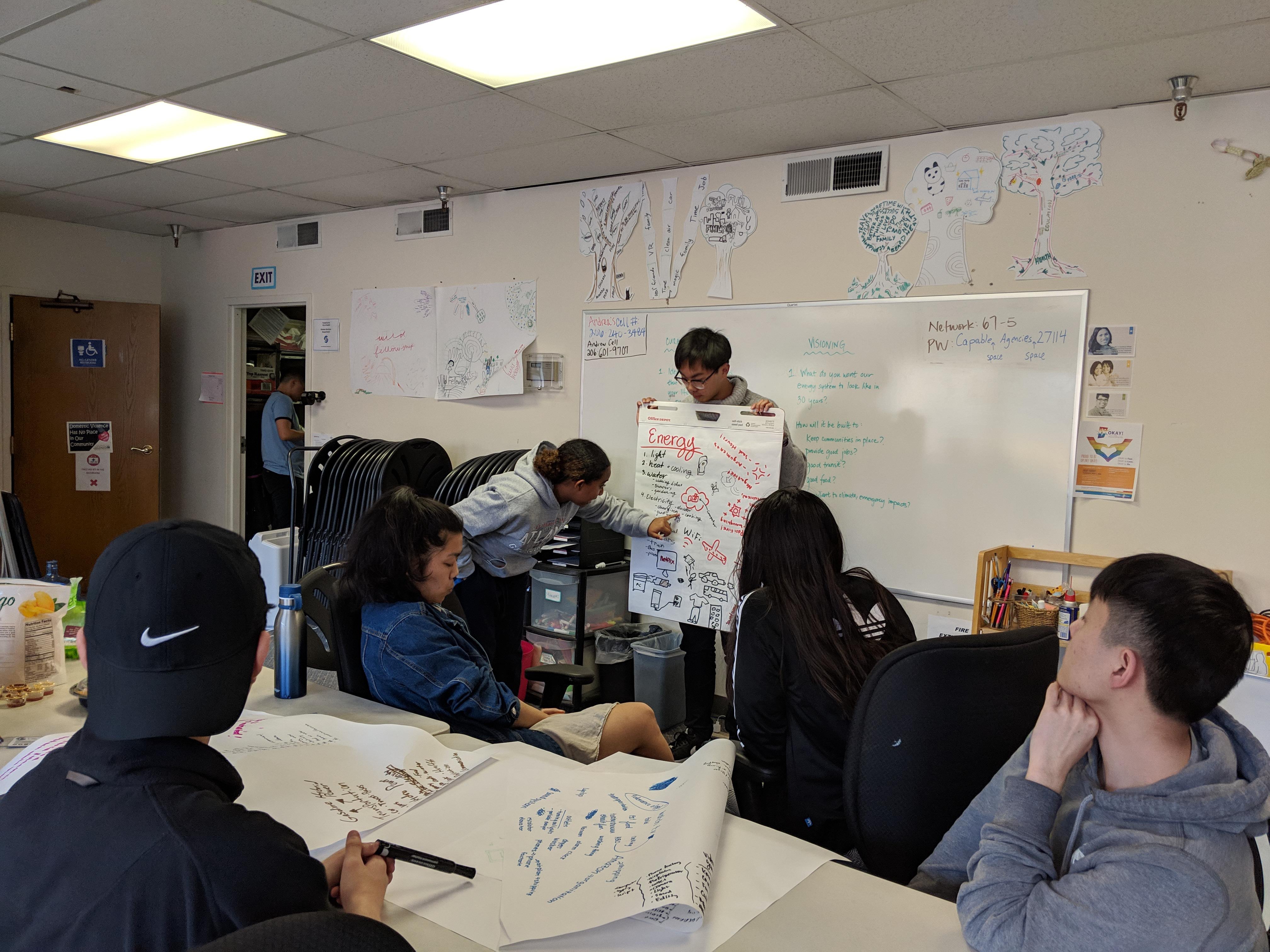
In this series, we share stories of co-governance in practice. For this interview, New America’s Hollie Russon Gilman and Lizbeth Lucero spoke with the leadership at Puget Sound Sage, a community-based organization and policy powerhouse in Seattle, to discuss how their efforts on the economy, climate, health, and leadership are building a new wave for civic participation.
Q&A with Leadership at Puget Sound Sage
Can you tell us a bit about your work at Puget Sound Sage and how you’re elevating community voice?
Debolina Banerjee: My role at Sage is to lead our Green New Deal campaign, which includes coalition building and policy advocacy. We began environmental justice work in the early 2010s with Change to Win and the International Brotherhood of Teamsters on a nationwide campaign to eliminate toxic diesel emissions from Port trucks driving through and parking in BIPOC communities. We also partnered with a local university to conduct a first-ever emissions exposure study in the communities near the Port of Seattle. This led to partnering with local community groups advocating on climate and environmental justice issues, including the BIPOC groups disproportionately impacted by climate change.
As a result of working with labor and BIPOC communities, we came up with a community-led research project in South Seattle, Our People, Our Planet, Our Power, which was released in 2016 and explores the impacts of climate change on Environmental Justice (EJ) communities. We also helped launched Initiative 1631, a ballot initiative that offered low-income communities in the state of Washington opportunities to advance climate justice by enhancing forms of clean energy. Unfortunately, it did not pass. The fossil fuel industry spent historically high amounts of money to defeat the initiative. In 2020, we released another research report Powering the Transition to explore the impacts of energy policies on our communities and organize them for future energy justice-focused campaigns.
While the national Green New Deal campaign was gaining momentum in early 2019, we created our own local framework for achieving environmental justice with local communities and environmental activists. We worked with current and former Seattle City Council members to establish a Green New Deal ordinance that set up a community oversight board to guide the city’s environmental priorities. In 2020, we helped win, with leadership from Councilmember Teresa Mosqueda, a tax on big tech companies we call Jumpstart. Of the $250 million a year from that tax, 9 percent goes to Green New Deal investments and comes through our oversight board. This has been one of our primary strategies to bridge the divide between those inside and outside government. In addition to serving on that board, we are bringing together environmental justice leaders and community members, which we call an EJ Kitchen, to design policy and spending priorities rooted in the community and help us along the way to get those priorities passed.
In addition to advocacy from our EJ Kitchen, we are also organizing with a Black and Indigenous-led coalition called Seattle Solidarity Budget, which launched as a result of the murder of George Floyd in 2020, to fight together for BIPOC community priorities. For the last three years, we have demanded hundreds of millions of dollars be diverted from policing to restorative justice, climate justice, and investment in Black, Indigenous, and other communities of color on the frontlines of race and economic injustice.
Eric Opoku Agyemang: I'm the Leadership Program Director at Sage. My work is guided by the belief that we need to have a say in designing the policies most impacting our communities and in order to do that, we need a seat at a table. If you're not at the table, then you're on the menu. In other words, if you're not there to speak for yourself, then someone else is going to speak for you.
As an organization, we see the need to build the capacity of community leaders and have proper and fair representation on boards and commissions in order to influence policies at the local level. This is where our Community Leadership Institute comes in.
The Community Leadership Institute is a six-month leadership program designed for BIPOC emerging leaders that offers training related to core community issues including climate change, equitable development, labor, justice, and transit. We also incorporate workshops on municipal budgets, campaigns, and more. After the training component of the leadership program, our leaders are placed on boards and commissions. Thus far, we've been able to train over 100 leaders who have successfully served on more than 100 powerful boards and commissions at the county and state levels.
We actively work to ensure people of color are on the boards making key decisions impacting communities, such as where to build more green spaces, schools, roads, and infrastructure. Yet, we recognize that it’s not enough just to train leaders, we have to continue to provide support and mentorship while they are serving on boards and commissions. We also have an alumni network where folks frequently connect and build strong advocacy networks to influence policies within the community. We’ve even had leaders elected to City Council, such as Abdi Mohamed who graduated from our program two years ago and was elected in 2021.
Abdirahman Yussuf: I am the Equitable Development Organizer at Sage. Our development work was sparked over 10 years ago when we saw skyrocketing costs of land and housing really hurting our communities. In 2016, we partnered with 20 other BIPOC-led organizations to win an initiative to protect low-income communities from being displaced, resulting in a groundbreaking City program called the Equitable Development Initiative (EDI). The initiative aims to build the capacity of BIPOC-led organizations to own and control land assets, advance economic mobility, and preserve communities and culture through equitable development—a theory of change we call Community Stewardship of Land. The Seattle EDI has granted over $75 million to 25 community organizations over the last five years and now has a budget of $25 million a year. The most important thing is that decisions about how grant money is awarded are made by a community advisory committee that I sit on and is majority BIPOC-community leaders. Over the last few years, we’ve built strategies for long-term developments including creating affordable housing, small business spaces, clinics, and childcare centers. Sage is now fighting to win a similar initiative at the county level to support organizations outside of Seattle.
As another part of our work, we helped form the Graham Street Community Action Team to envision the future of a neighborhood about to get a new light rail station and start building the capacity and infrastructure needed to make this vision a reality. This team consists of seven organizations including religious and refugee-focused organizations. A piece on the Medium covered some of our work around the new light rail station, which we championed to prevent community displacement.
As a previous fellow in the Community Leadership Institute, I developed the knowledge, skills, and voice I have now. The Community Leadership Institute is building a pipeline of emerging leaders and helping to build on strategies and tactics to move the agenda forward.
Aretha Basu: I am the recently hired Political Director at Sage. I previously worked as a legislative aide in Seattle where I learned a lot of the inside knowledge that I'm hoping to leverage coming into the work at Sage.
We are currently working with a cohort of BIPOC first-time candidates. We know running for office is a very daunting and often grueling process. Many of the candidates we’re working worked with are going through some of the hardest experiences that they will go through in their elected careers. We provide emotional support, peer-to-peer mentorship, and open dialogues with bi-weekly cohort meetings. This year, our cohort members are women of color, predominantly Black women, which has been amazing. We are providing a space for our group to vent and be themselves, at the same time, it can be challenging to hear some of the experiences they face on a daily basis.
We also have a program called the Local Elected Leadership Institute, which we're hoping to revamp. This program is designed to help elected officials in their first few years in office. We know and understand getting elected is only half the fight. We are able to bring progressive officials from around the state together to discuss a shared agenda to help build power for our local public leaders.
Some of our more senior elected officials have also provided great mentorship to those with less experience. We’ve also created an endorsement process through the political leadership committee. The committee conducts interviews, and then they vote to endorse particular leaders. In this last endorsement round, we’ve endorsed 19 candidates from across the state running in Clark & King Counties, including county commissioners, city council members, and some judicial races. We are truly excited about our endorsed candidates.
Is this model replicable in other communities, such as in more rural communities in Seattle?
Fernando Mejia Ledesma: Our model is replicable. We're beginning our strategic planning process for the next five years and are particularly thinking about how we can scale our approach and expand the organization.
A lot of our work has been grounded in the southern metropolitan area of Seattle. But now we're expanding into more rural, rural-adjacent cities such as Vancouver in Southwest Washington. As Aretha mentioned, we launched a cohort that is bringing a lot of everyday community members together who might be impacted by different issues whether it's immigration or housing policy. We are also partnering with the Southwest Washington Equity Coalition, which is comprised of community stakeholders, city council members, local foundation leaders, business leaders, and others, to advance a progressive vision for rural communities.
Not only are we strategizing and expanding our work, but people are actively reaching out to us because they see the value of replicating our model in their communities. One of the things that we have collectively learned is the power dynamics that can arise from stepping into communities as outsiders. The challenges we are aiming to address have to be solved by working collaboratively with communities to find bold, practical solutions. We also recognize that the community dynamics in Seattle are very different from other places, such as Vancouver or central Washington.
We're working to change the face of government by changing who gets to make policy decisions and transforming how governments operate. We want our governments to have risk-takers, we want them to be bold, to work on equitable development, to work on the Green New Deal, and to be drivers of change. We're changing the face of democracy to make it more democratic.
How has the faith community played a role in community engagement?
Abdirahman Yussuf: Through our Graham Street campaign work, the organizations that we work with are mostly Muslim organizations. We reach out to mosques, temples, and church leaders. Everyone has been really welcoming and committed to working with us. We’ve had listening sessions in churches and mosques. They are not just places of worship, they’re community centers where a lot of folks gather. I always tell folks a good place to start reaching out to religious groups is simply by having conservations and going to them in their communities.
In a sentence, what is a lesson or takeaway from your work at Sage?
Eric: We may have our differences, but we have to work together and organize around the issues we care about and allow people, most impacted, to decide, implement, and develop policies they’d want to see change.
Debolina: Movements are not successful because of one leader or organization. It’s successful because there are multiple organizations and community members leading together.
Aretha: Government and people need each other. There is no way that a progressive elected official is going to be successful unless there is strong community support and community organizing can’t be successful with government support.
Abdirahman: We need to prioritize the pipeline of leaders that will help our communities over the long term and build a strong, healthy ecosystem of community change-makers
Fernando: In order to make the change that we want to see in our society, we have to build power. Power is not about dominance. The essence behind the power is one of liberation. In other words, we use that power as a vehicle to achieve justice for our communities.
New York City’s Public Engagement Unit Is Enhancing Civic Engagement by Going Directly to Its Residents (Adrienne Level of NYC's PEU)
New York City’s Public Engagement Unit Is Enhancing Civic Engagement by Going Directly to Its Residents: An Interview with Adrienne Level of NYC's PEU
Introduction
Collaborative governance—or “co-governance”—offers a model for shifting power to ordinary people and re-building their trust in government. Co-governance models break down the boundaries between people inside and outside government, allowing community residents and elected officials to work together to design policy and share decision-making power. Cities around the world are experimenting with new forms of co-governance, from New York City’s participatory budgeting process to Paris’s adoption of a permanent Citizen Assembly. More than a one-off transaction or call for public input, successful models of co-governance empower everyday people to participate in the political process in an ongoing way. Co-governance has the potential to revitalize civic engagement, create more responsive and equitable structures for governing, and build channels for Black, brown, rural, and tribal communities to impact policy-making.
Still, co-governance models are not without challenges. The hierarchical and ineffective nature of our current governing structure is difficult to transform. Effective collaboration between communities and politicians requires building lasting relationships that overcome deep distrust in government. So far, successful models of co-governance tend to be local and community-specific—making it critical that we share stories of success and brainstorm ways to scale.
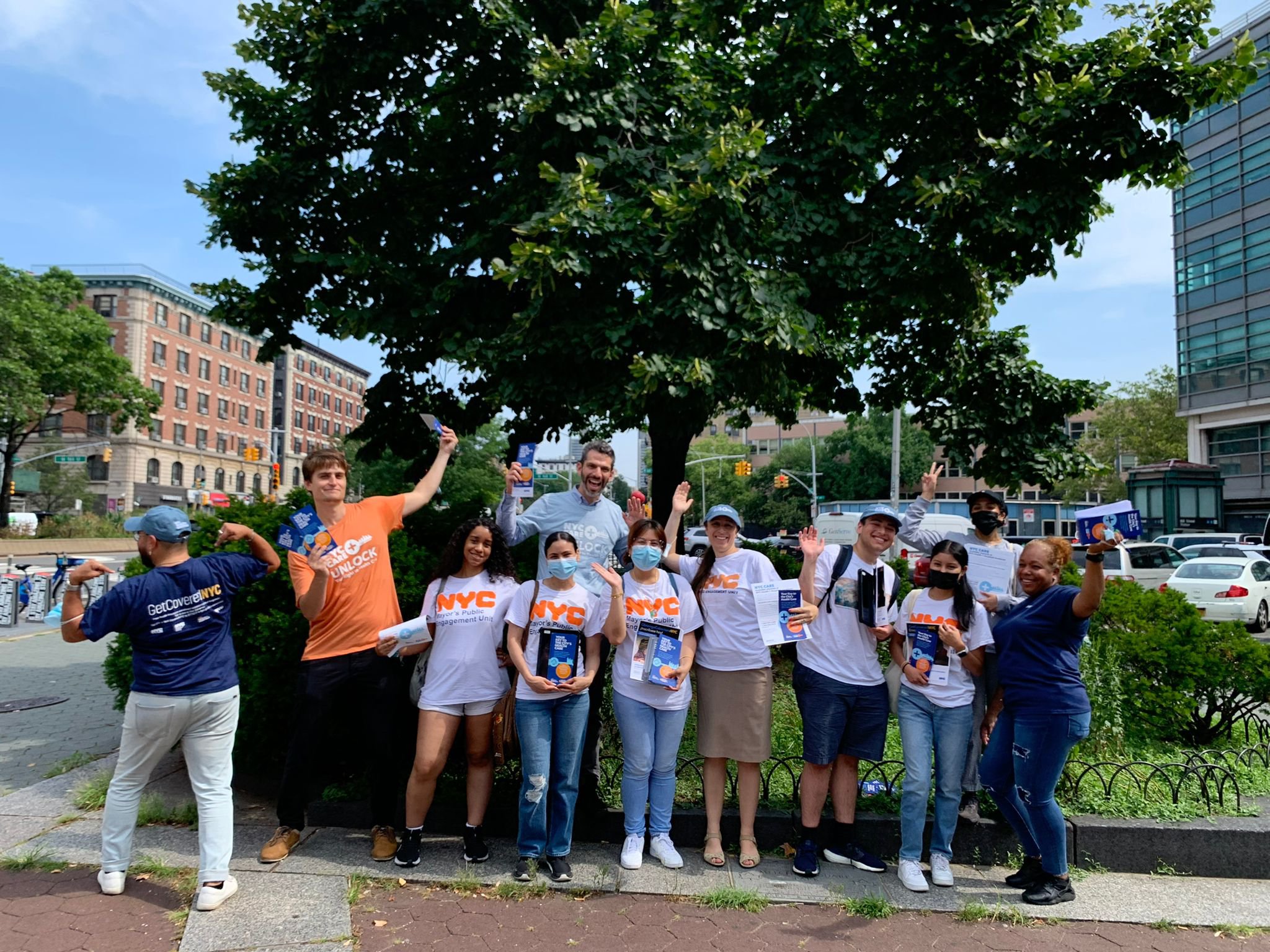
In this series, we share stories of co-governance in practice. For this interview, New America’s Hollie Russon Gilman and Lizbeth Lucero spoke with Adrienne Lever, the executive director of New York City’s Public Engagement Unit (PEU). The PEU connects low-income New Yorkers to key city services, including housing, transportation, and health care. Adrienne has served as director of the Public Engagement Unit since June 2021. Prior to serving as director, she served as PEU’s senior advisor for strategic capacity building. Here are edited excerpts from our conversation about PEU’s model, whether it could be replicated in other cities and townships, and major takeaways from their work at the city-level.
Q&A with Adrienne Lever, Executive Director of NYC's PEU
How are you building civic power and voice during this moment, particularly within communities impacted by systemic disparities?
From my background in organizing and campaigning, something I consistently heard from folks on the ground was: “Government does nothing for me, so why should I vote? Why should I participate?” It can be very hard to motivate people to want to make their voices heard when they don't see the government acting on their behalf.
Here at the PEU, we want to reframe the government's responsibility to its citizens. Rather than sitting and waiting for people to come to bureaucracy to get the help that they need, the PEU proactively goes out into communities to meet New Yorkers where they are—whether that’s on their phones through text messages, at their doors, or at community events–to identify those who are in need and connect them to services. In going out proactively into the community and building those relationships, we are saying: “The government is here not just to answer your call when you have a crisis, but to help prevent the crisis before it actually happens.”
That creates both a bond and a conversation. We not only talk clients through what benefits are available to them but also provide long-term case management to assist them in every step of the process to obtain those benefits. This way they see there's somebody on their side to be helpful and present, even in a huge city like New York, where the complex multi-agency bureaucracy can be particularly difficult to navigate.
Building those relationships is key to building civic power because it changes the way people feel about government, which in turn makes citizens more likely to want to participate. When we send surveys or go out and ask people for feedback to help inform policy, they're more likely to respond because they have built a relationship with us and see that we care. To do our work, we use innovative technology and organizing tools that come from campaigns and grassroots movements in a way that scales and doesn’t sacrifice the personal human touch.
We have four amazing teams: a Tenant Support Unit, Housing Support Unit, and Special Project Unit, as well as GetCoveredNYC which deals with health care. Our Tenant Support Unit proactively reaches out to support tenants on a wide array of issues—from landlord harassment, rent arrears, and repair negligence, to forced lockouts or forced eviction. Leveraging existing city data, we identify tenants, go out into their communities, knock on doors, find those who need help, connect them to resources, and provide case management. We also take incoming calls from tenants on our Tenant Helpline, which has handled over 100,000 calls from tenants across the city since 2019. GetCoveredNYC uses similar tactics to talk to people about health insurance, and connect people who are uninsured with certified enrollers. The Housing Support Unit builds relationships with landlords, brokers, shelter providers, and other organizations to rent vacant units to voucher recipients.
Lastly, the Special Projects Unit handles everything else we get called in for as the city’s outreach experts. Whenever there is an emergency response need, a new mayoral initiative, or a benefit that's undersubscribed, we often step in to help fill that gap. We work with other agencies often as the need arises, but sometimes, our team will also proactively suggest new outreach projects that can support our agency partners.
Right now, we're reaching out to low-income New Yorkers about the Fair Fares Program, which reduces transit fares by half. We are working with agency partners to contact a targeted list of New Yorkers, who are subscribed to other benefits that indicate they would be eligible for Fair Fares and help them enroll in the program—another example of how PEU is cutting through complex processes to make the bureaucracy more responsive.
Recently, the Department of Aging also asked us for support with outreach to a population of 8,000 seniors who were receiving recovery meals during the pandemic. As soon as this meal program ended, we reached out to those 8,000 seniors to connect them to resources, making sure that nobody who had signed up for the program and continued to need support was left out.
Who, if any, are the trusted intermediaries in and around the community that you work with on these initiatives and how do you identify and support leaders in the community?
I think there are really two sides to it. Obviously, we work with nonprofit and community-based organizations all the time. As the city, we absolutely recognize the importance of trusted messengers in communities, especially when it comes to long-term case management and tenant organizing. And yet, I think that sometimes we, as government, relinquish our responsibility to actively rebuild that trust by putting all of that responsibility on trusted messengers. The city shouldn't have to always rely on an outside partner to inform and help communities with the benefits being offered. It’s important to balance leveraging existing, established networks of trusted messengers, with building trust directly between residents and the city—through face-to-face conversations, through in-depth sessions with support specialists—so that more people are able to change their minds about what government is and can do for them.
We ensure that we’re being really inclusive of our nonprofit partners in conversations, while also trying to break the narrative that people have to go to non-governmental organizations when seeking personalized support.
How do you engage with residents who have been systematically left out of policy-making decisions? For instance, there’s a huge undocumented population in New York, how do you build trust with individuals who fear government officials and do not trust government agencies?
This is also sort of twofold because undocumented communities are a really important population and also the least likely to trust government. I think, more than with any other population, we really rely on very close partnerships with organizations on the ground who are in communities and can work with clients to support them through the process. So if somebody is unwilling to give us their information, we have experts and community leaders we can transfer them to for additional help.
While we never track whether a client is or is not undocumented, anecdotally I can also say that we have found that people are thrilled to get the help from PEU directly. We get a lot of positive responses from clients who might not be willing to go to the city themselves at first, but who are more than willing to work with PEU when we reach out proactively, especially after we begin to build relationships and trust with them at their doorsteps.
We have been showcasing some of our clients’ stories, with their permission and consent. One of our staff members spoke at a press event with Mayor Eric Adams recently, to talk about her work with a woman who is an undocumented immigrant recently diagnosed with cancer. Tania, our GetCoveredNYC specialist, connected this client to a health care access program called NYC Care, which she is now using to afford her cancer treatments. It’s important to share these stories, and the experiences of staff like Tania, who build deep relationships with their clients to build trust and ensure that people are receiving the services that they need.
It helps that we also have the most incredible and diverse staff, who come from the communities of the constituents that we're working to serve. We have every single age, personality, race, color, ethnicity, you name it. Many of our staff are immigrants as well. We always make a point of translating our materials into at least 10 languages, upwards of 25 languages. We showcase the languages spoken on our team as much as possible, sharing photos and videos of our staff on social media so that New Yorkers are really able to see themselves reflected in our staff.
Are there any lessons from New York’s model that can be replicated in other parts of the county?
I think other cities absolutely can do this, if they think strategically about how to build a team and how to do outreach.
In some ways, our work is harder because we're such a massive city. How are we actually supposed to reach all of these New Yorkers? Leveraging tactics to scale our work quickly, like peer-to-peer text messaging, is helpful but challenging in a major city like New York. A single staffer can send 200,000 text messages within an afternoon, but following with personalized responses up still takes a lot of staff time.
Bringing in campaign skills has been so transformative in how we do our work, because we think a lot about how to strategically target community members and maximize our impact. That being said, a small amount of outreach can go a long way because stories get shared, people learn about the work that we’re doing, we build relationships of trust within the community, and we ultimately build a strong reputation where people can authentically reach out for support.
Hiring is also critical. We hire and train people who have worked as bartenders or in other kinds of customer service, as community organizers and social workers, all of whom are extremely talented and are excited to build strong relationships with people. Being more inclusive in the hiring process means rethinking the expectation that you have to have a specific kind of degree or type of experience to do this work. We consider many different skill sets, which allows us to build an incredible, passionate, and sustainable team.
How do you authentically engage with residents and encourage them to participate in government?
I think part of our job is to share what we learn from the work that we do, being boots on the ground, to help the city inform policy. Earlier, I mentioned the Tenant Helpline, which took calls from tenants all over the city who were facing eviction and a variety of other housing issues. Our helpline provides a huge repository of information that tells us a lot about what’s happening in the city. Among those 100,000 calls we have received, we are able to get details from our housing specialists who handle the cases. We are able to notice patterns and ask questions like, “Why haven't we received as many calls from X, Y, and Z neighborhoods?” We then reach out to those especially vulnerable zip codes that aren't calling the helpline as frequently to figure out why they're not calling and how to engage with them.
We shared a lot of our findings with the city’s new chief housing officer, who put a lot of the feedback into the housing plan this year. So we've seen, especially with this administration, a real desire to learn from what's happening on the ground and develop a strategic and flexible policy that is responsive to what's actually happening, versus what they think should happen.
What are some of the challenges or limitations of engaging with residents across the city?
Our tactics change based on the population you're targeting. If we're trying to reach out to the city's homeless population, we won’t be as effective in outreach through door-knocking or making phone calls because they may not have access to phones and may not have an address. That’s why we do a lot of tabling in communities. This summer, we have over 100 City University of New York (CUNY) interns who are part of what we've called the CUNY Benefits Corps. They table all over the city and canvass neighborhoods, using a tool called Access NYC to do quick benefits eligibility screenings for New Yorkers. The information our interns gather comes back to our staff, who then make follow-up calls to provide additional information and support. We also work with non-profit partners on the ground, especially to engage with more difficult-to-reach populations.
We have to continue to be innovative, flexible, and creative—no single strategy is the solution when it comes to reaching out to a city’s vulnerable populations. And we may have a different answer to your question in a year from now than we do today, because we may think of something brilliant that we aren't currently doing—and I hope that does happen, because that would mean we're trying new things and continuing to learn and grow.
Building the Future of Democracy in Petaluma, California (Petaluma City Manager Peggy Flynn)
Building the Future of Democracy in Petaluma, California: An Interview with the Petaluma City Manager
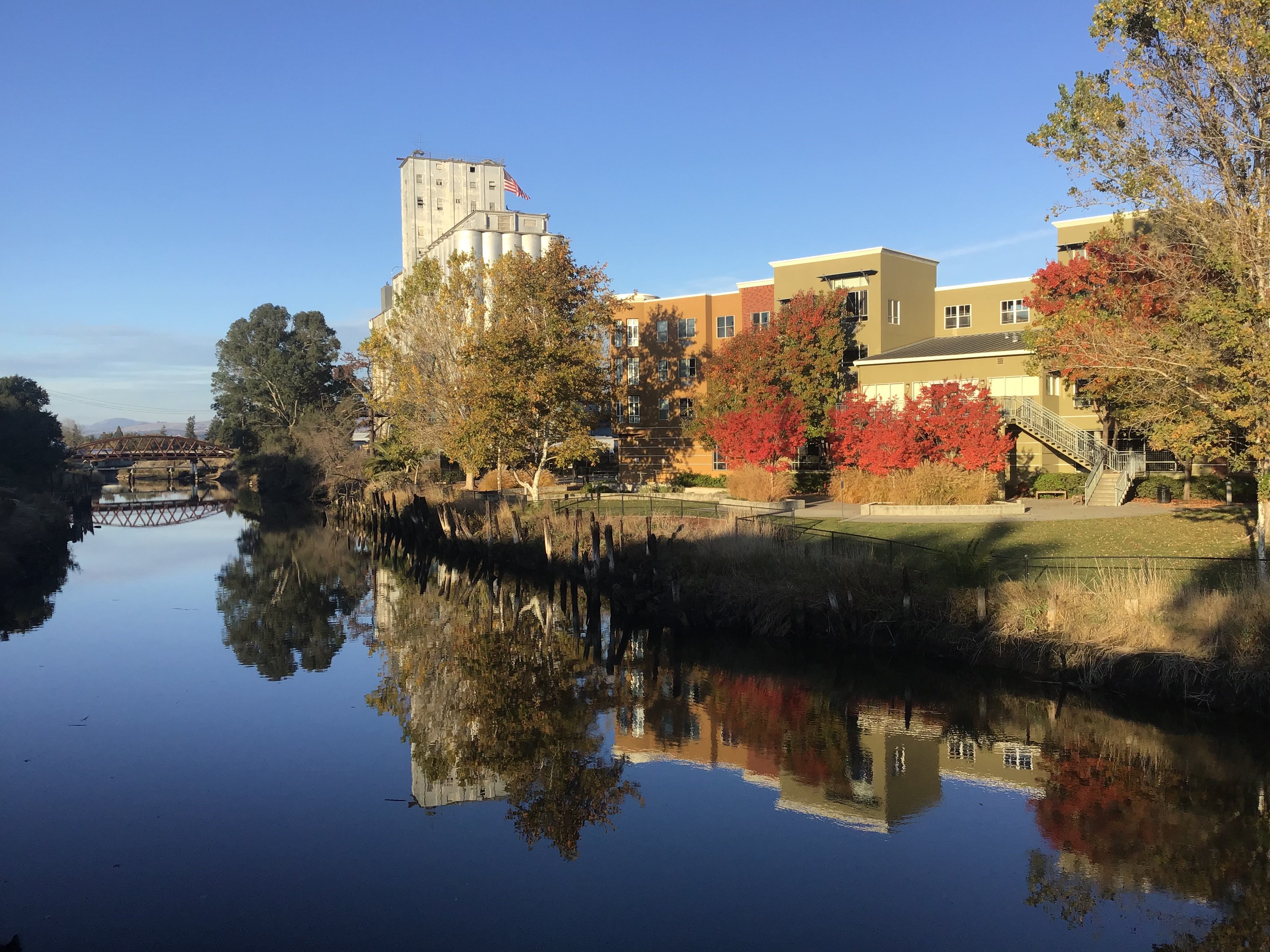
Shutterstock
Introduction
Collaborative governance—or “co-governance”—offers a model for shifting power to ordinary people and re-building their trust in government. Co-governance models break down the boundaries between people inside and outside government, allowing community residents and elected officials to work together to design policy and share decision-making power. Cities around the world are experimenting with new forms of co-governance, from New York City’s participatory budgeting process to Paris’s adoption of a permanent citizens’ assembly. More than a one-off transaction or call for public input, successful models of co-governance empower everyday people to participate in the political process in an ongoing way. Co-governance has the potential to revitalize civic engagement, create more responsive and equitable structures for governing, and build channels for Black, brown, rural, and tribal communities to impact policy-making.
Still, co-governance models are not without challenges. The hierarchical and ineffective nature of our current governing structure is difficult to transform. Effective collaboration between communities and politicians requires building lasting relationships that overcome deep distrust in government. So far, successful models of co-governance tend to be local and community-specific—making it critical that we share stories of success and brainstorm ways to scale.
In this series, we share stories of co-governance in practice. For this interview, New America’s Hollie Russon Gilman, Grace Levin, and Lizbeth Lucero spoke with Petaluma’s City Manager, Peggy Flynn. In 2022, the City of Petaluma partnered with Healthy Democracy to convene a deliberative lottery-selected citizens’ assembly process. Citizens’ assemblies are a process for engaging communities in decision-making using a random sample such as sortition for a lottery system. Citizen assemblies bring together representative samples of the community—sampling across age, gender, race/ethnicity, and geographic location of residence—to deliberate on important local policy issues. Community members who deliberate on a policy proposal are compensated for their time and witness first-hand the impact of their decision-making outcomes. This process aims to take a more equitable approach in engaging the entire community on decisions that directly impact their daily lives.
The Petaluma case study is the first municipal citizens’ assembly in California. This process brought together 36 lottery-selected citizens—representative of the city’s geographic diversity—to help determine the future of the city’s publicly-owned and under-utilized 55-acre fairgrounds property. From mid-May to mid-July, the panelists met for a total of 90 hours to decide how the fairgrounds property could maximize the needs and desires of the community. After the deliberation process, the panelists wrote three major reports to share their recommendations with the city council to determine how to best utilize the fairgrounds. Below, City Manager Peggy Flynn talks to us about the major takeaways from this democratic process and lessons learned from local government.
Q&A with Petaluma City Manager Peggy Flynn
Could you tell us about the work you’ve been doing in Petaluma and how you got involved in the city government?
I'm not a traditional city manager. At least, that was not my trajectory. I started in journalism and that was my focus until I discovered local government. Petaluma is very different from many cities. It is also one of the oldest cities in California. Our infrastructure was failing and we had the worst roads in the Bay Area. When I came in, we were going to file for bankruptcy. We were barely getting by—and with two failed sales tax attempts and no local revenue sources, things were bleak. Fortunately, the community has always believed in Petaluma. When I was hired, our community passed a one-cent sales tax in the midst of the pandemic.
The pandemic showed us in other ways how powerful local government can be. We were regularly out on the street. We were helping businesses. We were helping our most vulnerable. We were making sure that food distribution was available and that our local food sheds were strengthened, and robust. And, there’s still so much we can improve on as we are reaching full normalcy post-pandemic. I strive everyday to make sure that people feel that the government is for the people by the people. It’s an old adage, but it’s true. Petaluma is my community; I don’t know that I would be a city manager anywhere else.
What are citizens’ assemblies, and how did you first hear about them?
Citizens’ assemblies are a way to give voice to our residents who haven’t participated or seen themselves in local decision-making. It creates ownership and leadership in our community, and demystifies local government.
I first heard about citizens’ assemblies during a democratic panel at the Cal Cities Annual Conference and Expo in 2021. To me, this democratic process seemed like the missing piece we had been waiting for to make participation in local government more inclusive and worthwhile. The city can implement the most robust engagement plan, but in most cases, we’re hearing from the most privileged people who have the experience, the loudest voices, and the time to show up. We weren’t hearing from the moderate viewpoints or the people who couldn’t make the meetings because they were working three jobs. Many people thought they didn’t have any power to influence “city issues”—but it is their city. I work for them. I can't make decisions without them. It is critical to have our residents at the table.
With these challenges in mind, after the conference, I bugged Linn Davis who co-leads Healthy Democracy’s program development and process design to learn more about citizens’ assemblies and how we can bring this to our community. Health Democracy is a non-profit, nonpartisan organization that designs and coordinates innovative deliberative democracy programs. It was especially good timing as we were thinking about what to do with the city’s fairgrounds property.
How did you get the buy-in? How did it all work?
The fairgrounds affect everyone. It's 55 acres of valuable land owned by the residents. The city abdicated its responsibility for the property by giving it to the fair for a dollar a year, but our residents don’t have access to the property. We needed to ask people what they wanted to do on the fairgrounds with this valuable community asset. I knew if we did a traditional engagement process, we were going to hear from the same people we always do. Citizens’ assemblies offer a model to ensure more voices are heard in the process.
There are a lot of politics involved in this process, which can be a limitation for other cities that are interested in doing this work. I approached public distrust by emphasizing that this is about the community and the need to make government more transparent—this wasn’t about politics, this was the right thing to do.
Our citizens’ assembly was the largest convening Healthy Democracy has ever run. When they sent over the proposal of $425,000, we had some pushback on the budget, but I knew it was a worthy investment for our community members to experience real, authentic engagement with their local government. This is how much it would have cost to hire an external consultant to tell us what to do. This way, at least, I knew we were investing directly in community members.
We, as members of the local government, tried to remove ourselves from the process, to limit bias. We also oversampled for the demographics that don’t normally participate. At the same time, we were learning alongside the participants about the assembly process, and while there were definitely improvements we could have made, I think everyone left with a better understanding of how our government can work better with innovative strategies for inclusive democracy.
One thing I wish we would’ve done differently was to provide better context to residents about the assembly process and provide more front-facing information on our general [infrastructure] plan for the city regarding housing and land. We really wanted to give panelists full autonomy in the process, but this was new to all of us. We wanted to be able to communicate and learn from them as they were making decisions, but this process limited our interactions to eliminate bias. It also wasn’t clear how we, in government, could leverage this experience for longer-term engagement opportunities. In this process, we needed to find more ways to stay connected to our community members even after the process—including connecting them to leadership roles on committees, commissions, and councils. These are all important lessons to take away for future citizen panels.
How was digital technology integrated into this process?
During the second wave of COVID-19, we had to heavily rely on technology and adopt a hybrid environment. We budgeted for technology and tools to make sure this process was equitable and that we could provide the appropriate technology and support for each participant. We ended up having very small rates of attrition and were able to keep people engaged. We are also one of the few cities that have kept hybrid-style city council meetings. Community members can join and weigh in on items while they’re feeding their kids or taking care of other things in the background. We will continue to use hybrid models to accommodate more people in our community—even after the expiration of the emergency resolution, which forced the implementation of hybrid meetings during the pandemic.
People have a common misconception that only wealthy communities can afford exploratory models of engagement, but you mentioned earlier that Petaluma was facing bankruptcy and still made it possible. Can you talk more about that?
I think when you have fewer resources, it’s even more important to come together to figure out how to get things done, because what’s the alternative when business-as-usual is not working? And while we didn’t have as many financial resources, we did have a strong sense of community which is a significant asset. There’s a strong collective tradition here that believes if the government isn’t going to help us we’re going to help ourselves. I’m interested in other models of engagement like participatory budgeting to make communities more inclusive. I don’t want people to feel like they have to be experts in municipal finance to be able to weigh in on our budget.
Are there other city managers you’ve met along the way?
I’ve had a lot of people reach out to me and ask me what we are up to in Petaluma. I want to engage more with other city managers about our experience with citizens’ assemblies. I am part of the International City Manager Association and we have an opportunity to engage with and learn from one another about new models of civic engagement. We need to tell people that this actually works and there are ways for city managers to work hand in hand with residents instead of being removed from community life.
We need to create support systems to keep and sustain leaders. If not, the next generation won’t want our jobs because we don't have the support systems we need. To be frank, there aren’t a lot of women in city manager positions. We should be supporting one another. How can we have other thought partners involved in this process?
How did the community respond to the citizens’ panel?
Our community is so engaged on so many levels. We're a small city, but we have a collective community. Still, we need to find ways to include the voices of those who aren’t sheltered, our Latinx community, and our youth. We have a youth commission appointed by our Council and has up to 20 commissioners from eighth grade through the age of 20. Their purpose is to be advocates for the well-being and development of youth in Petaluma, but they haven’t yet been involved with city-wide projects.
When we started the engagement on the fairgrounds process, it was a really powerful process. We started hearing from people that we had never heard from before. Healthy Democracy hired all local people from the community to do translation and help with facilitation. Once, I had a lady come in who was helping with translation during the citizens’ panel process and said, “I've lived in this city for 20 years and I've never felt more proud of being a Petalumian.” This was very emotional and so grounded in the community that it challenged people’s perceptions of local government and the city. This process demystified decision-making. We had people coming in wanting to watch the panel’s deliberations.
There was so much ownership over the process. Even though there wasn't consensus over the proposed projects, people supported one another. In the beginning, people were uncomfortable and scared to participate given the heightened political polarization, but in the end, we are all still neighbors. The panelists and our community should feel so good about the work we were able to accomplish.
What were some of the major takeaways you learned in this process?
I think we need a space for city managers to come together to share lessons and opportunities of engagement models happening across the country. Second, the argument that this can’t be done in other cities and municipalities around the country is not as strong as you think. How much does a dysfunctional government cost? Both in monetary and practical terms. We know better and we have to do better. Also, another argument I often hear is, “Why should we engage residents if they elected us to make the tough policy decisions?” Well, my response is: you can make a better decision based on the community's active participation. This is not taking away from our elected officials, but helping them make more robust, meaningful, informed decisions.
What do we lose when we do not have this? As I mentioned earlier, we are intentionally keeping the hybrid functions in our council meetings. We are meeting people where they are so we don't lose participation. Now I am thinking more deeply about how we can do more at all levels of our decision-making processes, not just with land use. We have committees and commissions, but guess who participates? The same people who have the time and luxury to do so. So, what if we start changing the circumstances by paying people? What if we provide people with the appropriate technology or childcare? What if we provide a livable wage? We could be a lot more functional as a local government. At the state and federal levels, that may be more challenging, but at the local level, this is absolutely possible, we just need pilot cities to start the process.
Community-Centered Governance: Richmond's Approach to Tackling Income Inequality (Policy Strategist Chaya Braxton)
Richmond's Approach to Tackling Income Inequality: An Interview with the Richmond Office of Community Wealth Building

Introduction
Collaborative governance—or “co-governance”—offers a model for shifting power to ordinary people and re-building their trust in government. Co-governance models break down the boundaries between people inside and outside government, allowing community residents and elected officials to work together to design policy and share decision-making power. Cities around the world are experimenting with new forms of co-governance, from New York City’s participatory budgeting process to Paris’s adoption of a permanent citizens’ assembly. More than a one-off transaction or call for public input, successful models of co-governance empower everyday people to participate in the political process in an ongoing way. Co-governance has the potential to revitalize civic engagement, create more responsive and equitable structures for governing, and build channels for Black, brown, rural, and tribal communities to impact policy-making.
Still, co-governance models are not without challenges. The hierarchical and ineffective nature of our current governing structure is difficult to transform. Effective collaboration between communities and politicians requires building lasting relationships that overcome deep distrust in government. So far, successful models of co-governance tend to be local and community-specific—making it critical that we share stories of success and brainstorm ways to scale.
In this series, we share stories of co-governance in practice. For this interview, New America’s Hollie Russon Gilman and Lizbeth Lucero spoke with Policy Strategist Chaya Braxton of the Richmond Office of Community Wealth Building (OCWB), whose mission is to create policy and structural change to address income inequality and the racial wealth gap. Here are edited excerpts from our conversation on OCWB’s mission to address systemic poverty.
Q&A with Policy Strategist Chaya Braxton
Can you tell us about the Office of Community Wealth Building?
The Office of Community Wealth Building in the City of Richmond is a new kind of municipal department that addresses systemic poverty through programs, initiatives, and policy recommendations. Former Mayor Dwight C. Jones realized that neighborhoods were changing rapidly and that the city needed to protect the interests of those who were most impacted by poverty. He formed the Anti-Poverty Commission in 2011 to advance interventions on housing, employment income, mental health, transportation, and childcare.
In 2015, the commission established a permanent department now known as the Office of Community Wealth Building (OCWB). OCWB has a dual focus. First, we focus on reducing the effects of poverty, and second, on enhancing the quality of life for the residents of Richmond.
Are there other cities around the country that have replicated a department like the Office of Community Wealth Building?
Cities across the country have looked to the City of Richmond and our work to implement something similar in their municipalities. Several that are interested in combating poverty have reached out to us to learn from the work we are doing here. For example, in 2018, the City of Rochester, New York, visited as they were launching Rochester’s Office of Financial Empowerment (OFE). The Washington D.C. Poverty Commission also visited us in Spring 2022 to learn more about OCWB’s programs and initiatives.
What was the process for the OCWB becoming its own department in the City of Richmond?
Prior to 2015, the Anti-Poverty Commission published a report recommending the permanent establishment of the OCWB to address poverty and the wealth gap.
The City organized in support of the OCWB and its emphasis on workforce and economic development. We know upskilling the workforce is a central element of a comprehensive poverty reduction strategy.
Our office has launched the Richmond Resilience Initiative, a guaranteed income pilot program under the national collaborative, Mayors for Guaranteed Income. More than 40 families are receiving $500 cash payments per month to go toward their household expenses. This initiative is particularly important because research shows that it can take several generations for Black and brown communities to escape poverty. So, we want to help families jumpstart their path towards financial security and advocate for jobs with living wages for long-term stability.
How do you identify which neighborhoods to focus on in your outreach efforts? What data and/or metrics do you use?
We use data from the Census and Department of Labor to help us identify which people, communities, and families need our services most. In the City of Richmond, this includes prioritizing resources for residents in Voter Districts 6, 7, and 8, which have high concentrations of poverty. We also consider factors of educational attainment levels and age. As needs arise and are assessed, additional neighborhoods are prioritized for service.
There are fewer Black people now living in Richmond than there were 10 years ago, but they are still excessively represented in the populations experiencing the highest rates of poverty. Our ability to expand resources available to these communities rests on our ability to increase partnerships with local organizations whose relationships would help us overcome language and cultural barriers that have so far inhibited our success.
How is the OCWB working with local organizations and community groups to combat poverty?
It is extremely important to connect people with the right resources and get people involved with the work we’re doing. The City of Richmond Ambassadors program has been essential to this process. The Ambassadors are a group of selected individuals who participate in our workforce programs, share information about the resources available throughout the city and build trusted relationships with community members to assist them in not only increasing their access to services, but providing feedback on the various needs of the community so that policy and procedures can be created or refined to address those needs systemically. In many instances, the Ambassadors have been the first point of contact for people interested in our services.
We also have an Office of Strategic Communications and Civic Engagement, a new office founded by Mayor Stoney in 2021, to connect communities with city government. Collaboratively, our offices engage residents to encourage their involvement in local government and provide them with the platform to have their voices amplified.
At OCWB, we have prioritized service delivery to lower the barriers for residents to access services such as child care, education, employment, health and wellness, housing, income, and transportation. As a cross-sector collaborative office, partnering with community-focused organizations is the foundation of how we do what we do. These organizations include local community colleges, labor unions, and the Reserve Officers’ Training Corps. Our Program Coordinator for Wealth Building stewards our relationships with external partners and is constantly looking for ways to forge new relationships with organizations across the city.
How does the OCWB build trust with residents?
One of the things that make us a really strong team is that many of us have been doing this type of work for over 20 years, with deep roots in the community. We often leverage our existing, long-standing relationships to get work done. For many of us, this work is very personal. We know one another. We are each other’s neighbors, and we work with Ambassadors to make connections with other residents who may not know about who we are and what we do.
OCWB continues to integrate the perspectives of residents in our service delivery system. The Maggie L. Walker Citizens Advisory Board (CAB) is an independent body recognized by Richmond City Council under ordinance 2014-234-215 to oversee the progress of the city’s comprehensive strategy to address poverty reduction. It is comprised of those who are experiencing poverty or representing organizations, businesses, or service providers that are responsible for servicing residents who are impacted by poverty.
In Richmond, residents trust OCWB to be resourceful and connect them to the proper tools and services across all our departments. I think that speaks to the importance of building local connections and relationships early on and stewarding those long-term relationships.
During the pandemic, how was the OCWB reaching out to hard-to-reach communities?
There were times during the pandemic when it was really tough, but we did not close our doors to the needs of the residents. When other entities went home, our staff rotated on an in-person schedule that provided safer environments for services to continue. When physical space became challenging, we opened outdoor service areas where residents could get essential assistance without the increased risk of exposure to health concerns. Once physical space gatherings were prohibited, we migrated to a virtual platform in which we hosted virtual sessions three times a day to share key information around areas like homeownership, food insecurity, rental assistance, eviction aversion, career exploration, unemployment insurance, health updates, and much more.
We also had our Engagement Specialists, who remained in constant communication with our residents about training, job search, and supportive services. The Ambassadors even provided door-to-door outreach for school-aged youth and seniors. We leveraged technology to host in-person watch parties in locations where poverty was highly concentrated so that residents who were not as technically savvy would not miss out on pertinent information and services. People sat spaced apart and masked up, watching the virtual sessions together.
It is especially important for us to coordinate with partner organizations we can count on in harder-to-reach communities. We don’t always have the capacity or expertise to reach out to undocumented communities, for example. The Office of Immigrant Refugee Services help us do outreach for these populations.
Sometimes, simple solutions like having a translator on staff are essential. Other times, there are a lot of nuances that can make outreach challenging. We also try our best to direct residents to other community organizations in that case.
For those experiencing homelessness, it is most important to us that their physical needs be prioritized. So, in these cases, we make referrals to other partners such as Homeward and Housing and Community Development. Many of our Engagement Specialists go above and beyond to help stabilize people on the journey to self-sufficiency, but it takes a lot of resources and hands to do this successfully.
We also have financial literacy programming that supports wealth-building strategies like saving, investing, and buying a home. The OCWB is a part of efforts that need to span generations to get people where they want to be financially.
What does effective outreach look like in the City of Richmond?
Door-knocking and being intentional about showing up in places where other community residents and partners are present to cultivate deeper connections is the catalyst for effective outreach to OCWB. Last year, we created two Community Advocate positions. In addition to the Ambassadors, we have our own, in-house, community advocates, some of whom have been through the Ambassador's program and want to continue to help with outreach efforts in their communities. Ultimately, our desire is to see our communities thriving—communities in which neighborhoods are safe, adequate housing is available and affordable, food and other aspects of wellness are plentiful and accessible, and communities have everything that they need to enhance their quality of life.
Is there any additional information folks should know about the work of OCWB?
People should know about the participants that go through our cadre of programs. For instance, we were working with someone who came from New York, spent some time in Richmond, and participated in our customer service training class. Now, he runs a nonprofit organization that feeds 300 people experiencing homelessness every single week. Ex-pro-athletes have come through our program, which has helped them restore their lives and provide for their families.
We also have been partnering with other city agencies internally on issues like justice-involved expungement to best support people with minor offenses to return to society, earn living wages, and attain credentials in high-demand occupations. These efforts are just a small part of the holistic, systems-based change that is needed to elevate our communities.
Rural Partners Network: Connecting Local Community to Government (Deputy Under Secretary for Rural Development Farah Ahmad)
Connecting Local Community to Government: An Interview with U.S. Department of Agriculture Rural Development
Introduction
Collaborative governance—or “co-governance”—offers a model for shifting power to ordinary people and rebuilding their trust in government. Co-governance models break down the boundaries between people inside and outside government, allowing community residents and elected officials to work together to design policy and share decision-making power. Cities around the world are experimenting with new forms of co-governance, from New York City’s participatory budgeting process to Paris’s adoption of a permanent citizens’ assembly. More than a one-off transaction or call for public input, successful models of co-governance empower everyday people to participate in the political process in an ongoing way. Co-governance has the potential to revitalize civic engagement, create more responsive and equitable structures for governing, and build channels for Black, brown, rural, and tribal communities to impact policy-making.
Still, co-governance models are not without challenges. The hierarchical and ineffective nature of our current governing structure is difficult to transform. Effective collaboration between communities and politicians requires building lasting relationships that overcome deep distrust in government. So far, effective models of co-governance tend to be local and community-specific—making it critical that we share stories of success and brainstorm ways to scale.
In this series, we share stories of co-governance in practice. For this interview, New America’s Hollie Russon Gilman, Sarah Jacob, and Alexander Fung spoke with Farah Ahmad, Deputy Under Secretary for Rural Development at the U.S. Department of Agriculture (USDA), about the Rural Partners Network (RPN). RPN is an all-of-government program that helps people in rural communities find resources and funding to create jobs, build infrastructure, and support long-term economic stability on their own terms. The Biden-Harris Administration is making sure rural voices are reflected in national policies that will benefit all people in rural communities. This is especially important for communities that have been marginalized, disenfranchised, or overlooked in the past. Through RPN, USDA works with over 1000 partners at the federal, state, and local level to address specific needs in rural and tribal communities. The department has also hired full-time employees in the field dedicated to providing on-the-ground assistance for participating communities.
Q&A with Deputy Under Secretary for Rural Development Farah Ahmad
Could you please describe the Rural Partners Network (RPN)?
Through RPN, we work with rural communities and figure out what plans and projects make sense for them. Every community is a little bit different. There may be one that has a focus on water infrastructure or one on growing entrepreneurship. RPN place-based staff help them get started and learn how to navigate the wealth of federal, private, and public resources.
The federal government has dozens of programs, so it’s about bringing those resources together to connect the dots between what a community wants and how a set of projects could help them achieve their vision. The next step is to partner with them to find the right resources to make their project come to life.
We do this in two very specific ways. First, we have federal staff in rural communities whose sole job is to listen first and work with all the local partners—our “federal navigators” or community liaisons. A lot of rural communities haven't had a good relationship with the federal government for a myriad of reasons. Rebuilding trust is really where we have to start. Our federal staff are often from the community themselves. They have established relationships and built trust. The partners they're working with are their neighbors and friends. They help move communities from a vision to a tangible project, and then transform that project into tangible resources.
Second, we take the lessons we've learned from those federal navigators and from the communities themselves and actually do something with them. Lessons from communities don't always make their way up to federal policymakers. So, RPN has an established interagency group of representatives from over 24 federal agencies who are tasked with listening to the communities and hearing them say firsthand, “Hey, this program isn't working for us.” The federal partners in Washington hear that, and they're charged with doing something about it. They try to break down barriers and discover how their programs can better meet the needs of rural communities.
Can you tell me more about a concrete example that you think illustrates this work on the ground?
I’ll start by talking about Southeastern Kentucky. There was a really devastating flood during the summer of 2022, which President Biden declared a disaster area. During a disaster, a community’s priorities shift instantly. FEMA arrived to do rapid response work, because it was a presidentially declared disaster area. Fortuitously, Southeastern Kentucky was an RPN area so we already had our federal navigator on the ground working with the impacted community.
Thus, from the get-go, there was already a different level of trust. Our community liaison, Rachel Chambers—who was dealing with the impacts of the flood herself because she is from the same communities—helped build a bridge between FEMA and the impacted community. She spoke with people in the community and wrote down a list of short-term needs, like dealing with flooded homes. She funneled immediate requests to FEMA. To her credit, she also started collecting medium-term and long-term needs. That's our role as a long-term partner with rural communities and represents the spirit of RPN.
She realized that what we were hearing from hundreds of affected families in Southeastern Kentucky was that they needed to repair their houses. Their homes were so devastated that they needed quite a bit of funding. USDA Rural Development has a home repair program called the 504 program. That program had a limitation of $10,000 for its grants. As Rachel was talking to these devastated families, she found out $10,000 wouldn’t be enough. Those funds would only repair part of a basement or half a roof, and you can't live in a home with half a roof.
So, she called the national office and said, “Hey, we need to do something for these families, because they're not even going to apply for our funding. It's hard to apply for federal programs, and if they're not going to get the resources they actually need to get back in their home, they won’t apply.” She asked if we could increase the grant cap.
The beauty of the Rural Partners Network is that the community liaison’s job is to ask the hard questions and push policymakers to think more creatively. When she did, we had all our housing experts and our Office of General Counsel look at our rules, and we found that we could, in fact, increase that cap with a regulatory waiver for areas within the presidentially declared disaster zone. We raised the cap to nearly $40,000 and suddenly the game changed for those families. It now made more sense for them to apply and go through the process of seeking funding to be able to fix and stay in their home.
This is just one example of the impact of having the direct line of communication that’s rooted in a community's need. Because she asked that question, we were able to make a change in real-time.
What are lessons that other federal agencies and local governments can learn from RPN?
Federal agencies can have a different relationship with communities. Not talking to communities means we’re not actually serving them. We have to hear from communities about what their ideas are—whether it’s about a new wastewater infrastructure or high-speed internet in their town—to see how we can fit a federal program around their project instead of the other way around.
We often tell communities how their project can fit within the federal government’s box. But the lessons I think many federal agencies have learned is how a federal agency’s program can fit into a community's box. It’s not always one-size-fits-all. That might seem very simple, but it feels a little bit ingrained in who we are at USDA Rural Development.
Another really important lesson is to provide technical assistance. “Technical assistance” of course means a lot of different things to different people. But it can mean helping people understand what it takes to fill out an application for a federal program. It can mean spending a little bit of time answering some questions for a community. It can mean actually doing some of the hard work of figuring out how we can help communities braid different programs together to fit their needs. It's not natural to do that because our agencies are so big. But once they do it a time or two, it starts building that muscle memory to actually go outside their own agency and find complementary programs that can really help communities not just build the infrastructure, but make sure it's affordable and accessible. There was a recent study that identified “no front door” as one of the main reasons resource-deficient communities struggle to access federal programs. RPN is creating a “no wrong door” policy for our rural communities.
Is there anything that we should have asked you that you would like to share with us?
At USDA Rural Development and RPN, we're trying to close the gap between community and the government. The federal government has all of these resources that are the community's resources, and we're trying to get as close as we can to build strong and long-lasting relationships.
Through RPN, we have learned many lessons about who else we need to engage and what other partners need to be at the table. Going through that process and improving every year is almost as important as launching the program itself, because we certainly don't have all the answers. That’s why we're trying to close that gap and actually learn from communities and have our solutions actually come from them.
I would also reiterate that it's not one-size-fits-all. We're working with communities who have had some historic challenges like generational, persistent poverty, and those are things that are exacerbated by today's challenges—whether that's impacts of COVID-19 or a natural disaster. Sometimes we are trying to meet short-term needs, while also building back a better long term.
When I visited Southeastern Kentucky, I met a woman who was impacted by the flood. Like a lot of people, her home was completely washed away. Not only was her home gone, but her actual property was washed away—it was eroded by the floods. So, it wasn't just about getting her back into a home. She had to rethink where she wanted to live, and she had been in that community for decades. It's not just about rebuilding infrastructure, it's also about rebuilding a life and a community. And those are the kind of the pieces that I think we forget about when someone's filling out an application. But through RPN, we have committed to closing the gap between the community and the government, and we are already seeing results. We look forward to more successes in the future—and enriched lives because of it.
- Introduction (Hollie Russon Gilman and Mark Schmitt)
- Widening Political Participation in Lexington, Kentucky (Richard Young of CivicLex)
- Planting the Seeds for Movement Building (Deborah Scott of Georgia STAND-UP)
- Winning Paid Family Leave in Delaware (Liz Richards of Delaware Cares)
- Building a Movement of Women and BIPOC Leadership (Sarah Johnson of Local Progress)
- Developing Community Power to Influence, Lead, and Govern (Leadership at Puget Sound Sage)
- New York City’s Public Engagement Unit Is Enhancing Civic Engagement by Going Directly to Its Residents (Adrienne Level of NYC's PEU)
- Building the Future of Democracy in Petaluma, California (Petaluma City Manager Peggy Flynn)
- Community-Centered Governance: Richmond's Approach to Tackling Income Inequality (Policy Strategist Chaya Braxton)
- Rural Partners Network: Connecting Local Community to Government (Deputy Under Secretary for Rural Development Farah Ahmad)
More About the Authors
Hollie Russon Gilman
Senior Fellow, Political Reform Program

Lizbeth Lucero
Program Associate, Political Reform

Mark Schmitt
Senior Director, Political Reform Program

Jessica Tang
Master in Urban Planning and Master in Public Policy Candidate, Harvard Graduate School of Design and Harvard Kennedy School

Richard Young
Founder and Executive Director, CivicLex
Grace Levin
Master in Urban Planning Candidate, Harvard Graduate School of Design

Chaya Braxton

Farah Ahmad

Deborah Scott

Liz Richards
Sarah Johnson

Fernando Mejia Ledesma

Debolina Banerjee

Eric Agyemang

Abdi Yussuf

Aretha Basu

Adrienne Lever