
Candace Rondeaux
Senior Fellow, Future Security
Drawing on five years of intensive research, this report is part of a series investigating the Wagner Group, Russia's shadowy paramilitary cartel, to shed light on its deception operations and map its expansive reach.
When Russia launched its full-scale invasion of Ukraine on February 24, 2022, few would have guessed that so much would go so wrong so fast for the Russian army. As Russia’s top-ranked military floundered, a covert Russian paramilitary cartel stepped out of the shadows and into the limelight. One year into Russia’s faltering offensive, the Wagner Group counts as one of Russia’s most potent forces on the battlefield and a critical source of force mobilization. Yevgeny Prigozhin, the paramilitary’s self-avowed billionaire founder and financier, has, meanwhile, become one of the most recognizable faces of Russia’s war of aggression on Ukraine.
While these developments may seem surprising, they were entirely predictable. That is because the Wagner Group is one part instrument of psychological warfare, one part deception operation and one part deniable proxy force for missions the Kremlin wants to keep secret and state-sponsored criminal activity that Russia’s President Vladimir Putin is determined to deny. From its inception, the paramilitary was purpose-built to defy definition and confound Western intelligence and law enforcement agencies. Prigozhin has in turn leveraged his wealth and Kremlin connections to build up the Wagner Group brand while exploiting the credulousness of policymakers, journalists, and even aid workers to promote contradictory narratives about the paramilitary. And, in so doing, he and the Wagner Group have succeeded in diverting attention away from the political and financial backers of Russia’s military adventures and war profiteering. Now that Russia’s war with Ukraine and its allies in the West is out in the open, the Wagner Group seems to be taking up its diversionary role once again by drawing Ukrainian forces deeper into costly skirmishes ahead of a highly anticipated fresh Russian offensive as the full-scale invasion enters its second year.
As demonstrated by the Wagner Group’s heavy assault on the Ukrainian towns of Soledar and Bakhmut, Prigozhin gained outsized political influence in Russia in large part because of his successful marketing of the Russian way of war to domestic and international audiences beguiled by Kremlin spin. After operating for years in the shadows, the Wagner Group’s acknowledged leader is now on camera or in the headlines almost everyday. Whether the Wagner Group ultimately succeeds or fails on the Ukrainian battlefield, it has proved a powerful instrument in the Kremlin’s quest to rally the Russian public and capture the attention of Russia’s rivals.
Prigozhin’s uncanny public relations prowess is most evident online, where social media channels dedicated to—and thus advertising—the Wagner Group’s exploits have proliferated rapidly, gaining an audience of millions, including a loyal and active fan base. The Kremlin-backed campaign to promote the Wagner Group has only grown in size, scope, and sophistication over the last year, as our analysis of social media indicates, using data culled from several platforms, including Telegram and Russia’s Facebook-like social media platform VKontakte. Our data indicates the coordinated influence campaign that sprang up around the operations of Russia’s irregular contract-based military contingents just before the start of the war in Ukraine has reached extraordinary new heights as regular Russian forces have continued to flounder. Most importantly, Prigozhin’s brand networking of the Wagner Group has been crucial in helping to raise tens of millions of dollars of crypto currency donations and military gear, both of which are essential for sustaining Russia’s military operations in Ukraine and elsewhere.
A convicted criminal, Prigozhin won the trust of Putin over three decades while serving as the Kremlin’s chief caterer, among other roles. The strength of Prigozhin’s early ties to Putin and several powerful mafia figures in St. Petersburg during the 1990s was key to his rise and his eventual informal appointment as overseer of a vast network of shell companies erected to shield Russia’s military-industrial complex from domestic scrutiny and U.S. and European sanctions. That service and his years of working quietly as a conduit for secretive business deals—cut between Russia’s wealthiest powerbrokers in the energy and arms sectors and leaders of Russia’s security agencies—earned Prigozhin the sobriquet “Putin’s Chef.” Along the way, Prigozhin built a sprawling empire of holding companies that helped catapult him into the upper ranks of Russia’s billionaire oligarchs.
It has also earned Prigozhin the ire of a global superpower. The United States has indicted and sanctioned Prigozhin and placed him on the FBI’s most wanted list. The Biden Administration’s National Security Council has estimated that Prigozhin spent $100 million a month to deploy 50,000 irregular soldiers of fortune to Ukrainian frontlines. Prigozhin’s perceived success in mobilizing irregular Russian soldiers to fight on contract in Ukraine has led some to speculate that Prigozhin could one day replace Russia’s Defense Minister Sergey Shoigu or even Putin himself. As a consequence, the White House has designated the Wagner Group a transnational criminal organization and some in Congress are pushing legislation that would label the Wagner Group a foreign terrorist organization—a move that would place Prigozhin on par with al-Qaeda’s deceased leader Osama bin Laden.
How and why did this happen? How did Russia—a nuclear-armed nation with a top-ranked military—come to rely on the personal army of a mafia-connected billionaire convict with no apparent military experience to advance the Kremlin's strategic aims? What are the chances that Prigozhin could use the Wagner Group as a fulcrum to vault himself into a position of government leadership in Putin’s regime? How will the Wagner Group’s unconventional forces factor into the outcomes of the war and influence negotiations between Russia and Ukraine?
These questions urgently need answers. They hold grave implications for the trajectory of Russia’s war in Ukraine and the future of the relationship between Russia, the United States, and NATO. They are also questions that we, a team at New America and Arizona State University, have been trying to answer for the better part of nearly five years. It takes time, resources, and a rare combination of language skills as well as historical, cultural, regional, and local knowledge to generate the kind of reliable, real-time analysis needed to weed through the tangled webs of business interests that make it possible for Prigozhin and other Russian oligarchs to clean the blood money earned from Russia’s military adventures. War profiteering is big business and keeps the bullets flying in Ukraine and at least a dozen countries where the Wagner Group operates.
The U.S. Treasury Department’s recent announcement that it plans to designate the Wagner Group as a transnational criminal organization appears to acknowledge that fact. The move will place more tools at the disposal of the United States, Ukraine, and allied countries to follow the money and freeze or seize the assets of Prigozhin’s business networks. The more aggressive policy stance is an encouraging sign that at least the White House is done dithering over definitions, but there is much more work ahead for Congress and the legislatures of NATO allied countries.
With calls growing louder in the UN and elsewhere to form a special Nuremberg-style international tribunal for Russian war crimes in Ukraine, there is an urgent need to firmly outline the status of the Kremlin’s relationship with Prigozhin and the Wagner Group. Without greater clarity about which parts of the Russian government hold overall effective control over irregular contract soldiers who are deployed under the stated banner of private Russian entities, it will be difficult to bring Prigozhin, the Wagner Group, and other Russian paramilitary groups to account. The path to justice for the untold numbers of civilians who have suffered at the Wagner Group’s hands will no doubt be long and rocky.
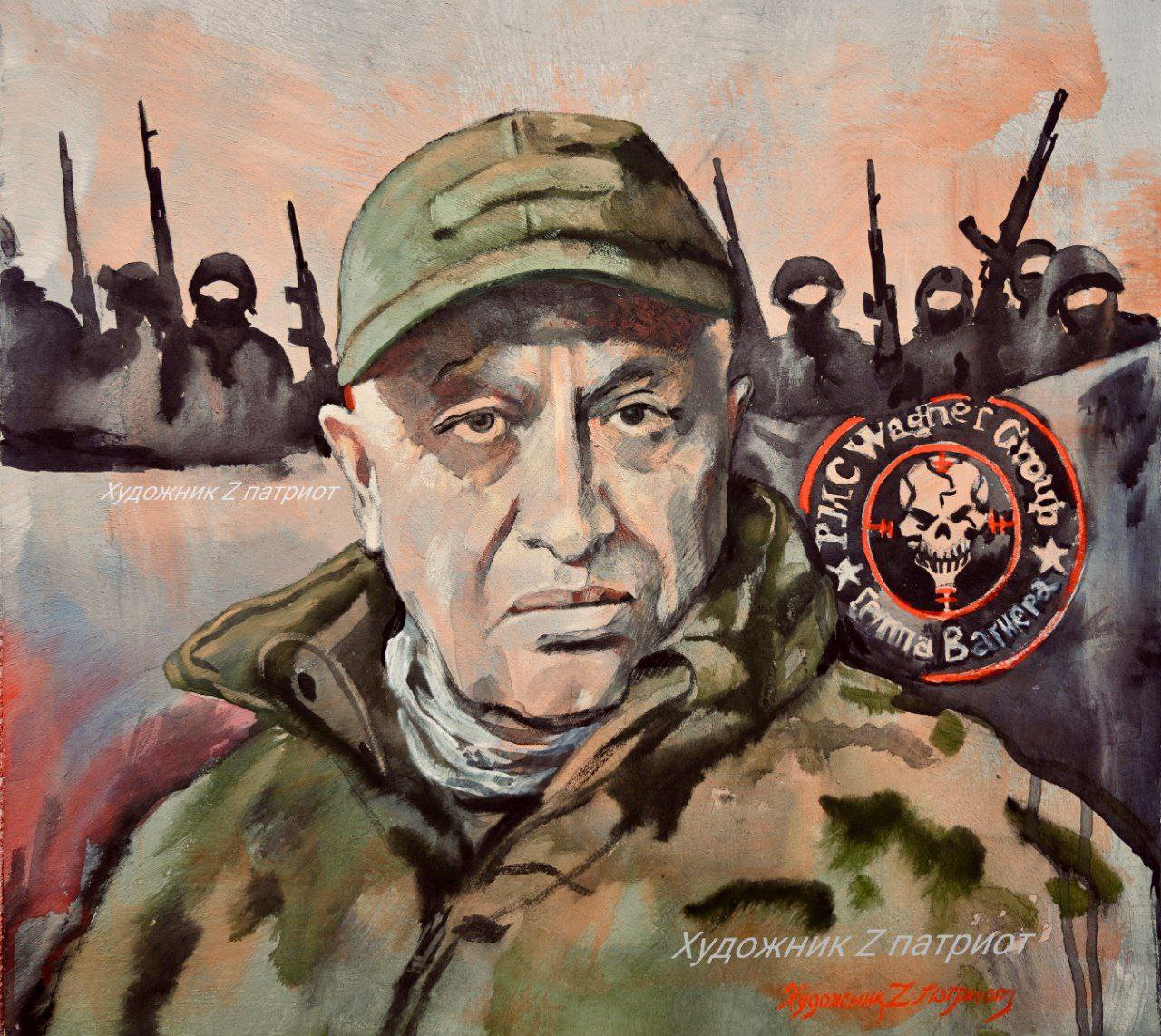
But attempts to try the paramilitary and its sponsors in court could end up being an interminable road to nowhere without a more concrete picture of the Wagner Group’s command structures and greater insight into the legal frameworks, financial arrangements, and coordinating mechanisms that allow Russia’s irregular contract soldiers to operate in tandem with Russia’s regular armed forces. Congress and its legislative counterparts in the United Kingdom and Europe should be moving much more swiftly to ensure that relevant government agencies issue a timely, credible, and regular public accounting of efforts to disrupt and expose the cartel structures that sustain the Wagner Group—information that they need in order to act effectively.
This report and those that follow in this series are an attempt to spur more creative thinking in policy circles about how to handle the Wagner Group and to catalyze more concerted action from the United States and its NATO allies. Our team draws on policy analysts, investigative journalists, academic researchers, and technologists; our skills include expertise in military affairs, international law, computational social science, anthropology, media studies, Russian language, and the political economy of modern Russia. Over the years, we have experimented with a variety of methods to cut through the fog surrounding the Wagner Group and its Kremlin connections, creating new tools and approaches to separate the signal from the noise across multiple streams of publicly available data. In addition to support from New America’s International Security Program, we have relied heavily on the skills, resources, and experience on loan to us from across Arizona State University, including the Center on the Future of War, the Data Mining and Machine Learning Lab, the Melikian Center for Russian, Eurasian, and Eastern European Studies, and the School for Complex Adaptive Systems.
Our analysis rests not only on the anecdotes and examples that we use to illustrate our points, but on several dozen terabytes of social media data, leaked corporate records and correspondence, public information registries, archived websites, field interviews, and insights gathered from experts around the world who have tracked the Wagner Group since its inception. Since February 2022, our lead researchers have been flooded with requests for information from the media, government policymakers, and international institutions seeking to explain or act in response to the unfolding actions in Russia’s invasion of Ukraine. The information is multilayered and complex and resists quick explanation. To help meet this demand, we are publishing this series of reports that will untangle long-standing relationships and address the rapid and ongoing changes that we see as Russia’s assault on Ukraine heads into its second year.
What we’ve learned after conducting multiple investigations is that the Wagner Group arguably constitutes one of the most successful deception operations in the annals of modern Russian military history. The Wagner Group was designed as a diversionary force from the very start: Its primary strategic mission is to misdirect attention and its secondary tactical purpose is force mobilization. Above all, the Wagner Group is essential to keep funds flowing to Russia’s state coffers as it contends with crippling sanctions. Social media and the Wagner Group’s explosive fan base growth online since the start of the Russian offensive in Ukraine has played no small part in helping Prigozhin achieve so much success on all three fronts: creating name brand recognition for Russia’s new generation warfare, energizing Russia’s ultranationalist base, and masking the stealth mobilization of thousands of irregular contract soldiers around the world.
“The Wagner Group arguably constitutes one of the most successful deception operations in the annals of modern Russian military history.”
Since Russia’s illegal annexation of Crimea in 2014, the Wagner Group and Prigozhin have become synonymous with Russia’s global military adventures. While the Wagner Group is far from the only Kremlin-approved Russian military-security contractor operating abroad, Prigozhin's operatives have taken on an increasingly prominent role in shaping Russia’s foreign policy. Beyond Ukraine, Russian expeditionary forces ostensibly working in the employ of Prigozhin operate on contract under agreements between Russia and dictatorships around the world, including Syria, Sudan, Venezuela, and the Central African Republic. UN experts and international human rights organizations have documented atrocities linked to the Wagner Group in multiple global hotspots, most notably in Mali and Libya. In response, the United States and European Union have repeatedly sanctioned the Wagner Group and Prigozhin, but to little effect and to their possible detriment. The Wagner Group continues to operate with impunity because many policymakers fail to recognize that it is private in name only, and that Prigozhin is more chief marketing officer than savvy military strategist.
Putin has outsourced many functions that traditionally belong to the Russian state to an organization that until very recently enjoyed no legal status under Russian law: The relationship between the two is intricate, changing, and largely concealed from direct view. Putin and the Kremlin have benefited handsomely from their murky relationship with Prigozhin. Absent the Wagner Group, Russia would have faced even steeper challenges with force mobilization and management in Ukraine than it has to date. In fact, it is highly likely that Putin factored Prigozhin’s successful management of the Wagner Group into his decision to invade. It is also possible that Putin was counting on the off-book hard currency revenues generated by the Wagner Group’s services in securing Russia’s arms and energy deals in far-flung locations across Africa, Latin America, and the Middle East to make up for export revenues that would be lost due the inevitable U.S. backlash and sanctions. Prigozhin is, therefore, inextricably linked not only in Russia’s military-industrial complex, but to Putin’s survival. Our data and evidence tell us that the Kremlin views the Wagner Group as fundamental to Russia’s ability to maintain its psychological edge over adversaries of Putin’s regime at home and abroad. Russian history tells us that this makes Prigozhin extremely valuable in the moment but potentially expendable in the longer term.
While Washington and Brussels seem to be waking up to the threat posed to Ukraine by the Wagner Group, there is little sign they understand the brewing factionalism between Prigozhin and Russia’s military leaders and its implications for the global order. These fault lines and shifting allegiances mean that it would be wise for the United States, NATO, and Ukraine to game out scenarios that would result if Prigozhin were either taken off the chess board or elevated further up the Kremlin’s ranks. If Prigozhin were eliminated tomorrow, the Wagner Group’s networks would certainly be disrupted, but it would not take long for Putin—or his successor—to find someone to take Prigozhin’s place. Treating the Wagner Group as an entity that is somehow distinct from the Russian state risks adopting a reactive and ineffective policy of targeting Russian businesses and special purpose military detachments that can easily adapt by using shell companies, changing ownership structures, and sheltering ill-gotten profits in complex digital currency transactions. For these and other reasons, designating the Wagner Group a foreign terrorist organization would likely be insufficient and possibly counterproductive to the task of changing Russia’s current course of action.
If Putin continues to rely on Prigozhin’s networks to solve Russia’s force mobilization and manpower management problems, at least two scenarios are possible. We could see Prigozhin eventually take a more prominent and perhaps even official government role such as a post in the Ministry of Defense. Much more likely, Putin could tap Prigozhin to stand for election as a member of the State Duma or appoint him to a high-profile regional post such as governor of St. Petersburg, a position currently held by a political rival of Prigozhin. Either scenario, however, would likely require Prigozhin to realign his priorities and shuffle resources to manage the twin roles of generalissimo and civil servant. This might be a desirable outcome in the short to medium term, but it would come with tradeoffs for both Prigozhin and Putin.
One possibility is that Prigozhin continues to accrue political capital and becomes an even more influential player not only in battlefield outcomes but also in a negotiated settlement with Ukraine. Another, equally likely scenario is that if and when negotiations between Kyiv and Moscow become more substantive and serious, Putin could come to see Prigozhin as a liability. One last and very real possibility is that Prigozhin will be successfully targeted for assassination by a political rival, Ukraine President Volodymyr Zelensky’s government, or a deniable proxy such as the Ukraine-based Freedom of Russia Legion. If this takes place, Washington can count on Prighozhin’s elimination sparking chaos within the ranks of Russia’s premier paramilitary cartel and should be prepared to deal with the ripple effects. Given the sway Prigozhin appears to have over Russia’s ultranationalist factions, there is a good chance that Putin would be compelled to respond strongly with a retaliatory strike in Ukraine to save face, scuppering any chance of negotiations with Kyiv.
As it is, Prigozhin is already facing a lawsuit brought in the United Kingdom by lawyers for several of the Wagner Group’s victims in Ukraine. The Wagner Group is likely to also surface in ongoing prosecutorial investigations led by the International Criminal Court into Russian war crimes in Ukraine. With momentum building behind calls to establish a special international tribunal on war crimes in Ukraine, there is also a good chance that Prigozhin and the Wagner Group could figure prominently in any bargaining between Russia and Ukraine to end the war.
All the above scenarios suggest that when it comes to dealing with Prigozhin and the Wagner Group, it is best to focus on the long game. Designating the Wagner Group a foreign terrorist organization risks the United States and its European allies getting stuck in rounds of short term reaction rather than executing a durable strategy. In time, as pressure mounts on the Kremlin, we could easily see a situation where the Wagner Group is replaced by a shell organization or any one of the other real world Russian military contractors now operating in Ukraine like Redut Antiterror, aka PMC Redut.
To make headway on the threat posed by Russia’s irregular contract forces, the United States and its NATO allies are going to have to get to grips with the three-pronged strategy that Prigozhin, his subordinates, and his paymasters in Russia’s oligarchy have employed to make the Wagner Group so successful. Social media constitutes the first and perhaps most underrated weapon in Prigozhin’s arsenal. As the detailed analysis in this brief and others in this series indicate, Wagner Group commanders and consultants in the employ of Prigozhin’s enterprises have leveraged social platforms and traditional media to great effect. In many ways, the Wagner Group today is much a social movement as it is a paramilitary organization. The sway Prigozhin now holds over millions online will be a force that both the Kremlin and the White House will have to contend with for years to come.
The second advantage Prigozhin now holds relates to the first prong in his strategy. By drawing attention to his splashy antics on and off the battlefield, Prigozhin has succeeded in diverting attention away from the business and personal relationships he has cultivated with Putin’s oldest friends and closest inner circle. A tremendous amount of open-source data point to the benefits conferred on Russia’s oligarchy by the Wagner Group and other less well-known paramilitaries posing as private contractors. The United States and Europe have sanctioned billionaire Russian businessmen like Gennady Timchenko, head of the Volga Group; Sergey Chemezov, CEO of Russian state arms conglomerate Rostec; Igor Sechin, head of Rostec; Alexey Miller, chief of Gazprom; and Yuri Kovalchuk, head of SOGAZ, Russia’s largest insurer and the majority stakeholder of VKontakte, the social media platform that birthed the Wagner Group brand. These five men are not only Putin’s oldest friends; they and the companies they run are the backbone of the cartel that profits from the Wagner Group activities. The shadowy financial intermediaries, digital currency exchanges, and shady trading houses that make it possible for Prigozhin to recruit, equip, and pay the salaries and death benefits for Wagner fighters remain, despite the sanctions, virtually untouched.
The third and last tactic Prigozhin has employed is the one that may have the most serious long-term ramifications for the global order. Forces deployed under the Wagner Group and Prigozhin’s employees have operated with impunity for at least a decade now, relying on a combination of brutality, ambiguity, and deniability to keep them beyond the reach of international justice. Killing journalists, filing strategic lawsuits against public participation in investigations of misconduct against researchers, interfering in elections and massacring civilian opponents of the dictatorships Russia is propping up—all these are part of a playbook designed to intimidate and eliminate anyone who dares question Prigozhin’s business dealings and the Kremlin’s military adventures. Wagner Group commanders have killed scores in violation of international law, and it has pillaged countless mines and oil and gas fields. And, yet so far no government or international body has proposed a workable strategy for pursuing a prosecution of Prigozhin and the Wagner Group for war crimes. This needs to change if the United States and NATO truly want to one day see a durable settlement achieved in Ukraine and end the Wagner Group’s reign of terror.
Where many of Russia’s military leaders have failed in driving the narrative of Russia’s war of aggression in Ukraine, Prigozhin has succeeded. One measure of Prigozhin’s importance to Russia’s psychological warfare strategy is the media splash created by the well-timed release in September 2022 of a “leaked” video showing Prigozhin urging prisoners to join up to fight with the Wagner Group. The video turned up online only 10 days after Putin’s party announced plans to push for the annexation of Ukrainian territory seized during the Russian invasion and just before Putin announced Russia’s mobilization of 300,000 conscript soldiers. Released on the heels of devastating Russian battlefield losses only a few weeks earlier, the video went viral overnight.
Priogozhin’s prison recruitment video appeared to offer concrete evidence of coordination between Prigozhin and Russian authorities after years of denials from the Kremlin. Up until that point, Prigozhin generally played along with Putin’s strategy of maintaining plausible deniability, often dissembling when questioned about his role and the Wagner Group’s connections to the Kremlin. This is why many analysts were surprised when Prigozhin issued a statement in late September acknowledging his ties to the Wagner Group. It was a bold admission given the fact that the Wagner Group has come under scrutiny from the UN for egregious war crimes committed in several countries across Africa and the Middle East in recent years—to say nothing of the countless violations of laws of war that have taken place since the start of Russia's latest offensive in Ukraine.
Prigozhin’s avowal came two days after he showed up at a funeral for a Wagner fighter killed in the strategically important eastern Ukrainian town of Bakhmut. Five weeks later, Prigozhin acknowledged online that he backed the Russian troll farm that interfered in the 2016 U.S. presidential election that put Donald Trump in the White House. Finally, Prigozhin openly cheered the brutal Islamic State–style videotaped execution of a former prisoner who volunteered with the Wagner Group, later briefly escaped, then was traded back to Moscow in a prisoner swap with Kyiv.
The sledgehammer-wielding executioner who appears in the gruesome video has not yet been identified. But when the European Parliament issued a resolution urging the EU Council to designate the Wagner Group a terrorist organization soon after news of the on camera execution surfaced, Prigozhin responded by circulating a video of one of his company representatives delivering a bloodied sledgehammer to the EU parliament. The same month, the Wagner Group announced the grand opening of its new headquarters in a massive new skyscraper in central St. Petersburg, sparking speculation that Prigozhin might be angling for a political appointment.
These developments raise questions: Was Prigozhin’s sudden grab for the spotlight coordinated with the Kremlin, or had Putin’s attitude toward Prigozhin shifted? Why, after years of carefully distancing itself, would the Kremlin suddenly decide to abandon its long-running strategy of maintaining plausible deniability when it comes to Prigozhin and the Wagner Group?
The answer is simple: It hasn’t. What, if anything, has changed is that the Kremlin has increased its level of investment in the campaign to promote the Wagner Group at a time when Russia’s need for battlefield manpower has never been more critical. Yet, the Kremlin and key government agencies such as the Ministry of Defense continue to deny any knowledge of the Wagner Group’s operations. In so doing, it has simultaneously promoted the myth that the Wagner Group is accountable to none and fueled the rise of a powerful faction of ultranationalist politicians and online influencers while at the same time elevating Prigozhin’s public profile.
Building up the Wagner Group brand has been a top priority for Prigozhin and the Kremlin for at least a decade. After the start of the Arab Spring, the Kremlin has sought to counter instability in states that depend on Russia for military equipment and energy production expertise. When the United States, United Kingdom, and other NATO allies began to interdict shipments of weapons to Syria following the 2011 uprising against the government, Russia covertly began to infiltrate Russian special purpose military detachments into Syria in 2012 as part of the plan to expand the Russian Naval Sustainment Base at Tartus. Strategically “leaked” tidbits about the Wagner Group helped divert attention away from the Russian firms and contractor military units that continued to do business with sanctioned actors like Syria’s President Bashar al-Assad. The Wagner Group narrative also helped tamp down public scrutiny of Russian military operations as well as manage escalation risks in areas where rival states like the United States and Turkey were operating as combatants in undeclared wars. Wagner’s brand identity rapidly expanded with Russia’s first incursion in Ukraine in 2014. At that time, Russia was facing international pressure for its support of Assad’s regime and wrestling with the impact of a raft of sanctions levied against its largest energy and arms producers after its annexation of Crimea, and it was looking to maintain its preeminent position as the world second largest exporter of arms after the United States and a top ranked energy producer and trader.
Only then, fragmentary stories about a mysterious ghost army employed by a shady caterer loyal to Putin began cropping up in the Russian blogosphere. Prigozhin’s marketing skills and his deft management of his ties to Kremlin insiders helped transform stories about the Wagner Group into a Russian media juggernaut that has shored up Russia’s ability to patch up manpower gaps on the frontlines in Ukraine. A critical part of this media machine is a network of Wagner-linked bloggers, which we will explore in our next report, A Field Guide to Wagner Group Bloggers: Russia’s New Mercenary Media Elite.
Senior Fellow, Future Security