A Chapter of: Housing and Climate Change in the United States
III. Those Who Receive
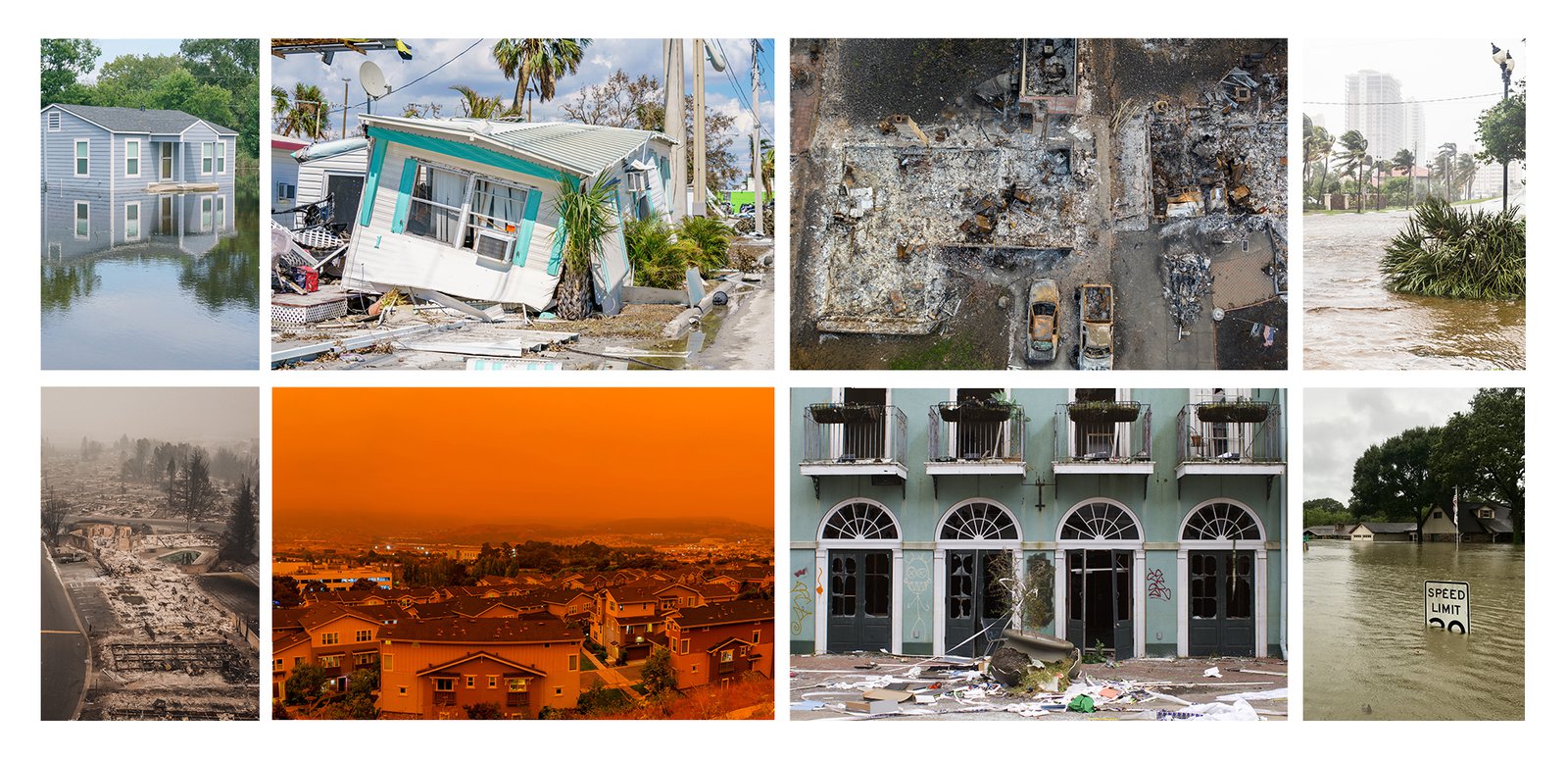
Climate impacts, particularly natural disasters such as hurricanes and wildfires, often trigger an outflow of residents from affected areas into nearby neighborhoods, towns, and cities. Such rapid population growth can overwhelm receiving communities’ resources and social services, raise housing prices, and lead to an increase in homelessness.
Shutterstock
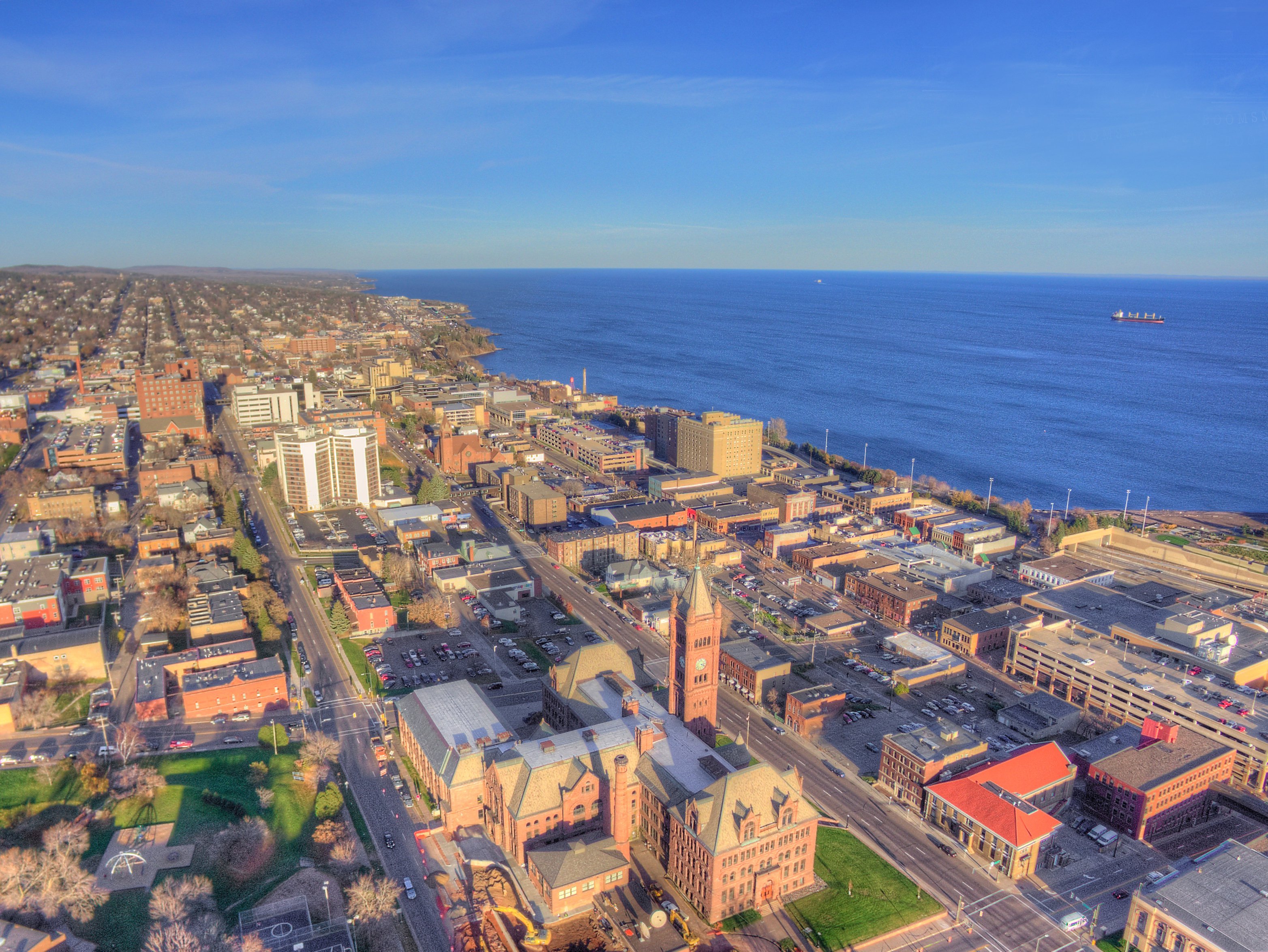
By contrast, some cities such as Buffalo, New York, and Duluth, Minnesota, are actually positioning themselves as “climate havens,” with the hope that an inflow of residents will boost the local economy and reverse population outflows stemming from the United States’ post-industrial demographic reshuffling. Buffalo, for example, lost over half its population between 1950 and 2010, yet the city’s inland location and proximity to freshwater make it relatively well-suited to withstand climate impacts. In the coming decades, local officials in Buffalo and similar cities must ensure that there is an adequate supply of safe and affordable housing as well as sufficient infrastructure to support large increases in population and possible climate gentrification.
Currently, the discernible impacts of climate change on housing in climate havens are only emerging. Yet, while much of the present conversation focuses on communities bearing direct impacts of climate change, many policy choices that climate haven cities undertake in the next few years and decades will determine the livelihoods of long-time residents and new climate migrants.
Housing Scarcity and Homelessness
Some studies suggest that climate migrants will move West, while other research asserts that the Northeast or the Great Lakes region will become climate havens. Regardless, this future climate migration will likely raise housing costs and exacerbate shortages in climate havens across the country. According to analysis from Redfin, wealthy California transplants are already driving an increase in Denver, Colorado, home prices. The increased demand for housing within receiving communities will increase rents and home prices, likely disproportionately affecting lower-income residents.
If policymakers do not channel the necessary resources to ensure housing supply keeps pace with demand within these climate haven communities, the result could be major spikes in housing loss and housing insecurity.
The northern California city of Chico is a stark example of this challenge. An inflow of refugees from nearby Paradise, which burned to the ground in 2018, exacerbated a severe affordable housing shortage. Almost overnight, the population of Chico grew by 20,000 as the city opened up multiple shelters and residents housed fire victims in their own homes. But this rapid population growth has been unsustainable, and the city has subsequently experienced a homelessness crisis, with roughly a quarter of the unhoused population in surrounding Butte County losing their homes in the 2018 fire.
Climate Gentrification
As climate impacts become more severe, some residents from wealthy and more white, but climate-vulnerable neighborhoods and communities are relocating to nearby areas that are poorer, more Black and Hispanic, and more resilient. Increasingly referred to as “climate gentrification,” this dynamic has many of the same negative effects as gentrification more broadly. Lower-income, lifelong residents of a neighborhood are pushed out by rising housing costs and pressure from developers, who see potential profits from building on newly desirable land and selling to wealthier newcomers. Sometimes, displaced households have little choice but to relocate to neighborhoods that are more vulnerable to climate change or lack easy access to public services and economic opportunities.
Both in-depth reporting and a growing body of academic research indicate that climate gentrification is occurring more frequently across the United States, especially within certain cities. Following Hurricane Katrina and more recent storms, for example, higher-elevated, historically Black neighborhoods in New Orleans are undergoing significant socioeconomic changes. Analysis of U.S. Census data by CNN found that the share of Black households in Census tracts with the highest median elevations fell by more than a third between 2000 and 2019. Many of these elevated neighborhoods also saw more pronounced economic gentrification in the years since Katrina. Overall, the correlation between elevation and race in New Orleans has become more pronounced in the last two decades: Higher areas tend to be more white, and lower areas more Black.
Climate gentrification is also increasingly noticeable in low-lying Miami, where scientists predict five to six feet of sea-level rise by 2100. Miami is a city with immense wealth at risk from future climate impacts—$15 to $23 billion of property could be underwater by 2050—along with significant socioeconomic inequities. Research from Tulane University professor Jesse Keenan and others found that, in general, single-family homes situated on higher ground in Miami-Dade County increased in value at a higher rate than those in lower lying areas. In Miami’s Little Haiti, a minority community that sits on an inland ridgeline, the average home value has nearly tripled since 2010, the largest price hike of any Miami neighborhood during that time.
It is also worth noting that climate gentrification is occurring further inland. In Arizona, for example, it is suspected that many Phoenix residents are already fleeing the city’s extreme heat. (The Phoenix Metropolitan Area is expected to experience nearly 150 days above 105 degrees by 2050.) Some wealthier residents are relocating to Flagstaff, a small city in the state’s mountainous north, which provides more moderate temperatures. But long-term residents in Flagstaff are increasingly worried that higher-income households will price them out as rents and home values rapidly increase.