A Chapter of: Housing and Climate Change in the United States
I. Those Who Move
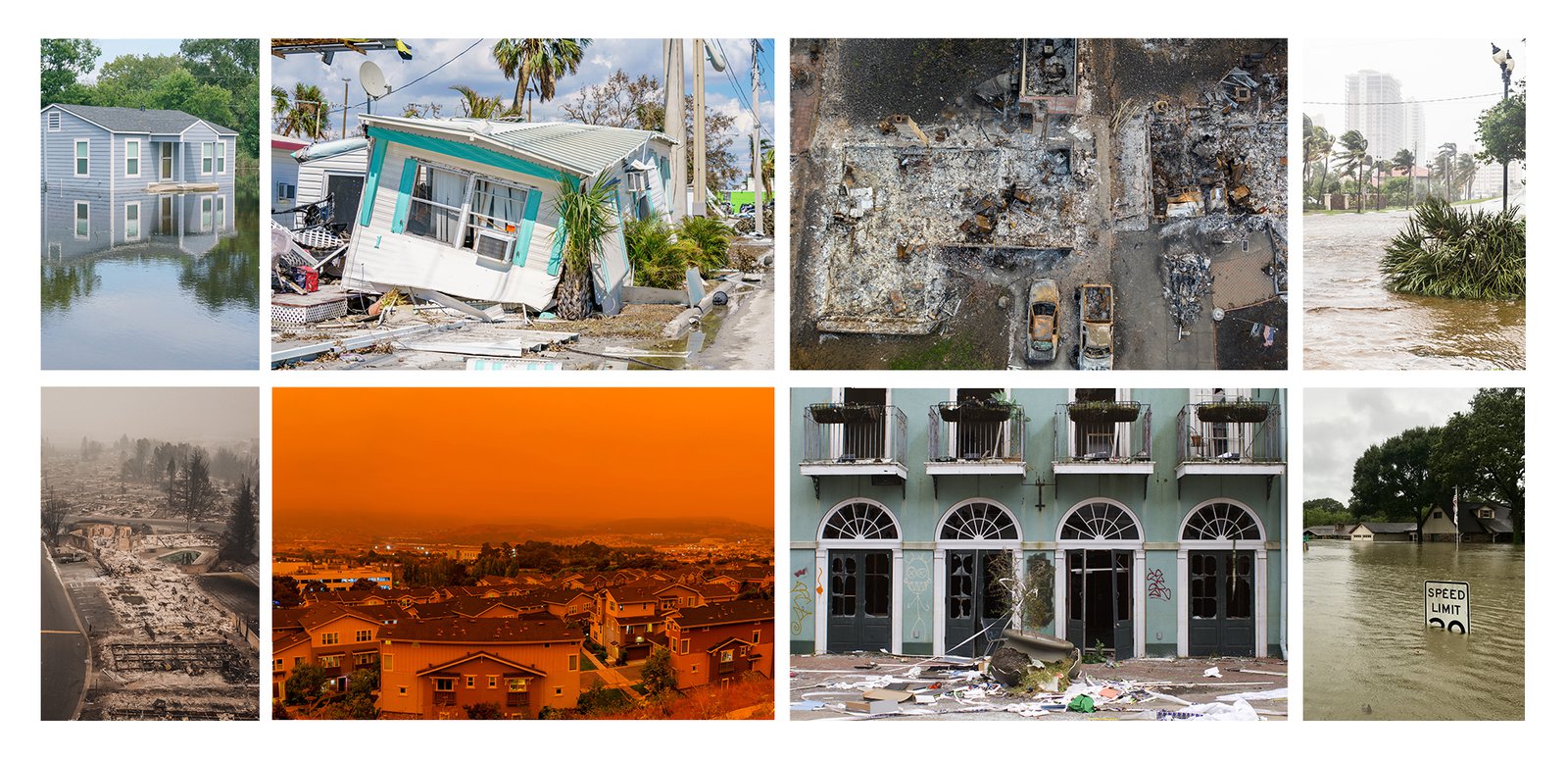
Climate change will likely result in major population shifts across the United States, as people are displaced by natural disasters or voluntarily relocate away from areas at risk of climate impacts. Based on recent trends, tens of millions of U.S. homes likely sit in disaster-vulnerable areas, and this number is certain to increase due to sea-level rise, drought, and extreme heat. Tulane University professor Jesse Keenan estimates that 50 million Americans could move by 2050 due to climate change.
In this section, we explore three types of “moves” due to climate change: disaster-driven displacement; planned community-level relocation; and ad-hoc individual action.
Disaster-Driven Displacement
Natural disasters displaced 1.9 million U.S. households in 2022, and the number of people forced out of their homes each year by storms, wildfires, and droughts will only increase as global temperatures rise.
Sudden displacement caused by a natural disaster is physically and mentally traumatic, disruptive to livelihoods, education, and social cohesion, and negatively impacts individuals’ and families’ financial wellbeing. Further, research indicates that disaster-related displacement exacerbates existing racial and socioeconomic inequities in the U.S., and post-disaster reductions in affordable housing make it especially difficult for lower-income households to return to their communities.
After a disaster, many Americans face difficulties in rebuilding their damaged homes or finding safe and affordable alternative housing for the long term. These challenges result, in part, from a byzantine patchwork of insurance coverage, post-disaster housing, and reconstruction aid that is not timely or sufficient to meet the needs of impacted communities.
Less than 20 percent of U.S. homes have standalone flood insurance, and homeowners insurance typically does not cover flooding from extreme rainfall, storms, or other natural disasters, leaving homeowners dependent on federal aid to cover property or financial losses. This aid is typically provided by the Federal Emergency Management Agency (FEMA) and the U.S. Department of Housing and Urban Development (HUD), the two federal agencies primarily responsible for disaster recovery.
Jeff Gammons StormVisuals / Shutterstock.com
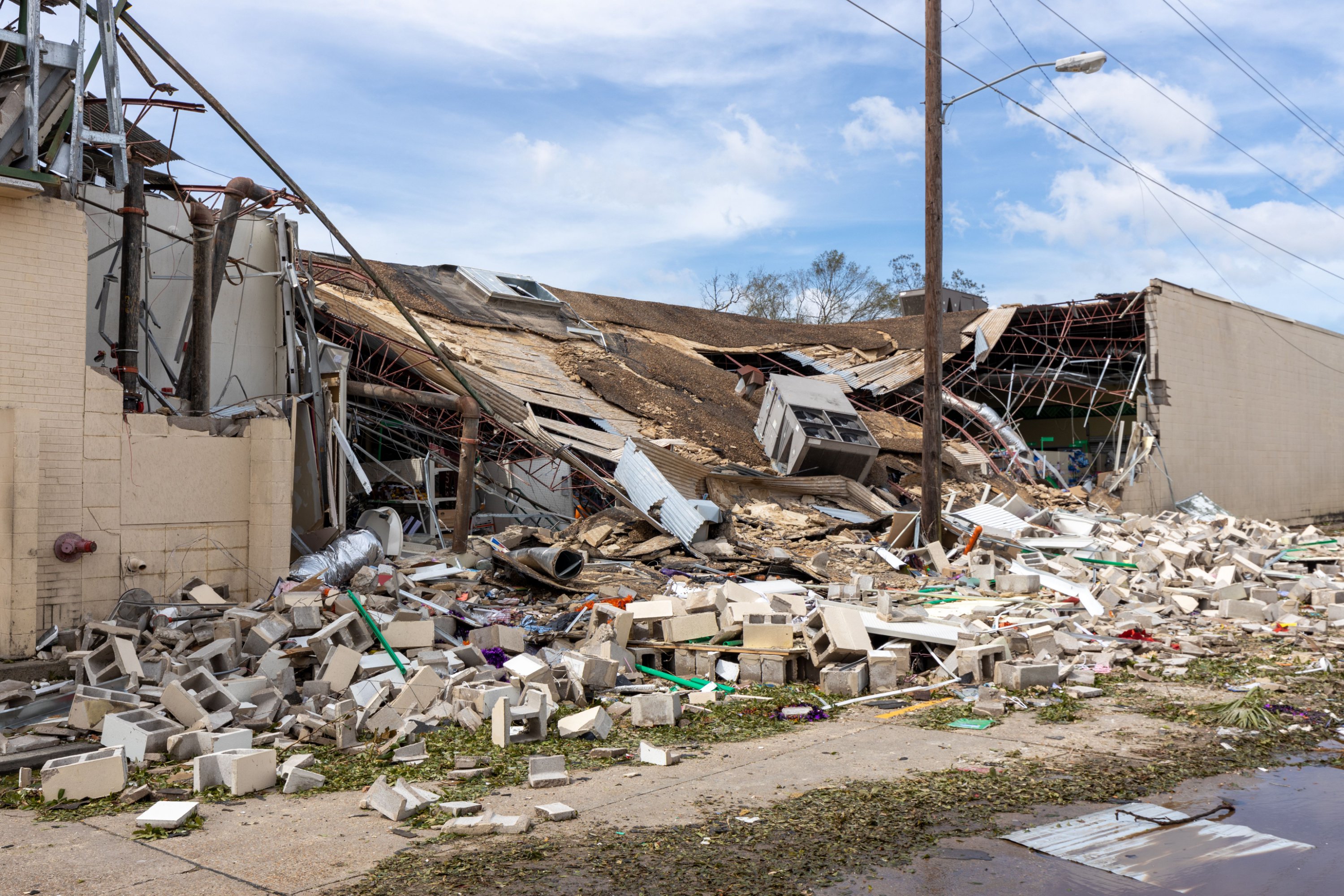
Yet, as reported in-depth by New York Times journalist Christopher Flavelle, the disbursement of federal aid is commonly hamstrung by bureaucratic rules and inefficiencies, and long-term assistance can take years to materialize. FEMA only provides temporary relief for disaster victims, lasting up to 18 months post-disaster, and would require Congressional approval to fund permanent repairs or purchase new homes. HUD is responsible for providing long-term recovery funds, but there is often a lapse between post-disaster aid through FEMA, and the onset of long-term recovery funds from HUD. Due in large part to the need for HUD to obtain Congressional approval before disbursing funding to state and local governments, this process can last months or years. Even after Congressional approval, a monthslong rules writing and approval process precedes the disbursement of the money to states. In Lake Charles, Louisiana, for example, many displaced residents had not received HUD assistance more than two years after Hurricanes Laura and Delta decimated the city in 2020.
Disaster, Class, and Race
Discriminatory housing policies in the United States have resulted in lower-income and minority communities living in areas at higher risk of flooding and other environmental hazards.1 Low-income Americans are also more likely to live in homes that are older and less able to withstand a natural disaster, increasing their vulnerability. At the same time, analysis by FEMA indicates that many of these households lack flood insurance. Federal requirements for insurance in high-risk areas are not tightly enforced, and coverage is often cost prohibitive.
These lower-income, minority communities are less likely to receive post-disaster relief, especially compared to white, affluent communities. Many FEMA aid programs target property owners, which immediately prioritizes wealthier homeowners and marginalizes renters. Affluent communities also better possess the time, resources, and networks to access this financial assistance.
So once disbursed unequally, these government relief funds tend to exacerbate wealth disparities, increasing the financial standing of more resilient, wealthier Americans while further impoverishing poorer communities that typically struggle to recover from disasters. In fact, a 2019 study from the University of Pittsburgh and Rice University found that, the more aid an area receives from FEMA, the more inequality increases along lines of race. In counties hit by large disasters, which in turn receive more aid, Black residents experience a $27,000 decrease in their wealth on average while their white neighbors experience a $126,000 increase in their wealth on average.
Ultimately, households in low-income and minority neighborhoods are much more likely to be displaced long-term by natural disasters or struggle to rebuild their homes and recover financially. Hurricane Katrina is indicative: Nearly one-in-three Black residents have not returned to New Orleans after the storm, while the white population has nearly reached its pre-hurricane level.
As a result of these hurdles, households and communities impacted by disasters face an impossible choice: continue to live in substandard and temporary housing, while fighting to receive aid and rebuild, or move away to find permanent housing elsewhere. But mobility is often a reflection of socioeconomic class and these dynamics can exacerbate existing inequalities: Higher-income households are most likely to have the social and economic resources to access assistance, rebuild, or move, leaving behind already-vulnerable families and individuals.
Planned Community-Level Relocation
A June 2020 report from the First Street Foundation warns that a stunning 14.6 million properties in the continental United States are at substantial risk of flooding in the next 30 years, as climate impacts worsen. In some coastal states, such as Florida and Louisiana, entire seaside communities will likely become uninhabitable in the coming decades.
Local leaders are responding to this climate risk in various ways, including by building sea walls and elevating homes in floodplains and storm-prone areas. Yet these adaptation measures are becoming increasingly inadequate as sea levels rise and severe flooding increases, prompting some policymakers to consider or implement a strategy known as “managed retreat.”
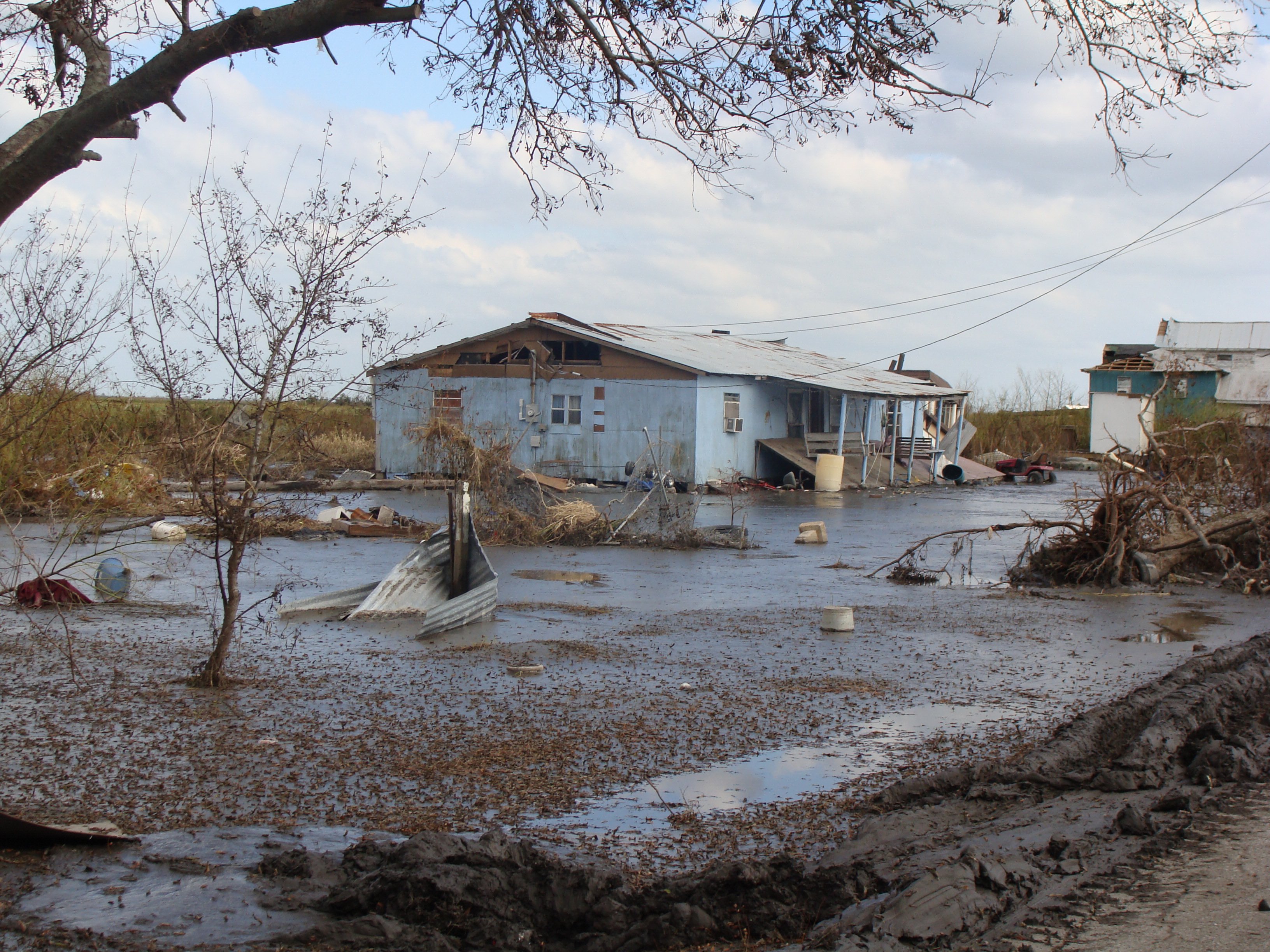
Managed retreat is the purposeful and planned relocation of people, homes, and other infrastructure away from disaster-vulnerable coastal areas and floodplains. The strategy is most often applied following a natural disaster, when a local government offers homeowners the “pre-disaster” value of their damaged house to relocate instead of rebuild. Historically, the federal government provides three-quarters of the funding—via FEMA or HUD—and state and local officials fund the balance and administer the program.
The U.S. Government facilitated over 43,000 voluntary buyouts in 49 states and three U.S. territories between 1989 and 2017, relocating vulnerable homeowners with FEMA funding following a disaster. A more well-known example is New Jersey’s Blue Acres Buyout Plan, which has completed over 1,000 voluntary buyouts since Hurricane Sandy in 2012.2
Still, managed retreat is applied incrementally and at a small scale in the United States, and the number of buyouts has steadily declined in recent decades. In part, this downward trend reflects the many financial, logistical, and political challenges of successfully implementing managed retreat strategies. The typical U.S. home cost $357,000 in January 2023, and it is often difficult for municipalities, especially those that are poorer or less populated, to secure funding for buyouts. Many local governments may also lack the administrative capacity to engage in lengthy negotiations and purchase houses. Managed retreat has also been considered a political “third rail,” with elected officials reluctant to place the financial and psychological burdens of relocation on their constituents.
Karen Apricot / Flickr.com
Political support for managed retreat could be growing, however. According to the New York Times, the Biden Administration appears to have created the first program in U.S. history that is specifically designed to help relocate communities threatened by climate change. In 2021, Congress provided the Department of the Interior’s Bureau of Indian Affairs with $130 million to spend over five years on relocating flood-prone tribal communities. At least eleven tribes have applied for relocation grants within this more proactive approach to climate change, with two native communities in Alaska and one in Washington State receiving $25 million each to relocate.3
Ad-Hoc “Individual Action”
The slow pace and limited scale of buyouts and other government assistance means that many households may move away from climate-vulnerable areas through individual action, using their own resources. This dynamic may cause far larger population movements than managed retreat and other planned relocation strategies: An influential 2018 study suggested that one in twelve Americans in the Southern United States will move towards California, the Rockies, or the Pacific Northwest over the next 45 years as people choose to relocate to regions less susceptible to extreme climate.4
There is no comprehensive or national data on climate migration rates in the United States, but reporting and small-scale research indicate that more and more families are grappling with these decisions. A 2021 Redfin survey of 2,000 people found that nearly half of the respondents who planned to move in the next year attributed their decision to increased natural disasters and extreme heat, and over one-third claimed that sea-level rise was a factor in their planning. Another, smaller survey of 30 new residents in Vermont, indicated that one-third factored climate in their decision to relocate from out of state.
ProPublica reporter Abrahm Lustgarten predicts that a larger wave of migration will begin once climate change more acutely impacts wealthier populations’ physical and financial security. As mobility is often a reflection of socioeconomic class, future population shifts are likely to increase poverty and exacerbate social, economic, and political divides. Low-income and minority households in the United States are most affected by climate impacts and suffer the most severe effects of natural disasters—yet these individuals and families often have fewer financial resources, job opportunities, and social networks that allow for a planned move away from climate-vulnerable areas. Already, wealthy households in coastal Louisiana and Georgia are relocating away from at-risk areas, while Black and Indigenous communities are largely left behind.
Where Will Climate Migrants Move?
Predictions on where climate migrants will move include future “climate havens” such as New England, the Pacific Northwest, and the Great Lakes region, although many of these areas are also experiencing extreme weather. But Anne Weber, a policy analyst at the Natural Resources Defense Council, has found that many of those already displaced prefer to remain in their home regions if possible. People in coastal areas may simply move inland within their own state.
Historical trends suggest that the climate crisis will accelerate urbanization. Other research more specifically indicates that climate migrants will move to nearby counties that are more urban and have lower unemployment rates and higher wages. A little over half the U.S. population lived in cities in the mid-twentieth century. By 2050, some researchers believe that 90 percent of the country will live in urban areas, in part due to negative climate impacts.
Citations
- For example, research from The Nature Conservancy and the University of Washington School of Environmental and Forest Sciences found that communities that are mostly Black, Hispanic, or Native American experience 50 percent greater vulnerability to wildfires compared with other communities.
- It is worth noting that, in addition to funding from FEMA and HUD, the Blue Acres Buyout Program receives funding from a portion of New Jersey’s corporate business tax, in order to ensure a more sustainable and predictable funding approach.
- Another notable development is the U.S. Army Corps of Engineers 2015 incorporation of eminent domain within its “compulsory managed retreat” policy, which conditions flood mitigation funding on a municipality’s agreement to use eminent domain to relocate households if necessary.
- Of course, large areas of California are now at significant risk of wildfires. The state has the most at-risk properties in the United States due to its large size and Mediterranean climate, according to a 2022 analysis from the Washington Post. Recent disasters also indicate that the Pacific Northwest and the Rockies are also increasingly vulnerable to wildfires.