Table of Contents
- Executive Summary
- Introduction: The Case for More and Better Parties
- 1. Defining the Problem(s)
- 2. The Case for Political Parties: Why Modern Mass Democracy Needs Political Parties and Can’t Operate without Them
- 3. Learning from History: The Flawed American Tradition of “Tearing Open” without “Building Up”
- 4. The Contemporary Choice: Will We Repeat the Mistakes of the Past or Build Something Better for the Future?
- 5. Pro-Parties Reform: Building More and Better Parties
- 6. Conclusion: Imagining a Better Future, with More and Better Parties
Introduction: The Case for More and Better Parties
American democracy is in crisis. The basic foundational agreements of legitimate opposition and neutral elections are in shambles. Partisans view each other as the nation’s top threat, surpassing even foreign adversaries. Each election, we are told, the soul of the nation is at stake: Will America remain a democracy?1 Will America remain “America”?2
Such high-stakes uncertainty atop repeated us-versus-them conflict is a proven driver of political extremism.3 In moments of uncertainty, humans are drawn to demagogic extremism to restore order. Close binary conflict lights up our ancient in-group versus out-group threat circuits, and leads us away from cooperation and compromise and toward violence.
Yet amid rising extremism—or perhaps more accurately, because of it—the possibility for electoral reform expands. More people recognize the problem is bigger than any individual actor. The problem is the party system itself. And it is not self-correcting. Instead, it is self-reinforcing; a “doom loop.”
As the enthusiasm surrounding electoral reform intensifies, we're witnessing, for the first time in generations, a tangible opportunity for a revitalized, more inclusive, and responsive system of self-governance to emerge.
Paradox pervades this possibility. Reform feels feasible precisely because the status quo feels so unstable. Big political change travels with rising radicalism and extremism. Indeed, there are many good reasons to believe the United States is entering its fourth great era of democracy reform. As with the previous reform eras (the 1830s, the 1900s, the 1960s), a high-stakes moral passion animates politics. Engagement hits new highs. Antisystem sentiments and institutional distrust prevail among the general public.4
We must act. The threats and uncertainties are real, self-reinforcing, and worsening. Uncertainty breeds extremism. Extremism breeds uncertainty. Many actors in American politics now openly espouse views antithetical to pluralist, liberal democracy. They remain on the cusp of winning unified control in Washington, DC. The stakes are high. Democracy may not survive.
The pressing task at hand is to thwart extremists from seizing governmental power. In the near term, this entails sidelining those with authoritarian inclinations who seek to penalize their adversaries, curtail civil liberties, and manipulate electoral regulations into a permanent advantage.
The long-term challenge is to minimize the allure and influence of these illiberal forces, limiting their power and access for generations to come. This is more difficult. It demands understanding the reasons illiberal, extremist forces have gained such traction in contemporary American politics.
This paper advances an argument that such extremist forces are a product of the party system—in particular, our hyperpolarized, nationalized two-party system. Therefore, only a system change can address the threat of extremism and democratic breakdown. Because political parties are the central organizing institutions of modern democracy, no change is possible without changing the political parties.
The core problem is that a system so deeply divided by geography, identity, and culture has catalyzed a zero-sum, us-against-them mode of political conflict that feeds on itself. This dominate-or-be-dominated partisan conflict breeds distrust, hatred, and extremism, and a predictable slide into authoritarianism.
Thus, to marginalize the dangers of extremism destroying our political system, we must address the core of the problem: the two-party doom loop.
The “rotten at the core of the party system” is a familiar trope in American political reform. In every era of reform, leading activists have railed against the evils of the party system. The traditional American reform move has been to treat political parties, particularly party leadership, as an obstacle to democracy in America. The classic reform move in every era has thus been a variation on the same theme: more direct democracy. In each era, reformers have sought a way around parties.
But there is no way around political parties in modern mass democracy. Improving democracy hinges on robust political parties. Rather than treating political parties as obstacles to healthy democracy, this paper treats political parties as facilitators of healthy democracy. Political parties make modern representative self-governance possible.
We need better parties. By better, I mean parties that can honestly and effectively carry out the essential activities that parties perform in modern democracy. Thus, effective and representative governance in modern democracy requires better parties.
Here, it is crucial to clarify: Political parties are a means to better governance. Political parties are the infrastructure of modern mass democracy just as roads and bridges and railways and airports and electricity grids are the infrastructure of a modern economy. If we want better roads and bridges, it is not merely because we enjoy driving. Rather, we say we want better infrastructure because of what else it makes possible—a thriving economy not bogged down by potholes and closures and traffic snarls. In the same way, we want better political parties not for their own sake, but for the sake of a healthy representative democracy that improves the collective welfare of everyone. Like roads and bridges that connect citizens across the country to the larger economy, parties are the institutions that connect citizens to the government. When they function poorly, many citizens feel disconnected and isolated.
“We want better political parties not for their own sake, but for the sake of a healthy representative democracy that improves the collective welfare of everyone.”
Healthy parties perform numerous essential functions. They aggregate long-term policy commitments among diverse groups and communicate the consequences of these policies to voters at scale. They make elections meaningful and consequential by structuring choices. They engage and mobilize voters. They vet and support qualified candidates for public office. Healthy parties assemble governing majorities and broker compromises capable of solving public problems.
Healthy parties perform all these roles with honesty and integrity. Healthy parties do not lie to voters. Healthy parties do not engage in corruption. Most importantly, healthy parties adhere to the basic foundations of democracy—mutual toleration and forbearance.5 Healthy parties police extremism and authoritarianism in their ranks. Healthy parties do not dehumanize their political opponents or tolerate violence, let alone endorse it. Healthy parties accept electoral defeat with grace, and electoral victory with humility.
Healthy parties take a longer view than individual candidates and know that they will be held accountable by voters, whether they are in the majority or the minority in a particular governing institution. They don’t expect total, permanent power, but they hope to achieve at least some of their policy goals in any circumstance.
Healthy parties do not mean perfect parties. As with other institutions in society—corporations, universities, hospitals, nonprofits, etc.—institutional quality exists on a continuum. Institutions change. Leadership matters. Culture matters. Personnel matters.
Yet the system itself matters. Our polarized, nationalized two-party framework results in parties entrenched in relentless conflict, producing limited options and repercussions from intense competition. Politics is an ecosystem. If the temperature is too high, the ecosystem collapses.
A multiparty system creates multiple parties that exist in more dynamic competition and cooperation. This environmental variable is the crucial shaping factor for the quality of parties. In a multiparty system, party quality will certainly vary. It should. But more competition means that new parties can emerge when mainstream parties falter.
Understandably, advocacy for better parties can feel hollow when hyperpartisanship is such a core democratic crisis. Our existing party system is undoubtedly spiraling into disaster. But we cannot do modern democracy without parties. So we must build better parties, not abandon parties altogether. We need vibrant competition for representation and effectiveness. A genuine multiparty democracy—the proper environment for better parties to emerge—is unlikely to take hold immediately. Our two-party system is the product of existing single-winner election formulas that discourage third parties by rendering them as spoilers and wasted votes. The two-party system is also buttressed by other rules that punish smaller parties, such as anti-fusion and ballot-access laws, which major parties have put in place to protect their dominance.
Altering these rules takes time. But momentum for structural reform is increasing. In the meantime, we must do what we can, where we can. We can take buckets to the flood to hold off the worst damage right now while recognizing that we must also repair the stormwater management system.
Elevating more moderate representatives over extremists in the short-term can keep the extremists out of power. Several reform approaches can accomplish this goal, to varying degrees. Some may work better under certain circumstances than others. All may buy us a little time. We must carefully consider which reforms can yield immediate results while also contributing to long-term stability. A short-term fix that comes at the cost of long-term stability is counterproductive.
The core argument of this paper is that long-term democratic stability will require more political parties and better political parties. The contemporary rise of political extremism and the threats to our democracy are consequences of a failed party system.
We cannot have a functioning, representative, participatory democracy without organized political parties. Political parties provide the coherence and framework of electoral choice and governing accountability. No modern democracy has ever succeeded without organized parties, and for a good reason.
Absent parties to structure and organize politics, democracy crumbles. A failing party system is a hallmark of democratic backsliding and instability. Dictators hate nothing more than organized political opposition capable of mounting any electoral challenge. One recent study of authoritarian dictatorships found that in 43 percent of such countries, only one party—the ruling party—was legal (no organized opposition). In 18 percent of such countries, parties were banned outright. Only 39 percent allowed multiple parties to exist, and even there, opposing parties were often restricted and hobbled by ruling authoritarians.6 In the Soviet Union, only one political party was allowed. In China, only one political party is allowed. A single political party—or better, no parties at all!—is a promise of unity and harmony. It is a historically false and brutal hope. Among the countries where politics is entirely nonpartisan today (because political parties are banned): Kuwait, Qatar, and Saudi Arabia.
Yet the American party system right now is plainly failing. Parties can have a dark side. To unite citizens, parties must also divide. As psychologists have long known, in-group loyalty and out-group hostility emerge from the same psychological processes of categorization. And under certain circumstances, particularly ones of high stress and high threat, and usually with active goading from above, out-group hostility can easily grow into a destructive force when partisan competition flattens into two (and only two) sides.
Because of the extremism that our current hyperpartisan party system has unleashed, and how this extremism has lodged itself deeply into the Republican Party, we face an immediate threat of illiberal extremism gaining enough power in our political system to undermine American pluralism and prosperity. We must fight this threat with all we can. When each election poses an existential threat, illiberal extremists will perpetually remain a few thousand votes from complete control. In one election, they might win. Such extended existential conflict is itself a politically radicalizing force.
Short-term reform thus focuses on managing the symptoms of a flawed system. Long-term reform readjusts the system to nurture both pluralism and prosperity, undermining the causes of extremism. Short-term reform can buy us time. But it is not a substitute for fixing a broken system.
Short-term reform focuses on the constituent parts of the larger political system, in particular politicians and voters. It focuses on elevating certain groups of voters (moderates) over other groups of voters (extremists). It focuses on elevating certain types of candidates (moderates) over other types of candidates (extremists).
Long-term reform focuses instead on the party system. It sees parties as the central organizing institutions of democracy. To change the trajectory of our democracy, we must change our party system. Both voters and politicians exist within a party system. The party system shapes their expectations and possibilities and connects them to each other. The parties are the central gravitational bodies around which everything else in democracy revolves. If dysfunctional political parties are the drivers of hyperpartisan extremism at the current moment, then more and better political parties still must be the builders and facilitators of democratic renewal.
A strong idealism pervades a vision that we can do without political parties, or at least that our political parties can be so bottom up and open that they almost fade away. This well-intentioned hope has driven a long-standing “democratic wish” in the history of American political reform that power can come directly from The People, with no form of intermediation, and especially not partisan intermediation.
This “open it all up” vision has guided previous reform attempts, which have consistently failed to resolve the inevitable problem at the heart of politics, which is that somebody must ultimately wield power. Previous reform efforts responded to real abuses of power. But power and organization are necessary parts of any political system.
This paper will document some of this history, because it is crucial that we learn from it.
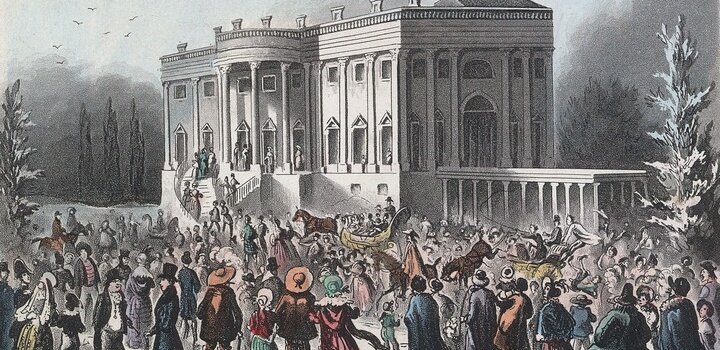
First, in the 1830s, reformers smashed the centralization of party leadership in Washington, and brought presidential nominations to the states. The first modern mass parties organized in response to this decentralization. But to hold the parties together, leaders simply replaced the clubby caucus rooms of Congress with the patronage “spoils system” politics that stymied the development of American state-building capacity.
In the 1900s, progressive reformers again set their sights on party leadership, replacing party bosses with direct primaries for most elected offices, setting up “nonpartisan” government and new administrative agencies that only the “public interest” would guide. This did not solve the problem of organized interests. It only moved organized interests into the shadows, where they could, ironically, operate with less scrutiny and more power.
In the 1960s, a new generation of reformers, angered by this hidden power elite, borrowed the familiar moralizing populism. They broke open the presidential nominating process and gave it over to direct primaries, weakening political parties even further. They also took a new approach to administrative agencies, setting up new agencies as more open to the public, which would presumably act as a bulwark against the cozy corruption of government and business that the progressive reformers had failed to anticipate.
But as we enter the 2020s, we are dealing with the new problems created by excessive opening up. As parties weakened, organized interest groups became stronger and more powerful. Government agencies became hobbled by process. Organized lobbying interests have repeatedly abused the transparency and openness to delay and to undermine government regulations. Unorganized citizens have not taken the same advantage of the expanded participatory opportunities.
Yet, once again, a “more democracy” hope for expanded open and direct participation suffuses many current visions of reform. Once again, there is a theory that partisanship and parties are keeping Americans from government by the people. And if extremism has taken hold, it is only because the “wrong people” are in charge. Give “ordinary” citizens more power, the theory goes, and we’ll get better leaders because we’ll get better participation.
If we study our history, however, we recognize that this idealism does not fit the simple political reality that political power always follows political organization and political parties are the central organizers of all modern politics. There is simply no getting around this.
This paper argues for learning these lessons, and then for trying something different this time. Rather than less intermediation and more direct democracy, we need better intermediary institutions, and perhaps a little less direct democracy. We need better parties.
An argument for more and better parties is, of course, also an argument for electoral reforms that make more parties viable. In particular, it is an argument for fusion voting in the immediate term and proportional representation in the longer term.
Fusion voting allows multiple parties to endorse the same candidates on the ballot. Within a system of single-winner elections, fusion creates an opportunity for new parties to form, because a ballot line gives them some meaningful power. Proportional representation is the standard electoral mechanism in advanced democracies around the world. While winner-take-all systems punish third parties, proportional-representation systems allow for more than two parties to win seats in a legislature, because seats are proportional to vote shares. Both fusion and proportional representation build political parties. They make it possible for more parties to form and organize, thus creating an environment in which better parties can grow and thrive.
While other currently popular reforms, particularly open primaries and ranked-choice voting, may help certain more moderate candidates to defeat extremists in certain elections, they do not build toward more parties. In the short term, we should do what we can to deal with the democracy emergency. But as we think about getting out of the emergency, we must think hard about how extremism is the product of the party system, far beyond individual candidates. To change the system, we cannot get around parties. A better democracy can only come through better political parties, which at this stage in American political development will require more political parties.
The paper will proceed as follows:
- Section 1 defines the current problem. It explains how extremism is a product of the party system, and why reform that attempts to manage rising political extremism without addressing its root causes is likely to fail. It explains how to join strategies that resolve short-term emergencies with strategies that build long-term democratic resiliency.
- Section 2 details why political parties are the essential and inevitable institutions of modern mass democracy. I will explain in more detail what roles parties play and explain how we can evaluate better parties. I will also explain why parties in the hyperpolarized U.S. system are unable to perform these functions.
- Section 3 offers a guided tour of American democracy-reform history. The tour will cover the three major periods of democracy reform. In each major era, a candidate-centric, antipower ethos of democracy reform reigned supreme. Despite the best intentions of idealistic reformers, the reforms fell short because they treated political parties, and organized power more generally, as obstacles to circumvent rather than as facilitating institutions to work through.
- Section 4 assesses the current reform menu, explaining the extent to which different reform options are likely to lead to better political parties. This section divides reforms into candidate-centric reforms likely to preserve the two-party system (open primaries, ranked-choice voting) and party-centric reforms likely to make space for more parties (fusion and proportional representation). Following the logic of this paper, we should consider fusion and proportional representation as the most powerful electoral reform paths.
Citations
- President Barack Obama, Address at 2020 Democratic National Convention, (Philadelphia, August 19, 2020); President Joe Biden, “Remarks by President Biden on Standing up for Democracy,” (Washington, DC, November 2, 2022). Barack Obama’s 2020 Democratic National Convention speech put the stakes plainly: “Because that’s what’s at stake right now. Our democracy.” He said that the Trump administration “has shown it will tear our democracy down if that’s what it takes to win.” In 2022, before the midterms, Joe Biden similarly clarified the stakes with a speech in which he said, “Make no mistake: Democracy is on the ballot.”
- Vice President Mike Pence, Address at 2020 Republican National Convention, (Fort McHenry, Baltimore, August 26, 2020). Mike Pence’s Republican National Convention speech argued that: “In this election, it is not so much whether America will be more conservative or more liberal, more Republican or more Democrat. The choice in this election is whether America remains America.”
- J. M. Berger, Extremism (Cambridge, MA: MIT Press, 2018).
- Samuel P. Huntington, American Politics: The Promise of Disharmony (Cambridge, MA: Belknap Press, 1983).
- Steven Levitsky and Daniel Ziblatt, How Democracies Die (New York: Crown Publishing, 2018).
- Milan W. Svolik, The Politics of Authoritarian Rule (Cambridge, MA: Cambridge University Press, 2012), 35.