A Chapter of: Murder by Chain of Command
Assad Regime Crimes against Humanity in Detention Facilities
At some point after the regime’s military campaign against Baba Amr, an individual, later a witness, was walking down a street in the city of Aleppo when a bus suddenly stopped next to him and his companions. Military Intelligence agents herded the group onto the bus and took them to a nearby headquarters for questioning. During the interrogation that followed, a military intelligence officer holding the rank of colonel accused one victim of producing video footage that had been aired on Al Arabiya and Al Jazeera. When the witness denied any knowledge, the colonel threatened him and his neighborhood of Fardous: “Do you want me to do to Fardous what was done to Baba Amr?”53
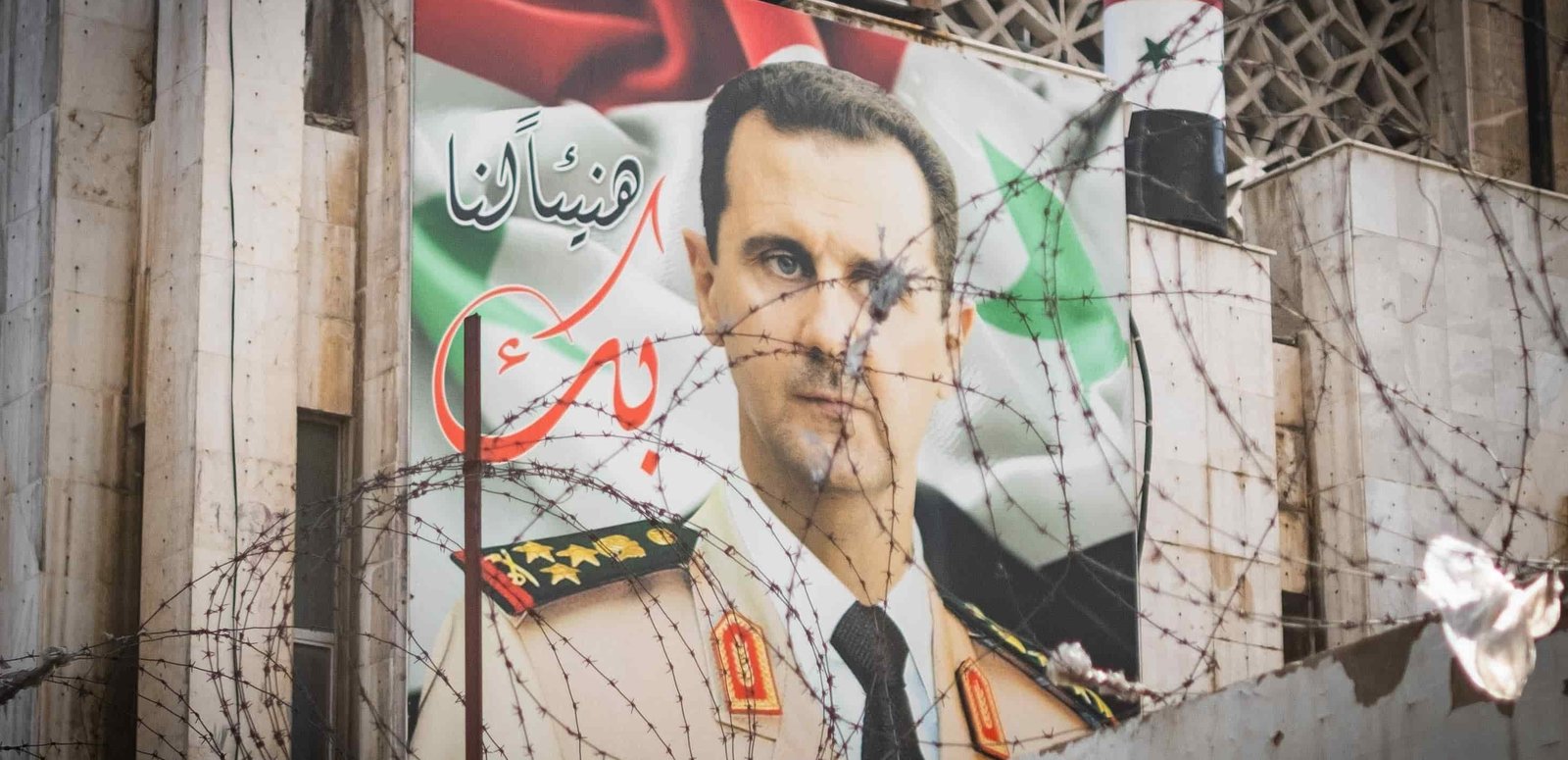
The military intelligence colonel was well aware that Baba Amr had become a symbol for the total destruction the regime was willing to levy on rebellious areas. Before leaving the interrogation room, the colonel continued with an expression Assad loyalists used to declare the supposed divinity of their leader: “If God fell to the earth, Bashar al-Assad will fall after him!” The remaining guard then forced one detainee to kiss a picture of Assad.54
The infraction which the aforementioned prisoner had supposedly committed was nominally legal under the press freedoms granted in Syria’s 2012 constitution. But written law under the Assad family was more a facade for the state’s security-intelligence apparatus than a compulsory point of reference for authorities. Furthermore, any activity that could fall under the broad definition of “undertaking propaganda tending to weaken the national sentiment in times of war or peril of war” was criminalized by the Syrian Penal Code, giving men like the military intelligence colonel wide latitude to punish whatever behavior they chose.55
In April 2011, in an attempt to calm Syria’s restive streets and deflect international pressure, Assad announced the lifting of the state of emergency that had been in place since the Baath party’s rise to power in 1963. But while Assad abolished the notorious Supreme State Security Court that prosecuted sedition, he simultaneously introduced new legislation that criminalized all protests not authorized by the regime. He also lengthened the period for which the intelligence and security agencies could hold Syrian citizens under arrest. In 2012, Assad enacted a new anti-terrorism law and created the Counter-Terrorism Court, introducing new broadly defined offences subject to harsh penalties. The new law even allowed the regime to punish Syrians for failing to inform the authorities of “terrorist offences” they were not involved in, but merely aware of.56
The Regime’s Initial Arrest Campaign
As noted earlier, the CCMC’s outreach initiatives in spring 2011 were too little and too late to significantly reduce tensions, and the subsequent harsh crackdown merely provoked more protests across the country. The numbers of protesters reported in CCMC documents, however, were deliberately understated due to the pressure on all levels of the chain of command to deliver results. Put another way, the regime began to lie to itself. According to one witness, formerly a regime insider, local level Baath party members systematically underreported the recorded number of protestors to the party branches in the governorates, and those branches in turn underreported the numbers they received. Another insider witness who served in the Syrian army’s Fifty-Second Brigade stated that all checkpoint commanders were ordered to cap reports of protestors at 1,000 people, regardless of the true number. Upon aggregating these understated numbers, the CCMC itself would then lower the reported number of protestors yet again before forwarding them to Assad.57
The security apparatus responded to the protests using the only playbook it knew: arrest anyone whose loyalty to the regime was in doubt, resort to humiliation and torture to break any suspect’s will, extract false confessions to preserve a veneer of lawfulness, and extract as much information as possible to identify new targets. Given the rapidly growing extent of anti-regime activities and sentiment, that meant the detention of approximately 300,000 people in just the first two years of the uprising.58
Responsibility for this vast task fell to the regime’s security-intelligence apparatus in tandem with the military and various regime loyalist groups such as the popular committees, all of whom were overseen by the CCMC. In a vain attempt to contain the protests, security officers in each governorate began compiling extensive wanted lists that probably encompassed not just protest ringleaders, but many individuals who may have had only marginal roles in the protests. For example, the Idlib Security Committee on May 30, 2011, identified 1,785 “targets from among the prominent protestors, influencers, and main inciters,” an implausibly high number of suspects in a governorate whose population was under 1.5 million people.59 These inflated wanted lists were then distributed within the security and intelligence agencies all over the country. On June 19, 2011, for instance, the Military Intelligence Branch in Idlib sent to its counterpart branch in Damascus a list of 1,129 wanted individuals.60
Across Syria, the Assad regime swept up thousands of suspects, real and imagined, from these bloated wanted lists. The many checkpoints manned by security-intelligence forces and the military, along with joint raids in which military forces provided cover for security-intelligence agents who inspected houses, became an almost industrial detention machinery operated by Syria’s main security-intelligence agencies. These agencies’ respective directors comprised the core of the CCMC and NSB, putting those bodies effectively in charge of the detention machine. As so often in Assad’s Syria, the much-feared mukhabarat were at the forefront of repression.
Pulling the Strings: The All-Powerful Mukhabarat
Mukhabarat, Arabic for intelligence, is an umbrella term for intelligence agencies—in the Syrian case, General Intelligence (also known as State Security), Military Intelligence, Air Force Intelligence, and Political Security. Especially during and after the Muslim Brotherhood-led insurgency of the late 1970s and early 1980s, Hafez al Assad facilitated the growth in size and power of the various mukhabarats. With the army kept at bay, Hafiz al Assad turned Syria into what is often referred to as a “mukhabarat state.” Similar to the East German Ministry for State Security, the Syrian mukhabarat agencies became an immediate means of control of society through a close web of local branches and tens of thousands of informants that reported suspicions regarding the loyalty of neighbors and even family members.61
When Bashar al Assad succeeded his father in July 2000, the newly minted 34-year-old president preserved the existing power structures by not challenging the positions of key cadres from his father’s era.62 However, at the same time he introduced his own close associates into senior positions, both in non-strategic portfolios such as economic affairs, and into the regime’s core intelligence and security agencies.63 Among Bashar’s closest lieutenants were figures such as generals Ali Mamluk, Asif Shawkat, and Hasan Turkmani, all of whom later became powerful members of the CCMC. Despite some troubles during the presidential transition period, the regime operated an extensive and highly active mukhabarat apparatus when the uprising began in 2011—as it had done since the 1960s.
Monitoring and persecuting internal dissidents traditionally had been the responsibility of the Political Security agency, but in 2011, the regime quickly employed the infrastructure of all four security-intelligence agencies to detain and interrogate perceived opponents.64 This included organizing ad hoc detention facilities for huge numbers of detainees. Multiple witnesses describe being detained in lecture halls, gyms, and basements at Air Force Intelligence facilities that were converted into makeshift detention centers.65 The four mukhabarat services also became involved in manning checkpoints, mounting joint operations with the military and internal security forces, coordinating loyalist formations, and holding exploratory meetings with potential allies.66
On August 18, 2011, the Damascus-based Military Intelligence Branch 294 disseminated instructions from the NSB to arrest all members of the grassroots protest coordination committees that were forming throughout the country. Ten days later, Military Intelligence Branch 243, responsible for the Deir ez-Zour and Raqqa governorates, issued the order to “arrest all armed men and those who incite others to demonstrate and follow up in order to prevent them from returning to their towns and villages. You are also ordered to arrest them along with the inciters and leaders of demonstrations and refer them to us as soon as possible so that we can take necessary action.”67
The implementation of such orders was meticulously monitored. For example, the Political Security chief in Damascus instituted a reporting system on March 18, 2011, which required the heads of governorate-level branches to supply daily reports, including the names of all arrested persons.68 In addition, high-ranking intelligence and security officers micromanaged operations such as the establishment of checkpoints to a striking degree and personally conducted interrogations. This included General Ali Mamluk, Chief of the General Intelligence, who personally interrogated one witness during the witness’s detention at Branch 331 in Idlib. After an argument in which the witness referred to security agents as “thugs,” Mamluk told the witness that he “deserved to die.”69 The chief of the General Intelligence Branch in Deir ez-Zour allegedly told another victim that if he and other detainees damaged any more statues during protests, he would “destroy everything from Deir ez-Zor to Abu Kamal.”70 An insider witness alleges that his superior, a brigadier general and the chief of General Intelligence Branch 255, ordered his subordinates “not to have compassion and mercy towards the demonstrators because they are connected to the outside [i.e., beyond the borders of Syria] and want to destroy the State’s institutions,” and instructed that “all demonstrations must be dissolved, regardless of the consequences.”71
The predictable result of this heavy-handed, inflexible approach was that many thousands of detainees were murdered in the facilities or died due to the catastrophic conditions of their detention. Aware of the rising number of detainees dying in their custody, the mukhabarat chiefs took steps to hide the death toll from public view. They tried, for example, to find ways to deal with the many decaying bodies that the existing Syrian health system was not equipped to handle, leading to “bad smells” on hospital floors.72
Similarly, in the case of facilities subordinate to Military Intelligence, branch heads were responsible for either releasing a detainee’s body to his or her family, or tasking the Military Police to bury the body. In most of the relevant reports available today to criminal investigators, regime officials recommended not releasing the bodies due to the torture marks on their corpses. In some cases in Aleppo, regime officials put dead detainees in black bags, wrote the words “terrorist” on them, and threw them into the Queiq River near Aleppo’s Canadian Hospital, as alleged by a defector who served in the Aleppo branch of Military Intelligence until 2012.73
With increasing protests, the number of body bags grew. But rather than reconsidering its handling of the crisis, the regime sought to professionalize its lethal crackdown. For that purpose, it created a new structure half a year into the uprising, the so-called joint investigation committees (JICs).
Inhumanity by Committee: JICs and Crimes against Detainees
The CCMC’s directives from August 5, 2011, that tightened its direct grip over security and military forces also addressed the practice of arrests and interrogations. The CCMC decided that the security committees should establish JICs in “hot” governorates composed of “representatives of all security branches and the Criminal Security Branch to which all persons detained in a security campaign shall be referred for investigation. The results of the investigations shall be circulated to all security branches so that they can be exploited in distributing the new targets and seriously pursuing them, with the emphasis on investigations leading to members of the local co-ordination committees and their arrest.”74
In the first two years of the uprising, tens of thousands of civilians were interrogated by the JICs, which were usually composed of up to five representatives of the four security and intelligence agencies and the Criminal Security Branch of the police.75 One criminal investigative body has obtained lists of detainees prepared by the JIC in Hama governorate. These lists contain personal details and a note about the respective arresting agency for over 10,000 persons processed between August 18, 2011, and August 19, 2012. The vast majority of the victims were arrested by the four major mukhabarat agencies. Those arrested included at least 685 minors, the youngest of them just 11 years old.76 The JIC’s main task was to coerce confessions, identify new targets, and disseminate the information obtained, but the systematic mass detentions also created hostage leverage which could be used to discipline the population. Furthermore, while official documents portray a well-organized system, in reality it was deeply corrupt. With hundreds of thousands of people seeking their relatives and loved ones, the knowledge of their whereabouts, conditions of detention, and further fate became an opportunity for extortion as much as a show of regime force.77
Accounts from survivors who were detained in different prisons under the control of the intelligence agencies, internal security forces, and military demonstrate a uniformity in the forms of mistreatment across the regime’s detention enterprise. Torture and abuse were committed during arrests, procession into custody, detention, and transfer from one facility to another. Detainees typically rotated through multiple locations throughout their detention period. Syria has a network—an archipelago—of civilian and military detention facilities throughout its governorates, as well as detention facilities operated by the security-intelligence agencies. Often, detainees arrested by an agency branch in one of the governorates would be transferred to the agency’s branches in Damascus for interrogation, sometimes in up to 16 different facilities.78 Likewise, prisoners were transferred routinely from one security-intelligence service (as opposed to branch) to another.
One witness, formerly a regime official who served at the General Intelligence Branch in Aleppo, recounted the routine when his unit delivered detainees to a neighboring Military Intelligence branch. Soldiers would immediately attack the detainees by throwing them on the ground, stomping on them, throwing cold water on them, and beating them with nail-studded sticks.79 Detention conditions are in every case described by witnesses as having been inhumane, with cells so overcrowded that detainees could not sleep because there was no room to lie down on the floor. Dozens of people shared a single toilet, if one was available at all. Food was often rotten, and the cells were infested with lice and scabies.80
During interrogations, detainees were beaten with hands, feet, cables, wires, and hoses; hung by their wrists from the ceiling; subjected to electric shocks; placed in tires and beaten; strapped to hinged wooden boards, the ends of which were brought slowly together, bending the back of the detainee; and subjected to egregious sexual violence.81 One defector has alleged the existence of a special order that authorized regime officials to abuse a detainee to the point of death.82 All these methods were used to extract information about opposition activities or to coerce detainees into signing or thumb-printing blank pages or pre-prepared confessions that they were not permitted to read.
Superiors in the regime chain of command were well aware of these practices. Two defectors from Military Intelligence have claimed that their branch’s interrogation rooms had surveillance cameras which were connected directly to their branch head’s offices.83 According to several accounts, senior regime officers even participated directly in the rape of detainees.84 Other perpetrators allegedly made the rape of detainees into a business, selling access to female detainees to other members of the mukhabarat agencies.85
The Assad regime’s leadership was aware of widespread sexual violence perpetrated by its security apparatus, but none of the Syrian government internal communications obtained by criminal investigators indicates any regime investigation of these crimes. Instead, the Assad regime tried to obscure its crimes by blaming its enemies. For example, one victim has recounted how an investigator in the Military Intelligence branch in Hama pressured him to falsely confess that “terrorists” had raped him.86 Similarly, when in December 2011 the United Nations (UN) Special Representative of the Secretary-General on Sexual Violence in Conflict informed the Syrian government of a forthcoming UN report that would include paragraphs on sexual violence perpetrated by regime forces, the Minister of Interior personally instructed the police commands in Idlib and Homs to present to the UN cases of women or girls who had allegedly been sexually assaulted by opposition forces.87
While tens of thousands of Syrians remain in detention today, the physical and psychological wounds of many of the survivors remain open.88 Female witnesses interviewed long after having been subjected to rape and other forms of abuse, describe internal damage and vaginal and anal tearing which necessitated operations to resolve fistulas, incontinence, and other lasting effects.89 Men describe the loss of sexual and reproductive function as a result of rape, the application of electricity to sexual organs, and other abuses. Witnesses also describe ongoing psychological effects including depression, anxiety, and other symptoms of post-traumatic stress.90 The extensive documentation of systematic sexual violence is an indispensable component of the entirety of evidence against the Syrian regime.
Citations
- Fardous is a neighborhood in eastern Aleppo.
- Interview Report SYR.WDA.006, cited in CIJA, “Crimes Against Humanity,” 164.
- See Syrian Penal Code, Article 285.
- Anti-Terrorism Law, Article 10, enacted by the Syrian People’s Assembly in July 2012.
- Interview Reports SYR.WAC.001_EO (2) and SYR.WHC.504, cited in CIJA, “Crimes Against Humanity,” 135.
- Interview Report SYR.WAC.001_1, cited in CIJA, “Crimes Against Humanity,” 422.
- Communication from Branch 271 to Branch 294, June 4, 2011, cited in CIJA, “Crimes Against Humanity,” 137.
- Communication from Branch 271 to Branch 294, June 19, 2011, cited in CIJA, “Crimes Against Humanity,” 138.
- F. Peil, “Syria,” in Intelligence Communities & Cultures in Asia & the Middle East: A Comprehensive Reference, ed. Bob de Graaff (London: Lynne Rienner, 2020), 355.
- Peil, “Syria,” 357.
- Carmen Becker, “Strategies of Power Consolidation in Syria under Bashar al-Assad: Modernizing Control over Resources,” Arab Studies Journal 13/14, no. 2/1 (2005/06): 68, https://www.jstor.org/stable/27933934.
- The most important of these security-intelligence agencies was the Military Intelligence directorate, not, as is popularly believed at least in Syria, Air Force Intelligence.
- CIJA, “Crimes Against Humanity,” 87; see, e.g., Interview Reports SYR.WHA.033 and SYR.WDA.058.
- Internal security forces are comprised of civilian police, riot police, criminal security branch personnel, and prison service personnel.
- CIJA, “Crimes Against Humanity,” 69; see Communication from Military Intelligence Branch 243 to Military Intelligence Sections, detachments and Security, August 28, 2011.
- CIJA, “Crimes Against Humanity,” 102; see Instruction from the Head of the Political Security Department, March 18, 2011.
- Interview Report SYR.WEA.009_AO CIJA, cited in “Crimes Against Humanity,” 93.
- Interview Report SYR.WJC.003, cited in CIJA, “Crimes Against Humanity,” 159.
- Interview Report SYR.WGA.777_AE, cited in CIJA, “Crimes Against Humanity,” 96.
- CIJA, “Crimes Against Humanity,” 72; see Instruction from the National Security Bureau, December 3, 2012, as referenced in Circular from Head of Military Intelligence, December 18, 2012.
- Interview Report SYR.WDA.043, cited in CIJA, “Crimes Against Humanity,” 166.
- CIJA, “Crimes Against Humanity,” 147; see Communication from Head of the NSB to the Secretaries of the Baath Party in the Governorates of Hama, Rural Damascus, Deir ez-Zor, Homs, Idleb and Dar’a, August 6, 2011.
- CIJA, “Crimes Against Humanity,” 49–50.
- CIJA, “Crimes Against Humanity,” 52. For reasons of victim and witness protection, the lists themselves were not made available to the authors.
- Demanding payments from detainees’ families for ransom, milder treatment, or even simple information on a detainee’s status or welfare is a decades-long practice by Syrian regime security agencies that has continued throughout the period of the Syrian conflict. See, for example, Joshua Surtees, “Syrian Detainees’ Families Forced to Pay Huge Bribes to Corrupt Officials – Report,” Guardian, January 4, 2021, https://amp.theguardian.com/world/2021/jan/04/how-syria-uses-prison-to-extort-money-report-arrest-funding-assad-regime; or Syrian Network for Human Rights, “At Least 164 Arbitrary Arrests/Detentions Documented in Syria in March 2023, Including Nine Children and Three Women (Adult Females)…Syrian Regime Forces Continue to Blackmail Detainees’ Families Despite Their Catastrophic Economic Conditions,” news release, April 2, 2023, https://snhr.org/blog/2023/04/02/at-least-164-arbitrary-arrests-detentions-documented-in-syria-in-march-2023-including-nine-children-and-three-women-adult-females/.
- Interview Report SYR.WJA.009, cited in CIJA, “Crimes Against Humanity,” 162.
- Interview Report SYR.WDA.049, cited in CIJA, “Crimes Against Humanity,” 166.
- Interview Report SYR.WDA.019, cited in CIJA, “Crimes Against Humanity,” 174.
- CIJA, “Crimes Against Humanity,” 156.
- Interview Report SYR.WDA.043, cited in CIJA, “Crimes Against Humanity,” 165.
- Interview Reports SYR.WDA.043 and SYR.WDA.047, cited in CIJA, “Crimes Against Humanity,” 164–165.
- CIJA, “Crimes Against Humanity,” 190.
- CIJA, “Crimes Against Humanity,” 191.
- Interview Report SYR.WFA.052_AE, cited in CIJA, “Crimes Against Humanity,” 204.
- CIJA, “Crimes Against Humanity,” 204; see Letter from the Head of the NSB to the Minister of the Interior, December 14, 2011.
- Arbitrary Imprisonment and Detention—Report of the Commission of Inquiry of the Syrian Arab Republic (Geneva: United Nations Human Rights Council, 2021), https://www.ohchr.org/en/hr-bodies/hrc/iici-syria/detention-report.
- CIJA, “Crimes Against Humanity,” 202, see, e.g., Interview Reports SYR.WGA.123_EO and SYR.WKC.001.
- CIJA, “Crimes Against Humanity,” 203.