A Chapter of: Lessons from the Past to Govern for the Future
Regenerating Land and Lives: The Timbaktu Collective in Anantapur, India
By Kirthana Sudhakar
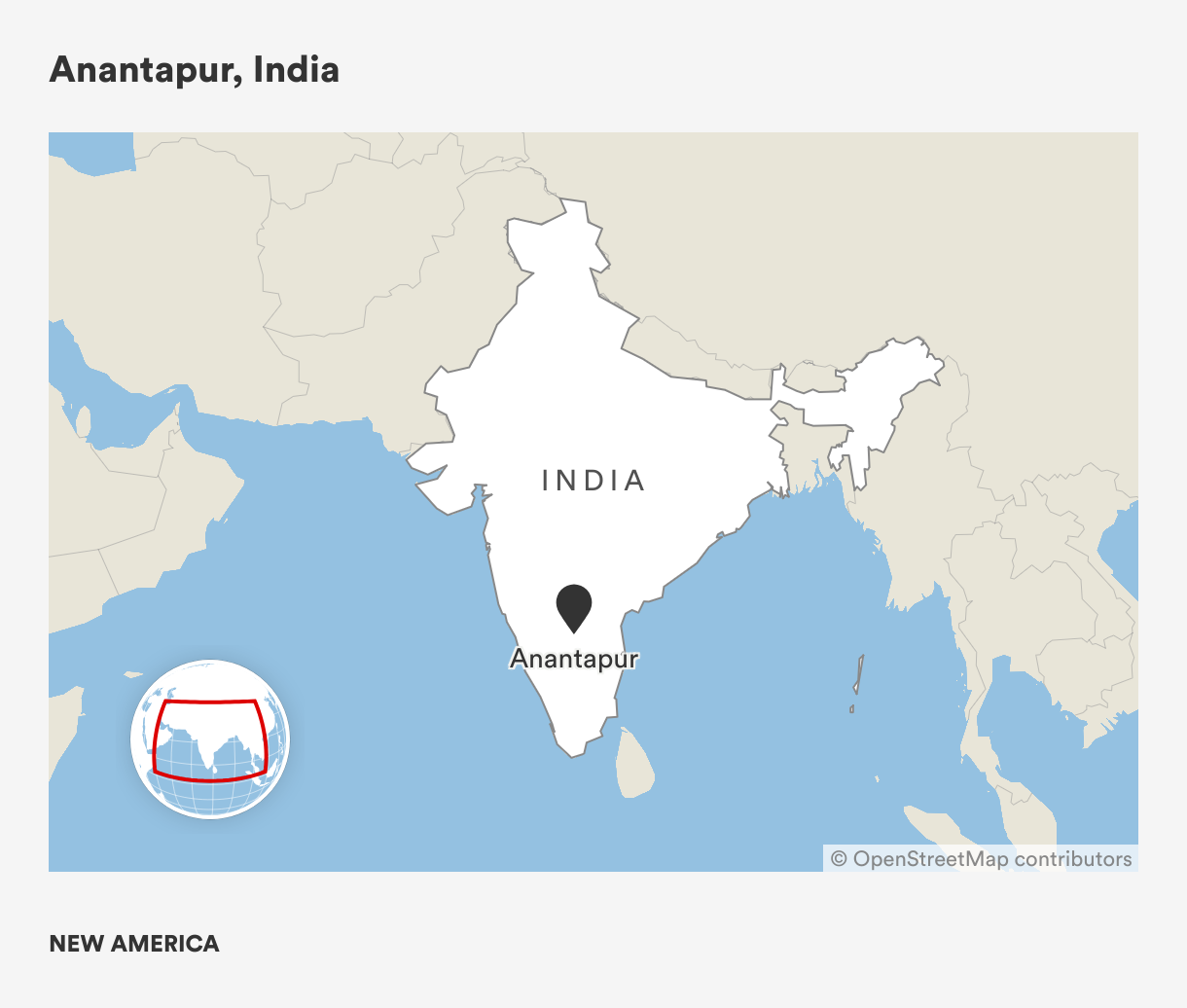
On April 1, 1978, a social activist from Mumbai named Bablu Ganguly arrived in Anantapur, a small city in the south-central Indian state of Andhra Pradesh, to take a job with a grassroots organization fighting for land and income rights. For years, a focus on short-term gains left the region’s ecology damaged and its farmers struggling. Ganguly began to explore how Indigenous agricultural practices might revive the area’s natural and civic life.
Ganguly soon met a social worker named Mary Vattamattam. The two began working together to support marginalized groups, fight poverty, and improve the environment. In 1990, they married, purchased 32 acres of land, and created a nonprofit organization called the Timbaktu Collective. Vattamattam worked to create a system of microfinancing while Ganguly planted thousands of trees to revive the forest. When the ground proved too arid, Ganguly concluded he needed to take a broader approach to environmental regeneration. “This land needs healing,” he said. That healing, he decided, required the rich wisdom and knowledge of the land’s native peoples.
At the center of the Timbaktu Collective is the dharani, a communally governed farmer’s cooperative that uses traditional farming methods and a locally controlled system of production and distribution. Coming from the Sanskrit word for earth or land, the dharani promotes regenerative agricultural practices and offers farmers access to financing, seeds and equipment, training, and distribution networks. Over the years, the dharani has helped once-vulnerable farmers to take charge of their destiny.
Three decades after its founding, the Timbaktu Collective has restored the region’s ecological health and improved the livelihoods of thousands of families in the area. Timbaktu has replaced systems focused on short-term profits with ones focused on long-term value. By updating traditional practices, the collective has restored the land and reclaimed the community for present and future generations. The organization’s grassroots model can be used in any community eager to embrace its past to preserve its future.
“Nothing Taller than Me”: The Degradation of the Land and People
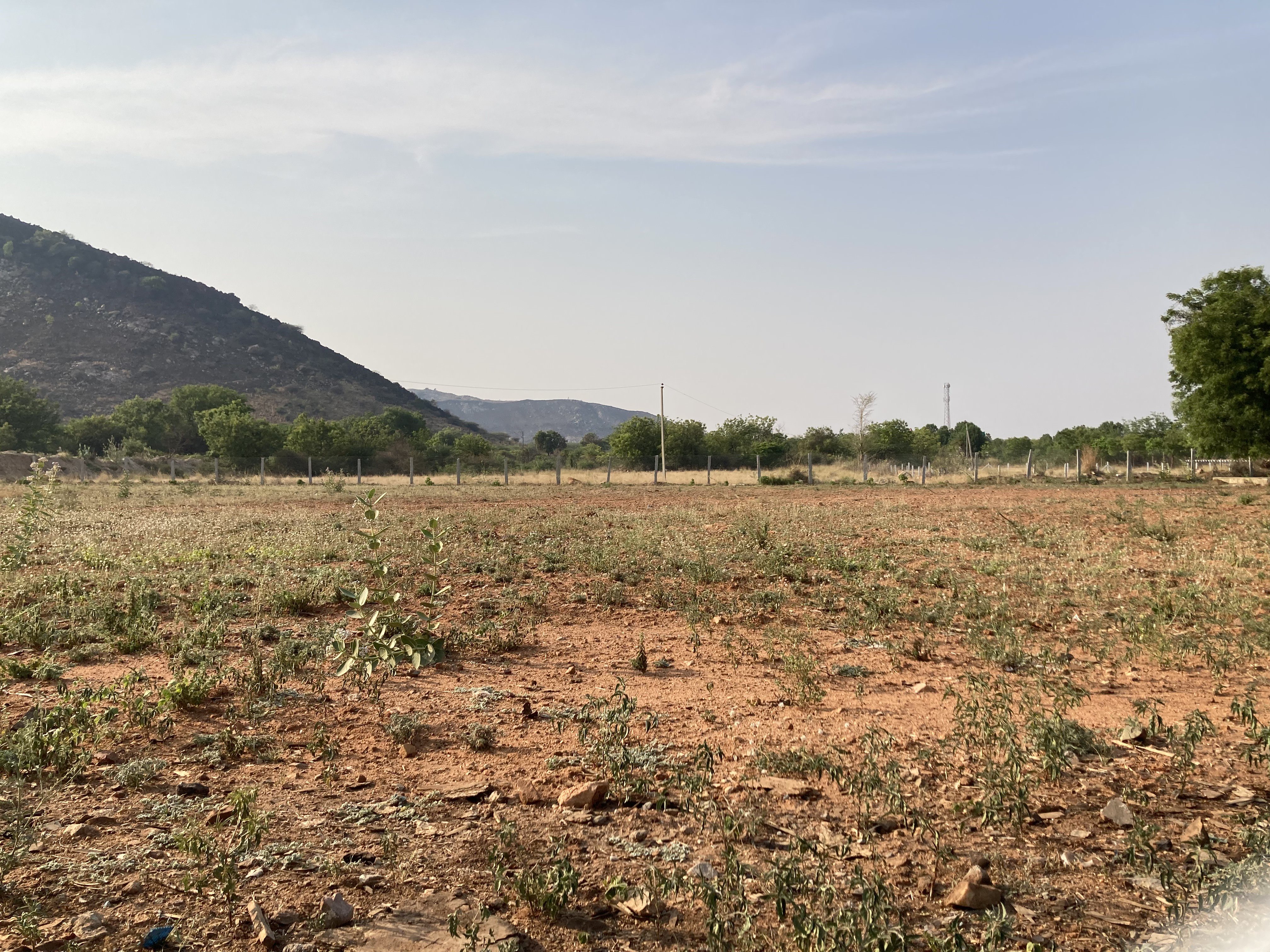
With its rocky hills and minimal rainfall, Anantapur was never conducive to the growth of deep forests. Still, the area historically was filled with thick clusters of hardy plants and trees adapted to arid conditions.
Soon after the start of colonial rule in 1858, the British began building railways to move people and goods. Trees were cut down to provide lumber for train tracks and fuel for the locomotives. After independence in 1947, India embraced an aggressive development agenda, dependent on mass manufacturing, mining, and modern commercial agriculture. Forests were cut down to enable large-scale production of tea, coffee, sugarcane, and other cash crops.
Kirthana Sudhakar, 2023
In the 1970s, the Indian government embraced the Green Revolution, a global agricultural technology transfer that increased crop yields but relied on single crops and chemical fertilizers. Across India, farmers who once might have cultivated an array of traditional and native crops (e.g., rice, maize, wheat, paddy, red gram, bajra, ragi, kora, sunflower, brinjal, horse gram, onion, turmeric, sugarcane, cow gram, safflower, coriander, and chilis) began monocropping, farming only a single cash-crop. Practices of the Green Revolution—monocropping and intensification of growing with chemicals—gave the illusion of efficiency by creating spikes in short-term cash crops. But the practices damaged the land’s ecological health, undermining its long-term value, and so made the region poorer.
In Anantapur, that crop was primarily peanuts. The area’s semi-arid conditions and periodic monsoon rains were well suited to the groundnut. But monocropping depleted the soil further, and the use of chemical fertilizers, fungicides, and pesticides damaged the ecology and harmed the health of people in the area.
The powerlessness of farmers mirrored the degraded environment. As was the case across India, farmers in Anantapur relied on middlemen to get their agricultural products to market. Outside banks, seed suppliers, distributors, wholesalers, and retailers dominated the business. According to Ganguly, distributors and other middlemen would take as much as 75 percent of the overall value of an agricultural product, leaving little for the farmers.2 “The tragedy is that middlemen just collect from everybody, and then sell it in their name. They control the value chain,” said Ganguly.
When Ganguly and Vattamattam founded the Timbaktu Collective in 1990, the region was hurting. Farmers were exploited and isolated by the market economy. Widespread mental health issues and even frequent suicides were reported among the farmers. And the land was barren and desert-like. “It was really bad. The hills had no trees, only bushes, nothing taller than me,” Ganguly remembered. “We set out to start restoring things.”
Regeneration
The animating principle of the Timbaktu Collective is ecological and agricultural regeneration. The collective has drawn on Indigenous wisdom, modern science, and trial and error to restore the soil and biodiversity of plants and crops in the area.
After a series of conversations with residents in the area, Ganguly and fellow activists began experimenting with ecological restoration. They surveyed the land and hills and spread seeds to determine which native plants would thrive in the area. They kept copious notes and tracked what they learned.
Starting in 1995, the collective undertook projects on watershed development, land development, and local traditional seeds. The collective held seed exhibitions and conducted trials on organic farming. In 2005, it held its first project in organic farming, using agroecological practices with a focus on food security, crop biodiversity, and enterprise development.
Because of an arid climate, most farms at Timbaktu can only grow and harvest one crop a year. Farmers with better irrigation systems can complete two (and, rarely, three) harvests a year. By managing the land better, with earth-friendly methods, they hoped to improve agricultural yields while restoring the land. “Agriculture,” as Ganguly said in a 2015 documentary, “is the art of living with land”—not dominating nature.
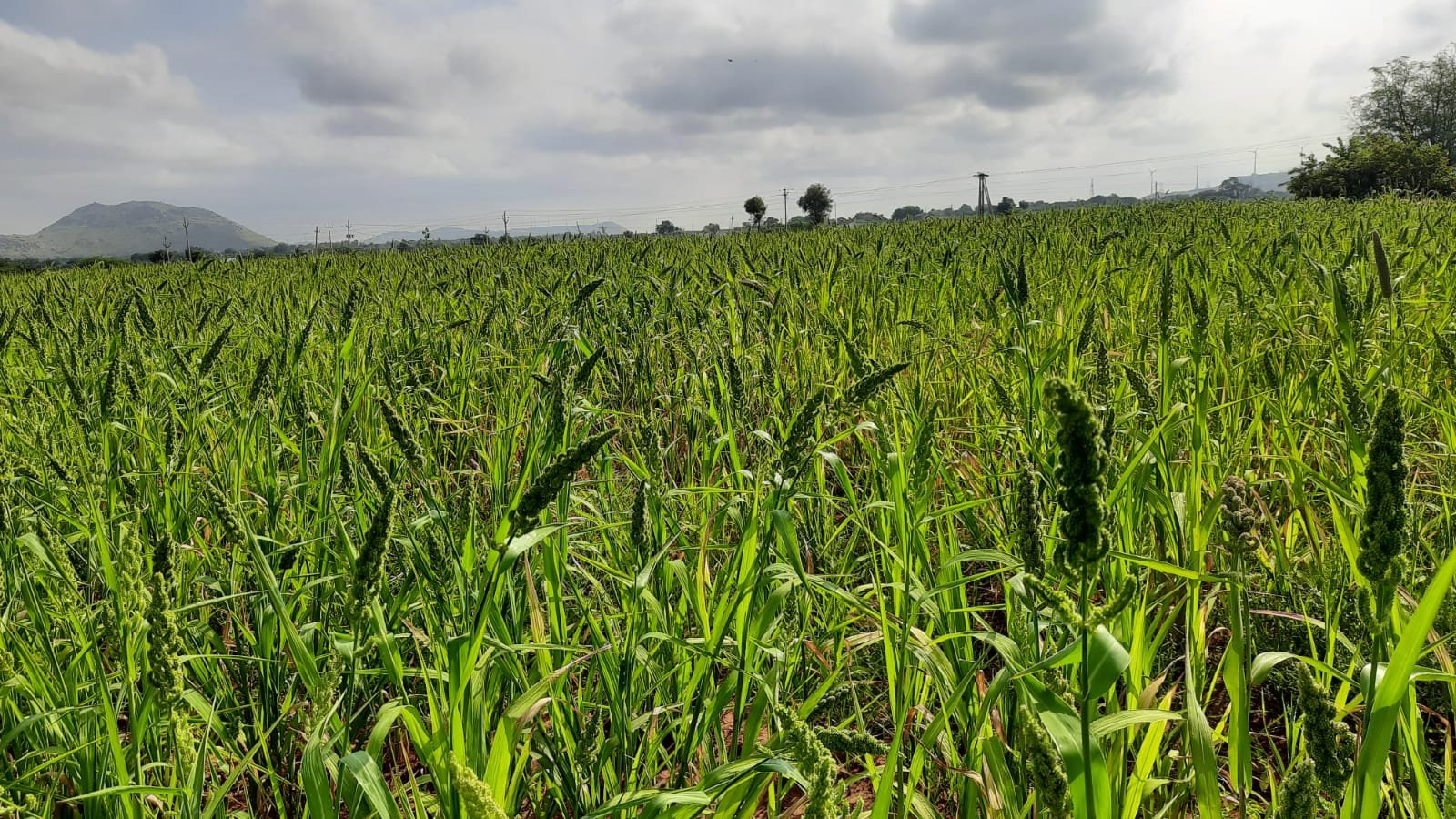
The collective adopted a traditional form of mixed cropping called navdanya, an Indian concept that literally means nine seeds or new gift. This approach promoted crop diversity (with an emphasis on crops that offered high nutritional value), soil replenishment, and the use of traditional farming methods. At the center of the program was millet, an ancient grain that thrives with other crops. Though it had been cultivated in India since as early as 3300 B.C.E., millet farming had become a lost art amid the boom in monoculture crops. With the restoration of diversified agriculture, the land began sprouting companion crops, including local varieties of chilis, mustards, and tomatoes.
Timbaktu Collective, 2021
While diversifying their crops, farmers also embraced ancient farming rituals. Planting and harvesting followed moon cycles and monsoon rains. Those ancient practices included using compost for fertilizers and using roots, leaves, and seeds for pest and disease control. When the crops were brought in, the community held harvest festivals.
These rituals held symbolic meaning that strengthened the farmers’ sense of community, tradition, and belonging. “Navdanya [is] the symbol of this renewal of diversity and balance, not just of the plant world, but of the planet and social world,” said Vandana Shiva, a celebrated environmental activist. “It is this complex, relational web which gives meaning to biodiversity in Indian culture and has been the basis of its conservation over millennia.”
Ganguly and his team looked not just to Indigenous wisdom, but also to modern techniques. They drew inspiration from the approach of the Japanese botanist Akira Miyawaki to assess the soil, climate, and ecosystem; select trees to form the layers of a forest; and then plant dense groves of trees. The hardiest trees survived and eventually produced a dense, lush forest.
The Ten Elements of Agroecology
The Timbaktu Collaborative follows the United Nations standards and values for sustainable agriculture practices, outlined in a 2019 report.3
- Diversity: To ensure food security and nutrition while conserving, protecting, and enhancing natural resources.
- Synergies: To enhance key functions across food systems, supporting production and multiple ecosystem services.
- Co-Creation and Sharing of Knowledge: To assure sustainable, effective responses to local challenges and needs.
- Efficiency: To promote innovative agroecological practices, using fewer resources.
- Recycling: To manage agricultural production with lower economic and environmental burdens.
- Resilience: To adapt to a wide range of environmental, economic, and social developments.
- Human and Social Values: To use sustainable food and agricultural systems to improve rural prosperity, equity, and social well-being.
- Culture and Food Traditions: To foster healthy, diversified, and culturally appropriate diets while maintaining the health of ecosystems.
- Responsible Governance: To promote viable visions and manage different scales of operations, from local to national to global.
- Circular and Solidarity Economy: To connect producers and consumers, providing a process for honoring the environment and its people.
Cooperatives
Organizationally, the Timbaktu Collective is based on community-level cooperatives. As of 2022, more than 39,000 families from across 310 villages in the greater Anantapur region were members of Timbaktu cooperatives. The organization includes eight diverse but related programs. These programs are designed to empower people at the grassroots level by providing them with the knowledge and resources to take control of their economic livelihoods.
The Timbaktu Collective’s Eight Programs
Since its creation in 1990, the Timbaktu Collective has created eight distinct programs. Six of these programs have been branded with Sanskrit words that describe their purpose and values.
- Kalpavalli (Eternal Source of Abundance): Started in 1992, this program coordinates community-based projects for conservation and biodiversity.
- Swasakthi (Power of Self): Begun in 1992, this program empowers women through mutually aided credit cooperatives.
- Chiguru (Tender Leaf): Started in 1992, this program advocates for children’s rights and alternative education and programs.
- Militha (Inclusion): Started in 2004, this program promotes the rights and well-being of people with disabilities.
- Dharani (Earth): Established in 2008, this program promotes nature-based farming practices, organic farming, food processing, and marketing by small farms.
- Enterprise Development: Registered in 2008 by the Timbaktu Shop, this program markets organic farm products, soap, textiles, and pickles.
- School of Regenerative Agriculture and Pilot Initiatives: Started in 2018, the school trains the next generation of sustainable farmers.
- Gramasiti (Wealth of a Village): Formed in 2020, this program offers the opportunity to raise small ruminants, mostly goats and sheep, to farm laborers.
Timbaktu’s first cooperatives were women’s groups established by Mary Vattarattam. She called these cooperatives sanghas, a Sanskrit word meaning assembly or community. In her social work prior to the launch of the collective in 1990, she would convene these sanghas so women could propose and discuss solutions for social and economic challenges in their lives.
The women reported that a major hurdle to empowerment was a lack of access to credit for business activity. In 1992, Vattarattam established Swasakthi, a community savings and microfinance program for the women’s cooperatives. Each member contributed 10 rupees per month to the collective savings fund. Members could then apply for fixed-interest rate loans from the fund to start or expand a microenterprise. The program was a success. As of 2022, more than 31,000 women were members, with the community fund holding some $5.4 million in savings.
A Society of Farmers’ Collectives
The backbone of the Timbaktu Collective is the dharani. Taken from the Sanskrit word meaning earth, the dharani is a society of farmers’ cooperatives that commit to regenerative agricultural practices and that adopt a version of Vattarattam’s community-based financing structure to give farmers greater control of their livelihoods. The dharani features traditional farming with diverse, organic crops and a locally controlled system of production and distribution that frees farmers from reliance on outside, sometimes predatory, banks, suppliers, and distributors.
Established with an initial seed fund from the Swasakthi women’s cooperative and a philanthropic grant, the dharani began with 350 farmers in 2005 and officially incorporated in 2008 as a member-owned business enterprise called Dharani Marketing and Farming Coop Ltd.
Kirthana Sudhakar
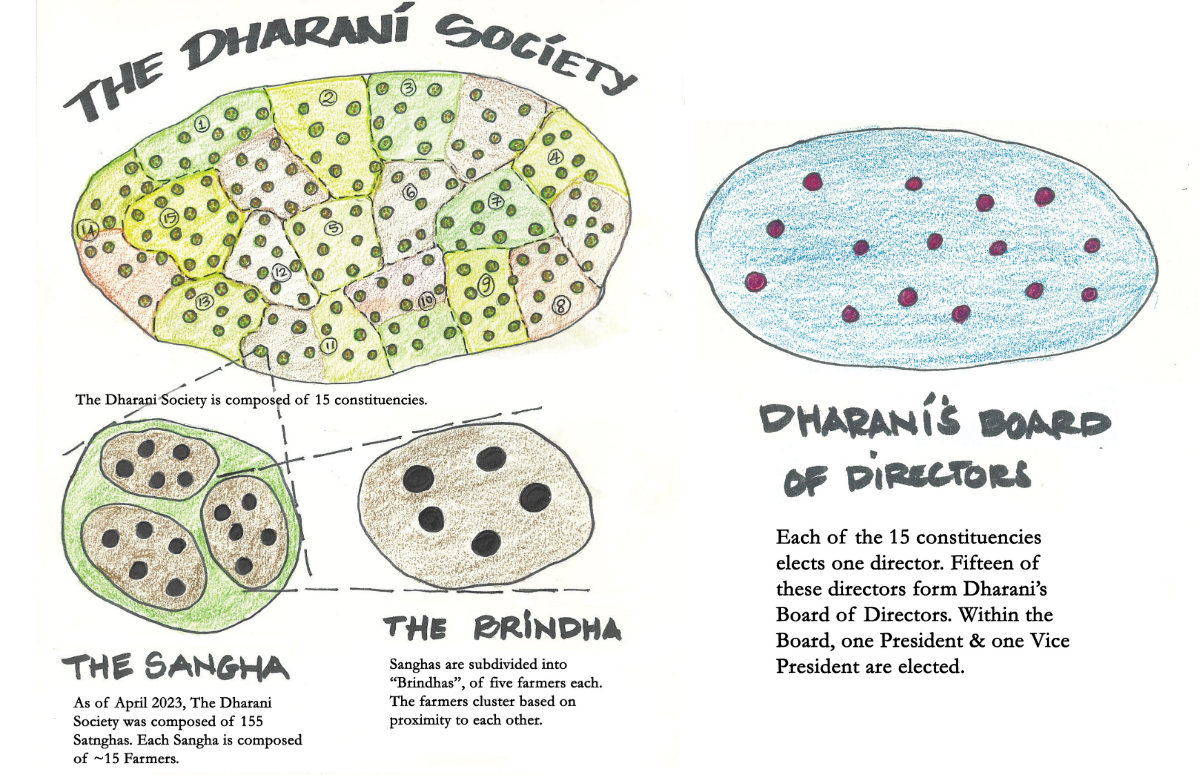
When it comes to governance, the dharani operates on five levels:
- Farmers: As of 2022, more than 2,000 smallholder farmers were members of the dharani; they range in size and in their involvement in the larger operations of the cooperative.
- Brindhas: A brindha is a group of five farmers whose farms are adjacent to one another.
- Sanghas: A sangha is composed of 15 farmers (or three brindhas) and is the primary operational and governance unit of the dharani; they coordinate planning, business operations, and cultivation and harvesting.
- Constituencies: Sanghas are organized into 15 constituencies, which coordinate the sanghas.
- The Board: Each constituency elects one of its members to serve on the dharani’s board of directors, which in turn elects one of its own to serve as president of the board.
Though a hierarchy, the dharani is wholly member-owned, and its governance system is collaborative, involving both vertical and horizontal relationships and systems of accountability. Top down, the dharani sets standards and provides training for organic regenerative farming; disburses resources such as seeds, community-based financing, tools, machinery, and organic fertilizer produced by the society’s 2,000 pairs of cows; and coordinates the sale and distribution of the farmers’ agricultural products. Bottom up, the farmers share information about crops and yields, determine their own goals and processes, and hold each other accountable to regenerative and organic agriculture standards. Top and bottom levels of the collaborative jointly plan the year's planting and harvesting. “Say I'm doing the crop planning meeting,” explained Gondi Mahesh, the CEO of the Dharani Farm Coop. “Timbaktu will tell me how many acres are to be allotted to pulses, oil seeds, whatever dharani requires. This is followed up in the sangha meeting.”
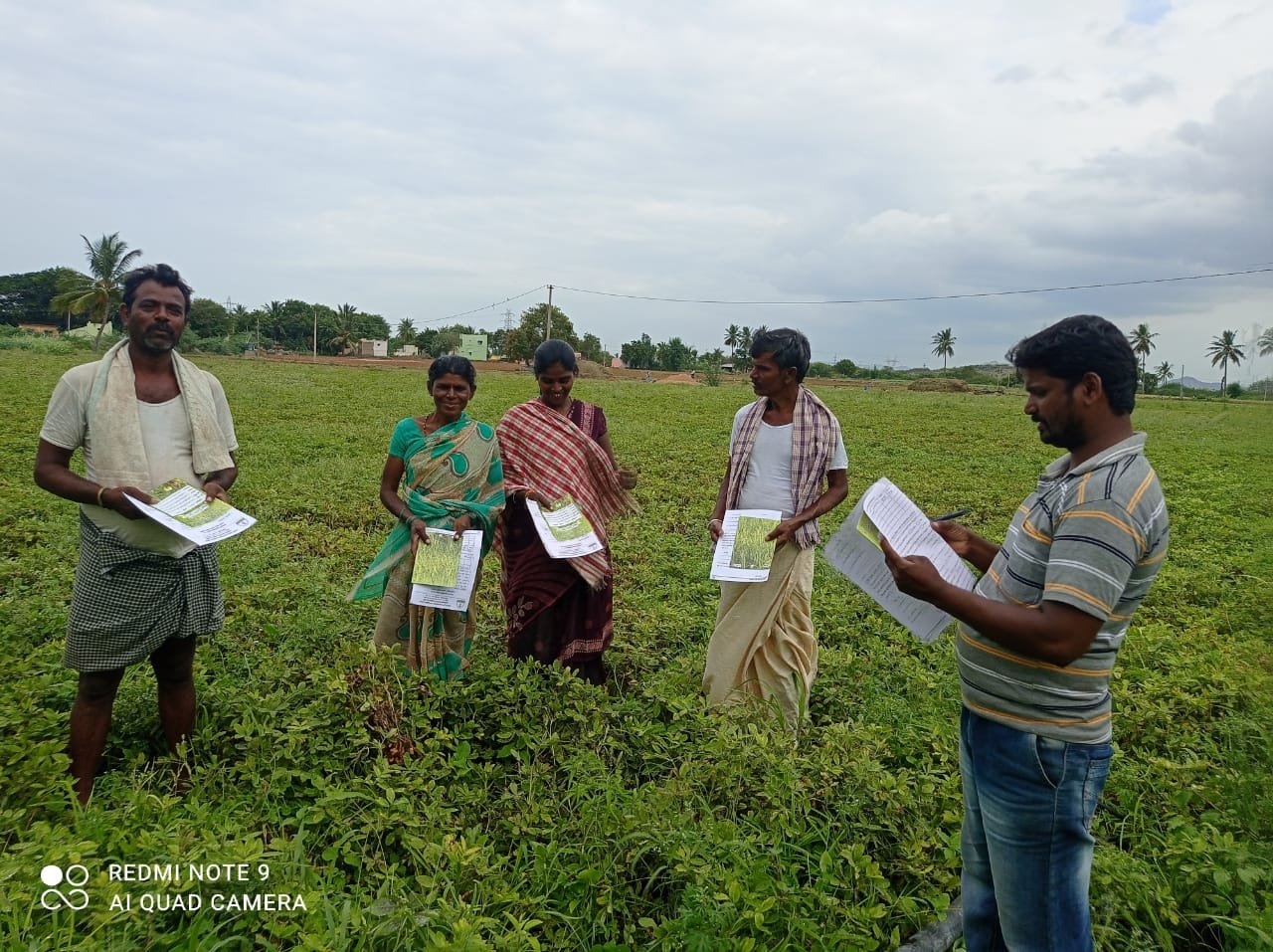
The transition from chemical-based monocropping to a diverse and organic farming approach has required years of effort and enforcement of demanding standards. The Timbaktu Collective’s Farmer Field School gathers growers for traditional classroom lessons (on topics like financing, product development, and sales) as well as hands-on lessons (on seeds, pests, water, fertilizer, and cultivation). For example, they learn, among other skills, how to make organic pesticides (with pastes from ground-up medicinal leaves) at about 6 percent of the cost of commercial chemical pesticides.
In the beginning of a growing cycle, Timbaktu provides farmers with seeds, fertilizers, and other materials at reasonable prices. Farmers follow a regularly updated guide known as the “package of practices,” which provides standards for cultivating several species of crop.
In 2023, Timbaktu was in the process of developing packages for growing organic vegetables, which will let it continue to repair the land while serving a niche less sensitive to market fluctuations. While several of the farmers at the dharani have been growing vegetables to meet their own needs and those of their family and community, they have also observed a growing demand for fresh produce in the last decade, which they intend to meet.
A farmer peer review system, in which farmers within the same brindha assess one another’s fields, ensures everyone is following organic, regenerative practices. “If I'm going to my field, I will also look at crops in your field,” said Mahesh. “That way, we know what everybody’s doing.” Violations of regenerative farming practices are not tolerated. In a typical year, the dharani finds six or seven violations—less than 1 percent of its overall cooperative. “If they find any chemicals or bottles, they will say that this is not cultivated organically and will recommend not buying,” said Mahesh. “Farmers are banned for three years.”
Timbaktu Collective, 2021
At harvest time, a Timbaktu procurement team comes to pick up the crop. “The farmer keeps the harvest ready to sell,” said Mahesh. “They dry, clean, and remove any mud, stones, or foreign particles, per our standards. They inform us it’s ready to procure.”
Critically, the Timbaktu Collective guarantees it will purchase the output of all dharani farmers. Farmers are relieved of the stress of managing sales themselves or relying on middlemen. The collective processes, packages, markets, and sells the farmers’ products under the Timbaktu Organic brand, which appears in more than 300 retail outlets, mostly in southern India.
With its rigorous process of certification and distinctive products, Timbaktu is less dependent on national and global markets. Farmers can produce their crops without worrying about meeting the lowest price points in the market. With a distinctive product, they are also affected less by price fluctuations in the different phases of the value chain. For example, “with millets, we don't even look at the market,” Mahesh said. “Their rate is seldom higher than our rate. We don't care! Because we have that marketing capacity.”
“We wanted [the farmers] to earn more money,” said Ganguly. “The only way was to participate in the value chain, from seed to consumer. That’s what dharani is all about.” Farmers in the dharani are not dependent on exploitative brokers and middlemen. “Typically, farmers only have control up to the farm gate, and after that nothing,” said Ganguly. “Here, the ownership of the whole process is with dharani farmers.”
Restoring the Future
In a matter of decades, the Timbaktu Collective has revived the region of Anantapur. Some 7,000 acres were transformed from dry, rocky, and nutrient-poor wasteland to forest with a wide range of trees, shrubs, and plants. By digging simple stone-lined gullies to contain water during the rare periods of heavy rains, the collective has prevented runoff and enabled the water to seep into the ground. Since 1990, the number of species of flora in the area has risen from 21 to more than 400. “At a particular point, nature just took off,” said Ganguly. “[Nature] has the capability of regenerating herself, revitalizing. This is the same principle that we used in agriculture later on.”
At the same time, the Timbaktu Collective has touched the lives of nearly 40,000 families in the area. The adoption of traditional farming practices has boosted crop yields, and the dharani’s cooperative ownership system allows farmers a greater share of the value chain. As the dharani has expanded, so has the diversity of its crops, from seeds and grains to vegetables (like tomatoes, bitter gourds, and leafy greens) and fruits (such as mangos and chikoo berries). Contrast that with the larger Anantapur community, where nine in 10 acres of arable land are still devoted to groundnuts.
Success requires resilience. “There were many instances where I thought, ‘This doesn't make any sense,’” Vattamattam says. “I think my success was that I continued, I didn't give up.…It's always like, ‘Take one more step and see what happens.’ To take that one step forward, I had to build my courage.” The collective is a group effort. “This is not easy and needs to be built slowly and steadily,” Ganguly said. “We all need to learn to trust and respect each other, and then the rest will follow.”
In the beginning, Ganguly and Vattamattam chose the name Timbaktu as a joke to their children. When they left home for the day, the children would ask where they were going. “To Timbuktu,” they said.4 Only later did they realize that the name—which means the place where the earth meets the sky—expresses their search for something new in an eternal past.
Kirthana Sudhakar is research associate for New America’s Future of Institutions project. She is a graduate of Columbia University’s dual program in urban planning and historic preservation and the bachelor’s program in architecture at Rashtreeya Vidyalaya in Bangalore, India. For this case study, she traveled to the Timbaktu Collective and interviewed members.
Citations
- See Ashish Kothari, “Very Much on the Map: the Timbaktu Collective,” in Ecologies of Hope and Transformation: Post-Development Alternatives from India, ed. Neera Singh, Seema Kulkarni, and Neema Pathak Broome (Pune, India: Kalpavriksh and Soppecom, 2018).
- The 10 Elements of Agroecology: Guiding The Transition To Sustainable Food And Agricultural Systems (Rome, Italy: Food and Agricultural Organization of the United Nations, 2018), https://www.fao.org/3/i9037en/i9037en.pdf.
- Rintu Thomas and Sushmit Ghosh, Timbaktu (Black Ticket Films, 2012), film, commissioned by India’s Ministry of Information and Broadcasting, blackticketfilms.com/timbaktu/.