Lessons from the Past to Govern for the Future
Abstract
Many of our institutions are focused on the short term. Whether corporations, government bodies, or even nonprofits, they tend to prioritize immediate returns and discount long-term value and sustainability. This myopia is behind planetary crises such as climate change and biodiversity loss and contributes to decision-making that harms the wellbeing of communities.
Policymakers worldwide are beginning to recognize the importance of governing for the long term. The United Nations is currently developing a Declaration on Future Generations to codify this approach. This collection of case studies profiles community-level institutions rooted in Indigenous traditions that focus on governing for the long term and preserving the interests of future generations.
Acknowledgments
We would like to thank all the community leaders, organizers, and activists who graciously shared their time, insights, and stories for this project. Special thanks are due to Bablu Ganguly, Mary Vattamattam, Manisha Kairaly, and Gondi Mahesh at the Timbaktu Collective in India and to I Wayan Alit Artha Wiguna in Bali. Basori provided invaluable transcription and translation assistance, and Sabrina Detlef performed copyedits that improved this report. We are grateful to the Rockefeller Foundation for supporting this work as part of the Future of Institutions project.
In Mexico, we would like to thank Pedro, Rosa, Karla, Biaani, Yolanda, Víctor, and the countless other Indigenous and non-Indigenous activists who have shared their wisdom, heritage, and challenges with the global community. We recognize your invaluable contributions, both seen and unseen, in the pursuit of intergenerational justice.
A Pedro, Rosa, Karla, Biaani, Yolanda, Víctor y las innumerables personas activistas, Indígenas y no Indígenas, que han impartido su sabiduría, herencia y desafíos a la comunidad global. Con profunda gratitud, reconozco sus invaluables contribuciones, tanto visibles como invisibles, en la búsqueda incesante de la justicia intergeneracional. Que sus voces persistan, anunciando la llegada de un futuro más brillante y equitativo.
Editorial disclosure: The views expressed in this report are solely those of the authors and do not reflect the views of New America, its staff, fellows, funders, or its board of directors.
Downloads
Introduction
By Charles Euchner
Without tradition…there seems to be no willed continuity…neither past nor future, only sempiternal [eternal] change of the world and the biological cycle of living creatures in it. —Hannah Arendt1
A farming community in south-central India struggles to survive in the face of global and national policies that promote monocropping and chemical fertilizers. In a land turned to dust, two activists embrace traditional methods to form a collective that supports farmers and revives the hills and farmlands of the country’s driest territory.
Indigenous communities in southwestern Mexico, buffeted by the destructive practices of mining companies and corrupt governments, find their voice by reviving and transforming a centuries-old tradition of communal festivals. Rejecting corporate-sponsored carnivals, they come together for an annual gathering of truth-telling, which bolsters grassroots activism.
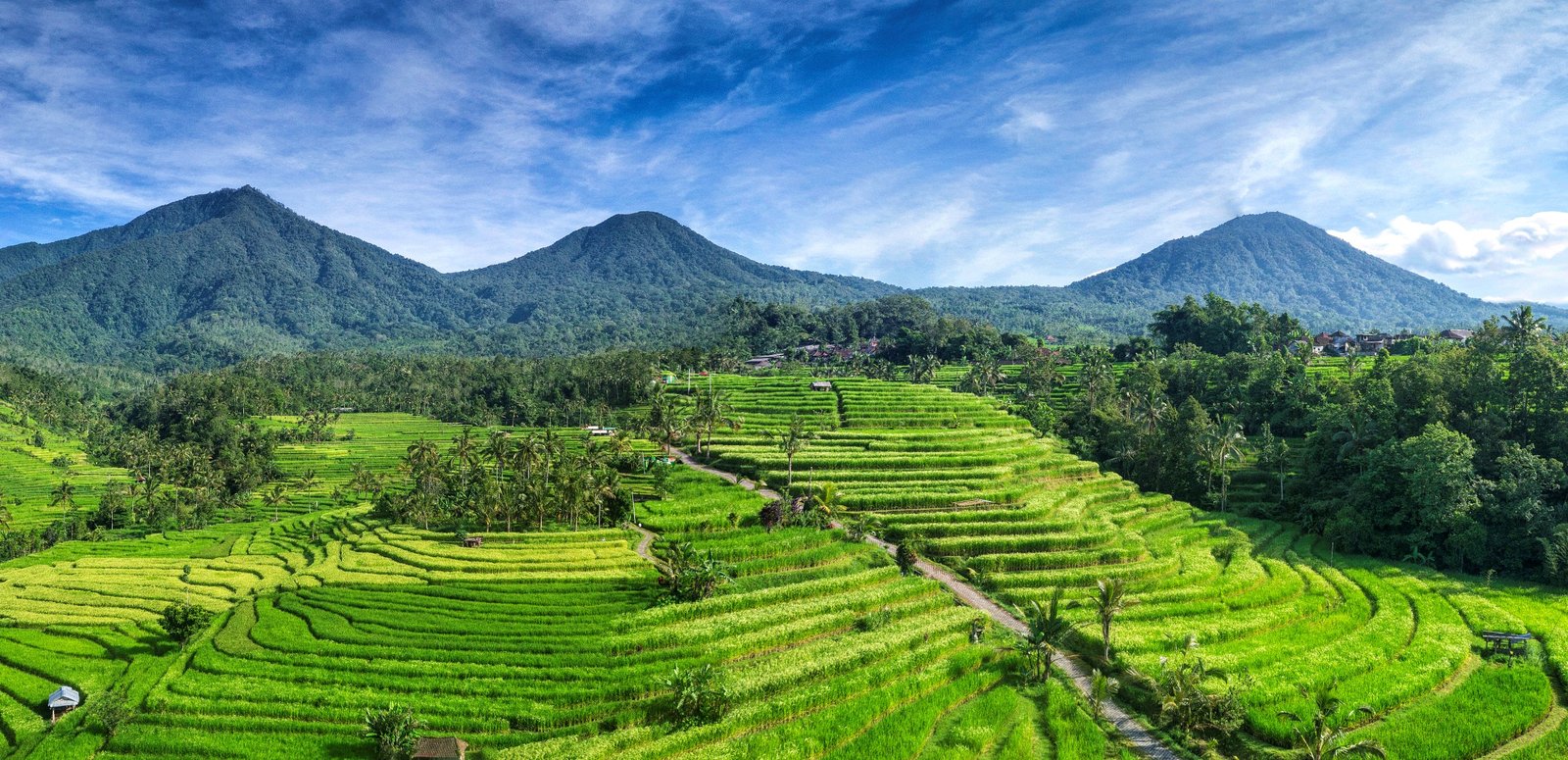
In Bali, rice farmers organize themselves into cooperatives called subaks to share limited water and synchronize planting cycles. Dating to the eleventh century and based on communal governance and religious traditions, the subak system preserves the land, maintains social harmony, and generates abundant rice harvests more effectively than a modern government could.
In three distinct parts of the world—captured in detailed case studies by New America’s Future of Institutions project—ordinary people in villages have discovered the power of the past to open new possibilities for the future. In each case, ancient wisdom is embodied in an institution that asserts people’s control over their lives. In a world where the short-sighted pursuit of profit and power is destroying the planet and dividing societies, these communities offer practices and principles for good, sustainable, abundant lives. Understanding their strategies may help us develop new governance tools to tackle challenges like climate change or artificial intelligence, for which our current political systems are falling short.
At their core, these cases embody the concept of intergenerational justice. This concept is simple, if hard to pursue: Every generation has an obligation to future generations, owing “enough and as good” resources and opportunities (to use John Locke’s classic phrase) that it received. A future-oriented approach helps us move beyond the myopic demands of the present to think—and act—in a way that goes beyond just reacting to crises to proactively shaping the world we want to build.
Too often, we lack appreciation for the past and future. New technologies and new discoveries can make traditional cultures, wisdom, and practices seem irrelevant. In every realm—business, agriculture, community life—the need to produce now subverts old ways of living. Modern society turns on the need for growth in the short term. The focus on stock prices and quarterly earnings is just one signal of this orientation. Tapping the power of Indigenous practices offers a deeper way to meet the challenges of the present and lay the groundwork for a better future.
In a variety of settings, Indigenous communities offer us strategies to take control of our lives and look out for future generations. A number of lessons come from these case studies:
- Address Inequality: Activists and policymakers need to address structural inequalities. Traditional practices offer ways to control and develop resources in the face of political injustice, colonialism, and extraction.
- Tap into Intergenerational Wisdom: People can connect the wisdom of the past with their desire for a sustainable future, which can offer insights for the present.
- Embrace Something Old, Something New: Communities can evolve with experimentation, since the best policies and practices emerge when time-tested knowledge is combined with new facts from science and experience.
- Organize at the Grassroots Level: People need to organize at the local level, with open dialogue, training in skills, and collective efforts to devise actionable agendas.
- Count Small Wins: People need a chance to produce quick successes to build momentum for a long-term vision of opportunity and sustainability.
- Engage Existing Systems: Communities need to devise effective strategies to work within the limitations of existing political systems. These three cases show that one key to effective engagement is to understand your own core values and how to address pressures to compromise on those values.
The United Nations in 2024 will host the Summit of the Future, an opportunity for the world to develop strategies for more effective global governance that, among other things, consider the interests of future generations. Rather than taking a “one-size-fits-all” approach, these case studies explore different approaches to intergenerational governance in different local environments. These case studies show, contrary to sentimental views of Indigenous peoples, a determined, pragmatic, and stubborn approach to building a robust future with old values. To embrace traditional values is not to long for the past. Rather, it is to use its deepest and most enduring resources and insights to face the challenges of the present.
Charles Euchner is special projects editor for the Future of Institutions project at New America. A longtime author and policy analyst, he has written or edited a dozen books.
Citations
- Hannah Arendt, Between Past and Future (New York: Viking, 1961), 5.
Regenerating Land and Lives: The Timbaktu Collective in Anantapur, India
By Kirthana Sudhakar
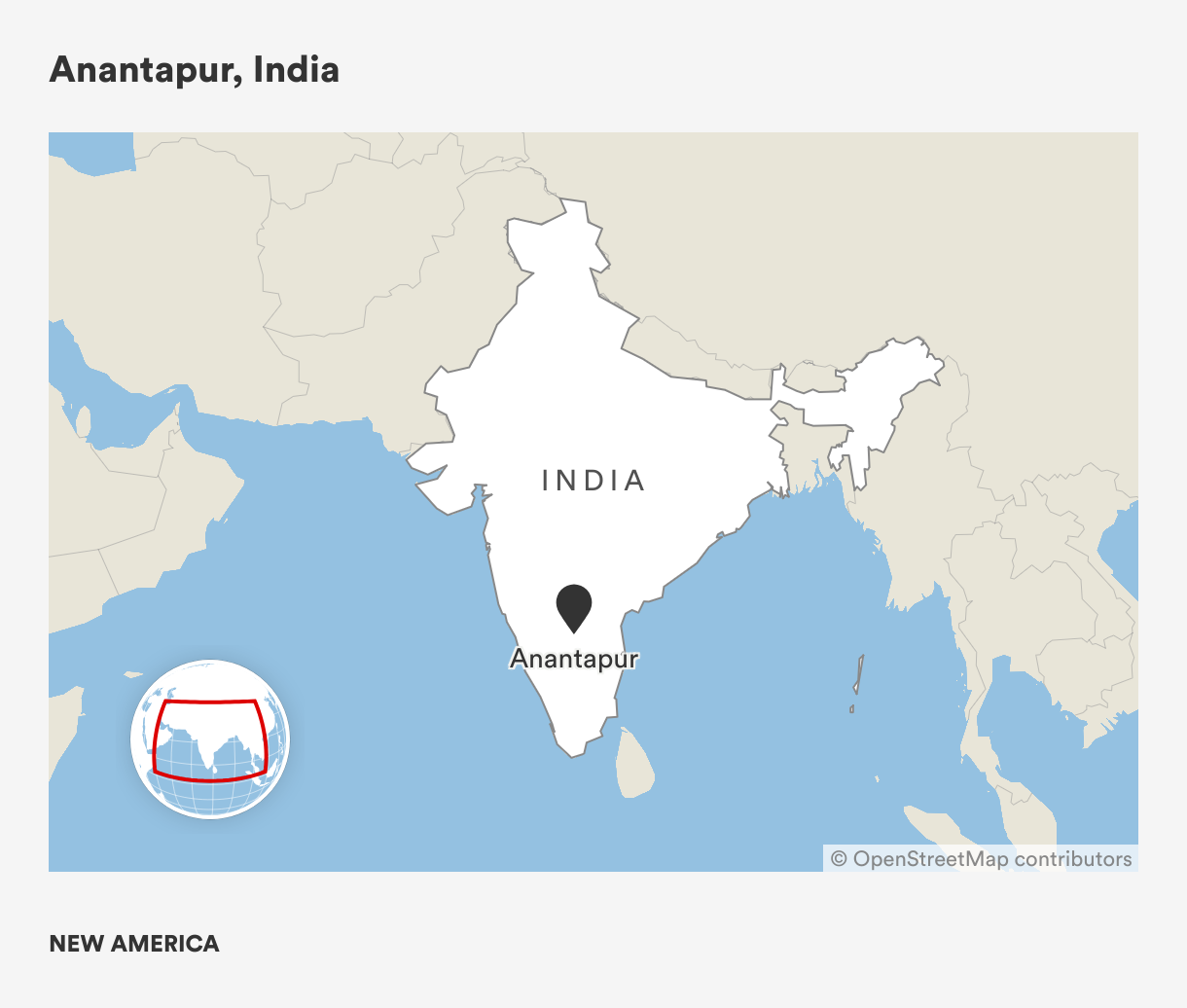
On April 1, 1978, a social activist from Mumbai named Bablu Ganguly arrived in Anantapur, a small city in the south-central Indian state of Andhra Pradesh, to take a job with a grassroots organization fighting for land and income rights. For years, a focus on short-term gains left the region’s ecology damaged and its farmers struggling. Ganguly began to explore how Indigenous agricultural practices might revive the area’s natural and civic life.
Ganguly soon met a social worker named Mary Vattamattam. The two began working together to support marginalized groups, fight poverty, and improve the environment. In 1990, they married, purchased 32 acres of land, and created a nonprofit organization called the Timbaktu Collective. Vattamattam worked to create a system of microfinancing while Ganguly planted thousands of trees to revive the forest. When the ground proved too arid, Ganguly concluded he needed to take a broader approach to environmental regeneration. “This land needs healing,” he said. That healing, he decided, required the rich wisdom and knowledge of the land’s native peoples.
At the center of the Timbaktu Collective is the dharani, a communally governed farmer’s cooperative that uses traditional farming methods and a locally controlled system of production and distribution. Coming from the Sanskrit word for earth or land, the dharani promotes regenerative agricultural practices and offers farmers access to financing, seeds and equipment, training, and distribution networks. Over the years, the dharani has helped once-vulnerable farmers to take charge of their destiny.
Three decades after its founding, the Timbaktu Collective has restored the region’s ecological health and improved the livelihoods of thousands of families in the area. Timbaktu has replaced systems focused on short-term profits with ones focused on long-term value. By updating traditional practices, the collective has restored the land and reclaimed the community for present and future generations. The organization’s grassroots model can be used in any community eager to embrace its past to preserve its future.
“Nothing Taller than Me”: The Degradation of the Land and People
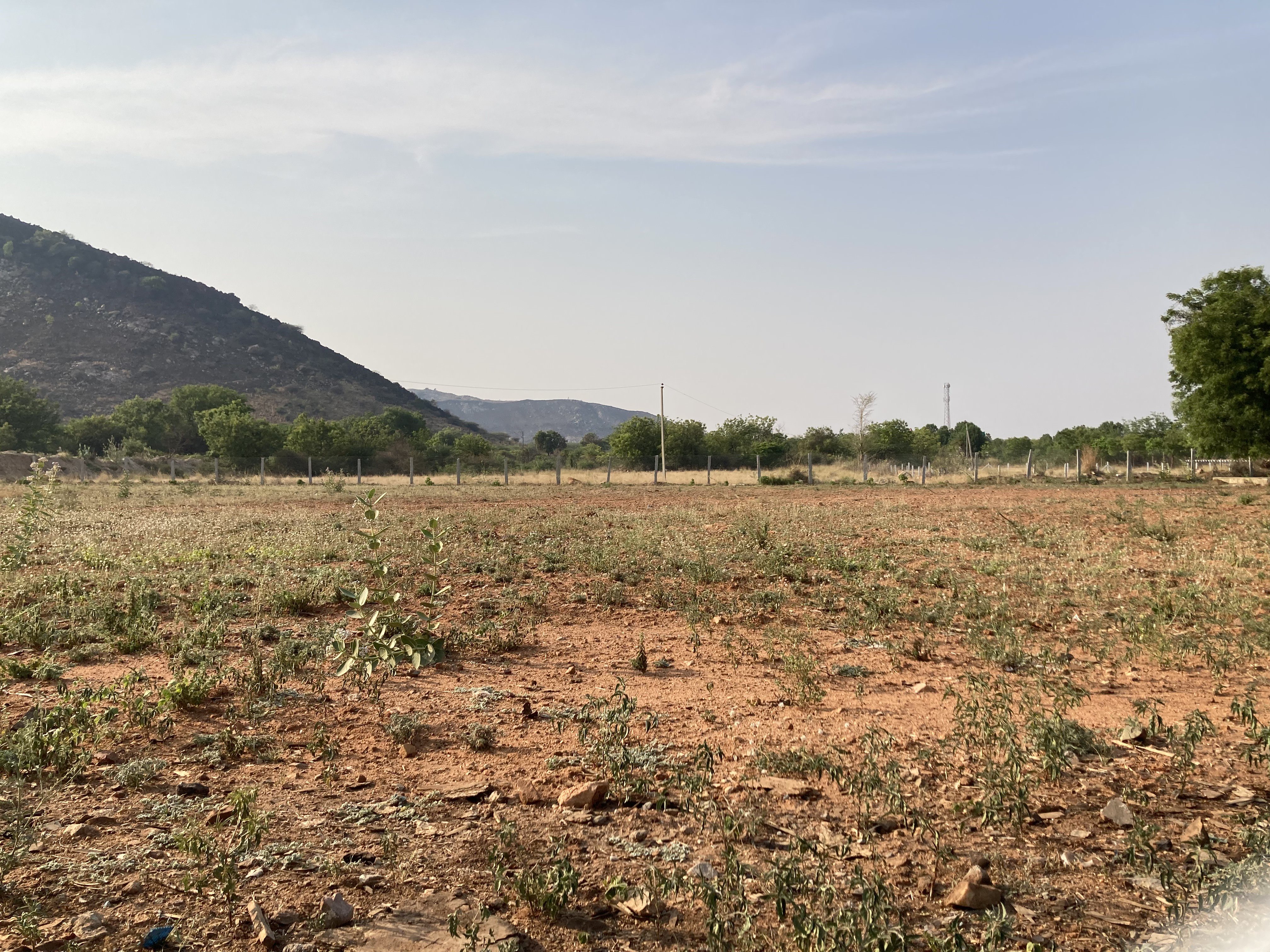
With its rocky hills and minimal rainfall, Anantapur was never conducive to the growth of deep forests. Still, the area historically was filled with thick clusters of hardy plants and trees adapted to arid conditions.
Soon after the start of colonial rule in 1858, the British began building railways to move people and goods. Trees were cut down to provide lumber for train tracks and fuel for the locomotives. After independence in 1947, India embraced an aggressive development agenda, dependent on mass manufacturing, mining, and modern commercial agriculture. Forests were cut down to enable large-scale production of tea, coffee, sugarcane, and other cash crops.
Kirthana Sudhakar, 2023
In the 1970s, the Indian government embraced the Green Revolution, a global agricultural technology transfer that increased crop yields but relied on single crops and chemical fertilizers. Across India, farmers who once might have cultivated an array of traditional and native crops (e.g., rice, maize, wheat, paddy, red gram, bajra, ragi, kora, sunflower, brinjal, horse gram, onion, turmeric, sugarcane, cow gram, safflower, coriander, and chilis) began monocropping, farming only a single cash-crop. Practices of the Green Revolution—monocropping and intensification of growing with chemicals—gave the illusion of efficiency by creating spikes in short-term cash crops. But the practices damaged the land’s ecological health, undermining its long-term value, and so made the region poorer.
In Anantapur, that crop was primarily peanuts. The area’s semi-arid conditions and periodic monsoon rains were well suited to the groundnut. But monocropping depleted the soil further, and the use of chemical fertilizers, fungicides, and pesticides damaged the ecology and harmed the health of people in the area.
The powerlessness of farmers mirrored the degraded environment. As was the case across India, farmers in Anantapur relied on middlemen to get their agricultural products to market. Outside banks, seed suppliers, distributors, wholesalers, and retailers dominated the business. According to Ganguly, distributors and other middlemen would take as much as 75 percent of the overall value of an agricultural product, leaving little for the farmers.2 “The tragedy is that middlemen just collect from everybody, and then sell it in their name. They control the value chain,” said Ganguly.
When Ganguly and Vattamattam founded the Timbaktu Collective in 1990, the region was hurting. Farmers were exploited and isolated by the market economy. Widespread mental health issues and even frequent suicides were reported among the farmers. And the land was barren and desert-like. “It was really bad. The hills had no trees, only bushes, nothing taller than me,” Ganguly remembered. “We set out to start restoring things.”
Regeneration
The animating principle of the Timbaktu Collective is ecological and agricultural regeneration. The collective has drawn on Indigenous wisdom, modern science, and trial and error to restore the soil and biodiversity of plants and crops in the area.
After a series of conversations with residents in the area, Ganguly and fellow activists began experimenting with ecological restoration. They surveyed the land and hills and spread seeds to determine which native plants would thrive in the area. They kept copious notes and tracked what they learned.
Starting in 1995, the collective undertook projects on watershed development, land development, and local traditional seeds. The collective held seed exhibitions and conducted trials on organic farming. In 2005, it held its first project in organic farming, using agroecological practices with a focus on food security, crop biodiversity, and enterprise development.
Because of an arid climate, most farms at Timbaktu can only grow and harvest one crop a year. Farmers with better irrigation systems can complete two (and, rarely, three) harvests a year. By managing the land better, with earth-friendly methods, they hoped to improve agricultural yields while restoring the land. “Agriculture,” as Ganguly said in a 2015 documentary, “is the art of living with land”—not dominating nature.
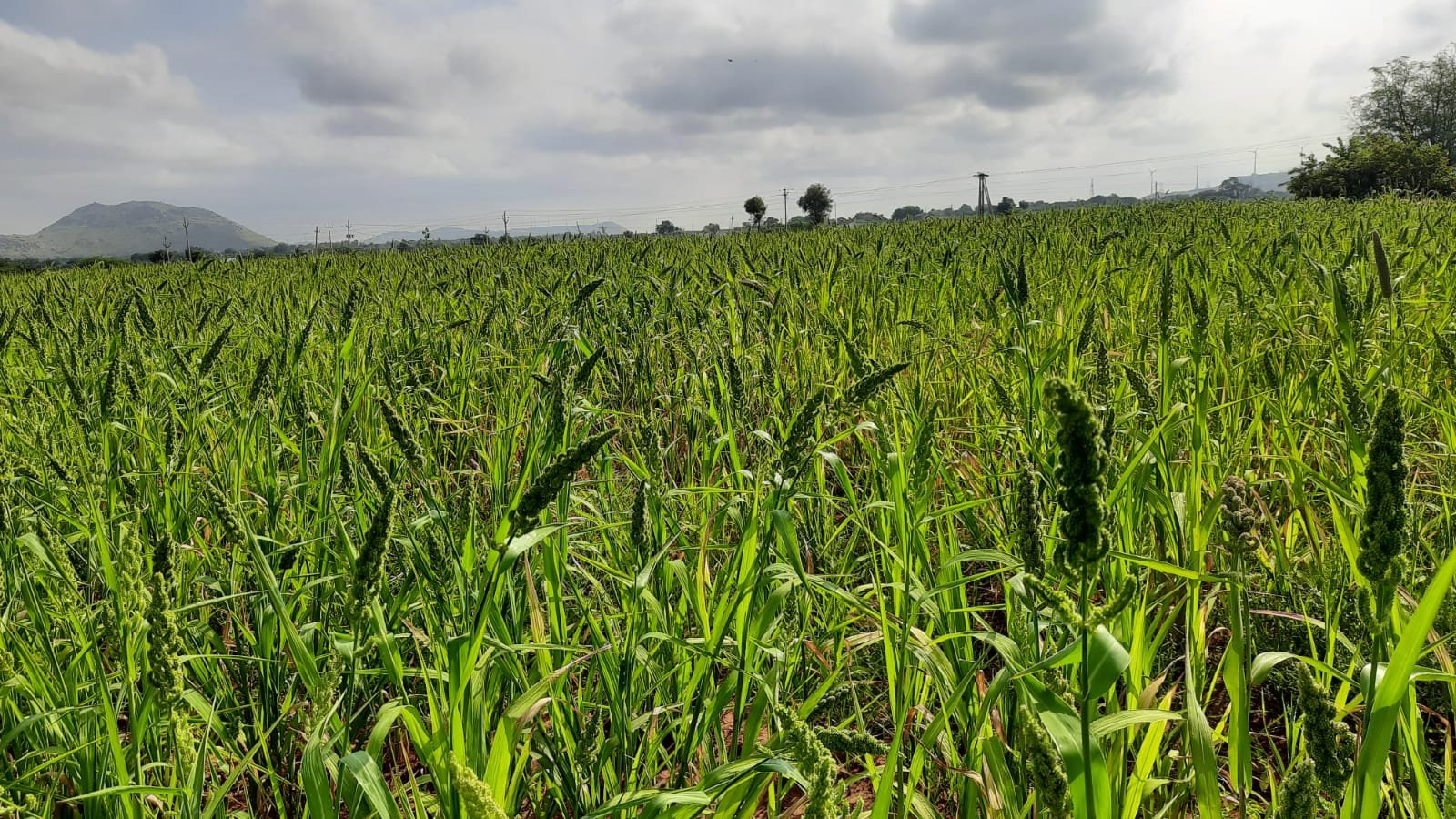
The collective adopted a traditional form of mixed cropping called navdanya, an Indian concept that literally means nine seeds or new gift. This approach promoted crop diversity (with an emphasis on crops that offered high nutritional value), soil replenishment, and the use of traditional farming methods. At the center of the program was millet, an ancient grain that thrives with other crops. Though it had been cultivated in India since as early as 3300 B.C.E., millet farming had become a lost art amid the boom in monoculture crops. With the restoration of diversified agriculture, the land began sprouting companion crops, including local varieties of chilis, mustards, and tomatoes.
Timbaktu Collective, 2021
While diversifying their crops, farmers also embraced ancient farming rituals. Planting and harvesting followed moon cycles and monsoon rains. Those ancient practices included using compost for fertilizers and using roots, leaves, and seeds for pest and disease control. When the crops were brought in, the community held harvest festivals.
These rituals held symbolic meaning that strengthened the farmers’ sense of community, tradition, and belonging. “Navdanya [is] the symbol of this renewal of diversity and balance, not just of the plant world, but of the planet and social world,” said Vandana Shiva, a celebrated environmental activist. “It is this complex, relational web which gives meaning to biodiversity in Indian culture and has been the basis of its conservation over millennia.”
Ganguly and his team looked not just to Indigenous wisdom, but also to modern techniques. They drew inspiration from the approach of the Japanese botanist Akira Miyawaki to assess the soil, climate, and ecosystem; select trees to form the layers of a forest; and then plant dense groves of trees. The hardiest trees survived and eventually produced a dense, lush forest.
The Ten Elements of Agroecology
The Timbaktu Collaborative follows the United Nations standards and values for sustainable agriculture practices, outlined in a 2019 report.3
- Diversity: To ensure food security and nutrition while conserving, protecting, and enhancing natural resources.
- Synergies: To enhance key functions across food systems, supporting production and multiple ecosystem services.
- Co-Creation and Sharing of Knowledge: To assure sustainable, effective responses to local challenges and needs.
- Efficiency: To promote innovative agroecological practices, using fewer resources.
- Recycling: To manage agricultural production with lower economic and environmental burdens.
- Resilience: To adapt to a wide range of environmental, economic, and social developments.
- Human and Social Values: To use sustainable food and agricultural systems to improve rural prosperity, equity, and social well-being.
- Culture and Food Traditions: To foster healthy, diversified, and culturally appropriate diets while maintaining the health of ecosystems.
- Responsible Governance: To promote viable visions and manage different scales of operations, from local to national to global.
- Circular and Solidarity Economy: To connect producers and consumers, providing a process for honoring the environment and its people.
Cooperatives
Organizationally, the Timbaktu Collective is based on community-level cooperatives. As of 2022, more than 39,000 families from across 310 villages in the greater Anantapur region were members of Timbaktu cooperatives. The organization includes eight diverse but related programs. These programs are designed to empower people at the grassroots level by providing them with the knowledge and resources to take control of their economic livelihoods.
The Timbaktu Collective’s Eight Programs
Since its creation in 1990, the Timbaktu Collective has created eight distinct programs. Six of these programs have been branded with Sanskrit words that describe their purpose and values.
- Kalpavalli (Eternal Source of Abundance): Started in 1992, this program coordinates community-based projects for conservation and biodiversity.
- Swasakthi (Power of Self): Begun in 1992, this program empowers women through mutually aided credit cooperatives.
- Chiguru (Tender Leaf): Started in 1992, this program advocates for children’s rights and alternative education and programs.
- Militha (Inclusion): Started in 2004, this program promotes the rights and well-being of people with disabilities.
- Dharani (Earth): Established in 2008, this program promotes nature-based farming practices, organic farming, food processing, and marketing by small farms.
- Enterprise Development: Registered in 2008 by the Timbaktu Shop, this program markets organic farm products, soap, textiles, and pickles.
- School of Regenerative Agriculture and Pilot Initiatives: Started in 2018, the school trains the next generation of sustainable farmers.
- Gramasiti (Wealth of a Village): Formed in 2020, this program offers the opportunity to raise small ruminants, mostly goats and sheep, to farm laborers.
Timbaktu’s first cooperatives were women’s groups established by Mary Vattarattam. She called these cooperatives sanghas, a Sanskrit word meaning assembly or community. In her social work prior to the launch of the collective in 1990, she would convene these sanghas so women could propose and discuss solutions for social and economic challenges in their lives.
The women reported that a major hurdle to empowerment was a lack of access to credit for business activity. In 1992, Vattarattam established Swasakthi, a community savings and microfinance program for the women’s cooperatives. Each member contributed 10 rupees per month to the collective savings fund. Members could then apply for fixed-interest rate loans from the fund to start or expand a microenterprise. The program was a success. As of 2022, more than 31,000 women were members, with the community fund holding some $5.4 million in savings.
A Society of Farmers’ Collectives
The backbone of the Timbaktu Collective is the dharani. Taken from the Sanskrit word meaning earth, the dharani is a society of farmers’ cooperatives that commit to regenerative agricultural practices and that adopt a version of Vattarattam’s community-based financing structure to give farmers greater control of their livelihoods. The dharani features traditional farming with diverse, organic crops and a locally controlled system of production and distribution that frees farmers from reliance on outside, sometimes predatory, banks, suppliers, and distributors.
Established with an initial seed fund from the Swasakthi women’s cooperative and a philanthropic grant, the dharani began with 350 farmers in 2005 and officially incorporated in 2008 as a member-owned business enterprise called Dharani Marketing and Farming Coop Ltd.
Kirthana Sudhakar
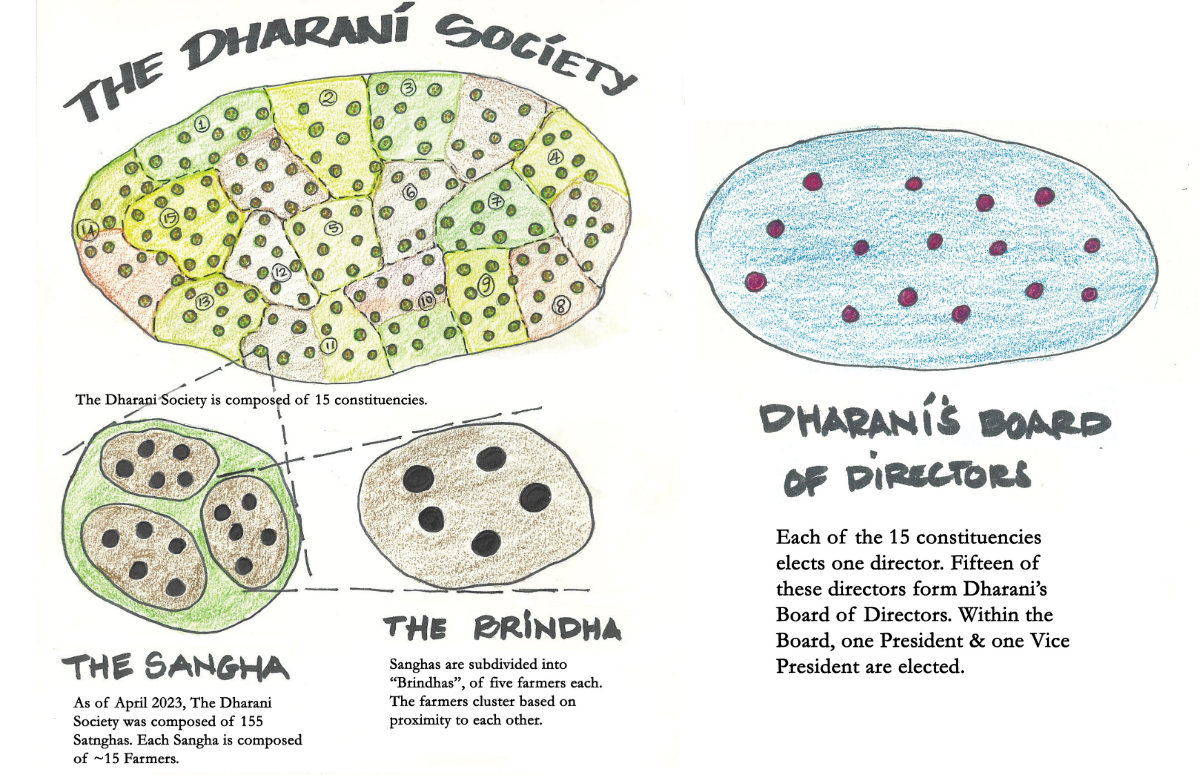
When it comes to governance, the dharani operates on five levels:
- Farmers: As of 2022, more than 2,000 smallholder farmers were members of the dharani; they range in size and in their involvement in the larger operations of the cooperative.
- Brindhas: A brindha is a group of five farmers whose farms are adjacent to one another.
- Sanghas: A sangha is composed of 15 farmers (or three brindhas) and is the primary operational and governance unit of the dharani; they coordinate planning, business operations, and cultivation and harvesting.
- Constituencies: Sanghas are organized into 15 constituencies, which coordinate the sanghas.
- The Board: Each constituency elects one of its members to serve on the dharani’s board of directors, which in turn elects one of its own to serve as president of the board.
Though a hierarchy, the dharani is wholly member-owned, and its governance system is collaborative, involving both vertical and horizontal relationships and systems of accountability. Top down, the dharani sets standards and provides training for organic regenerative farming; disburses resources such as seeds, community-based financing, tools, machinery, and organic fertilizer produced by the society’s 2,000 pairs of cows; and coordinates the sale and distribution of the farmers’ agricultural products. Bottom up, the farmers share information about crops and yields, determine their own goals and processes, and hold each other accountable to regenerative and organic agriculture standards. Top and bottom levels of the collaborative jointly plan the year's planting and harvesting. “Say I'm doing the crop planning meeting,” explained Gondi Mahesh, the CEO of the Dharani Farm Coop. “Timbaktu will tell me how many acres are to be allotted to pulses, oil seeds, whatever dharani requires. This is followed up in the sangha meeting.”
The transition from chemical-based monocropping to a diverse and organic farming approach has required years of effort and enforcement of demanding standards. The Timbaktu Collective’s Farmer Field School gathers growers for traditional classroom lessons (on topics like financing, product development, and sales) as well as hands-on lessons (on seeds, pests, water, fertilizer, and cultivation). For example, they learn, among other skills, how to make organic pesticides (with pastes from ground-up medicinal leaves) at about 6 percent of the cost of commercial chemical pesticides.
In the beginning of a growing cycle, Timbaktu provides farmers with seeds, fertilizers, and other materials at reasonable prices. Farmers follow a regularly updated guide known as the “package of practices,” which provides standards for cultivating several species of crop.
In 2023, Timbaktu was in the process of developing packages for growing organic vegetables, which will let it continue to repair the land while serving a niche less sensitive to market fluctuations. While several of the farmers at the dharani have been growing vegetables to meet their own needs and those of their family and community, they have also observed a growing demand for fresh produce in the last decade, which they intend to meet.
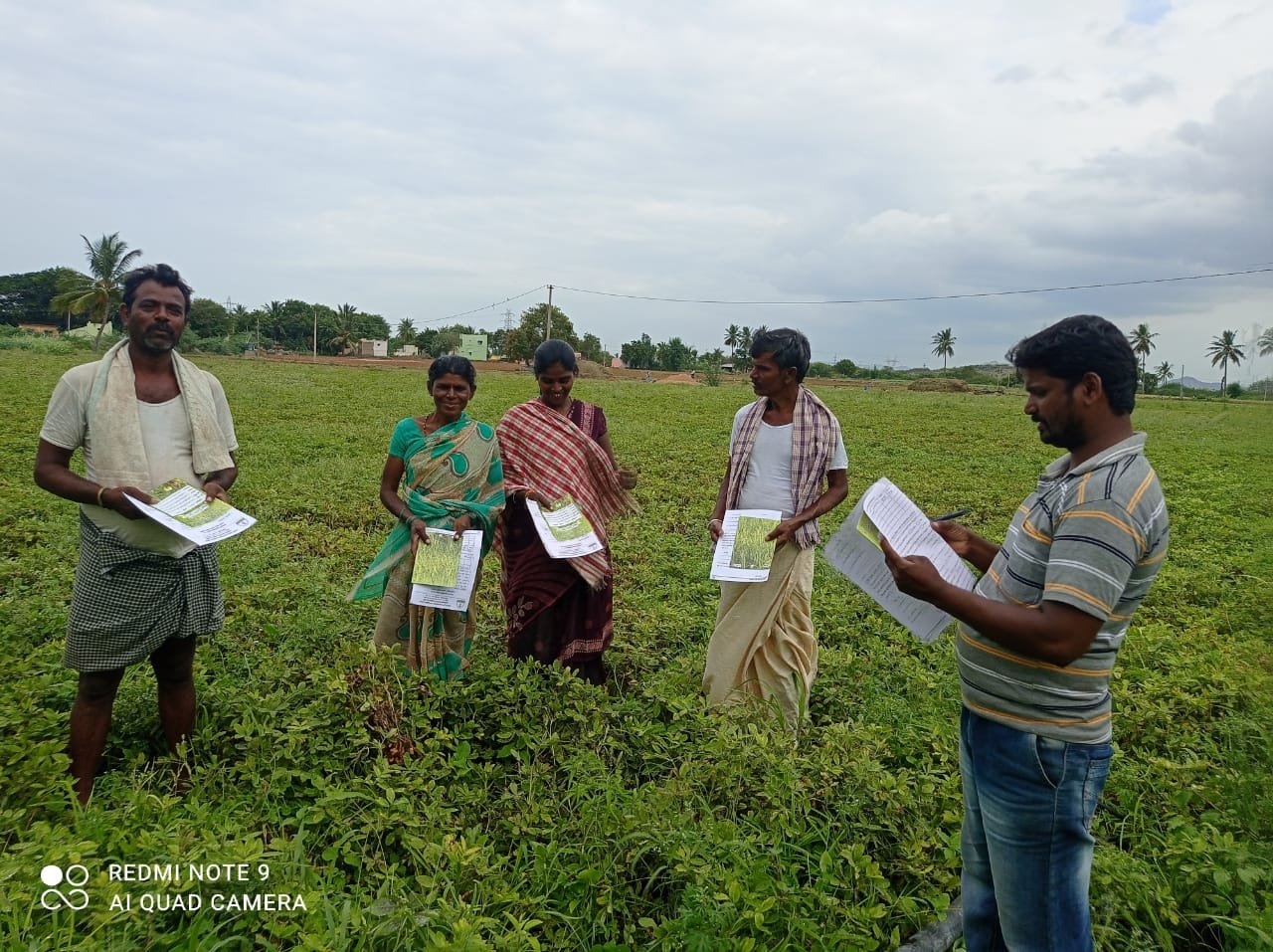
A farmer peer review system, in which farmers within the same brindha assess one another’s fields, ensures everyone is following organic, regenerative practices. “If I'm going to my field, I will also look at crops in your field,” said Mahesh. “That way, we know what everybody’s doing.” Violations of regenerative farming practices are not tolerated. In a typical year, the dharani finds six or seven violations—less than 1 percent of its overall cooperative. “If they find any chemicals or bottles, they will say that this is not cultivated organically and will recommend not buying,” said Mahesh. “Farmers are banned for three years.”
Timbaktu Collective, 2021
At harvest time, a Timbaktu procurement team comes to pick up the crop. “The farmer keeps the harvest ready to sell,” said Mahesh. “They dry, clean, and remove any mud, stones, or foreign particles, per our standards. They inform us it’s ready to procure.”
Critically, the Timbaktu Collective guarantees it will purchase the output of all dharani farmers. Farmers are relieved of the stress of managing sales themselves or relying on middlemen. The collective processes, packages, markets, and sells the farmers’ products under the Timbaktu Organic brand, which appears in more than 300 retail outlets, mostly in southern India.
With its rigorous process of certification and distinctive products, Timbaktu is less dependent on national and global markets. Farmers can produce their crops without worrying about meeting the lowest price points in the market. With a distinctive product, they are also affected less by price fluctuations in the different phases of the value chain. For example, “with millets, we don't even look at the market,” Mahesh said. “Their rate is seldom higher than our rate. We don't care! Because we have that marketing capacity.”
“We wanted [the farmers] to earn more money,” said Ganguly. “The only way was to participate in the value chain, from seed to consumer. That’s what dharani is all about.” Farmers in the dharani are not dependent on exploitative brokers and middlemen. “Typically, farmers only have control up to the farm gate, and after that nothing,” said Ganguly. “Here, the ownership of the whole process is with dharani farmers.”
Restoring the Future
In a matter of decades, the Timbaktu Collective has revived the region of Anantapur. Some 7,000 acres were transformed from dry, rocky, and nutrient-poor wasteland to forest with a wide range of trees, shrubs, and plants. By digging simple stone-lined gullies to contain water during the rare periods of heavy rains, the collective has prevented runoff and enabled the water to seep into the ground. Since 1990, the number of species of flora in the area has risen from 21 to more than 400. “At a particular point, nature just took off,” said Ganguly. “[Nature] has the capability of regenerating herself, revitalizing. This is the same principle that we used in agriculture later on.”
At the same time, the Timbaktu Collective has touched the lives of nearly 40,000 families in the area. The adoption of traditional farming practices has boosted crop yields, and the dharani’s cooperative ownership system allows farmers a greater share of the value chain. As the dharani has expanded, so has the diversity of its crops, from seeds and grains to vegetables (like tomatoes, bitter gourds, and leafy greens) and fruits (such as mangos and chikoo berries). Contrast that with the larger Anantapur community, where nine in 10 acres of arable land are still devoted to groundnuts.
Success requires resilience. “There were many instances where I thought, ‘This doesn't make any sense,’” Vattamattam says. “I think my success was that I continued, I didn't give up.…It's always like, ‘Take one more step and see what happens.’ To take that one step forward, I had to build my courage.” The collective is a group effort. “This is not easy and needs to be built slowly and steadily,” Ganguly said. “We all need to learn to trust and respect each other, and then the rest will follow.”
In the beginning, Ganguly and Vattamattam chose the name Timbaktu as a joke to their children. When they left home for the day, the children would ask where they were going. “To Timbuktu,” they said.4 Only later did they realize that the name—which means the place where the earth meets the sky—expresses their search for something new in an eternal past.
Kirthana Sudhakar is research associate for New America’s Future of Institutions project. She is a graduate of Columbia University’s dual program in urban planning and historic preservation and the bachelor’s program in architecture at Rashtreeya Vidyalaya in Bangalore, India. For this case study, she traveled to the Timbaktu Collective and interviewed members.
Citations
- See Ashish Kothari, “Very Much on the Map: the Timbaktu Collective,” in Ecologies of Hope and Transformation: Post-Development Alternatives from India, ed. Neera Singh, Seema Kulkarni, and Neema Pathak Broome (Pune, India: Kalpavriksh and Soppecom, 2018).
- The 10 Elements of Agroecology: Guiding The Transition To Sustainable Food And Agricultural Systems (Rome, Italy: Food and Agricultural Organization of the United Nations, 2018), https://www.fao.org/3/i9037en/i9037en.pdf.
- Rintu Thomas and Sushmit Ghosh, Timbaktu (Black Ticket Films, 2012), film, commissioned by India’s Ministry of Information and Broadcasting, blackticketfilms.com/timbaktu/.
The Festival Is Resistance: A Fight to Preserve the Future in Oaxaca, Mexico
By Claudette Salinas Leyva
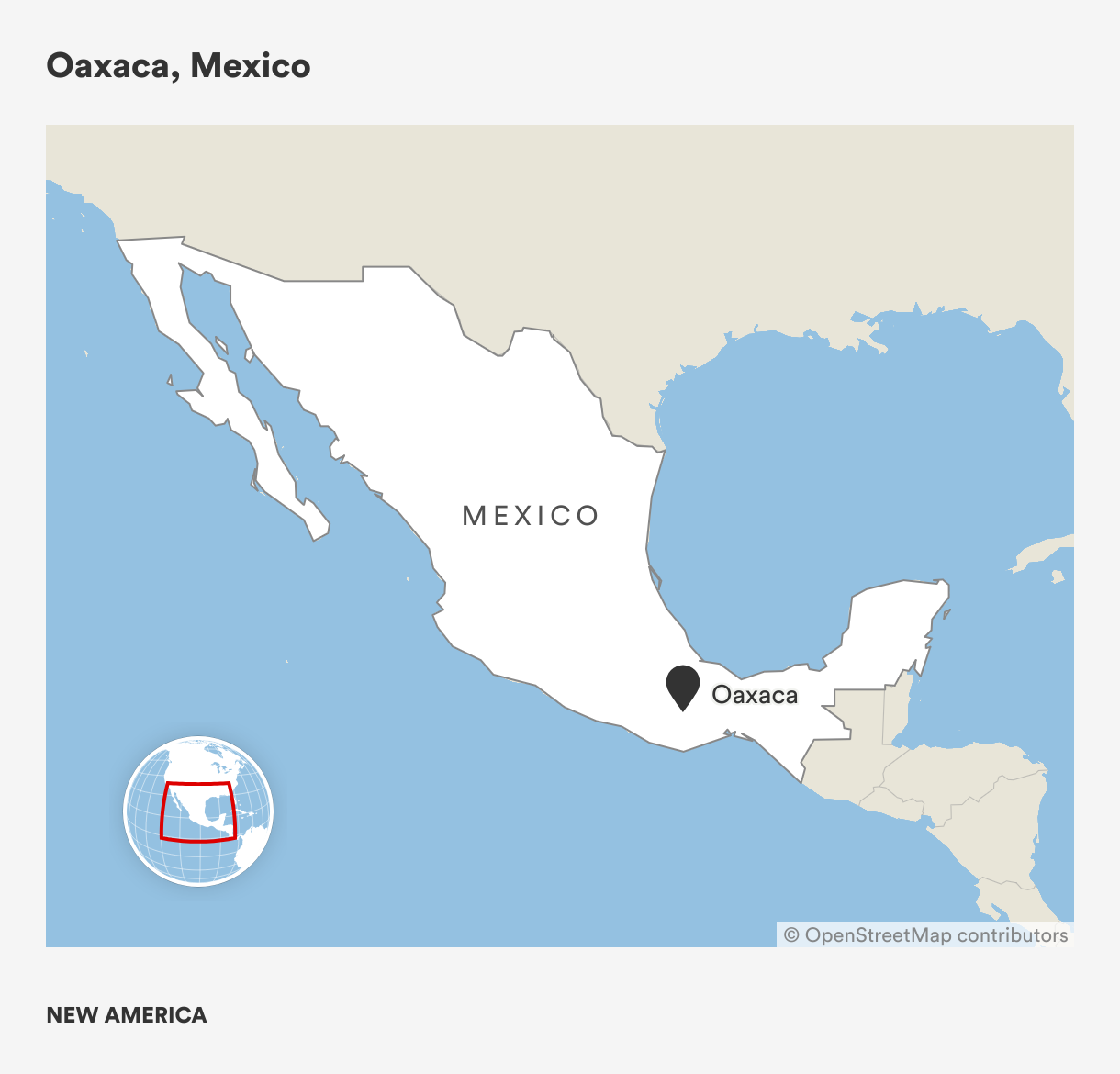
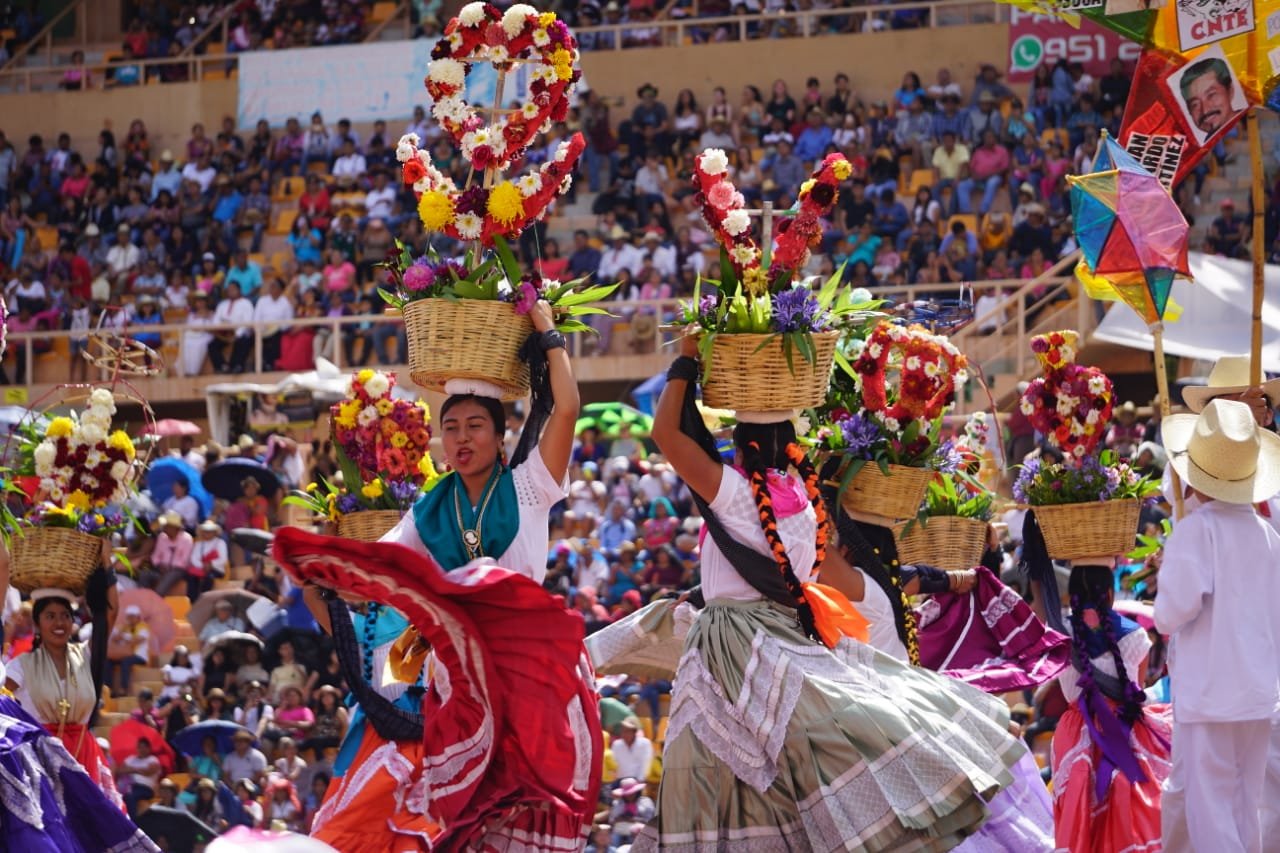
Every July in the heart of Oaxaca, a state in southeastern Mexico, a vibrant cultural celebration unfolds. La Guelaguetza Popular, full of color and sound, attracts Indigenous communities from all over the region. Over the course of three days, celebrants in distinctive cultural attire fill the squares and streets to perform dances, play music, and enjoy traditional foods. The Guelaguetza—a Zapotec word meaning mutual cooperation—has brought together Oaxaca’s diverse Indigenous peoples for centuries.
But the festival is also a platform for politics and resistance. In a region where legal methods of resistance have been ineffective and dangerous—Oaxaca is one of the deadliest states in Mexico for activists—La Guelaguetza Popular offers a place for political protest against threats posed by the short-term interests of extractive industries and the state. Indigenous leaders and activists hold conversations at the festival and organize around pressing issues of environmental protection, education, land rights, and food sovereignty. In the process, they build coalitions that sometimes develop into effective political action.
Noticias Oaxaca NVI
Over time, La Guelaguetza Popular has reframed political narratives in the region, amplifying Indigenous and other communal perspectives about solidarity and resistance. Experts on social movements agree that progress requires a long-term approach to organizing. People need to find ways to engage in ongoing conversations with others to clarify values and objectives, develop expertise, share information, and generate the capacity for action. The festival creates the opportunity for the community’s deepest preferences to find expression. At the same time, it emphasizes the importance of preserving cultural traditions and values to build a better future.
The Struggle for Land and Future
Oaxaca has a diverse geography, ranging from vast coastal plains to soaring mountains. One of the three poorest states in Mexico, Oaxaca is rich in natural resources, especially gold, silver, zinc, copper, and lead.5 The region’s political history has been marked by struggles over control of these resources, especially among outside corporate and government interests.6
Sixteen distinct Indigenous peoples—Mixtecs, Zapotecs, Triquis, Mixes, Chatinos, Chinantecos, Huaves, Mazatecos, Amuzgos, Nahuas, Zoques, Chontales, Cuicatecs, Ixcatecos, Chocholtecos, and Tacuates—comprised 43.7 percent of the state’s total population in 2015.7 Each group has its own unique language, rituals, and traditions.8 Livelihoods revolve around communal agriculture inland and artisanal fishing on the coast. The peoples of Oaxaca have lived sustainably, using resources wisely while caring for people at all ages, by following practices of their ancestors and preserving their way of life for future generations. They engage in “milpa” agriculture, which mixes maize with other species like beans, squash, and potatoes, which helps prevent erosion and degradation of the soil.9
For decades, Oaxaca communities have been locked in struggles for their land and future. The Mexican government has seized territory, and private companies have extracted ore from the mineral-rich mountains. Gold and silver mining, a major industry since colonial times, has quickened in the twenty-first century. The result is environmental damage and economic dependency.
For example, in Capulálpam de Méndez, a small mountainside town, mining activity has polluted rivers and drained natural springs and aquifers. In 2010, three dams collapsed, leading to a flood of wastewater that turned 26 towns and villages into a toxic graveyard.10 Much of the water in Indigenous areas is no longer safe for human consumption, animal husbandry, or crop irrigation.11 Severe health issues, including respiratory diseases and cancer, have proliferated.12 At the same time, climate change has made droughts more frequent, further threatening traditional agricultural practices.
The government has failed to protect Indigenous communities from the environmental harms and risks associated with mining. Between 2002 and 2011, the federal government issued concessions to mining companies on more than 50,000 hectares of Zapotec land in the area around Capulálpam, a significant portion of the group’s ancestral holdings.13 The government made these concessions without consulting or informing communities about legal, environmental, and social considerations. The deal violated the binding International Labor Organization’s Indigenous and Tribal Peoples Convention.14 In 2019, a federal district court in Oaxaca ruled that the concessions also violated constitutional protections.15 But mines have continued to operate on Zapotec land.16
Conventional channels for political action have proved inadequate to protect land, rights, and interests. The people of Oaxaca often turn to community organizing and activism. But corporations and governments respond with acts of intimidation, repression, and violence. They often attempt to pit Indigenous groups and activists against one another. Organized criminal groups, often linked to the drug trade, and security forces, representing the state as well as legal and illicit private interests, often threaten violence against activists.17 According to data from El Centro Mexicano de Derecho Ambiental (CEMDA), a human rights organization, 79 reported attacks occurred in Oaxaca from 2012 to 2018—more than in any other state.18
Indigenous activists also face legal persecution. “For years the government has tried to punish and dissolve collective and community organizations by fabricating crimes against us,” said Pedro A., an Indigenous activist from Los Valles Centrales, in an interview. With arrest warrants, evictions, and brief jail sentences to “send the message,” activists are further deterred from carrying out acts of civil protest, such as blockades or demonstrations. “They consider us country folk who cannot express ourselves well,” said one resident from Magdalena Ocotlán. “They look down on us, but it’s not fair for us to be treated this way.” Lacking power in formal systems of politics and policy, Oaxaca’s Indigenous peoples have been forced to find creative ways to fight for the interests of the future.
La Guelaguetza Popular and Expressive Politics
The Guelaguetza festival, as it is now known, dates back to pre-Columbian times, when the Zapotecs held annual celebrations to share customs and celebrate the harvest. In 1932, the government of the state of Oaxaca established a festival in which Indigenous people would gather in the capital city to present crafts and products from their region.19 The government began calling the festival Guelaguetza in 1953 and promoted it for economic development. In 1974, to accommodate growing crowds of tourists, the state government built an 11,000-seat amphitheater for the festival.20 It became highly stage-managed and charged admission, with prices too high for many Indigenous and low-income people to participate. Private mining companies became sponsors.
Then there was a clear mandate to change. In 2006, a strike in Oaxaca by the National Union of Education Workers (SNTE) over wages and classroom resources spiraled out of control. Previously, the government had attempted to negotiate with teachers in the event of a strike. But in 2006, Governor Ulises Ruiz Ortiz refused to bargain and sent between 1,000 and 3,000 armed state police to disperse an encampment in the center of Oaxaca.21 SNTE escalated its protest and found support from student groups, other labor unions, and Indigenous groups. A months-long battle ensued. Police used clubs, rubber bullets, and tear gas against the teachers. As fires burned, gunfire could be heard nightly. Hundreds of thousands of demonstrators took over the city and demanded the governor’s resignation.22 Some of the protestors formed an ad hoc organization called the Popular Assembly of Oaxaca (APPO). Protesters blockaded the city, occupied public buildings, closed banks, and held regular marches. The takeover lasted for six months. With 800,000 people joining the protests, APPO demanded democratic reforms.23
As part of this protest, APPO organized a boycott of the official Guelaguetza festival. APPO argued that the festival, what should have been a powerful expression of Indigenous culture and power, had become, in the words of one observer, a “waste of economic resources that only benefits big business, owners of hotels, restaurants, and travel agencies…not the Oaxacan people.”24 When activists blocked access to the amphitheater, the government canceled the event. In subsequent years, the government continued to hold its festival. Those festivals drew tens of thousands of tourists and boosted the local economy. But as a result of the fiery protests of 2006, a challenge was coming.
Reviving the Traditional Festival
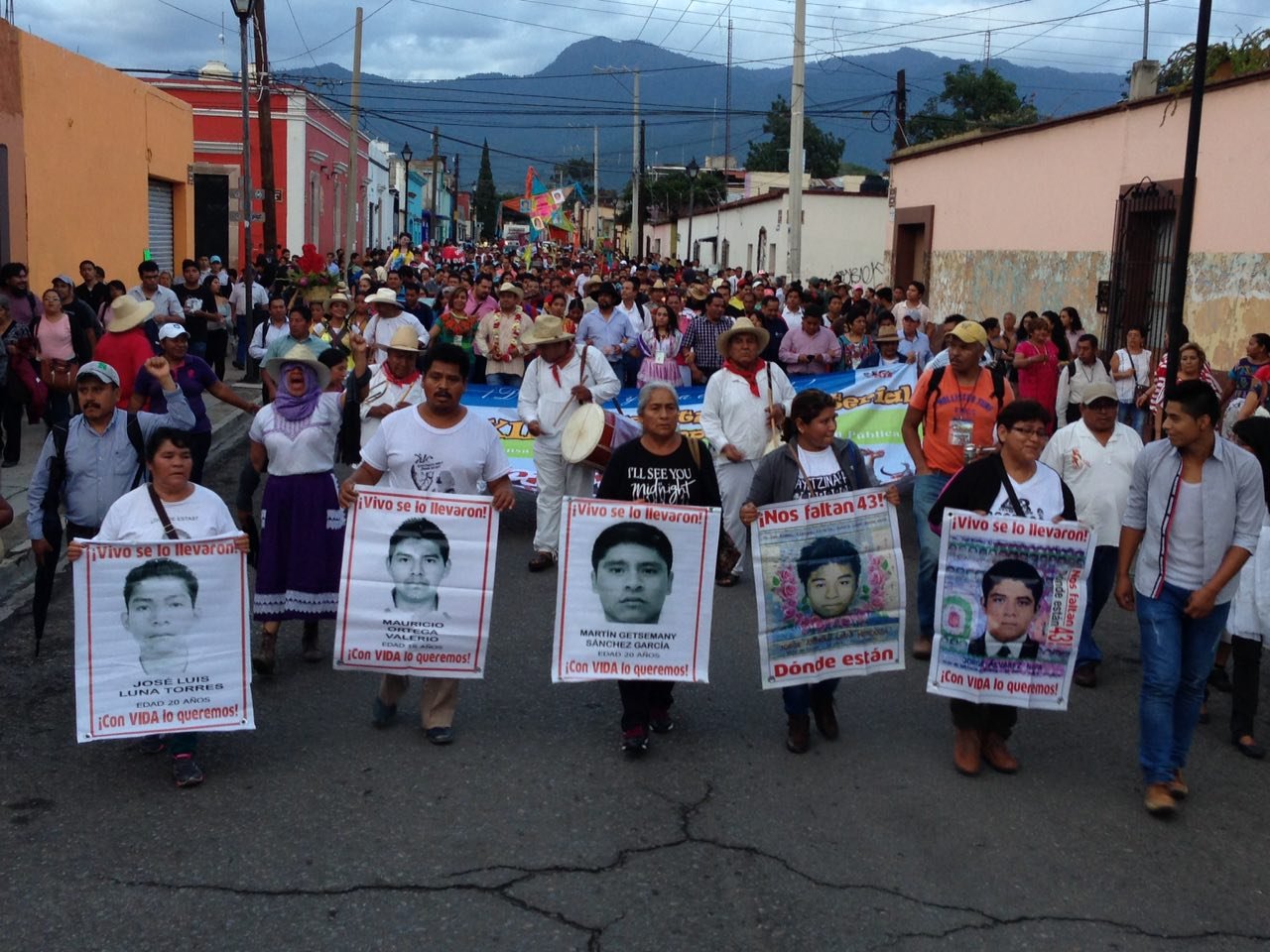
When the government canceled its festival in 2006, APPO organized La Guelaguetza Popular, a free, multi-day festival intended to capture Guelaguetza’s original spirit of mutual cooperation and solidarity. The region’s Indigenous peoples attended, along with activists, union members, and residents of Oaxaca.25 Over the years, the festival has grown to tens of thousands of celebrants, where participants wear the colorful costumes of their ancestors and perform traditional dances and music. The streets fill with the sound of drums, the smell of tamales cooking on open fires, and the smoke of copal, a resin used in Indigenous rituals.
The festival also provides a venue for activists to organize and carry out protests that can be risky for Indigenous groups elsewhere. Political scientists have referred to this as expressive politics, or “infrapolitics.” With subtle, often unnoticed actions of resistance in everyday life, repressed groups can gain solidarity and begin to develop a political agenda.26 Infrapolitics, often held in private spaces or selected public events, provides a space for marginalized voices to express their views. During the festival, Indigenous activists give speeches to raise awareness about community struggles. They lead chants like “Yes to life! No to mining!” and “No gold! No silver! Mining kills!” Participants speak out against the health hazards and environmental damages of mining and criticize state and federal authorities for supporting mining industries and denying their harmful effects.
Coordinadora 1DMX
Organizers and activists—who requested anonymity in this report for fear of reprisals—say the festival is a safe place in which to speak out. “We want attention, and each July, we get it from neighbors, tourists, states, and corporations by showing up as a united coalition in the face of adversity,” said Rosa B., an organizer in 2023. “We are a point of unity against repression, and we exist because we resist.” Crowds gather in churches, streets, and stadiums and hear testimony from activist leaders and ordinary people. On the final day, people fill the seats of the iconic Technological Stadium of Oaxaca for performances.
Festival participants have an opportunity to learn about the economic and social conditions of the region—and to connect with the activists, offer support, and explore political strategies. “We have faced retaliation for our resistance,” said one Indigenous activist in 2023. “But every [person] that hears our stories, every nod of understanding, and every hand that joins us in support adds to our resolve. This festival, while a celebration, is also a testament to our fight for justice and equality.”
Groups are invited to join the festival through word of mouth. The organizers often identify and connect with local initiatives that fight against government and criminal abuses such as imprisonment, forced disappearances, and land grabbing, and social issues such as food insecurity and poverty. “La fiesta es resistencia,” participants in the events say.27 “Being Indigenous is not just about folklore. It is a form of resistance,” said Karla N., a Mixtec activist. The cultural rituals, songs, dances, and symbols all date back generations, and their continued display ensures their continuation.
Women play a leading role. In ceremonial rituals using the Zapotec language, they express gratitude for the abundance of Mother Earth and call for strength and endurance to preserve their land and resources. Elders prepare traditional tamales and mezcal, with the help of young girls. “We nourish, we sustain, and, like water, we’re essential to life,” said Biaani, a Zapotec woman. “These rituals remind everyone that we, as women, are the bedrock of our community.”
Teachers and unions are also instrumental. Giving speeches, carrying placards, and engaging in artistic performances, they assert their rights and express their frustration with government policies. They are playing the long game. “We’re shaping the minds that will uphold our traditions, fight for our rights, and contribute to our society,” said Yolanda C., a teacher. “This festival allows us to convey that teachers’ concerns matter, and we deserve better.”
The concept of intergenerational justice unifies the festival. Informed by ancestral wisdom and determined to forge a sustainable future, festival celebrants seek to reimagine politics and invoke the traditions of solidarity and cooperation. In this reimagining, the government and private interests join with the community to nurture the environment and safeguard societal welfare, not just for those alive today, but also for those yet to come.
Preserving the Future
For the Indigenous communities of Oaxaca, the most pressing goal is to defend the land for themselves and for future generations. Activists reject the extractive approach to development, in which the environment is simply a collection of resources to be exploited for short-term profit. Instead, they embrace a holistic relationship with the environment in which every act of construction is also an act of stewardship.
Defense of the land and opposition to mining is a prominent theme at La Guelaguetza Popular. In some cases, inspired and brought together by the festival, activists have gathered the support and motivation to carry out campaigns that have succeeded. For example, in the town of Ixtepec, a determined group of young women who go by the name of “las meñas” spoke out against a mining project that posed a severe threat to their community. The 2015 project was backed by Plata Real, a subsidiary of the American company Sunshine Mining and Refining, and the Japanese firm Dowa.28 The proposal’s open-pit mines would damage hillsides and endanger the Guigu Bicu River, critical to irrigation.29 The project would have destroyed around 6,000 hectares of farmland for Zapalote Chico maize, which is not just a food staple but also a cultural asset embedded in the community’s identity, fundamental to traditional gastronomy and rituals.30
Despite significant opposition from local leaders who were determined to push forward with corporate development, the women refused to back down. “Although women’s voices have traditionally been marginalized in discussions about land and territory, we have a vital role in defending these resources,” the group said in a statement. “After all, we are responsible for the reproduction of life and the maintenance of our families.”31 Communal festivals and events helped them recruit activists. At a protest in 2016, they used sledgehammers and crowbars to destroy one of the five boundary markers of the project.32 That year, more than 2,500 people gathered in a Forum Against Mining Exploitation and signed a declaration to express their support for an Ixtepec free of mining.33 As information about the negative impact of mining activities circulated, opposition swelled.34 In 2017, due to mounting resistance and the growing disapproval of their operations, the companies withdrew from the area.35
This successful campaign offers a model for translating political expression into political action. In these communities, the bond with the land goes beyond market relationships and processes.
“For me, the territory is not merely a physical space, but a source of dignity and vitality,” Víctor D., a Zapotec man, said in 2023. “Its destruction would directly threaten our very existence, jeopardizing access to essential resources, culture, and traditions.”

Cencos 22
The power of Indigenous peoples’ activism lies in their ability to look forward as well as backward. If elites, and the political system they run, tend to focus on the immediate impacts of economic empowerment strategies, infrastructure, water resources, and mining and other extractive industries, these activists make a strong case for long-term considerations. La Guelaguetza Popular creates an opening for traditional communities to express and develop long-term needs and preferences. Even if they cannot eliminate short-term pressures, they can resist them.
Claudette Salinas Leyva, a research associate for New America’s Future of Institutions program, is a Mexican researcher and lawyer. One of the 10 youth consultants at the United Nations Foundation leading the Task Force on Future Generations, she also works as a governance affiliate in Riesgos Catastróficos Globales, an initiative to help build institutional resilience in low- and middle-income countries.
Citations
- Servicio Geológico Mexicano, Anuario estadístico de la minería mexicana, 2019 (Mexico City: Gobierno de México, 2020), http://www.sgm.gob.mx/productos/pdf/Anuario_2019_Edicion_2020.pdf; IMCO Staff, “En Chiapas, Guerrero y Oaxaca se encuentran los municipios con mayor porcentaje de la población en situación de pobreza,” Instituto Mexicano Para La Competitividad, December 15, 2021, https://imco.org.mx/en-chiapas-guerrero-y-oaxaca-se-encuentran-los-municipios-con-mayor-porcentaje-de-la-poblacion-en-situacion-de-pobreza/.
- Carlos Ramírez, “Las revueltas de Oaxaca,” Letras Libres, September 15, 2016, https://letraslibres.com/politica/las-revueltas-de-oaxaca/.
- Panorama educativo estatal de la población indígena 2018: Oaxaca (Mexico City: Instituto Nacional para la Evaluación de la Educación, 2019), https://www.inee.edu.mx/wp-content/uploads/2019/08/P3B114.pdf.
- María del Carmen Castillo Cisneros, “Las identidades étnicas en Oaxaca,” Nueva Época no. 41 (January-April 2018), https://productosdigepo.oaxaca.gob.mx/recursos/revistas/revista41.pdf.
- “La milpa, saberes y sabores,” Secretaría de Agricultura y Desarrollo Rural (blog), October 14, 2020, https://www.gob.mx/agricultura/articulos/la-milpa-saberes-y-sabores.
- Baltasar Hernández and Netzar Arreortúa Martínez, “Extractivismo de minerales en la sierra de Juárez, Oaxaca,” La Jornada, March 27, 2022, https://ecologica.jornada.com.mx/2022/03/27/extractivismo-de-minerales-en-la-sierra-de-juarez-oaxaca-8839.html.
- Dulce Olvera, “Conflictos sociales, inseguridad y enfermedades deja una década de operación de minera en Oaxaca,” SinEmbargo.mx, April 11, 2021, https://www.sinembargo.mx/11-04-2021/3961474.
- Hugo Adalberto Von Thaden Ugalde, Celerino Robles, and Mario Enrique Fuente Carrasco, “Mining Activity in the 20th Century in the Oaxaca Valley: Today’s Public Health Risks,” Revista internacional de contaminación ambiental 36, no. 1 (February 2020), https://www.scielo.org.mx/scielo.php?script=sci_arttext&pid=S0188-49992020000100165.
- Juan Carlos Cruz Vargas, “Acusan habitantes de la Sierra de Juárez: Minera Natividad, una devastadora impune,” Proceso, April 29, 2023, https://www.proceso.com.mx/reportajes/2023/4/29/acusan-habitantes-de-la-sierra-de-juarez-minera-natividad-una-devastadora-impune-306205.html.
- Hernández and Arreortúa Martínez, “Extractivismo de minerales en la sierra de Juárez,” https://ecologica.jornada.com.mx/2022/03/27/extractivismo-de-minerales-en-la-sierra-de-juarez-oaxaca-8839.html.
- Salvador Aquino-Centeno, “Expertise and community juridification: Defense of subsoil and communal lands in Oaxaca, Mexico,” Íconos: Revista de Ciencias Sociales 72 (January 2022), https://iconos.flacsoandes.edu.ec/index.php/iconos/article/view/5022/3930#info.
- Aquino-Centeno, “Experticias y juridificación comunitaria.”
- “Denunciamos criminalización y amenazas contra el defensor Carlos Beas Torres en el Istmo, Oaxaca,” Congreso Nacional Indígena, March 22, 2023, https://www.congresonacionalindigena.org/2023/03/22/denunciamos-criminalizacion-y-amenazas-contra-el-defensor-carlos-beas-torres-en-el-istmo-oaxaca/.
- Overall, 460 such attacks occurred in Mexico. See “Violence Against Indigenous Groups in Oaxaca Remains Mostly Environmentally Motivated,” Justice in Mexico, July 10, 2020, https://justiceinmexico.org/violence-indigenous-groups-environmental/.
- Michelle Whitford, “Oaxaca’s Indigenous Guelaguetza Festival: Not All that Glistens Is Gold,” Event Management 12 (2009): 1–17, https://www.researchgate.net/publication/233708697_Oaxaca's_Indigenous_Guelaguetza_Festival_Not_all_that_Glistens_is_Gold.
- Whitford, “Oaxaca’s Indigenous Guelaguetza Festival,” https://www.researchgate.net/publication/233708697_Oaxaca's_Indigenous_Guelaguetza_Festival_Not_all_that_Glistens_is_Gold.
- Kylin Navarro, “Oaxacan Teachers Strike Against Governor, 2006,” Global Nonviolent Action Database, January 11, 2010, https://nvdatabase.swarthmore.edu/content/oaxacan-teachers-strike-against-governor-2006#case-study-detail.
- Luis Hernandez Navarro, “Oaxaca: Memoria Viva, Justicia Ausente,” El Cotidiano 148 (March–April 2002): 5–20, https://www.redalyc.org/pdf/325/32514802.pdf.
- Navarro, “Oaxacan Teachers Strike,” https://nvdatabase.swarthmore.edu/content/oaxacan-teachers-strike-against-governor-2006#case-study-detail.
- Diana Denham, “State-Sponsored Guelaguetza Canceled, Alternative Guelaguetza Carried Out by APPO,” Casa Collective, July 25, 2006.
- Nancy Cázares, “¿Cuál es el origen de la Guelaguetza Popular?” La Izquierda Diario, July 14, 2017, https://www.laizquierdadiario.mx/Cual-es-el-origen-de-la-Guelaguetza-popular.
- James C. Scott, Weapons of the Weak: Everyday Forms of Peasant Resistance (New Haven, CT: Yale University Press, 1985), http://www.jstor.org/stable/j.ctt1nq836.
- Yásnaya Elena A. Gil, “Mujeres indígenas, fiesta y participación política. Revista de la Universidad de México,” Dossier, November 2019, https://www.revistadelauniversidad.mx/articles/1157b614-c696-4872-9b14-c48b1c8680b5/mujeres-indigenas-fiesta-y-participacion-politica.
- Diana Manzo, “Mujeres zapotecas resisten frente a las Zonas Económicas Especiales,” Lado B, November 5, 2017, https://www.ladobe.com.mx/2017/11/derecho-la-vida-mujeres-zapotecas-resisten-frente-las-zonas-economicas-especiales/.
- Manzo, “Mujeres zapotecas,” https://www.ladobe.com.mx/2017/11/derecho-la-vida-mujeres-zapotecas-resisten-frente-las-zonas-economicas-especiales/.
- Manzo, “Mujeres zapotecas,” https://www.ladobe.com.mx/2017/11/derecho-la-vida-mujeres-zapotecas-resisten-frente-las-zonas-economicas-especiales/.
- “Extractivismo profundiza la violencia de género en todos sus niveles: Mujeres de Ixtepec,” Desinformémonos, March 21, 2022, https://desinformemonos.org/extractivismo-profundiza-la-violencia-de-genero-en-todos-sus-niveles-mujeres-de-ixtepec/.
- “Rechazan proyecto minero en Ixtepec,” El Universal, July 11, 2016, https://www.eluniversal.com.mx/articulo/estados/2016/07/11/rechazan-proyecto-minero-en-ixtepec/.
- “Ixtepec se declara como territorio libre de mina,” No a la Mina, April 13, 2016, https://noalamina.org/latinoamerica/mexico/item/15485-ixtepec-se-declara-como-territorio-libre-de-mineria.
- Manzo, “Mujeres zapotecas,” https://www.ladobe.com.mx/2017/11/derecho-la-vida-mujeres-zapotecas-resisten-frente-las-zonas-economicas-especiales/.
- “La Resistencia de Puente Madera,” Observatorio Memoria y Libertad, April 26, 2023, https://memoriaylibertad.wixsite.com/inicio/post/la-resistencia-de-puente-madera.
The Subak System in Bali, Indonesia
By Dewa Atmaja, Jero Dodo, and Gordon LaForge
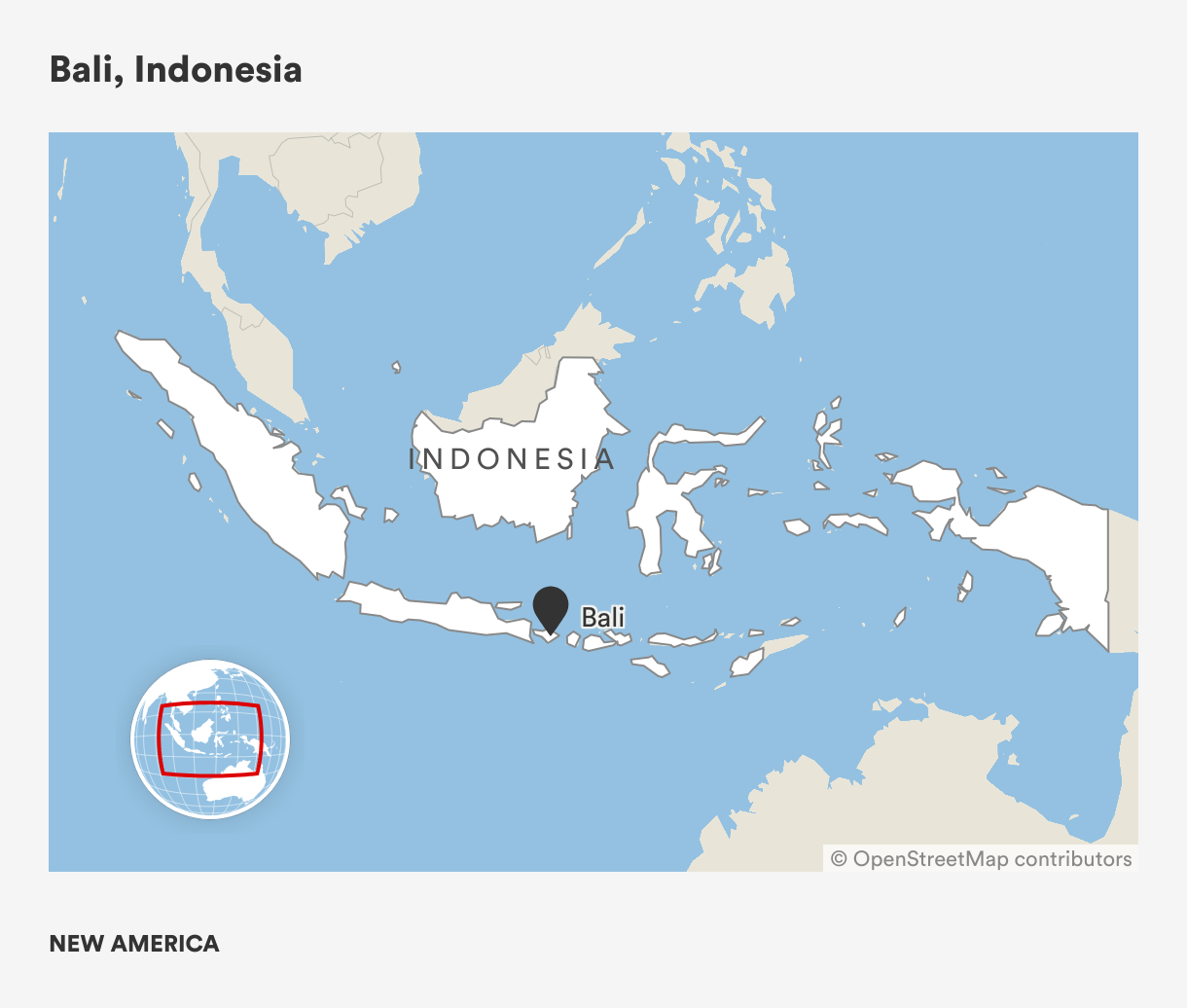
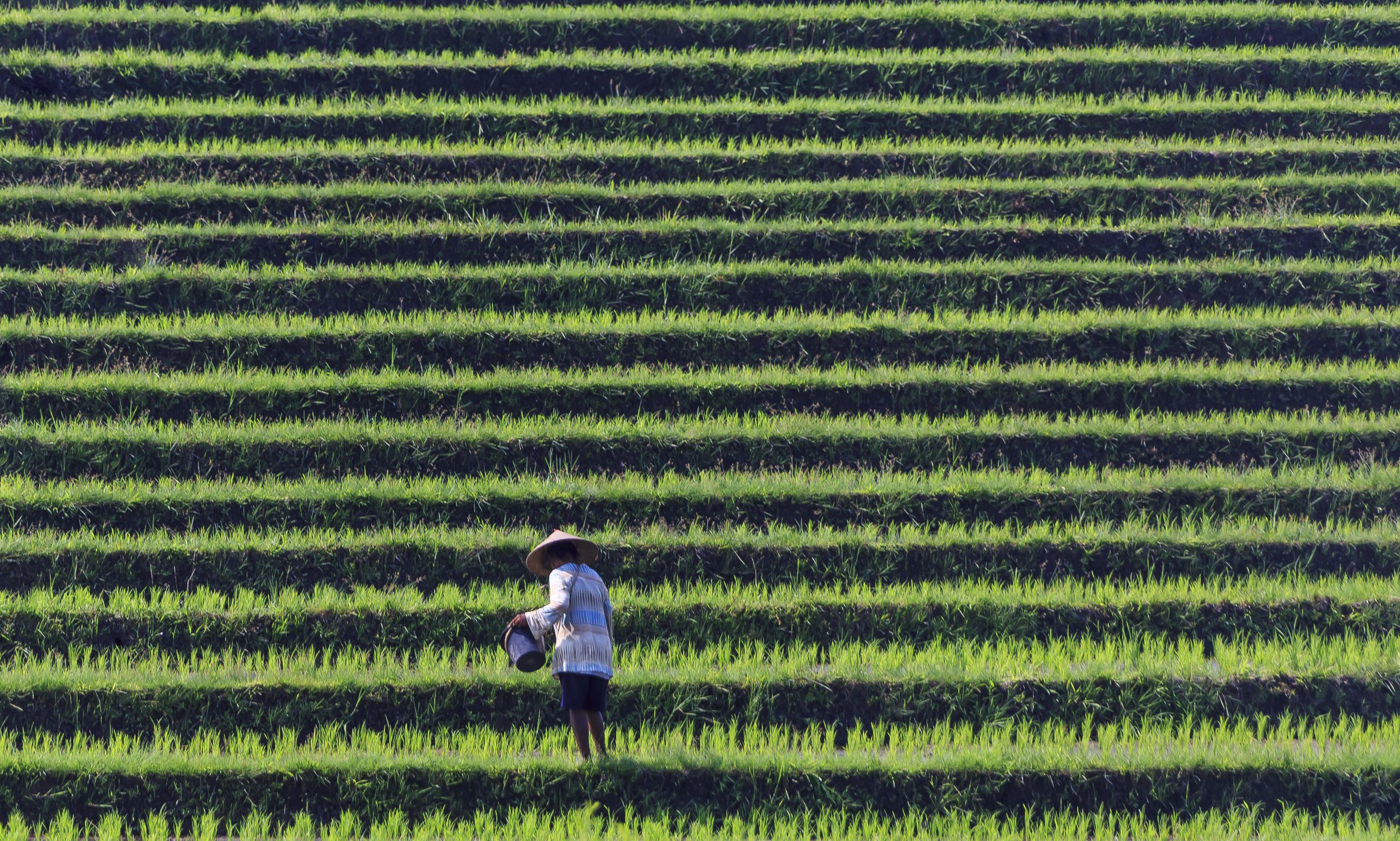
On the island of Bali in Indonesia, water flows down a group of central volcanoes to irrigate terraced rice paddies below. Since the eleventh century, the Indigenous Balinese have maintained the subak system to manage that water and preserve a way of life for future generations. Each subak is an independent, self-governing collective of farmers who share limited water and suppress pests by synchronizing their planting cycles. Communal, consensus-based governance aligned with hindu religious traditions enables the farmers in a subak to maintain their own crop yields and those of the subak. Today, some 800 subaks manage around 75,000 hectares of rice paddies in Bali.36
The subak system governs a common resource without centralized, top-down control. Its success challenges the theory of the “tragedy of the commons,” which holds that individual actors deplete a common resource unless a central authority manages the resource. Especially in extractive industries—fishing and hunting areas, natural resources like water, and energy resources like coal and oil—individual actors plunder as much as possible without consideration for future needs. Subak governance offers a bottom-up, community-scale, and democratic form of resource governance. All the farmers with land in a given area meet regularly to determine irrigation schedules, allocate maintenance responsibilities, and manage problems that arise.37 Members of the subak elect leaders from their own group.
To better understand how the subak functions and preserve the interests of future generations, New America’s Gordon LaForge talked with two subak leaders in Bali, Dewa Atmaja who is the head (pekaseh) and Jero Dodo who is the manager (kelian) of Subak Bena. This interview has been translated from Bahasa Indonesia and edited for clarity.
Gordon LaForge: Could you please explain the characteristics of the subak system?
Dewa Atmaja: Before answering, allow me to first request blessings for our conversation. In Bali, we do that by saying Om Swatiastu. Right; thank you very much for taking the time to conduct this interview.
The subak system is a foundation in Bali. It regulates how we share water and farm rice. Before cultivating our fields, we meet to discuss irrigation and sharing water. The members of the subak are all farmers. They farm rice, but also vegetables and ornamental plants every third planting cycle to balance and nourish the soil. Our subak, called Subak Bena, where I am the pekaseh, has 240 members divided into three tempek [sub-divisions].
Jero Dodo: To add to that, a subak is a community of the people who work together on the shared goal of farming rice. The subak system is a way of organizing and governing communal life that is closely tied to what we call desa ADAT.38 “A” stands for agama [religion], which is central to our lives and the subak system. “D” stands for dresta, which refers to the process followed by the farmers irrigating the paddy, planting the seeds, and harvesting the rice. “A” stands for awig-awig [by-laws based on customary rules]. All members of a subak must follow the awig-awig. If they violate them, they are sanctioned according to the consensus reached in a subak meeting. If someone repeatedly violates the rules, they can be expelled from the subak. Finally, “T” stands for tata krama [etiquette], a main feature of which is transparency. All the members of the subak have to be transparent to avoid conflicts and misunderstanding. We all work with the same view.
The subak depends on the tri mandala [three spaces].39 For the subak, the tri mandala consists of prahyangan [the temples and holy places where humans connect to the Supreme Being], pelemahan [the rice fields], and pawongan [the members of the subak]. We maintain harmony to the Supreme Being with rituals, to the environment with the fields we farm sustainably, and to the members of the subak with strong fellowship, respect, and adherence to the rules and etiquette.
In Bali, we never try to divide one another, and everyone knows everyone. The ultimate goal of the subak is to work together to produce agricultural crops to sustain our lives and support our families and children. We in Bali cannot become disconnected from any part of the tri mandala [the Supreme Being, the environment, and the community], just as a human beings’ vital body parts are interconnected, and we cannot live without any one of them.
J. Stephen Lansing
LaForge: How do subak meetings work? Who participates, and how are they run so that everyone can provide input and have their voices heard?
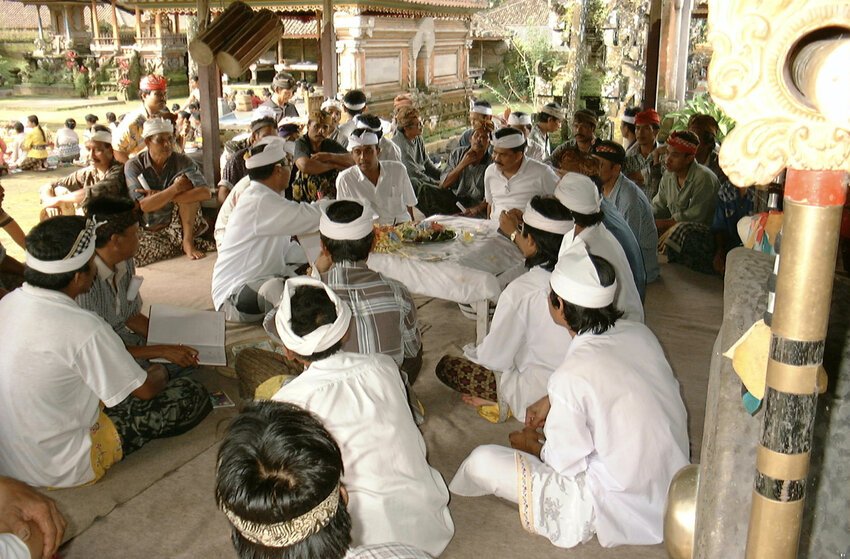
Dodo: Very good question. The meetings follow the tata krama [etiquette], according to which the members of the subak have to gather for a meeting at the Bale Subak [Subak meeting place] when they hear the sound of the kentongan [a drum made of bamboo]. Subak members are required to attend when they hear the kentongan. In practice, some of the members live out of earshot of the drum, so we let everyone know the date and time of each meeting beforehand.
In each meeting, we identify problems and issues that need attention. The Subak members are obligated to perform activities like fixing waterways and repairing irrigation structures.40
LaForge: In a subak meeting, how are disputes or disagreements resolved?
Atmaja: When a disagreement occurs in our subak, we ask our members to sit together and discuss the matter until they can find a consensus. If we cannot reach a consensus, then we ask for an outside party to sit with us and help mediate and find a consensus. Until now, in our subak we have always been able to resolve disputes through consensus.
LaForge: What is the role of religion and tradition in the subak?
Dodo: Sang Hyang Widi [God Almighty] is the soul of the subak. We Hindus in Bali follow Sang Hyang Widi. All we have is from God. We uphold the principles of divinity and can’t live without those principles. When we are sick, we won’t be able to cultivate our land. God blesses us with health and gives us guidance so that we can take care of our land and perform other activities.
Our work in the fields is closely related to religion, and we hold rituals [at each stage of the farming cycle]. When we first irrigate our field, we have a ritual. Before we plant our seeds, we hold a ritual. We have a ritual when we plough the field and another when we prepare to harvest. We hope that when we are working on our fields, God gives blessings to us.
In our subak, we have no courage to cultivate our land unless we have conducted the appropriate ritual or ceremony. If a subak member fails to perform or participate in a ritual, they will be sanctioned by the subak meeting. The penalty is described in the awig-awig. Religion is like the blood running through the subak. We cultivate our land in accordance with the principles of our religion, and we cannot imagine it any other way.
LaForge: Since all the subaks in Bali rely on the same source of water for irrigation, subaks might need to coordinate with each other or resolve disputes that might arise. How do you cooperate with other subaks?
Atjama: If there are problems coordinating with another subak, we will first call the leaders of that subak and invite them to sit together with us to discuss the matter. Together, we figure out a way to solve the problem, and we arrive at a consensus. We make sure that we are clear and that we have the same understanding of the problem and solution. We settle it as if we were all part of the same family. That’s it. Our subak has never been unable to solve a problem with another subak.
Dodo: To add a little bit to that, in our day-to-day lives, one subak coexists with another subak. The rules and etiquette govern how they relate to each [other]. For example, in the irrigation process, one pekaseh and another pekaseh must be transparent with one another.
You can't be egotistical. For example, the amount of water for irrigation is allocated according to the size of the subak. This is set according to the awig-awig. One subak cannot impose its will or demand more. It is important that the leaders of different subaks have a transparent relationship.
If there are problems, we sit together to talk, because we are in a community, an organization with a shared purpose to bind together all the members who work in the agricultural process. That means one pekaseh is closely related to another pekaseh. We all share the subak system.
LaForge: How does the subak system protect the interests of future generations? How does the subak system connect the past with the future?
Dodo: In our daily lives today, we still use the benchmarks of the past. We cannot determine what will happen tomorrow, but we still measure everything based on the past. In the past, our ancestors, the former leaders of our community, formed an organization called the subak. We accept the logic of that era today and pass it forward to the next generation. As we mentioned earlier, that past wisdom we manifest today as the adat [customary] system: religion, farming method, rules, and etiquette. Future generations in Bali will never let this system go, so long as they still need rice. For those cultivating rice somewhere besides Bali, I'm sorry, I have no idea how it works.
In Bali we also believe the relationship between the older generations and the present generations cannot be severed, as was ordained by our ancestors. In Bali, our children believe in not disappointing their parents, let alone their ancestors or those who have passed away. This customary standard [of filial piety] exists in the household.
LaForge: The subak is connected with the past, but is it also able to adapt? For instance, if there are new technologies, is the subak able to adopt them?
Dodo: When it comes to new technology, we in the subak are very adaptive. If we hear about a new technique or technology that can benefit us and improve our work, we have no hesitation adopting it.
For instance, we have adopted new farming techniques to harvest more rice. In the past, our parents used to harvest only once a year. Now we harvest up to three times per year. That means, if our parents produced one ton of rice per year, now we produce three. If we still relied on their farming technique, we would have missed the boat. Times change. Our parents ate cassava; nowadays, our children eat Kentucky Fried Chicken and hamburgers.
However, in the process of adopting new technology, we never deviate from etiquette, awig-awig, and the rest of the adat system. There are also bad effects of new technology along with benefits. It’s always a balance. Techniques that make farming more efficient also make our farmers a little lazy. In the old days, our parents had to collect topsoil and use it as fertilizer. Now, we can just go to a shop to buy fertilizer. What would take a whole day we can now do in two hours, so with the extra time we might just go home and sleep. So there’s always good and bad.
Right now, 18 farmers in our subak have been experimenting with a new technique that is beneficial. In terms of irrigation, the method uses less water, and it also results in a more productive harvest.41
We hope more of our subak members will adopt it. It requires the same amount of work and energy. There’s no difference. And whatever the method of work, if you love it sincerely, it will give you a sense of pleasure. So our spiritual mind becomes satisfied.
CEphoto, Uwe Aranas
LaForge: What do you think are the greatest threats facing the subak system? What could prevent it from continuing into the future?
Dodo: One type of threats are those that come from nature, such as pests. But there have always been pests; they were created by God long ago. From ancient times, we have had birds that eat the rice, mice, plant hoppers, even bacteria. We are not really worried about these threats because they are natural, and we can adjust to them. If God wishes them to happen, they will definitely happen.
What makes me fear now for the life of the subak is the concrete line. This is my term, the concrete line, and what I mean is the construction of new buildings, houses, and tourist facilities made of cement. Subak land is being taken and concrete buildings are going up. This is what I’m afraid of. When it comes to pests, we will never be anxious because nature is in control. What we fear the most is the greed of humans.
If modern structures continue to be built on subak fields, the subaks will surely disappear because one of the three spaces required for the subak is pelemahan [the environment, the rice fields]. Our subak is still natural for the time being, with no concrete housing. There is only a small shelter, a place for farmers to rest during the day, take shelter when it rains, and cook a little bit. Our subak is still original, and the water is still good.
Atmaja: I agree that the conversion of the land for new development is a threat. Another big one is the changing weather [climate] these days. I just came from a dam that was destroyed, and [it] disrupted the water supply in our subak. This time of year, we shouldn’t have much rain in Bali, but suddenly there was very heavy rain for two days that caused flooding and damaged several dams. We are fixing them, but this is a growing threat.
Dewa Atmaja is the leader (pekaseh) and Made Gunawan, also known as Jero Dodo, is a manager (kelian) of Subak Bena in Tabanan, a regency in Southern Bali.
Citations
- John Stephen Lansing, Ning Ning Chung, Lock Yue Chew, and Guy S. Jacobs, “Averting Evolutionary Suicide from the Tragedy of the Commons,” International Journal of the Commons 15, no. 1 (November 2021): 414, https://www.researchgate.net/publication/356146235_Averting_Evolutionary_Suicide_from_the_Tragedy_of_the_Commons.
- J. Stephen Lansing, Perfect Order: Recognizing Complexity in Bali (Princeton, NJ: Princeton University Press, 2006), 89.
- Desa adat translates to “customary village,” but in this context, ADAT is used as a mnemonic device.
- Tri mandala is a concept of space and being that comes from the Tri Hita Karana, the traditional philosophy of the Balinese that roughly translates to “three causes of prosperity.” It holds that harmonious relationships within and among three realms—the spiritual, the environment, and humanity—are the source of happiness and flourishing.
- Routine subak meetings are held around every 35 days, and farmers synchronize their planting and water use schedules in them. As each subak is self-governing, some are more democratic than others. See Lansing, Perfect Order, p. 5.
- The new irrigation technique, which moistens rather than floods the soil, also reduces methane emissions from the rice paddies by as much as 70 percent. See Claire Turrell, “Bali Rice Experiment Cuts Greenhouse Gas Emissions and Increases Yields,” Mongabay, August 11, 2023, https://news.mongabay.com/2023/08/bali-rice-experiment-cuts-greenhouse-gas-emissions-and-increases-yields.
More About the Authors

Claudette Salinas Leyva
Research Associate, Future of Institutions

Kirthana Sudhakar
Research Associate, Future of Institutions

Dewa Atmaja

Jero Dodo

Charlie Euchner
Special Projects Editor, Future of Institutions

Gordon LaForge
Co-Director, Power, People, and Planet Initiative